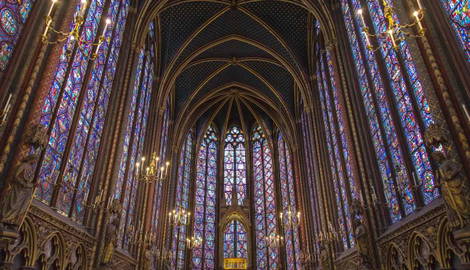

To many visitors to Paris today, the Sainte-Chapelle is an unmissable destination. Situated on the Île de la Cité, it stands as an iconic example of Gothic architecture. Visitors cannot help but be drawn in by its intricate, jewel-toned stained glass windows, which cover most of the walls of the upper chapel. Immersed in the beauty and light of the Sainte-Chapelle, it is easy for visitors to feel transported to a time centuries past.
While the chapel’s beauty may feel eternal, it nearly fell into total disrepair in the aftermath of the French Revolution, which actively sought to eliminate all symbols of both the monarchy and the Catholic faith from France.
The Construction of Sainte-Chapelle
The Sainte-Chapelle came into existence during the reign of Louis IX, who was France’s king from 1226 to 1270. Louis IX is remembered for being one of France’s most pious rulers, even being named a saint by Pope Boniface VIII after his death.
To many observers, the king’s reputation for piety was cemented in his lifetime through his acquisition of several relics of profound importance to the Catholic faith. In the late 1230s, Louis IX bought the Crown of Thorns that supposedly adorned the head of Christ, considered by Catholics to be one of the holiest of relics, from Emperor Baudouin II of the Latin Empire of Constantinople. Baudouin’s kingdom was in financial trouble due to sieges from foreign powers, and he hoped that money from Louis IX would aid him in protecting his country.
Louis IX acquired the Crown of Thorns for a price of 135,000 livres and continued to purchase other relics from Baudouin II, including the purple robe of Christ and a section of the cross used to crucify Him. These relics arrived in France between 1239 and 1241.
In order to elevate and reverence the relics in the way he believed that his faith demanded, Louis IX decided to build a new chapel to house them. This chapel, which became the Sainte-Chapelle, was constructed in proximity to the king’s palace in Paris. It was built with the express intention of serving as a place of worship for the monarch and his family. Scholars are unsure as to the exact identity of the chapel’s architect, but some have speculated that the man could have been Pierre de Montreuil, a highly influential Parisian architect of the Gothic Rayonnant style in which the chapel was built.
The Sainte-Chapelle was officially consecrated in 1248, and the relics it contained were preserved in a massive gilt reliquary that was nearly three meters long.
The Sainte-Chapelle and the French Revolution
In the years after its construction, the Sainte-Chapelle did not remain untouched by weather and calamity. In the seventeenth century, for example, the chapel’s roof had to be rebuilt after a fire. In the same century, the lower chapel was flooded, causing it to need repairs. None of these events, however, was as catastrophic to the Sainte-Chapelle as the French Revolution.
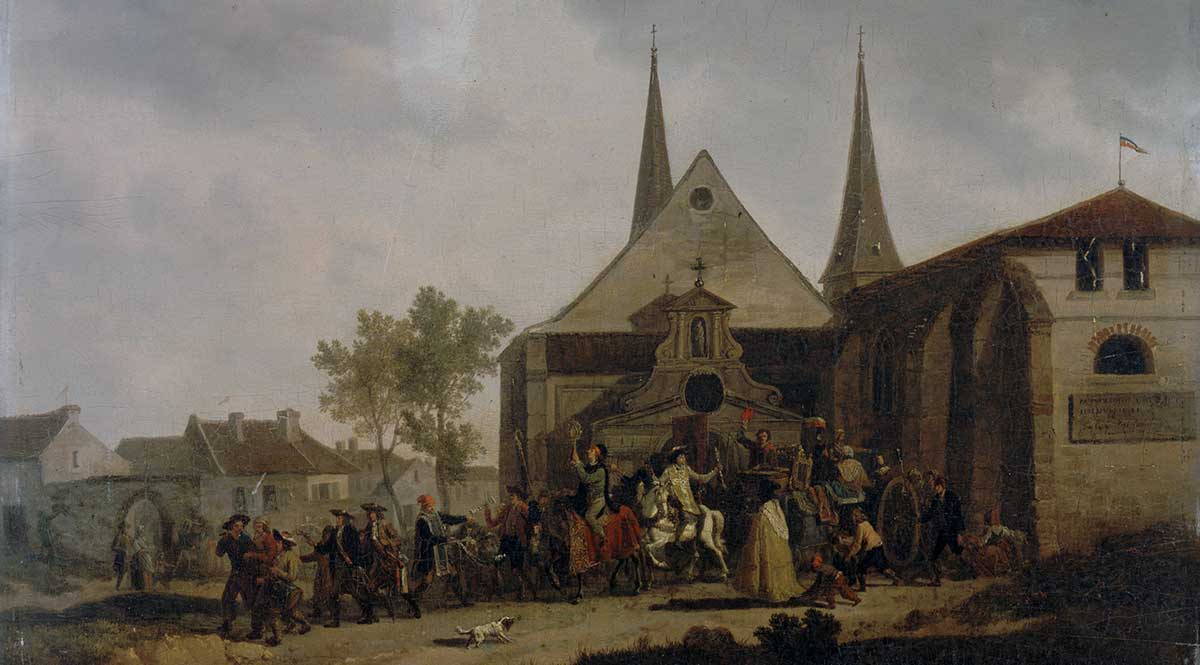
In addition to its elimination of the French monarchy, proponents of the French Revolution actively sought to curb the influence of the Catholic Church, which was perceived as being a major player in the oppression of the nation’s Third Estate. In 1789, all land and possessions belonging to the Catholic Church were claimed by the revolutionary National Constituent Assembly, and clergymen were later forced to publicly swear loyalty to the new state. These developments included the reworking of the Sainte-Chapelle into a secular establishment.
Originally intended for demolition in 1790, by 1793 the chapel had become a storage facility for flour and a backdrop for political meetings. Any imagery in the chapel that recalled the French monarchy was removed, and the chapel’s spire, which was carved with a royal coat of arms, was completely torn down.
Many objects from the interiors of Sainte-Chapelle were destroyed, including the massive reliquary where the relics were stored. A number of the objects that survived were rescued by curator Alexandre Lenoir, who placed them in a museum known as the Musée des Monuments Français. As for the Crown of Thorns, it was stored in France’s National Library for most of the Revolution, until it was given back to the Catholic Church in the early 19th century.
Even after the French Revolution ended, Sainte-Chapelle continued to suffer damage, as, starting in 1803, the chapel was used to store archives. The addition of shelves to the chapel seriously damaged its massive stained glass panels, hundreds of which were removed from the building. Many of those that were removed were ultimately sold to collectors.
Saving Sainte-Chapelle
As the 19th century progressed, European attitudes towards historic monuments, particularly those in the Gothic style, began to shift. Proponents of the Romantic movement in particular began to see Gothic architecture as evoking a beautiful and mystical and time long past. As a result, attitudes towards a restoration of the Sainte-Chapelle grew increasingly enthusiastic.
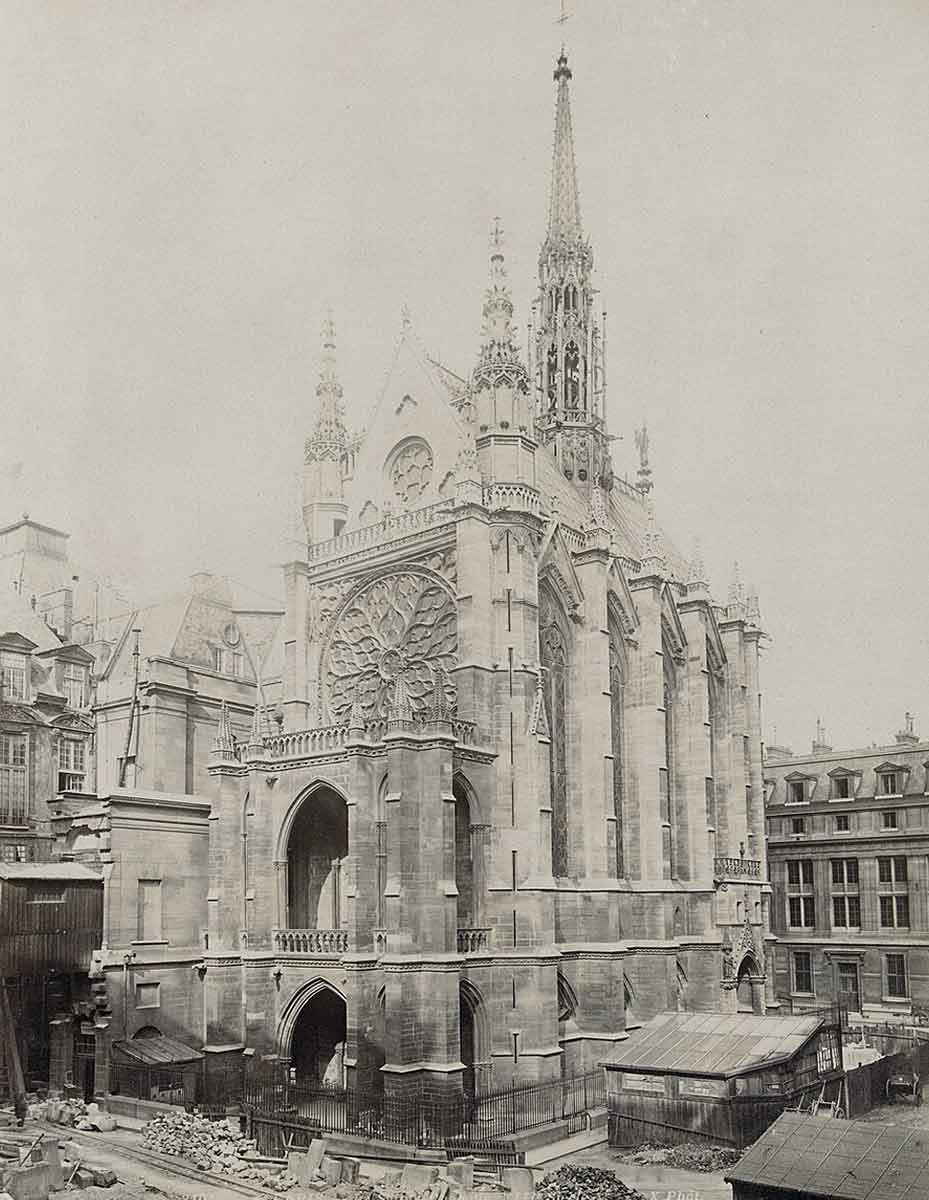
After architect Jean-Baptiste Lassus publicly presented drawings of proposed restorations to the Sainte-Chapelle in 1836, work began on the chapel in 1840. Many influential architects were involved in the project in addition to Lassus, including Félix Duban and Emile Boeswillwald. Perhaps most notably of all, the famed architect Eugene Viollet-le-Duc, who had helped to restore Notre-Dame de Paris, served as an advisor on the restoration work. Viollet-le-Duc’s vision was crucial for the project, as his unique approach to the restoration of historic buildings shaped much of what was achieved.
For the team working on the restoration of Sainte-Chapelle, the whole was far greater than the sum of the parts. Instead of simply trying to salvage what was left of the chapel, it was their goal to recreate the chapel in the most all-encompassing manner they could conceive. This approach was particularly apparent in how the chapel’s stained glass windows were handled. The glass in the windows that remained was meticulously restored so that it might retain its historic beauty.
As for the glass that had been lost or destroyed, the restoration team thoroughly researched its original, 13th-century appearance so that they could recreate what had been there before as closely as possible. As a result, the stained glass of Sainte-Chapelle is now remembered as some of the most iconic in European Gothic architecture.
Sainte-Chapelle’s Architecture
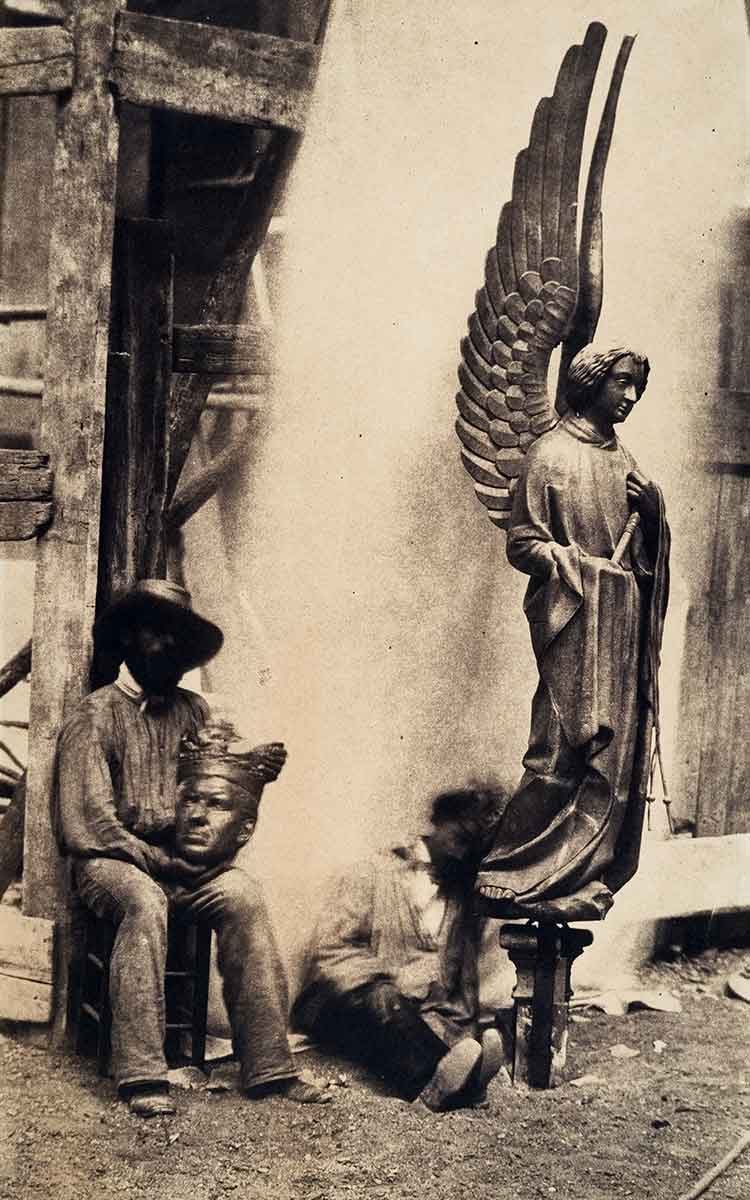
What ultimately remains of Sainte-Chapelle’s architecture is an eclectic mix of the remnants of the chapel’s past. While many elements of the chapel were created in the 19th century, during the restoration process, others can be traced to the 13th century when the chapel was originally built. The exterior of the chapel, in particular, is rife with architectural features created in the 19th century.
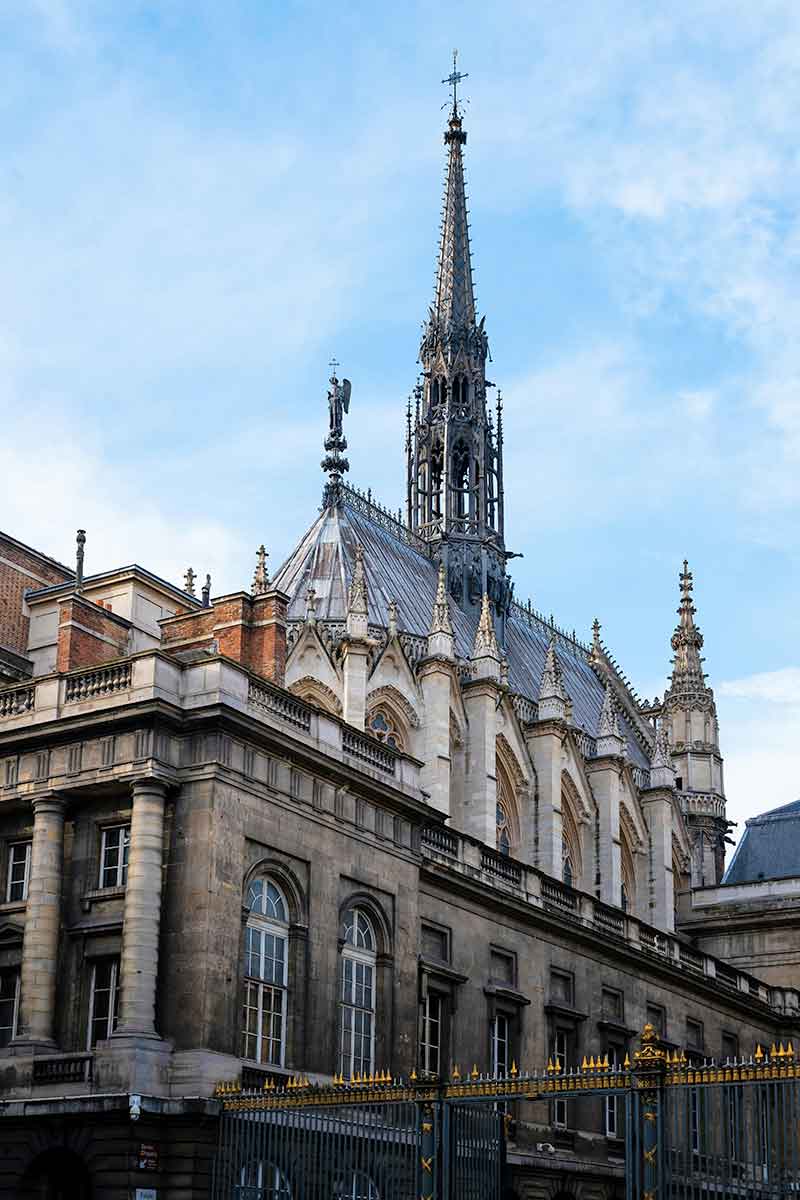
For example, the chapel’s steeple is a 19th-century addition created under the supervision of architect Jean-Baptiste Lassus, patterned after a steeple that the chapel was known to have had in the fifteenth century. Many of the sculptures on the exterior of the Sainte-Chapelle, including the sculptures on the portal of the western facade and the sculptures of the king and his bishops on the eastern end, were created in the 19th century as well.
The interior of the Sainte-Chapelle is divided into two stories. The lower section, known as the lower chapel, was used by the king’s servants and the everyday members of the congregation. Here, the stained glass windows and much of the paintwork, come from the 19th-century restoration.
Nevertheless, historical features still remain. Above a door, a painting of the Annunciation can be found dating back to the 13th century. This work of art was uncovered and retouched to resemble its medieval design during the later restoration. Meanwhile, the upper chapel, where the sacred relics were housed and worshipped by the king and his immediate family, contains a great deal of nineteenth-century paintwork on elements such as the quatrefoils. At the same time, many of the sculpted columns, which feature detailed natural imagery and representations of the Biblical apostles, can be traced back to the 13th century.
The Sainte-Chapelle’s Stained Glass
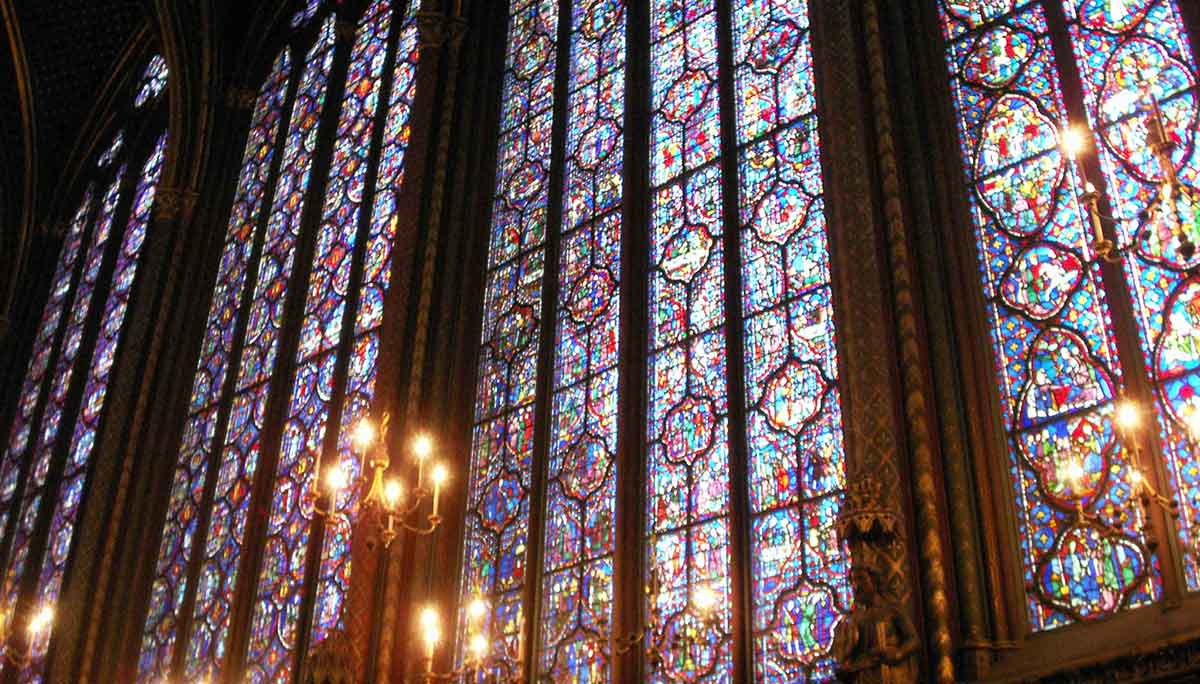
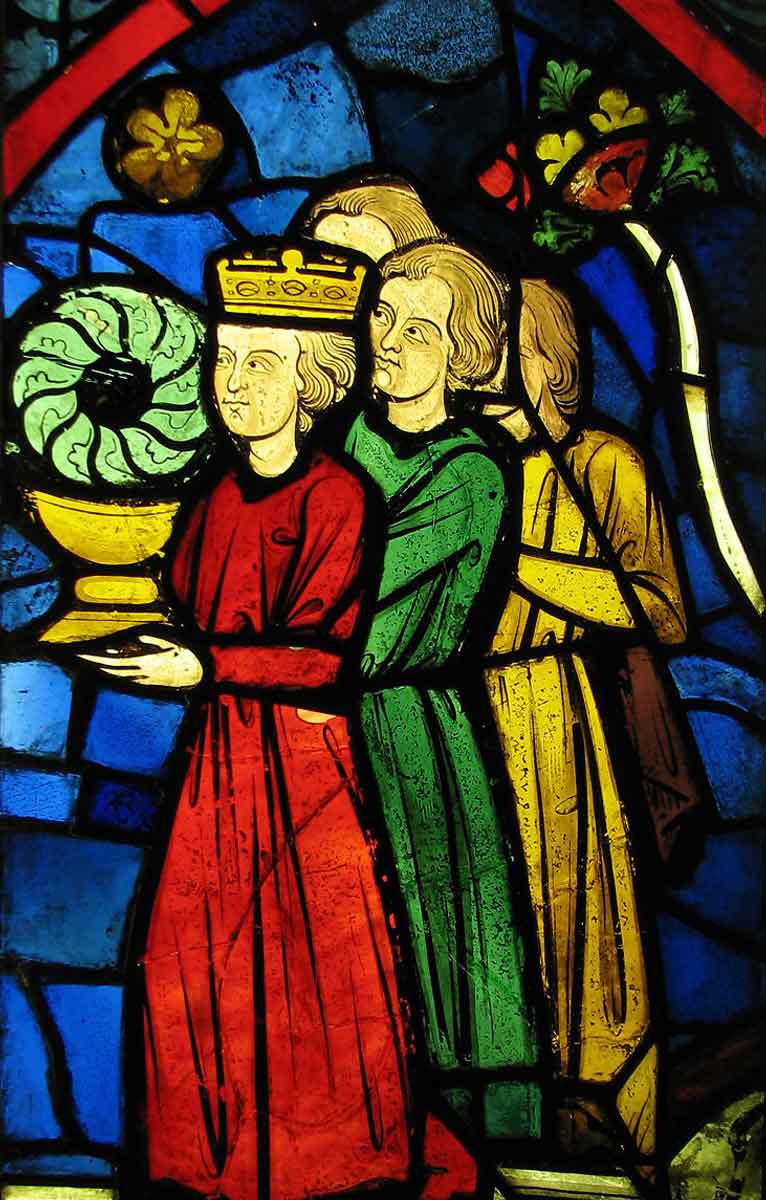
The most memorable aspect of the upper chapel is undoubtedly its 15 stained glass windows. Between 13 and 15 meters high (40 to 50 feet), these windows are particularly remarkable due to the fact that two-thirds of them originate from the period in which the chapel was built. Most of the others, as stated previously, were created in the 19th century with the goal of recreating the originals as closely as possible. Given the context in which the chapel was built, it is hardly surprising that these windows contain a great deal of imagery related to the royal family of France, such as coats of arms.
This imagery is carefully woven throughout a complex, historical narrative beginning with the creation of the world and continuing through Louis IX’s reign. Specifically, the main windows, which line both sides of the chapel, recount Biblical history from the Old Testament to the New Testament, with the addition of a narrative of how Louis IX acquired the relics he placed in the chapel.
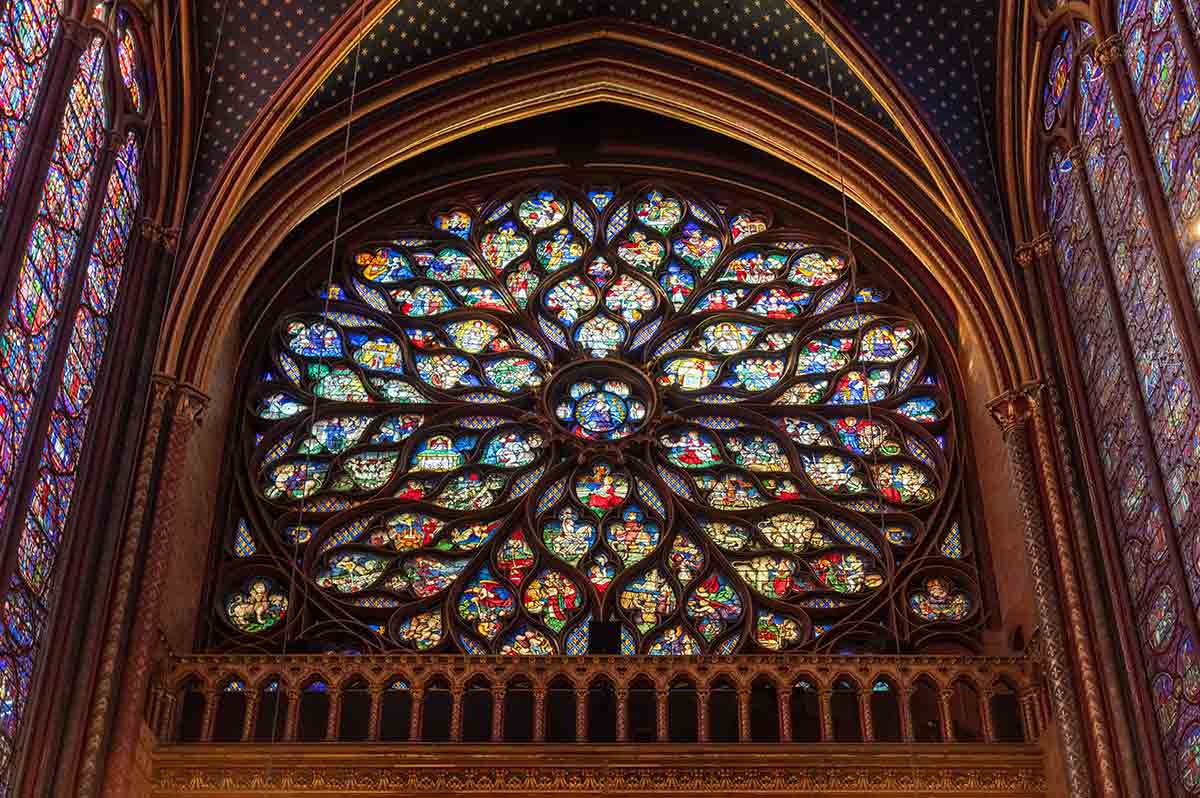
A massive rose window created in the 15th century in the Flamboyant Gothic style, contrasting the Rayonnant Gothic style of the original chapel, specifically depicts scenes from the Book of Revelation. Further windows found in the liturgical choir depict the life of Christ, as well as scenes from the lives of John the Baptist and John the Evangelist.
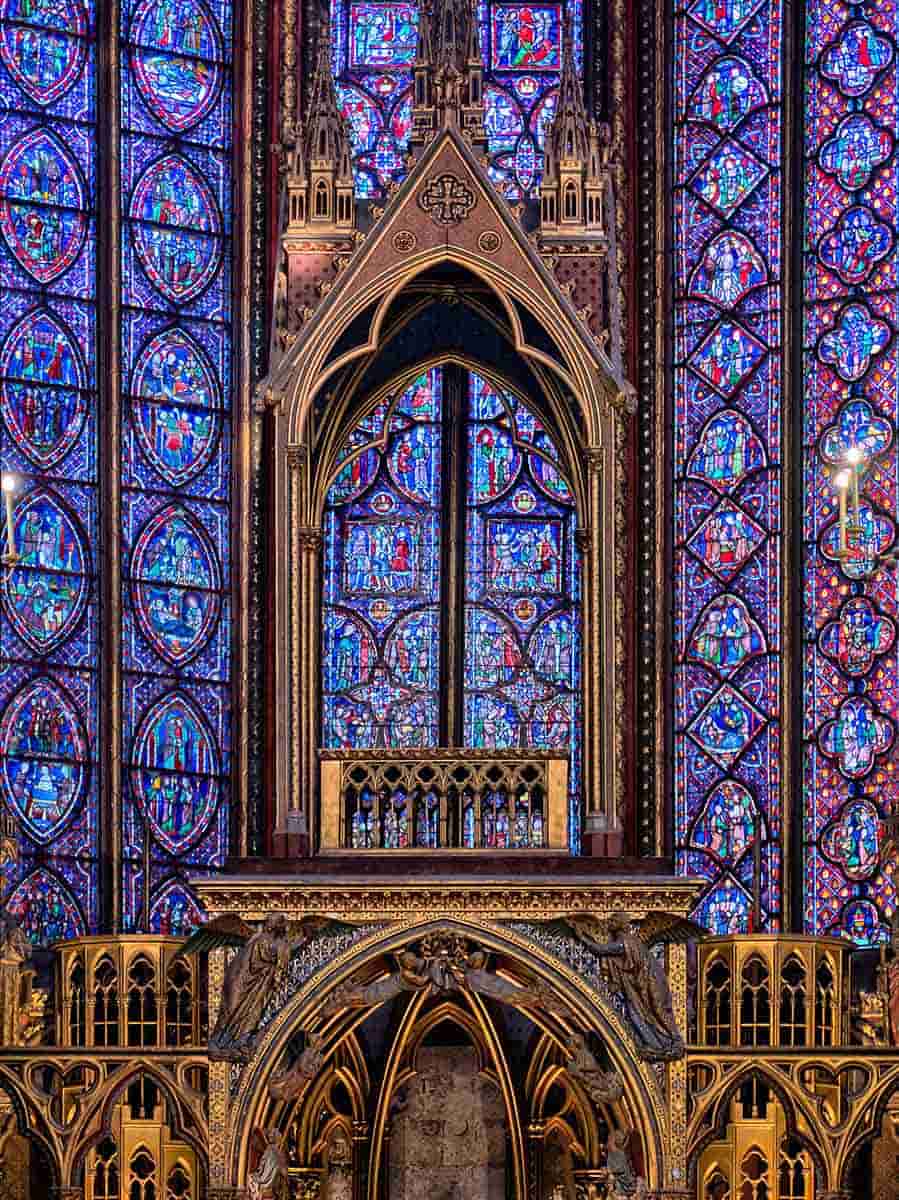
Evidently, these windows are rich with detail, containing an overwhelming number of narratives within their lead framework. The end result of this intensive detail is the rainbow of colors that the windows refract into the chapel, turning the natural light of the outside world into a glittering kaleidoscope of reds, blues, purples, and more.
While to modern eyes the individual details of each window may seem evasive, what is significant is that they continue to successfully convey to visitors the profound devotion and reverence the chapel was originally meant to evoke in worshippers. This profound spirituality, transmitted from the 13th century to the present day, is a reminder of the chapel’s survival. In spite of the threats the Sainte-Chapelle has faced over the centuries since its construction, as well as the losses of its relics, its sacred beauty continues to touch the hearts of visitors into the present day.