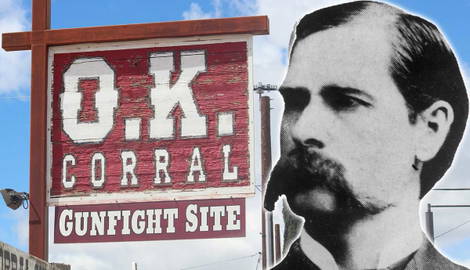

The era commonly known as the Wild West lasted a short while, from about 1865-1890 – the end of the American Civil War to the general end of the westward expansion of the railroads. In Tombstone, Arizona, conflicts emerged between rival factions: Wyatt Earp and his brothers and friends versus the Cochise County Cowboys, a group of cattle rustlers stirring up trouble. The two sides represented common issues in the Old West: townspeople trying to run their businesses, while rural people wanted a freer lifestyle. Neither side was entirely within the law, but the Cowboys were definitely outlaws, stealing cattle and raiding stagecoaches.
30 Seconds, 30 Shots: The Real Story Behind the OK Corral Shootout
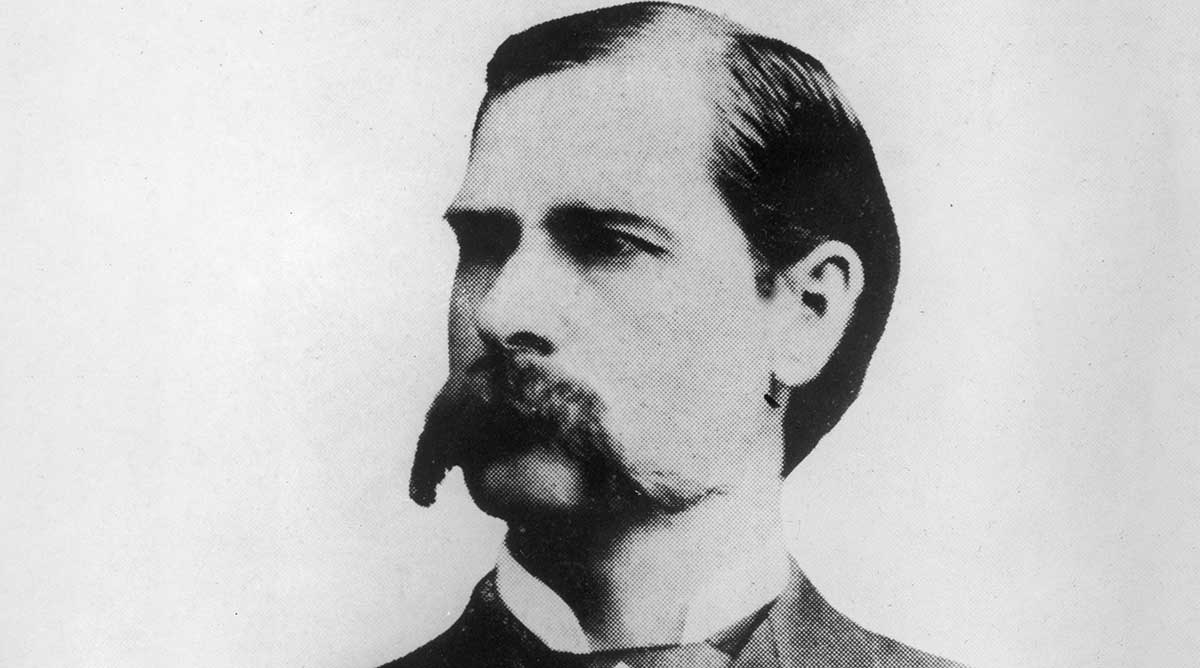
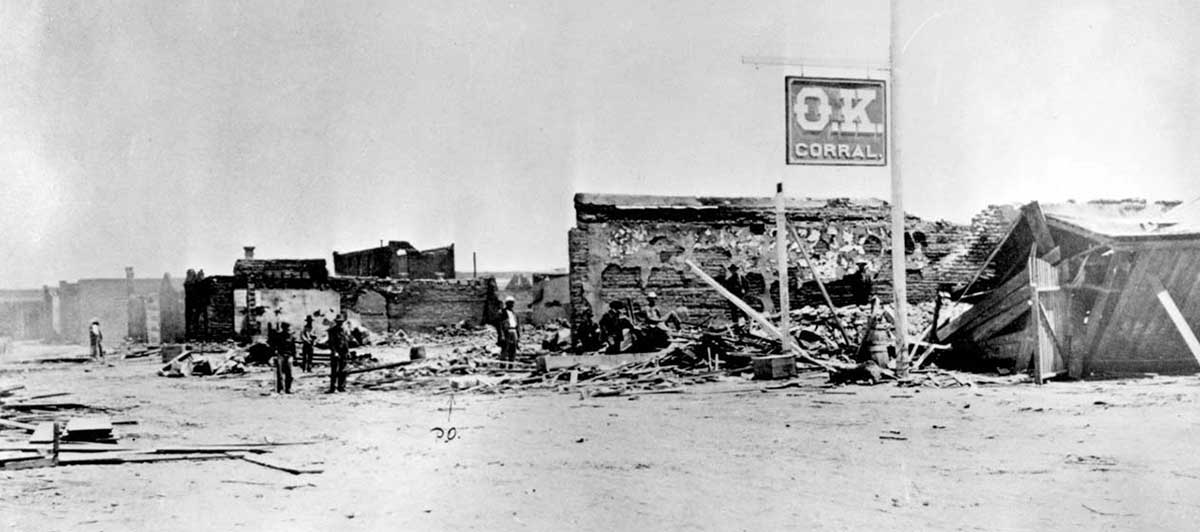
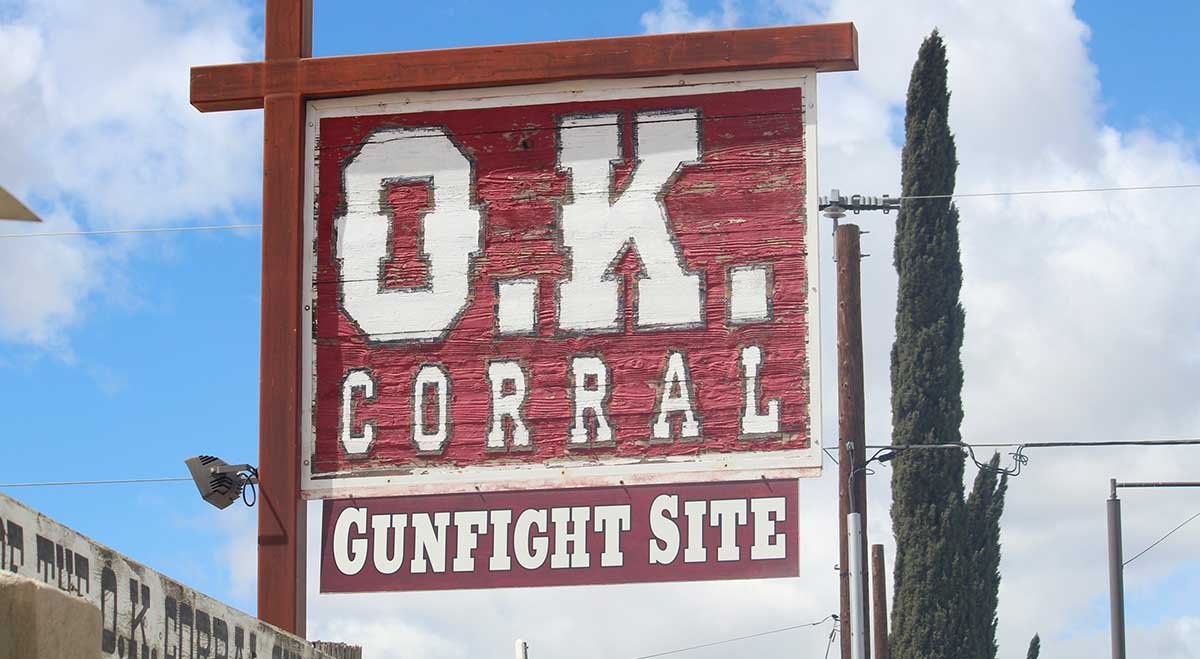
In October 1881, the situation came to a head, and it led to the first major conflict. The Earp brothers, Wyatt, Virgil, and Morgan, and their friend Doc Holliday sought to enforce a gun ban in the town on a group of Cowboys. At the lot next to C.S. Fly’s photography studio (not the actual OK Corral, which was nearby), the Earps approached a group of Cowboys. The Earps claim the Cowboys drew their weapons instead of turning them over, resulting in a shootout. In 30 seconds, 30 shots were fired, and three of the Cowboys were killed. It only exacerbated the feud between the two factions. The gunfight was the beginning of the violence between the groups, which lasted for about six months.
How Wyatt Earp and Hollywood Built the Ultimate Wild West Legend
The person most responsible for the popularity of the gunfight may be Wyatt Earp himself. Concerned about his reputation, he pressed for his (sanitized) story to be told from his perspective. In 1931, two years after Wyatt Earp’s death, the book Wyatt Earp: Frontier Marshal was published by Stuart Lake (an authorized, poorly written biography by John Flood, Earp’s personal secretary, was never published).
The account popularized the gunfight, and the popularity grew as it was made into several movies and television shows. Frontier Marshal presented Wyatt Earp as heroic and noble, a view that has carried on for decades and appears in various films ever since. While Wyatt Earp may have exaggerated his moral character, he was part of several major events that occurred within a few years of the gunfight and are reasonably well documented.
Why Hollywood Westerns Outlasted the Real Wild West Era
The brevity of the gunfight – a mere 30 seconds – and the ensuing romanticization of the incident (promoted by Wyatt Earp himself) – serve as a microcosm of the entire Wild West period. The period of the Old West was brief, rapid, and more legendary than fact. While outlaw incidents certainly were abundant, most people in the Old West were common folk simply trying to make a new life for themselves in a new environment.
What we see in movies and other popular media tends to be either oversimplified or exaggerated experiences made for entertainment. Interestingly, the time period when westerns were most popular lasted longer than the Old West itself. Beginning with the Great Train Robbery in 1910 and ending with John Wayne’s final movie, The Shootist in 1976, the era of the Western lasted over 50 years… and the era of the Old West did not even reach 40 years.
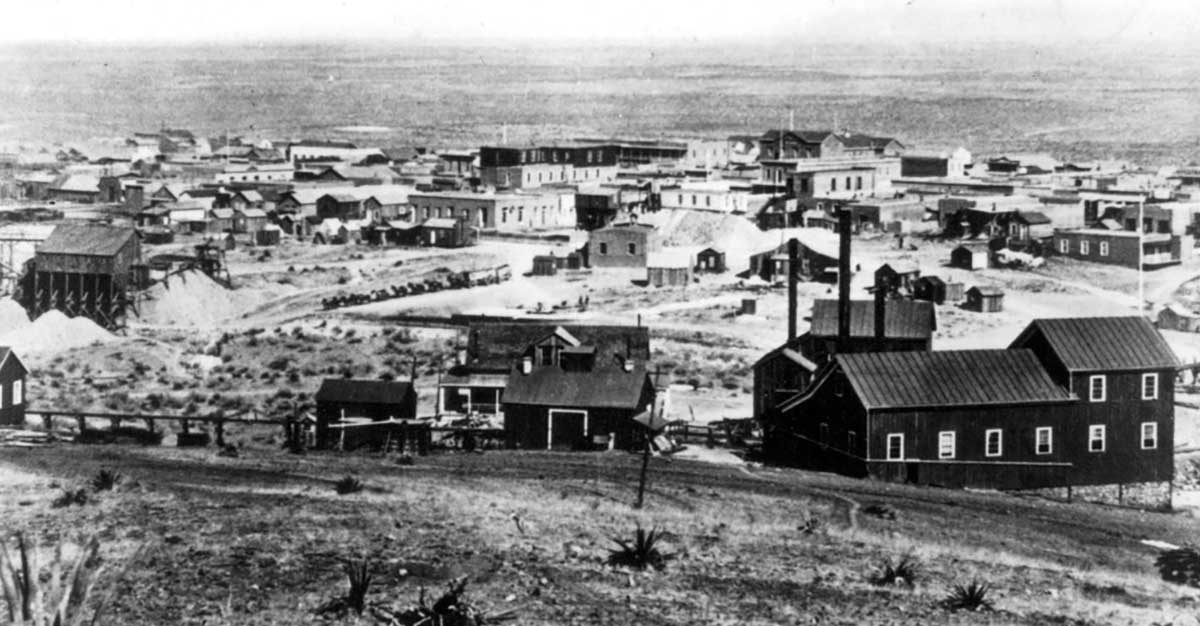
And Tombstone, Arizona? During its boom years in the 1880s, 7,000 people lived in the town. Now, under 2,000 reside there, and it exists primarily as a tourist destination, preserving an important part of the history of the Wild West.