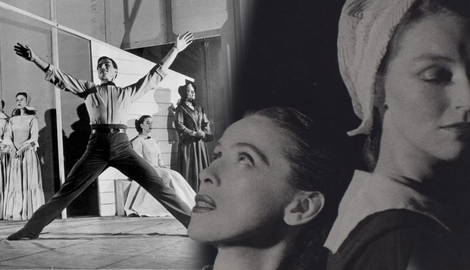
Why is Aaron Copland’s ballet score, Appalachian Spring, considered so important? Martha Graham wanted to create art that came out of the American experience. One of Graham’s most celebrated works and dance interpretations, Appalachian Spring, explores the lives of a young pioneer husband and his bride beginning a life together on the American frontier.
Of course, the work also served a political purpose, showing the world that America was built on hard work, determination, and faith. Yet, Appalachian Spring sounds as evergreen as the day it was first performed in 1944.
Music and Plot
Appalachian Spring, Television Performance, 1958
While Appalachian Spring is rooted in American realism, it also contains modernist elements. Famous choreographer, Martha Graham, commissioned the score from Copland via Elizabeth Sprague Coolidge after Graham’s principal dancer Erick Hawkins approached Coolidge. Copland was a great admirer of Graham but declined her first commission, which was based on the Greek myth of Medea because he deemed the subject too dark.
Appalachian Spring, however, tells the story of a newlywed pioneer couple and the war that briefly disrupted their lives. It is a tale of their joyous reunion and their determination to tame the land and prosper — the American dream of a brighter future.
Appalachian Spring is also considered a turning point in American art. After WWII, many New York Artists shifted towards abstract expressionism and embraced the ideals touted by modernism (Rutkoff & Scott, 1995). The ideals of progress, self-expression, and rethinking the world as we know it while searching for and creating utopia drove the early 20th century.
The score is divided into eight scenes or scenarios:
- Prologue
- Eden Valley
- Wedding Day
- Interlude
- Fear in the Night
- Day of Wrath
- Moment of Crisis
- The Lord’s Day
Each section will be discussed briefly below. All inferences and interpretations below are my own — make your own because the score’s openness allows everyone to do just that. The time codes in the text refer to the video linked above.
1. Prologue
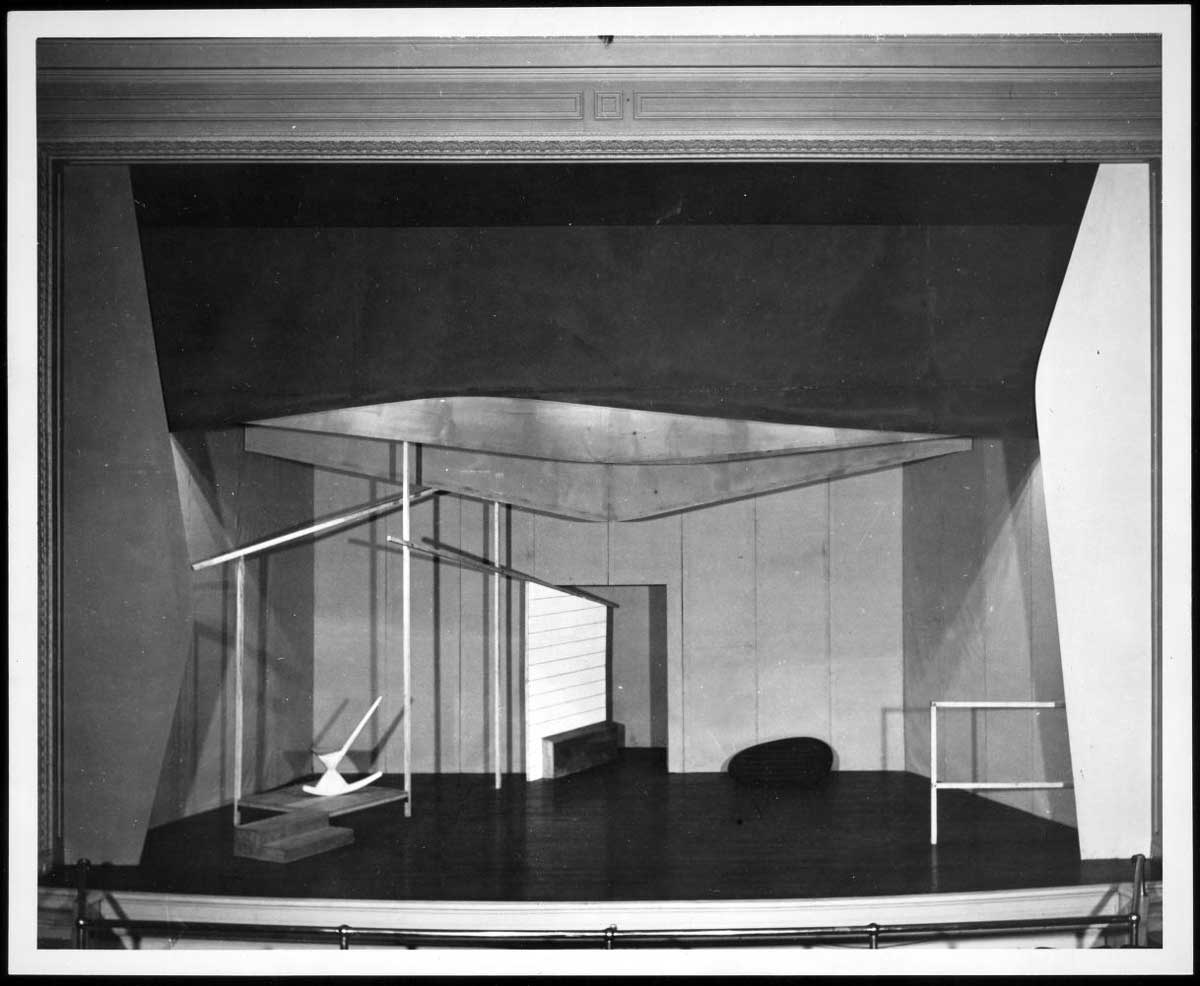
Copland conjures a pastoral scene with a flute in the foreground, but there is a slight dissonance throughout hinting at the troubles that will later ensue. A simple structure resembling a house is either being built or already built forming the set designed by Isamu Noguchi.
The dancers/characters are introduced individually: the Preacher enters first, followed by the Pioneer Woman (reminiscent of Whistler’s Mother), seating herself in the rocking chair. They both observe the land. Next, the Husbandman enters, pauses a moment to admire the house, and walks across to the fence, waiting for the Bride, who enters next. They share and embrace before she goes across to her mother. Last, the Worshipers enter to take their place in front of the Preacher. It should be noted they do not worship the Preacher — they are symbolic of Christian dedication to God.
2. Eden Valley
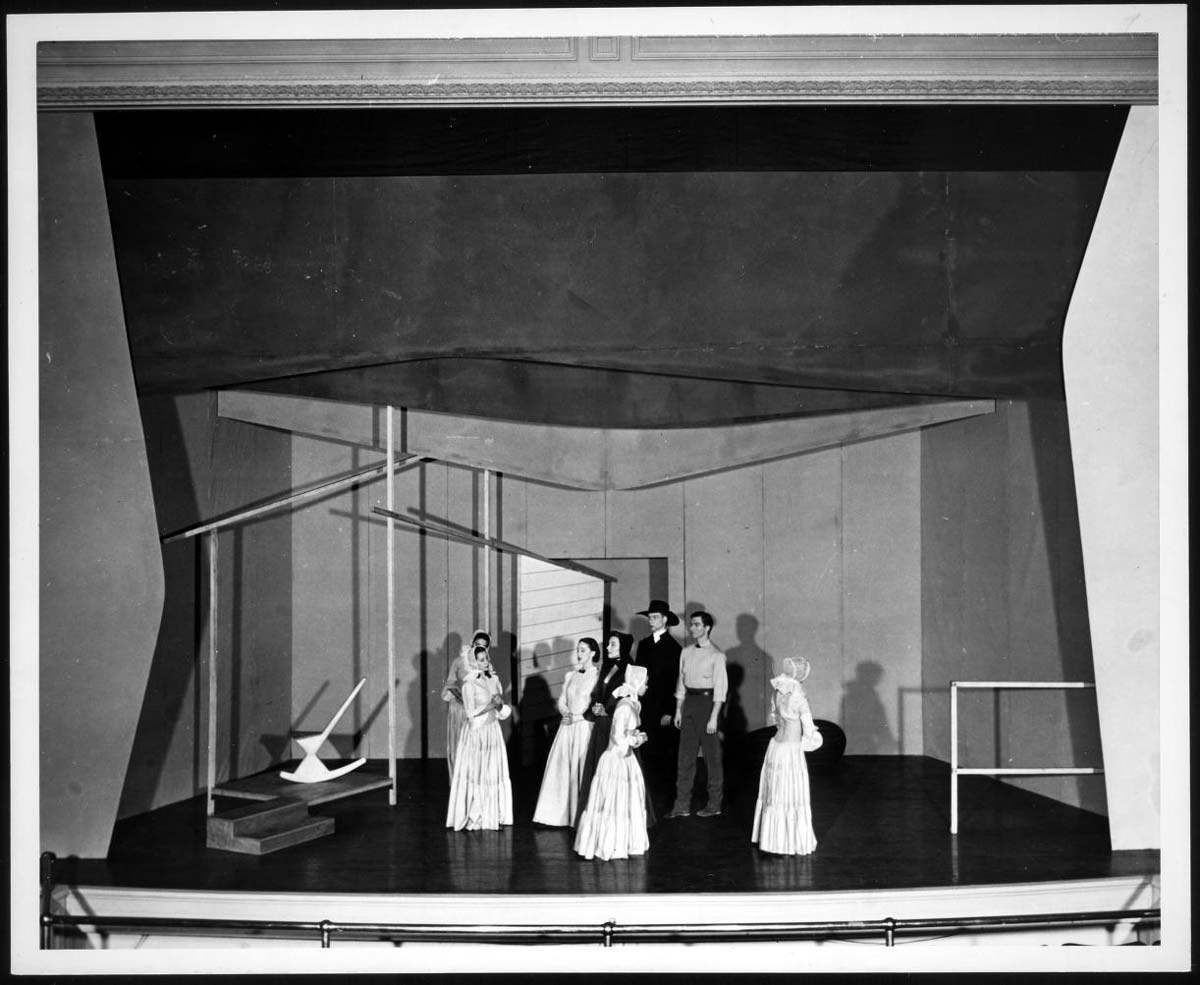
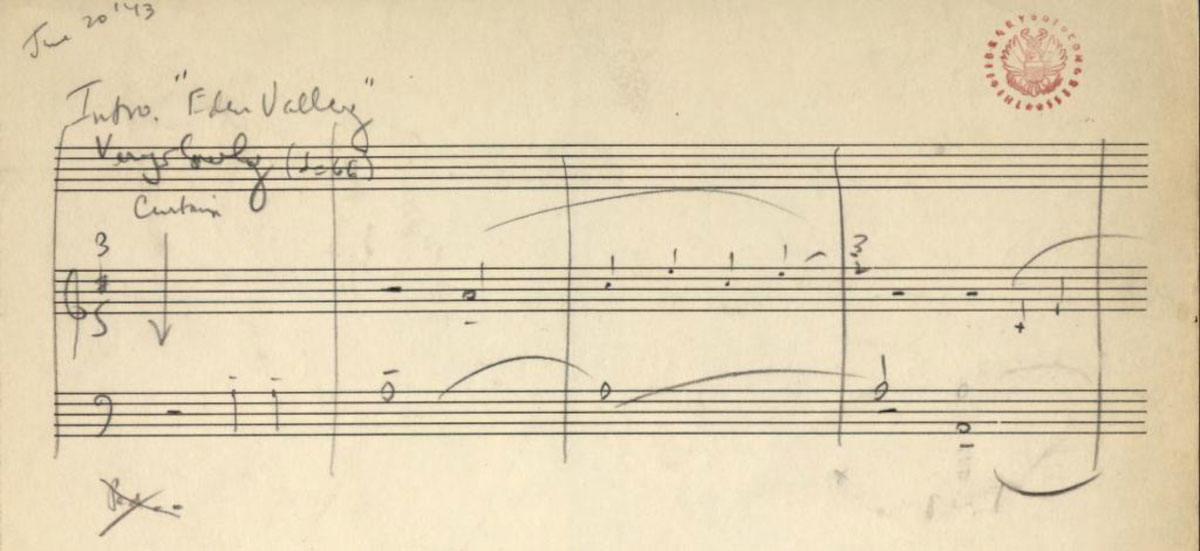
After all the dancers are introduced, there is a moment of calm and silence. Suddenly, the Preacher looks up (at 02:09) and the music bursts forth in a boisterous, celebratory style to welcome the spring. The Pioneer Woman looks to the skies and the Worshipers begin a dance that emulates plants springing from the soil and begins a joyous dance. Eventually, Pioneer Woman moves onto the stage (at 02:50) performs a “gratitude dance” and “blesses” the growing crops (04:11) symbolized by the Worshipers.
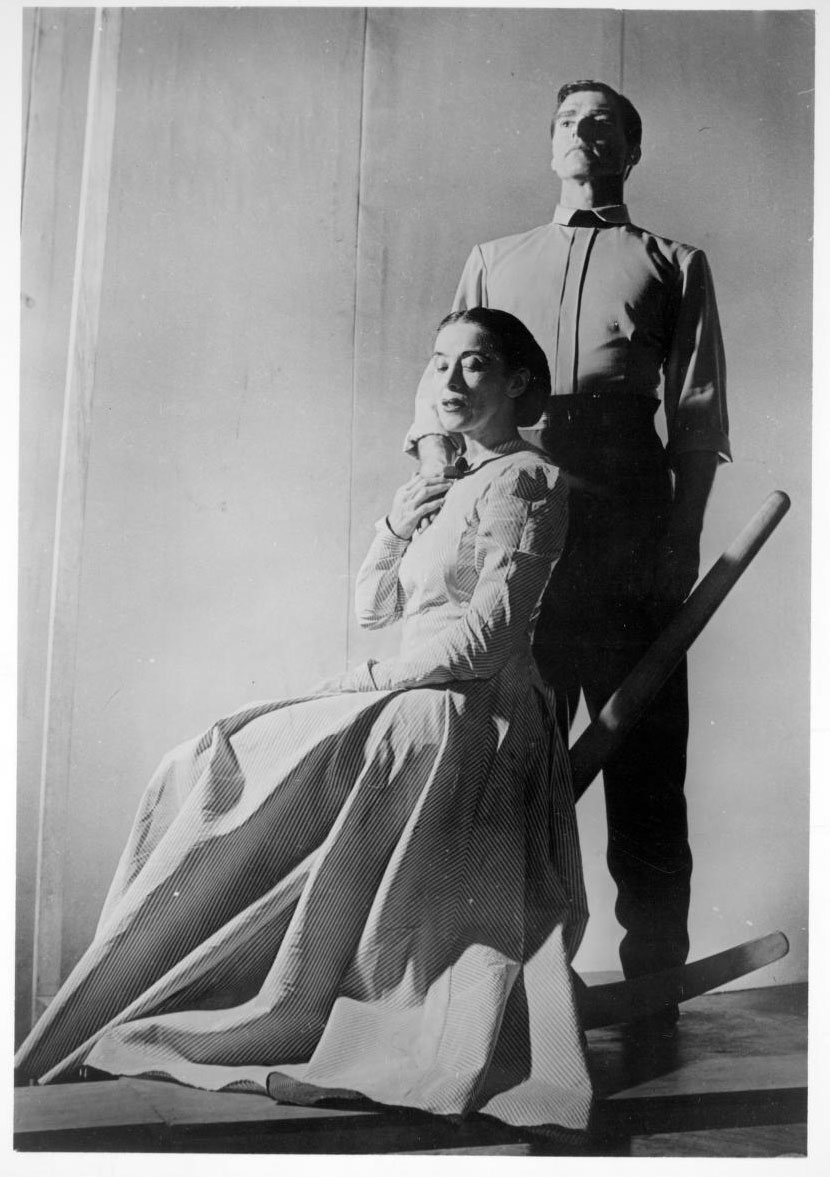
The Husbandman performs a jagged dance (beginning at 04:50) but is twice interrupted by a chorale-like melody in the clarinet. He bows to the Bride and they perform a courting duet dance (05:59). After they have received the blessing for marriage from the Pioneer Woman and the Preacher, they sit side by side.
3. Wedding Day
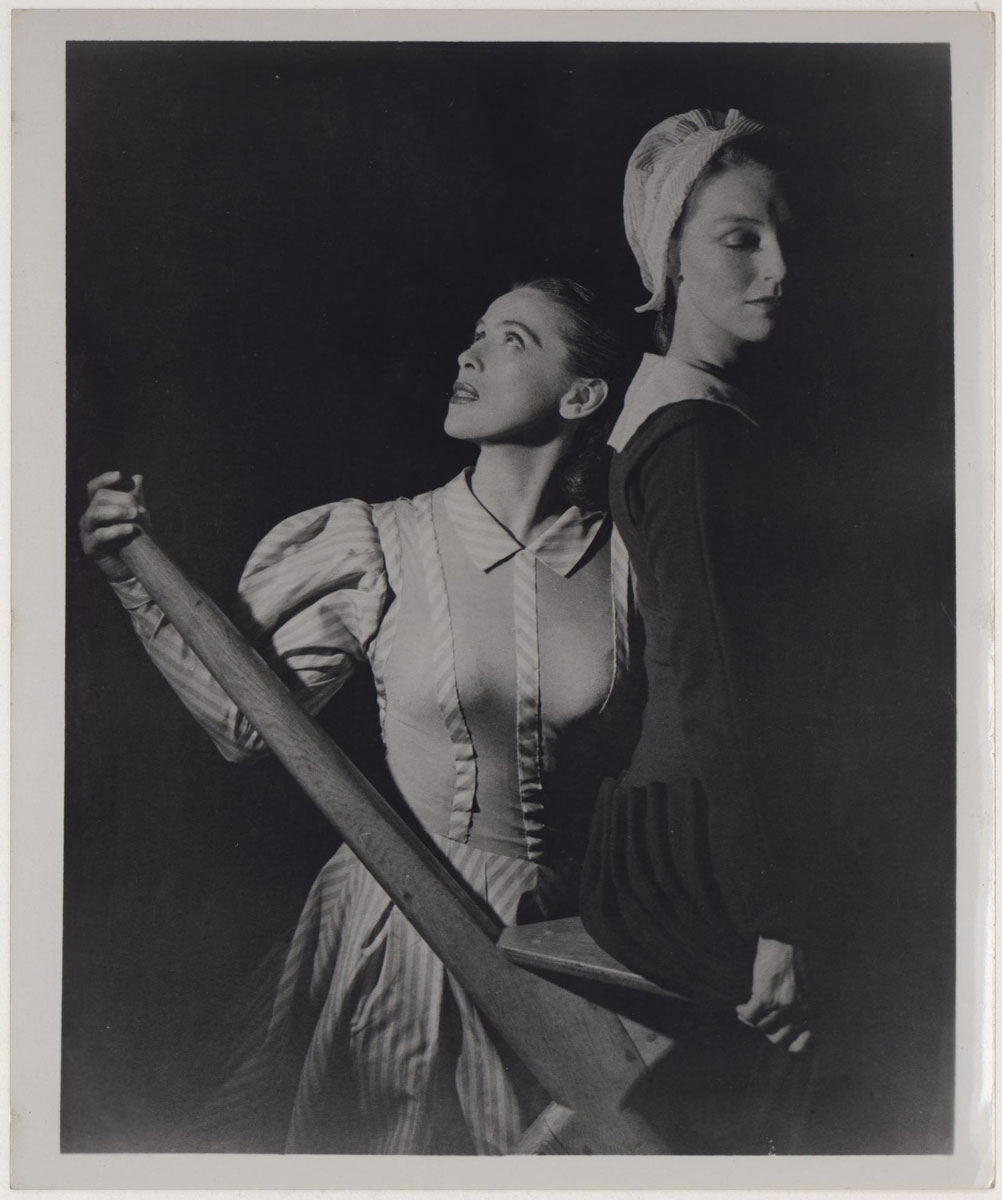
The first sequence of the Wedding Day opens (at 08:06) with a simple melody in the clarinet and it is reminiscent of a country fair combined with a revival meeting with square dancing and fiddling thrown into the mix. The Worshipers quickly join in the festivities (08:22) dancing with the Preacher. After the Bride’s rhythmically complex solo (starting at 11:41) she returns to her mother, the Pioneer Woman’s, feet. Here she learns about being a good wife to the Husbandman, but also what is expected of her as a mother and housekeeper.
First, her mother hands her a “parcel” (at 13:41) that can be likened to rocking a baby but the action flows into the likeness of churning butter or preparing food for her house. She hands the parcel back to the Pioneer Woman who looks satisfied with her daughter’s knowledge. After continuing her solo, the bride returns to her mother a final time (at 14:57)
The Preacher calls everyone together to witness the Bride and Husbandman’s union (15:11), blesses the marriage (at 16:54), and the newlyweds set off to their new life together. The Interlude follows.
4. Interlude
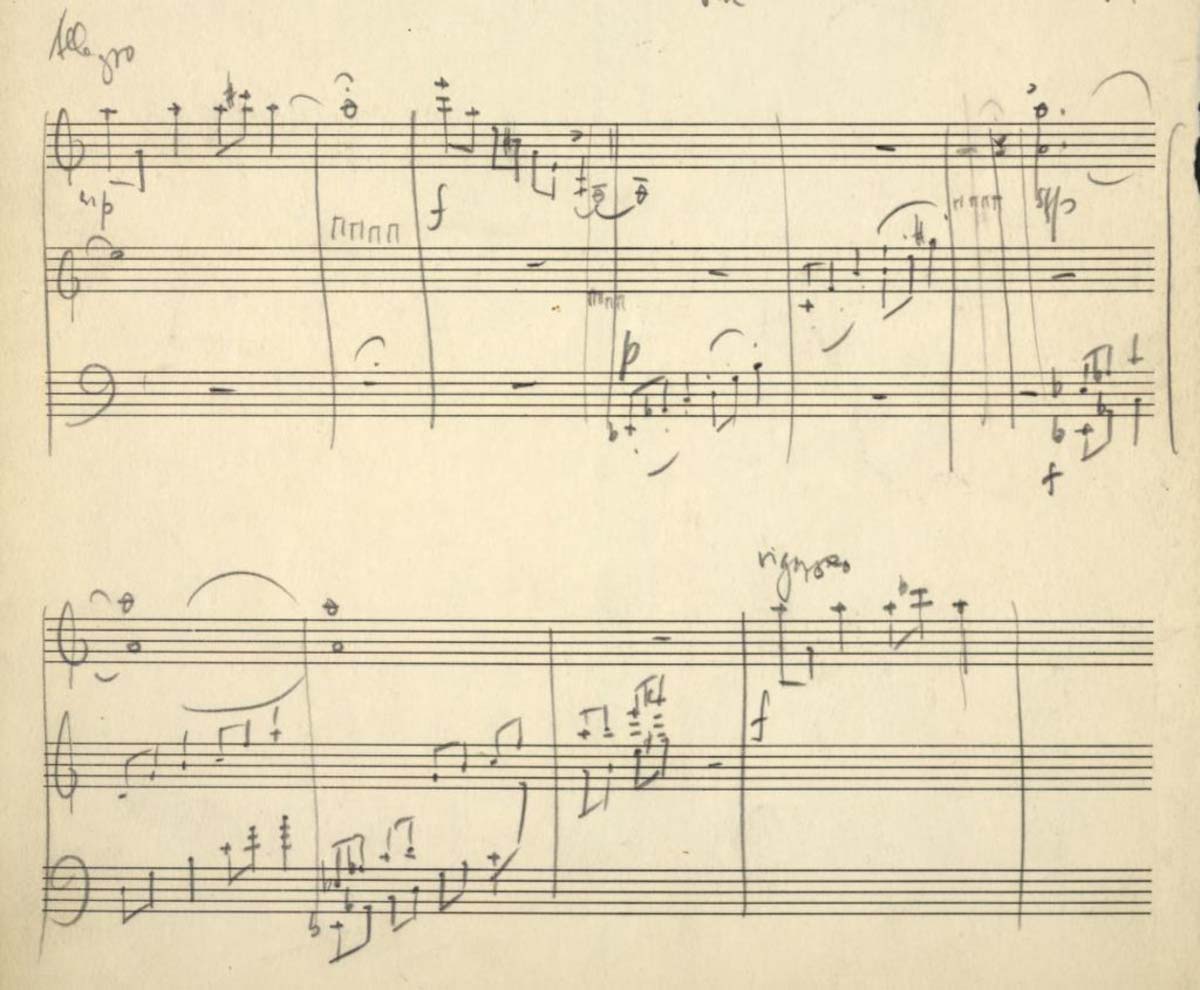
Snippets of the Shaker song, Simple Gifts are used throughout much of the ballet, but during the interlude, it is quoted in full (starting at 17:05). The newlyweds are dancing joyfully and their comfort with each other is clear in their constant eye contact, the openness of the body, and how easy they find it to touch each other.
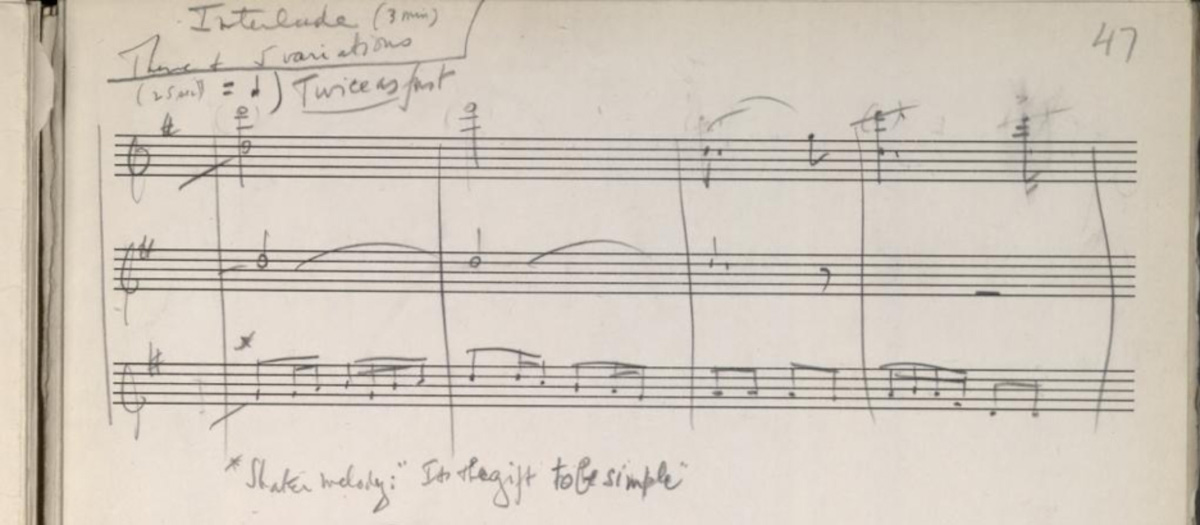
Five variations of the song are played, and we may interpret it to represent the lives of the pioneers going about their daily activities. The first variation is a solo for the Bride (starting at 17:16 to 17:38), and the second for the Husbandman (starting at 17:39 to 18:02) with a much quicker tempo while the woodwinds dominate the overall sound. A third variation starts with the low notes of the strings, with the bassoon joining later to accompany the Bride’s dance (starting at 18:03 to 18:22). Strings and woodwinds support the Husbandman’s solo (starting at 18:29 to 19:03).
The final iteration (starting from 19:11 to 19:45) of the Shaker song is a duet by the couple and a clip-clop on the piano supported by the harp and strings can be heard in the background reminiscent of a horse’s hooves. One may interpret the “clip-clop” as a foreshadowing of news of the war arriving at their house in the next part. The Worshipers dance to the music’s final strains before gathering in front of the Preacher.
5. Fear in the Night
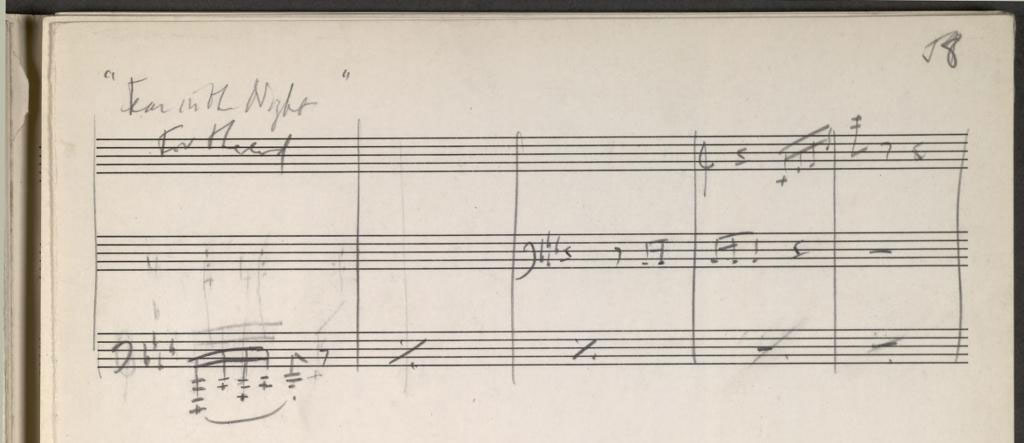
The Preacher approaches the newlyweds accompanied by an almost funeral march-like melody (at 20:03) which brings a sense of foreboding to the ballet. His jolting solo is frenzied, and his violent shaking reminds one of Shaker revivals and services. The Bride and Husbandman are in turmoil and kneel to pray for deliverance from the approaching war (this is a foreshadowing of the American Civil War).
6. Day of Wrath
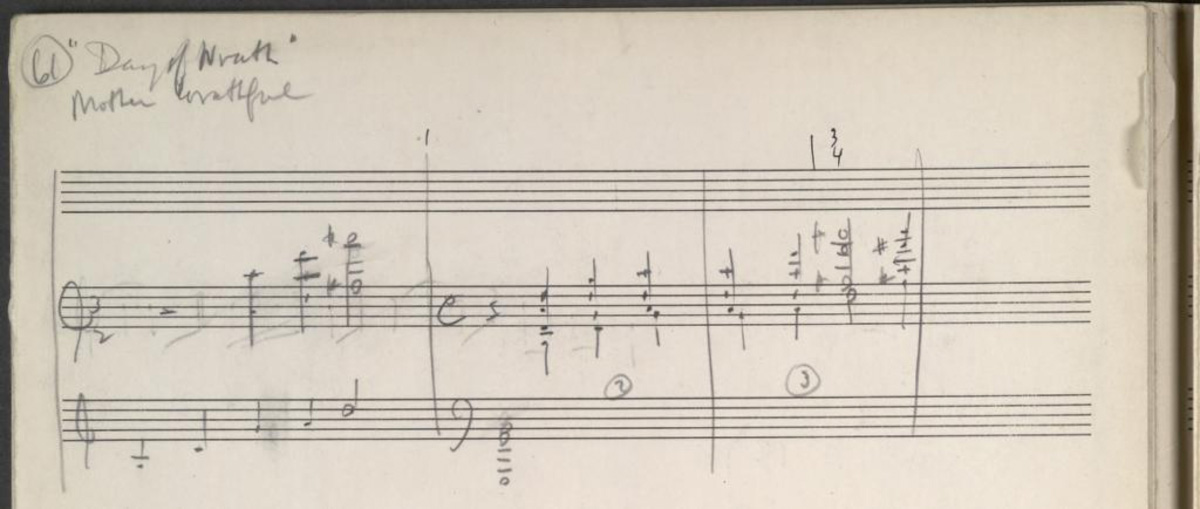
A distraught Pioneer Woman rushes to the Preacher (at 21:31) and kneels in prayer. A fuller orchestration of the Prologue’s music accompanies her solo. The Worshipers join her dance. His jumping solo signifies the Husbandman’s departure (starting at 22:02). He is anguished about leaving the Bride behind, but also filled with heroic aspirations to fight in the war. He waves farewell to his family and exits the stage while the Preacher and Worshipers (at 23:35) dance to the Wedding Day music to remind the Bride of her husband’s love for her and pray for his safe return. The Husbandman briefly appears again, but as he walks away, the Bride jolts up, which leads to the next section.
7. Moment of Crisis
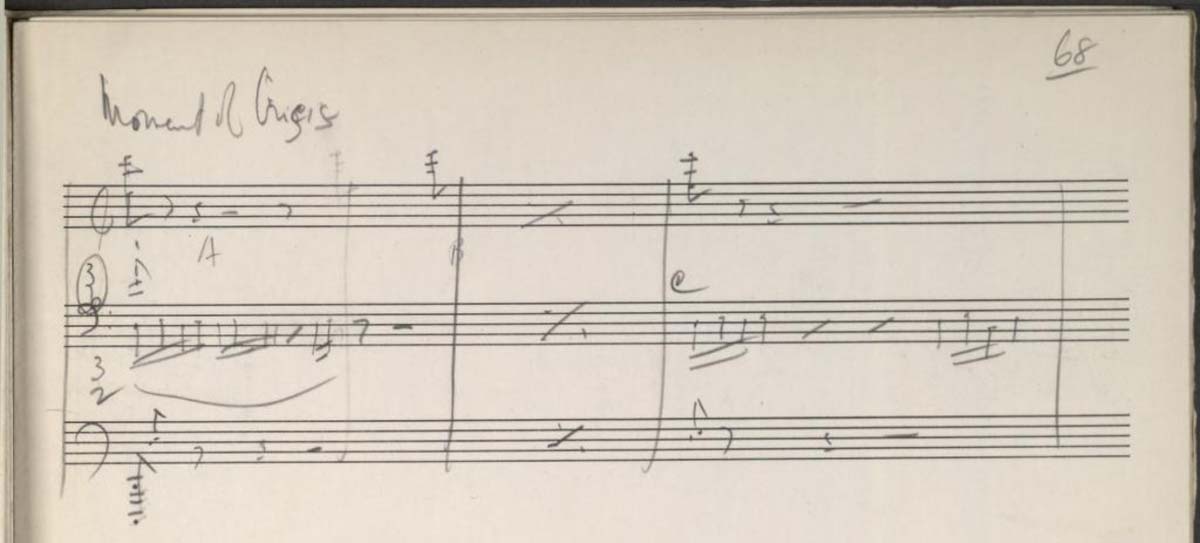
The Bride opens the penultimate movement with an anxious solo (at 24:47). Overall, the music is tumultuous and seems to lack direction and key signature. Finally, the music settles down (at 26:38) when the Husbandman approaches the Bride and they dance a final duet. Simple Gifts returns for a last time (at 27:16) while the couple stands and looks out over their land. The Worshipers dance to the melody of the hymn and the Pioneer Woman joins them signifying that all has settled and worked out for the best. When the Pioneer Woman joins them in a dance it signals the end of the fearsome time.
8. The Lord’s Day
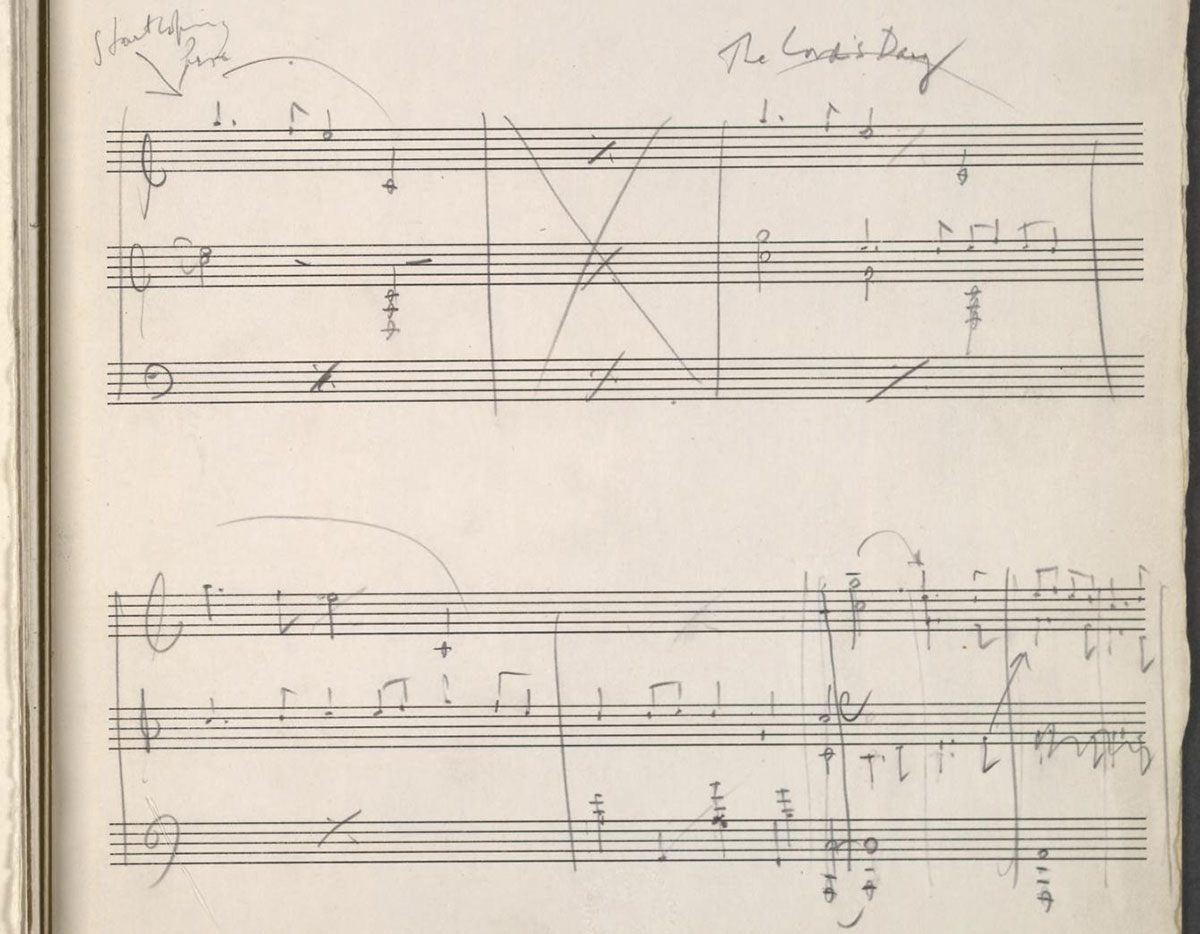
As the final strains of the hymn float away, the chorale melody (first heard interrupting the Husbandman’s dance) returns, and everyone settles down in prayer (at 28:13). The opening melody symbolizing the cast openness of Appalachia is heard again as the Husbandman approaches the Bride (at 29:31).
While all the other dancers exit the stage, the couple returns to their home. They look out over the vastness of the land and as the music dies with a clarinet solo, the Bride raises her hand in thanks for all they have.
Was Appalachian Spring Used as a Political Tool?
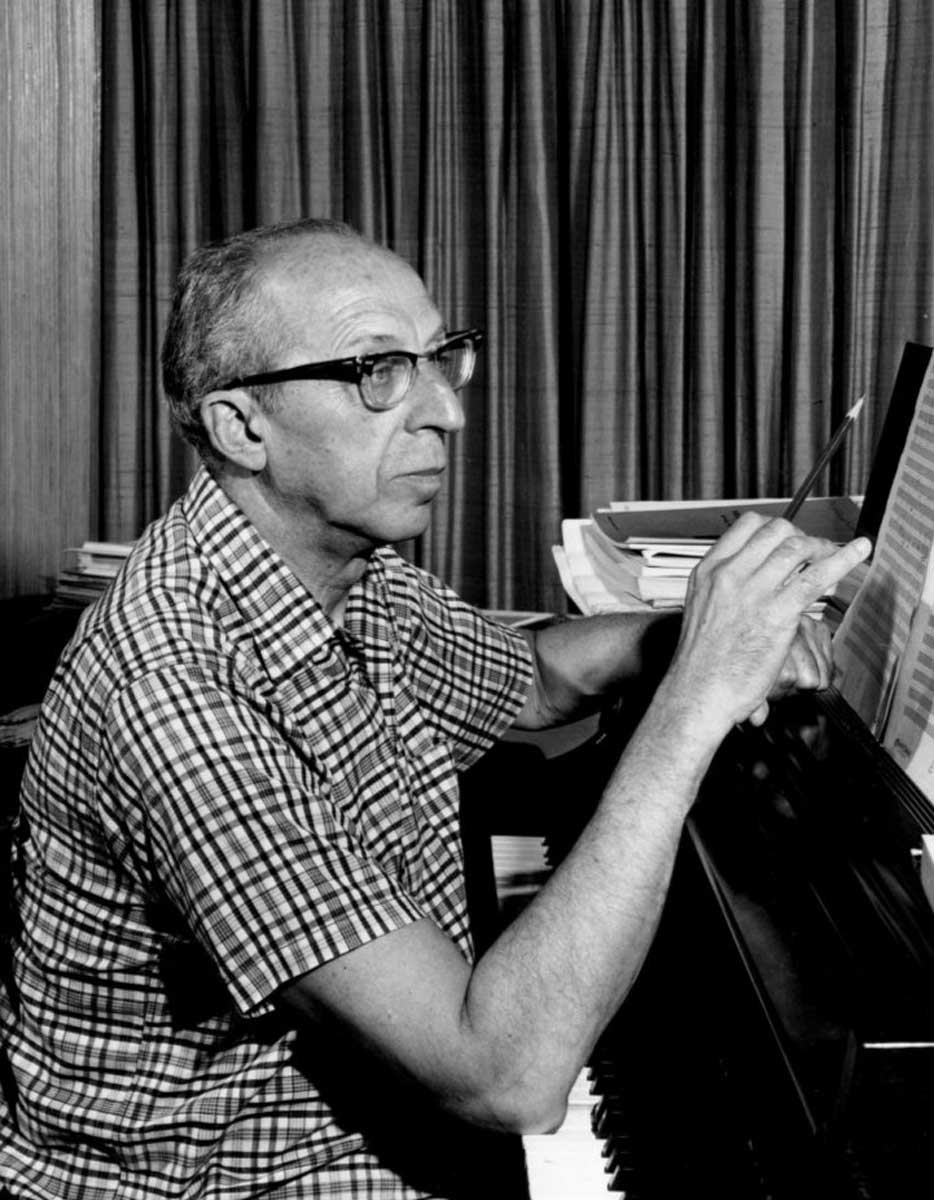
Music has served many purposes in human history from entertainment, to worship in the earliest churches, to being the soundtrack for the political needs of the Nazi party. It was also wielded as a precious commodity and secret weapon behind the Iron Curtain. Music has the power to transform us and take us on unexpected journeys.
During the Cold War, the USA and Russia had numerous cultural exchanges following the Khrushchev Thaw: through the Lacy-Zarubin Agreement of 1958, dancers became diplomats. Cultural exchanges created through the agreement were aimed at educating people in both countries. First, the Moiseyev Dance Company toured the USA followed by a tour by the American Ballet Theater in the Soviet Union.
The aim was simple: to strengthen the USA’s artistic and cultural reputation beyond its borders. Dance companies that toured the Soviet Union included Alvin Ailey, Jose Limon, and Martha Graham.
One can easily see that each country had its agenda: Soviet Russia sent the Moiseyev Dance Company to point the finger at the USA’s racism and racial inequality and to highlight Russia’s multicultural tolerance and harmony.
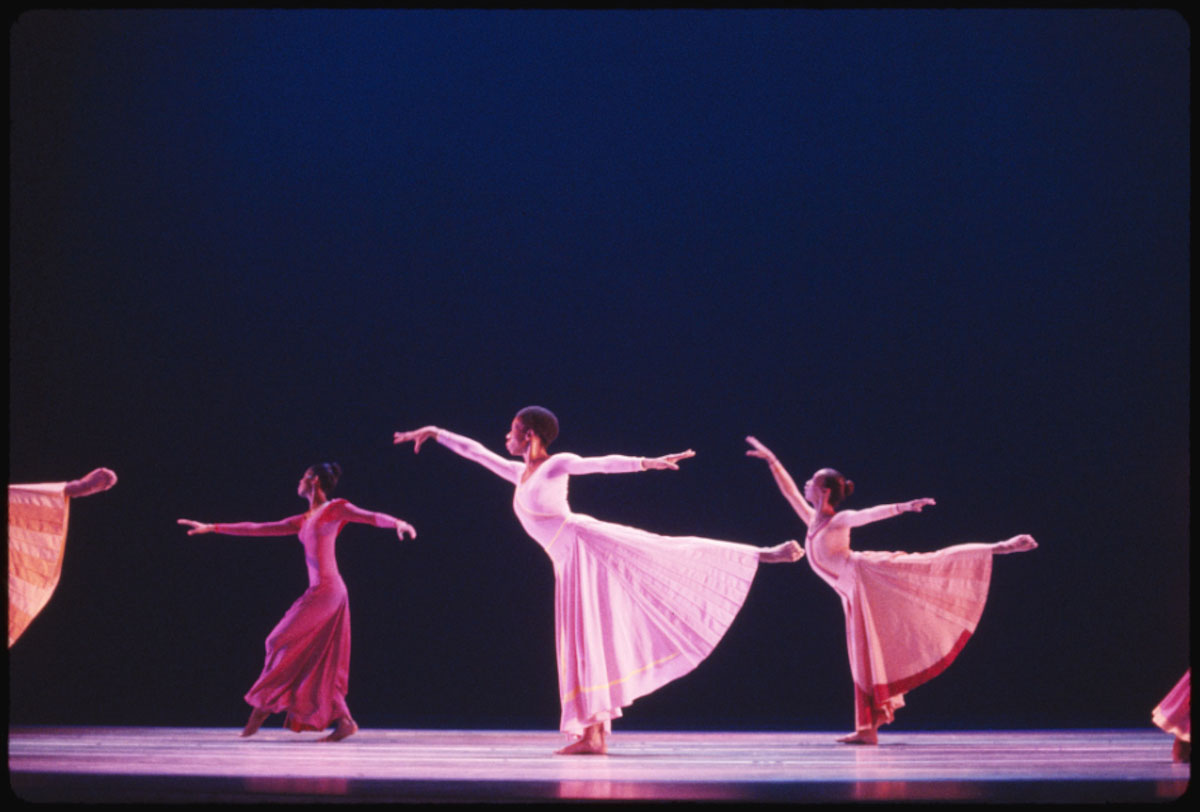
In a game of tit-for-tat, the USA sent the Alvin Ailey Dance Theater to the USSR. The Alvin Ailey American Dance Theater aims to “preserve the uniqueness of the African-American cultural experience” (The Ailey School, 2024). This one-up showmanship on the USA’s part was to show the Russians that the USA is the land of the free and everyone is equal. However, on the home front, the Civil Rights Movement was still in full swing belying everything the USA was trying to make everyone else believe…
Martha Graham’s tour to Vietnam in the 1950s had a different purpose. The production aimed to challenge and change the international opinion that Americans are a lazy nation. Appalachian Spring showed the world that Americans have unquenchable tenacity, self-reliance, and rugged individualism. It helped the world to reimagine American folk as rough pioneers who were not afraid of hard work.
Final Thoughts
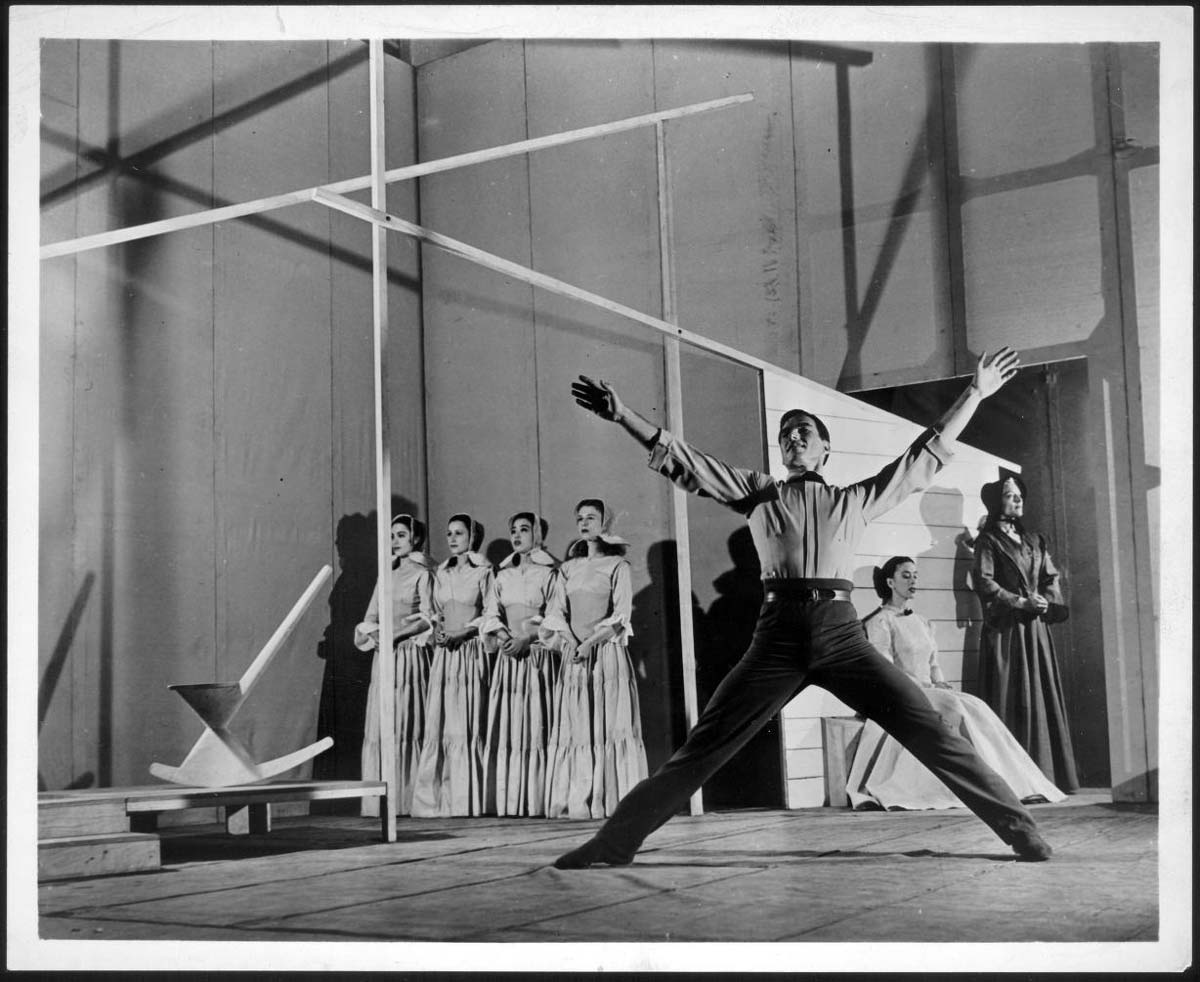
Both Aaron Copland and Martha Graham made American music history with Appalachian Spring, weaving a tapestry of the young American nation’s spirit of self-reliance. Graham’s vision was distinctly American and modern — she forsook the glamor of European ballet and portrayed the couple as rugged pioneers who examine their hopes and fears in every movement.
Copland’s score along with Graham’s visionary choreography held onto a touch of reality in a world that was chasing Modernism. The ballet became a symbol of American strength and a counterpoint to the veiled political messages the Russians were sending with their ballet productions about Marxist and Communist ideals.
Today, we still experience the same emotions as the Pioneer Woman, the Bride, the Preacher, and the Husbandman: love and loss but also hope and resilience. Appalachian Spirit is a reminder of human endurance in the face of adversity. Appalachian Spring is also the quintessential American classic opening up the imagination to allow listeners and viewers to draw their interpretations.
Further Reading and Watching
Aaron Copland Collection, Available Online. (n.d.). The Library of Congress. https://www.loc.gov/collections/aaron-copland/
Chosen Vale, Inc., dba Enfield Shaker Museum. (2024, July 16). Who are the Shakers? – Enfield Shaker Museum. Enfield Shaker Museum. https://shakermuseum.org/learn/shaker-studies/who-are-the-shakers/
Copland’s “Appalachian Spring” is the quintessential American classic | Classical Music Hour | WQXR. (2018, June 25). WQXR. https://www.wqxr.org/story/copland-appalachian-spring-quintessential-american-classic/
Library of Congress & Library of Congress. Music Division, S. B. (2016) Martha Graham Dance Company Performs Appalachian Spring & Dark Meadow Suite. Washington, D.C.: Library of Congress, -04-02. [Video] Retrieved from the Library of Congress, https://www.loc.gov/item/2021690085/
Victoria and Albert Museum. (2017). What was Modernism? Victoria and Albert Museum; V&A. https://www.vam.ac.uk/articles/what-was-modernism