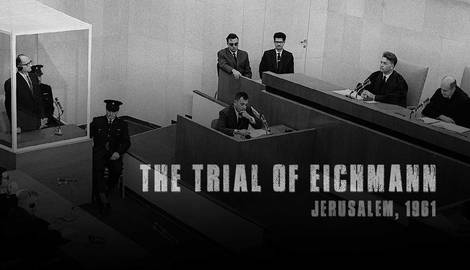
On May 23, 1960, Israel’s Prime Minister Ben Gurion announced that a team of Mossad agents had arrested Adolf Eichmann in Argentina. During World War II, as head of the office dedicated to “Jewish Affairs and Clearing Activities” of the Nazi regime, SS officer Adolf Eichmann played a key role in coordinating the systematic deportation of European Jews during the Holocaust. After a trial held in Jerusalem and closely followed by international observers, he was hanged in 1962. What led his story to this point?
Adolf Eichmann’s Life Before WWII
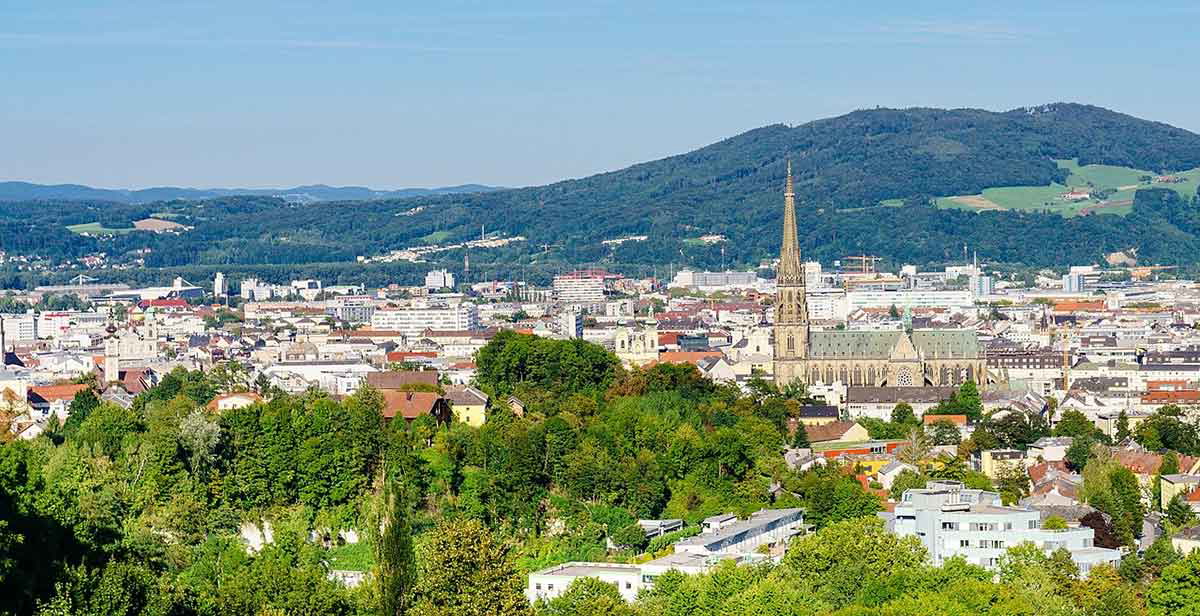
Adolf Eichmann was born on March 19, 1906, in Solingen, in Rheinland, an area in western Germany crossed by the middle tract of the Rhine River. His father, Karl Adolf, worked as an accountant for an electric company. His mother, Maria, a housewife, died in 1916 when Adolf Eichmann was 10 years old. At the time, Karl Adolf had already moved with his family to the Austrian town of Linz, Adolf Hitler’s hometown.
In 1921, Adolf Eichmann enrolled in the Bundeslehranstalt für Elektrotechnik, Maschinenbau und Hochbau, a technical high school. However, he left school two years later without obtaining a diploma. In the following years, he initially started working in the same mining company where his father was also employed. After taking up a job as a salesman at an electric firm, he eventually went on to work as a traveling salesman for the Vacuum Oil Company, a subsidiary of American Standard Oil.
In his Eichmann. His Life, Crimes and Legacy (2004), David Cesarani cautioned against the depiction of Eichmann as “a loser who drifted into the ranks of the SS,” a portrayal that his struggles in schools and later economic hardship may suggest. On the contrary, in his leading biography on the Nazi official, Cesarani described Eichmann as an individual possessing considerable intellectual abilities and presented his role as coordinator of the Holocaust as the result of a political development that began in his youth.
Indeed, in 1927, the young Eichmann became involved in politics and joined the Deutsch-Österreichische Frontkämpfer-Vereinung (German-Austrian Veteran Association), a paramilitary far-right group whose members (mainly World War I veterans) sought to fight the enemies of the supposed Aryan race and dreamed of unifying the “entire German volk.” Then, in 1932, Eichmann became a member of the Austrian National Socialist Party (NSDAP), or Nazi Party. Seven months later, he joined the Schutzstaffel, or SS, the “political soldiers” of the Nazi movement led by Heinrich Himmler.
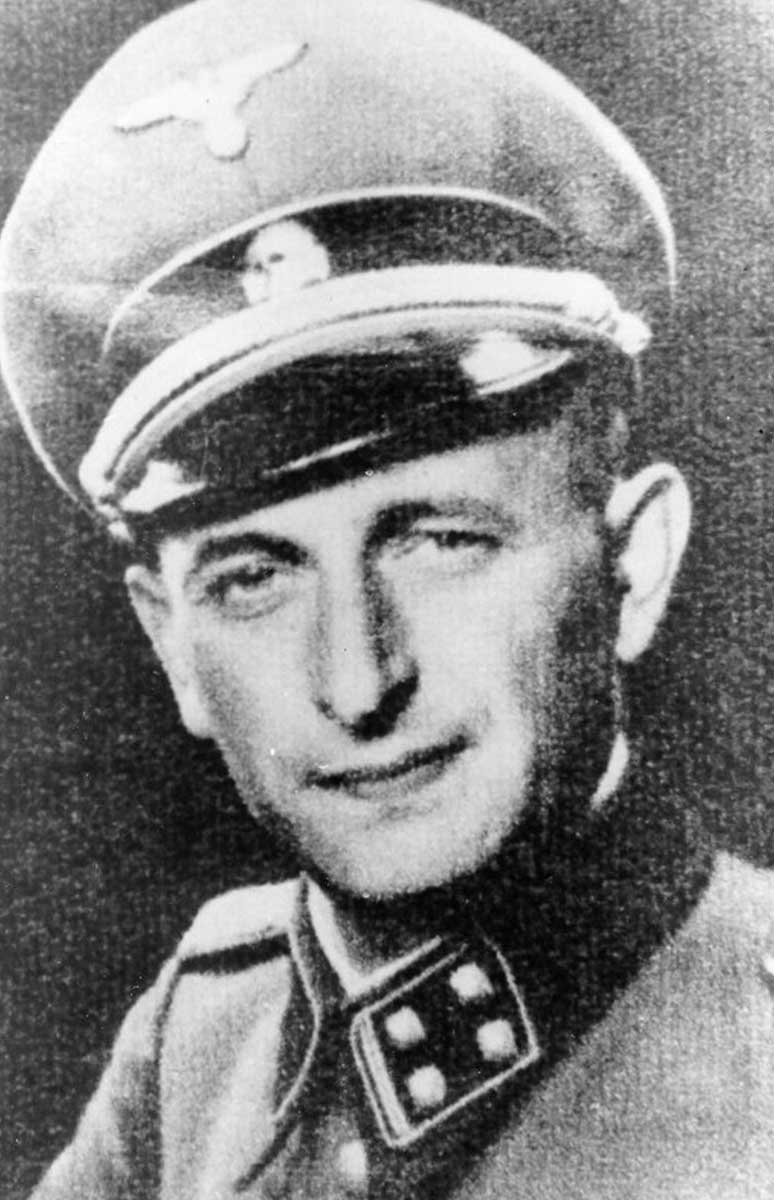
The following year, when the Austrian government banned the Nazi Party, like many other Austrian Nazis, Eichmann moved to Bavaria. There, he received a 14-months-long military and ideological training through the SS, first in Klosterlechfeld (a Bavarian town located in the district of Augsburg) and then in Dachau, a town north of Munich where the Nazi regime had built the first concentration camp in March 1933, a few months after Hitler’s rise to power.
In 1935, Adolf Eichmann, by then an SS-Scharführer (Sergeant), was appointed to Referat II 112 (“Juden,” Jews) of the Main Office of the Sicherheitsdienst (SD), or Security Service, in Berlin. The office’s main task was to research and devise the best way to carry out a forced emigration of Jews from the territories of the Third Reich. To this end, Eichmann got in touch with Zionist leaders and organizations. In 1937, he traveled to Palestine to study the feasibility of the plan involving the emigration of the German Jewish communities to this area. During his time at Referat II 112, Eichmann also briefly studied Hebrew and Yiddish.
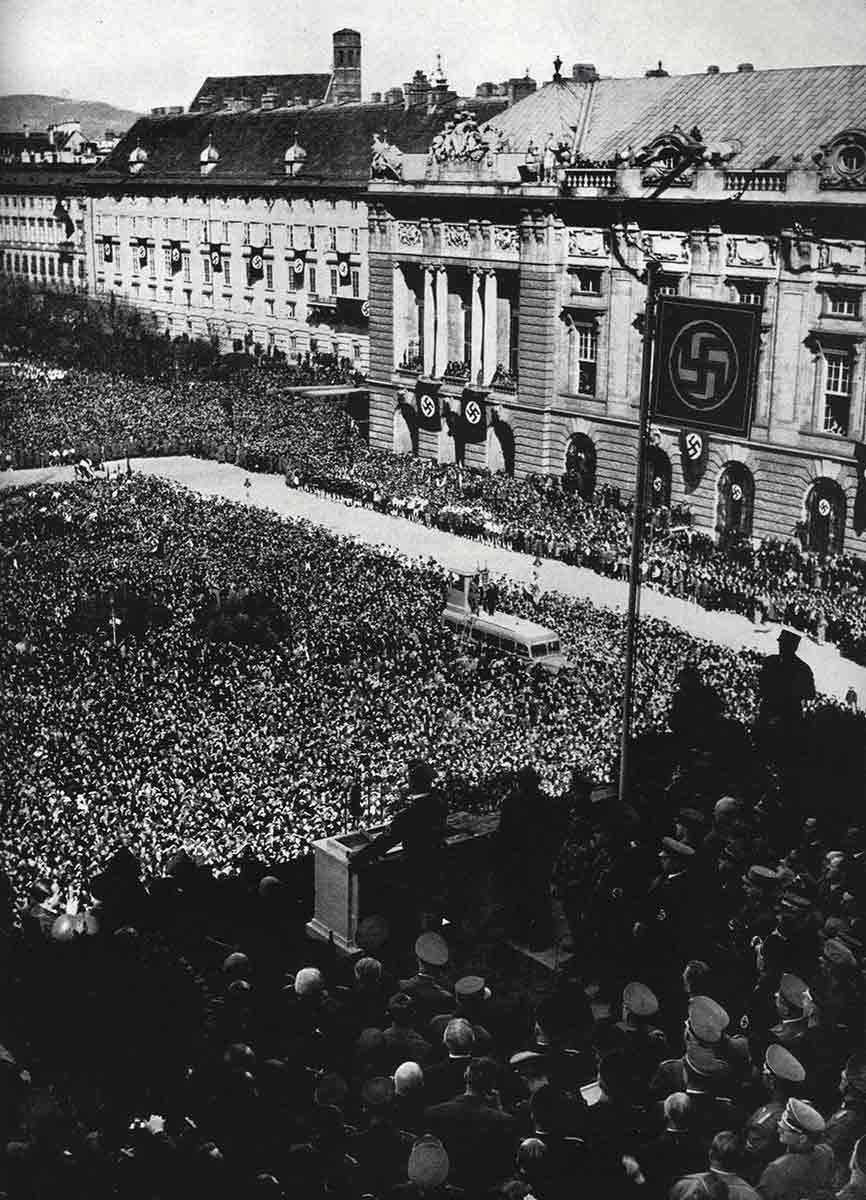
In 1938, when Nazi Germany annexed Austria, Eichmann moved to Vienna, where he organized the Zentralstelle für jüdische Auswanderung (Central Office for Jewish Emigration). It was the beginning of his career as chief organizer of the systematic deportation and extermination of European Jews. Eichmann’s activities in Vienna were a success, and between August 1938 and June 1939, about 128,000 Jews were forced to leave Austria. In 1939, he directed a similar operation in Prague.
About a month after the outbreak of WWII, Eichmann was made director of the newly established Reichszentrale für jüdische Auswanderung (Reich Central Office for Jewish Emigration) in Berlin. Then, in December, he became the head of Referat IV D 4 of the Reichssicherheitshauptamt (Reich Security Central Office), or RSHA, in Berlin, an office tasked with dealing with “Jewish activities.” Renamed Referat IV B 4 (Jüdische Angelegenheiten, Räumungsangelenheiten, or Jewish Activities and Clearing Activities) in 1941, the department coordinated the deportation of millions of Jews from German-controlled territories to ghettos and concentration and death camps.
What Was Adolf Eichmann’s Role in the Holocaust?
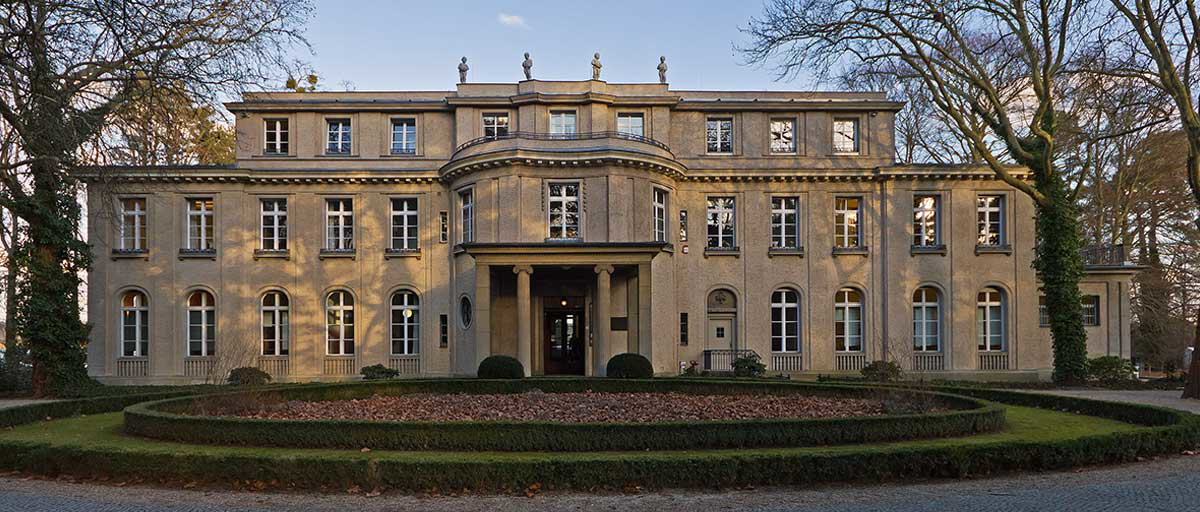
It was in his role as director of “Jewish Activities” at the RSHA that Adolf Eichmann played a crucial role in coordinating the logistics of the Holocaust. During the rest of the war years, Eichmann painstakingly devoted himself to the task of collecting exact data on the European Jewish population and devising the most efficient ways to transport Jews to the death camps, mainly in Nazi-occupied Poland. “Time just flew by,” he later commented regarding his time at the RSHA.
In 1941, Adolf Eichmann made his first trip to the Auschwitz-Birkenau death camp, where he met with Commander Rudolf Höss to discuss the operational details of the camp’s first gas chambers. In the following months, Eichmann worked fastidiously to ensure that the quotas for the Nazi network of concentration camps were fulfilled, complaining when loopholes and logistics issues, especially in the last years of the war, hindered his efforts.
In January 1942, Adolf Eichmann was among the 15 ministers and high-ranking Nazi officials invited by Reinhard Heydrich to a Besprechung mit anschließendem Frühstück (conference followed by breakfast) in a villa in the Berlin suburb of Wannsee. Heydrich organized the meeting, later known as the Wannsee Conference, to plan the Endlösung der Judenfrage, or the “Final solution to the Jewish question,” the euphemistic Nazi terminology to refer to the systematic extermination of all European Jews.
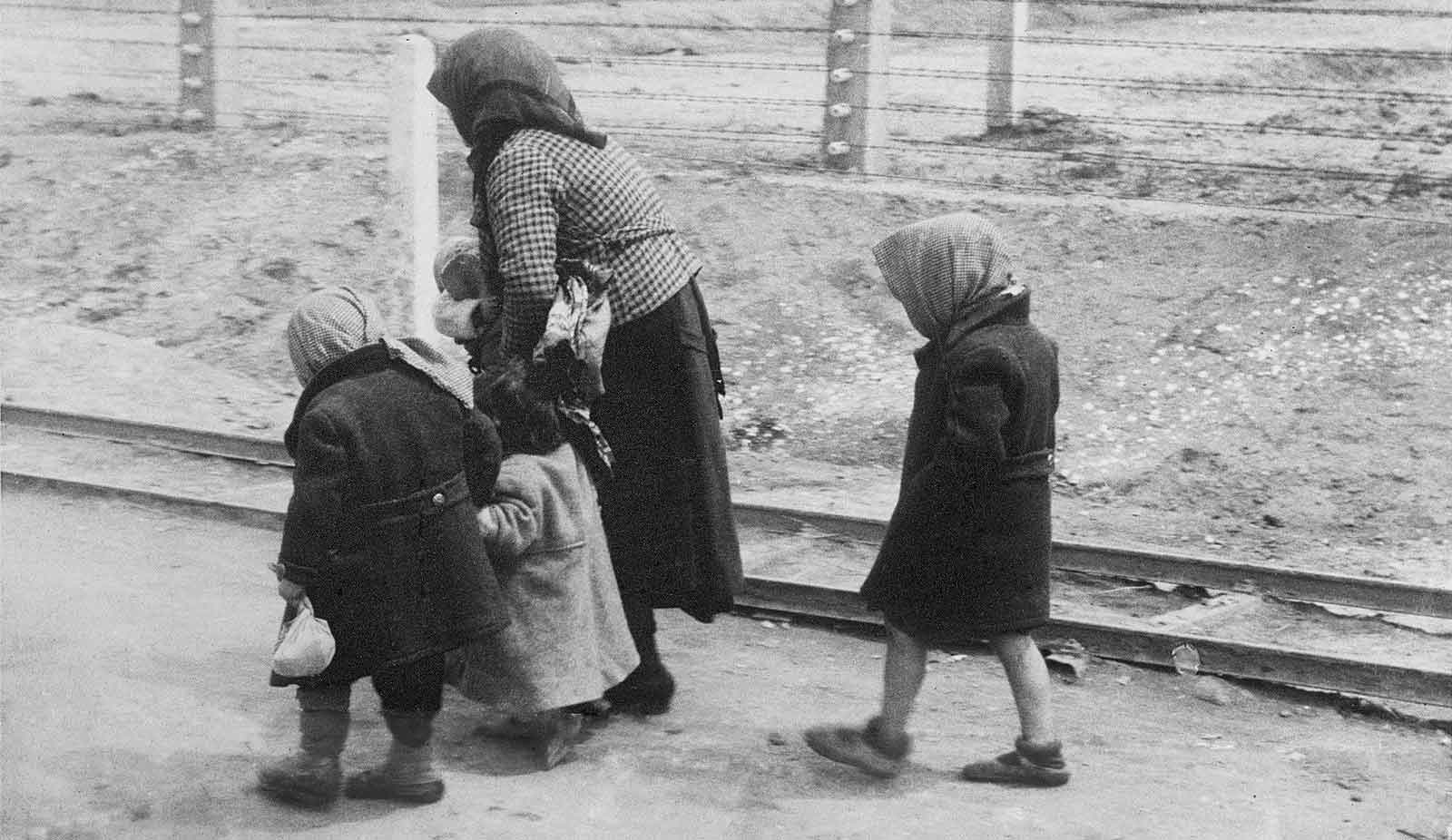
As Eichmann reported in the protocols of the conference, Heydrich himself announced the meeting’s agenda: “At the beginning of the discussion Chief of the Security Police and of the SD, SS-Obergruppenführer Heydrich, reported that the Reich Marshal [Hermann Goering] had appointed him delegate for the preparations for the final solution of the Jewish question in Europe.” In the two following years, Adolf Eichmann coordinated the efforts of all offices concerned with the “Jewish question” to ensure that the “evacuation to the east” (i.e., deportation to the concentration camps) ran smoothly.
Until 1944, millions of Jews from Slovakia, the Netherlands, France, Belgium, Greece, northern Italy, and Hungary were transported to the death camps. While Eichmann preferred overseeing the details of the mass deportation from his desk, he was forced to work directly in the field in Hungary. From his headquarters in the Majestic Hotel in Budapest, where he enjoyed playing the violin with his colleagues, Eichmann coordinated the round-up of about 440,000 Hungarian Jews. After their arrest, most were then sent on cargo trains to Auschwitz, where former commander Höss supervised the opening of more spur tracks, incineration pits, and cremation ovens.
Adolf Eichmann’s Escape and Arrest
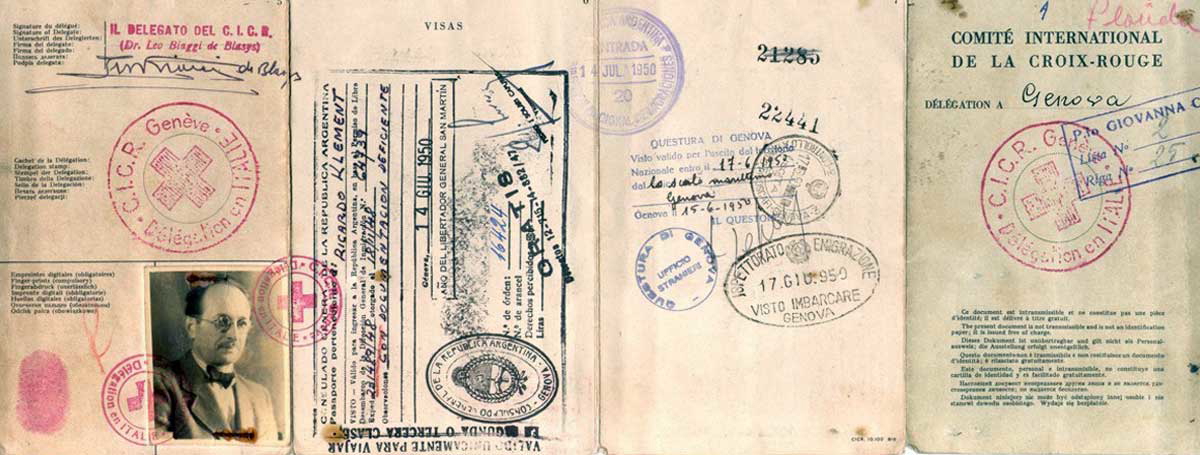
In December 1944, as the Soviets advanced on the Hungarian capital, Adolf Eichmann, still in the midst of his deportation activities, fled to Germany, where he was arrested by the Americans and brought to a POW camp. In 1946, however, he managed to escape. After hiding in the countryside for some months, he reached Berlin, where he lived until 1950 under the false name of Otto Henniger.
In the same year, with the assistance of the Vatican Refugee Commission, he secured a 10.100, the sought-after travel papers issued by the Red Cross. Like thousands of other Nazis, he then traveled to South America, under the name of Ricardo Klement, a supposed technician from Bolzano (Italy).
Upon arriving in Argentina, with the help of the local Nazi network, he secured a job in a metal factory in San Fernando, near Buenos Aires, where he lived for the next three years. He then moved to the remote province of Tucumàn, where he found employment at the CAPRI (Compaňía Argentina para Proyectos y Realizaciones Industriales) firm, a company founded by former SS officer Carlos Fuldner working as a subcontractor on the presidential palace. Finally, Eichmann moved to Buenos Aires, where he was hired by Mercedes Benz.
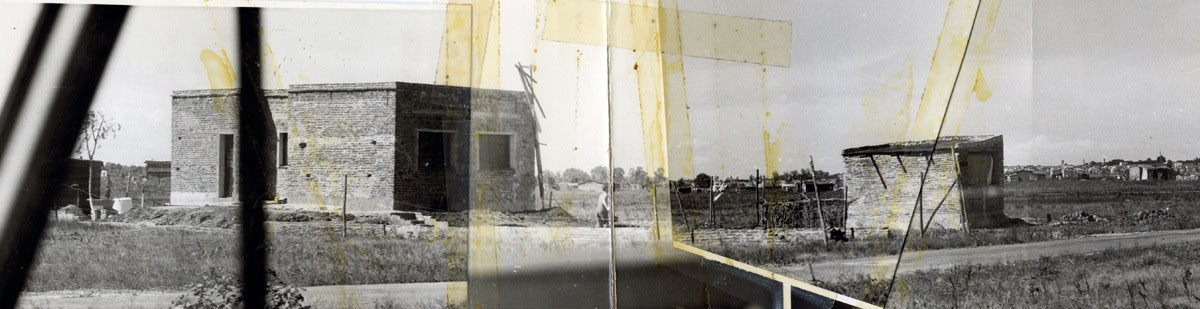
By then, news that Eichmann was hiding in Argentina had reached most intelligence agencies. In 1957, Frankfurt Attorney General Fritz Bauer received a letter from Lothar Herman, a German-born Jew whose daughter had briefly dated Eichmann’s son Klaus, informing him of Eichmann’s whereabouts in Argentina. Bauer passed on the information to the Israeli Foreign Minister, who contacted Isser Harel, the head of Mossad. However, when a team of Mossad agents reached Eichmann’s last-known address, he had already moved.
While Herman’s letter confirmed that Eichmann was indeed living in Argentina, the real breakthrough in the investigation arrived in 1959. Gerhard Klammer, a German-born geologist who had worked at the CAPRI firm alongside “Ricardo Klement,” confided to his friends Rosemarie and Giselher Pohl: “They still haven’t found Eichmann, I know where Eichmann lives.” Upon seeing him at a bus stop in Buenos Aires, Klammer had followed him to 4261 Calle Chacabuco Olivos. Wishing to remain anonymous, he asked his friend to convey the information to his boss, military Bishop Hermann Kunst, who then contacted Bauer.
A German Jew, Bauer famously commented that he “enter[ed] enemy territory whenever he walk[ed] out of his office,” a remark on the presence of former Nazis in West Germany’s administration and postwar Germany’s reluctance to address its Nazi past. Bauer passed Klammer’s intel along to the head of Mossad, who sent a team to Argentina. This time, the intelligence operatives’ efforts were successful, finally tracing Eichmann to Garibaldi Street in Buenos Aires and arresting him on May 11, 1960. As there was no extradition agreement between Israel and Argentina, the Mossad team smuggled Eichmann (codenamed “Attila”) out of South America on an El Al plane.
Eichmann’s Trial in Jerusalem
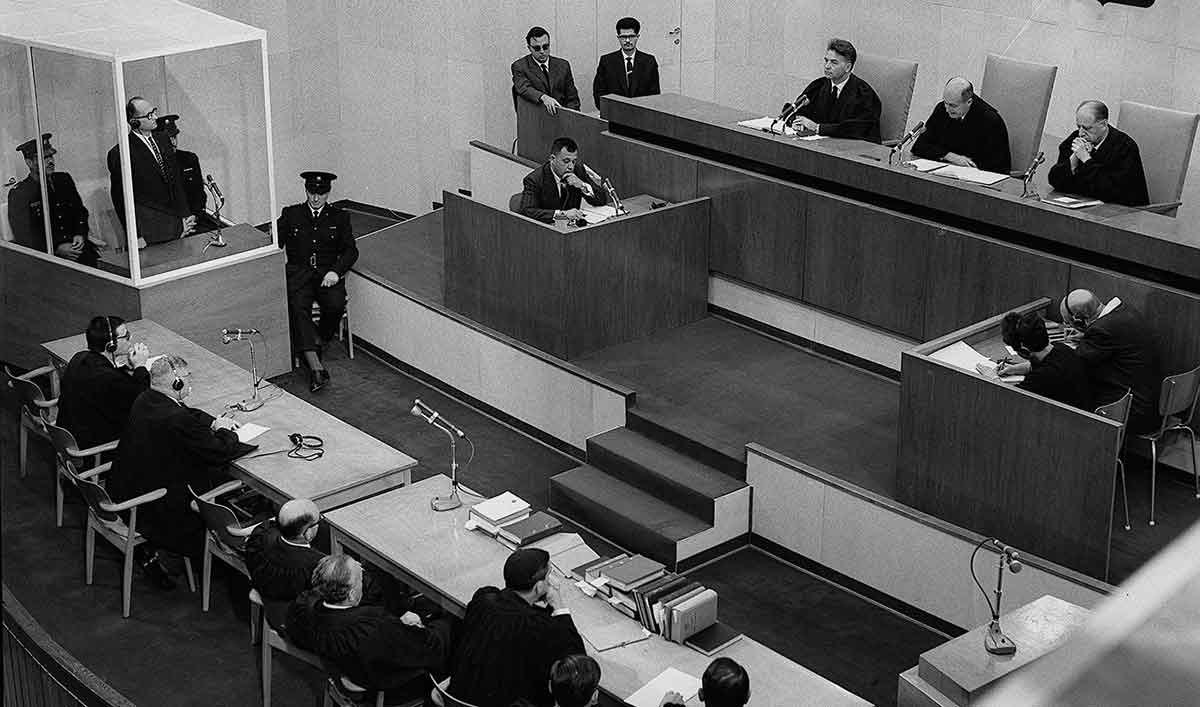
On May 23, 1960, Israeli Prime Minister David Ben-Gurion announced Eichmann’s arrest to the Knesset (parliament): “A short time ago one of the most notorious Nazi war criminals, Adolf Eichmann, was discovered by the Israeli security services. Adolf Eichmann is already under arrest in Israel and will shortly be placed on trial.”
The news shocked Israel and the world. The decision to try Eichmann in Israel—a country that did not yet exist during the Holocaust—led to an immediate international controversy, with many questioning the legality of the former Nazi arrest in Argentina. “It is a cardinal principle of international law that a state must not perform acts of sovereignty in the territory of a foreign state,” remarked a June 10, 1960 article published in The Guardian. In the end, however, Israel’s insistence on conducting the proceedings against Eichmann prevailed.
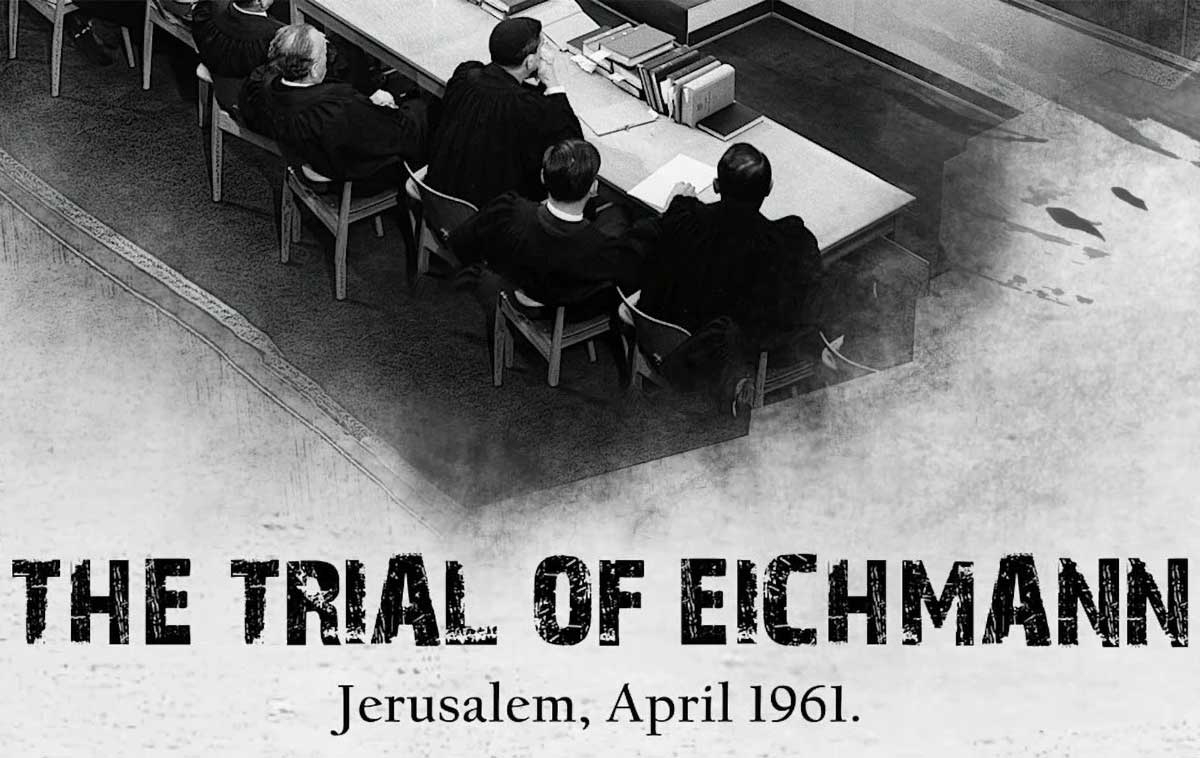
The first session of criminal case 40/61 began on April 11, 1961, before a special panel of three judges. The prosecution team, led by Attorney General Gideon Hausner, charged Eichmann on 15 counts, including “crimes against Jewish people, “crimes against humanity,” “war crimes,” and being a “member in a hostile organization” (the SS, SD, and Gestapo had all been labeled as “criminal organizations” during the Nuremberg Trial). The legal framework for all charges was the Nazis and Nazi Collaborators (Punishment) Law 5710-1950.
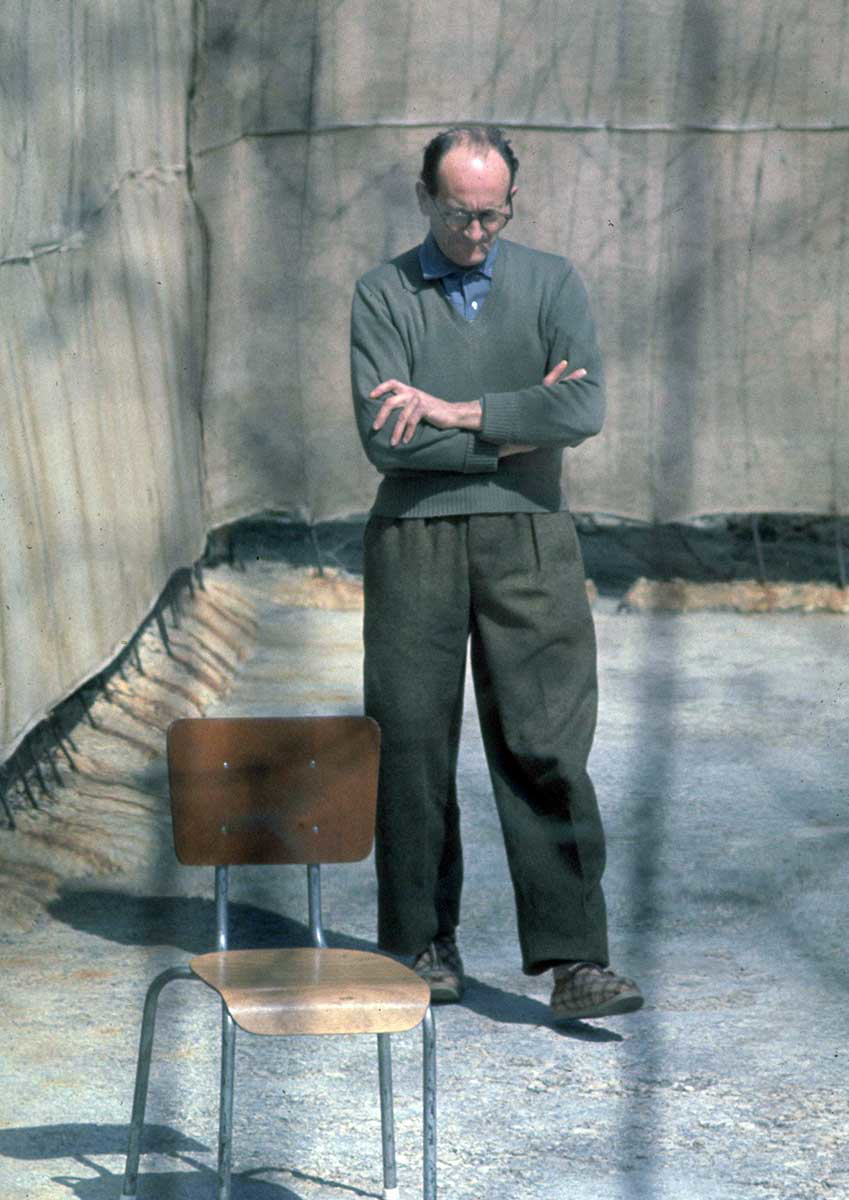
On April 11, Eichmann pleaded “not guilty” on all counts. His defense team, led by Dr. Robert Servatius, did not aim to deny the charges, instead opting to minimize the defendant’s role in the Holocaust, portraying him as “a small cog in the state apparatus.” Like several Nazis tried by the International Military Tribunal in Nuremberg, Eichmann denied his responsibility for his actions, stating that he was merely following orders. He put forward a similar argument in his 1962 plea for clemency addressed to President Yitzhak Ben Zvi, “There is a need to draw a line between the leaders responsible and the people like me forced to serve as mere instruments in the hands of the leader. I was not a responsible leader, and as such do not feel myself guilty.”
On December 13, 1961, the three judges found Eichmann guilty and sentenced him to death. After the May 1962 appeal to the Israeli Supreme Court was rejected, Eichmann was hanged on the night between May 31 and June 1, 1932, at the Ayalon Prison, Ramla. His ashes were then scattered at sea.
Legacy & Cultural Depiction
The trial against Eichmann attracted worldwide attention, with hundreds of journalists traveling to Jerusalem to cover the historic event. In Israel, hundreds of thousands of people listened to the live broadcast of the Kol Yisrael Radio. For the younger generations, the trial was an opportunity to learn about the Holocaust and the experiences of those who survived it.
Unlike the postwar proceedings against the Nazis in Nuremberg, in Jerusalem, the testimonies of the survivors took center stage. During the nine-month preparatory period, a special unit selected 108 witnesses to allow the prosecution team to trace the wider story of the Holocaust as the backdrop to Eichmann’s crimes. Indeed, in his opening speech, Attorney General Hausner declared:
“When I stand before you here … I am not standing alone. With me are six million accusers. … Their ashes are piled up on the hills of Auschwitz and the fields of Treblinka, and are strewn in the forests of Poland. … Their blood cries out, but their voice is not heard. Therefore I will be their spokesman and in their name I will unfold the terrible indictment.”
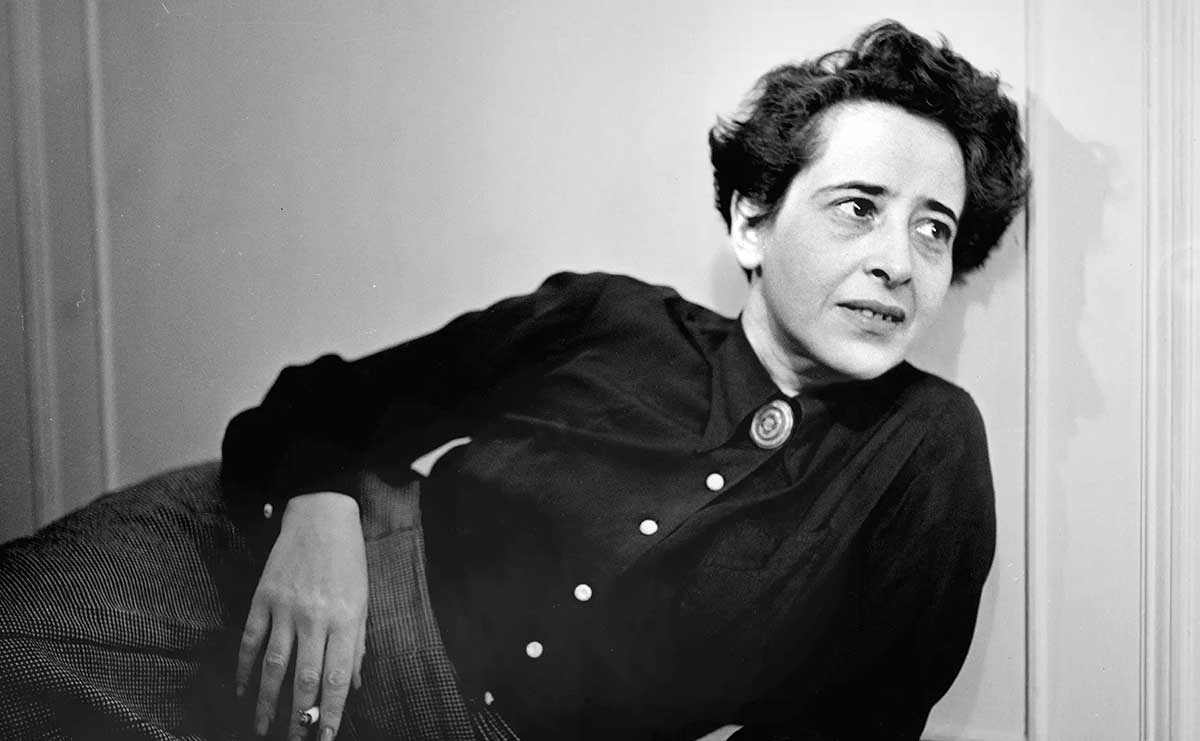
Besides increasing awareness of the Holocaust, the trial inspired researchers and scholars to pen essays and work on a wide array of topics that spanned from the legal to the psychological levels. Among them, the most famous and controversial was undoubtedly Eichmann in Jerusalem: A Report on the Banality of Evil (1963), the account of the trial written by Hannah Arendt, who was sent to Jerusalem by The New Yorker.
However, Arendt was not the only observer struck by the “ordinary” (or banal) appearance of Eichmann, who resembled a bureaucrat rather than a “monster.” During the trial, his tendency to ramble about the minute details of his work even led one of the judges to declare: “It is clear to us that, in German, the predicate comes at the end of the sentence, but it takes too long to reach the predicate.”
Over the years, Adolf Eichmann’s life and trial have also been told in several films, documentaries, and TV series. More recently, the trial of Eichmann was performed as a theater play (written by David Serero) that premiered at the Center for Jewish History in New York City in July 2024.