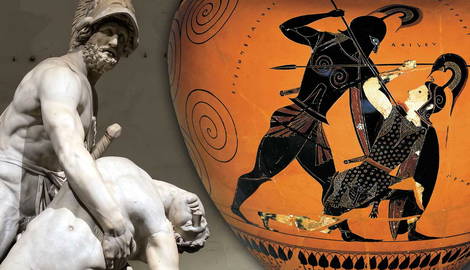
In many epic tales, the most interesting parts often come in the middle, for example, The Empire Strikes Back, the second movie in the original Star Wars trilogy. Stories sometimes take a while to get off the ground. While the Iliad starts in the tenth year of the Trojan War and gets into the action quickly, in some ways, the best parts are still to come. Enter the Aethiopis. While other fragmented stories of the Epic Cycle contain the Judgment of Paris, the kidnapping of Helen, and the Trojan Horse, the Aethiopis gives us the infamous details surrounding the death of Achilles himself.
Literary Context
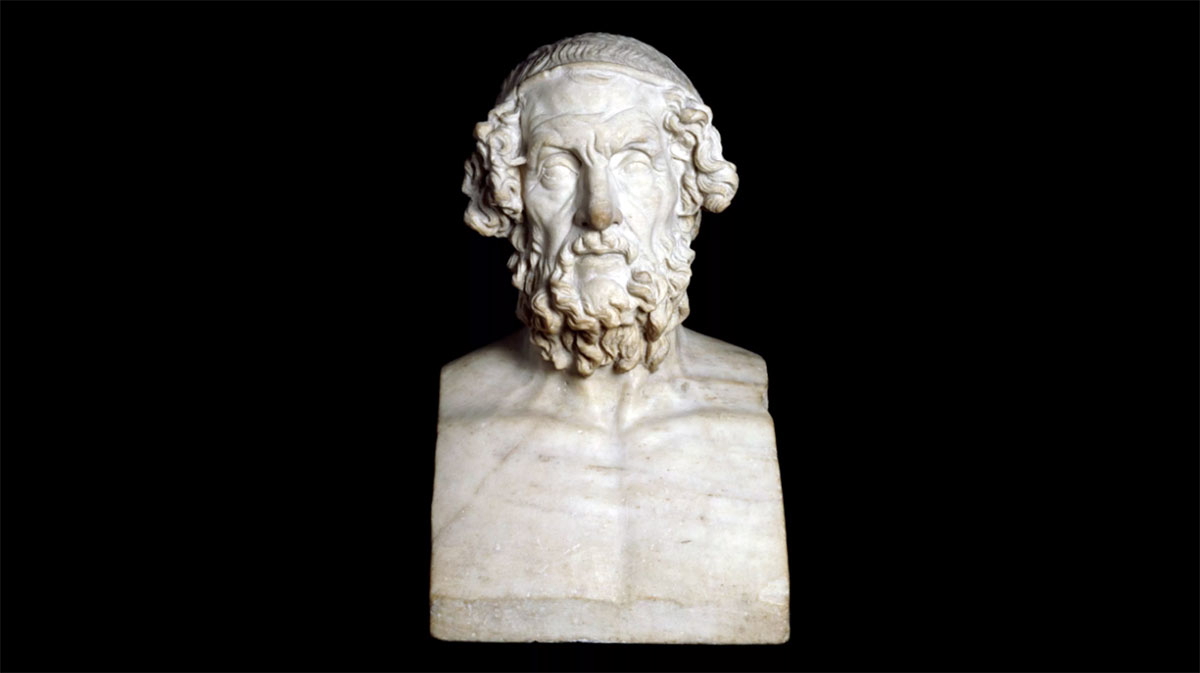
Homer’s epics, the Iliad and the Odyssey, were significant to ancient Greek culture, even among illiterate members of society. The infamous Trojan War was the backdrop to these tales, and the legend was vital to Greek identity. For those who could not read, they would simply pass stories from generation to generation through an oral tradition. Yet Homer was not the only author associated with the Trojan Cycle, otherwise known as the Epic Cycle. Other writers contributed to the legends, and ancient Greeks knew of these other works, even if they were not as popular as Homer’s.
Today, the lesser-known poems of the Epic Cycle are frequently ignored due to the simple fact that they only exist in fragments. Much shorter than the Homeric epics, they still contain within them specific details that come down to us today. This includes the Judgment of Paris and the kidnapping of Helen, the causes of the Trojan War, both occurring in the Cypria. Meanwhile, the Trojan horse appears in the Iliou Persis (Sack of Troy), set between the Iliad and Odyssey. The death of Agamemnon and the successful voyages home of Diomedes, Neoptolemus, and Menelaus are in the Nostoi (Returns), concurrent with Odysseus’ journey. But perhaps the most interesting lost chapter is the Aethiopis, containing Achilles’ last fights and subsequent death.
Arctinus, Author of the Aethiopis
Written in the 8th century BC, the Aethiopis is usually attributed to the poet Arctinus. Nothing is known of this author, as none of his works survive, but some legends consider him to have been a student of Homer. Arctinus is also said to have written the Iliou Persis (Sack of Troy), which showcased Greek victory through subterfuge via the Trojan Horse. Meanwhile, the Aethiopis dealt with tragic loss, which may explain why it was not celebrated by the ancient Greeks. Regardless, neither poem has come down to us in totality.
Structurally, the Aethiopis was composed of five books and written in the same dactylic hexameter verse as the Homeric poems. This fact does not necessarily indicate that Arctinus personally studied with Homer, as it was simply the standard poetic style of most Greek and Latin writers. Hesiod used the same meter in his Theogony, and no source indicates a connection between these two poets.
Tradition indicates Arctinus was from Miletus, a major city on the western coast of Asia Minor (now Turkey). Miletus lies south of the ancient city of Smyrna, one of Homer’s traditional birthplaces, though there are dozens of claimants to Homer’s hometown. Regardless of Arctinus’ connection to Homer, the legend of the last days of Achilles warranted its own tale.
Penthesilea and the Arrival of the Amazons
The poem is much shorter than Homer’s epics, yet it packs an incredible amount of action. It begins immediately after the end of the Iliad, as though the opening scene is just a continuation of the overall story:
“Thus, they performed the burial of Hector. Then came the Amazon, the daughter of great-souled Ares, the slayer of men.”
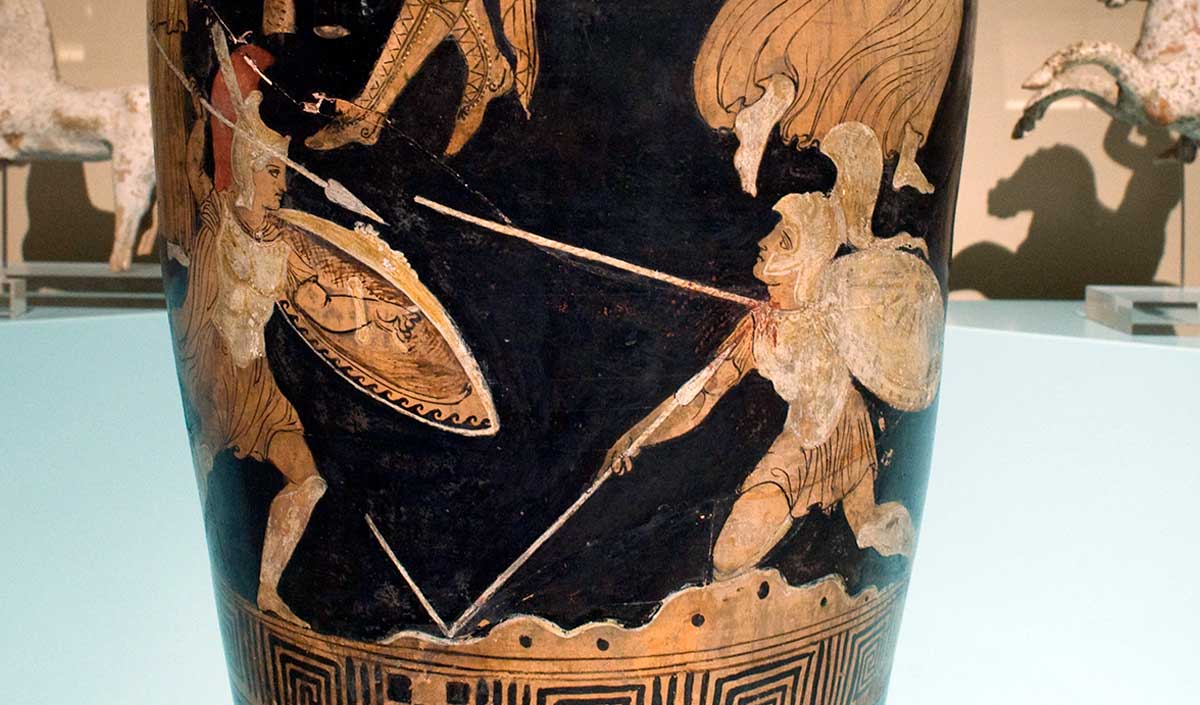
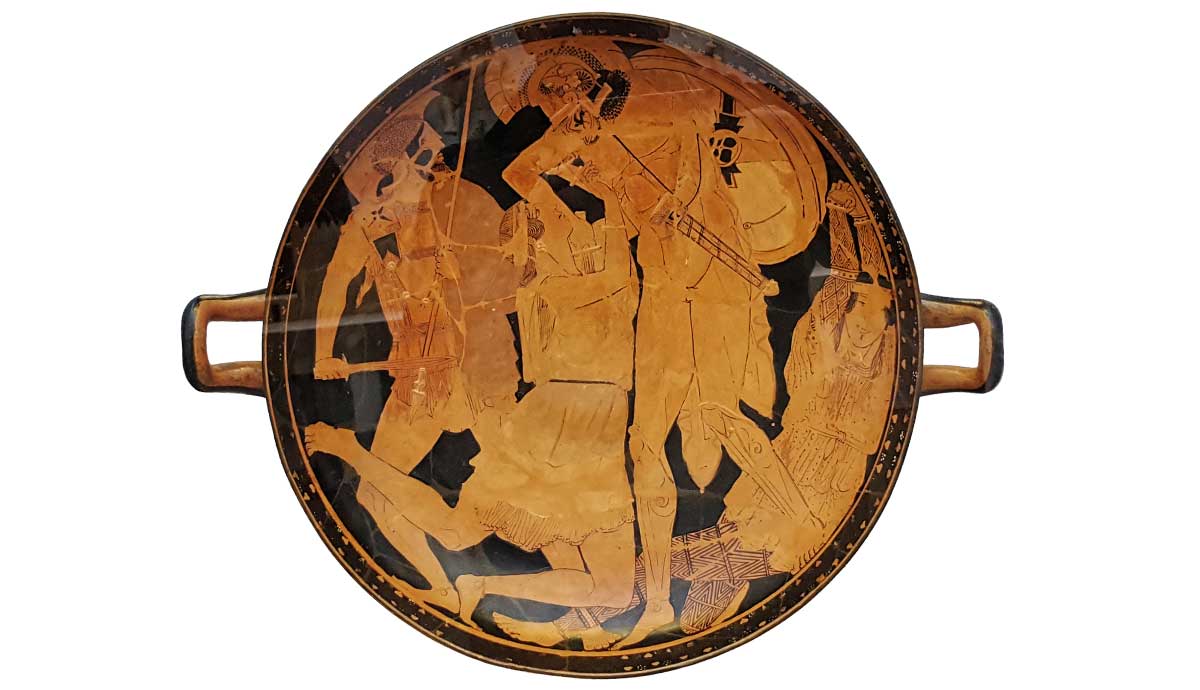
Indeed, the story began with the arrival of the Amazons, infamous warrior women, to assist the Trojan cause. Led by their queen, Penthesilea, daughter of Ares, the women distinguished themselves on the battlefield by pushing back the Greek army until the arrival of Achilles. He fought the Amazon queen in single combat, killing her. Yet as she lay dying, Penthesilea gazed into Achilles’ eyes, and he immediately became enamored of her beauty, falling in love with her. The queen died as the hero held her corpse lovingly in his arms. Another Greek soldier, the hated Thersites, began laughing at Achilles for how absurd he looked holding the dead Amazon. Achilles promptly turned around and punched Thersites so hard that he died on the spot.
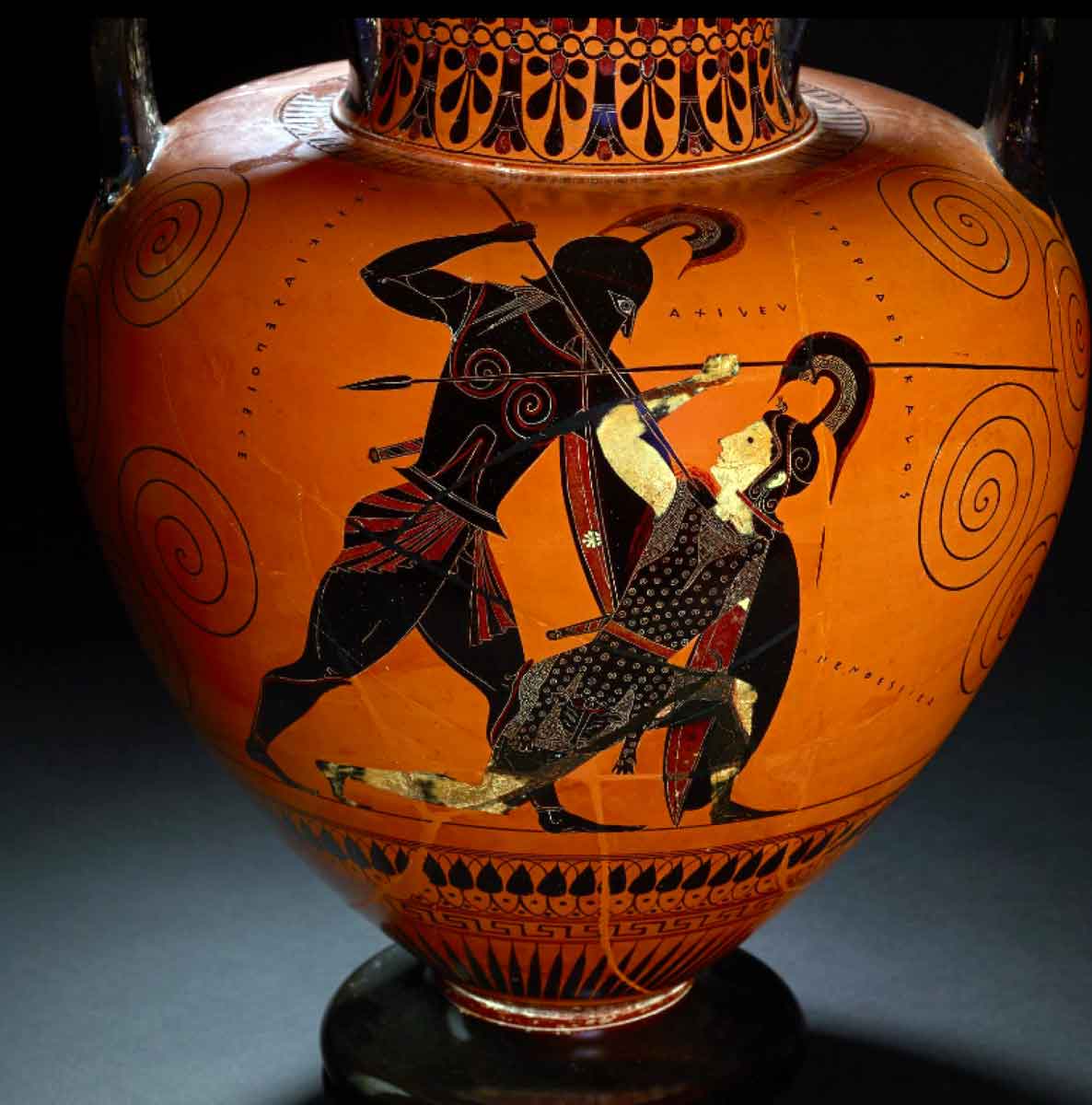
To cleanse himself of the blood guilt from Thersites’ murder, Achilles sailed to the island of Lesbos to offer sacrifice to Apollo, Artemis, and their mother, Leto. This reflects both a religious and a social requirement in Greek culture. Murder of one’s own kinsman or member of the same people required temple purification. Odysseus helped to purify his fellow epic hero, and Achilles returned to the war. Upon is return, he would meet his greatest match: the Aethiopian warrior, Memnon.
Memnon, Son of the Dawn
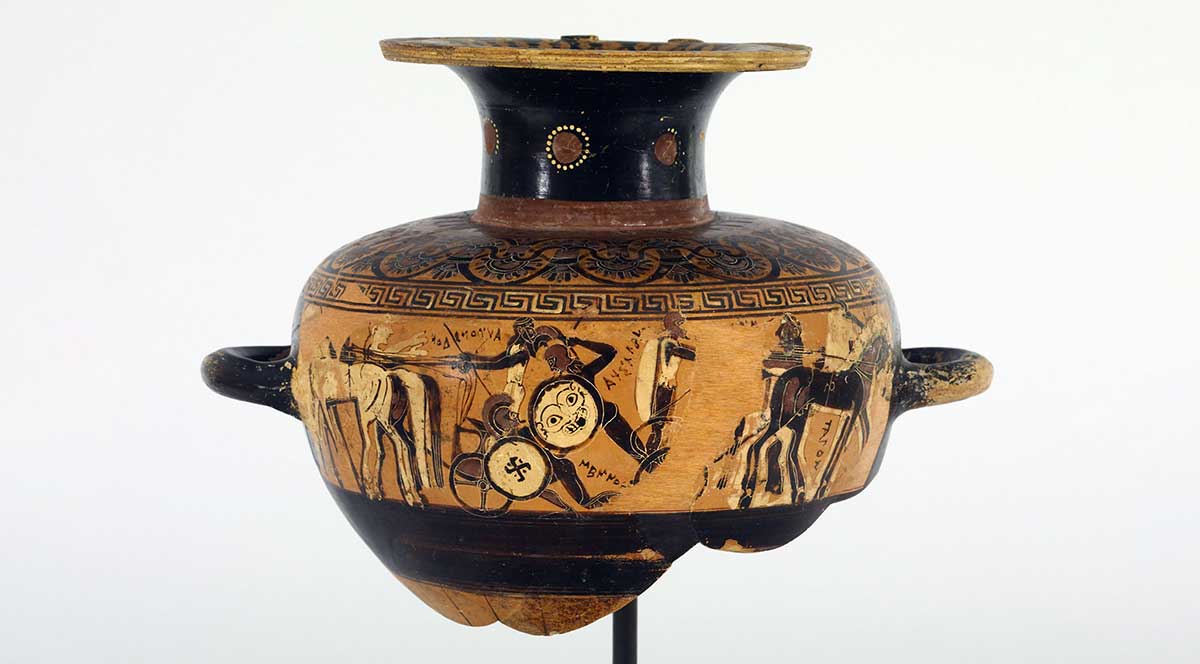
The Aethiopis has the distinction of depicting Achilles’ greatest battle. While Hector was the best of the Trojan champions, and Penthesilea the best of the Amazon warriors, Achilles still feels head and shoulders above these fighters. However, there was another warrior who was the son of a goddess. Memnon was born to Tithonus, a mortal prince of Troy, and Eos, goddess of the dawn. She was the sister of Helios, the sun, and Selene, the moon. This demigod was king of Aethiopia, a region usually associated with the lands south of Egypt, ancient Nubia, or modern-day Sudan. Some sources placed Memnon in India, but the majority favored the African location.
The namesake of the poem, Memnon, offered his assistance to the Trojans, who gladly accepted due to his legendary status. Memnon had great success in slaying Greek heroes on the battlefield, yet was aware that, despite his supernatural prowess, he was still mortal. Thus, he remained humble, which was a striking contrast to Achilles’ hubris.
Soon after, Achilles confronted him, and the battle ensued. Memnon proves capable, actually wounding Achilles and drawing blood, something Hector had never done. This episode sheds light on the fact that Achilles was never considered to be invulnerable in early Greek legend. In fact, he is also injured in the Iliad. Ultimately, despite Memnon’s skill, Achilles proved the superior warrior, driving his spear through Memnon’s heart and killing him.
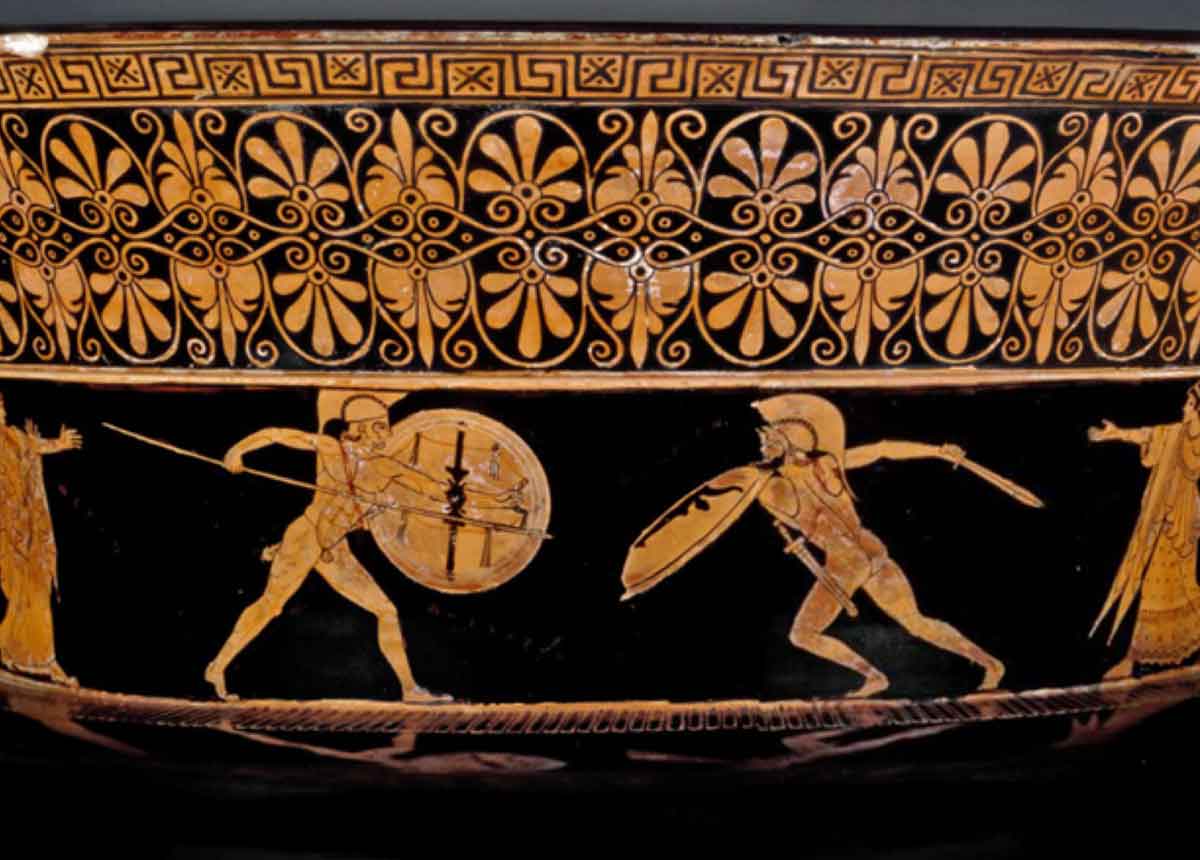
The back-and-forth between the two reflected the belief that Zeus had weighed the fates of the two beloved warriors against each other. Thetis and Eos each appealed to the king of the gods for their sons, but Thetis’ charm wins out. Achilles survived, but only briefly. Despite his defeat, Memnon was granted immortality by Zeus at the request of his mother.
The Death of Achilles
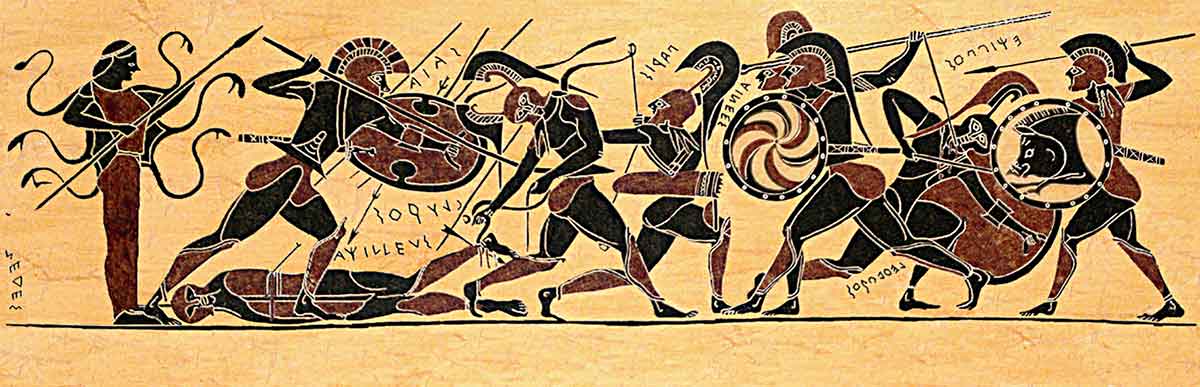
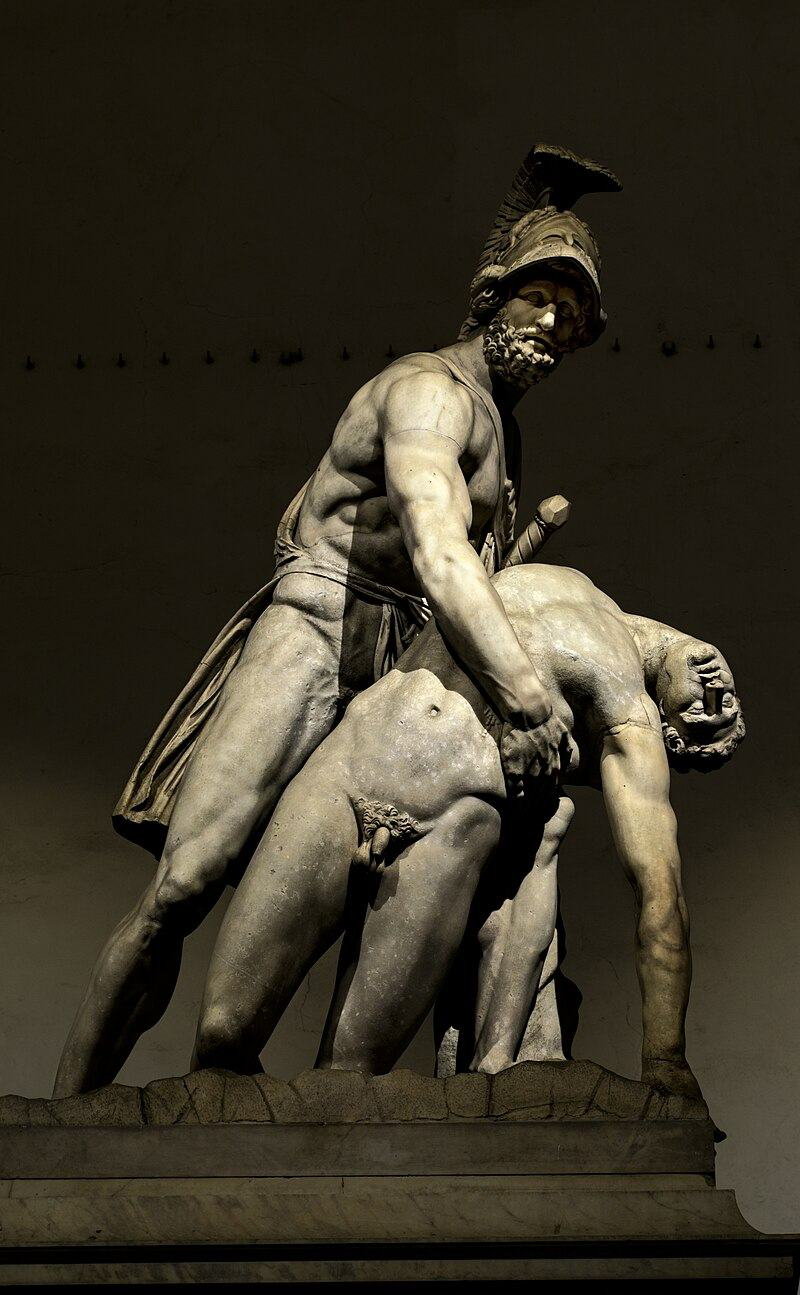
Perhaps in an adrenaline rush from his victory, Achilles single-handedly pushed back the Trojan army into the city walls. It is here that the demigod met his end. The Trojan prince, Paris, killed Achilles with the help of Apollo, who, despite just receiving purification from Achilles, did not grant him favor. Knowing he could never hope to contend with Achilles in combat, Paris instead fired his bow from a distance, shooting the hero dead. The Greek army, led by Odysseus, rallied to claim his body, with the hero Ajax carrying it from the battlefield.
Of course, legend will later say the arrow struck Achilles in his heel, but nowhere in the admittedly fragmented Aethiopis did it indicate that. Even later Greek stories did not explicitly say where Achilles was hit. Some Archaic and Classical artistic representations show an arrow in his heel or ankle. However, the specific details surrounding the ‘Achilles’ heel’ myth come much later, first appearing in the Achilleid of the Roman poet Statius at the end of the 1st century AD.
Odysseus vs Ajax
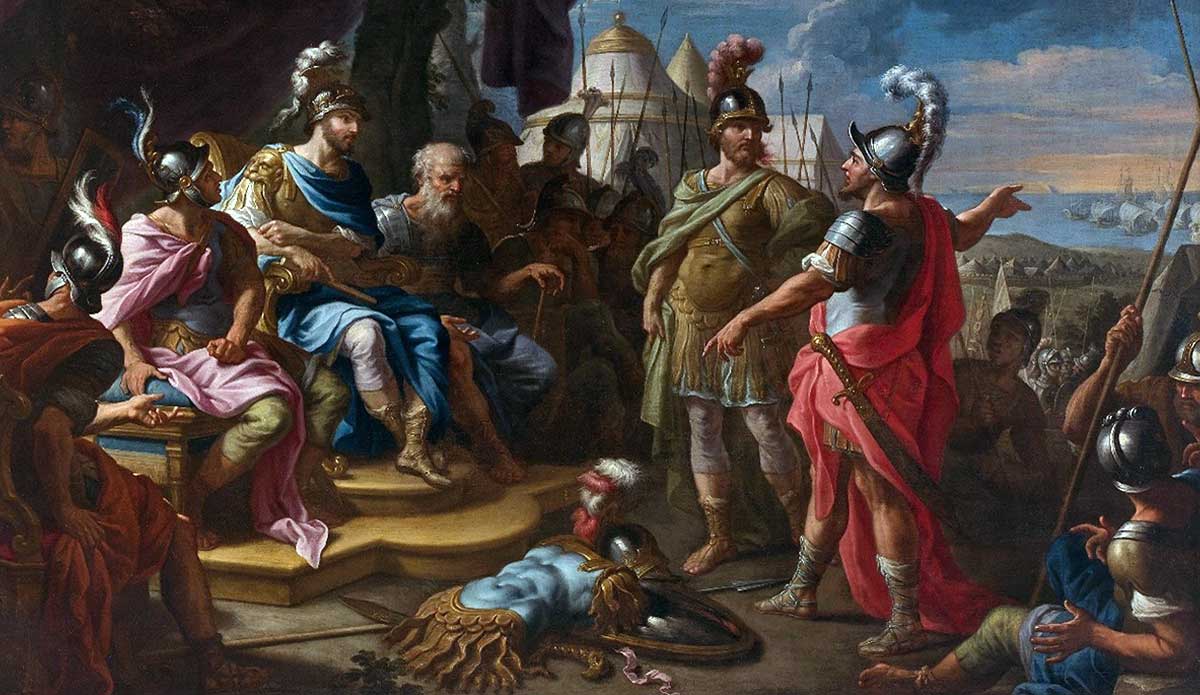
After Achilles’ death, the Greeks held a great funeral for him and for his comrade-in-arms, Antilochus, who had been killed by Memnon. However, before Achilles’ body could be burned on the funeral pyre, his mother, Thetis, snatched it from the flames and carried it off to a sacred island of Leuke, the White Island. Located in the Black Sea, the Greeks later built a temple to Achilles. Legend claimed he and Patroclus roamed the island as spirits.
Meanwhile, the army vied for Achilles’ armor, given to him by the blacksmith god, Hephaestus himself. They know that whoever held the glorious armor would essentially become Achilles’ successor. The two leading candidates were Odysseus and Ajax, considered the greatest Greek heroes after Achilles. While Ajax boasted of his superior strength and how he was the best fighter, Odysseus used his wits to overcome Ajax in a test of cunning. Considering he also gave a better speech, the Greeks voted for Odysseus to take the armor. Shamed, Ajax killed himself, though whether this scene was in the Aethiopis is debated. It may have occurred in the next poem, the so-called Little Iliad.
The Aethiopis ends with the funeral of Achilles and the games celebrating the best warrior at Troy, and one of the greatest heroes in Greek mythology.
An Epic Conclusion
One of the reasons the other poems in the Trojan Epic are less renowned today is that they do not survive in their entirety. Was this because the Greeks considered them less important and thus worthy of preservation, or is it simply a matter of bad luck? Even in antiquity, it was agreed that the non-Homeric poems were not as highly valued, and they were all much shorter in length anyway, being on average four to five books long versus the 24 book-length of the Iliad and Odyssey.
In some ways, modern audiences can compare them to the Star Wars cycle, with the Cypria being Episode One, while the Aethiopis would be equivalent to Episode Three, the most tragic chapter of the overall story of Achilles. The Aethiopis will remain lost to us, but its central hero and story is, in some ways, more familiar to us than the Trojan War itself.