Aside from his incredible feats of conquest and military strategy, Alexander the Great is also known for his propensity for founding cities bearing his name all across his empire. The most famous of them is, of course, Alexandria in Egypt, which is not entirely irrelevant to the subject of this article: the Alexandria that never was at Mount Athos. It is a story of an overly ambitious architect who wished to challenge the limits of human ability to shape nature to one’s will, and of a surprisingly restrained conqueror who channeled the architect’s fervor elsewhere, where it was most needed.
Deinocrates Enters the Scene
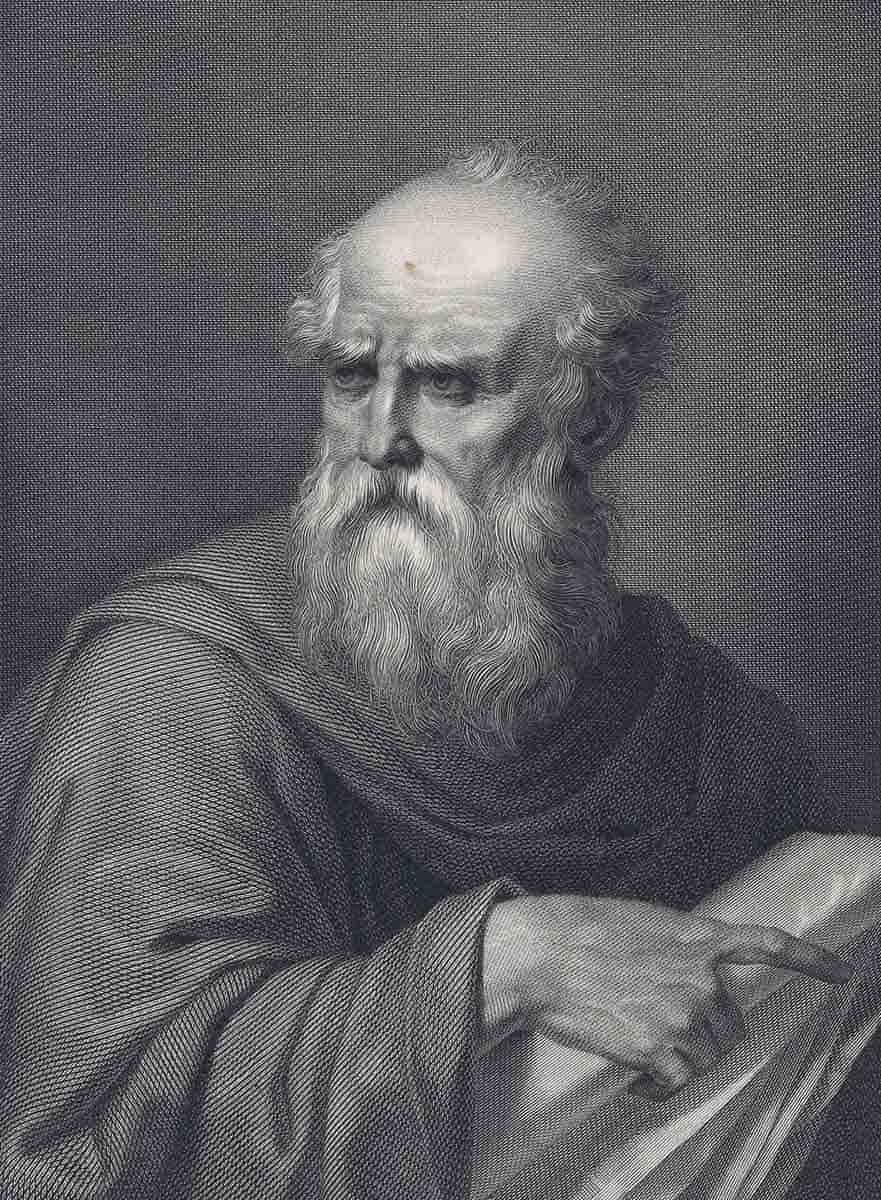
Writing around 30-20 BC, three centuries after Alexander’s death, the Roman architect and engineer Vitruvius is our main source for this episode. He included it in the introduction to the second book of his De Architectura (On Architecture), a seminal treatise on the subject, and the only major such work to survive from antiquity, inspiring architects and artists from the Renaissance to today. Why did Vitruvius choose to mention this episode?
Deinocrates was one of the new men of Alexander’s empire: ambitious Greeks who saw endless opportunity for personal advancement, wealth, and renown in the great conqueror’s shadow. Though he was described as tall, handsome, and dignified, Deinocrates did not wish to be a great warrior or general; his aptitude was for architecture and the shaping of the world around him. He had great dreams and projects in mind, and all he needed was a powerful patron to realize them. What patron was ambitious enough to entertain Deinocrates’s lofty ideas if not Alexander?
Using his contacts through friends and family within the upper echelons of Macedonian aristocracy, he tried to arrange an audience with the Macedonian king. However, conquering the known world was certainly busy work, and as time passed, Deinocrates saw that his plan was getting nowhere. Having tried patience, he came up with another, more daring scheme.
A Sales Pitch to Alexander the Great
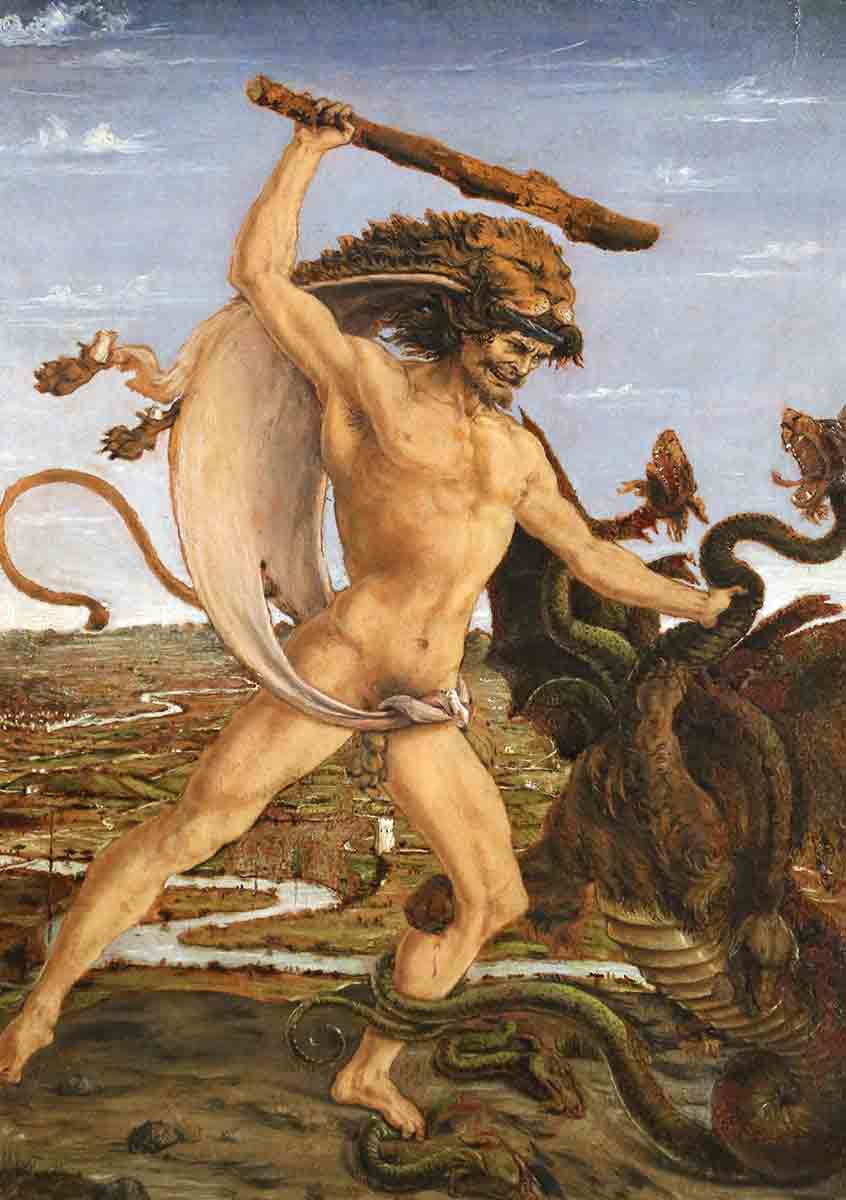
With a poplar wreath on his head, Deinocrates covered himself in oil, threw a lion skin over his left shoulder, and, wielding a club in his right hand, presented himself as Heracles to Alexander’s assembled court while the king was presiding over various legal cases brought before him. It was not a random choice; Alexander was famously a great admirer of the mythical hero, and his dynasty claimed descent from him!
The crowd was immediately taken aback, and we can imagine how Alexander’s guards moved to arrest this audacious interloper. The Macedonian king, however, ever appreciative of such stunts of boldness and bravery, ordered the crowd to make space for Deinocrates and asked him who he was.
“A Macedonian architect,” said he, “who suggests schemes and designs worthy of your royal renown.” Deinocrates wasted no time and probably went with the most ambitious of his projects, to woo Alexander and flatter his ego, thus all but ensuring his royal patronage.
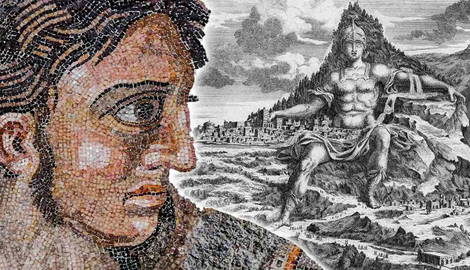
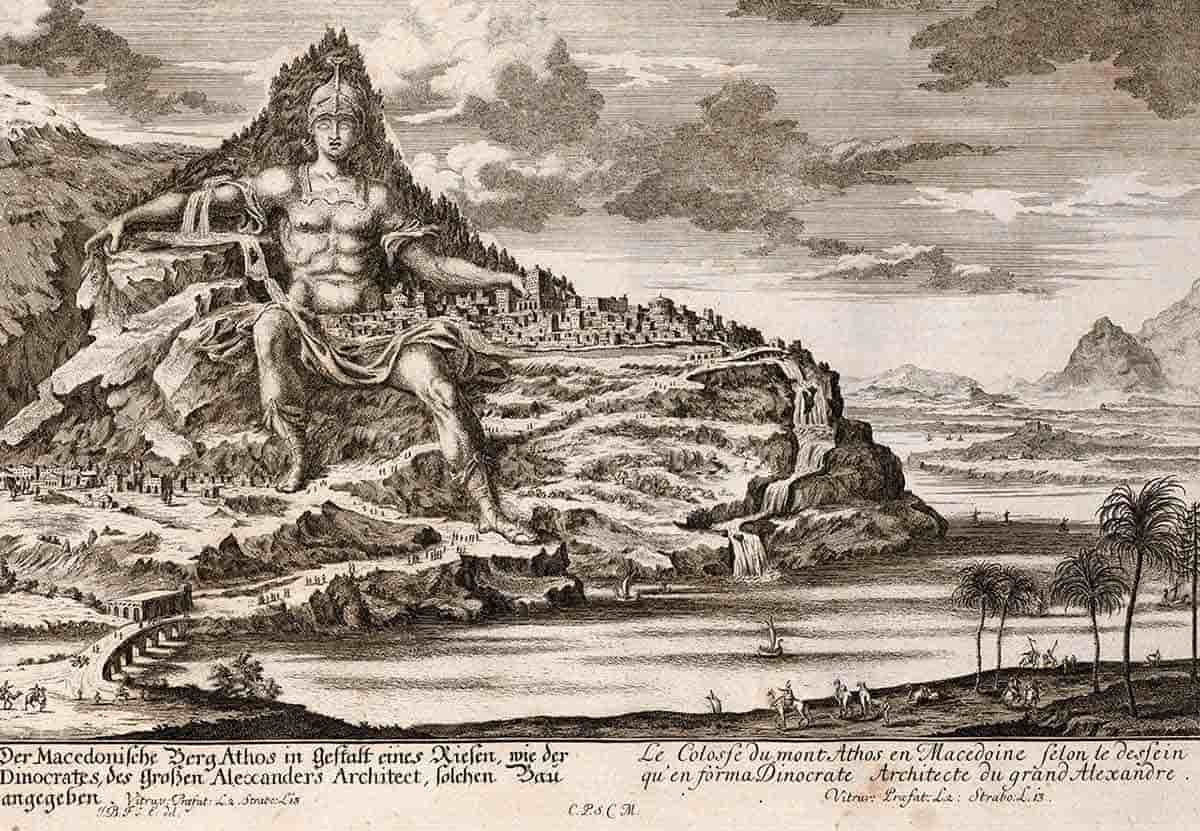
Deinocrates proposed the molding of Mount Athos, on the Chalcidice peninsula of Macedonia, in northern Greece, into a gigantic sculpture of a man holding an entire city in his left hand, and an immense cup in his right, which the streams of the mountain would flow down into, before flowing down to the sea. Now, there was a grand proposal worthy of consideration by Alexander, and it went without saying in whose likeness this monumental man would be sculpted…
A City Is Like an Infant…
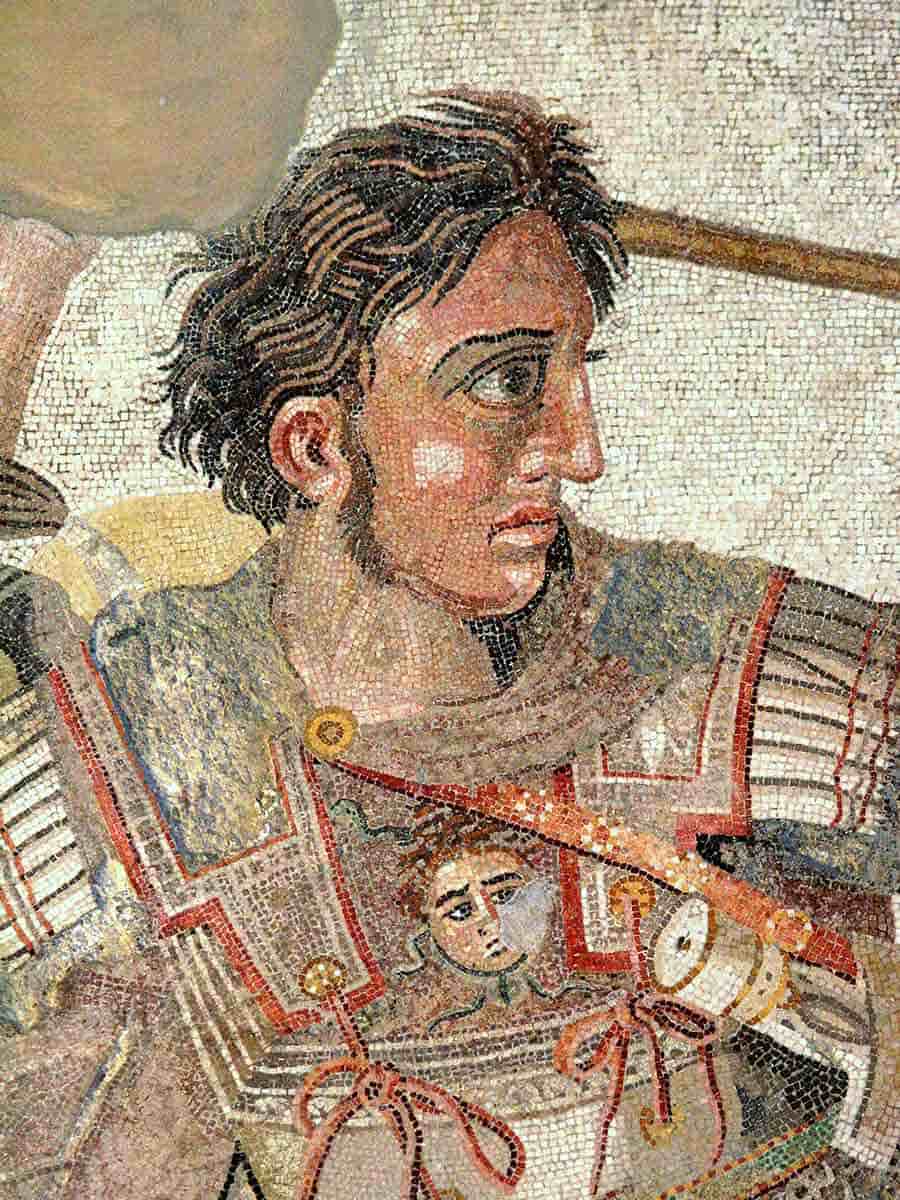
The smile on the spirited Deinocrates’s face must have faded somewhat as his proposal was met with a question. Did the site of this hypothetical city possess fertile enough soil capable of sufficient crops to feed such a place and population? Deinocrates might have stumbled over his words as he replied that the necessary food would be brought there by sea. One must remember that even Rome, which would become the greatest and most populous city in the Mediterranean, surrounded by fertile and arable land in Italy, had to import immense amounts of grain from Egypt and North Africa to sustain itself.
Alexander had a big ego, but he had it for a reason. He was an intelligent, strategic thinker and never founded a city on a whim, no matter what appearances may suggest. All of his Alexandrias were founded at points of strategic control, either as fortress-cities, surveying the surrounding country, or as flourishing trade posts on top of pre-existing, lucrative commercial routes, or both.
The city of Mount Athos would have been none of these things; it would be terribly exposed and dependent exclusively on maritime trade for its survival. “I am of opinion he would be much to blame who planted a colony on such a spot,” said the great conqueror, correctly stating that, as an infant requires constant nourishment from its mother’s milk, a new city needs a fertile and expansive surrounding countryside to grow rich and sustain a powerful enough population to properly defend it.
An Illustrious Counter-Proposal
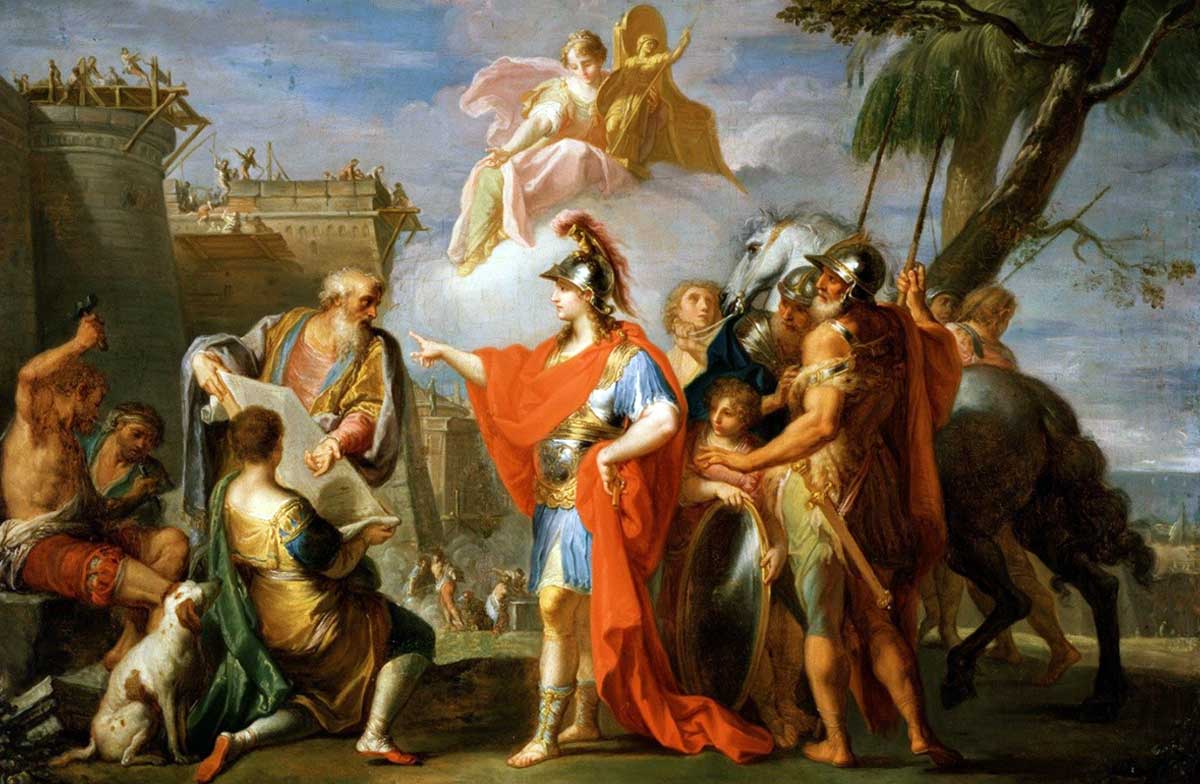
Deinocrates must have been despondent. He had aimed for the stars and was quickly hurtling back towards the ground. Alexander did not let him despair for long. He took the young architect along as part of his entourage as he conquered the Persian Near East. When he reached Egypt and found a spot that combined all of the necessary elements for the flourishing of a city, he gave Deinocrates the task he had wished for.
After Tyre in Phoenicia had been razed to the ground, having resisted Alexander’s advance, the Eastern Mediterranean needed a new commercial center, and Egypt, which had welcomed Alexander with open arms, would be the perfect place for it. Therefore, Deinocrates was given the project of designing Alexandria in Egypt!
As the Macedonian conqueror went east, winning glory and eternal renown, Deinocrates worked tirelessly to design the Alexandria which flourished far more and for far longer than all the others, becoming a symbol of Alexander’s ecumenic grandeur, a city of Greeks in Egypt, and the eventual capital of the Ptolemaic kingdom.
After this, Deinocrates would continue in Alexander’s employ. Another project he was involved in was the funeral pyre of Hephaestion, Alexander’s closest friend and general, who died in 324 BC, at Ecbatana, in Persia. According to Diodorus Siculus (Library of History, 17. 115), it would stand several stories high and resemble a Babylonian ziggurat.
Alexander trusted none other than Deinocrates (referred to as Stasicrates here, Plutarch, Life of Alexander, 72) to bring about this seemingly impossible project, “above all other artists, because in his innovations there was always promise of great magnificence, boldness, and ostentation.”
A Legacy Worth Remembering
Now, one might think the entire episode a fantasy, but Strabo, Plutarch, and Lucian all make reference to it, though, frustratingly for Deinocrates and his wishes for personal glory, his name is sometimes changed to Stasicrates, Deimocrates, and Deinochares. Despite this, the proposal, or one very similar to it, does seem to have taken place, and Alexander rejected it. In this manner, he emerged as the Classical ideal of the philosopher-king who favors sustainability and what is best for his people, over a monument to his ego.
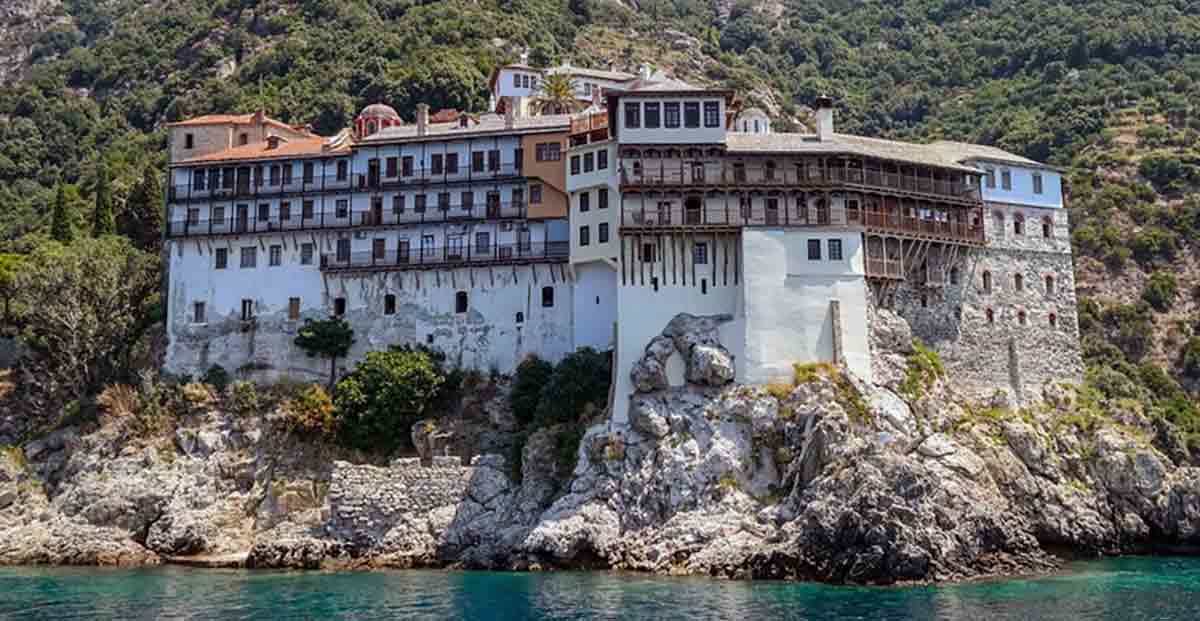
Just as well, since, had Deinocrates’s proposal been accepted, centuries later, the Greek Orthodox Church would have had no home for its heartland of over 20 different monasteries, in what is today called the “Agion Oros” (Holy Mountain)! These days, Agion Oros could be considered a kind of city, albeit a small one, with a population of almost 2000 monks from all over the Greek Orthodox ecumene. One wonders what Deinocrates would have thought about that!
In the end, why did Vitruvius include this story in his architectural treatise? He is not at all coy about it. At the end of the tale, he addresses the reigning emperor—Octavian Augustus—and tells him that while he possessed neither Deinocrates’s youth, nor his stature, nor his beauty, he nonetheless wished to put his own abilities to his service, not to build monuments of ego to the Alexanders of his own time, but projects beneficial to the Roman people. And he did just that.
Though most of his physical works are unknown or lost to time, his theoretical achievements through his multivolume treatise inspired architects to produce works of beauty and grandeur centuries later. Having served as a siege engineer during the wars of Julius Caesar, he dedicated the latter part of his life to instructing people how to build things up, instead of tearing them down.