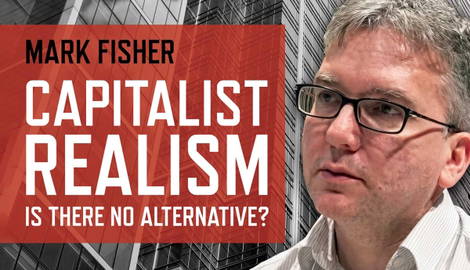
Mark Fisher was a blogger, social critic, cultural theorist, and academic philosopher. He made two strong claims in his 2009 work Capitalist Realism: Is there no alternative? First, what he calls ‘capitalist realism’ is a historically specific ideological formation within late capitalism. Second, this formation forecloses the imagination of viable alternatives. The second claim is considerably more ambitious than the first. It is unclear how Fisher’s concept of ‘capitalist realism’ is analytically distinct from neoliberalism as an economic and political doctrine. But even if we accept that ‘capitalist realism’ designates a unique configuration of capitalism, this would still imply that alternatives, such as neoliberalism, remain imaginable.
Who Was Mark Fisher?

Mark Fisher (1968-2017) was a blogger, writer, philosopher and teacher. He was known online under the pseudonym k-punk, a name under which he wrote numerous articles on politics, music and pop culture. His online work achieved acclaim from culture theorists, receiving a warm reception from, amongst others, The Guardian and VICE.
Fisher was also an academic. He earned his PhD from the University of Warwick in 1999 for his thesis on Gothic Materialism and Cybernetic Theory-Fiction. In 2003, he found employment as a philosophy lecturer in Kent and was later a course leader for the MA in Contemporary Art Theory at Goldsmiths. His first book, and the subject of this article, was published by Zero books in 2009 under the title Capitalist Realism: Is there no alternative?
His last book, The Weird and the Eerie, was published by Repeater Books in 2017. Shortly before the release of this work, Mark Fisher took his own life on January 13, 2017 at his Suffolk home. He was 48 years old.
Fisher uses biographical details from his own life and experiences to inform his work. In the nine chapters making up Capitalist Realism, we see frequent references to pop culture, education and pedagogy, and mental health. The work retains the energy of his early blogs.
The title of Fisher’s work is a response to the oft-repeated idea that there is no alternative to capitalism (especially neoliberalism). Fisher paints, at times, a bleak and almost pessimistic picture of the world but his work is not entirely without hope. Hope for a better alternative to what he calls Capitalist Realism.
What Is Capitalist Realism?

Fisher was not the first person to use the term Capitalist Realism. In 1984, Michael Schudson included a chapter specifically on what he termed ‘capitalist realism’ in his book Advertising, The Uneasy Persuasion. Schudson uses the term as a counterpart to the more familiar idea of socialist realism. Schudson’s point is that whereas socialist realism seeks to present the world not how it is but how it should be (under socialism), American advertising seeks to present the world how it should be under capitalism. The main idea is that both ‘realisms’ reveal a clash between the real and the actual.
Fisher has no objections with Schudson’s account of advertising, but his idea of Capitalist Realism is substantially different. Fisher uses the term to express two closely related ideas:
- The widespread acceptance that capitalism is the only viable political and economic system.
- The impossibility of imaging a coherent alternative.
The first part of the definition captures the idea that there is no viable alternative to capitalism. This idea is sometimes expressed with the acronym TINA (There Is No Alternative) and is particularly associated with neoliberalism. Here, the existence of other ways of doing things are accepted but considered to be so inferior to capitalism as to be unworthy of consideration. The second part of Fisher’s definition is that no alternative to capitalism can be imagined. This is a far more nebulous concept than the first.
It is questionable whether Fisher’s concept of Capitalist Realism really involves two separate ideas since if (2) is the case, then it stands to reason that (1) is also. For a clearer understanding of Fisher’s claims, let us take a closer look at the first part of his definition.
The Notorious TINA, or “There Is No Alternative”

The idea of there being no alternative to capitalism (TINA) is strongly associated with the neoliberal capitalist policies of former UK Prime minister Margaret Thatcher (in office 1979-1990). However, she was not alone in appealing to TINA in order to justify policies. For example, David Cameron, in office ten years after her, also evoked the idea in order to justify austerity measures in the UK. In addition, German Chancellor Angela Merkel used the term Alternativalos (alternative-less) in her response to the Eurozone crisis.
Proponents of TINA often claim to be realists who take a practical view of the situation. Those opposed to their policies are accused of being unrealistic and refusing to see the situation for how it really is.
However, the critics of TINA say that the idea is merely an excuse for inaction or a justification for unpopular and unfair policies. Appeals to TINA are usually made in defense of the market economy and of leaving it up to the markets to decide what ought to be done. But, say critics, the appeal to TINA is given as a fait accompli; that is, something that has already happened and about which there is nothing we can do. In other words, the accusation is that proponents of TINA beg the question; instead of defending why the neoliberal capitalist system should be preferred, they ask us to simply accept that capitalism is the only viable option.
The point of contention here is not whether capitalism is perfect but whether there is a better alternative. Proponents of TINA, obviously, think not.
Anti-Capitalist Resistance

Fisher acknowledges that there are resistant movements against capitalism. However, put simply, his claim is that these movements play within the rules of Capitalist Realism. That is, the capitalist hegemony allows for a superficial level of disruption and criticism. Indeed, superficial rebellion and what appears to be counterviews to capitalism are not merely tolerated but positively endorsed by capitalist institutions.
For example, in Hollywood movies the ‘bad guys’ are often depicted as ruthless businessmen acting on behalf of their soul-less corporations. And the trappings of radical anti-establishment movements are repackaged and resold to mass consumers (think here of ‘hippy-chic’ sold in mass-market fashion stores).
Fisher’s point is that it seems impossible to think outside of Capitalist Realism. If every aspect of our lives is shaped, commodified, and resold to us as a product, then what we consider to be reality is in fact just a version of “reality” that serves the purposes of those in power. In this sense Capitalist Realism is another word for “reality.” Here, what is “real and actual” is simply what we accept is real, guided by, for want of a better phrase, our “capitalist overlords.”
The problem Fisher identifies is that if all that is real is what capitalism recognizes as real, and if thought must remain within these bounds, then any opposition to capitalism cannot be conceived beyond this circumscribed horizon. Referring to this state of affairs, Fisher uses an idea attributed to contemporary thinkers Fredric Jameson and Slavoj Žižek that it is easier to imagine the end of the world than the end of capitalism.
There are two issues here in Fisher’s approach. Firstly, an over-reliance (and deference) to authority and his failure to precisely identify our “capitalist overlords.”
Fisher’s Deference to Authority
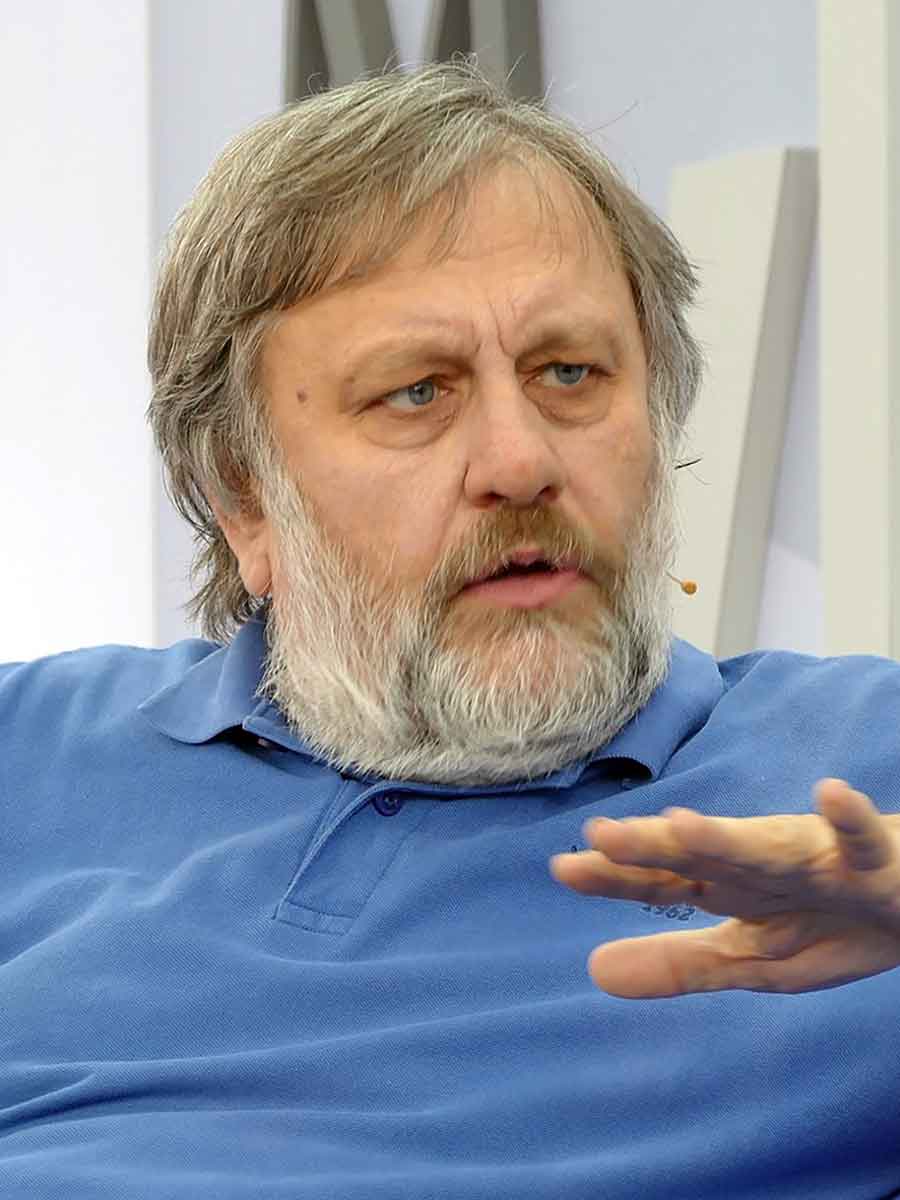
A weakness in Fisher’s Capitalist Realism is that he never offers an argument for his position. Rather, he offers a description of how he sees the world which is then presented as fact. In place of argument, Fisher appeals to more established thinkers. It is as if he believes that by wrapping himself in the cloak of their authority his own claims are supported. The problem with this approach is that his claims are hardly persuasive unless the reader already accepts the ideas of, for example, Fredric Jameson, Slavoj Žižek, Michel Foucault, Jacques Lacan, or Gilles Deleuze and Félix Guattari, etc.
In addition, Fisher neither anticipates challenges to his position nor offers any possible objections to his view. His reliance on the authority of others, to which he continually defers throughout the text, also reveals a second weakness in his work. Despite his frequent criticisms of academia, itself a capitalist institution, Fisher never manages to escape the academy.
As we have seen, Fisher discusses the impossibility of thinking outside of the limits imposed by capitalism. However, Fisher himself never manages to think outside of the rather narrow view of capitalism on offer in the academic institutions of which he was a part. The literature he references in his work is limited to a narrow range of thinkers that at the time dominated thinking in humanities departments.
Who Exactly Are Our Capitalist Overlords?
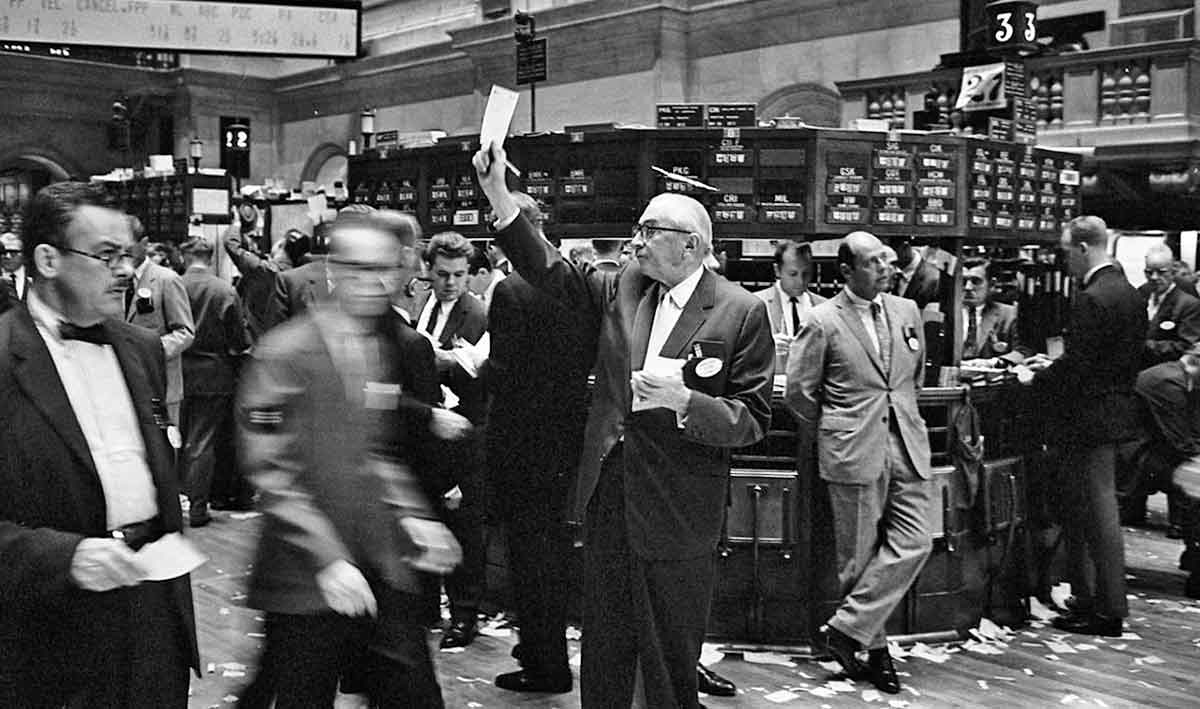
Fisher acknowledges that capitalism has taken different forms over the years and can change again. However, he never really goes into much detail on this subject. With his idea of Capitalist Realism, he seems to want to pinpoint something specific and worthy of a neologism. However, he fails to hone in on any specifics regarding the kind of capitalism he is critiquing.
If he is talking about capitalism in general (that is, that what he is calling Capital Realism applies to all forms of capitalism) then he is adding nothing new to Marx and Engels. However, if he is talking about something new that applies specifically to a unique form of capitalism then he has two problems. Firstly, he will need to show how this unique form is not simply neoliberalism. Secondly, if Capitalist Realism applies only to a specific kind of capitalism that can change (to a different kind) then there is an alternative to Capitalist Realism (some other form of capitalism).
Fisher seems to try to answer the first problem by saying that neoliberals are just an example of Capitalist Realism par excellence; that other alternative varieties of capitalism are also capitalist realist. But if this is the case, there seems to be nothing special about Fisher’s term and we can do without it. That is, Capitalist Realism is just the idea that the rulers control the ruling ideas, which is what Marx and Engels were saying in 1845.
But if Capitalist Realism captures something specific to a unique form of capitalism (neoliberalism) that there is an alternative to (other forms of capitalism), then there is an alternative to Capitalist Realism (and within capitalism). Even if we grant that Fisher is not simply discussing neoliberalism, his claim that it is impossible to imagine an alternative to Capitalist Realism is contradicted by himself.
Is There an Alternative to Capitalist Realism?

Fisher offers an exciting take on the power of capitalism. Every facet of life is under its controlling influence, and it is very difficult to see things other than with the images and ideas with which we are bombarded every day. As Marx and Engels said, the ruling class are the producers and regulators of the ruling ideas of the epoch. As a description of the production and regulation of ideas under capitalism, Fisher does a very good job. However, he stumbles when it comes to pushing home his original ideas on the subject.
His main thesis is that an alternative to capitalism cannot be imagined, but he offers no arguments in defense of this. Indeed, due to the deeply personal nature of his writing, it often appears that it is Fisher himself who cannot imagine an alternative to capitalism.
One of his arguments is that while capitalism has morphed into something new, traditional alternatives such as socialism have stagnated. It is true that the traditional left has struggled in recent times, with many former socialists embracing neoliberalism. However, it is not clear why the left cannot still change into something new: something that rejects neoliberalism and offers a genuine alternative to capitalism. Fisher is too quick to abandon traditional socialism.
Fisher appears over-enamored with a particular genre of anti-capitalist theory espoused by the likes of Lacan, Foucault, and Žižek. While they dominate academia, these thinkers are largely unknown outside of university humanities departments. Universities themselves are hardly bastions of anti-capitalist action; limiting one’s ideas to those found within the academy is to limit one’s view of capitalism.
Ultimately, while Fisher successfully highlights the problems of opposing neoliberalism, he fails to show that there is no alternative to Capitalist Realism. Or even that Capitalist Realism is something other than neoliberalism.