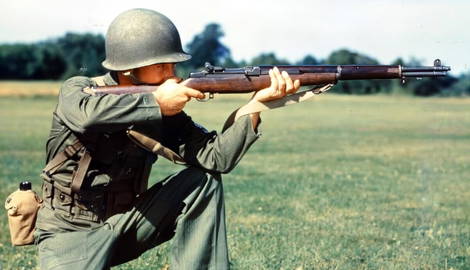

American forces in the two world wars often relied on heavy firepower to force their way through enemy lines. Yet, their rifles were just as crucial to their survival. Going from slow, bolt-action rifles like the Springfield or the Lee-Enfield to the M1 Garand or M1 Carbine, American riflemen became more effective as they gained access to better rifles in battle.
1. M1903 Springfield
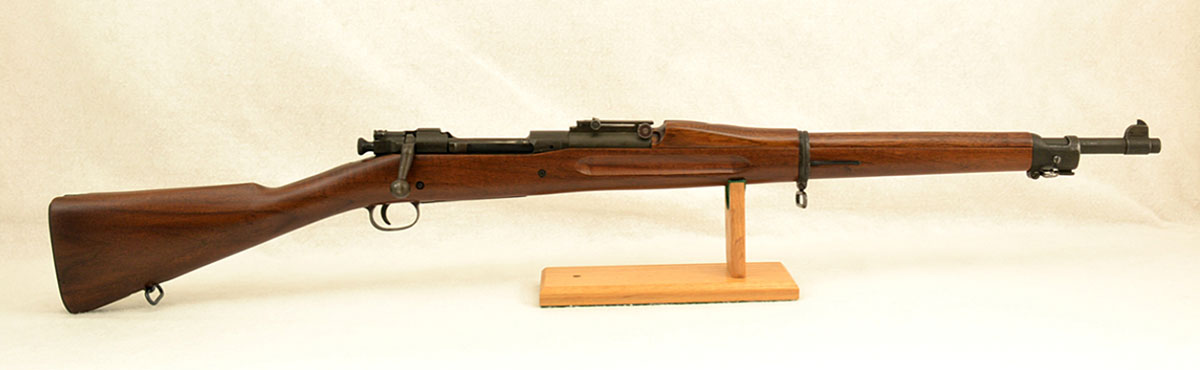
After the Spanish-American War ended, a US Army investigative panel urged the government to start issuing soldiers with a more advanced rifle than the Springfield 1892 Krag–Jørgensen. By 1903, Springfield Armory came up with the first bolt-action rifle that would become standard issue for the US military until 1936. It was modeled after the German K98 Mauser and the Springfield Krag–Jørgensen rifles.
The M1903 Springfield rifle used a .30 caliber round with a lot of penetrating power. Each rifle could fit a clip of 5 rounds at a time. It had to be redesigned in 1905 because Springfield developed a bayonet specifically for use on the M1903. Owing to America’s sizable rifle production capacity, tens of thousands of M1903s were available within two years. The rifle would be adapted to fit scopes for use as a sniper rifle. All the major branches of the U.S. military started to use the rifle by the time World War I broke out.
In 1916, the US Army under General John J. Pershing entered Mexico in force to hunt down the warlord Pancho Villa. The American soldiers carried M1903s as their main weapon, and it quickly received a positive reception. In WWI, Springfield made some upgrades to the rifle by changing the bullet that was used. Even after its replacement in 1936, it was still used extensively, either as a sniper rifle or as an honor guard weapon. From 1903 to 1949, over three million units of the M1903 were produced at Springfield’s armory, either for use by the US military, for sale to other countries, or for public use as a hunting rifle.
2. M1917 Enfield
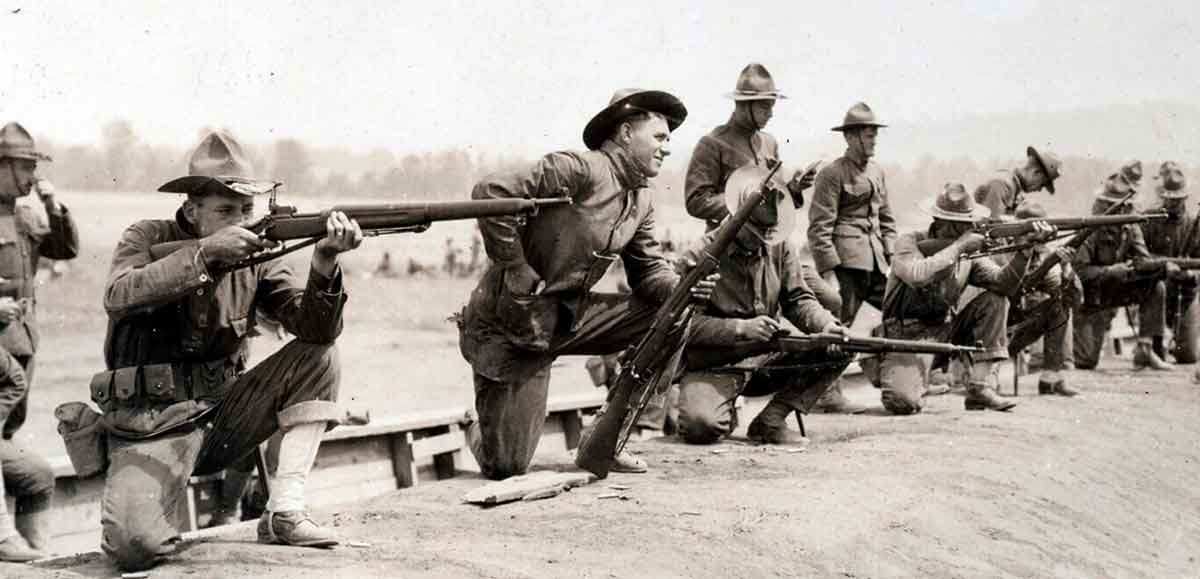
To complement the M1903, Remington and Winchester began producing the M1917 rifle, also known as the American Enfield. During the war, Britain was in desperate need of more rifles for its troops. London hoped that American companies could produce a rifle similar to the Small Magazine Lee-Enfield (SMLE) in use by British forces. Remington and Winchester agreed, hoping to turn a profit and get the attention of the US military.
The M1917 could use both the .303 caliber round used by the SMLE or the .30 caliber Springfield. It proved to be so popular that it actually became the main rifle of choice for much of the US Army in Europe in 1918. Like the M1903, it fit five-round clips, although it could fire a little faster. Its range, over 550 yards, was similar to the M1903, however, it was not modified for use by sniper units. Remington and Winchester also invented a specific blade for use as a bayonet on the M1917. Both companies had many factories to produce the M1917, meaning that it rivaled the M1903 in quantity produced.
By 1918, many American soldiers decided to use the M1917 because of its handiness and ability to fire rapidly. The famed Sergeant Alvin York used one during his well-known charge towards German positions in the Meuse-Argonne forest. However, it was put aside in favor of the M1903 after the war finished, with only a couple of mortar battalions retaining them. Between 1917 to 1919, around 2,200,000 were produced, a major feat by Winchester and Remington.
3. M1918 Browning Automatic Rifle
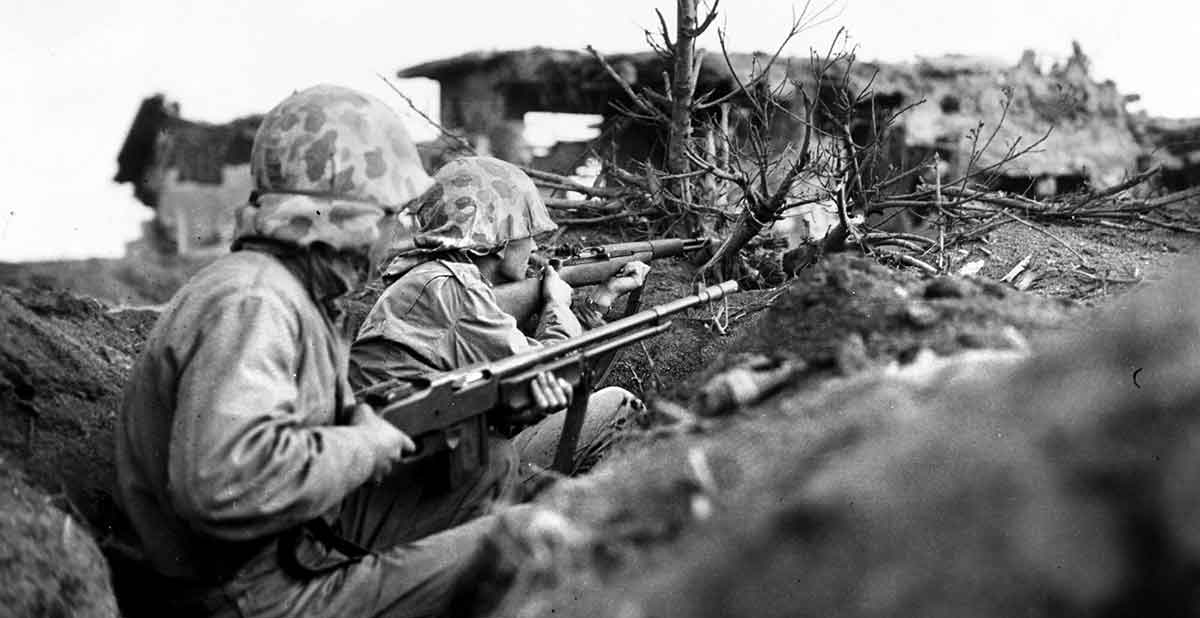
The Browning Automatic Rifle (BAR), designed by John Moses Browning in 1917, was developed in response to the trench warfare stalemate of World War I. Modeled after the Lewis Gun, the BAR was chambered in .30 caliber Springfield and featured a 20-round detachable box magazine. It could fire in both semi-automatic and fully automatic modes, with a rate of fire of up to 650 rounds per minute. The weapon was quickly adopted by the US Army and first saw combat in the closing months of World War I, becoming the first automatic rifle used by the American military in its history.
During the interwar years, the BAR underwent modifications, resulting in the M1918A2 variant employed extensively during World War II and the Korean War. It became a core component of US infantry squads, valued for its portability and firepower. However, its relatively low magazine capacity and heavy weight limited its long-term effectiveness. Many American GIs and Marines used it as a fire-suppression weapon but did not mount it to a bipod like they did with light machine guns.
The BAR saw service again during the early stages of the Vietnam War, though it was gradually phased out over time. Over its 55-year period of use, 350,000 were produced by Browning. It was extensively used by American forces during both world wars and by other friendly nations such as the South Korean Army.
4. M1941 Johnson Rifle
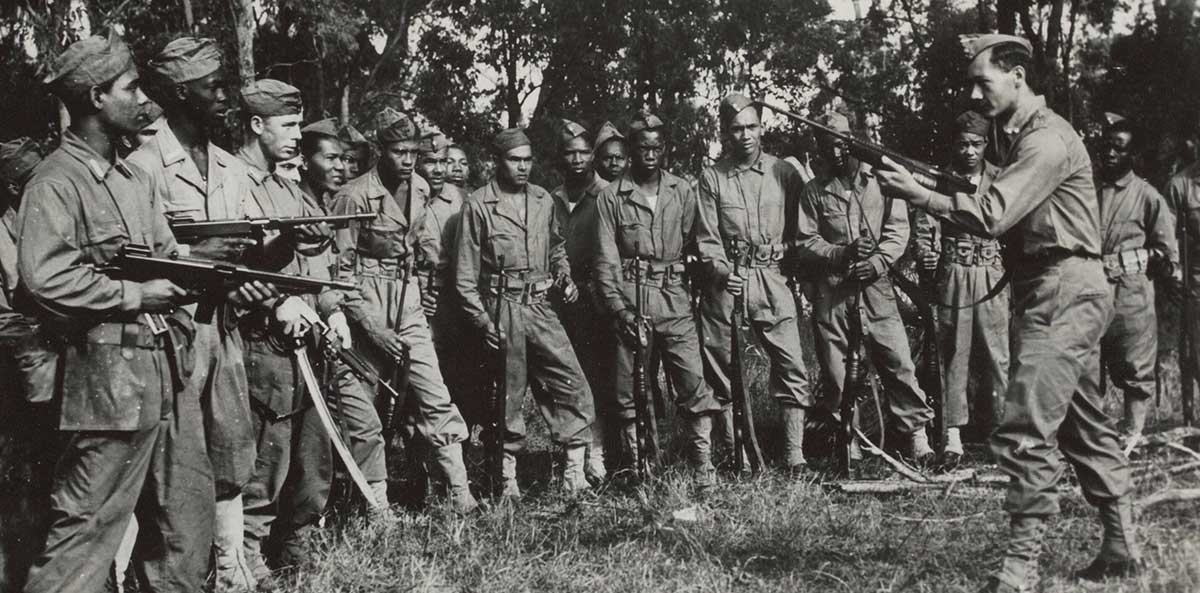
By the 1930s, American arms manufacturers were being asked by the military to produce semi-automatic rifles that could replace the bolt action rifles then in use. The aim was to provide American forces with a weapon that had a higher rate of firepower. American Marine officer and lawyer Melville Johnson wanted to create a weapon that rivaled the M1 Garand going into production and created a rifle with a ten-round rotary magazine that fit two five-round clips at a time. The rifle was relatively short and fit a .30 caliber round similar to prior American rifles.
However, the M1941 Johnson had a reputation for low reliability and was not in favor among American infantry. Its short barrel and complex design meant that it was inaccurate and could fall apart easily when stripped down. As a result, the Johnson never gained the fame of the Garand and was not mass-produced. Some Marine units used it in the Pacific War but it did not see much combat except for some early battles in the Pacific.
The US government hoped to sell some of the Johnson rifles it had to partner forces of the United States. For instance, the Dutch garrison in Indonesia equipped some of its infantry units with them. Chile placed an order for thousands of them in 1940 in case of a war with Bolivia. However, the failure of Johnson Manufacturing to turn a profit meant that the company filed for bankruptcy, stopping any rifle production. A mere 20,000 were produced before the company shut down.
5. M1 Garand
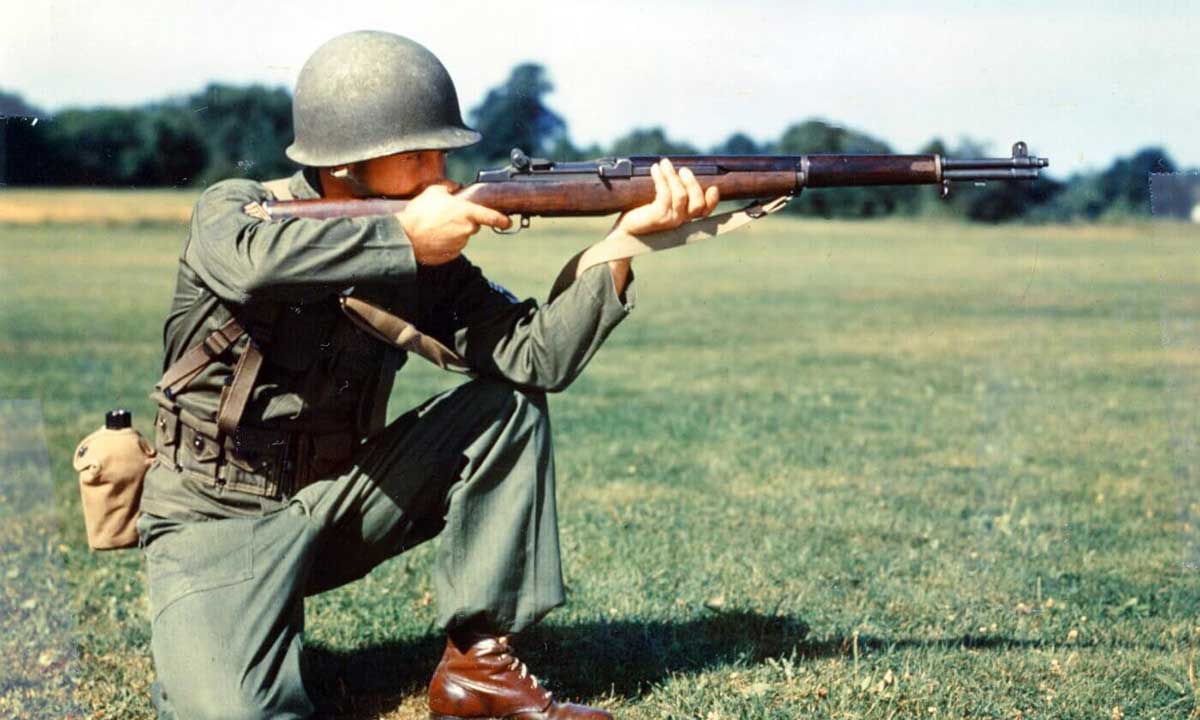
When Canadian-American rifle designer John Garand first created the T1E2 rifle, later the M1, he became one of the most influential arms inventors in American history. The M1 became the first semi-automatic rifle to be produced for the American military en masse. Thanks to its versatility and rate of fire, it became a very popular weapon among American servicemen during and after the Second World War. Over five million M1s were produced by Springfield, Winchester, and other companies from 1934 to 1957. Its features were so well-regarded that Soviet weapons designer Mikhail Kalashnikov based the AK-47 on the internal design of the M1.
The M1 fired a .30 caliber round in clips of eight. Once a rifle expended all of its ammunition, the clip popped out automatically and made a ping sound. Its barrel was designed to fit several different types of bayonets and even could fit a grenade launcher. Some models produced included scopes to enable their use as a sniper rifle. Because they did not require too many spare parts, they were prized for their reliability. Most riflemen in each squad carried an M1, allowing American forces to lay down a very rapid rate of fire.
John Garand sold the patent rights of the M1 in 1936, meaning that he never made a dime from the sale of this weapon. In 1965, the M14 took its place as the main American battle rifle, although it remained in use for decades later as a ceremonial weapon. Its widespread use by American servicemen made it one of the most well-known rifles of any army in the Second World War.
6. M1 Carbine
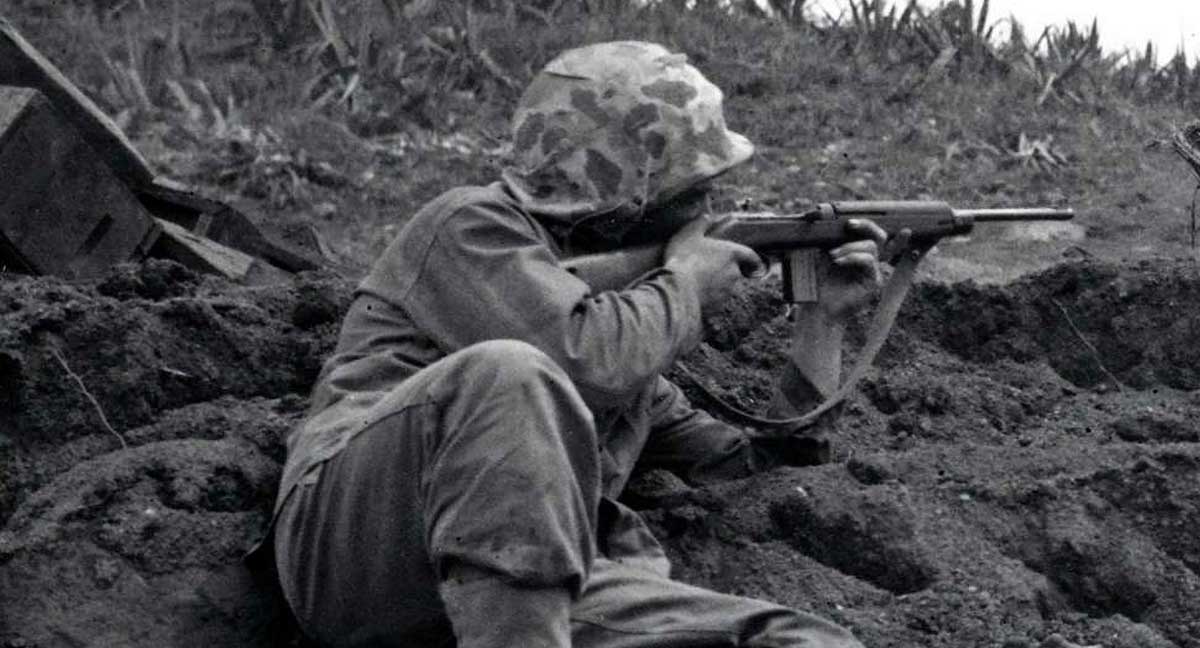
The M1 Carbine was developed just before the United States entered World War II to address a key need: providing rear-echelon and support troops with a weapon more powerful than a pistol but lighter than the M1 Garand. The US Army Ordinance Board wanted to equip its riflemen with a weapon of this description that ensured a high rate of fire. Adopted in 1941, the carbine used a .30 caliber cartridge and fed from a 15-round detachable magazine. It was semi-automatic and a light weapon, making it ideal for paratrooper, tanker, and marine units operating in close quarters.
Though it was never intended as a frontline combat rifle, the M1 Carbine was quickly adopted in virtually every theater of the war. Its light recoil and easy usability made it especially appealing for troops with limited infantry experience. By war’s end, over six million M1 Carbines had been produced by contractors including Inland, Winchester, and IBM, making it the most mass-produced US firearm of World War II.
The M1 Carbine proved highly effective in the Pacific, where close-quarters jungle fighting was common. Specialized variants were created, such as the M1A1 with a folding stock for airborne units and the M3, equipped with an infrared scope for night fighting. Despite some concerns about its stopping power, the M1 Carbine earned a strong reputation for reliability and versatility. It remains one of the most iconic small arms of World War II and a symbol of the US military’s adaptability during the conflict.