
When we go back to the very beginning of Western philosophy, we can easily notice that the Presocratic philosophers were obsessed with the universe as a whole. Some authors might even argue that philosophy emerged from such an obsession because they were all trying to find the meaning and root cause of the world we live in. Philosophers such as Thales of Miletus, his followers Anaximander and Anaximenes, Heraclitus, Pythagoras, Leucippus, and Democritus all proposed different theories about the nature and origins of our world. However, Empedocles, a Sicilian polymath, famously blended the roles of scientist, prophet, physician, and philosopher. This is what makes him unique among the Presocratics.
The Life of Empedocles
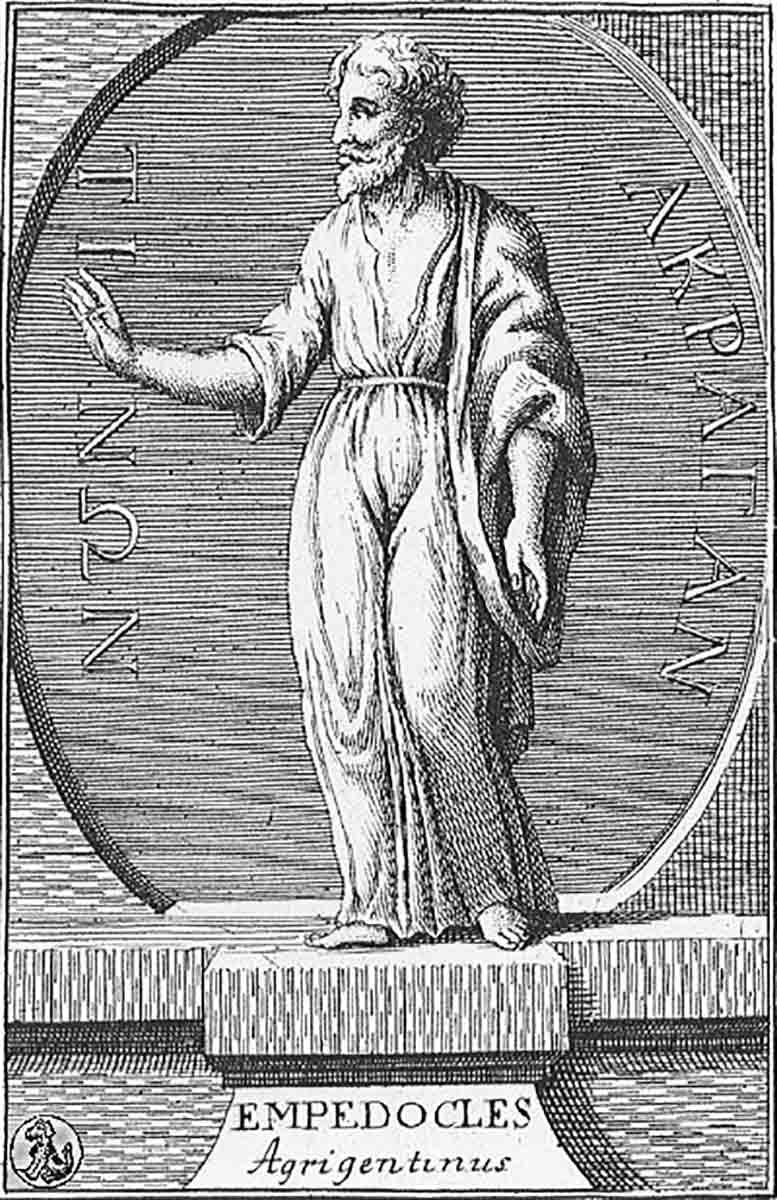
Empedocles (c. 495–435 BC) was from Acragas (modern-day Agrigento, Sicily). Unlike other philosophers, Empedocles was extremely extroverted. A man of constant dialogue, he wandered from place to place just to share a conversation with those curious about philosophy. He was a master rhetorician, so skilled that legend has it his audiences were left utterly speechless, particularly when he was teaching. Because of that, we can even say that Empedocles was the founder of rhetoric as a discipline, even though Aristotle provided its methodology.
He was born into a wealthy, noble, and culturally educated family, which is why he lived the way aristocrats of the period lived. Because of that, he was involved in local politics and played a role in public affairs, and people often saw him as their leader. There are many legends and myths surrounding his life, but the most fascinating moment is his legendary death.
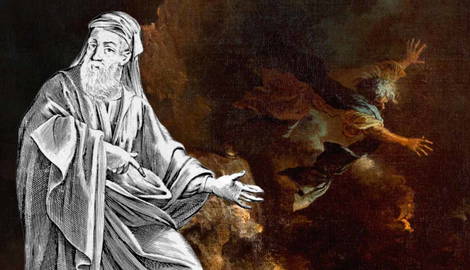
Near the end of his life, Empedocles sought to prove his divinity by leaping into the active volcano of Mount Etna. According to the legend, the volcano consumed him entirely, except for one of his bronze sandals, which was later expelled by the lava, exposing his mortality. While perhaps more legendary than historical, the tale serves to emphasize the aura of the supernatural that frequently surrounded him.
Metaphysics
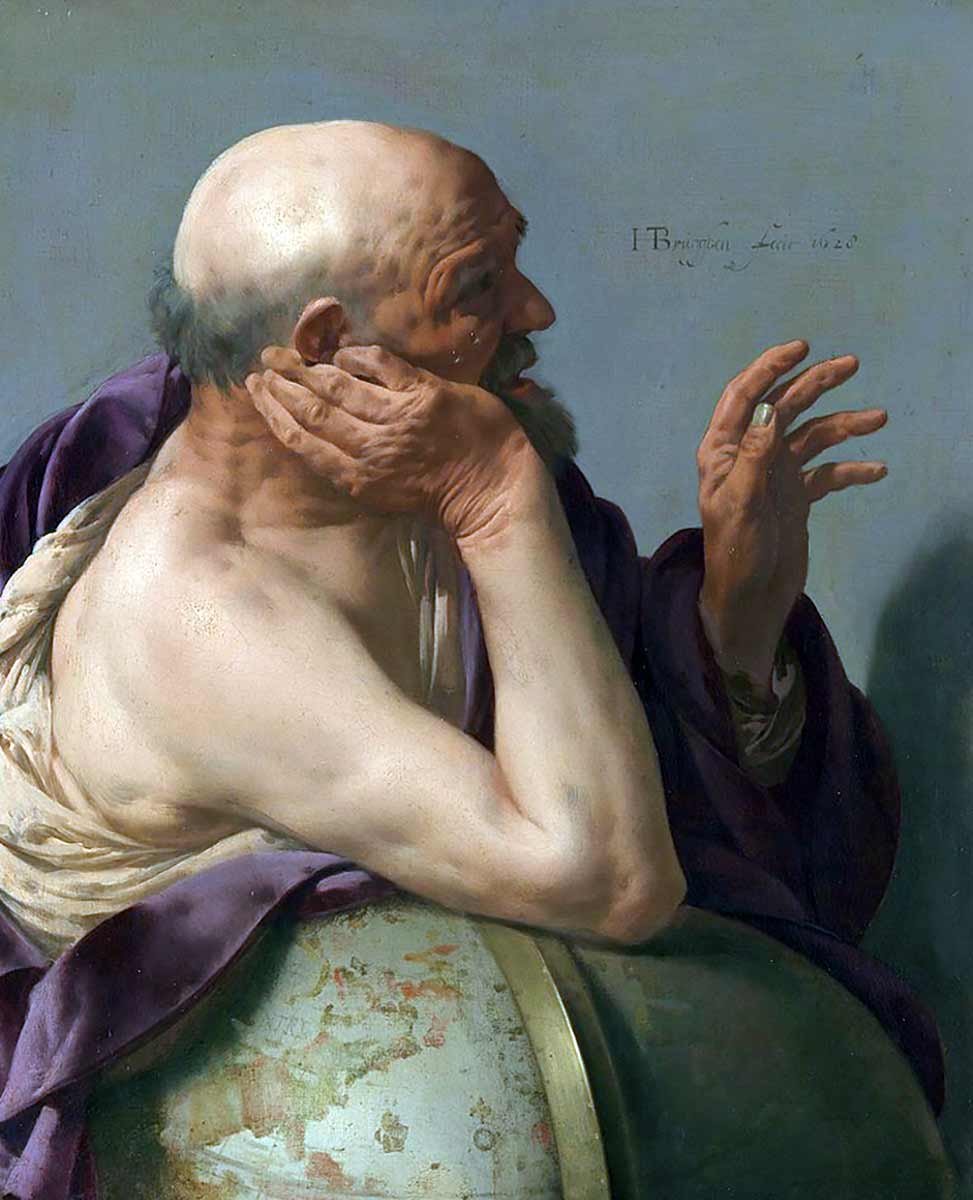
According to Empedocles, everything in the material world has its roots in the four natural elements, namely earth, air, fire, and water. Departing from the terminology of the philosophers who preceded and followed him, Empedocles did not classify these as ‘elements.’ Instead, he conceptualized them as primary substances with the inherent capacity to generate all things in the cosmos. These four substances are eternal and immutable, while the objects they form are transient and ever-changing.
We can clearly see that his view is the exact opposite of the views already present in ancient philosophy. The leading historians of philosophy, such as Jonathan Barnes, suggest that Empedocles’s philosophy is in direct opposition to that of Heraclitus and Parmenides. Barnes points out that Empedocles’ philosophy is in direct contrast to Heraclitus’ notion of panta rei, that everything in the world is in flux, and that the only constant thing that exists is change itself. On the other hand, Empedocles also disagrees with Parmenides, who held that all variety and multiplicity in the world are only illusions; it is only the One that truly exists, and the particular entities and beings in the world are only manifestations of the One.
Cosmology
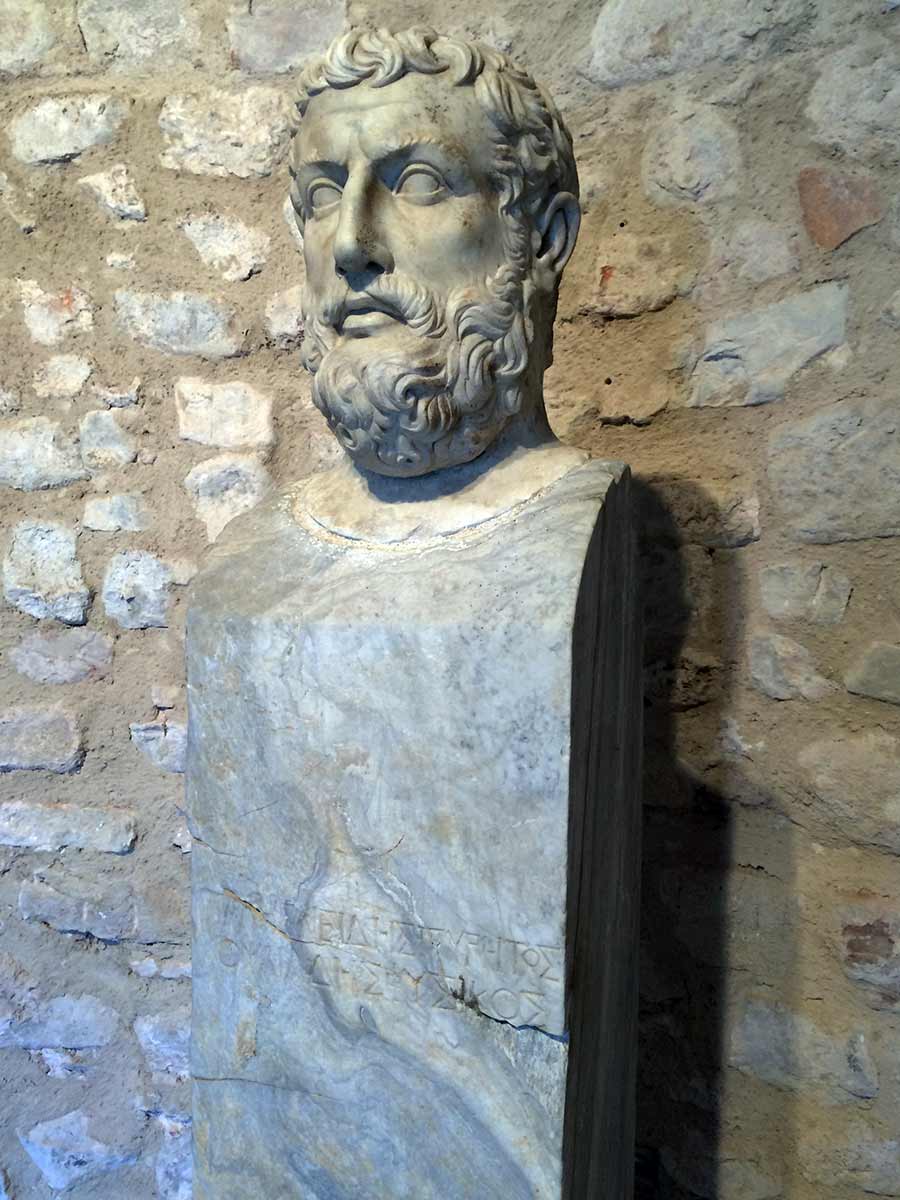
Now that we are familiar with the core concepts of his metaphysics, it’s time to show how they come into play in Empedocles’ philosophical system. Empedocles called earth, air, fire, and water “roots” instead of elements, or rhizomata in Ancient Greek. Along with the four roots, there are two powerful forces, Love (or Philia) and Strife (or Neikos). Love and Strife act as the dual engines of cosmic change, directing the mixture and dissolution of the four roots to produce the transient phenomena of our reality.
Love, says Empedocles, causes things to come together, to attract themselves, and in the end, to unite themselves. On the other hand, Strife causes things to distance themselves from one another, to reject one another, and, in the end, to decompose and even decay. But it’s important to note that Empedocles did not favor one over the other. Love is not a synonym for good, or Strife for bad. Instead, both are equally important and essential to the creation of the world.
How Do Love and Strife Work?
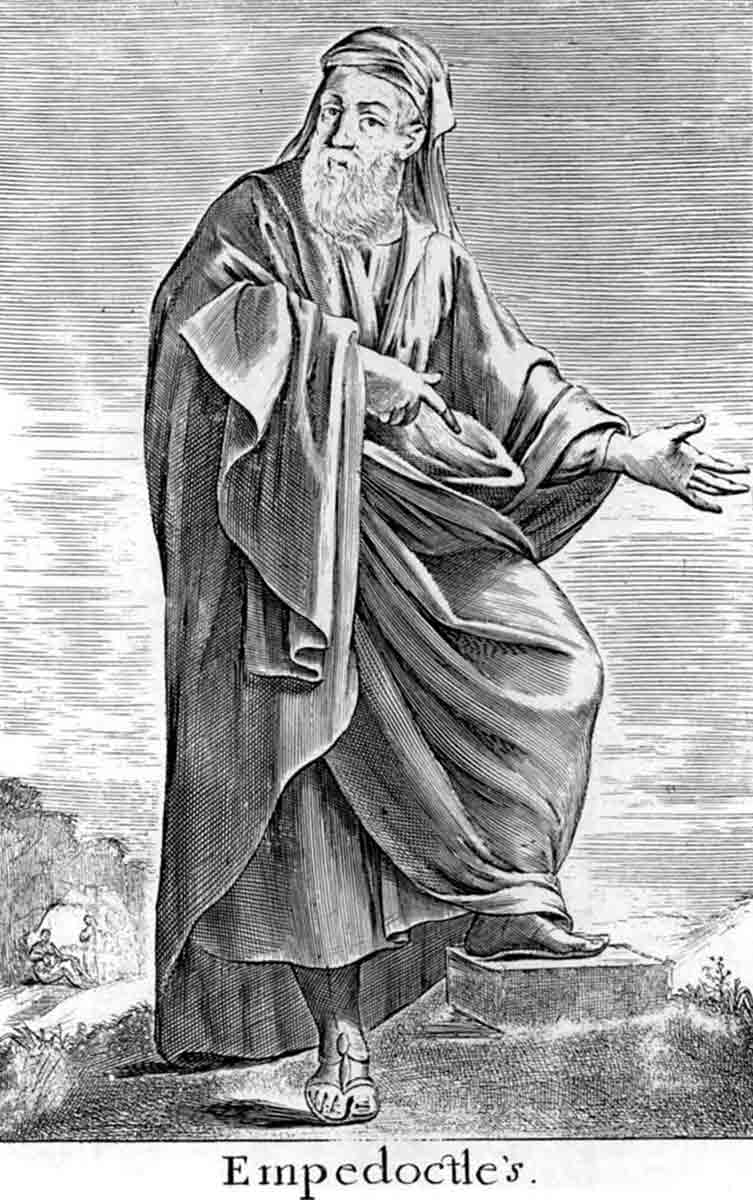
When one of these forces dominates and reaches its peak, life becomes unbearable and then dies. Love has the tendency to attract things together and to unite them, but in its extreme, it can create a very dense and fused atmosphere in which we cannot even make a distinction between one thing or another, nor will there be space for things to act and interact with each other. However, when Love begins to weaken under the influence of the principle of hate, the dense atmosphere begins to spread, and things can begin to separate from each other. That is when matter gets defined, and that is when distinct things start to exist!
However, as hate reaches its peak and represses the principle of Love completely, it causes all things in the atmosphere to distance themselves from one another, then separate, and, finally, fall apart, decay, and die. Everything will be dead until the principle of Love comes into play again, bringing the forces of attraction that will cause things to come together once again and unite, which will bring forth life itself. With its power, Love attracts all elements in the atmosphere like a magnet, reducing the distance between them and thereby regenerating the conditions necessary for life to be born.
Now we have a clearer picture of how Empedocles envisioned the creation of life and the universe. We can see that both principles of Love and hate are equally important and essential to the whole process, and that each contributes with its own powers and capacities.
Epistemology
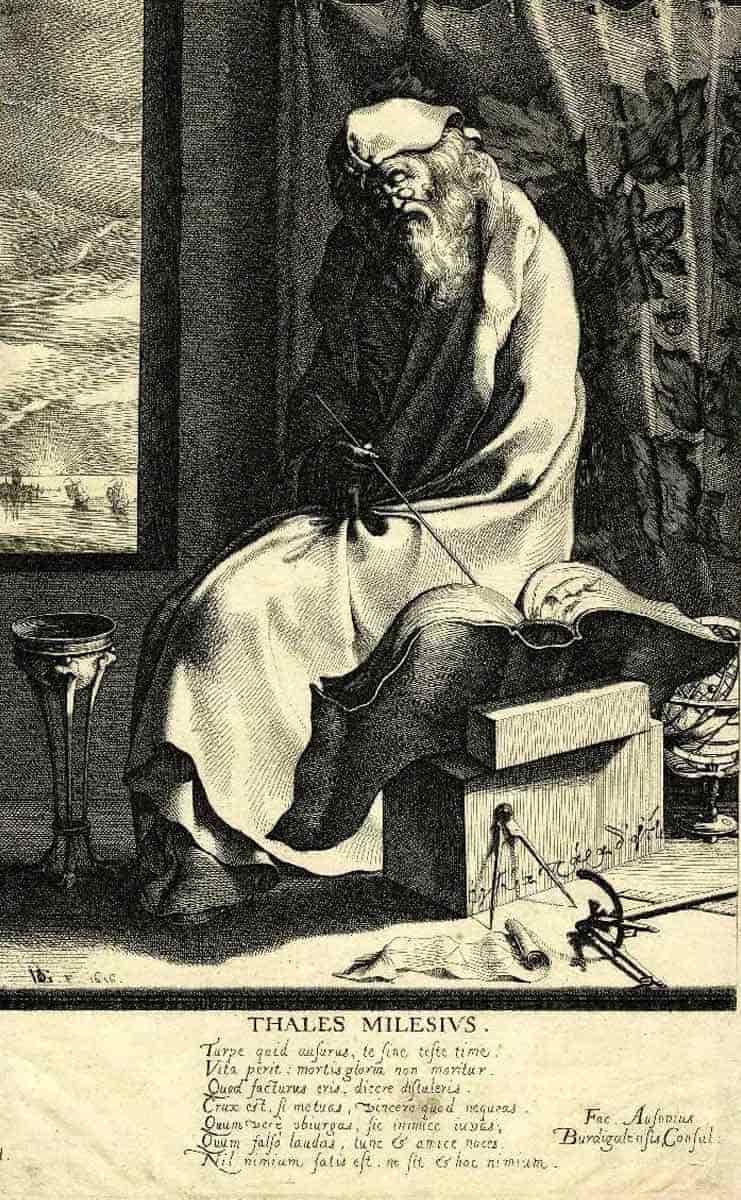
Now that we’ve shown Empedocles’ main metaphysical and cosmological views, all that’s left is to present his epistemology and show how these three fields fit together. At its core, Empedocles’ epistemology seeks to explain the physiological mechanics of perception and cognition. As we shall see, these processes are integrated into his broader philosophical system, operating on the foundational principle that we perceive the roots of the cosmos through the corresponding roots within ourselves.
According to Empedocles, perception is enabled by the impulses that flow from things in the world and reach the pores of the human perception system. These pores have different sizes and shapes, so they only “accept” impulses that match them in size and shape.
For example, we perceive bright colors thanks to the pores that absorb fiery impulses, but we perceive dark colors thanks to the pores that absorb watery impulses. Also, we have the sense of smell thanks to the pores of the breath concentrated in the nose, and we can hear thanks to the absorbing pores concentrated in the ears.
Ultimately, his theory of perception rests on the foundational law of correspondence: the principle that perception is only possible through the interaction of like with like (homoion homoio). Empedocles applies this law to cognition and ethics as well. We perceive external roots, love, and divinity through their internal counterparts. This mechanical symmetry dictates that sensory inputs shape thought and emotion, ultimately allowing the internal divine to attract and absorb the universal divine.
The internal divine fragment within the human soul acts as the sensory and spiritual bridge to the Sphairos, the god-like state of total cosmic harmony, where the four roots are perfectly unified and undifferentiated under the absolute dominion of Love.
Aristotle’s Critique of Empedocles
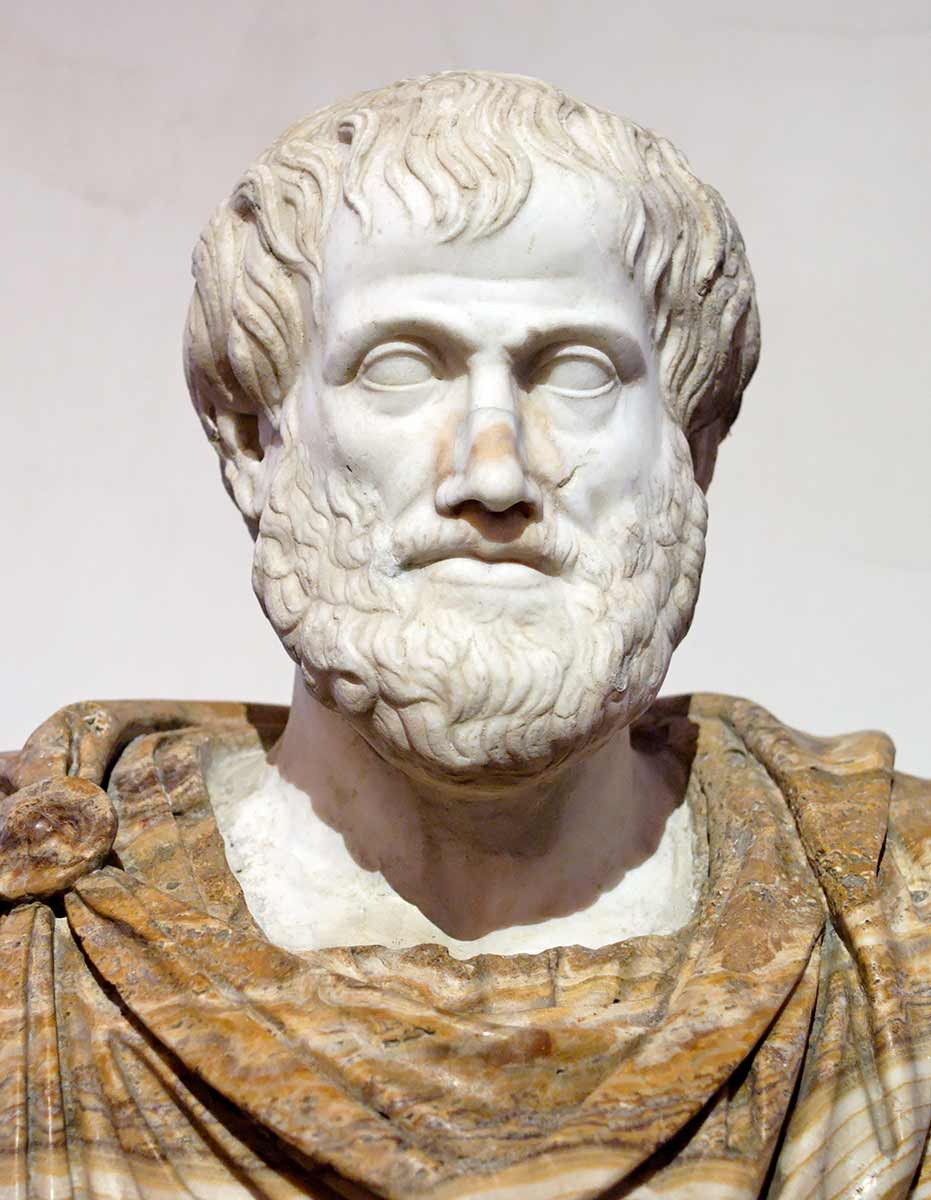
However, some thinkers were not very fond of Empedocles, especially his epistemological views. The primary friction between Empedocles and the later Peripatetic school (Aristotle and his successor, Theophrastus) lies in the conflation of capacities. In De Anima, Aristotle argues that Empedocles’ system is immature because it fails to distinguish between noēsis (intellectual thought) and aisthēsis (sensory perception).
For Aristotle, thinking is a distinct faculty of the soul that can grasp universals, whereas perception is tied to particulars. By reducing both to the physical interaction of “like with like,” Empedocles effectively stripped the mind of its unique status. Theophrastus further scrutinized this in his treatise De Sensibus, pointing out the logical inconsistencies in the concepts of pores and impulses. He was questioning, for instance, how the size of a physical pore could ever account for the complexity of a subjective thought, thereby influencing some of the concerns of contemporary philosophers of mind.