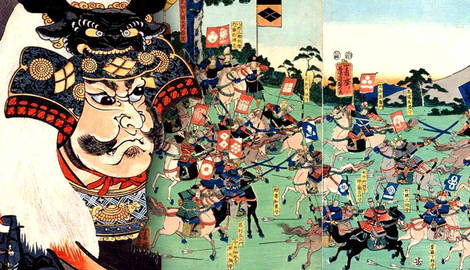

The Battle of Uedahara was fought in 1548 between the famed warlord Takeda Shingen and Murakami Yoshikiyo, close ally of another samurai legend Uesugi Kenshin. Although it was primarily a brutal engagement between mounted samurai and organized infantry, it is remembered today as possibly the earliest battlefield use of firearms in Japanese history. However, it was not a simple clash between bullets and swords but rather a fascinating case study of samurai tactics and—despite heavy losses incurred by Takeda Shingen’s army—the limitations of gunpowder in 16th-century Japan.
Firepower in Feudal Japanese Warfare
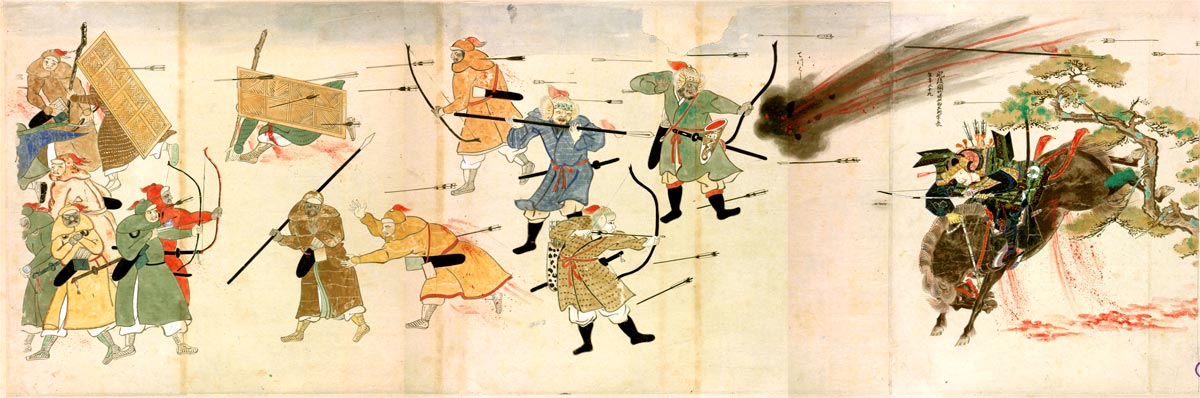
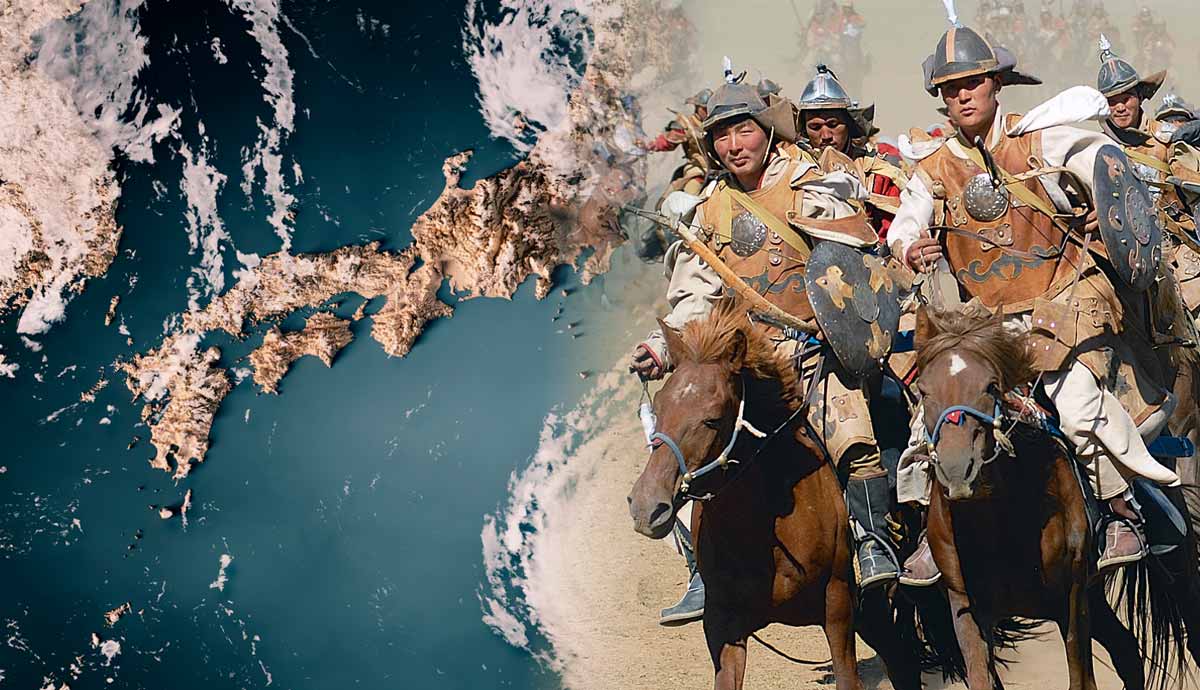
Long before firearms became closely associated with the armies of Japan’s Warring States period, different forms of gunpowder weapons had already reached Japan through China and Korea. The country first got a taste of them during the Mongol invasions of 1274 and 1281 when the armies of Kublai Khan shocked samurai with grenade-like bombs. Later developments introduced Japan to the China-devised handheld teppo cannons before the Portuguese brought advanced matchlock guns to the country in 1543. The latter were not used during the Battle of Uedahara.
Historical records instead point toward older Chinese-derived weapons that differed significantly in construction and operation from the weapons presented by Europeans. However, though the teppo were not as advanced, some samurai commanders had been experimenting with firearms prior to the Portuguese technology appearing in Japan.
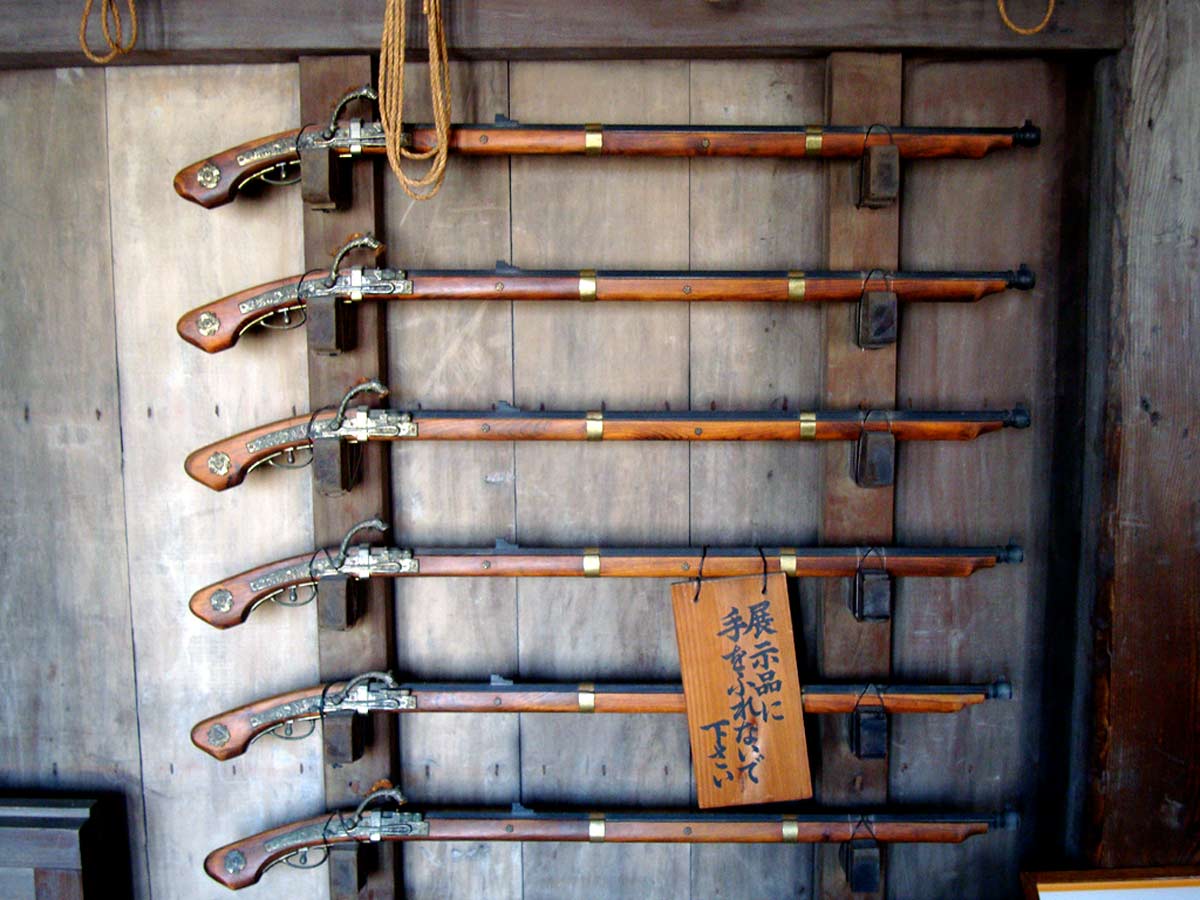
Murakami Yoshikiyo reportedly had a carefully selected group of soldiers receive teppo training before Japanese copies of the Portuguese muskets, the so-called tanegashima guns, became easily available in his native Shinano Province (modern-day Nagano Prefecture). Still, it would not be correct to think of these warriors as specialized riflemen. Yoshikiyo’s teppo troops had orders to discharge their weapons on command and then abandon them in favor of swords to engage in hand-to-hand combat.
Those instructions reveal that firearms only had a supporting role within the broader battle tactics of feudal Japan. They complemented formations of archers and spearmen instead of replacing them, while cavalry charges and close combat continued to determine the outcome of a battle. Firearms probably helped a little at Uedahara but are better thought of as another stage of Japan’s early experimentation with gunpowder before tactics evolved to fully utilize their potential.
When Rival Ambitions Converged Upon the Plains of Uedahara
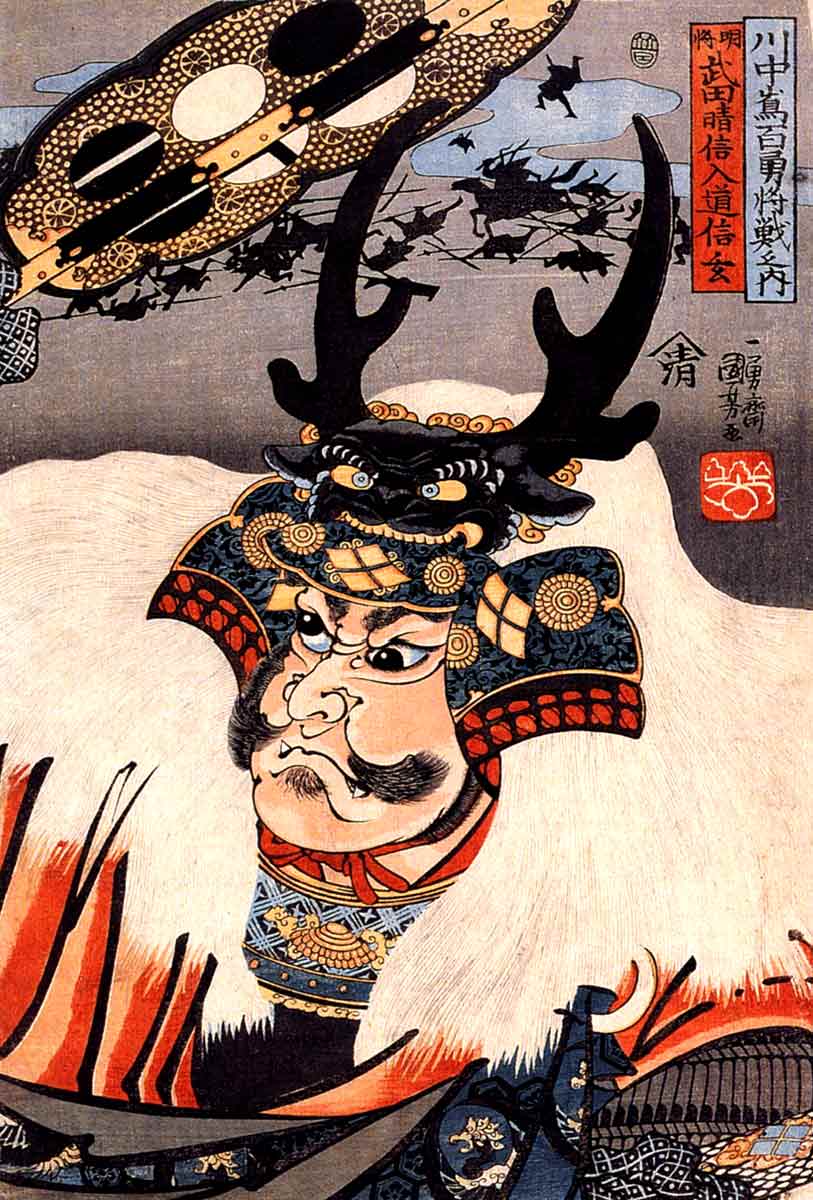
Takeda Shingen entered Shinano as part of an expansion campaign intended to secure neighboring territories and strengthen his position against competing regional powers in an era when both the imperial and the military government had collapsed. Some warlords had taken this opportunity to become autonomous rulers of their fiefs. Others like Shingen tried to unify the country, or at least parts of it, under their banner. In the 1540s, Takeda’s successful advances had placed him dangerously close to the lands of Murakami Yoshikiyo, an influential local ruler closely connected with Uesugi Kenshin, who would later become Takeda’s chief rival. The conflict between Murakami and Takeda was unavoidable.
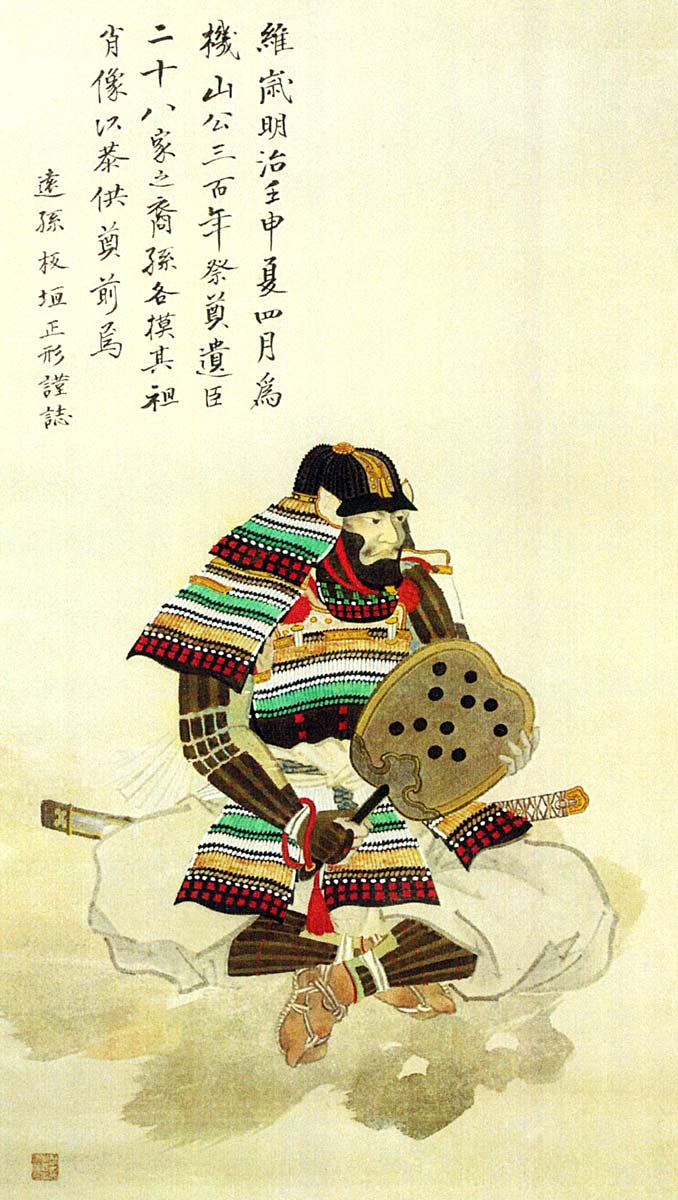
Murakami responded to Takeda’s movements by mobilizing a large force with the intention of recovering lost ground and driving the invaders from Shinano. Shingen personally readied to meet Yoshikiyo on the battlefield, departing his native Kai Province in March 1548 and moving north with reinforcements under the veteran commander Itagaki Nobukata. Due to a mix of geography and caution, both armies converged near the sprawling Shinano plain of Uedahara.
Although surviving figures differ, thousands of warriors fought on each side. The historian Stephen Turnbull sets out the varying claims about the size of each army from the Japanese sources:
“In Myohoji-ki, Shingen is said to have left Kofu with 5,000 men and been joined by 2,000 more, making 7,000 in total against the Murakami’s 5,000 men. Koyo Gunkan raises both figures somewhat, but it is fairly safe to say that the battle was fought between two sides that totaled at least 12,000 men of whom almost one-quarter – 2,900 men would be killed.” (Turnbull, 2019, p. 34)
However, more important than the precise numbers of samurai were their leaders’ tactics. Shingen intended to exploit the reputation and power of his mounted samurai, placing a lot of confidence in Itagaki Nobukata and his vanguard of veterans. Murakami, however, did not wait around doing nothing. His scouts investigated Takeda movements, allowing him to anticipate the cavalry assault and organize a proper response.
Dedicated spearmen stood ready to receive the cavalry charge while selected archers occupied strategically important positions to offer support. Alongside them, a detachment of troops received teppo and ammunition, with individual officers each directing smaller units of marksmen. As Murakami recounted himself to Uesugi Kenshin in the Koyo Gunkan chronicle: “As defense against the horsemen I chose two hundred skilled shooters out of the army and to one hundred and fifty soldiers I gave five well made arrows and a bow; and to the rest gave matchlocks imported in the seventh year of Eisho [1510] with three bullets. They were ordered to shoot when they were told and to throw them away later and fight with swords” (Turnbull, p. 133).
Rather than relying on firearms alone, Murakami utilized everything he had to get a leg-up on the Tiger of Kai, hoping to first blunt his cavalry charge before moving to close combat with swords.
Weapons Old and New Tested on the Field of Uedahara
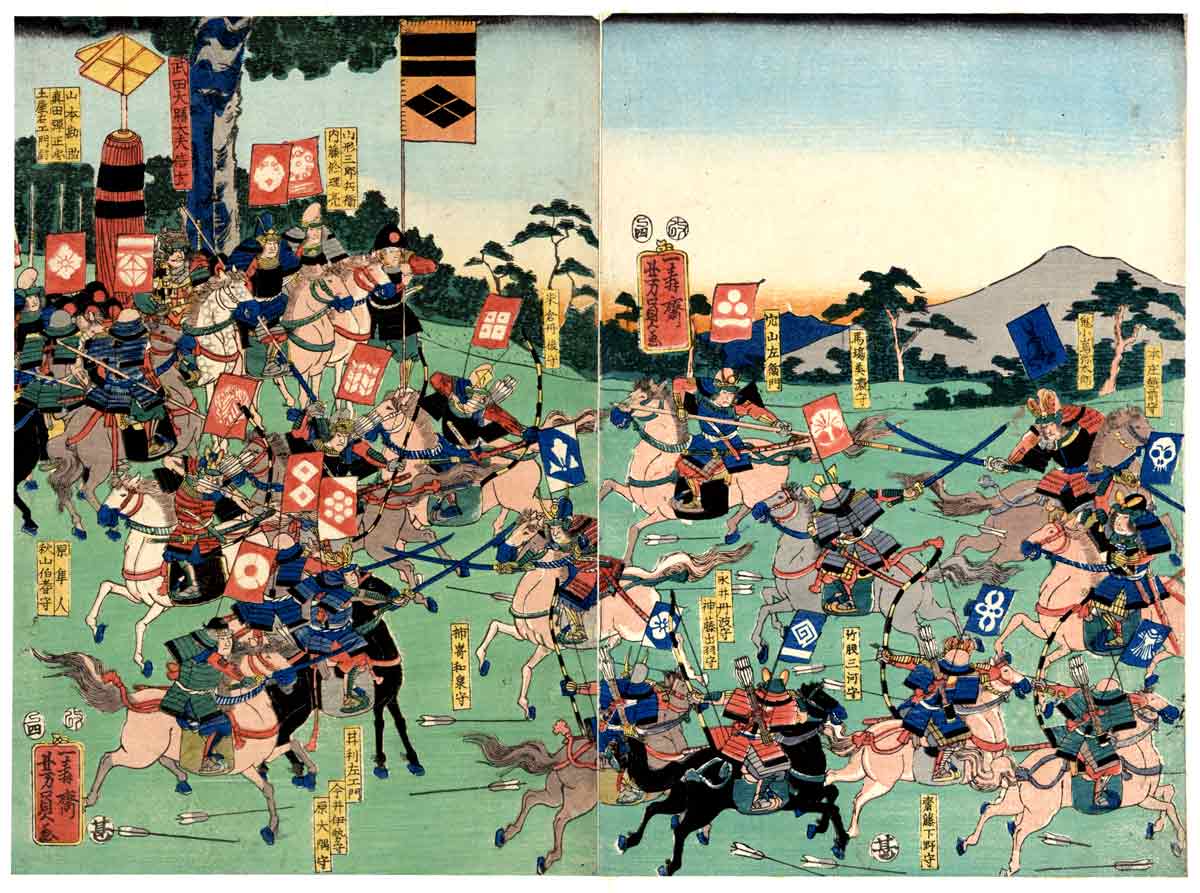
The battle opened with Itagaki Nobukata leading an aggressive mounted assault that initially achieved its purpose by breaking through the Murakami front and throwing opposing infantry into disarray. The beginning of the battle appeared to validate Takeda’s confidence in cavalry and offensive action. Yet the initial success sowed the seeds of its own destruction when the vanguard outran Takeda’s supporting forces and the mounted warriors found themselves exposed within enemy ranks.
It was at that time that Murakami’s preparations proved critical. Rather than collapsing under the brutal charge, his trained spearmen closed around isolated riders while archers picked them off one by one or offered covering fire. Surviving descriptions also mention select firearm bearers following their original orders to discharge their firearms and charging against the enemy with swords. Unfortunately, sources provide little detail about how many shots were fired or how much damage the teppo had inflicted on Takeda’s cavalry before the hand-to-hand combat. Stephen Turnbull noted that the records describe encounters between infantrymen whose principal weapons were still bows or spears. (Turnbull, 2019, p. 30).
Nevertheless, it is undeniable that the response from Murakami Yoshikiyo’s guns sowed confusion among Takeda’s ranks. Itagaki Nobukata became separated from his troops and was ultimately brought down by enemy infantry and killed. Other prominent Takeda commanders also died at Uedahara and even Shingen himself was reportedly wounded. Even so, Murakami’s army also suffered heavy casualties.
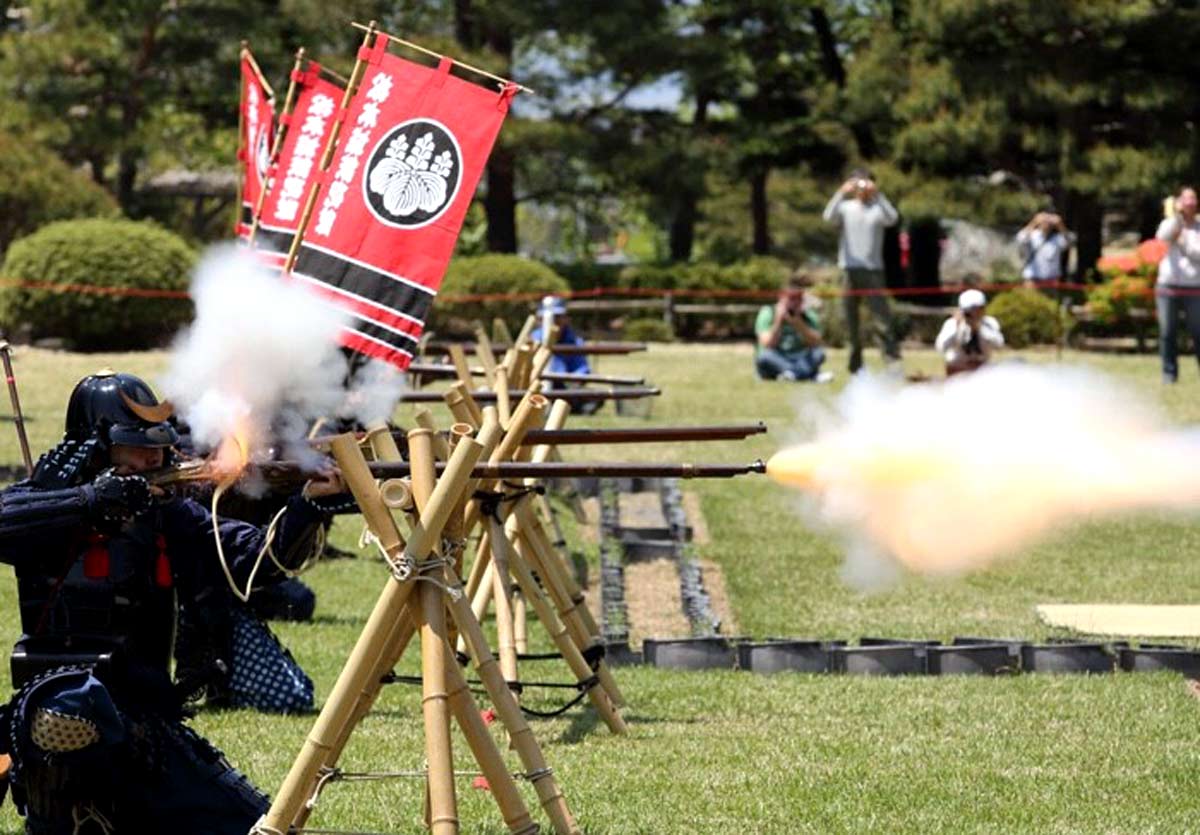
The effectiveness of firearms at Uedahara remains uncertain. Surviving descriptions devote far more detail to spearmen, archers, cavalry action, and close-quarter combat. As such, the battle cannot be called a gunpowder revolution but more of an experiment with gunpowder conducted within conventional samurai tactical doctrine.
Although Murakami had inflicted painful losses and frustrated Takeda, Shingen remained on the field as long as he could before withdrawing, enabling later Takeda lore to claim that his campaign had been at least partly successful. Even so, the deaths of leading commanders and the ultimate failure of the initial cavalry plan made Uedahara one of the biggest failures of Shingen’s early career.
Why Guns Mattered but Did Not Revolutionize Japanese Warfare
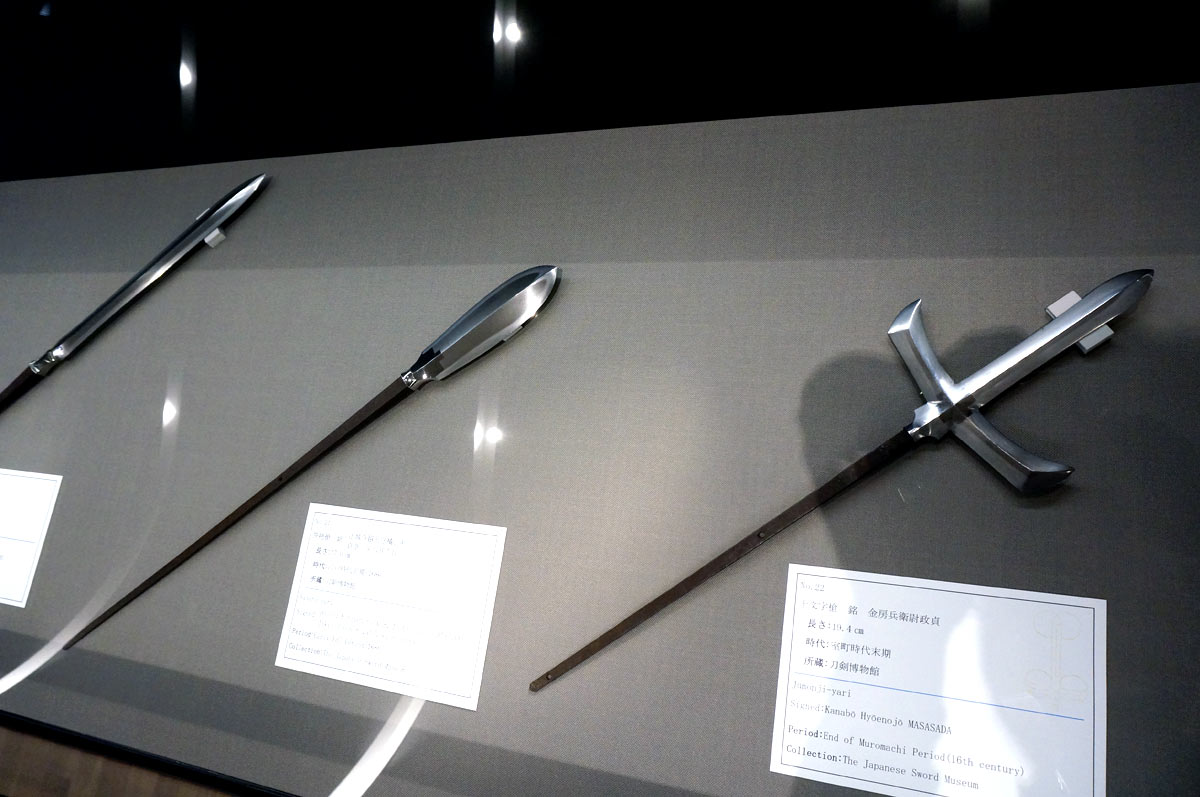
The appearance of firearms at Uedahara deserves attention because it demonstrates that Japanese commanders explored gunpowder technology before its later widespread adoption in the latter half of the 16th century. After the battle, even a relatively small number of firearms on the field forced generals to reconsider timing, organization, ammunition distribution, and coordination. This was because Murakami did not treat guns as curiosities but as tools with limited use that he wanted to maximize by using firearms in tandem with experienced samurai, archers, and spearmen in a primitive display of combined-arms tactics.
The Battle of Uedahara demonstrates why these weapons did not immediately transform Japanese warfare. Murakami’s firearms contingent remained tiny, ammunition supplies were limited, and they were not expected to reload during battle. This proves that commanders had not yet developed strategies exploiting the stopping power of mass volleys. Primitive teppo design may also have reduced battlefield effectiveness of early Japanese firearms compared with later matchlocks.
In the end, the outcome at Uedahara cannot be attributed to guns. Murakami Yoshikiyo succeeded because he anticipated Takeda Shingen’s tactics through reconnaissance, intelligent deployment, and exploited the opportunities created by an overconfident enemy cavalry. Only later, as musket technology improved and commanders refined methods for concentrated fire, would guns become a staple of the armories of Warring States armies.
Uedahara: A Small Step Toward a New Age of Combat
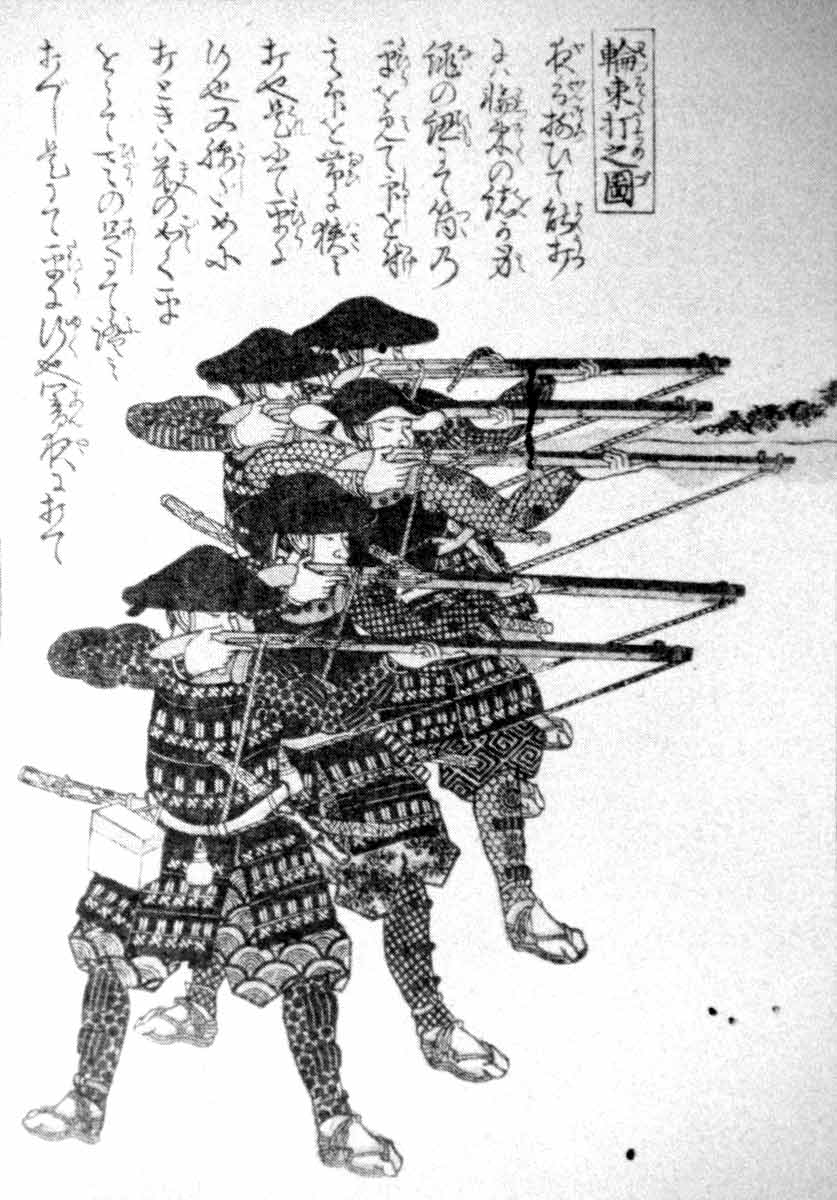
The Battle of Uedahara remains significant because it is a snapshot of Japanese warfare at a moment of transition. Traditional cavalry, disciplined infantry, and early firearms all appeared within the same violent encounter, yet no single element dominated. Murakami Yoshikiyo’s careful preparation inflicted serious losses on a legendary samurai and demonstrated that even famous commanders could be checked through planning and coordinated defense, even if firearms only played a small part. The Battle of Uedahara therefore stands less as the dawn of the age of gunpowder in Japan and more as an interesting proof of concept.
Sources:
- Turnbull, S. (2000). The Samurai Sourcebook. Cassell & Co.
- Turnbull, S. (2019). Samurai versus Ashigaru, Japan 1543–75. Osprey Publishing.