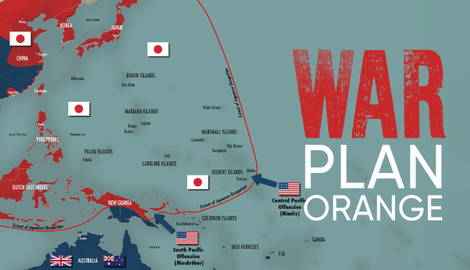

In the early 1900s, a group of American naval officers at the Naval War College in Rhode Island began coming up with a strategy to fight Japan’s navy. While it underwent multiple variations due to technology and geopolitical developments, War Plan Orange remained a major guiding document for American commanders during the Pacific War in the 1940s.
The Birth of the Color-Coded Strategic System
As the United States started to become a major international power, its military and civilian leadership faced the challenge of preparing for war with multiple countries in different theaters. The Spanish-American War, while a major success, revealed some challenges in coordinating the Army and the Navy over large distances. In response, President Theodore Roosevelt created the Joint Army-Navy Board. This was the forerunner to the Joint Chiefs of Staff, though it could only make recommendations and had no decision-making authority. However, its creation helped ease tensions between different service chiefs.
At the same time, this board was tasked with formulating war plans against major powers. These plans were organized by color depending on the country. For instance, the first country to receive a color (black) was Germany due to its increased interest in the Caribbean. Other countries followed suit and soon, there were 17 different color-coded plans in effect, including one (white) that envisioned a civil war in the United States. Different parts of the British Empire received different shades of red.
In order to prevent the plans from leaking and causing international incidents, the Board kept them heavily classified until the 1970s. Senior admirals and generals often lobbied for extra resources to match elements of each war plan, but they could not disclose the plans to Congress. Most of the plans never came to fruition and were often discarded. However, some of them became very important to American warfare in the 20th century.
Why Japan Became the Primary Pacific Threat

In 1904-1905, Japan trounced Russian forces in Manchuria and the Pacific. Their combined strategy of destroying two of Russia’s most powerful fleets and pushing its ground forces out of most of Manchuria proved very successful and convinced many foreign observers that Japan was the rising power in the Pacific.
Although the United States had brokered favorable terms for the Japanese in the Treaty of Portsmouth, President Theodore Roosevelt compelled the Japanese negotiators to drop their demands for reparations from Russia. Many Japanese believed that the United States was trying to hold them back and began to consider the US to be an enemy. This phenomenon did not go unnoticed in Washington and the Board began focusing more on its contingency plan, codenamed War Plan Orange.
Many of America’s possessions in the Pacific were vulnerable to an attack. If Japan attacked garrisons in Guam, the Philippines, or other Pacific islands, the US Navy would have to sail a very long distance to stop the attacks. Additionally, because the Panama Canal had not been completed yet, reinforcements from the Atlantic would take a very long time to reach the Pacific. American commanders began to draft plans predicting what the Japanese would do and how the United States could respond.
Japan was a member of the Entente in the First World War and also joined the Allied Expeditionary Force in Siberia during the Russian Civil War. However, its agenda and war aims were different from the Allies and, during the Russian Civil War, made clear that it hoped to expand into the Asian mainland. American officials began to believe that war with Japan was inevitable. As Japan’s naval capabilities grew, American planners began enhancing War Plan Orange to meet the challenge.
Naval War College Simulations
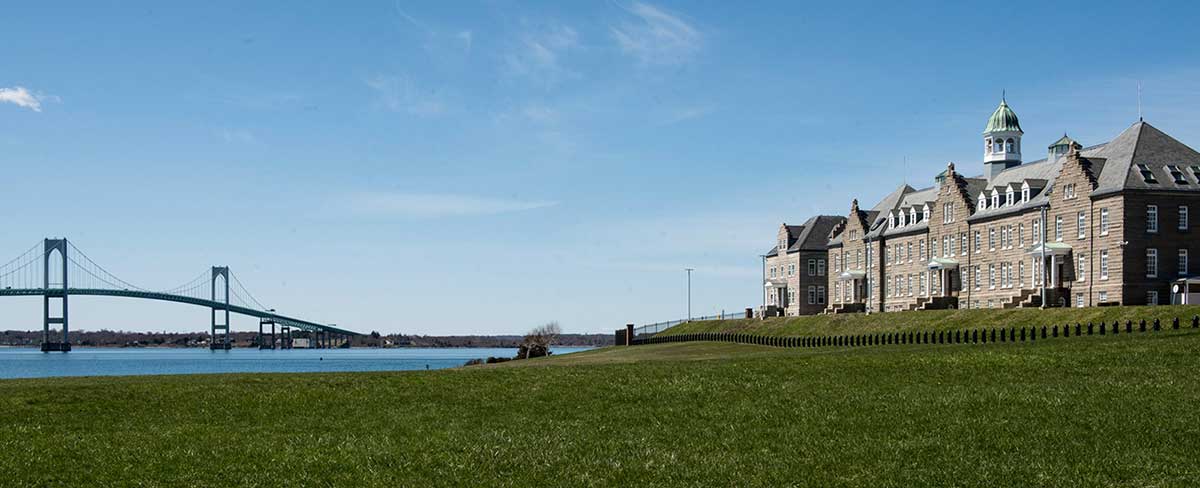
Generating War Plan Orange required planners to create war games. From 1905 to 1941, hundreds of simulations were run by officers at the US Naval War College in Rhode Island. Each wargame had different scenarios and had to take into account technological and geopolitical changes every year. The simulations were crucial in helping American planners identify flaws in War Plan Orange and allowed them to make changes accordingly.
The NWC had large floor spaces where officers could move ships around as part of the wargames. The American team was always “Blue” and the Japanese team was “Orange.” Each team had separate rooms to strategize while umpires tallied the score from a third room. These simulations were designed to take into account factors like fog of war, communications delays, intelligence failures, and other plausible scenarios in a real conflict. Whereas pre-WWII Japanese planning was often defined by the belief that Western countries were soft and easy to overwhelm, NWC planners understood Japanese capabilities and sought to plan accordingly.
Several vital lessons were learned that caused a rethink to original variations of War Plan Orange. American planners rejected the idea of a mass decisive battle, preferring to grind down Japanese forces in an attritional struggle. Additionally, the importance of logistics was reinforced due to American recognition of the distance it would take to drive on toward Japan. Lastly, the development of aircraft carriers changed the entire dynamic of the planning, forcing officers to contend with increased range of strike aircraft.
How the Plan Foresaw the Fall of the Philippines

By the early 1900s, the Philippines was one of the largest overseas territories under American control. Even as it began preparing to grant the archipelago independence, the United States retained a strong military presence, partly in response to fears that Japan intended to occupy the whole archipelago.
In a series of simulations, American planners found that Japan would seek to strike the islands quickly and without warning. Because of how widespread they were and their distance from other American outposts in the Pacific, the Philippines was very vulnerable to a seaborne invasion.
The final iteration of the plan to defend the islands was known as War Plan Orange-3 (WPO-3). In this plan, Philippine and American forces would not contest the Japanese on the beaches because it was anticipated that the Japanese could land anywhere. Instead, they would fight back from Luzon’s rugged interior and hold out until they could be relieved or the Japanese would be forced to grant them generous terms as part of a surrender agreement.
Because the Asiatic Fleet was not strong enough to fight Japan and Pearl Harbor was too far away, few American planners believed that a relief force could save the islands. Instead, they anticipated garrisons holding out in several predetermined points throughout the archipelago.
General Douglas MacArthur, commander of the Philippine and American forces on the islands in 1941 and 1942, had copies of these plans. However, he rejected them in favor of using air power to smash the Japanese convoys before they could land an attack force. When Japan was able to destroy most of his air force on the ground, MacArthur found himself executing WPO-3, but without the necessary resources for it. Nonetheless, the garrison fulfilled its mission in accordance with the planners’ intent.
Evolution of the Island-Hopping Doctrine
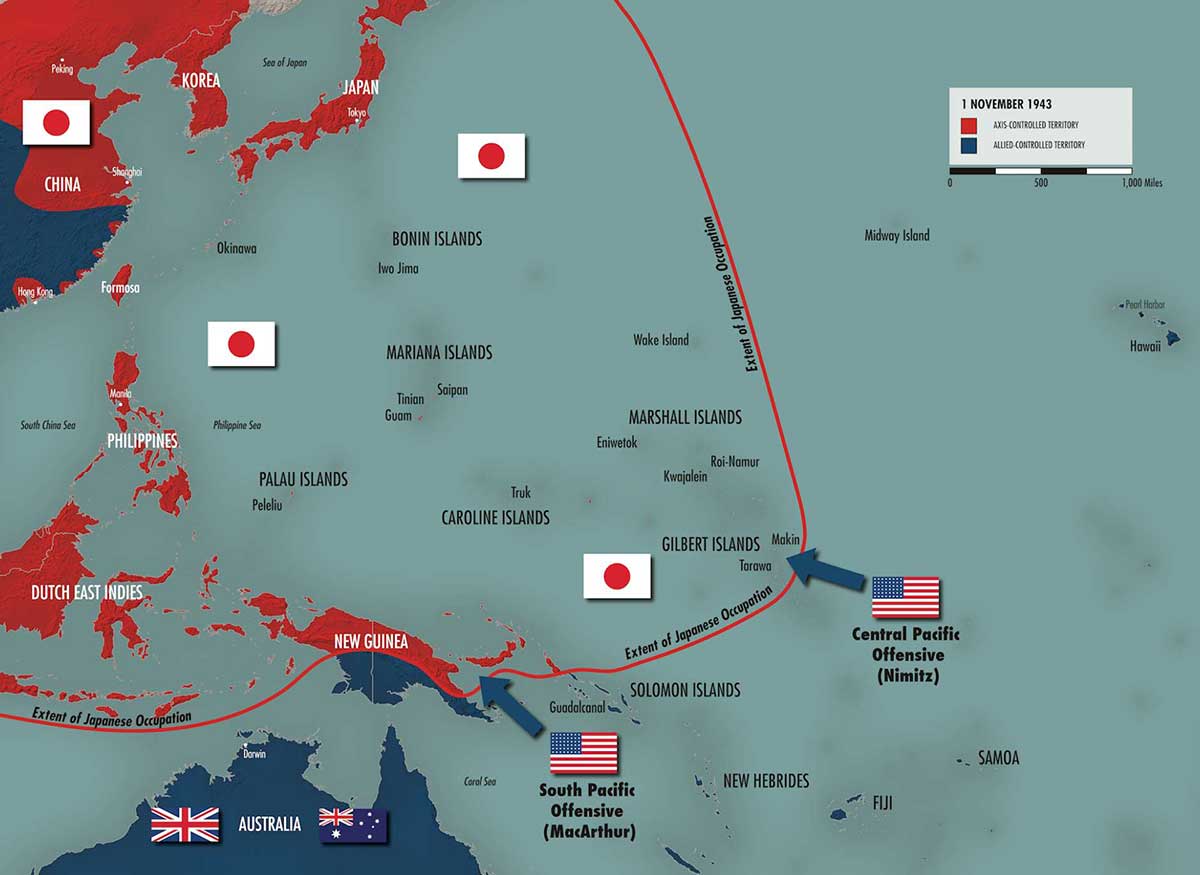
As War Plan Orange evolved, one critical component to the planning envisioned by the Navy was a strategy called island-hopping. In order to get closer to Japan’s home islands, American forces would need to seize as many island chains in the Pacific as they could. Japan knew this and began fortifying its overseas possessions that it feared could be targeted. Without control of some of the most critical islands, any nation’s ships were vulnerable to attack or could logistically maintain themselves.
In 1921, Marine Lieutenant Colonel Pete Ellis wrote a treatise arguing that the United States needed to prioritize an amphibious strategy that focused on denying the Japanese access to the main island chains in the central Pacific. His work was based on his personal trips around the Pacific and a review of Japanese strategic planning at the time. Subsequently, despite Ellis’s death in 1923, his theories heavily influenced the doctrine of the US Marines.
In the 1930s, American planners came to see the island chains that Japan controlled as “unsinkable aircraft carriers.” Thus, WPO included a new amendment: fleets should not sail beyond land-based air cover unless they had a large component of ship-borne planes. When the war finally came, American officials made a final modification: leapfrogging. Some island chains were to be seized and turned into offensive bases (like the Marianas). Others (such as Truk) were to be cut off and bombarded to the point that they didn’t pose a threat to the advancing American forces.
Why War Plan Orange Remains a Masterclass in Strategy
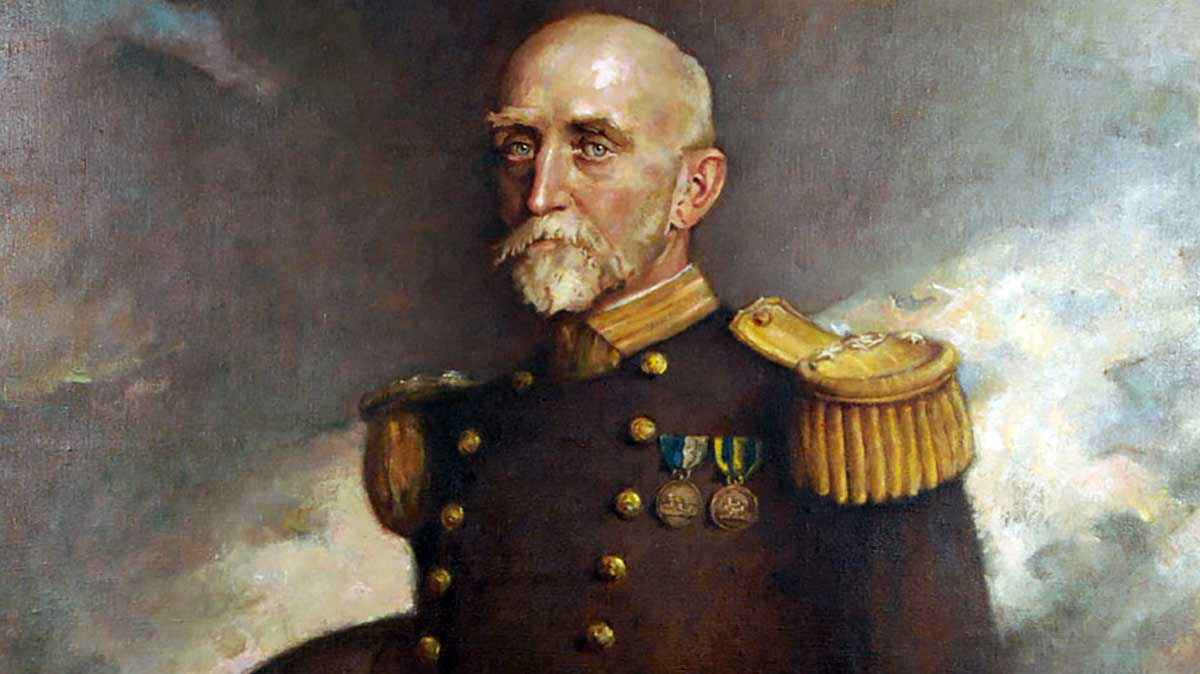
War Plan Orange was not a static plan that characterized American strategy for decades. It was a combination of ideas molded by tactical and technological innovation and ingrained precepts promoted by naval theorists such as Admiral Alfred T. Mahan, whose work had practically become gospel to US Navy officers.
WPO correctly identified Japan as one of the main threats to American interests and sought to define the appropriate measures needed to combat Japanese advances. Most importantly, it was designed to evolve in the face of complex changes in geopolitics, technology, and American strategic capacity.
Because the planners wargaming the Japanese side were encouraged to take advantage of American weaknesses, naval planners were able to identify what the United States needed to improve. For instance, American logistics before the war were not strong enough to sustain a large force over such a sprawling area. Additionally, the simulations revealed the Japanese penchant for surprise attacks. However, its lessons were not always absorbed by senior brass, even after a successful simulation involving a surprise attack by carrier aircraft on Pearl Harbor in 1932.
Many of the admirals who commanded American forces in the Pacific during the war were intimately familiar with the details of WPO. They all understood the importance of regaining the initiative from the Japanese after the first difficult year. Thanks to the repeated simulations and their understanding of Japanese planning and logistics, these men, including Raymond Spruance and Chester Nimitz, were able to prosecute the war in a way that maximized American strength and took advantage of Japanese weaknesses. WPO became a model for evolving strategic planning that still influences US naval strategy today.