
The Balkan Wars of 1912 and 1913 was one of the conflicts that led to the outbreak of the First World War. The war ended Ottoman control over much of Southeast Europe and resulted in the mass expulsions of hundreds of thousands of Balkan Muslims from their homes. Its effects have continued to contribute to instability in the region to the present day.
Rumelia Before 1912
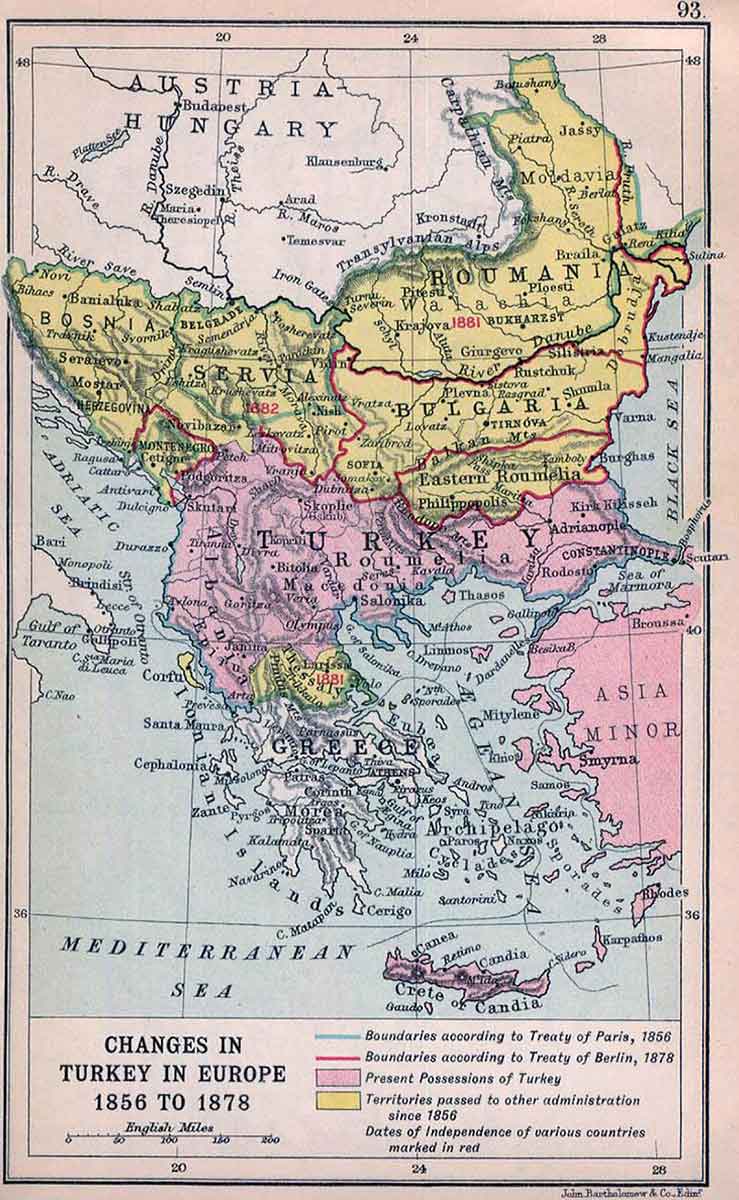
For centuries, the Ottoman Empire had controlled much of Southeastern Europe, which they called Rumelia. The Sublime Porte (Ottoman government) created a multi-tiered society in which Muslims were the dominant class. Much of the region was impoverished and tribal, with different ethnic and religious communities seeking to carve out pieces of territory for themselves. As the Ottoman empire declined in the 19th century, the minorities became increasingly emboldened by the prospect of gaining independence.
Following the Ottoman defeat in the Russo-Turkish War of 1877-78, the Ottomans were forced to recognize an autonomous Bulgarian state, while Bosnia and Herzegovina were placed under Austro-Hungarian occupation and administration. In the aftermath of the war, Balkan Muslims began relocating to the Turkish heartland of Anatolia. Despite a brief Turkish victory in 1897 against Greece, the empire’s weaknesses were plainly visible to all.
In 1908, the Young Turk Revolution that toppled Sultan Abdul Hamid II briefly inspired the hope that the empire would be more accommodating to its Christian subjects and willing to make deals with the European powers. However, that proved to be a flawed assumption and the chaos within Constantinople and Rumelia worsened. In 1910, the previously loyal Muslim Albanians revolted against the Ottomans. By 1912, Ottoman control in Europe was reduced to Albania, Macedonia, and Thrace, with a total population of six million people, mainly Muslims and Christians.
The Balkan League and Its Strategy
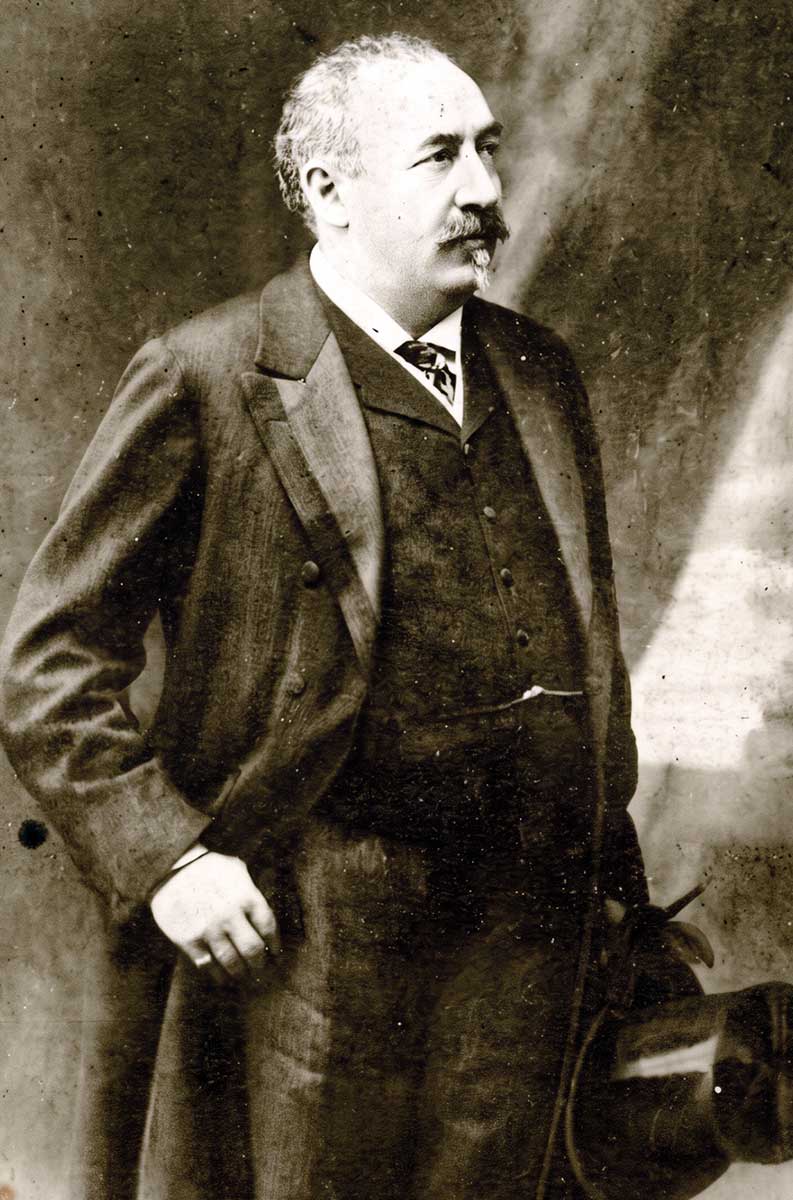
In 1911 and early 1912, diplomats from several Balkan states began negotiating to secretly partition what remained of Rumelia once the Ottomans could be ousted. The Serbs and Bulgarians agreed to divide Macedonia into several zones that would be controlled by them. Greece and Bulgaria aimed to take Thrace, but failed to agree on the extent of territory each would occupy. Montenegro hoped to partake in the spoils as well. While all four countries did not form a formal alliance, they did have a common understanding that the Ottomans posed a threat to each of them, and formed bilateral alliances among themselves.
With the backing of Russia, the League could field several hundred thousand men and enjoyed naval dominance in the Aegean. However, tensions between Bulgaria and the other Balkan states simmered under the surface because of the lack of a finalized agreement. Nicholas Hartwig, the Russian minister in Belgrade, tried hard to keep all four countries together when planning the initial phase of the war.
The Turks were very ill-prepared for the coming storm. The Young Turk regime was in the middle of a major military reorganization. The 1908 Revolution caused a schism in the officer corps and these divisions played out in the streets of Constantinople. When war broke out, a mere 300,000 men were mobilized to fight a Balkan coalition with more than twice their manpower.
Why Mass Expulsion Became a Tool of State Policy
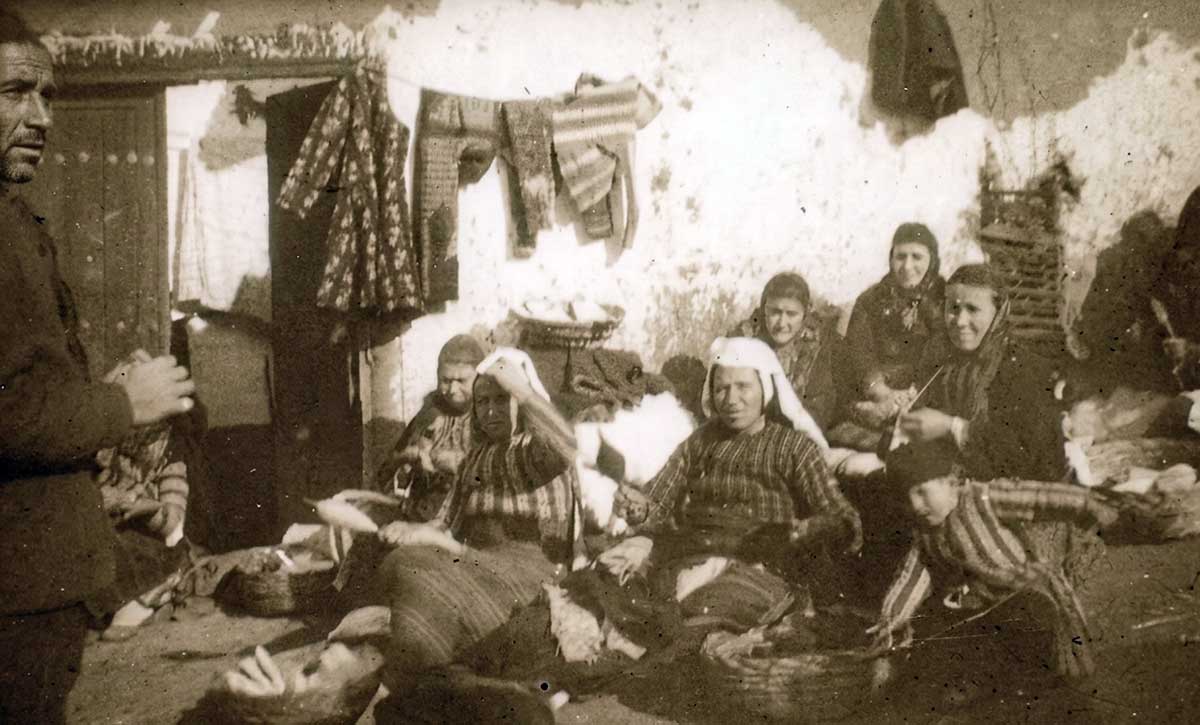
One of the main reasons that the Ottomans attempted to retain every inch of Balkan territory was due to the large presence of Muslims in the region, which included native populations and more recent Turkish settlers. The Ottomans knew that defeat would lead to another exodus of Muslims to Anatolia, further straining the region’s resources. The Porte hoped to fight hard to defend Muslim villages and cities from both the Balkan League armies and vengeful Christian militias.
While none of the Balkan governments were keen on inflicting serious bloodshed and prioritized territorial expansion, many local Christians sought vengeance against the Muslim communities for their perceived support for the Ottoman authorities who had occasionally perpetrated atrocities against Balkan Christians. Allied military leaders feared that the Muslim population in the target regions could serve as a fifth column for a future Ottoman attempt to retake the territory. Few allied officers were held accountable for atrocities committed against Muslims during the war.
After the wars ended, the Carnegie Endowment for International Peace issued a report on atrocities in the Balkans during both wars. It found that every army committed massacres and expulsions. The plight of the Muslims was discussed in detail and the report found that Balkan army and militia commanders intentionally sought to expel as many enemy civilians as possible. It was one of the first times a major non-government organization researched and published findings on mass human rights abuses.
The Tragedy of the Muhacirs
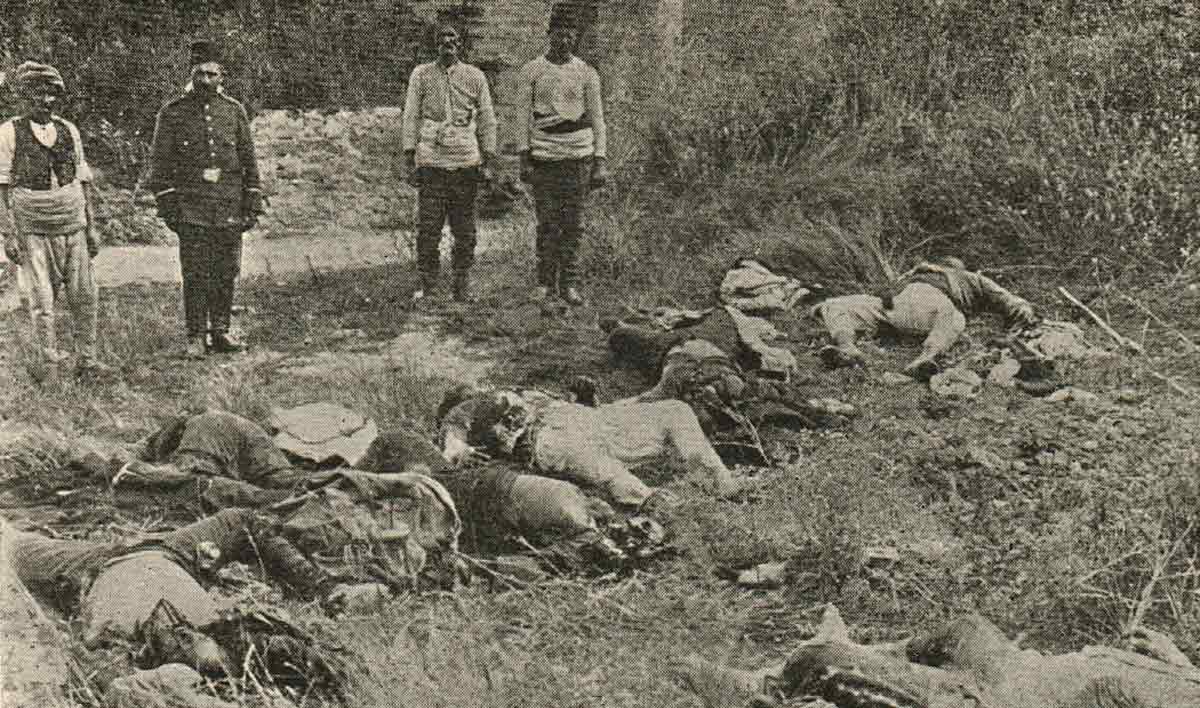
Today, the Balkan and Caucasus Muslims who moved to Anatolia as the Ottoman Empire declined are known as Muhacirs. Their trauma became a major component of modern Turkish nationalism. When war broke out, their villages initially came under attack from Christian militias. These militias wanted to ensure that the locals could not form a base of support for Ottoman troops and began to burn their homes. In many instances, Muslim men were force-marched into the woods and shot while their families were forced to flee.
When refugee flows began to clog up the roads, they were raided and attacked repeatedly. Most of these people kept marching until they reached Constantinople. Those unfortunate enough to get caught in the sieges of Shkodër and Edirne were shelled heavily by Allied artillery. In the territories seized by the Bulgarians, forced conversions became the norm. Mosques were routinely targeted and destroyed to deprive the Muhacirs of shelter.
During the Second Balkan War in 1913, the League broke down and Serbia and Greece fought to contest Bulgaria’s gains. The Turks took the opportunity to reclaim some territory in Thrace but continued to face significant waves of refugees. Some of the people who had been forced to flee Edirne were able to return, but most of Rumelia was lost to the Ottomans forever.
How the War Altered the Map of the Balkans

The end of the war remade the demographic map of Southeastern Europe. Not only were most Muslims expelled from the territories formerly controlled by the Ottomans, but the end of the war saw different ethnicities being forcibly transferred into states that represented “their” ethnic group. The transfer of entire groups foreshadowed the Lausanne Treaty and the post-WWI and post-WWII consensus on the effectiveness of population transfer.
Before the war broke out in 1912, over two million Muslims were living in Ottoman-controlled territories in the Balkans. By the end of 1926, this number had fallen to 870,000. An estimated 630,000 Muslims died during the 1912-1913 wars, close to 30% of the Muslim population in the Balkans. Much of the Ottoman infrastructure of the region was demolished and laws were passed by Balkan League member states to legalize the seizure of the refugees’ assets.
For many of the Muhacirs forced to move to Anatolia, the trauma they faced convinced many of them of two things: they needed to embrace Turkish nationalism with a fervor and that coexistence with non-Muslims was impossible. Many Muhacirs fervently supported the targeting of Christian minorities in the Ottoman Empire during the First World War as vengeance for their treatment during the Balkan Wars.
The Lingering Legacy of the War
In the decades following the war, the Muslims who remained in the Balkans faced significant challenges. Governments such as Yugoslavia, Bulgaria, and Greece implemented laws that harmed Muslim religious and property rights. The devastation of the Second World War harmed everyone in the region, but many Muslims were accused of collaborating with the Axis occupiers.
During the Cold War, communist regimes in Bulgaria, Albania, and Yugoslavia cracked down on mosques as part of an anticlerical drive or, in the case of Bulgaria, harmed the remaining Pomaks because they were accused of being supporters of Turkey, a NATO member. More Muslims tried to leave, fearing that they couldn’t possibly survive in the Balkans if another war broke out.
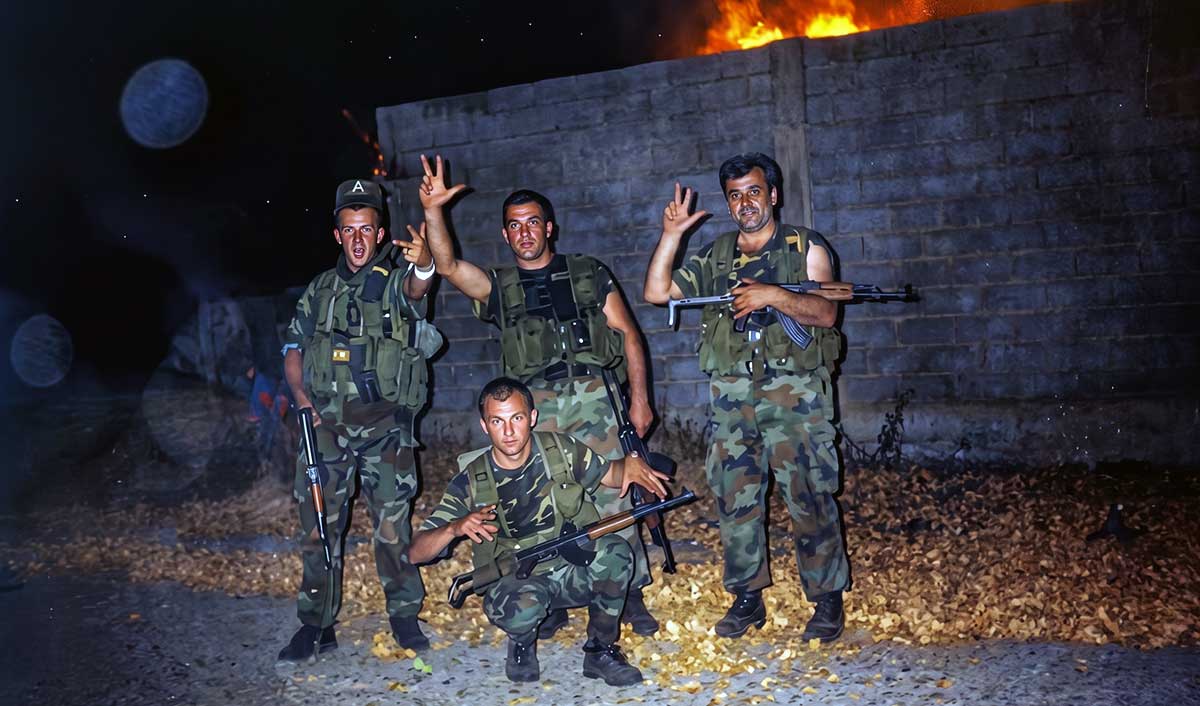
In the 1990s, the collapse of Yugoslavia precipitated further hostilities in the Balkans. Serbian ultranationalists precipitated massacres of Muslim Bosniaks and Kosovars that were reminiscent of the wars at the start of the century. This time, NATO intervened to prevent further atrocities. Nevertheless, the wars led to an increase in emigration and yet more damage and devastation inflicted on Muslim communities.
The Balkan expulsions were one of the most infamous acts of forced displacement in modern history. It led to a siege mentality among the Ottoman and post-WWI Turkish leadership. At the same time, it poisoned intercommunal relations in the Balkans for generations. Nations became convinced that wars could be won through ethnic cleansing, leading to a vicious cycle of forced displacement. Despite the restrictions on this practice by the Geneva Convention, ethnic cleansing and forced population transfers continue to affect the modern world.