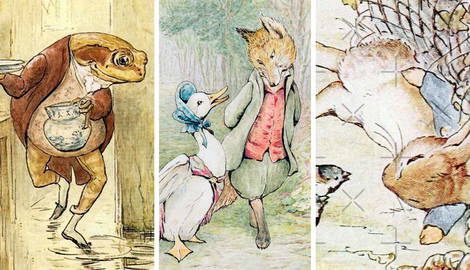

The author of twenty-three short children’s tales, Beatrix Potter became one of the most beloved authors of the 20th century. Supported in her interest in art by John Everett Millais, a renowned artist associated with the Pre-Raphaelite Brotherhood, the watercolor illustrations she created for her books brought a wealth of memorable characters to life. These characters have withstood the test of time, with their stories continuing to be read to children to this day, over one-hundred and twenty years since Potter first began writing.
Beatrix Potter’s Famous “The Tale of Peter Rabbit”
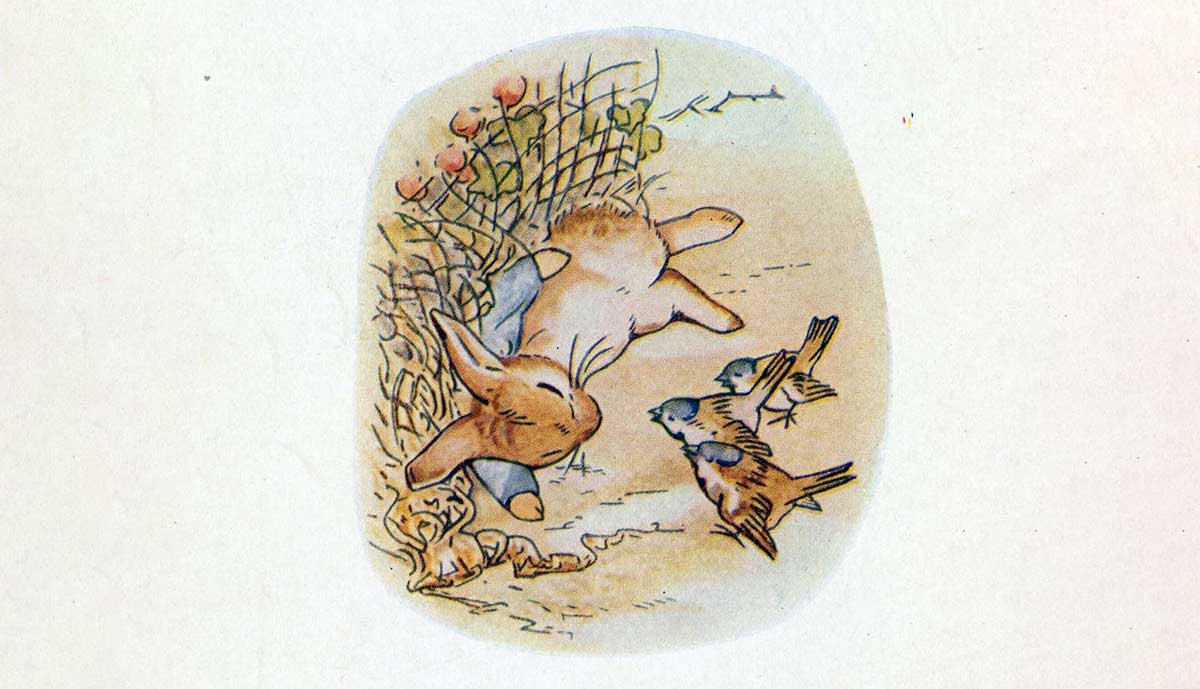
Beatrix Potter’s first published children’s book, The Tale of Peter Rabbit, became one of her most iconic. It famously recounts the story of young Peter Rabbit, along with his sisters, Flopsy, Mopsy, and Cottontail. Against the warnings of his mother, Peter Rabbit ventures into the garden of the nearby Mr. McGregor. After spending a terrifying day being chased by Mr. McGregor, who plans to turn Peter into a rabbit pie, Peter Rabbit learns a painful lesson and is sent to bed by his mother.
This beloved story, which has sold over 40 million copies around the world today, traces its origins back to the author’s personal correspondence. Beatrix Potter initially recounted the story in a letter to Noel Moore, the son of one of her childhood governesses named Annie Moore. Little Noel had been suffering from scarlet fever, and Potter hoped that the story would lift his spirits. She even included an assortment of her own illustrations in the letter she sent him. Since her childhood, Potter had loved keeping a variety of different animals as pets, and in this instance, she drew inspiration from her pet rabbit, Peter Piper, for the main character of the story.
With encouragement from Annie, Potter decided to pursue having the story published as a children’s book, with her own illustrations included. Initially, the story was rejected by multiple publishers. Eventually, however, The Tale of Peter Rabbit was picked up by Frederic Warne & Company, where it was published in October of 1902. It sold 8,000 copies upon its initial publication, and went on to sell thousands more in 1902 alone.
The Tailor of Gloucester
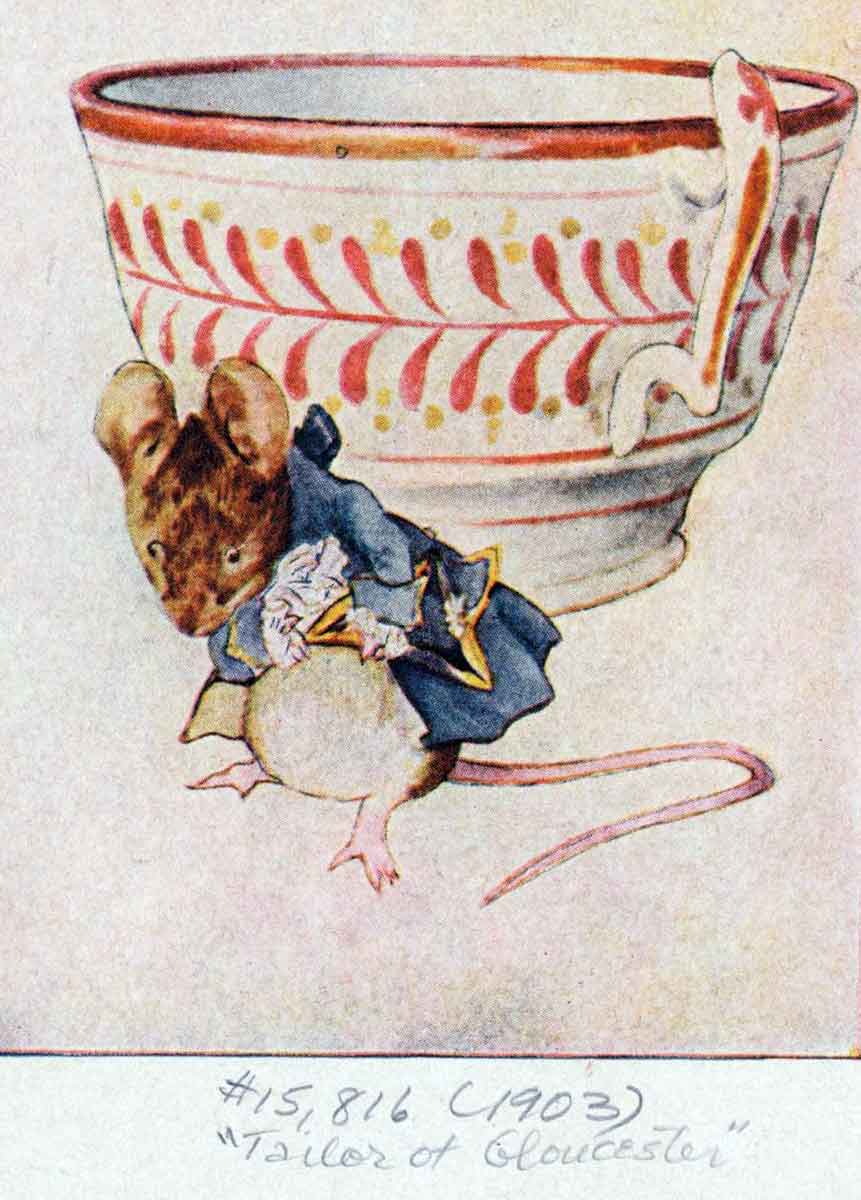
In 1903, Beatrix Potter’s personal favorite of all her tales, The Tailor of Gloucester, was published. In this Christmastime fable, a poor tailor becomes seriously ill whilst in the middle of creating a coat and waistcoat for the Mayor of Gloucester’s wedding. Feeling sympathy for the tailor, a kindly group of mice finishes the coat and the waistcoat for him. The tailor is astonished to return to his shop on Christmas Day and find the coat and waistcoat completed with no indication as to who might have finished the work. The only clue he is able to find is a tiny note next to an unfinished buttonhole reading, “NO MORE TWIST.”
The origins of this story are similar to those of The Tale of Peter Rabbit, having been initially composed for Freda Moore, another child of Annie Moore. In this instance, the story was lifted from a local legend she had heard while spending time in Gloucestershire with her cousin Caroline Hutton in 1894. The legend went that local tailor John Prichard had been working on a suit for Gloucester’s mayor, and had indeed entered his shop one day to find that the suit had been finished for him.
In reality, the suit had been completed by other tailors in the shop, but Prichard liked to boast in the following years that magic had been involved. Potter reworked the legend to incorporate her personal love of animals, including her own creative interpretations of what they might be like if they could talk and sing songs. Her unique vision, accompanied by her own charming watercolor illustrations, is what makes the tale a popular Christmas story to this day.
The Tale of Mrs. Tiggy-Winkle
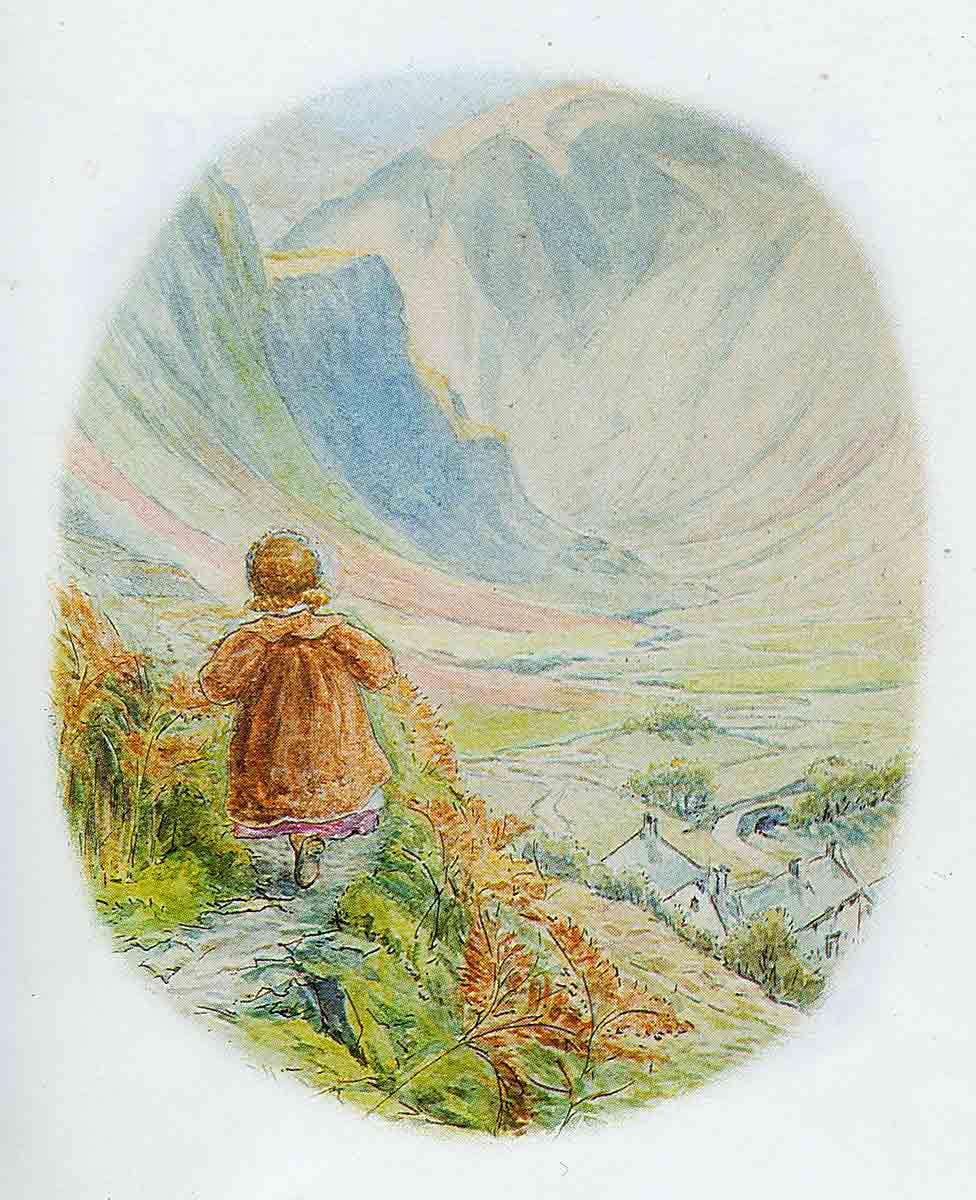
Another of Beatrix Potter’s most popular tales is The Tale of Mrs. Tiggy-Winkle, which was published in 1905. Framed by the beautiful scenery of the Lake District, The Tale of Mrs. Tiggy-Winkle centers around a young girl named Lucie who meets a kindly washerwoman named Mrs. Tiggy-winkle. True to the author’s interest in animals, Mrs. Tiggy-winkle is actually a hedgehog who does the washing for other characters featured in Potter’s stories, including Peter Rabbit, Benjamin Bunny, and Squirrel Nutkin. The story ends with Lucie marveling that Mrs. Tiggy-winkle was a hedgehog all along, with the author asserting that she herself is, in her own words, “well-acquainted with Mrs. Tiggy-winkle.”
For The Tale of Mrs. Tiggy-Winkle, Beatrix Potter drew inspiration from a wide variety of sources. Originally conveyed in 1902 in a letter to her cousin Stephanie Hyde Parker, the character of Mrs. Tiggy-winkle was lifted from Kitty MacDonald, a laundress who had previously worked for Potter’s parents during their holidays in Scotland. The character of MacDonald was merged with another one of the author’s pets, a real hedgehog named Mrs. Tiggy-winkle, of whom she was extremely fond. Furthermore, the character of Lucie was drawn from one of the author’s own childhood friends, named Lucie Carr. Potter apparently struggled in illustrating the character of Lucie, feeling that she was better at depicting animals than people. To readers today, her struggles are not apparent in the least, with the watercolor illustrations for the story being some of the most breathtaking she ever created.
The Tale of Mr. Jeremy Fisher
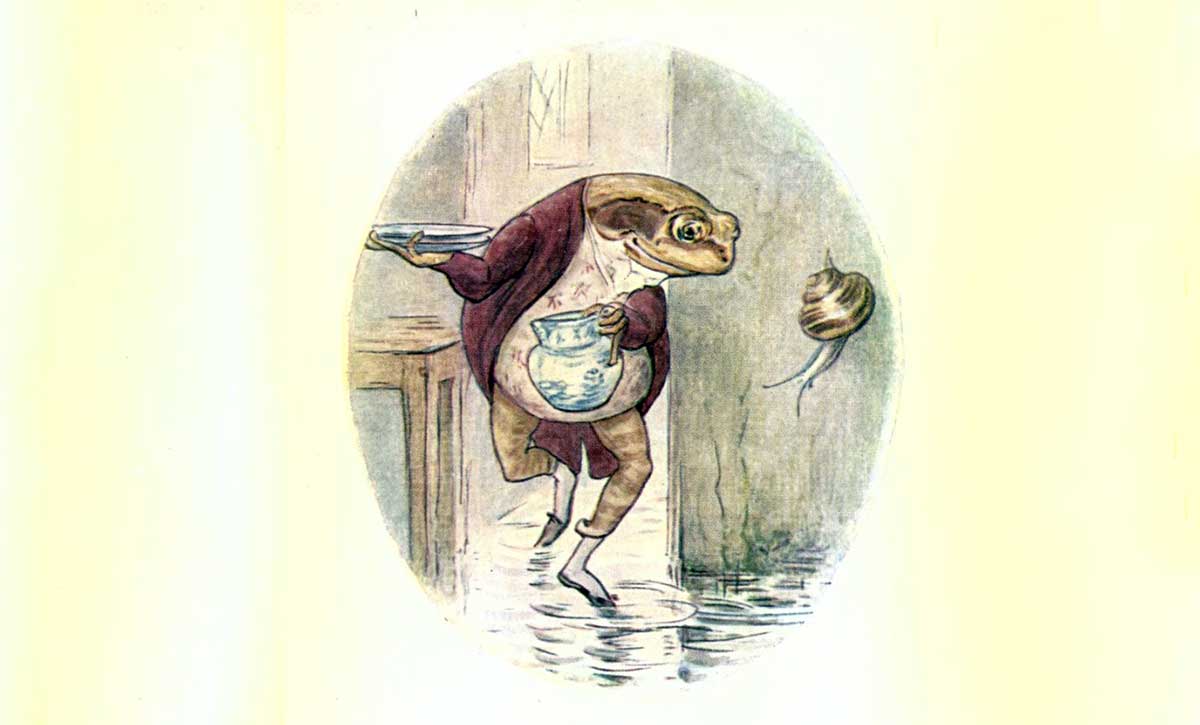
The following year, in 1906, The Tale of Mr. Jeremy Fisher was published. In this charming story, the frog Mr. Jeremy Fisher plans a dinner party for his friends Sir Isaac Newton (who, as his name suggests, is a newt) and Alderman Ptolemy Tortoise. Mr. Jeremy goes fishing, planning on serving minnows at the dinner party. After a series of misadventures, Mr. Jeremy barely escapes being eaten by a trout. He ultimately settles on serving his friends roasted grasshoppers and lady-bird sauce, and the three have a pleasant evening together.
Like with The Tale of Mrs. Tiggy-Winkle, Beatrix Potter’s inspirations for The Tale of Mr. Jeremy Fisher came from an array of her own experiences. The pets that she had kept throughout her childhood served as one of her initial sources of inspiration, with frogs being among her favorite creatures. Furthermore, one of her father Rupert’s favorite hobbies was fishing, and it seems likely that she drew inspiration from hearing him complain when he was unable to catch anything. Indeed, she seems to have conceived of the story during a time of heavy fishing for her father, as she was holidaying with her family near the River Tay in Scotland while she wrote it.
The story was first sent in a letter to Eric Moore, another one of the Moore children, in 1893. In 1896, a series of Beatrix Potter’s illustrations of Mr. Jeremy was featured by the publisher Ernest Nister in Nister’s Holiday Annual for 1896. Potter later repurchased these illustrations, and used them for the completed tale that was published by Frederic Warne & Company in 1906. In spite of the many years that passed between Potter’s initial conception of the story and its final publication, its intensely personal relationship to the author’s family memories can be felt in the final text and illustrations, making it particularly memorable among her stories for readers today.
The Tale of Jemima Puddle-Duck
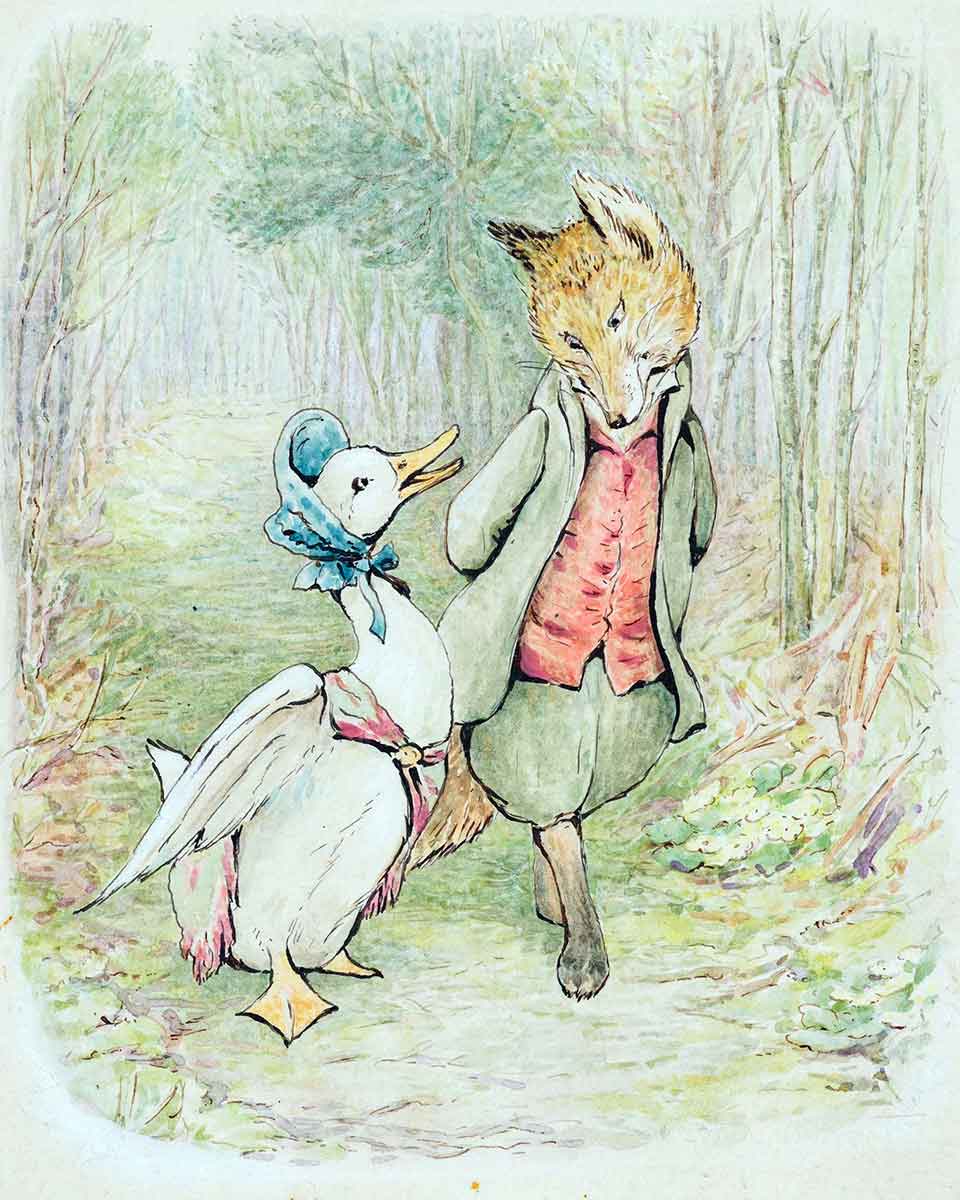
Two years later, in 1908, Beatrix Potter’s The Tale of Jemima Puddle-Duck was published. One of Potter’s darkest stories, it recounts the story of a farmyard duck named Jemima who longs to lay her own nest of eggs. She is convinced by a passing fox to lay her eggs in his wood-shed. Jemima remains oblivious to the fox’s true intentions as he takes increasing notice of her eggs and invites her to a dinner party, and she is finally rescued from being eaten by the farmdog Kep and his puppies. The puppies ultimately eat Jemima’s eggs as a thank you, leaving Jemima distraught. The story ends with the reassurance that Jemima did later successfully lay her own eggs, but that “only four of them hatched.”
The Tale of Jemima Puddle-Duck was written during a particularly important period in Beatrix Potter’s life. In 1905, she had purchased Hill Top Farm in England’s Lake District after the sudden death of her fiance Norman Warne of Frederic Warne & Company. Beatrix Potter enjoyed her new life at Hill Top in the following years, and the story incorporates many details related to the scenery and people there. For example, it is known that there was a real duck at Hill Top Farm named Jemima, who Potter observed had a somewhat ridiculous nature. Kep, the dog who saves Jemima at the end of the story, was a collie and one of the author’s favorite animals at the farm.
The story is dedicated to the son and daughter of the farm manager at Hill Top, Ralph and Betsy. The Tale of Jemima Puddle-Duck contains illustrations of both of them, along with their mother. Furthermore, the author’s illustrations contain many picturesque views of Hill Top Farm, including its barn, parts of the main house, and its surrounding landscape. In this way, The Tale of Jemima Puddle-Duck provides a particularly fascinating view for readers today into the daily life of Beatrix Potter at Hill Top Farm.
Beatrix Potter’s Stories Today
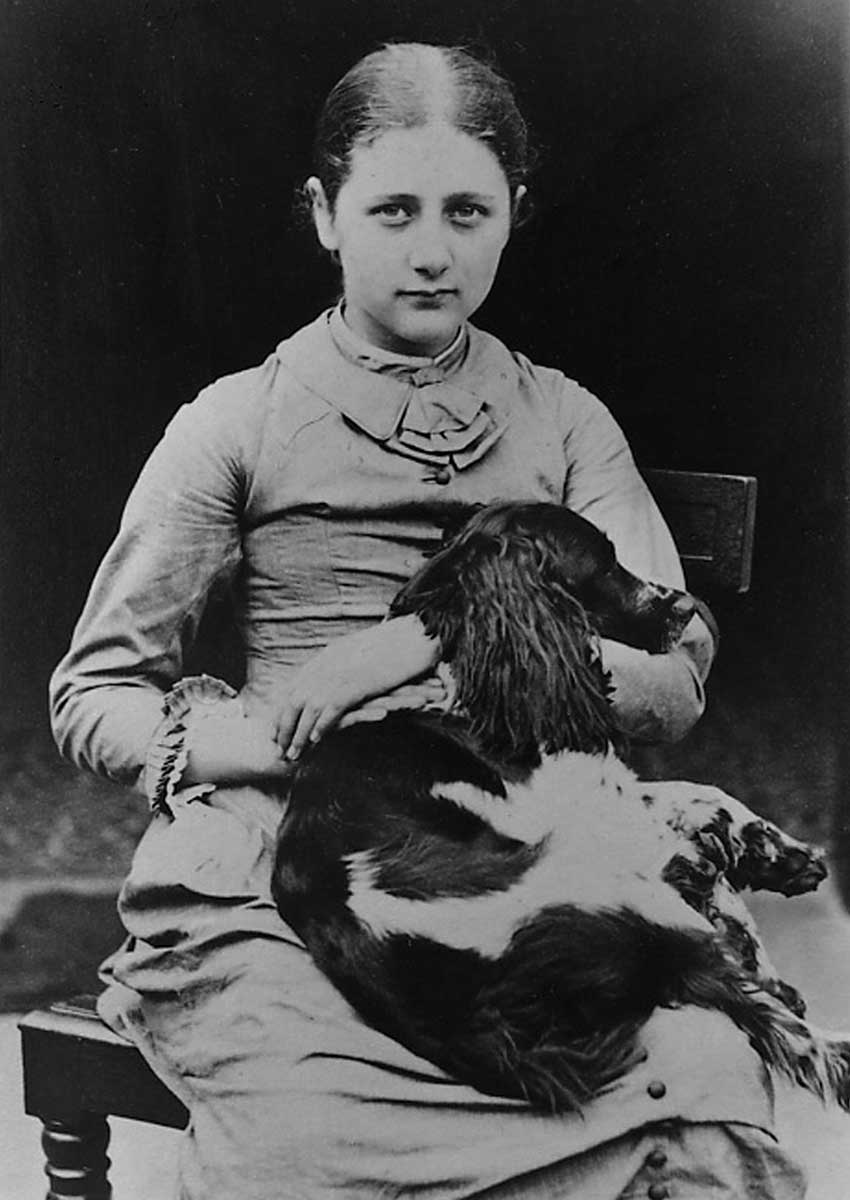
Today, Beatrix Potter’s tales are read around the world. They have been translated into a multitude of languages, including Russian, Welsh, and Turkish. Even unpublished works are rediscovered with much excitement, such as Potter’s The Tale of Kitty-in-Boots, which was finally published in 2016 with new illustrations by Quentin Blake. This enduring, worldwide popularity is a testament to Beatrix Potter’s personal creativity. Her love for animals, which inspired her detailed representations of these creatures and the worlds they inhabited, continues to inspire young minds in the 21st century. In this way, her art and her stories have kept her vision and imagination alive today.