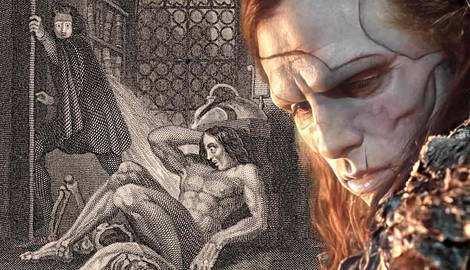

In some ways, it is remarkable that Mary Shelley’s novel Frankenstein is only 200 years old. With its core mythology of a man who cheats death by creating life out of human remains, it could be as old as humanity itself. At the same time, Frankenstein is a product of its era, with rapid advances in science and industrialization reshaping how people imagined the limitations of human life. Fusing modern anxieties with a timeless myth, Shelley created a tale whose resonance only increases with the centuries.
The Story of Frankenstein
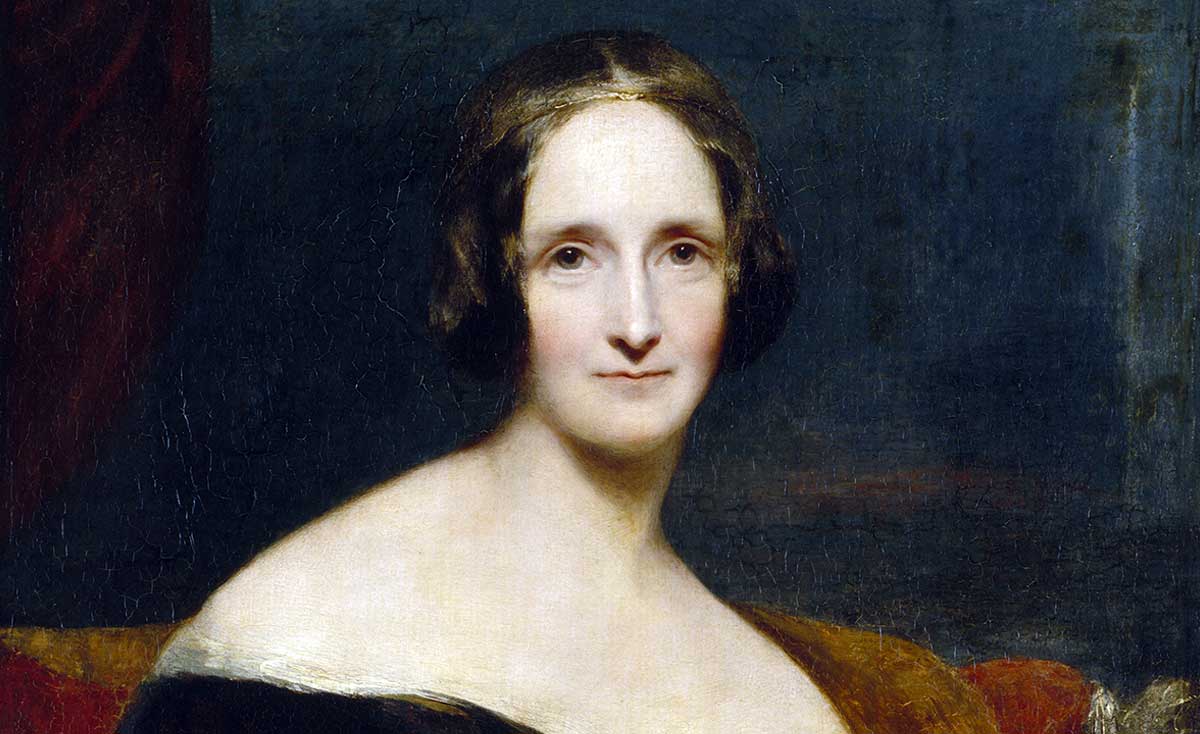
Mary Shelley wrote Frankenstein, or the Modern Prometheus in 1816, when she was just 18 years old. Commentators and critics, ever since the novel’s 1818 publication, have marveled at the electrifying imagination, acuity, and depth on display in this work by such a young author.
Frankenstein lurched into being on an auspicious night. While still a teenager, Mary Godwin—as she then was—had left England with the poet Percy Bysshe Shelley. By 1816, they were visiting fellow poet Lord Byron at his villa on the shores of Lake Geneva.
It has gone down in English literary history as a meeting of great minds, all deeply engaged with the literary culture of their day and a vast range of other subjects, from utopianism to vegetarianism, free love, and galvanism. Such surroundings, coupled with the strange microclimate of the ‘Year Without a Summer’ in 1816, furnished Shelley with the perfect ingredients to create Frankenstein. When the group of Romantics decided to hold a ghost story competition, she was ready.
In the novel, the protagonist, Victor Frankenstein, tells how he followed his ambition to its dizzying heights. Gathering and assembling body parts from corpses, he discovers how to infuse the creature with an electric life force.
Instantly, however, Frankenstein rejects his creature, finding him horrifying to look at. The creature spends the remainder of the novel pursuing his maker, leaving a trail of devastation in his wake. The novel has often been read as an allegory, open to many interpretations. What can Frankenstein teach us in the 21st century?
Is It About Artificial Intelligence?
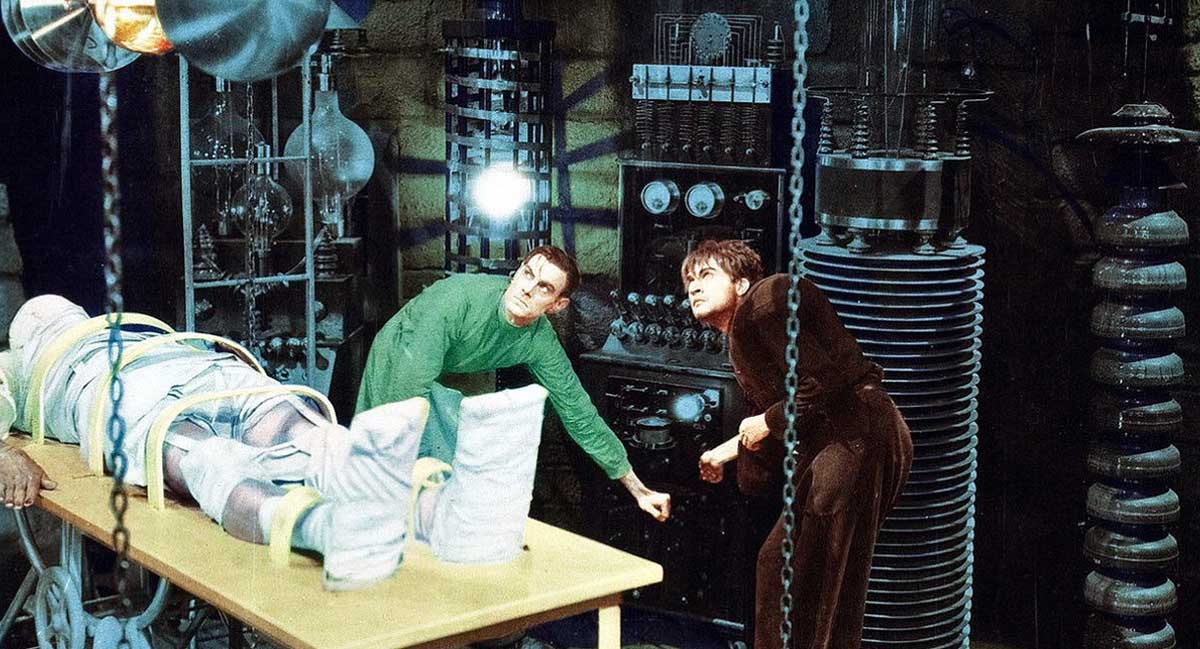
In the 200 years since its publication, Frankenstein has spawned hundreds of adaptations on the page, stage, and screen. Its influence has stretched beyond mere replications of its plot and characters. Ideas from the novel surface in such diverse places as episodes of Doctor Who and Scooby Doo, Stephen King’s 1986 novel It, and the 1975 film and stage musical The Rocky Horror Picture Show.
While these retellings play freely with aspects of the original novel’s plot and characters, one aspect that tends to remain intact is the science fiction. In some versions, Victor Frankenstein is transformed into an evil scientist intent on imperialist domination, a would-be creator of an entire new race; in others, he is grief-stricken and seeks to reanimate a lost loved one. In a 1992 film version, Frankenstein’s so-called monster is a clone of Frankenstein himself, not stitched together from corpses.
In Jeanette Winterson’s 2019 novelistic reimagining, Frankisstein, the creature forms part of scientific exploration into the possibilities of artificial intelligence. Winterson, who has taken an open stance on AI and its future role in the arts and beyond, turned to Shelley’s novel as an originary myth about humanity’s capacity to harness science and technology and, potentially, imbue non-living things with consciousness and sentience.
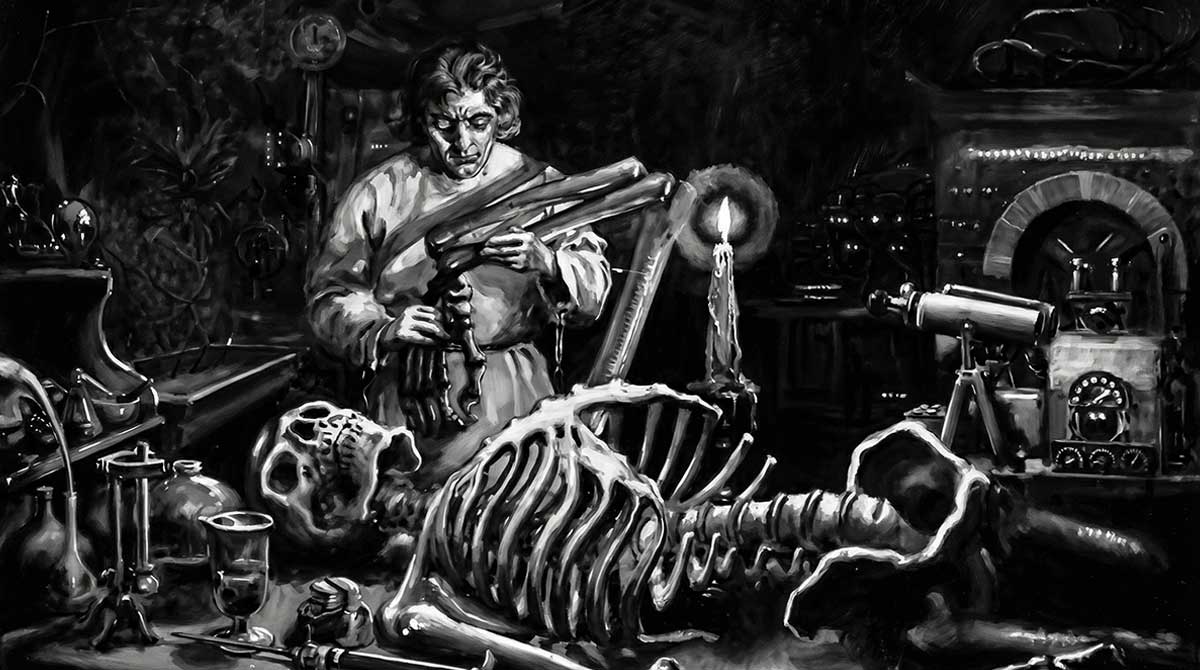
We can look to Frankenstein when thinking about how the rapidly developing world of artificial intelligence might reshape our experience of life and understanding of human nature. We are increasingly able, for instance, to recreate the likeness of human beings in videos—right down to their facial expressions, mannerisms, and speaking voices—and thereby to cheat death, not unlike Frankenstein with his reanimation of body parts.
In the novel, Frankenstein is enchanted by the ambitious scientists who have gone before him, who “penetrate into the recesses of nature and show how she works in her hiding-places” (chapter 3). He insists that humanity could be “upon the brink” of all sorts of discoveries, if only “cowardice or carelessness did not restrain our inquiries” (chapter 4).
Yet the novel invites us to wonder whether it might not be better to allow nature its “recesses” and “hiding-places.” In cheating death and playing God, Frankenstein takes on a role too powerful to sustain. At the core of the mystery he penetrates—the conception of life—he finds death, not his own, but a ripple effect of deaths among those he loves.
Is It About Parenthood?
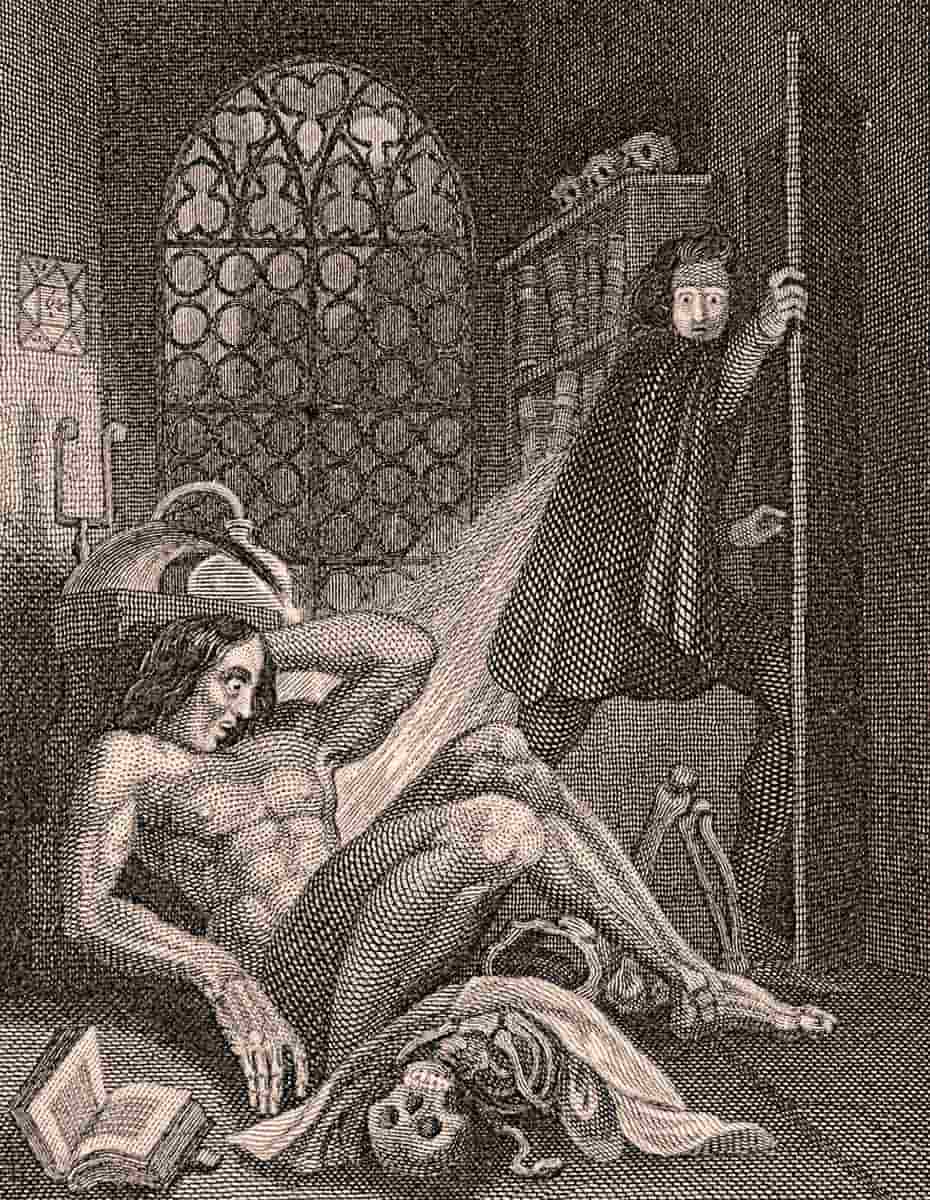
The creature’s devastation of Victor Frankenstein’s family might be read as payback for the scientist’s attempt to usurp the family by inventing a human being who is made, not born. Readers, since the advent of Freudian theory, have picked up on the importance of Victor’s aversion to making a female companion for his creature, resulting in the creature murdering Victor’s wife, Elizabeth, on their wedding night.
Although Shelley was only 18 when she started writing Frankenstein, she had already known the joys and hardships of parenthood. A year earlier, she and Percy had had a daughter, born two months prematurely. Her grief over this child’s loss, and subsequent happiness on giving birth to a son just a few months before the fateful trip to Lake Geneva, may have found their way into her novel’s representation of parenthood.
On top of this, Shelley had never known her mother, the radical philosopher and feminist Mary Wollstonecraft, who died shortly after giving birth to her. Her father, William Godwin, was a brilliant thinker, well-versed in the kinds of works that enthrall Victor Frankenstein, such as natural philosophy. Godwin was also a keen interpreter of John Milton’s epic poem Paradise Lost, which features in Frankenstein as one of the books that helps the creature learn to read, and as a source for the idea that the outcast (Satan in Paradise Lost, the creature in Frankenstein) might deserve our sympathy, rejected as he is by his maker.
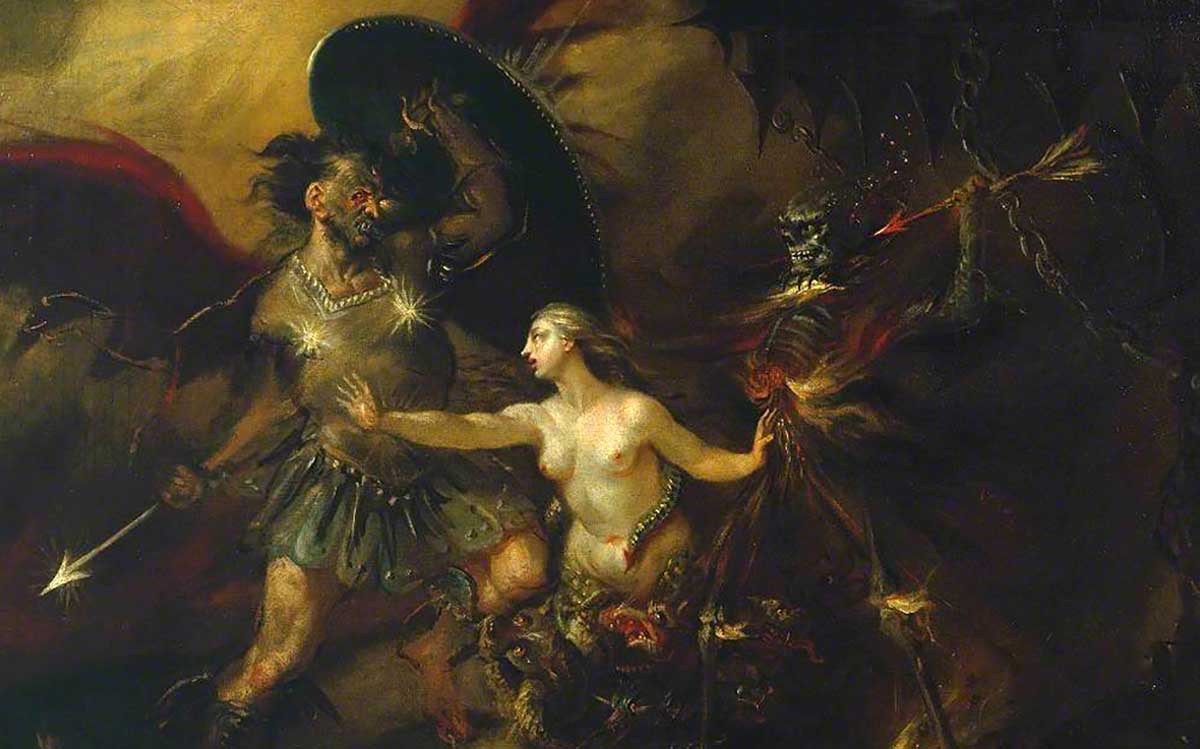
Frankenstein is a haunting meditation not only on the precious ability to give life to another human being (and the dangers of doing so artificially), but also on the responsibilities that follow that giving of life. It’s possible to read all of the creature’s actions as the hurt lashings out of a rejected child, stemming from Frankenstein’s response when he first animates the creature.
Before completing his experiment, Frankenstein is full of the optimism of the expectant father: “A new species would bless me as its creator and source; many happy and excellent natures would owe their being to me. No father could claim the gratitude of his child so completely as I should deserve theirs” (chapter 4).
Yet as soon as the creature comes to life, he feels “breathless horror and disgust […] Unable to endure the aspect of the being I had created, I rushed out of the room” (chapter 5). Many adaptations—including the 2025 film written and directed by Guillermo del Toro—highlight this rejection of a creature we might think of as, in some way, Frankenstein’s own son.
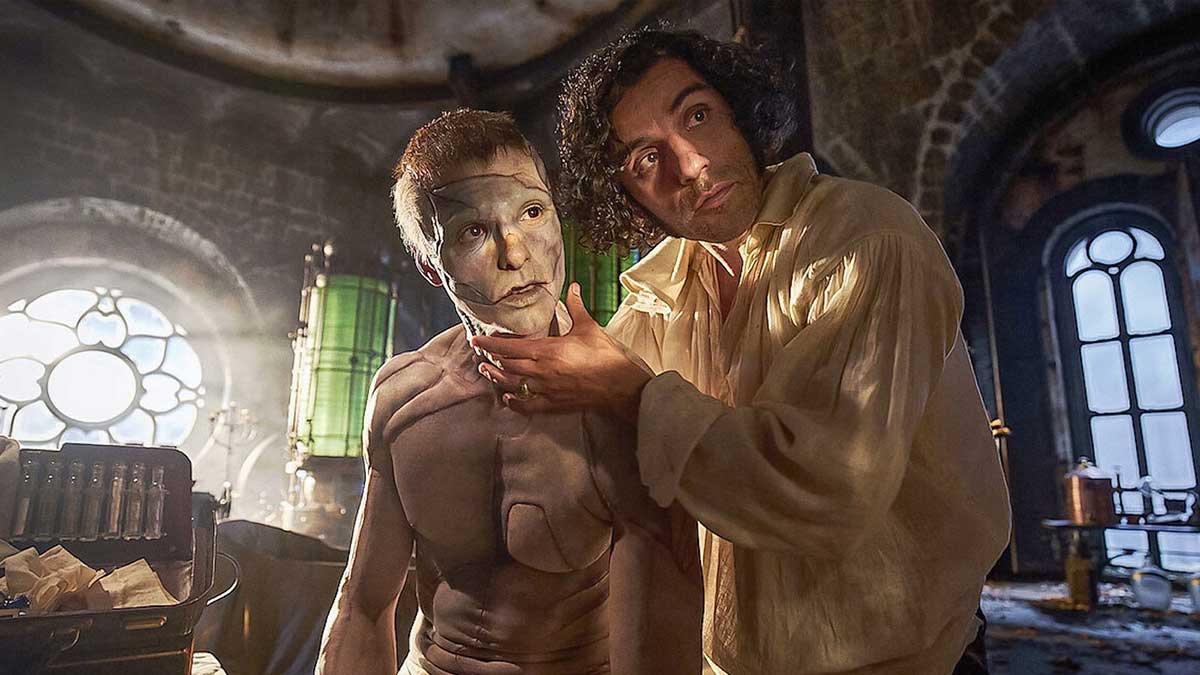
This recent film version shows the creature learning from Frankenstein just as a child might from its parents: mimicking body movements, looking to the sun for light and heat, mouthing his name, and ultimately copying his violence. We might therefore look on the creature’s later violence as learned behavior, not inbuilt—touching on that integral question about parenthood, nature or nurture. If Frankenstein’s creature is really a monster, is it because Frankenstein made him one?
Shelley shows us several moments in which Frankenstein could display care and love towards his creation. In a poignant scene immediately following the creature’s animation, we read in Victor’s account: “one hand was stretched out, seemingly to detain me, but I escaped and rushed downstairs […] fearing each sound as if it were to announce the approach of the demoniacal corpse to which I had so miserably given life” (chapter 5). Is Frankenstein’s fear of fatherhood—his inability to reach out and take the creature’s hand—to blame for the unraveling of his family and his livelihood?
Is It About Loneliness?
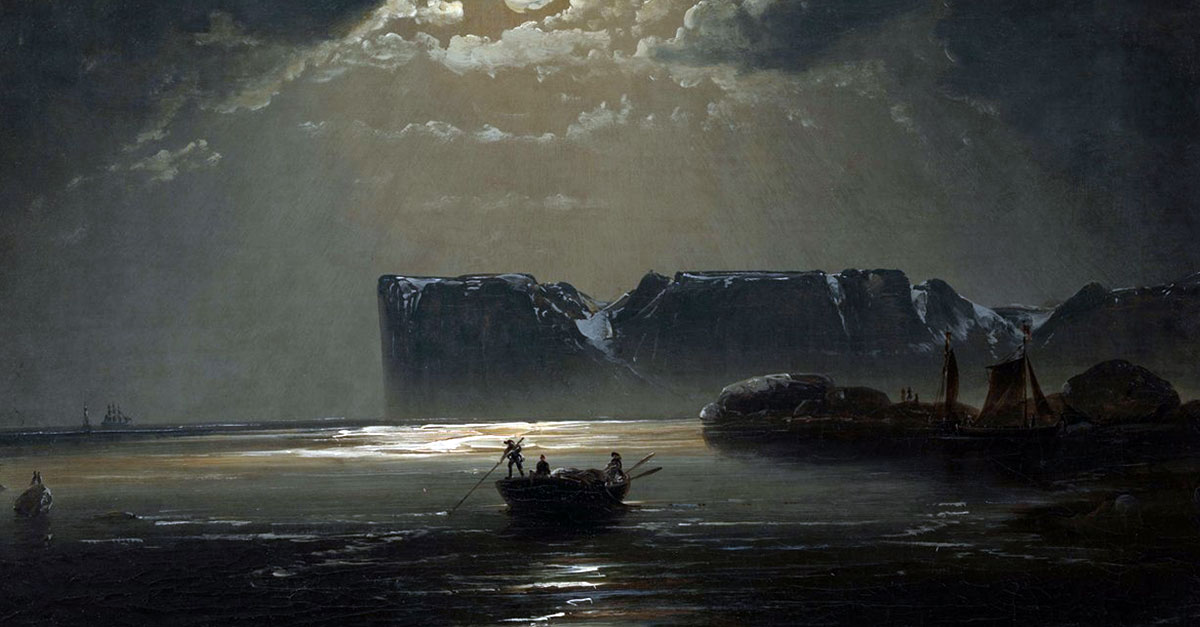
Perhaps an under-appreciated part of Frankenstein‘s relevance today is what it has to teach us about loneliness. Not every reader will relate to Frankenstein the ambitious scientist, or Frankenstein the absent father. However, we can all take something from the novel’s representation of the importance of human connection.
Loneliness, like hurt and violence, multiplies across Frankenstein. It opens with a framing device: the explorer Robert Walton, writing to his sister, describes his expedition to the upper reaches of the globe, picking up a mysterious stranger who, on the brink of death, relates his life story. Walton, at the helm of this forbidding quest, writes: “I bitterly feel the want of a friend” (letter 2). The fortuitous meeting with Victor Frankenstein affords Walton some company and a cautionary tale about pursuing ambition at the expense of relationships.
Frankenstein, too, has been lonely. Describing the period of frenzied research as he worked out how to assemble and animate his creature, he says:
“I could not tear my thoughts from my employment, loathsome in itself, but which had taken an irresistible hold of my imagination. I wished, as it were, to procrastinate all that related to my feelings of affection until the great object, which swallowed up every habit of my nature, should be completed.” (chapter 4)
In other words, Frankenstein’s experiment blinds him to everything else in his life. He neglects his family and friends, closing himself off from the touches of humanity which might have warned him against his “loathsome” plan.
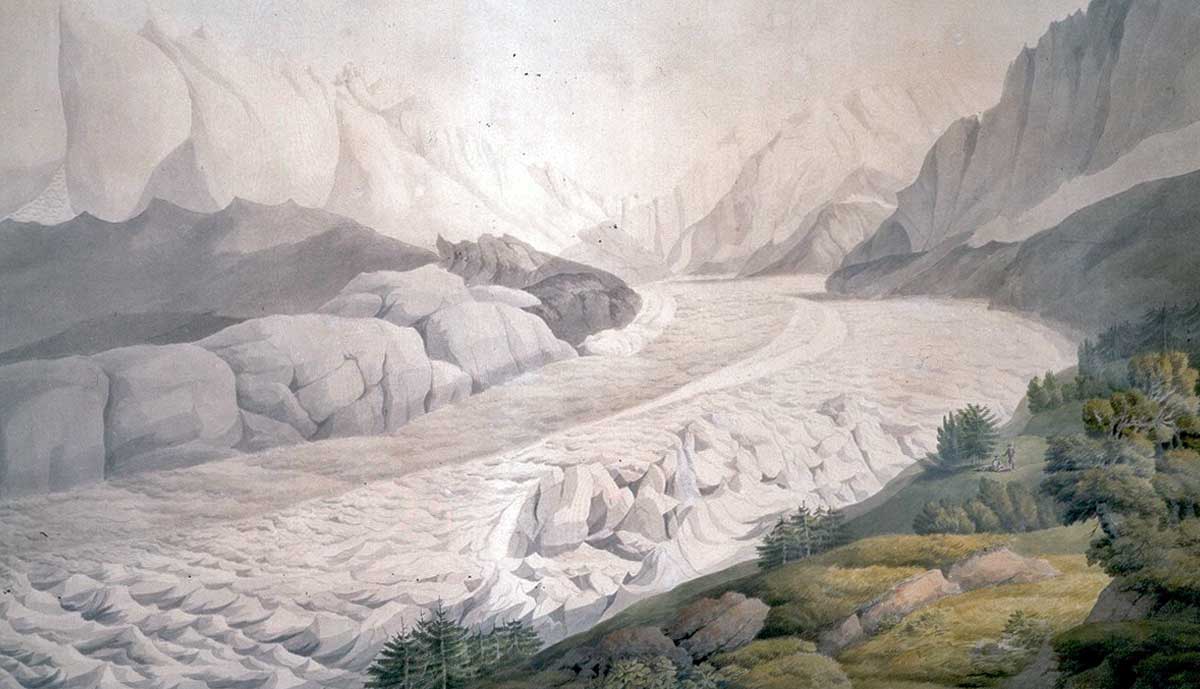
The irony is that Frankenstein only becomes lonelier after he kills everyone nearest and dearest to him, until the pair end up chasing one another across the desolate landscape of the Alps and finally up to the North Pole, locked in a vengeful folie à deux.
The creature is lonely too, rejected by his surrogate father and vilified by those he meets because of his appearance. Frankenstein calls the creature “a thing such as even Dante could not have conceived,” who was “ugly” while under construction and terrifying once invested with life (chapter 5). The only bond the creature forms is with an elderly, blind man, whose family raises the alarm once they discover the friendship.
It’s no wonder the creature begs Frankenstein for a female companion, made like him, who would be able to sympathize with him. In a fateful meeting at the Mer de Glace near Mont Blanc, the creature tells his maker: “Everywhere I see bliss, from which I alone am irrevocably excluded. I was benevolent and good; misery made me a fiend […] am I not alone, miserably alone?” (chapter 10). Seeing only a coldhearted killer, Frankenstein tells him: “There can be no community between you and me; we are enemies” (chapter 10).
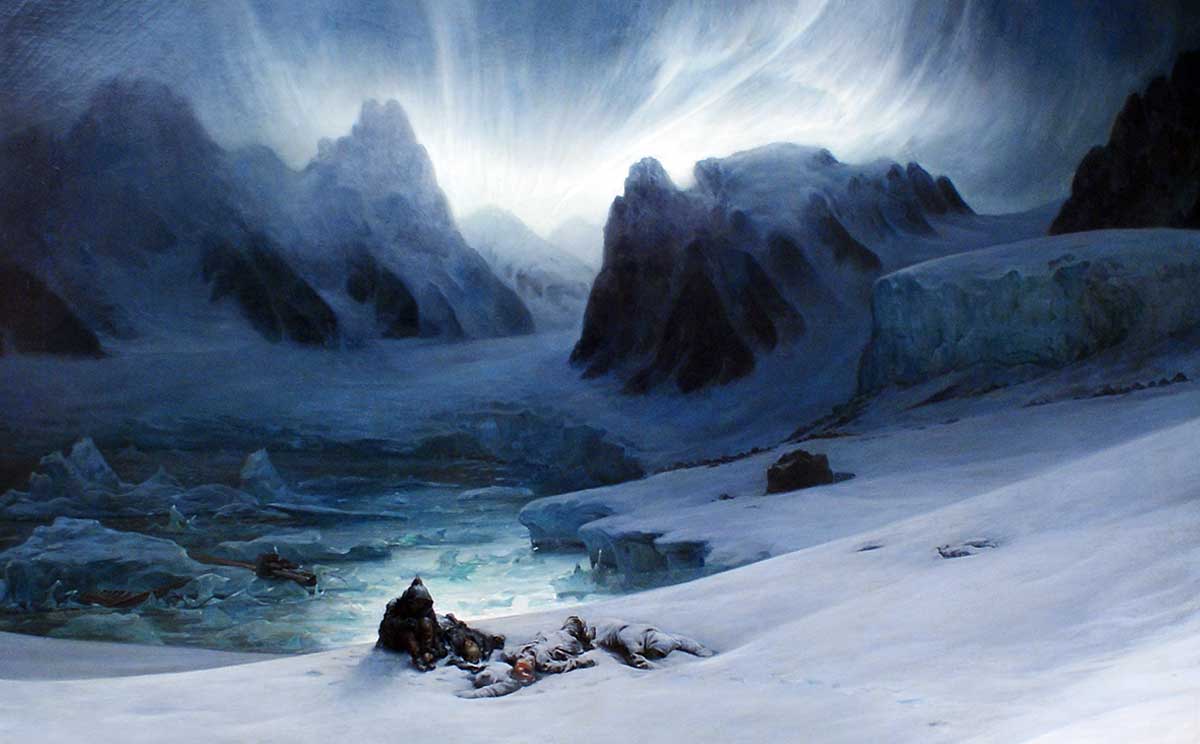
Loneliness sets off the “whirlwinds of […] rage” (chapter 10), which the creature promises to unleash. The closing vignette of Frankenstein is of a dying man seeing his greatest achievement borne away on the icy waters to likely death, watched over by another man who tempts fate in his dogged, solitary pursuit of ambition.
Connection sits at the heart of the novel’s structure, with Walton, Frankenstein, and the creature all mutually exchanging their stories, yet the stories they tell are haunted by solitude. Frankenstein is a searching exploration of what happens when we neglect those around us, when we are too quick to judge and condemn, and when we lose sight of our humanity.
Source
- Shelley, Mary Wollstonecraft (1993). Frankenstein; Or, The Modern Prometheus. Project Gutenberg edition.