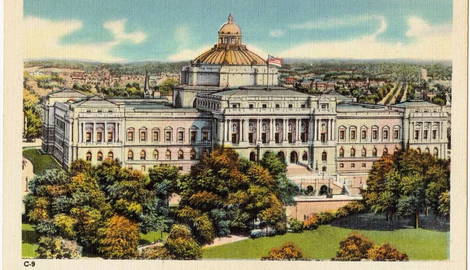

Libraries have long stood as pillars of knowledge and culture, evolving from ancient archives to modern public institutions. Ashurbanipal created the oldest known museum at Nineveh in the 7th century BC, housing a vast collection of cuneiform tablets. The Ptolemies built the Library of Alexandria in the 4th century BC in an attempt to centralize all human knowledge. In the United States, the concept of public libraries gained momentum in the 19th century. The Boston Public Library was established in 1848 and was among the first to offer free access to its collections. Today, libraries across the nation are not only book repositories but also architectural masterpieces and community spaces.
| Library of Congress | Washington, D.C. | 1800 |
Oldest federal cultural institution; houses a Gutenberg Bible and Thomas Jefferson’s personal collection.
|
| Boston Public Library | Boston, MA | 1848 |
First large free municipal library in the U.S.; features the iconic McKim Building and Bates Hall.
|
| New York Public Library (Schwarzman Building) | New York City, NY | 1911 |
Beaux-Arts landmark guarded by lions “Patience” and “Fortitude”; it contains the Rose Main Reading Room.
|
| George Peabody Library | Baltimore, MD | 1857 |
Known as a “cathedral of books,” it features five tiers of ornamental cast-iron balconies and a 61-foot skylight.
|
| Beinecke Rare Book & Manuscript Library | New Haven, CT | 1963 |
Modernist Yale library with translucent marble walls; it houses the Voynich Manuscript and a Gutenberg Bible.
|
| Harold Washington Library | Chicago, IL | 1991 |
Named for Chicago’s first African American mayor; features a rooftop Winter Garden and massive owl sculptures.
|
| The Morgan Library & Museum | New York City, NY | 1906 |
Originally J.P. Morgan’s private study; holds original manuscripts by Dickens, Twain, and a rare Chopin waltz.
|
| Los Angeles Central Library | Los Angeles, CA | 1926 |
Blends Art Deco and Egyptian styles; survived a major arson fire in 1986; features a sunburst tiled pyramid.
|
| St. Louis Public Library | St. Louis, MO | 1865 |
Designed by Cass Gilbert; underwent a massive $70 million “invisible” restoration in 2012.
|
| Suzzallo Library | Seattle, WA | 1926 |
Collegiate Gothic “soul” of the University of Washington; features a grand Graduate Reading Room.
|
| The Boston Athenaeum | Boston, MA | 1807 |
Private membership library; houses a large portion of George Washington’s personal library.
|
| Geisel Library (UC San Diego) | La Jolla, CA | 1970 |
Brutalist/Futurist design named after Dr. Seuss; holds the world’s most extensive Dr. Seuss collection.
|
| Folger Shakespeare Library | Washington, D.C. | 1932 |
Holds the world’s largest collection of Shakespeare’s works, including 82 copies of the First Folio.
|
| Fisher Fine Arts Library | Philadelphia, PA | 1891 |
Red sandstone Venetian design at UPenn; features unique gargoyle-shaped ventilation vents.
|
| Linda Hall Library | Kansas City, MO | 1946 |
Private STEM library on a 14-acre arboretum; holds first editions of Newton, Darwin, and Galileo.
|
1. Library of Congress, Washington, D.C.
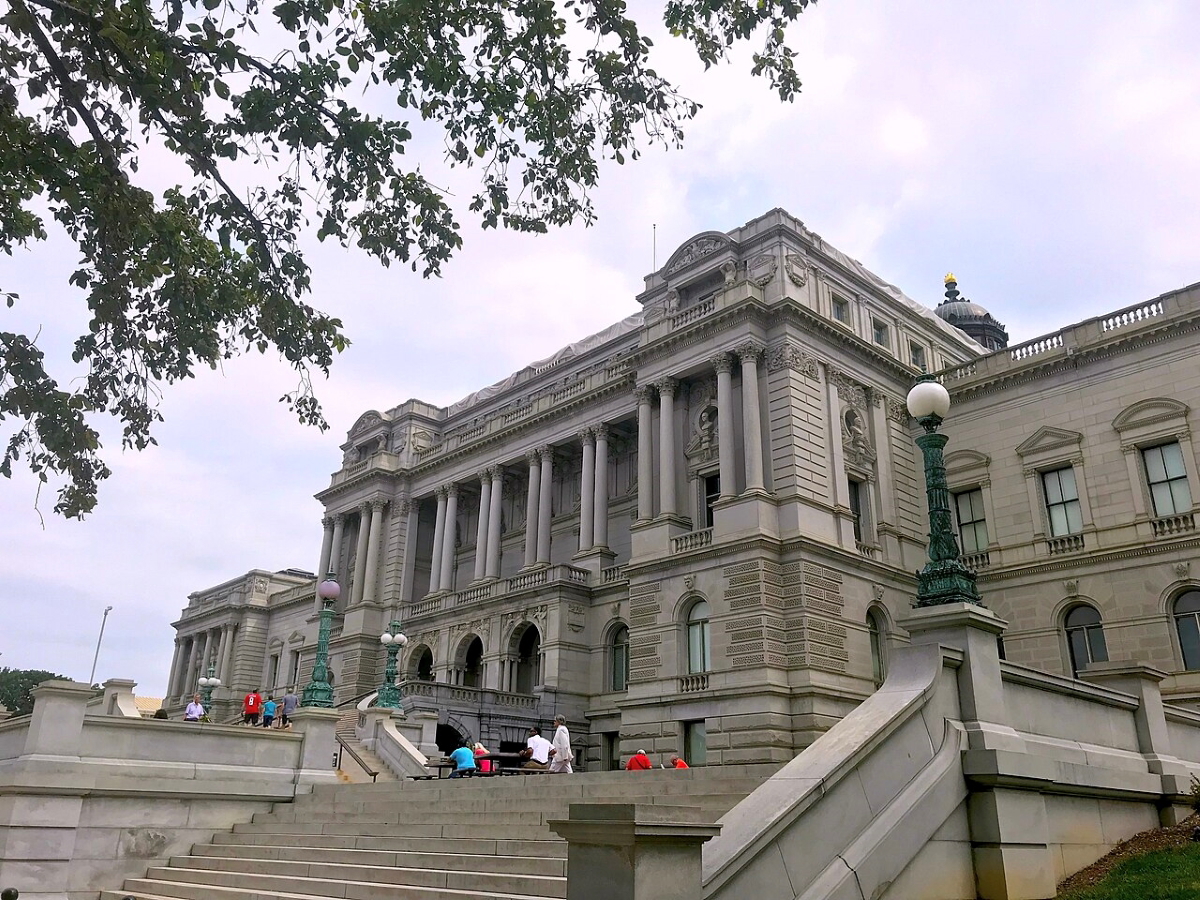
Established in 1800, the Library of Congress in Washington, D.C., is the oldest federal cultural institution in the United States. Originally housed in the Capitol, it suffered significant losses during the War of 1812, when invading forces burned the building, destroying its original collection. In a pivotal move to restore its holdings, former President Thomas Jefferson sold his personal library to the institution, laying the foundation for its diverse collections.
Today, the Library encompasses three buildings, with the Thomas Jefferson Building being a highlight for visitors. Completed in 1897, the architectural marvel showcases a stunning Italian Renaissance design. Inside, the Great Hall welcomes guests with its ornate decorations, while the Main Reading Room impresses with a majestic dome and symbolic statues representing various fields of knowledge. Notably, the Library houses one of the few surviving copies of the Gutenberg Bible, a treasure displayed for public viewing.
Visitors are encouraged to explore the library’s exhibitions, which delve into diverse topics from American history to world cultures. The institution also offers free tours, providing insights into its vast collections and the building’s rich history.
2. Boston Public Library, Boston, Massachusetts
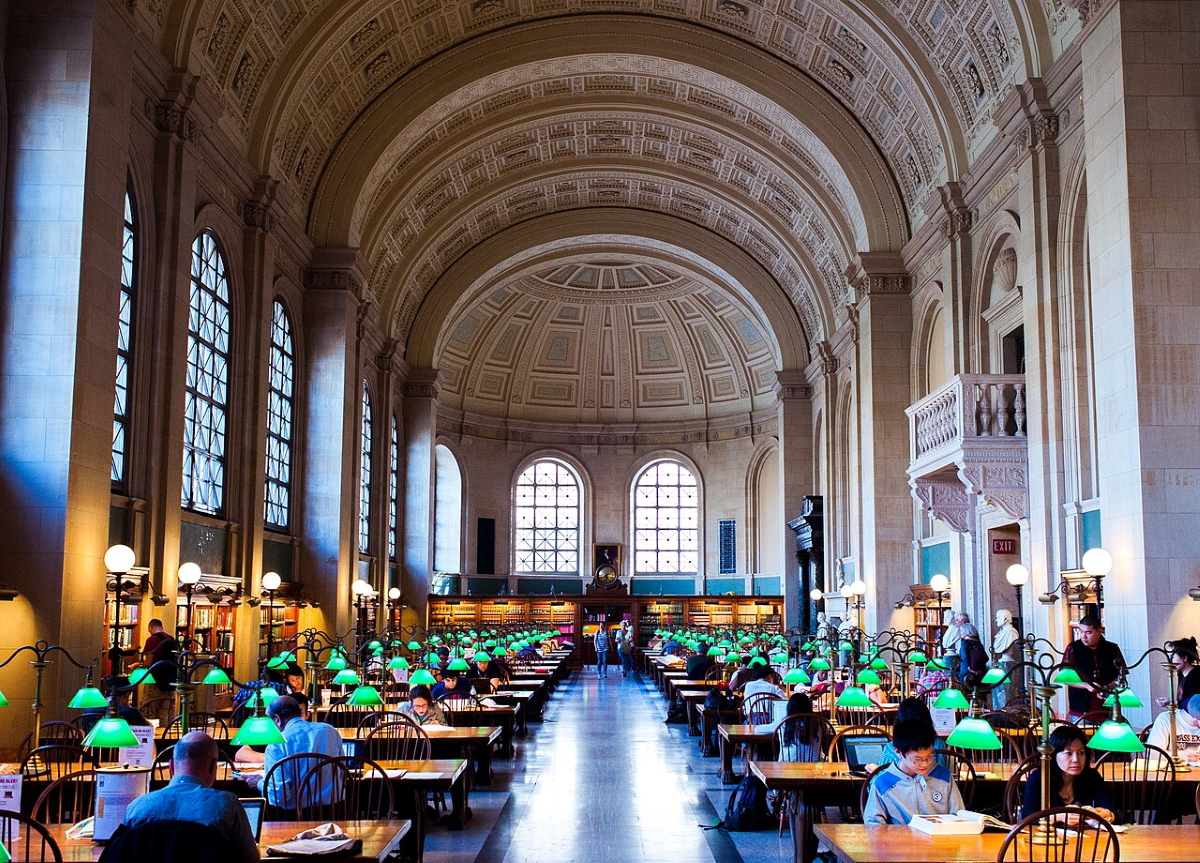
The Boston Public Library is a historic institution with a collection of over 23 million items and a stunning architectural design. Founded in 1848, it was the first large free municipal library in the U.S. and quickly grew beyond its original space. In 1895, the library moved to its iconic McKim Building in Copley Square, designed in the Italian Renaissance style.
Visitors can explore Bates Hall, the grand reading room with its high vaulted ceiling and signature green-shaded lamps. The library’s courtyard, inspired by European cloisters, offers a quiet escape in the middle of the city. Inside, murals by John Singer Sargent and Edwin Austin Abbey add to the library’s artistic appeal. The library also hosts exhibitions, lectures, and public events, making it a cultural hub.
3. New York Public Library – Stephen A. Schwarzman Building, New York City, New York
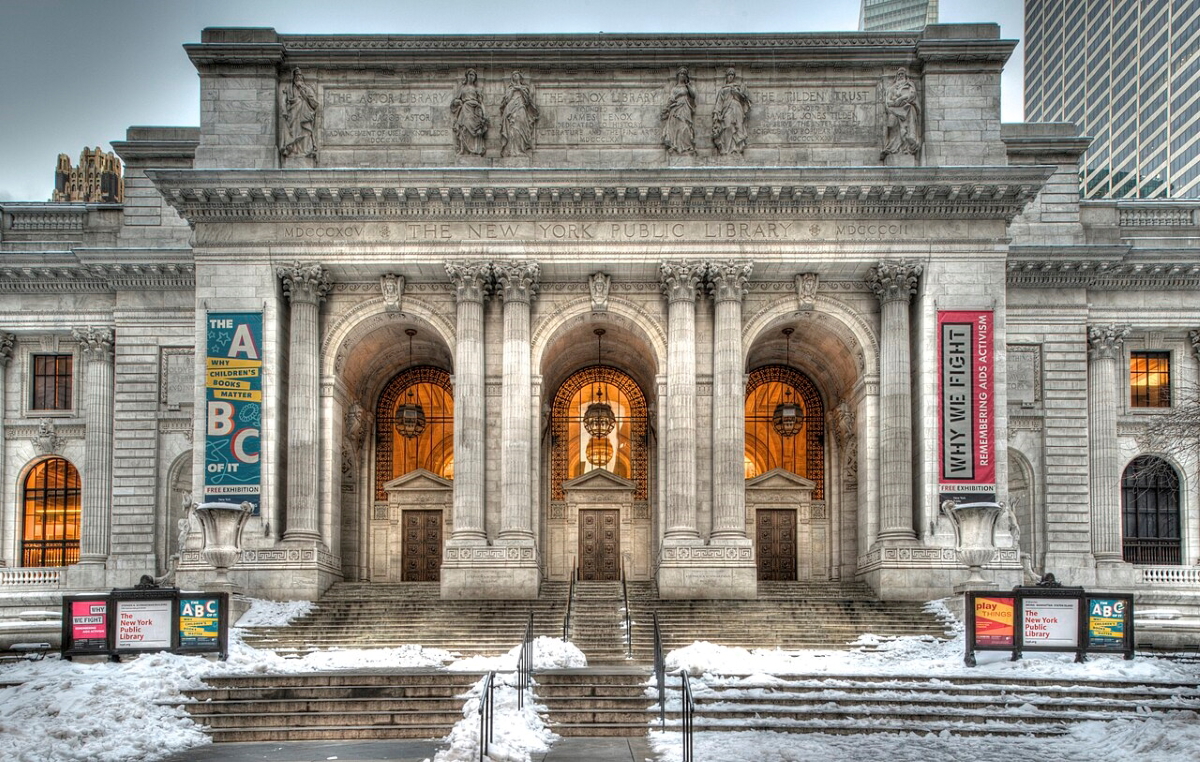
The Stephen A. Schwarzman Building, the flagship of The New York Public Library (NYPL), is a Beaux-Arts landmark located at Fifth Avenue and 42nd Street in Midtown Manhattan. Opened in 1911, it was the largest marble structure in the U.S. at that time. The building houses over one million volumes and offers free public tours highlighting its history, architecture, and collections.
When visiting, you can explore the iconic Rose Main Reading Room and various exhibitions. It features a stunning mural of a cloud-filled ceiling. In 2014, a single plaster rosette fell from the ceiling. This triggered a massive two-year, $12 million restoration where every single one of the 900 rosettes was inspected and reinforced.
4. George Peabody Library, Baltimore, Maryland
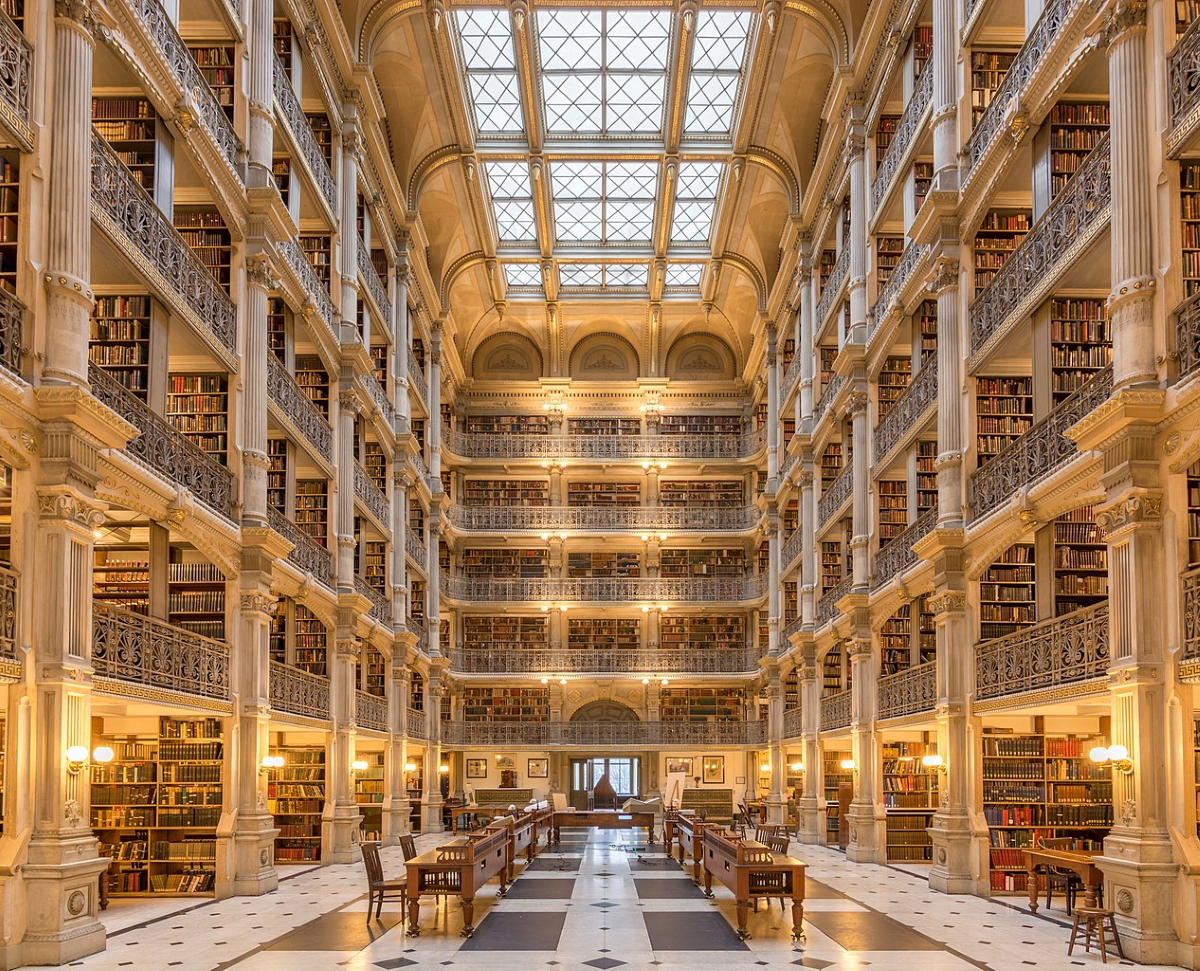
Established in 1857 by philanthropist George Peabody, the George Peabody Library in Baltimore, Maryland, is renowned for its stunning architecture and extensive 19th-century collection. Designed by architect Edmund G. Lind, the library opened in 1878 and features five tiers of ornamental cast-iron balconies rising to a skylight 61 feet above the floor.
Often referred to as a “cathedral of books,” the library houses over 300,000 volumes, with strengths in religion, British art, architecture, American history, and more. Now part of Johns Hopkins University, it serves as both a research library and an events venue, offering visitors a glimpse into its rich history and architectural beauty.
5. Beinecke Rare Book & Manuscript Library, New Haven, Connecticut
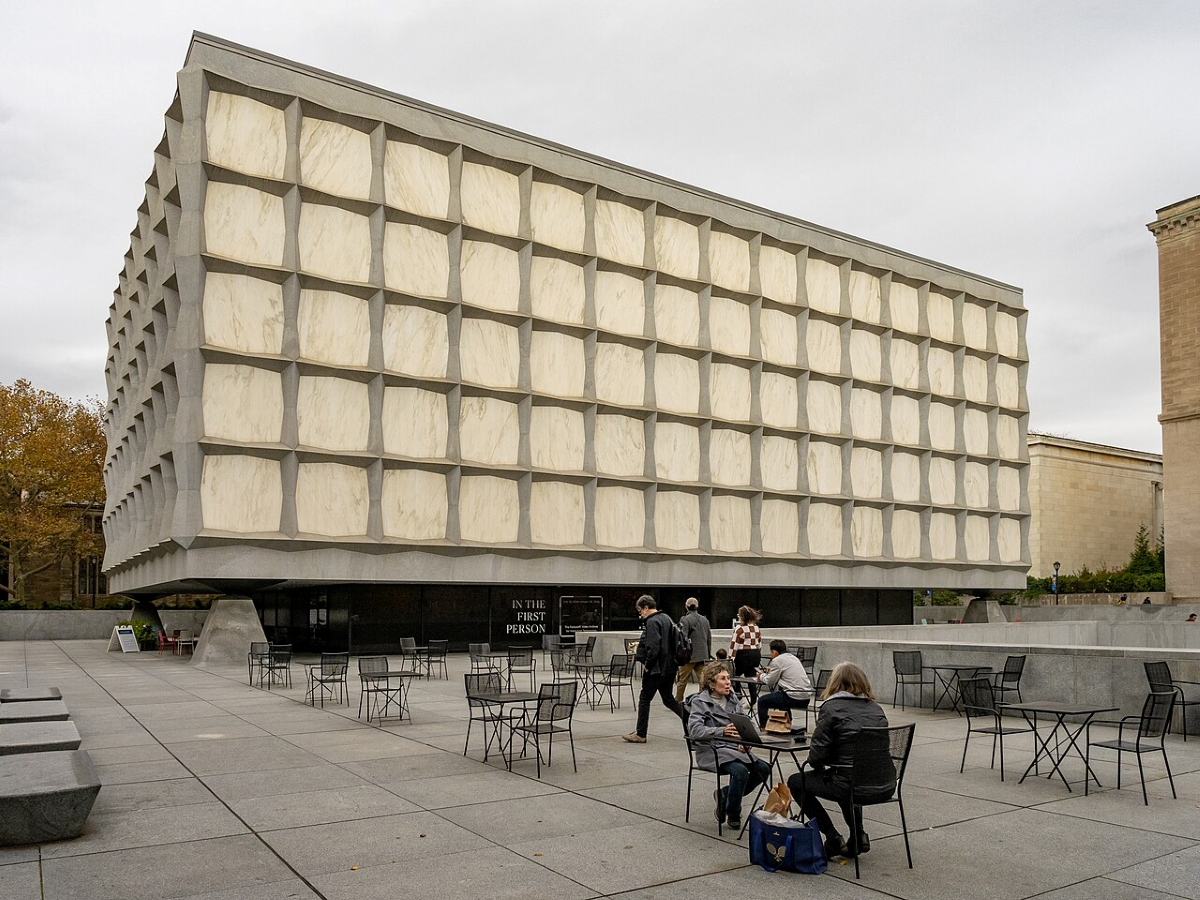
The Beinecke Rare Book & Manuscript Library is located at Yale University in New Haven, Connecticut. It is one of the oldest universities in the U.S. in continuous operation, and one of the world’s largest libraries dedicated exclusively to rare books and manuscripts. Established in 1963, it serves as a vital resource for scholars, researchers, and students.
Designed by architect Gordon Bunshaft of Skidmore, Owings & Merrill, the library is renowned for its distinctive modernist architecture. Its exterior features a windowless façade constructed from translucent Vermont marble panels, which allow natural light to filter into the interior while protecting the rare materials from direct sunlight. This design creates a unique, softly illuminated environment within the library.
Inside, the library houses some of the most valuable literary artifacts in existence. Among its prized possessions is a rare Gutenberg Bible, one of only 48 known copies. It also holds the Voynich Manuscript, a mysterious book filled with undeciphered text and unusual illustrations. The archives include the personal papers of influential writers such as Langston Hughes, Zora Neale Hurston, and James Joyce.
Open to the public, the library offers exhibitions showcasing its extraordinary collection. Researchers can access the reading room by appointment, while casual visitors can admire the breathtaking six-story glass-enclosed book tower.
6. Harold Washington Library, Chicago, Illinois
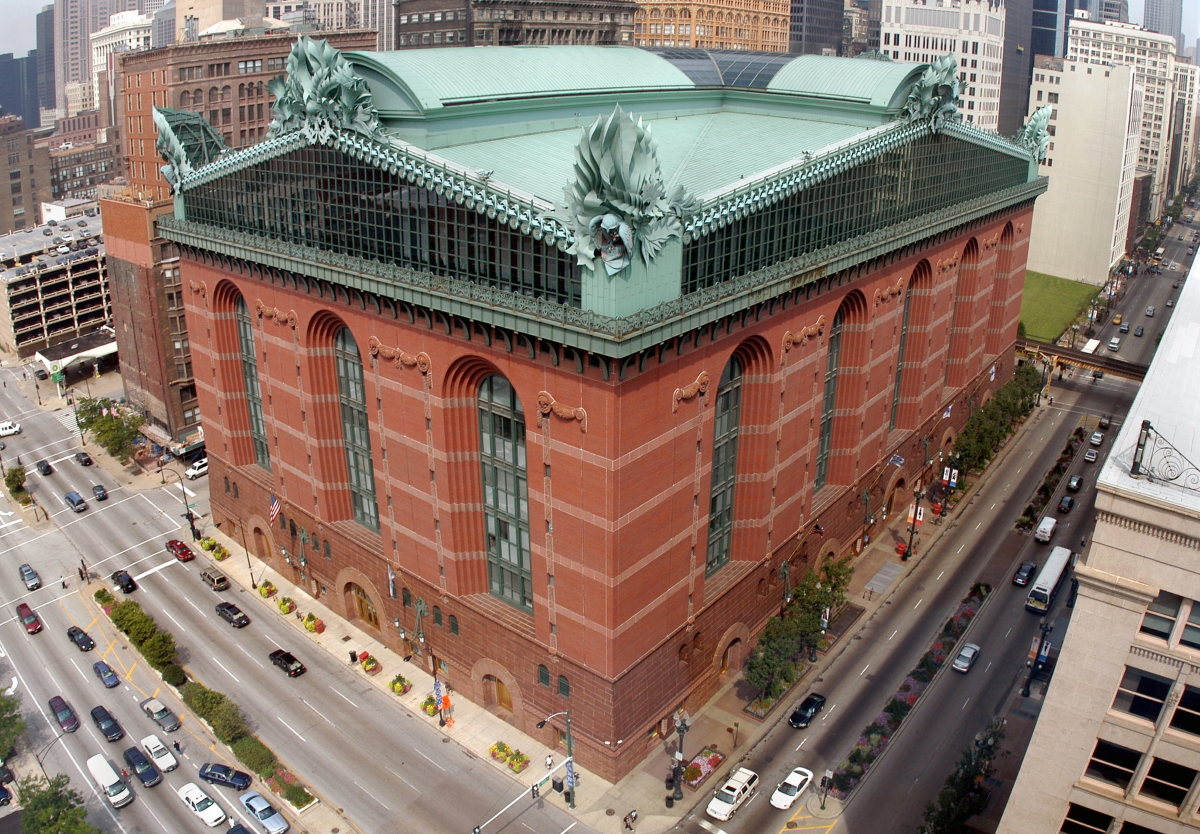
The Harold Washington Library Center stands as a cornerstone of Chicago’s intellectual and cultural landscape. Opened in 1991, it was named in honor of Harold Washington, the city’s first African American mayor, who championed education and public resources. Towering over the South Loop, its design blends classical and modern influences, with red brick, grand arched windows, and distinctive rooftop acroteria. These are massive, sculpted owls that symbolize wisdom and learning.
Inside, the library spans ten floors, offering an immense collection of books, digital resources, and dedicated spaces for learning and creativity. The grand entrance leads visitors into an open, welcoming space, while deeper inside, the Thomas Hughes Children’s Library provides a vibrant hub for young readers. The Maker Lab fosters innovation with 3D printers and technology tools, while the Harold Washington Archives preserve the legacy of the man who inspired its creation.
At the top, the breathtaking Winter Garden bathes in natural light, serving as a quiet retreat for study or reflection. Beyond its shelves and exhibits, the library remains a gathering place, hosting lectures, performances, and community programs.
7. The Morgan Library & Museum, New York City, New York
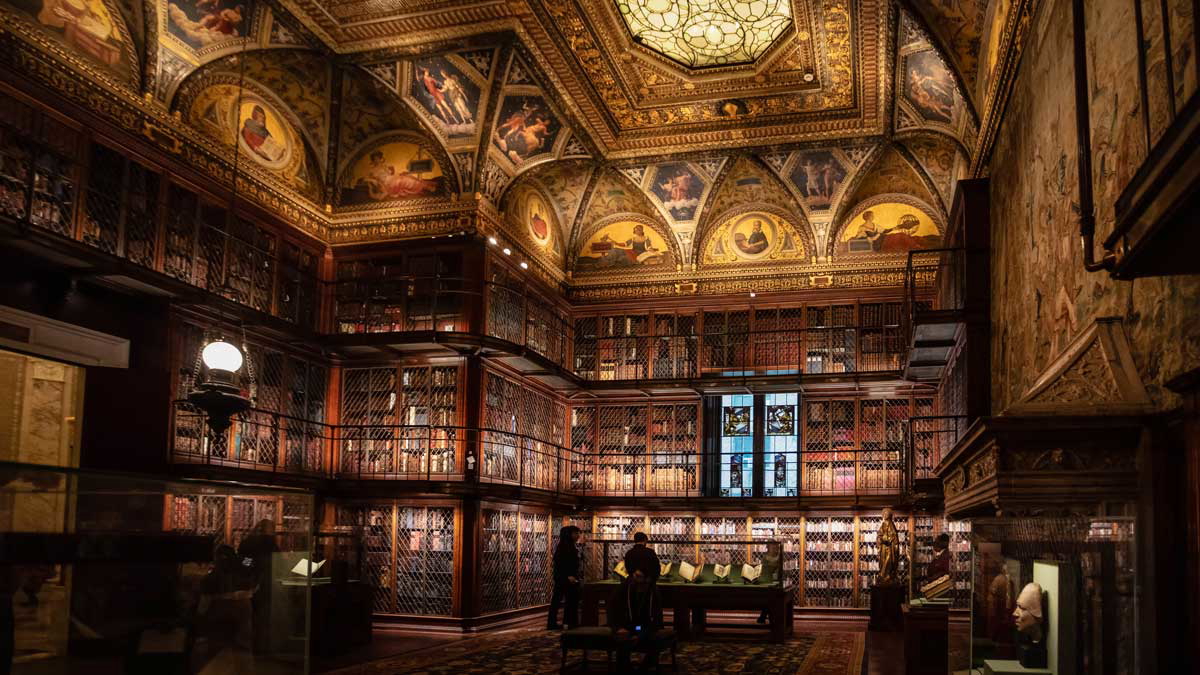
In the heart of New York City, The Morgan Library & Museum stands as a testament to the rich tapestry of art, literature, and history. Originally the private library of financier J. Pierpont Morgan, this institution has evolved into a public museum and research library, offering visitors a unique glimpse into the world of rare manuscripts, art, and architecture.
Designed by Charles Follen McKim of the renowned firm McKim, Mead & White, the library was constructed between 1902 and 1906. Its design draws inspiration from Italian Renaissance villas, featuring a grand façade and intricate interiors. The library’s main room, with its soaring ceilings and rich woodwork, houses an impressive collection of rare books and manuscripts, reflecting Morgan’s passion for collecting.
The Morgan’s collection is vast and varied, encompassing rare books, manuscripts, drawings, and artifacts. Highlights include a Gutenberg Bible from the 15th century and original manuscripts of literary giants such as Charles Dickens and Mark Twain. The museum also boasts an impressive collection of musical scores, including works by Mozart and Beethoven. In a recent discovery, a previously unknown waltz by Frédéric Chopin was found in the library’s archives, adding to the legacy of groundbreaking finds within its walls.
Visitors can step back in time as they explore Morgan’s private study, a room lined with historic tomes, rich tapestries, and a commanding fireplace. Throughout the museum, rotating exhibits bring fresh perspectives on history, literature, and the arts.
8. Los Angeles Central Library, Los Angeles, California
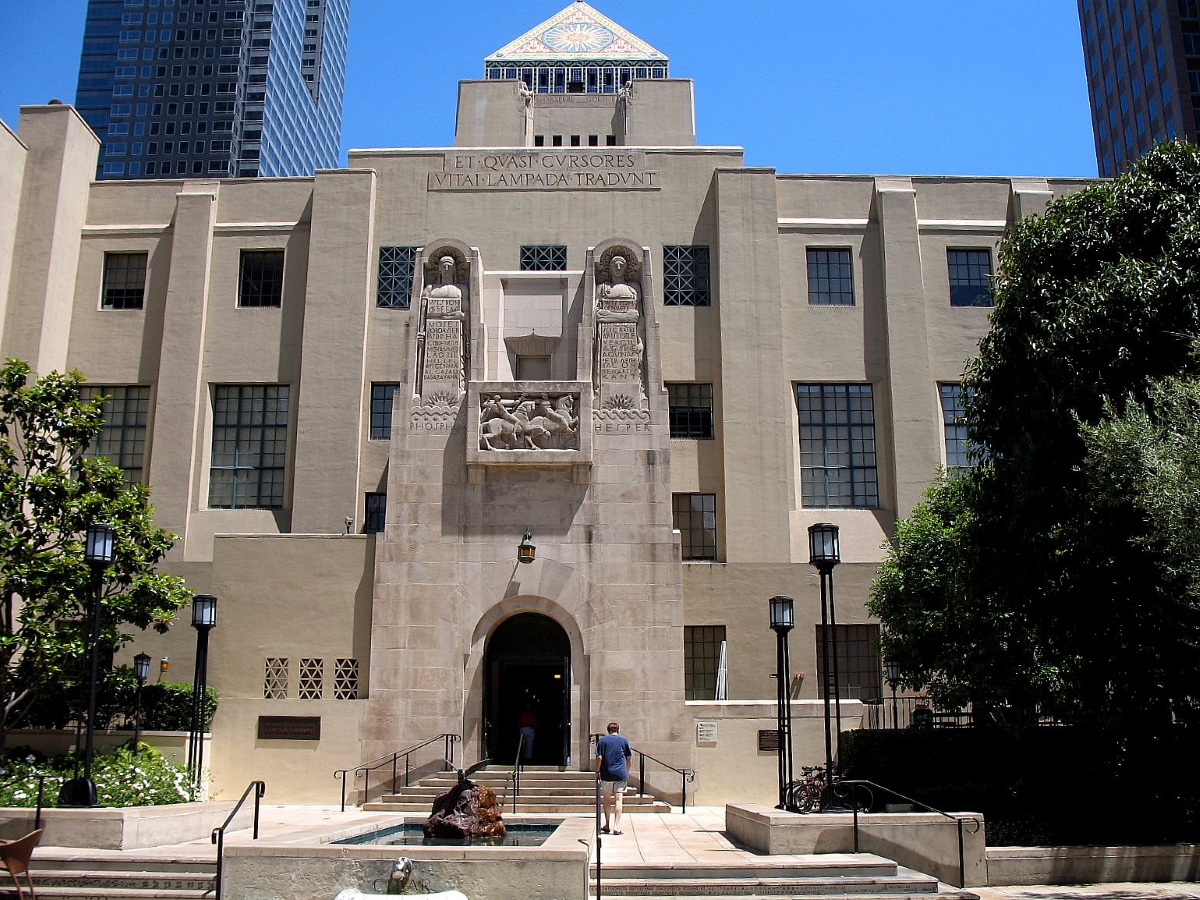
Los Angeles is a city of reinvention, and its Central Library is no exception. At first glance, its mix of Art Deco, Egyptian Revival, and Mediterranean influences might seem unusual, but in many ways, it mirrors the city itself. It is a blend of cultures, histories, and unexpected beauty. Designed by Bertram Goodhue and opened in 1926, the library’s striking tiled pyramid, adorned with a golden sunburst, crowns its place in the downtown skyline, a quiet monument in a city of constant motion.
But the library’s story is also one of survival. In 1986, an arson fire nearly destroyed it, reducing hundreds of thousands of books to ash. What followed was not just a restoration but a rebirth, culminating in the addition of the Tom Bradley Wing in 1993.
Today, visitors enter a living testament to the city’s resilience. The rotunda still carries its intricate murals of California’s past, while the eight-story atrium of the Bradley Wing floods the space with light, a quiet reminder that knowledge, like Los Angeles itself, refuses to be extinguished.
Far beyond its shelves, the library serves as a cultural crossroads. It offers a gathering place for art lovers, history buffs, and those simply seeking a moment of stillness in the city’s endless rush.
9. The St. Louis Public Library, St. Louis, Missouri
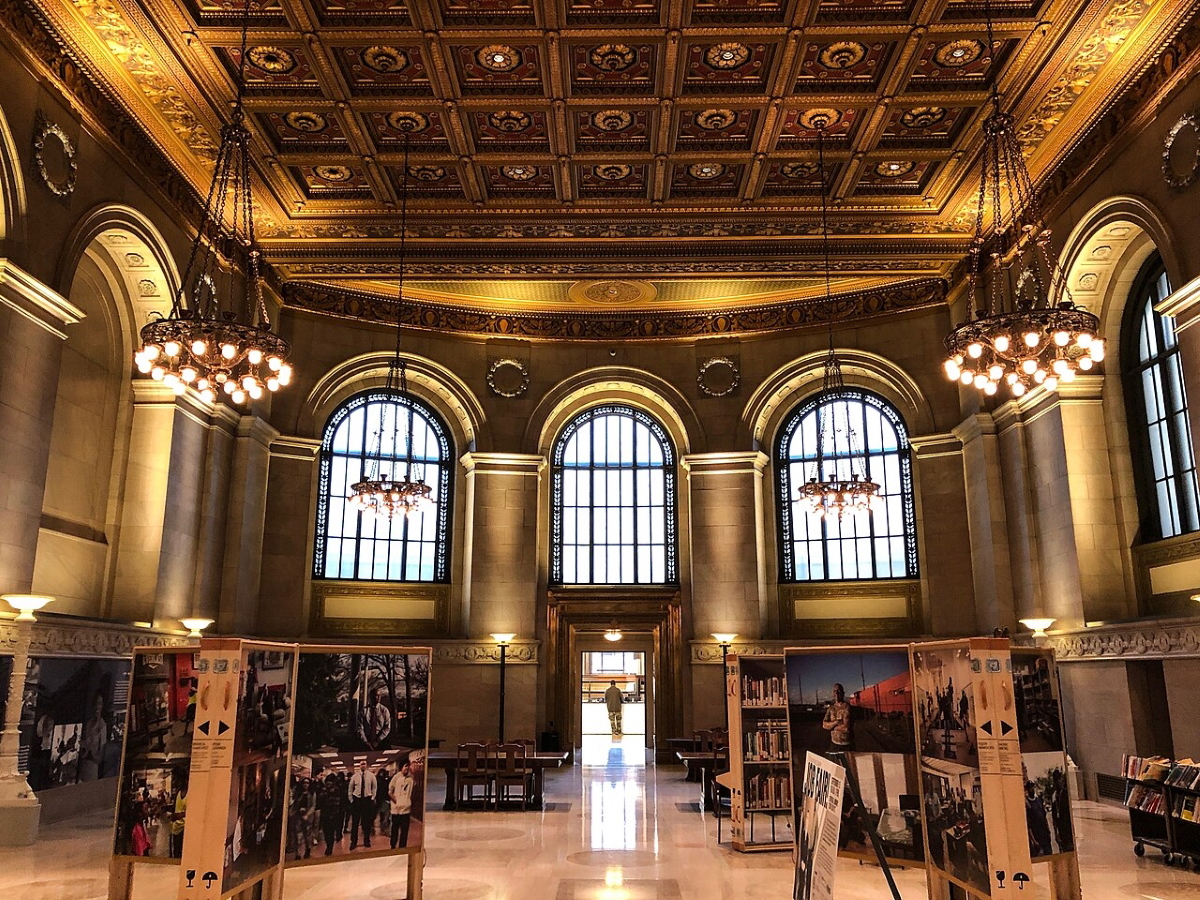
The St. Louis Public Library, established in 1865, has grown from a subscription-based entity into a comprehensive public library system serving the city of St. Louis.
Its Central Library, designed by renowned architect Cass Gilbert and opened in 1912, stands as a testament to early 20th-century architectural grandeur. The library’s collection has expanded significantly over the years, reflecting its commitment to providing diverse resources to the community.
Today, the St. Louis Public Library offers a wide range of programs and services, including digital makerspaces known as Creative Experience, available at multiple locations for patrons of all ages. Through its evolution, the library continues to adapt and innovate, ensuring that it meets the changing needs of its patrons while preserving its rich history.
10. Suzzallo Library, Seattle, Washington
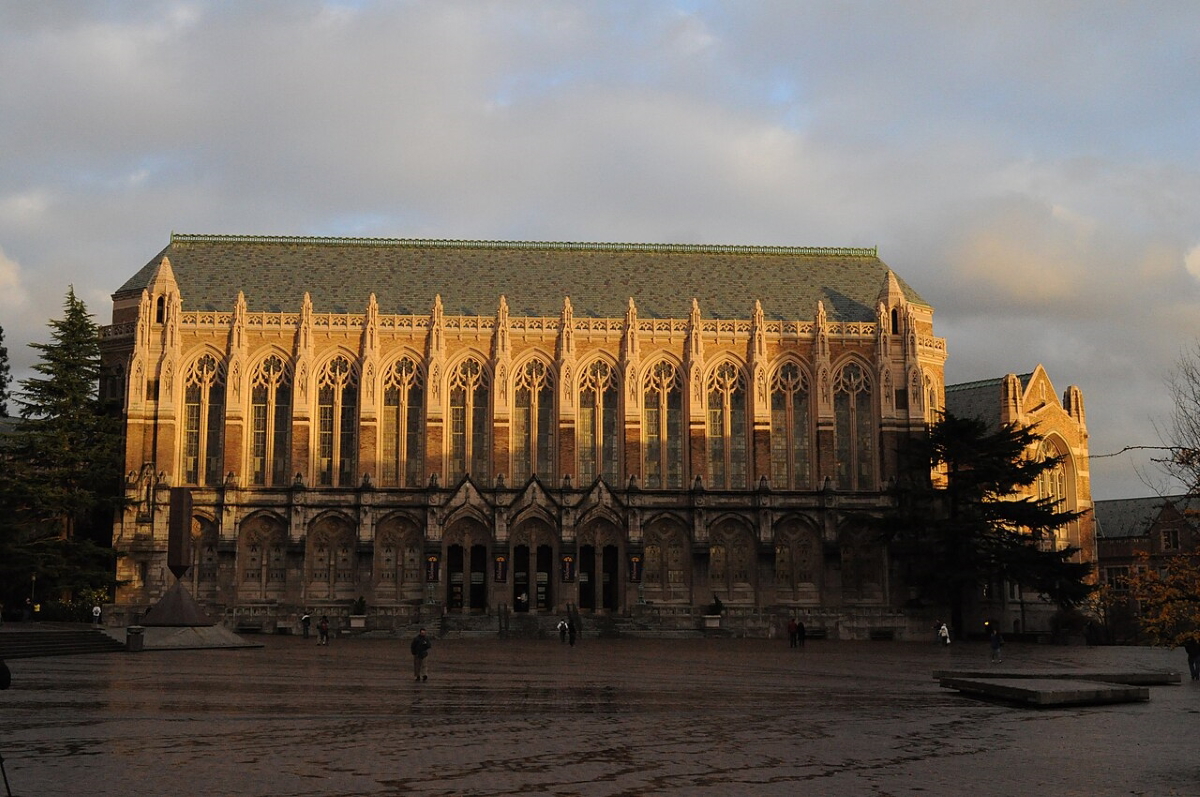
Suzzallo Library, the central library of the University of Washington in Seattle, opened in 1926 and was named after Henry Suzzallo, the university’s fifteenth president. Designed in the Collegiate Gothic style by architects Charles H. Bebb and Carl F. Gould, the library was intended to be the “soul of the university.”
Visitors are often drawn to the Graduate Reading Room, a grand space measuring 250 feet in length, 52 feet in width, and 65 feet in height. This room features a vaulted ceiling adorned with vibrantly colored and gilded details, oak bookcases topped with hand-carved friezes of native plants, and tall leaded windows with stained glass panels reproducing Renaissance watermarks.
The library’s exterior is equally impressive, with terra cotta sculptures of influential thinkers and artists, including Moses, Louis Pasteur, Dante Alighieri, and Shakespeare, selected by the faculty. Stone coats of arms from universities around the world, such as Toronto, Louvain, Virginia, California, Yale, Heidelberg, Bologna, Oxford, Paris, Harvard, Stanford, Michigan, Uppsala, and Salamanca, also adorn the façade.
Suzzallo Library is also a destination for those interested in architecture and history. Its design and ambiance have earned it the nickname “Cathedral of Books,” reflecting its status as a sanctuary for learning.
11. The Boston Athenaeum, Boston, Massachusetts
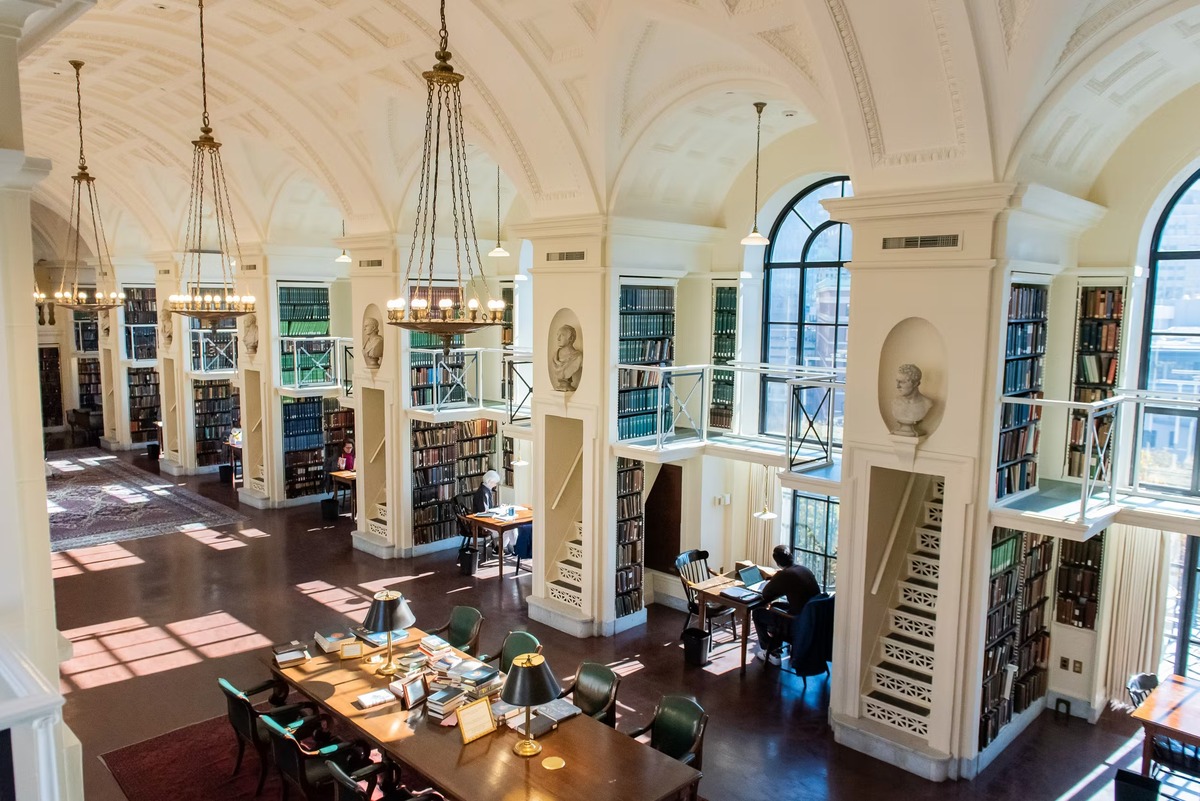
While the Boston Public Library was built as a “palace for the people,” the Athenaeum was founded in 1807 as a private, independent library to house a large portion of George Washington’s personal library. Founded by members of the Anthology Society, it is still a membership library, and patrons pay a yearly subscription fee to use its services.
At first, the library rented rooms, then, in 1809, they bought a small house adjacent to the King’s Chapel Burying Ground. In 1822, it moved into a mansion on Pearl Street, and in the 1840s, it moved to its current location at 10 ½ Beacon Street, the first space designed specifically for the library’s needs.
The library holds over 100,000 rare volumes and an art collection of 100,000 paintings, sculptures, prints, drawings, photographs, and decorative arts. These include a 1799 set of Goya’s Los Caprichos and Gilbert Stuart’s unfinished portraits of George and Martha Washington.
12. Geisel Library, UC San Diego, La Jolla, California
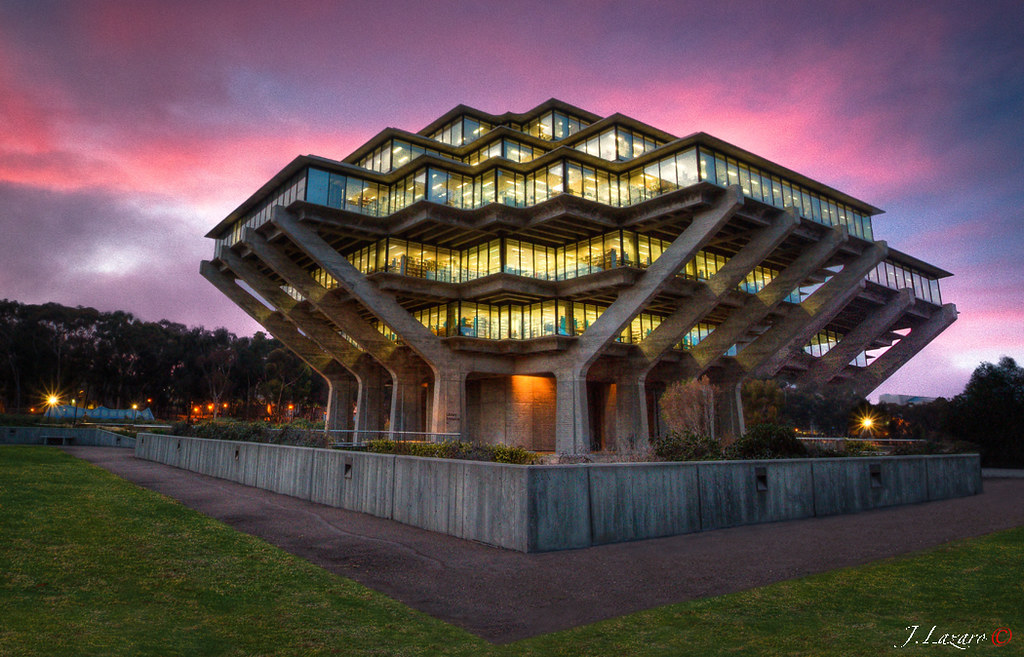
The Geisel is the main library building of the University of California, San Diego. It is named for Audrey and Theodor Seuss Geisel, the latter better known by his pen name Dr Seuss. Designed by William Pereira, it opened in 1970 as a mix of brutalism and futurism.
The library holds over seven million volumes, including the Dr Seuss Collection, which contains original drawings, sketches, proofs, notebooks, manuscript drafts, photographs, memorabilia, and more.
Unusually, the library’s lower floors are numbered one and two, while the upper levels are numbered three and four. This gave rise to the idea that the third floor is sealed off. In reality, the “missing” third floor is an outside forum.
13. Folger Shakespeare Library, Washington, D.C.
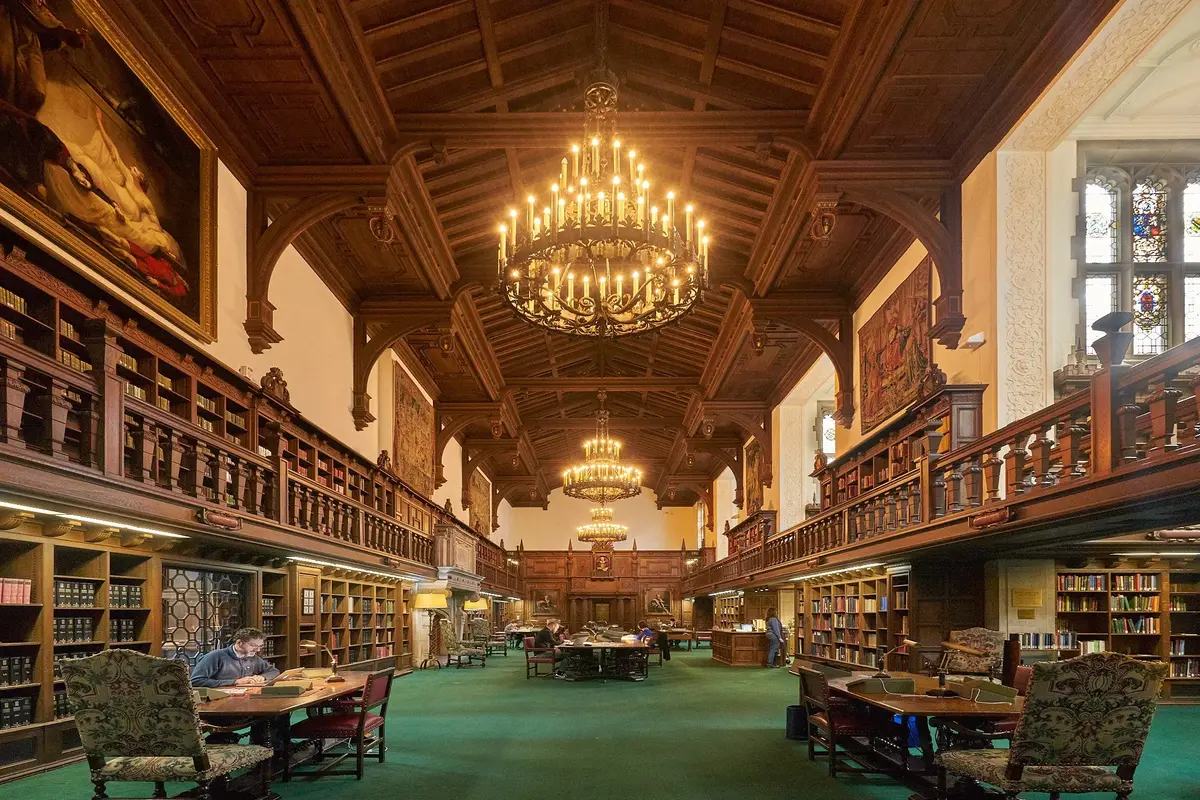
The Folger is an independent research library on DC’s Capitol Hill and holds the world’s largest collection of printed works of William Shakespeare. It is also the primary repository for rare materials from early modern Britain and Europe between 1500 and 1750.
The library was founded by Standard Oil of New York executive Henry Clay Folger, who was an avid collector of Shakespeareana. He built the library with his wife to house their collection, which included a 1685 Fourth Folio.
The building was designed by architect Paul Philippe Cret and features a white marble exterior with nine carved reliefs of scenes from Shakespeare’s plays by John Gregory. Inside the building is designed in Tudor style, and the lobby is designed in the style of an Elizabethan Theater.
14. Fisher Fine Arts Library, UPenn, Philadelphia, PA
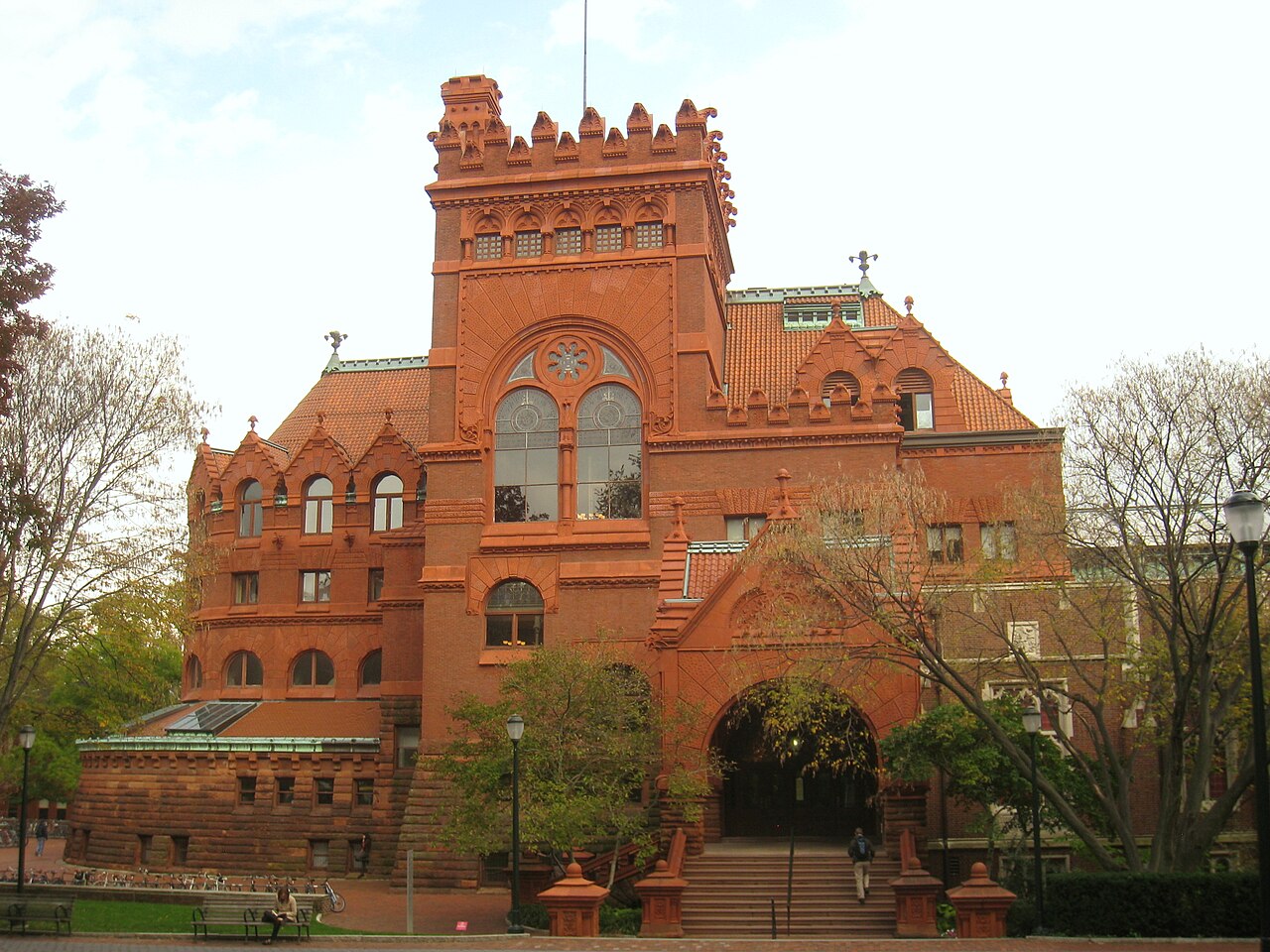
The Fisher Fine Arts Library was the primary library of the University of Pennsylvania from 1891 to 1962. The original design was considered innovative, with five stories of reading rooms and stacks built around a tower staircase. The building is a red sandstone brick and terracotta Venetian design that looks like a mix of a fortress and a cathedral.
The Main Reading Room is a soaring four stories, divided by an arcade from a two-story Rotunda Reading Room with a basilica plan. It also features Gargoyle vents that form a functional part of the ventilation system.
15. Linda Hall Library, Kansas City, MO
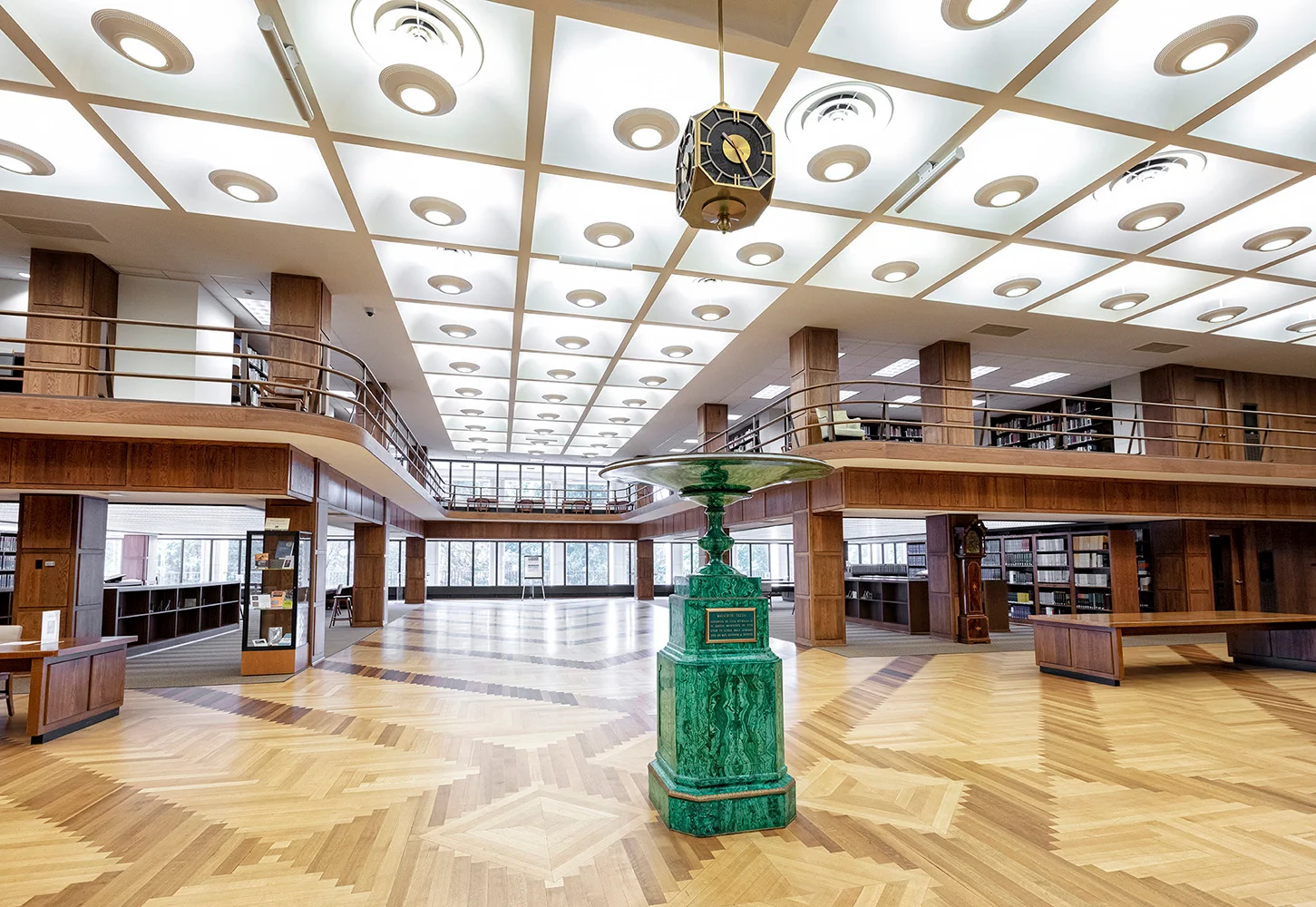
The Linda Hall Library is a private STEM library that sits on a 14-acre urban arboretum. It was established in 1946 through the philanthropy of Linda and Herbert Hall with the ambition of acting as a guardian of the collective intellectual heritage of science, technology, and engineering.
The library holds over two million items, starting with 62,358 books assembled by John Adams before he became president. It owns first-edition copies of some of the most important scientific works in history, including Newton’s Principia, Darwin’s On the Origin of the Species, and Galileo’s Sidereus Nuncius. The arboretum grounds are home to over 338 trees representing 52 genera and 145 species.