






The south of England has never had to work very hard to appeal to tourists. Most visitors don’t need to be persuaded to see Stonehenge, get a photograph in front of Westminster Abbey, walk Oxford as an open-air museum, or eat fish and chips on the south coast. But Northern England has a lot of fascinating towns and cities for history buffs. While the weather may have a bad reputation, some of the most dramatic chapters in British history happened in the north, and history has left its mark! It was the Roman frontier, the Viking landing ground, and the stage for medieval border wars. For visitors willing to travel north, here are five underrated Northern England historical sites to add to your itinerary.
1. Alnwick and the Might of the Percy Frontier
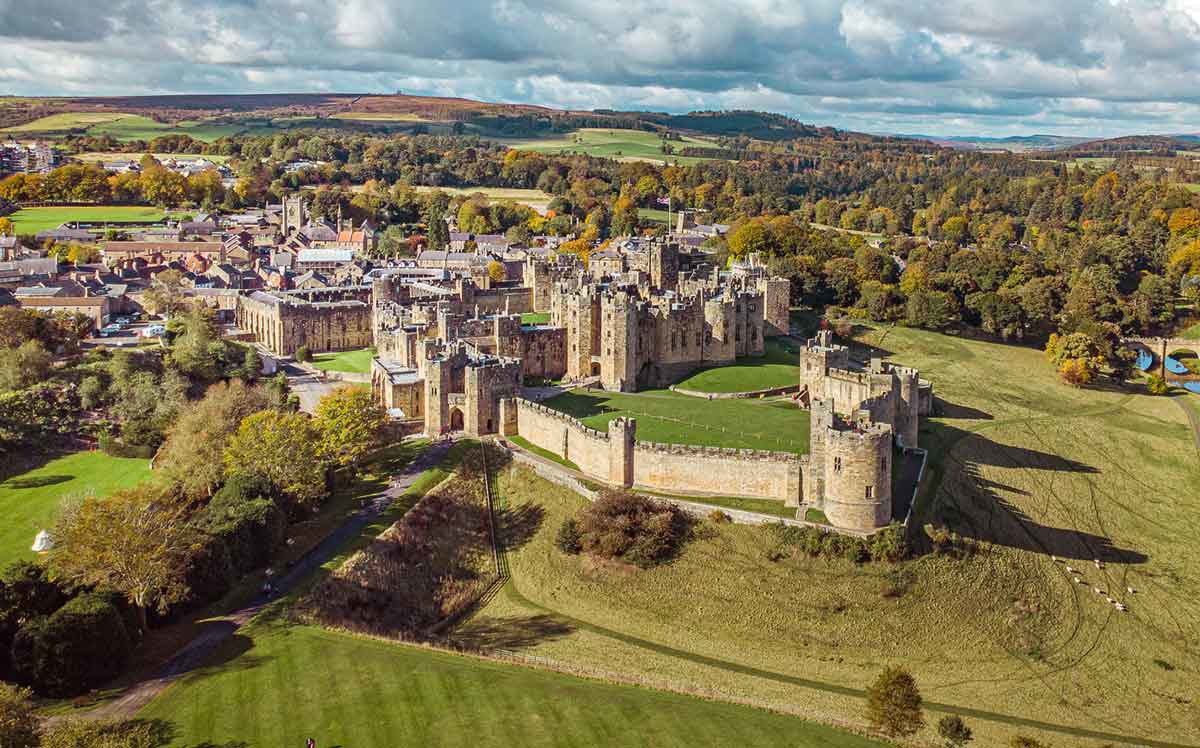
Alnwick is a small market town situated in Northumberland, just an hour’s drive from the Scottish border. Although compact in size, this town is brimming with locations with a mythical aura that belong in a fantasy novel.
Alnwick Castle was initially constructed in the 11th century and is the second-largest inhabited castle in the UK, surpassed in size only by Windsor Castle. It was used to represent Hogwarts School of Witchcraft and Wizardry in the Harry Potter films. Daily tours are available, which include anecdotes from the films. But the castle is only open to the public between March and October since Ralph Percy, the 12th Duke of Northumberland, lives there in the winter.
The importance of Alnwick Castle extends beyond the story of “The Boy Who Lived.” It was originally built to protect the border. William I, the King of Scotland, unsuccessfully attacked the castle in 1173 and then tried again the following year, when he was captured. The castle was renovated in the 1850s by Algernon Percy, the 4th Duke of Northumberland. He hired English architect Anthony Salvin and Italian architect Luigi Canina to create his dream home, including a library, drawing room, dining room, and china gallery, each unique in appearance.
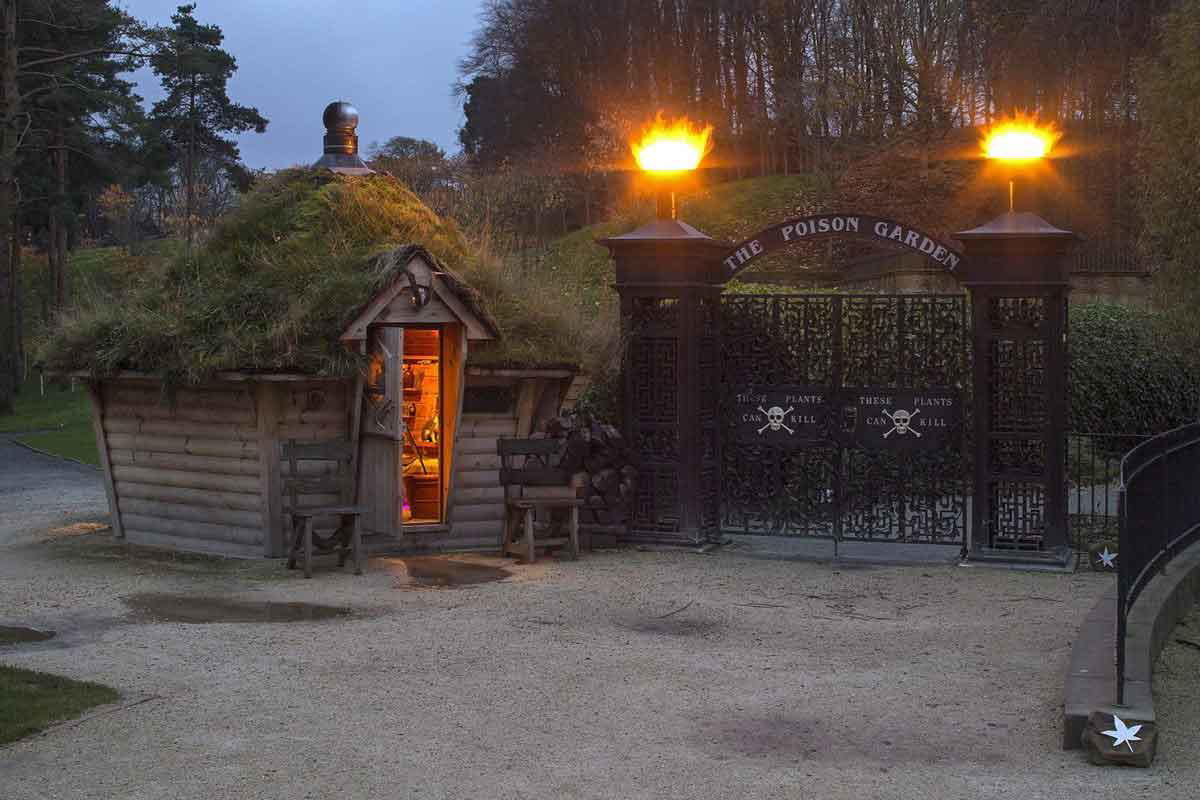
Britain’s deadliest garden is also located within the town of Alnwick. Poison Garden houses around 100 toxic, intoxicating, and narcotic plants. It will be obvious when you’ve reached the entrance to this public garden, given that the gate displays a skull and crossbones with the words “These Plants Can Kill.”
No magical visit to Alnwick would be complete without having a meal at The Treehouse Restaurant. It’s located in the treetops and made from a combination of English and Scots pine, Scandinavian redwood, and Canadian cedar. It’s quirky and cozy, and the traditional British food on offer is lovely. So, take a seat by a burning log fire, devour some classic local grub, and be sure to look at the cocktail menu since it pays tribute to the Duchess of Northumberland.
2. Whitby and the Gothic Roots of English History
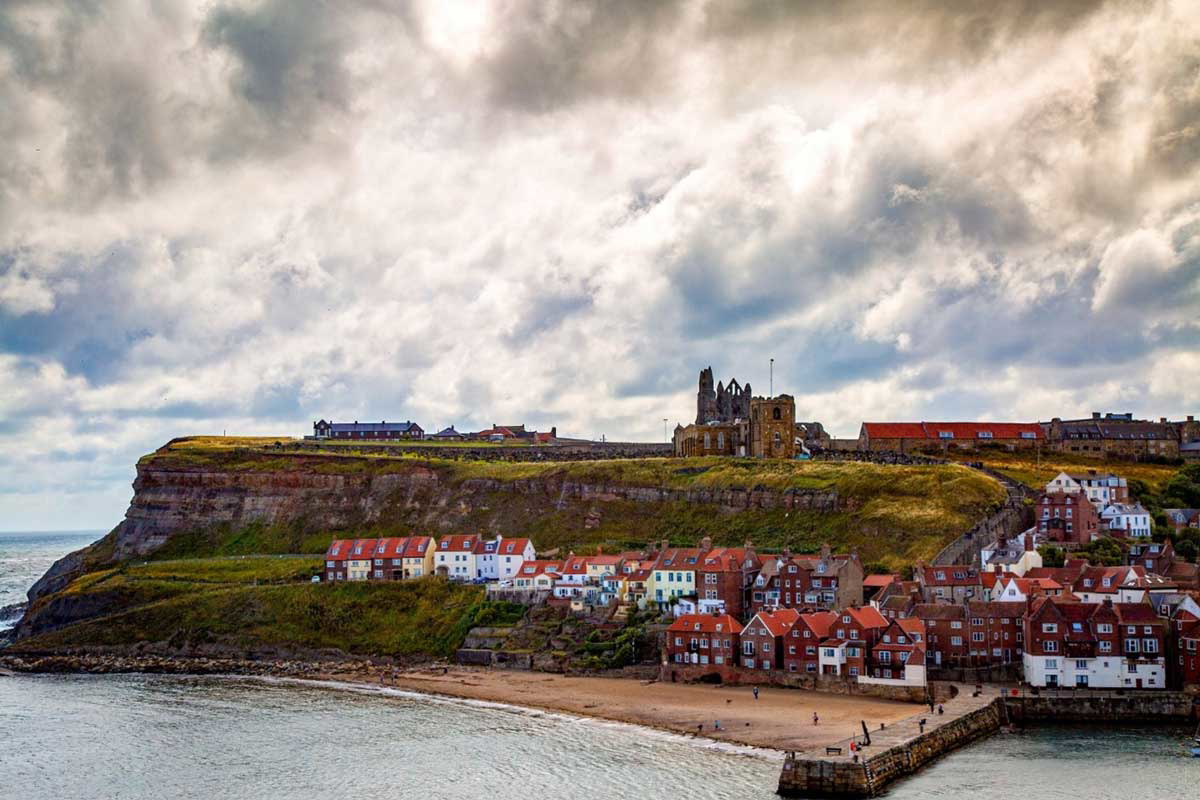
Situated in North Yorkshire along the coastline, Whitby is one of the most picturesque seaside towns in the whole of the UK. It’s steeped in history and easy to navigate, ensuring visitors are always within arm’s reach of an interesting setting. Popular attractions include Whitby Abbey, the Captain Cook Memorial Museum, and taking a stroll along West Cliff Beach (providing the British weather cooperates).
The town is fantastically spooky, and has been since 1897. Bram Stoker, the brains behind the novel Dracula, visisted Whitby while writing his world-famous book due to its gothic appearance. Since then, the town’s association with vampires has strengthened. Whitby now hosts two Goth Weekend music festivals a year.
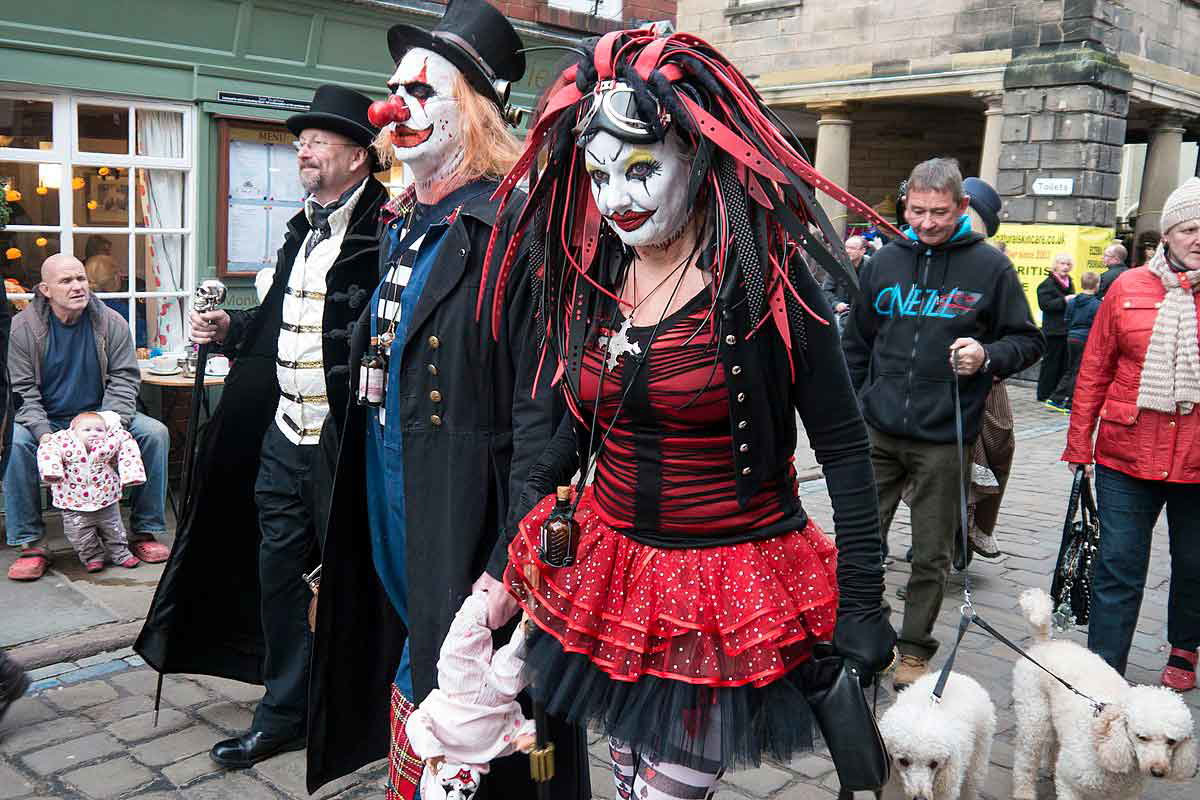
St. Mary’s Church is a beautiful cliffside parish overlooking the harbor. Stoker chose the name for Mr. Swales, a character within the story who predicts terrible things on the horizon, from a tombstone in the church’s graveyard. Oddly enough, it’s alleged that Humpty Dumpty’s gravestone can also be found within the same cemetery. The stone in question is downward-facing, oval-shaped, and has a faded inscription that is no longer readable. To reach the abbey from Old Town, take the infamous 199-step climb.
Whitby also has some of the best fish and chips restaurants in the world, such as the popular Magpie Cafe. People travel from all over the country to eat here, so expect long lines.
3. Durham and the Legacy of the Prince-Bishops
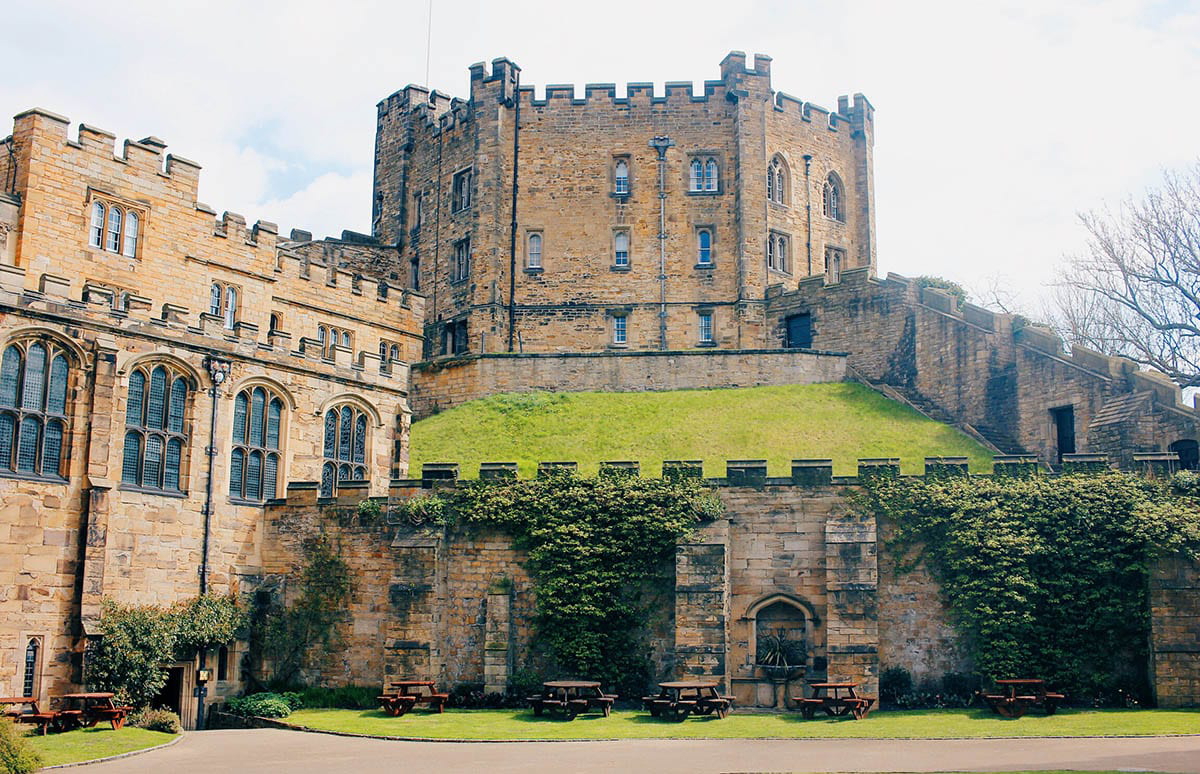
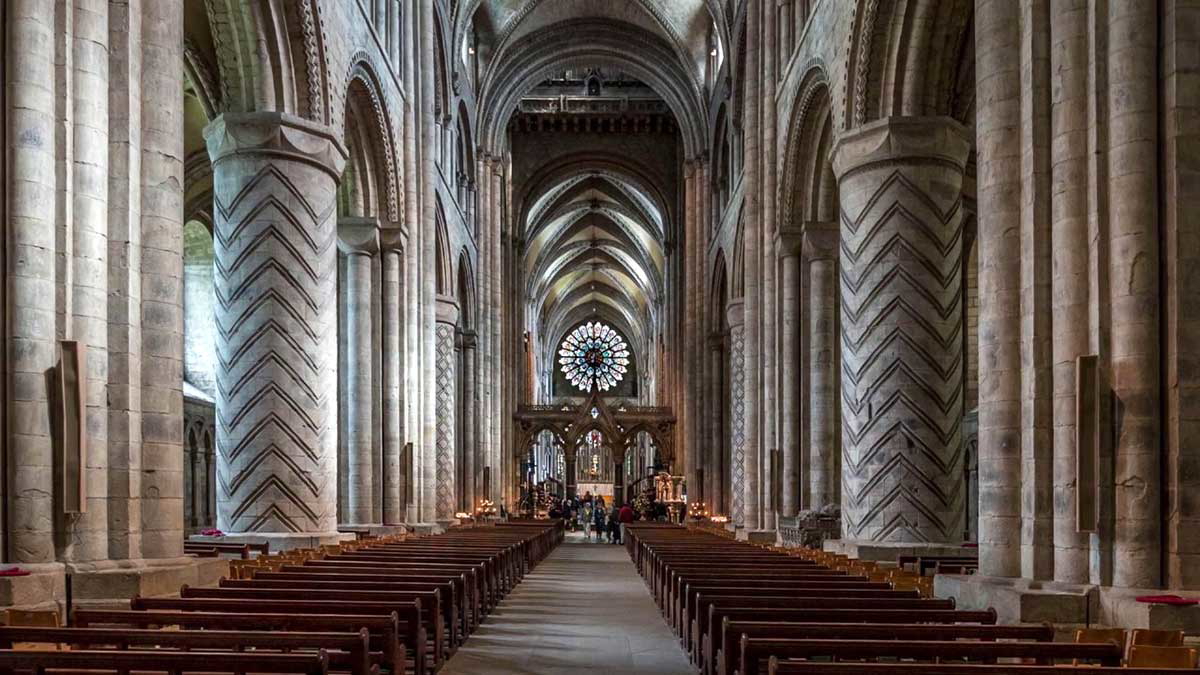
As well as being home to one of England’s most famous universities, Durham is best known for Durham Castle and Cathedral, a combined UNESCO World Heritage site considered one of the finest examples of Norman architecture in the country. The medieval castle was built to address the threat to the Scottish border in the 12th century, and it was the official seat of the Bishop of Durham. These bishops were granted special powers by the king, resulting in them being called “Prince-Bishops.” They could raise their own armies, mint their own coins, and levy taxes.
In 1837 the castle was donated to Durham University and it currently serves as residence halls. For that reason, you should book a guided public tour to explore. Highlights include the 11th-century Norman Chapel decorated with unique mermaid carvings, and the Black Staircase, a 17th-century floating staircase of black oak that rises over 50 feet. Durham Cathedral’s cloisters and chapter house were also used as sets in the Harry Potter films.
As well as being a historic city, Durham is a green city with many parks to explore. The Palace Green sits between the cathedral and castle and is home to the Palace Green Library, which opened to the public in the 17th century and had an extensive collection of medieval manuscripts. There are also the Crook Hall Gardens, with a charming 13th-century medieval manor, and Durham Botanic Gardens.
The Durham Riverside Walk is also an atmospheric and green experience. Stop at the Cellar Door restaurant in a 13th-century heritage building. Eat on the terrace for a river view or in the converted subterranean cellar.
4. Carlisle and the Frontier of Hadrian’s Wall
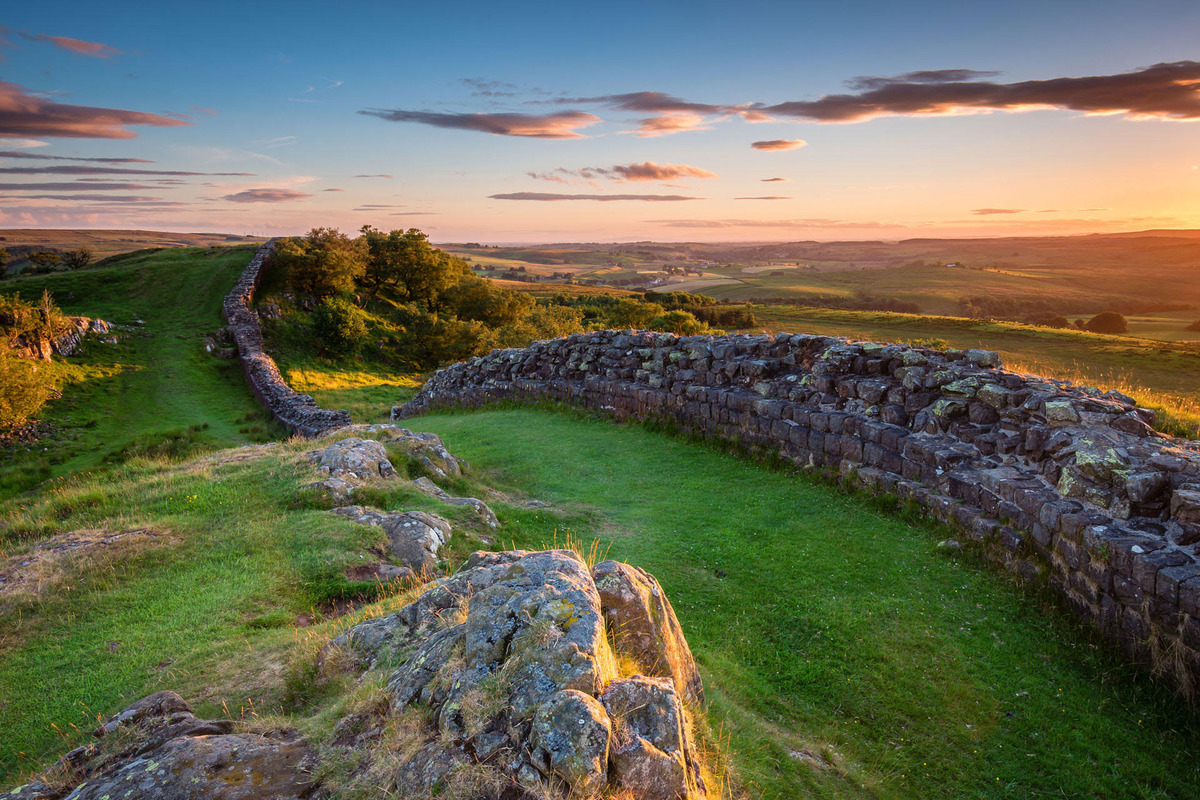
Carlisle was established as a Roman settlement named Lugavalium in the 1st century AD. It then supplied the Roman fortresses along Hadrian’s Wall after it was built as the northern border of Roman Britain in the 2nd century AD. It is one of the UK’s best Roman Britain destinations, especially if you are interested in the life of a Roman soldier on the British frontier.
Almost a millennium later in 1092, William II, the son of William the Conqueror, built Carlisle Castle. It survived ten major sieges during the Anglo-Scottish wars, more than any other castle in England. In 1568 it was converted into a high-security prison for Mary Queen of Scots, when she was imprisoned by her cousin Queen Elizabeth I. It also housed prisoners after the failed Jacobite uprising of 1745. The medieval castle is open daily with guided tours available.
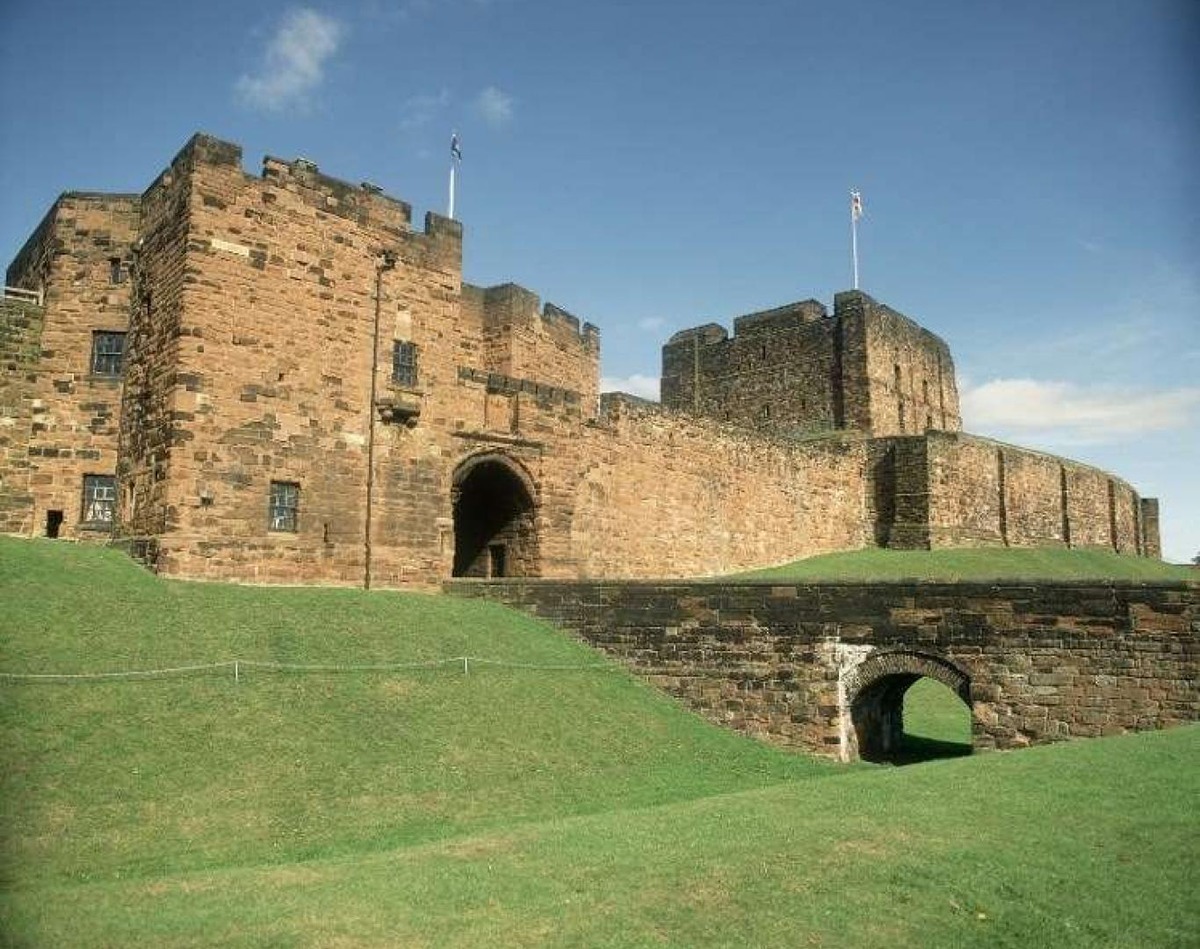
Visitors will also enjoy Carlisle Cathedral, an Augustinian priory founded in 1122, which has a vibrant blue-and-gold ceiling painted with stars. There is also the popular Tullie House Museum, a Jacobean mansion converted into a local history museum. The museum has an interactive replica of portions of Hadrian’s Wall that you can climb.
In the year 2000, a granite monument known as the Cursing Stone was installed in a city-center underpass. It is inscribed with a real 16th-century curse originally thundered by the Archbishop of Glasgow. It was meant as a spiritual attack on Border Reivers, who raided along the border at the time. The archbishop order that it be read from every church pulpit in the region. Among other venomous words, the curse cuts them off from the Church, forbidding priests from hearing their confessions or granting absolution, concluding with the curse:
And finally, I condemn them perpetually to the deep pit of hell, to remain with Lucifer and all his fellows, and their bodies to the gallows… first to be hanged, then ripped and torn with dogs, swine, and other wild beasts, abominable to all the world.
5. Leeds and the Engine of the Industrial Revolution
Leeds is one of the largest cities in England and has a wide range of attractions that should generate a lot more attention. Yet, this Yorkshire city is typically one of the most underrated places in England by tourists. York, Manchester, and Liverpool are generally the go-to picks for those interested in the industrial history of Northern England. However, Leeds merits a little more consideration.
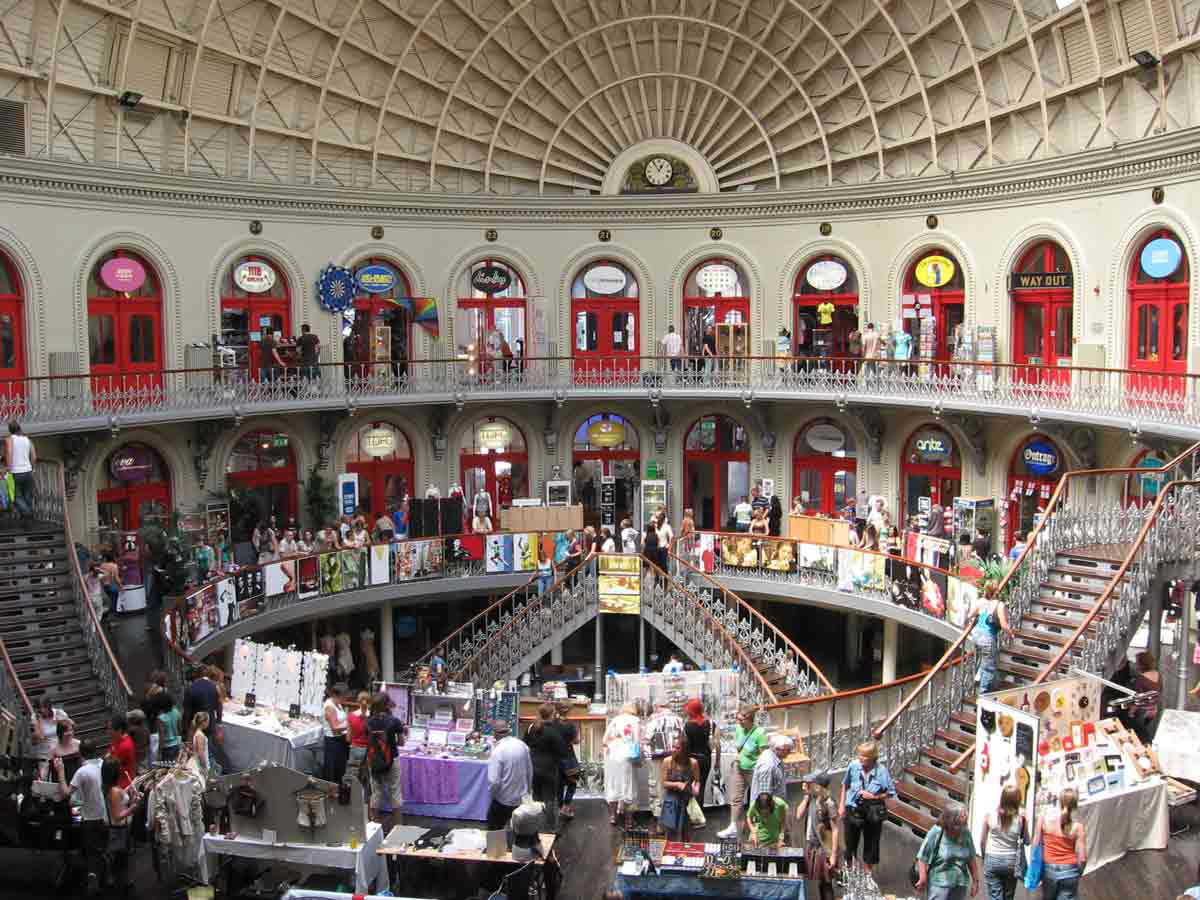
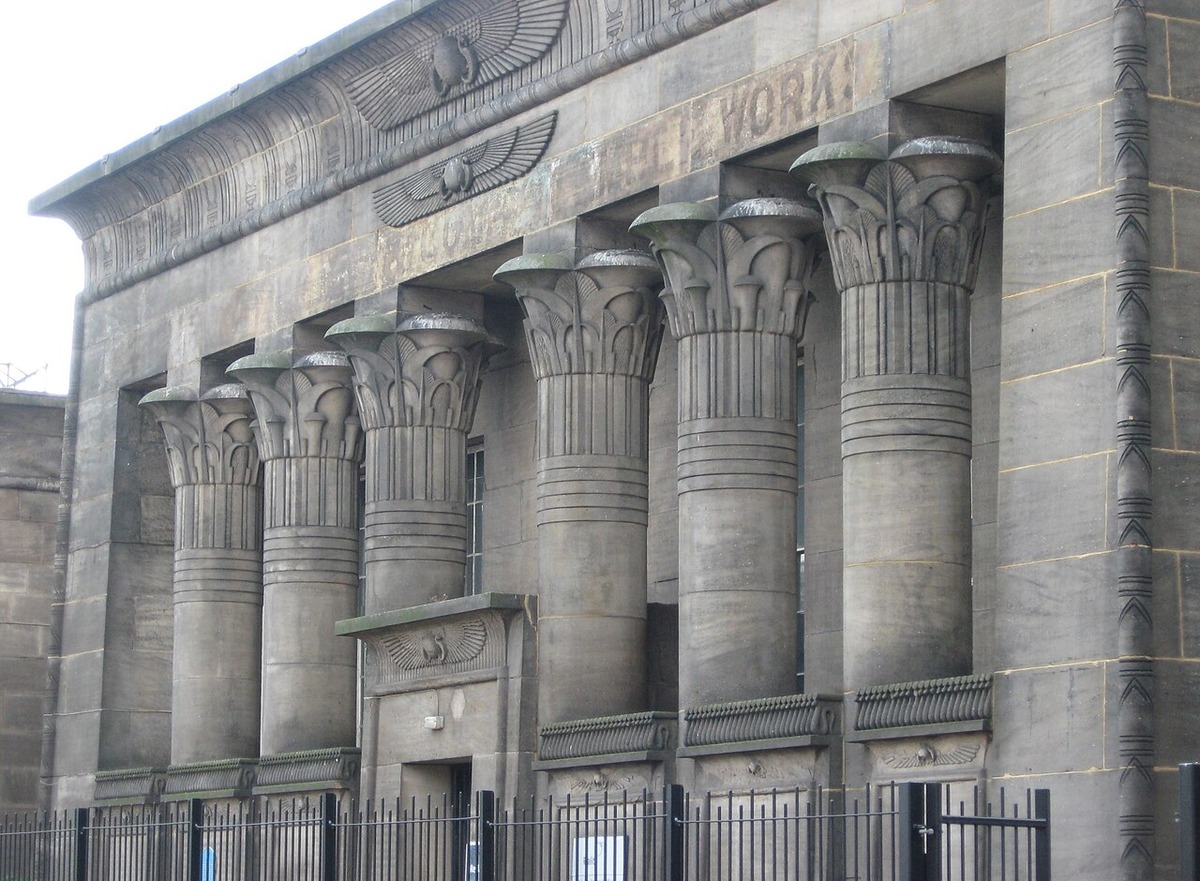
The vibrant city center nicely blends modern trends with historical architecture. There are many converted industrial buildings, such as Armley Mills, which is now the Leeds Industrial Museum, and the Corn Exchange: the converted spherical Victorian building contains an outer ring of quirky shops and a pleasantly peaceful dining area at its center. Further out in Holbeck you will find the Temple Works, a former flax mill that was built in the 1830s with a facade modeled entirely after the Egyptian Temple of Edfu.
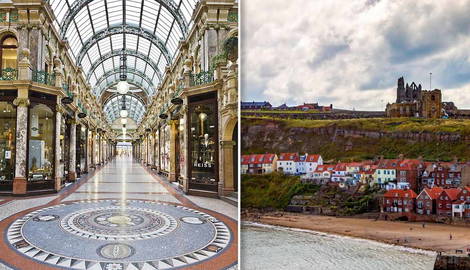
Another favorite among shoppers is the vintage arcades. These are a series of 19th-century beautifully decorated archways with a mixture of luxurious designer shops and cool independent retailers. The medieval-inspired structures within the Country Arcade and Thornton’s Arcade are some of the most aesthetically pleasing. The latter has a life-sized figure of Robin Hood chiming a Roman numeral wall clock high above your head.
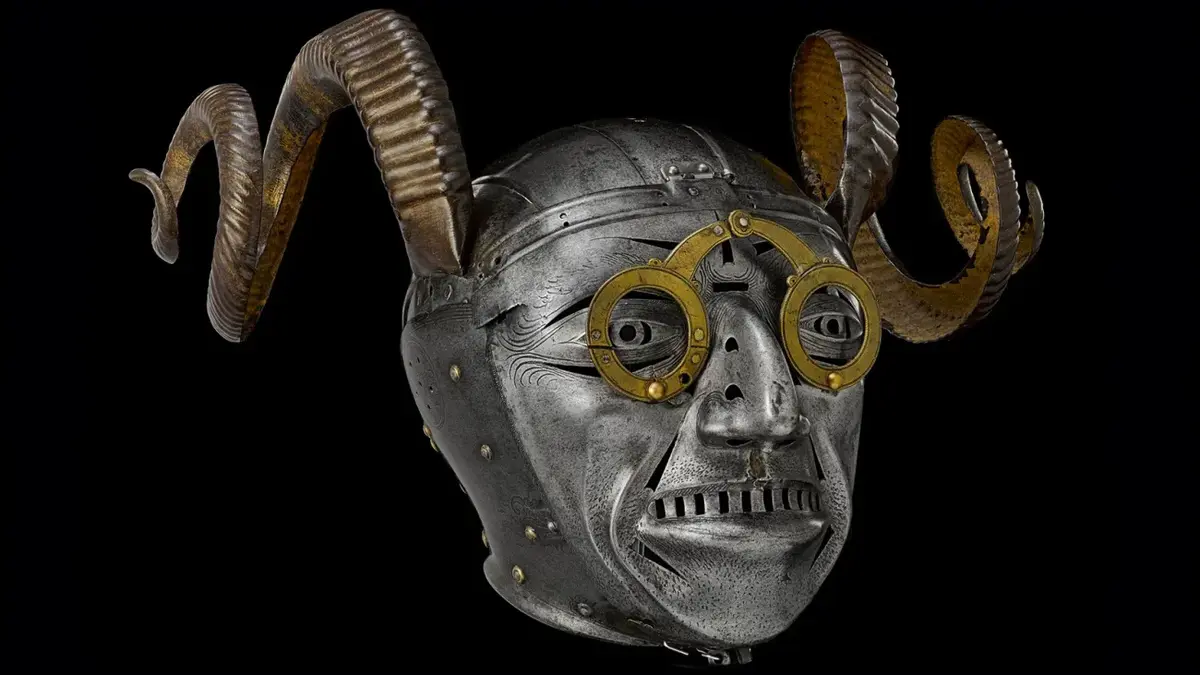
The Royal Armouries, a short walk from the shopping district, acts as a custodian for Britain’s collection of arms and armor. The museum is divided into five sections: War, Tournament, Hunting, Oriental, and Self-Defense, and showcases battle-themed relics from around the world. The Royal Armouries boasts a plethora of cannons, swords, and painted portraits, though its most impressive feature is perhaps the glass-encased tournament armor of Henry VIII. The museum also has daily tours, dramatic performances, and combat displays.
As for food, the options are endless. The Swine That Dines offers traditional home-style food done extremely well. The restaurant adapts simple, popular household dishes to create adventurous modifications. Just one more reason to travel beyond London to discover England’s hidden gems.






