
Artists have used shattered glass as a medium for symbolic expression, from Pablo Picasso’s fragmented Cubist artworks to contemporary art installations. Some artists used the texture and appearance of broken glass to explore grief and loss, while others tried to turn its destructive power into something creative. Let’s explore how broken glass art reflects themes of fragility, destruction, and renewal.
Broken Glass in Art: The Remnants of Old Times
Typically, art lovers associate broken glass with archaeological finds and the ruins of ancient civilizations. Broken glass represents something dead and left far behind, that has to be gathered together piece by piece. It is also a symbol of tragedy, with broken windows and shattered glassware indicating that the illusion of domestic safety that was once present in the space is no longer there.
Marcel Duchamp’s Large Glass
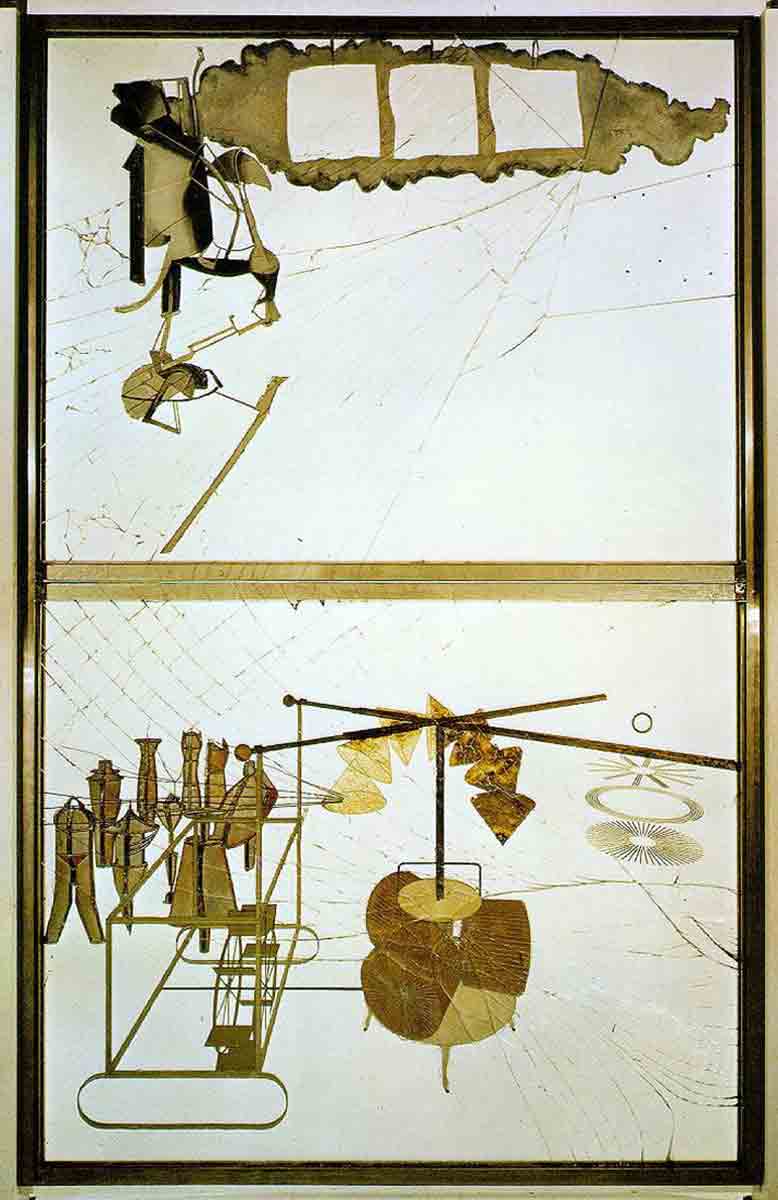
One of the most famous works of art that made use of the uniqueness and fragility of broken glass is Marcel Duchamp’s The Bride Stripped Bare by Her Bachelors, Even, also known as Large Glass. Duchamp was known for his complex and often nonsensical works that defied all expectations of artistic thought and aesthetic norms. He had a long-term obsession with mechanisms and interactions between small parts of a complex whole. As an outstanding chess player, he was able to dissect the process of thought and calculate events and impressions that were only beginning to emerge on the artistic scene. Most famous of Duchamp’s inventions, however, was the use of readymades—pre-manufactured and pre-existing objects recontextualized as works of art.
The Bride Stripped Bare by Her Bachelors, Even represented a strange and confusing combination of elements, mostly taken from Duchamp’s earlier works. Between two glass panels, the artist arranged a metal frame that held the figures of a bride (a compound resembling an insect rather than a human) and a group of bachelors that seemingly tried to set in motion the mechanism that would fuel the Bride. However, their efforts were futile, as the machine appears to be dysfunctional. One of the most prominent features of the work was the patterns of broken glass that transformed the image.
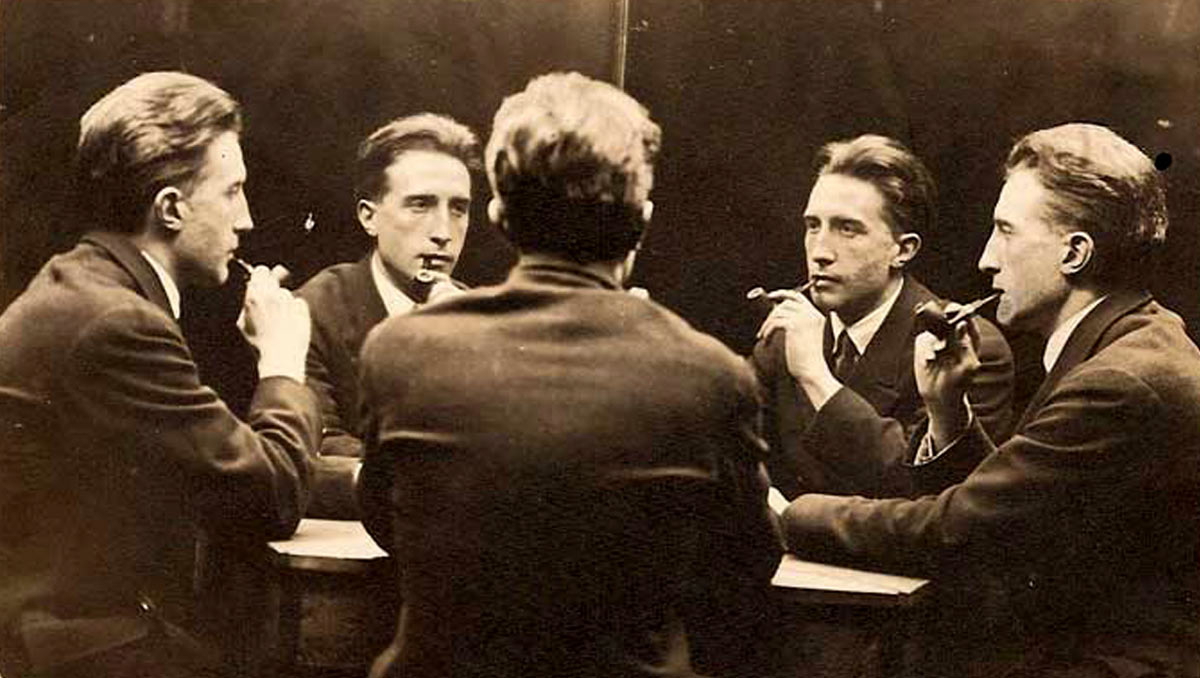
Initially, Duchamp had no plans to manipulate or damage the glass case. However, he complained that the work seemed unfinished to him and was lacking something important. In 1926, while transporting the work from the Brooklyn Museum back to the artist’s studio, the handling team dropped the crate, cracking the glass. Duchamp fixed the largest of the cracks but left several small ones intact, claiming they were the final touch necessary to complete the work. The web of cracks seemed to connect the panels together like a thin network of wires, adding more texture and complexity. Most importantly, the appearance of cracks was one of the rare aspects of the work that was not pre-planned by Duchamp, but nonetheless, he accepted it as a legitimate expressive gesture.
Pablo Picasso’s Cubism
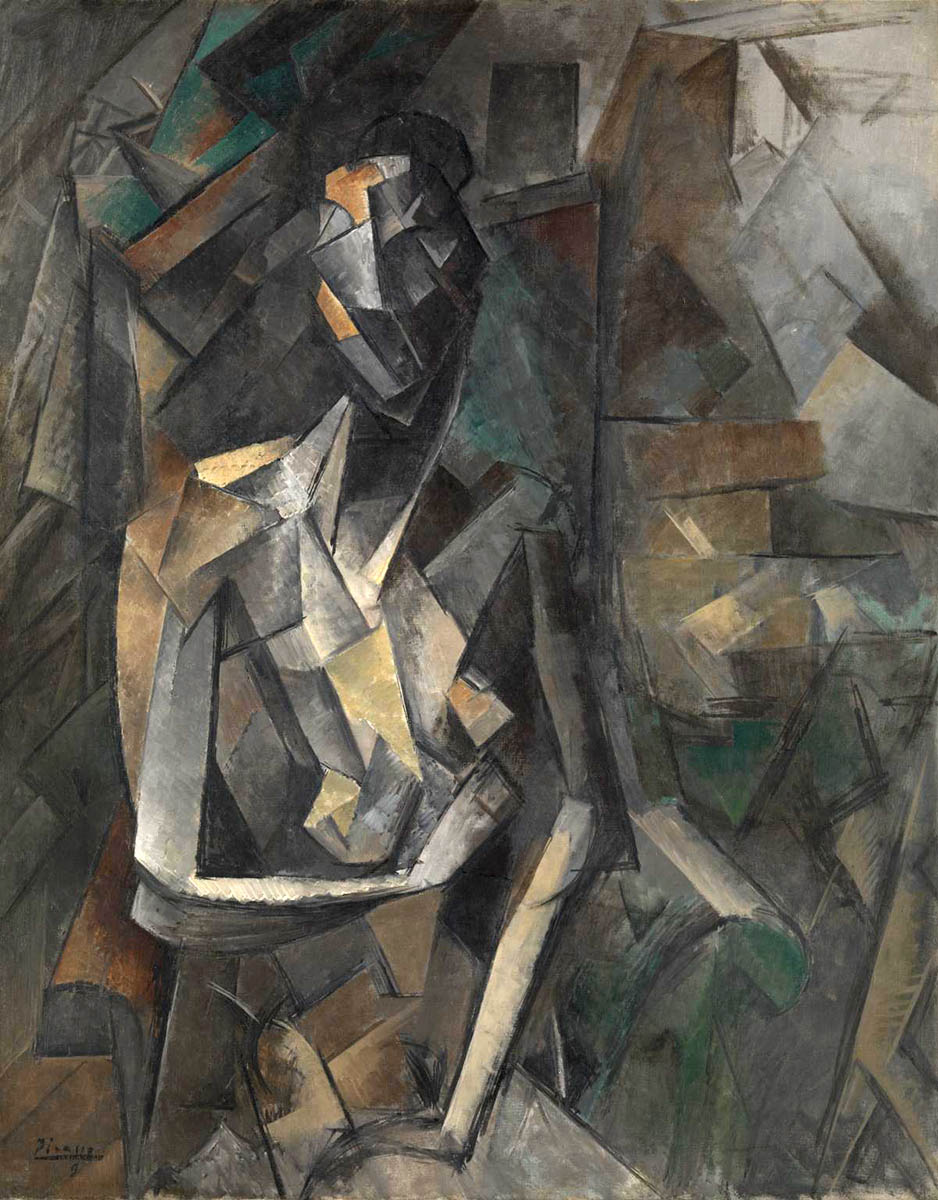
Many art critics compared the Cubist works of Pablo Picasso to shards of broken glass scattered over the canvas. In a certain way, they were correct, as Picasso and Georges Braque gathered their images from fragments of planes, angles, and states of being. Their paintings consisted of sharp, angular elements and simple forms, arranged into strange mosaics.
Art collector Sergei Shchukin, one of the first patrons to notice and appreciate the innovation of Picasso, nonetheless admitted he did not always like his paintings. He compared the initial impression from Picasso’s works with chewing on broken glass, but nonetheless felt there was something beneath the surface that required his attention. Shchukin needed time to live with a work of art he considered interesting in order to understand it. However, after the initial violent shock, he learned to love Picasso’s Cubist paintings, acquiring a collection of 51 works in just five years.
The Church of Saint-Maclou, Rouen
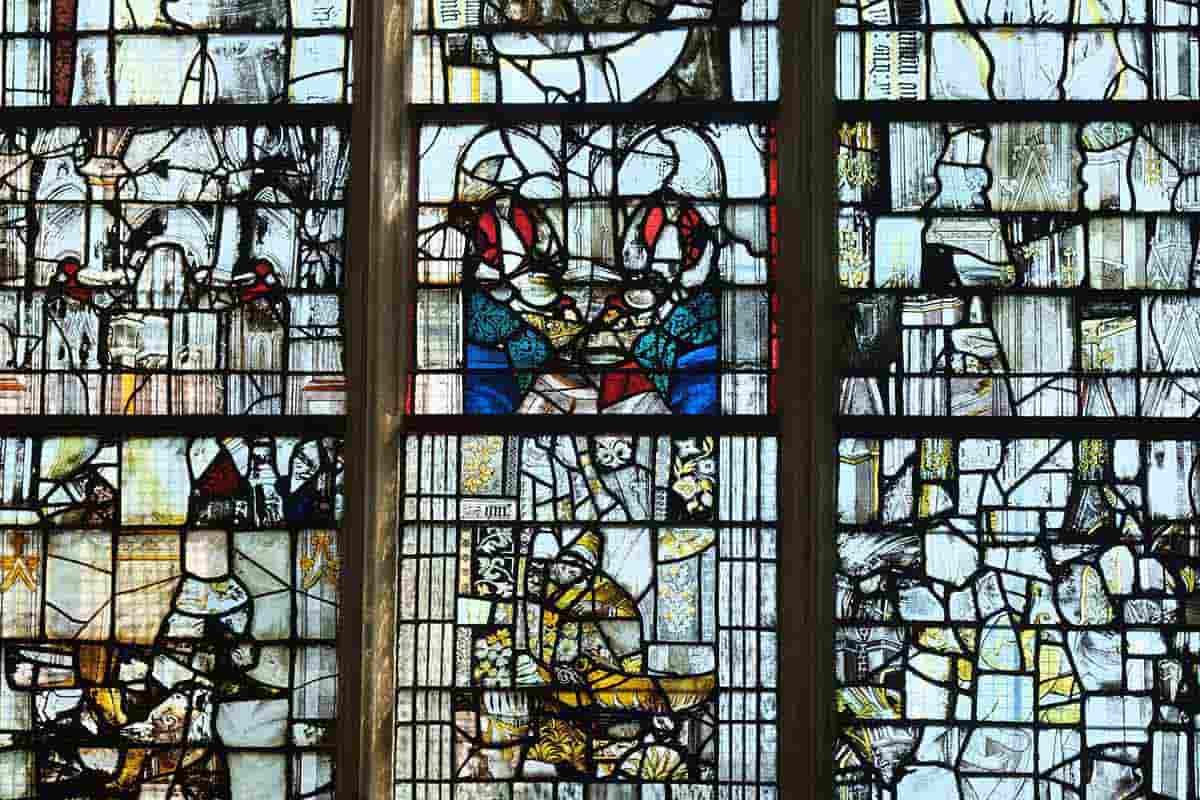
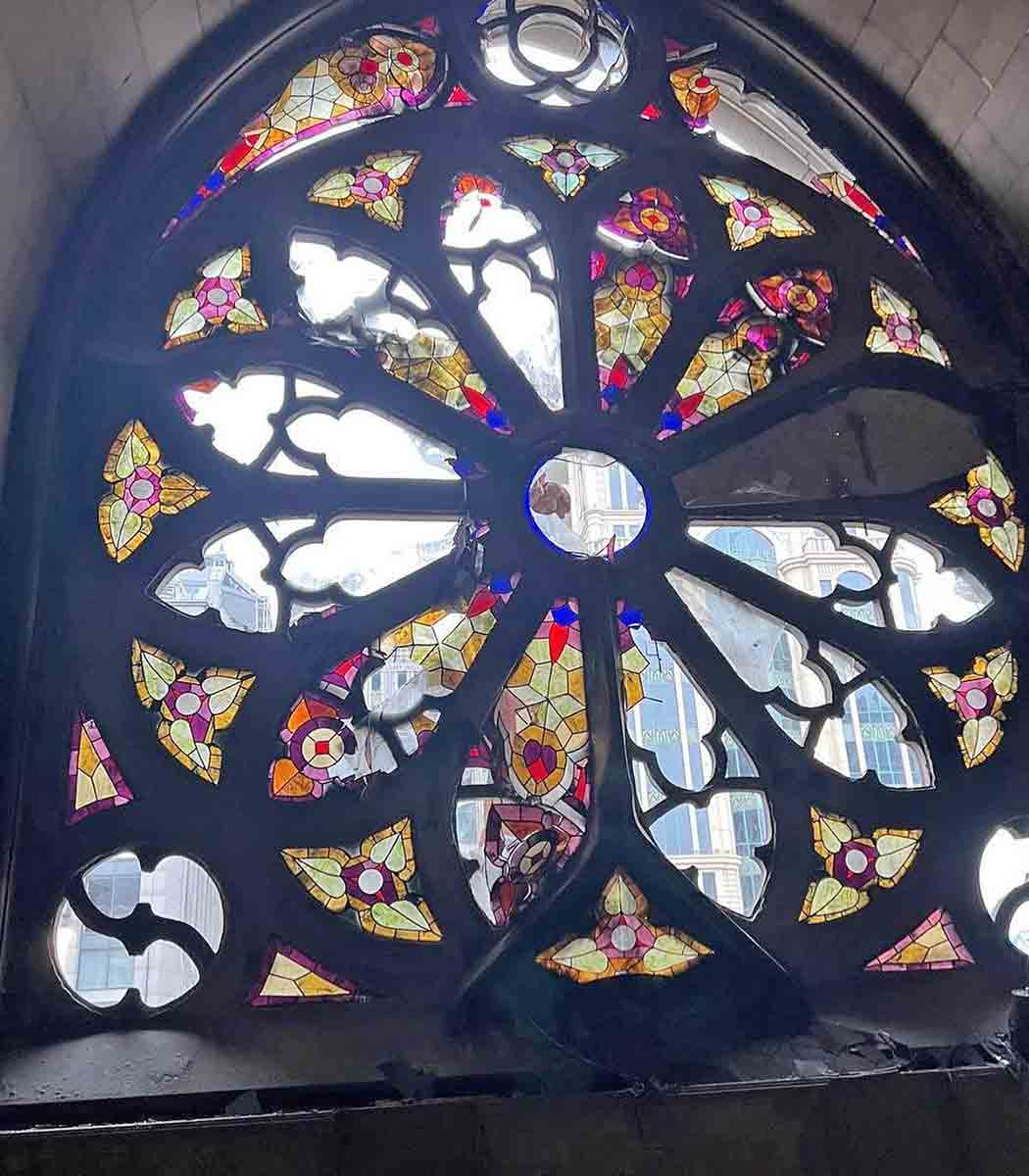
One of the most notable cases of accepting broken glass as an artistic medium came not from contemporary artists but from restoration teams. The Gothic Church of Saint-Maclou in Rouen, France, was built in the 15th to 16th centuries and was celebrated for its expressive and complex style of decoration for centuries. In 1944, two bombs fell near the church, destroying part of the building and several stained-glass windows that represented the lives of saints and the church’s patrons.
Despite all efforts, the restoration team was unable to reconstruct all the shattered images. While some of them were reassembled using modern elements, others were too damaged to form a coherent picture. As an alternative, they decided to align the remaining pieces to fit into the window frame, disregarding the compositional aspect of the original images. The result was semi-abstract, both similar and entirely different from what was expected from the medium. The compositions assembled from colorful fragments of faces, hands, and robes both preserved the unique artistic skill of the late Medieval masters and retained the memory of wartime chaos and destruction.
Nigel Henderson’s Wartime Memories
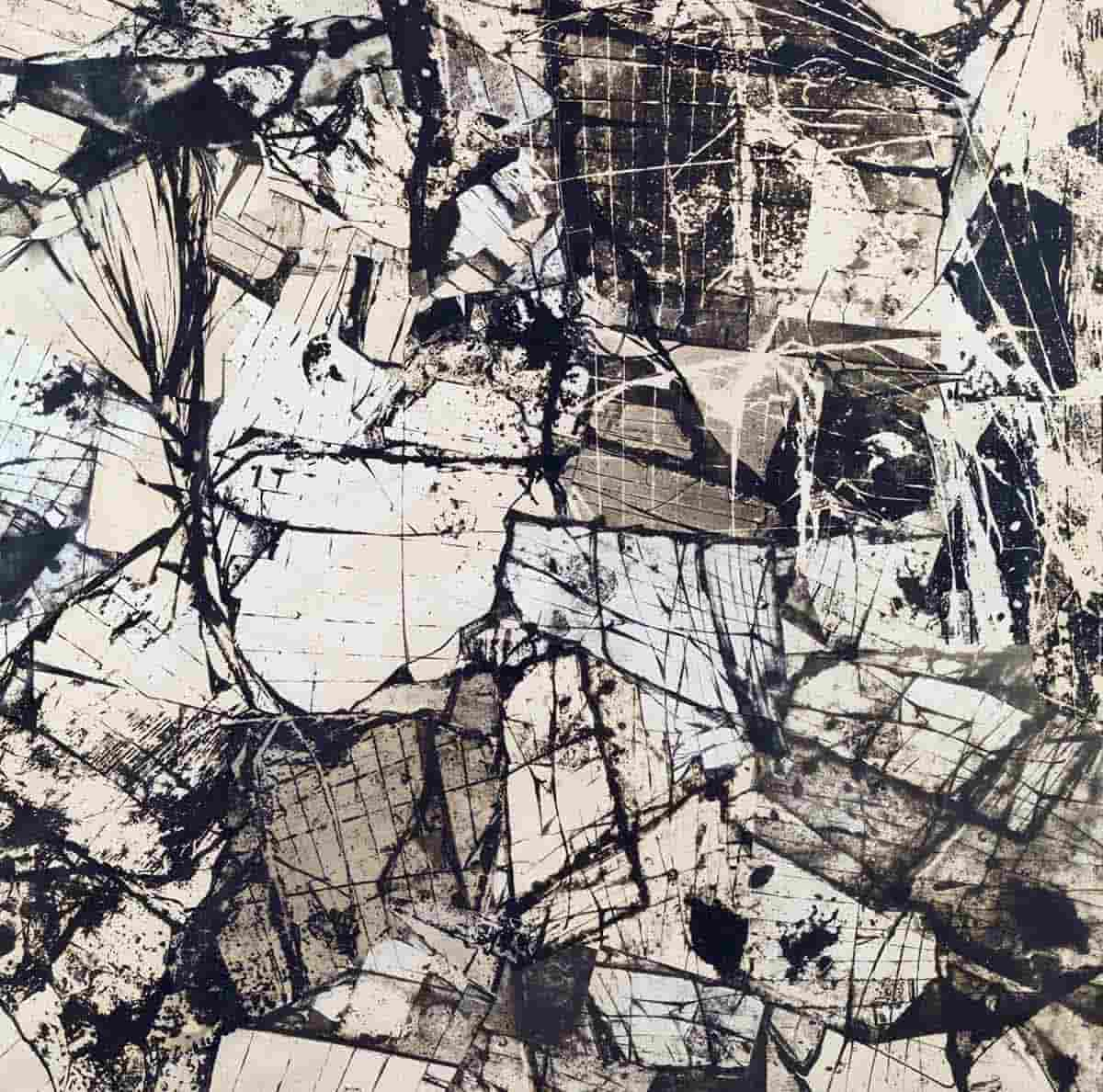
Broken glass began appearing in artworks extensively after the shock of the two World Wars, referencing the chaos and violence. One of the artists who adopted this motif was the British documentary photographer Nigel Henderson, who served as a pilot in the Royal Air Force during World War II. East London, where Henderson lived at the time, was severely damaged by bombings. After the war, the artist began creating collages from his cut photographs, which reflected the fragmented landscape destroyed by blasts.
Simon Berger’s Portraits
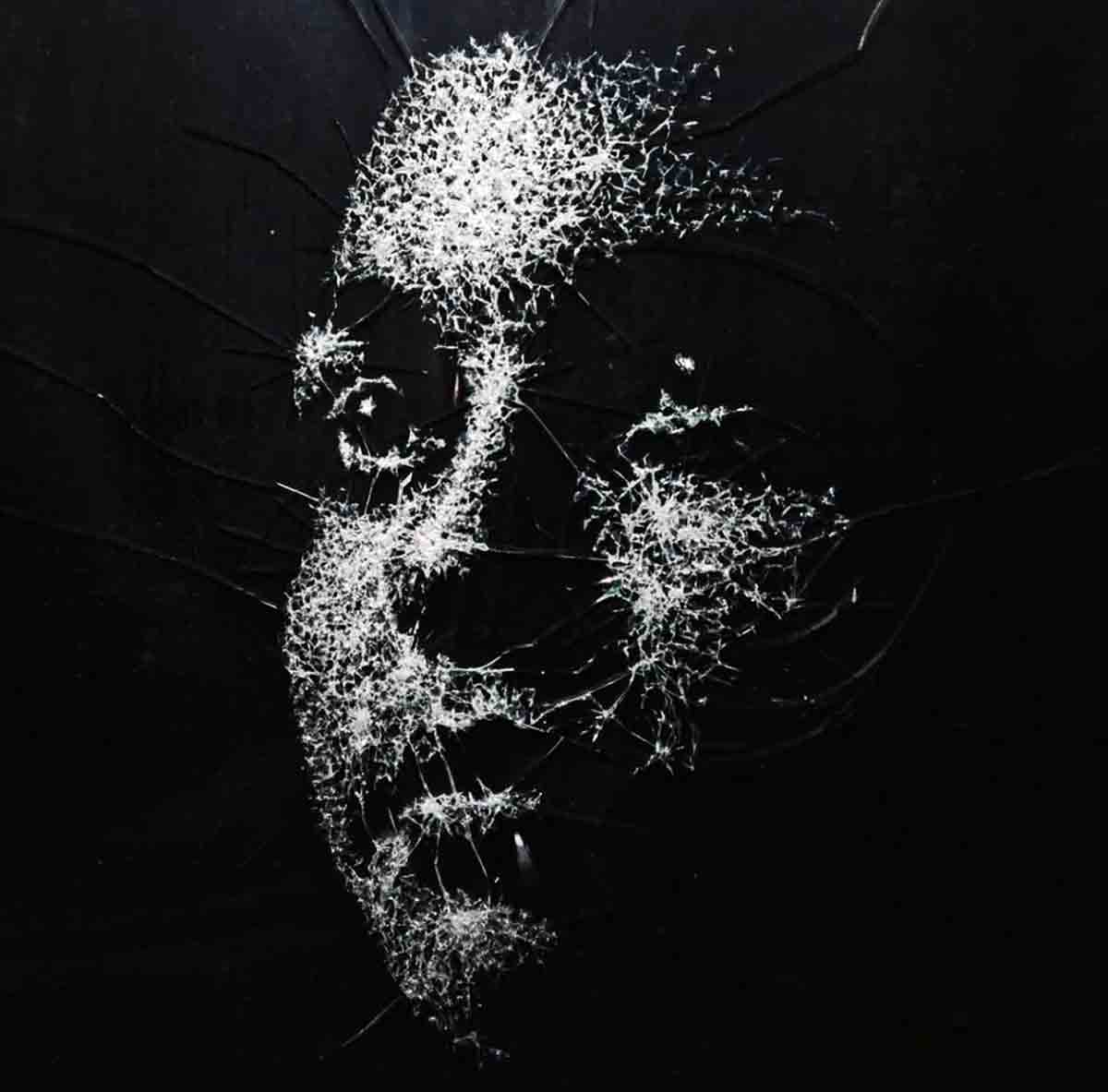
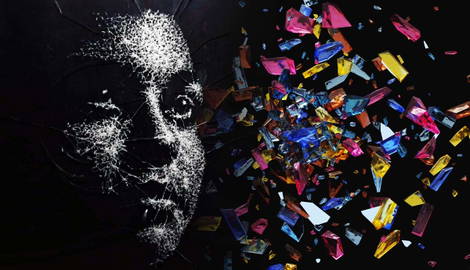
Simon Berger is a Swiss contemporary artist who adopted broken glass as his principal artistic medium. Unlike other artists who relied on chance and allowed it to make finishing touches to their works, Berger aims to make the process of glass-breaking as controllable as possible. While most glass artists regard the fragility of their works as a reason for extra care and caution, Berger embraces it as a legitimate form of expression. He turns destruction into a creative force by removing the texture of broken glass from the context of vandalism. Berger was initially trained as a carpenter and began his artistic career as a street artist and sculptor, using wood as his primary material.
Berger’s most famous works are portraits of women made on glass panels. Berger uses protective glass that does not fall apart when shattered. The artist uses a hammer to create patterns and shapes from cracks. His most famous work was the portrait of Kamala Harris, which was presented in 2021, soon after she took office.
Anselm Kiefer’s Broken Glass Art and Its Symbolism
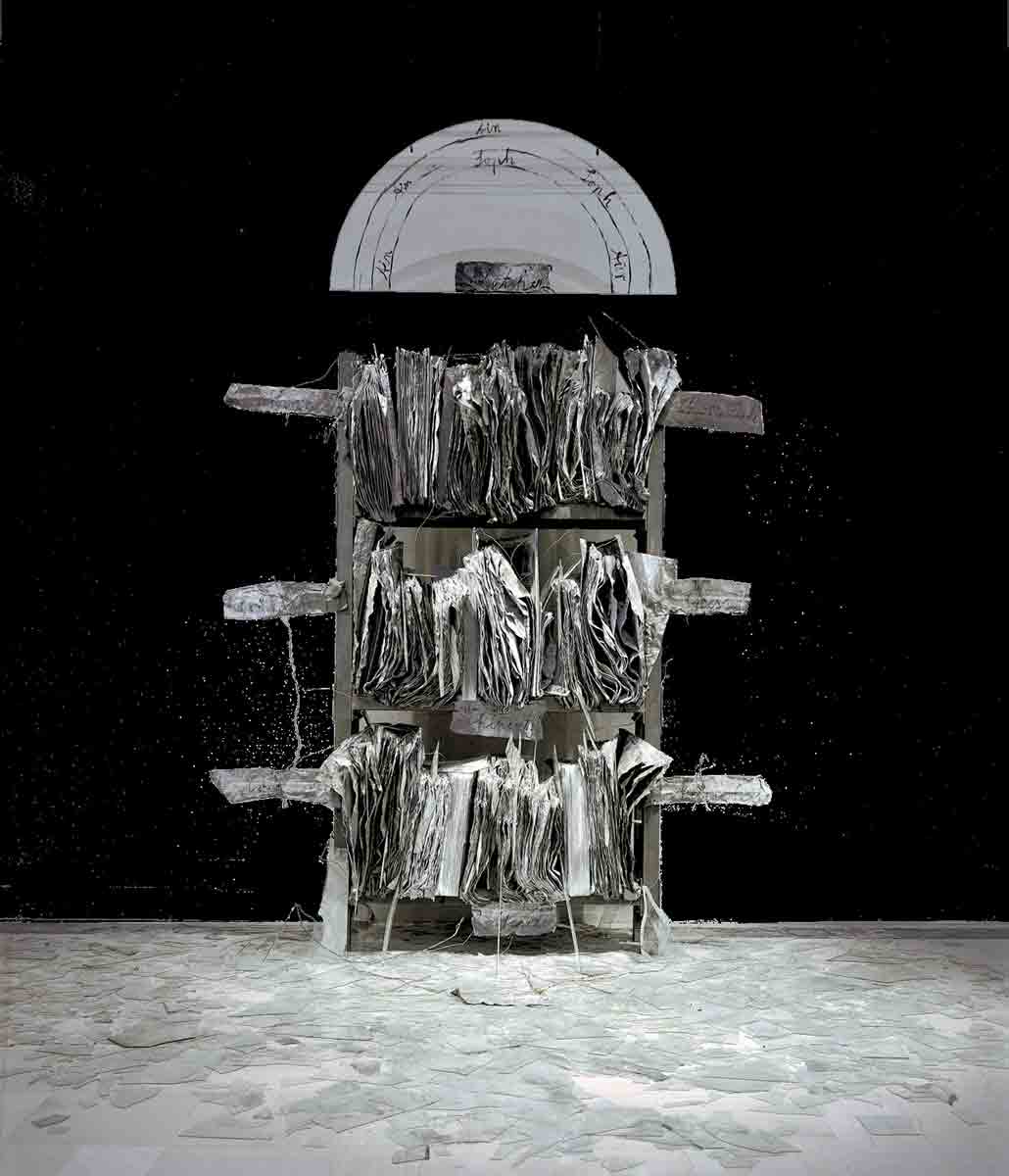
Anselm Kiefer is one of the most influential and famous contemporary artists, famous for his exploration of collective trauma and identity in post-war Germany. Kiefer does not limit himself to mediums and techniques, working not only with paint but also with organic and man-made materials. Broken glass is just one of many substances Kiefer has adopted for his expressive purposes.
Kiefer’s installation Breaking the Vessels looks like a hybrid of a burnt bookcase and an abandoned altar. The books on the shelves are not made from paper and ashes, but from lead, with the total weight of the installation surpassing seven tons. Around the bookcase, the floor is littered with shards of broken glass, a reference to the tragic events of Kristallnacht, also known as the Night of Broken Glass. On November 9th, 1938, Nazi forces and pro-nazi civilians raided homes, enterprises, and institutions that belonged to Jewish families. The next morning, the streets of German cities were covered in shards of glass from broken windows, giving the tragedy its name.

Apart from the Holocaust-related symbolism, Breaking the Vessels also refers to the particular importance of learning in Jewish tradition. According to the story from kabbalistic tradition, God aimed a ray of divine light into ten vessels that were supposed to contain the harmony of the universe. However, the vessels turned out to be too weak and shattered, spilling the divine harmony into the imperfect world.