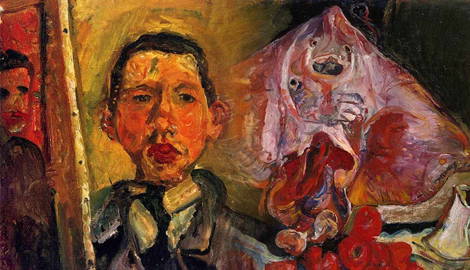

Chaim Soutine came from a poor Jewish family settled in present-day Belarus. His family never understood his fascination with art and even punished him for it. By a miracle, a starving Eastern European child grew into a Parisian artist whose works are now in the most prestigious museums worldwide. Soutine was strange. He was so deeply immersed in painting that he ignored not only society’s expectations but even basic rules of hygiene. His paintings were like their creator: odd, expressive, and deeply captivating.
Chaim Soutine’s Origins: Jewish Culture in the Russian Empire
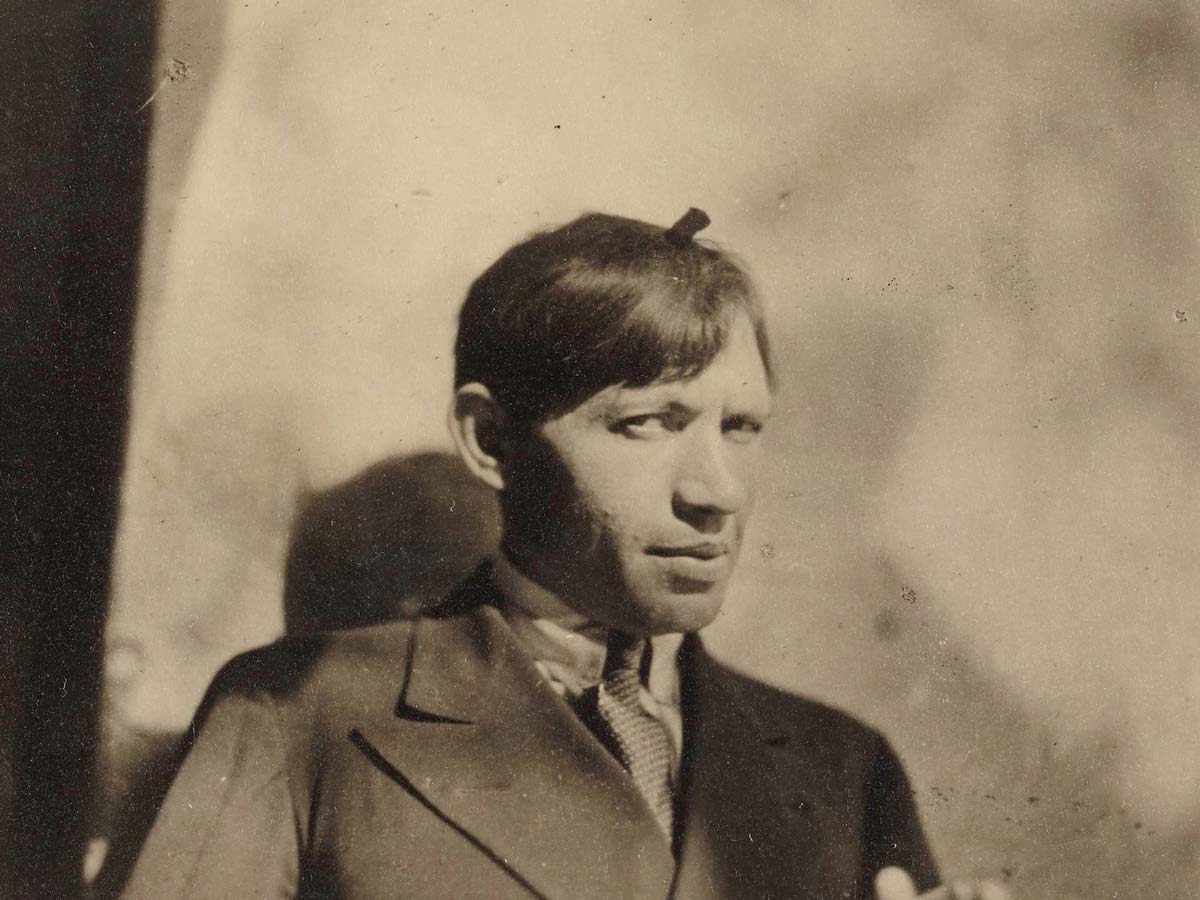
Chaim Soutine was born in Smilovitz, a town near Minsk in present-day Belarus, in 1893. He was the tenth out of eleven children in a poor Jewish family. His father, a mender, wanted his son to become a tailor so he could take the family out of crushing poverty. Soutine’s interest in art was never considered serious and was mostly ridiculed.
Smilovitz was a shtetl, a small town inhabited mostly by the Jewish community, with its own rules and hierarchies. In the Russian Empire, Jews from low-class backgrounds were allowed to settle mostly within the so-called Pale of Settlement—a region that partially covered territories of present-day Belarus, Lithuania, Latvia, Poland, Moldova, Ukraine, and Russia. Shtetls were enclosed communities that were always ready for an attack, given the considerable degree of antisemitism in the Russian empire. Such settlements held vibrant culture, unique traditions, and immense generational trauma caused by violent attacks, pogroms, and discrimination. Shtetl as a concept disappeared after the Holocaust, as the Nazis murdered many of their residents and partially eradicated their culture. As a Jew, Soutine was an outcast in his home country. As an aspiring artist, he was an outcast within the Jewish community.
A Gift or a Curse?
Soutine’s path toward an artistic career was not an easy one. Growing up in Smilovitz, he was mercilessly beaten by his elder brothers for even attempting to draw. Formally, Judaism limits the artistic depiction of humans and other beings and entities created by God. Different communities interpret these limitations differently based on the degree of their conservatism. Particularly, Soutine’s family and neighbors rejected the idea of creating art altogether, deeming it sinful and believing Chaim was cursed.
When Soutine was 16, he approached an Orthodox Jewish man asking to paint his portrait. The man politely refused, but on the next day, the man’s son and his friends beat Soutine almost to death. The future artist was unable to walk for a week. His mother filed a complaint, and the man paid 25 rubles to Soutine. He used this money to leave home and go study art in Minsk. In Minsk, Soutine was a brilliant student who was trained in a Realist manner. He was noted for his frequent choice of sad and even tragic subjects, perhaps inspired by the emotional turmoil of his path toward art.
The Culture of Gaze
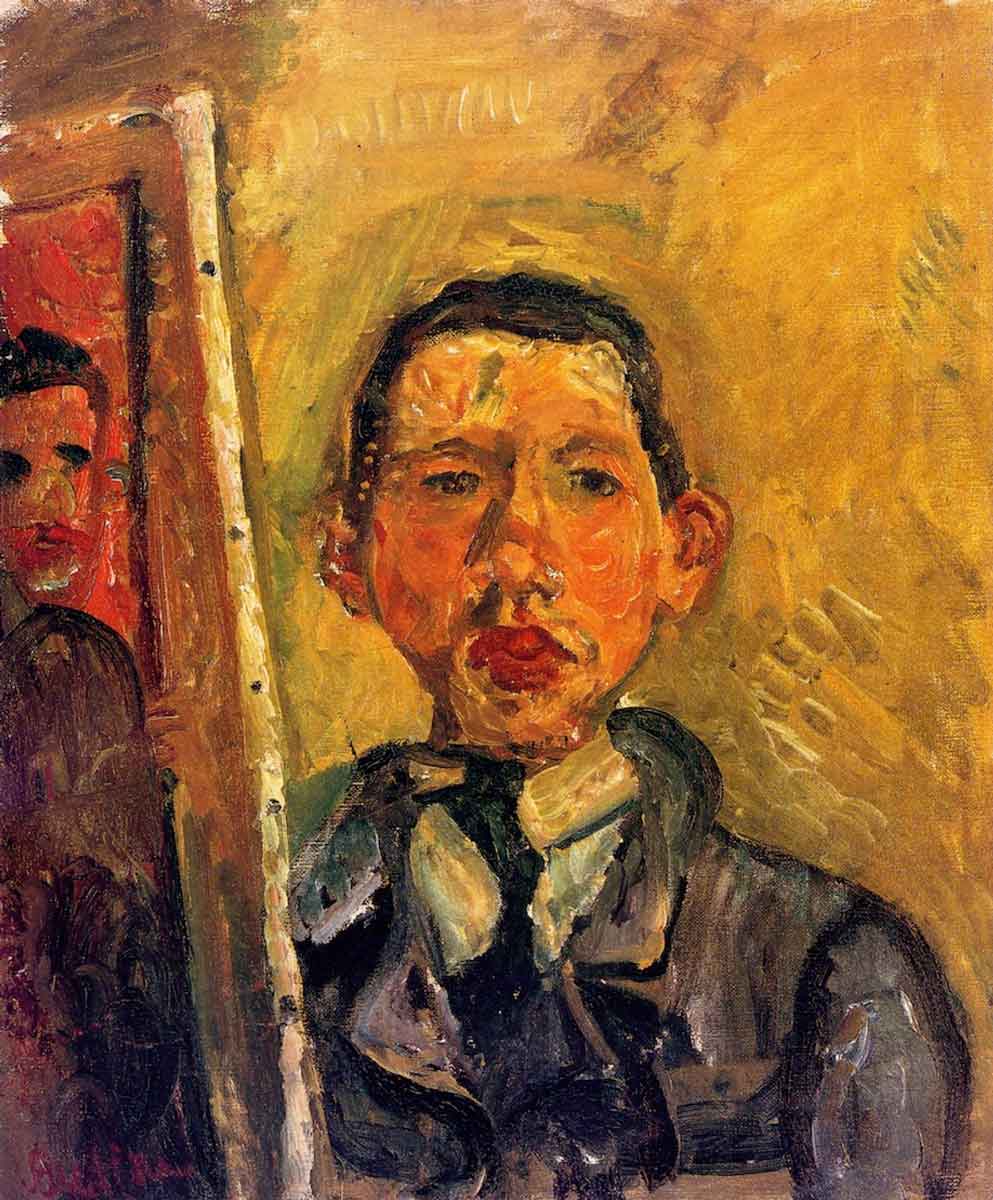
Art curator Maurice Tuchman remarked on how important the simple element of gazing was in Soutine culture and how it could have been applied to his art. In Eastern European culture, particularly in rural areas, gaze has a destructive power that could affect both the object and the subject. In Soutine’s time, pregnant women were forbidden to look at farm animals out of fear that the animal nature would harm the unborn child. Children born with deformities were said to be the victims of such unfortunate gazes. Looking at an already-born child was also dangerous, so mothers would hide them from the outsiders’ eyes.
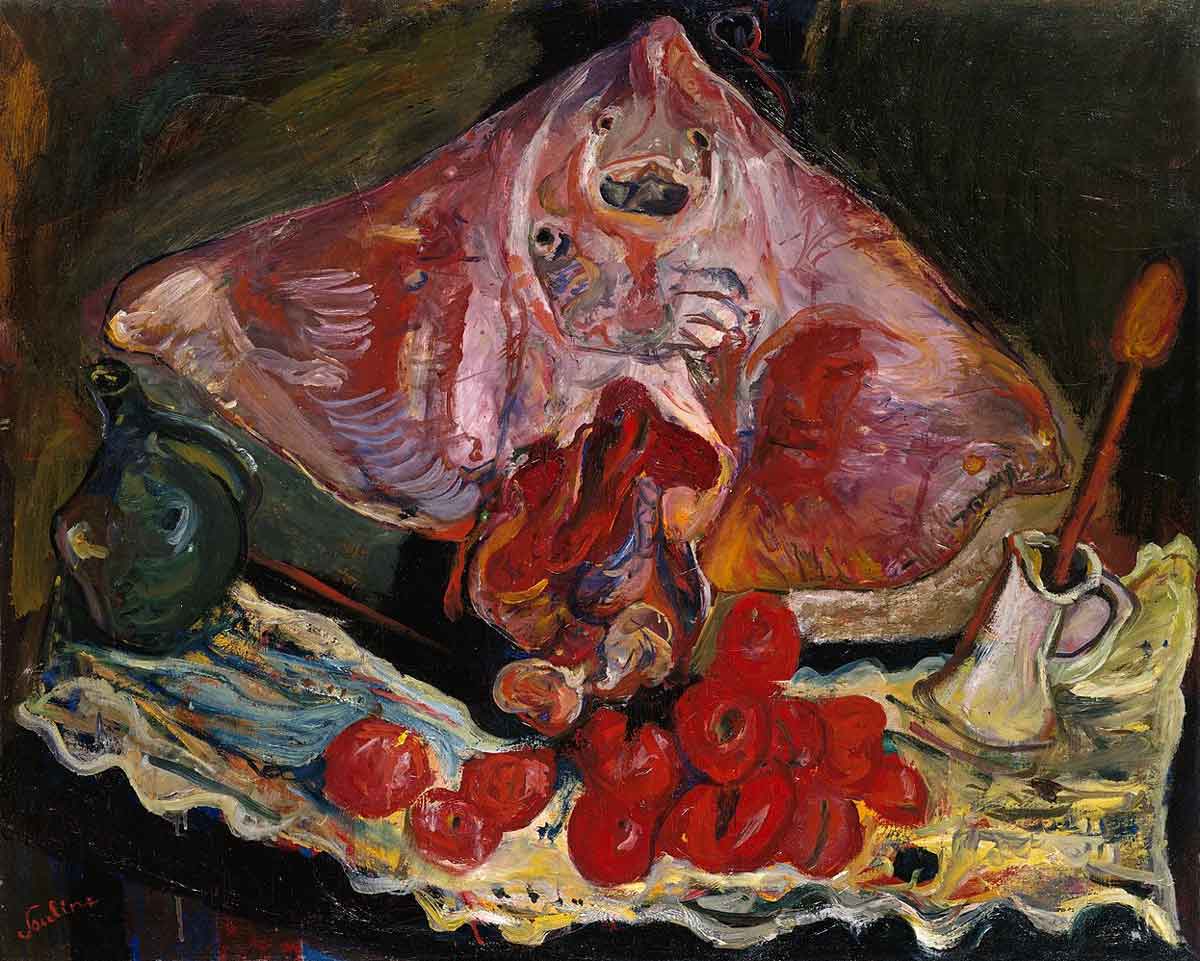
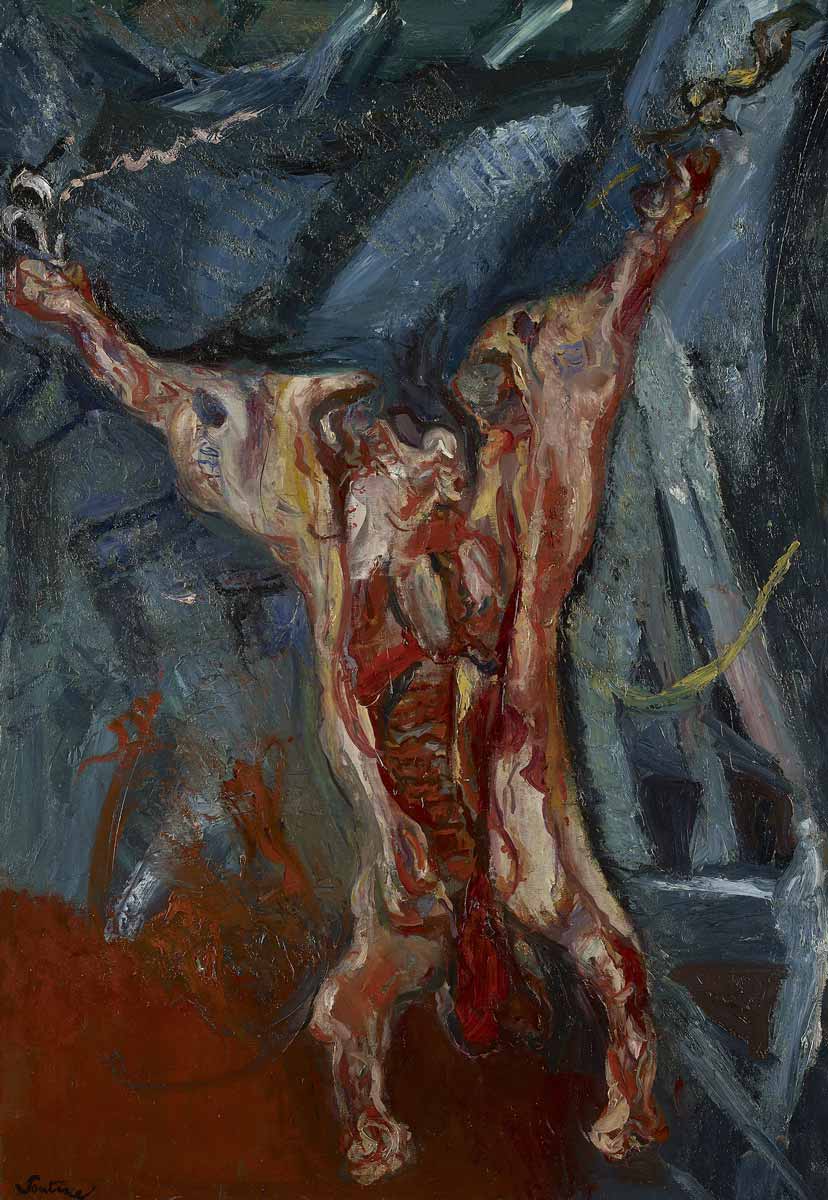
Soutine’s gaze was similarly aggressive and threatening. He dissected his figures and, in the words of Amedeo Modigliani, cut up the canvas with his lines. Struck by Soutine’s artistic gaze, his models—friends, lovers, or even a beef carcass—became something more than they seemed and revealed new facets.
Soutine in Paris
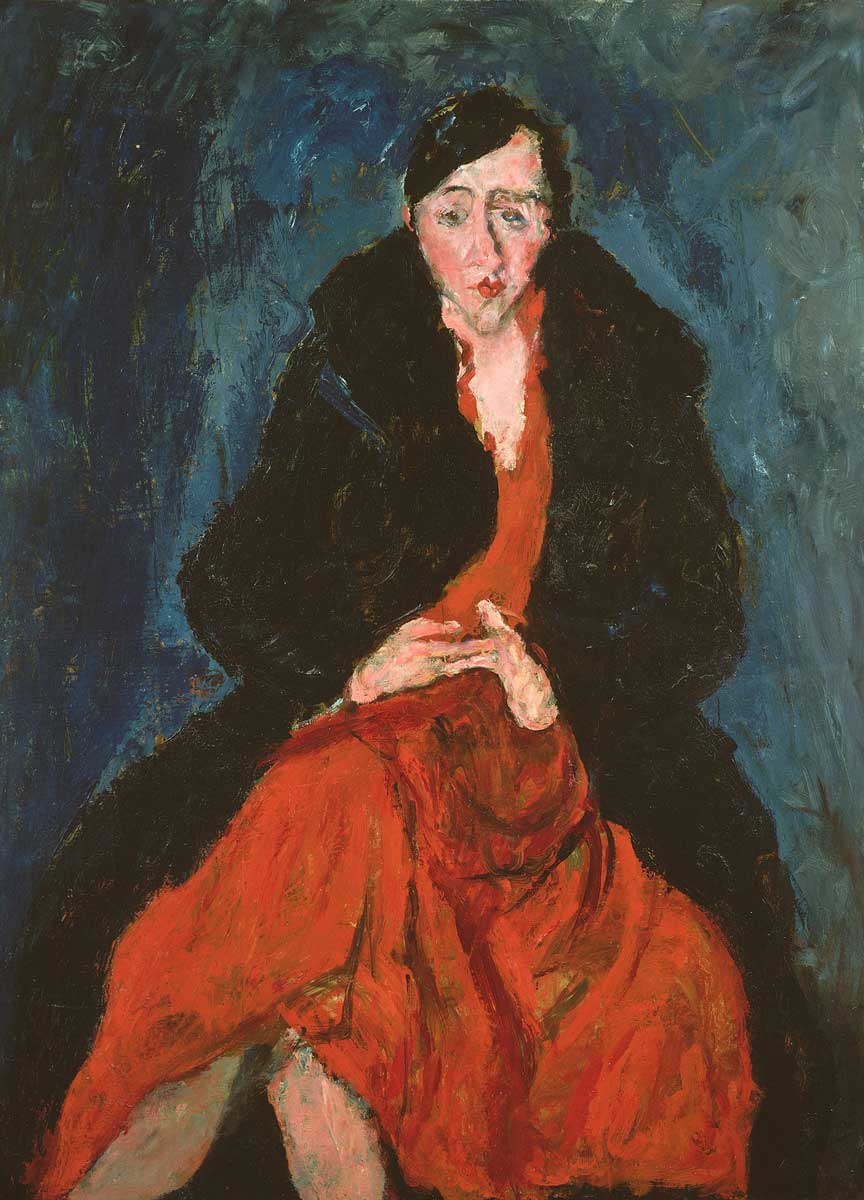
In Minsk, Soutine developed an idea to move to Paris in search of better and more progressive art. Somehow, he managed to save money for a one-way train ticket. Even in the company of poor and miserable artists, Soutine was the poorest and the most miserable. Poor, starving, with unkempt hair and dirty clothes, he sometimes scared even those who were familiar with homelessness and poverty.
He was utterly strange and even unsettling. Contemporaries recalled that he usually painted naked. This was not a conceptual choice or a metaphor but a literal material necessity: Soutine had no money to buy new clothes and was afraid to tear them or smear them with paint accidentally. Painting was his way of life rather than simply an occupation or passion.
In Paris, Soutine found himself in a community that, little by little, helped him adapt to his new life. He befriended fellow Belarusian immigrants Marc Chagall, Moise Kisling, Amedeo Modigliani, and Fernand Leger. He frequently went to the Louvre to study paintings and was deeply moved by the works of El Greco and Rembrandt. He continued to develop his artistic style, making it even messier and borderline hysterical. Unlike his close friend Modigliani, Soutine hardly bothered with studying drawing. A chaotic and nervous individual, he rejected any form of routine or discipline required to master a clear monochrome line of a pencil.
Chaim Soutine and His Homeland: Constructivism and Socialist Realism
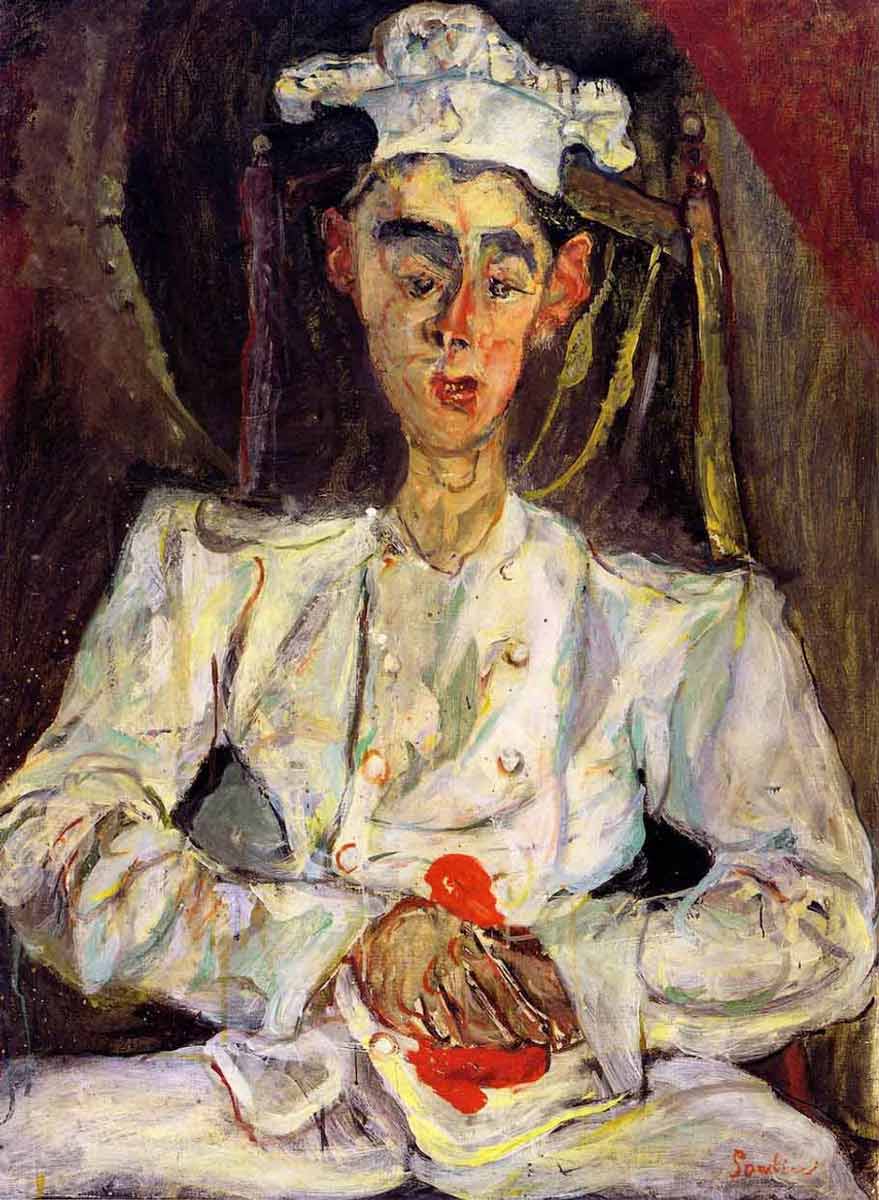
Soutine lived in poverty for almost ten years before a literal miracle happened. In 1922, an American art collector called Albert Barnes arrived in Paris and was struck by Soutine’s strange and intense art that bought from him 50 paintings at once. This sudden success allowed Soutine to temporarily settle into a life of relative comfort. He even traveled to Amsterdam and London to see more art.
At the same time, life was changing radically back in Soutine’s homeland. After the Russian Revolution, artistic styles began to evolve and mutate. First, there was the minimalist and functional Constructivism that celebrated urbanism and industrialism. Then, after the Soviet regime took a conservative turn, the official ideology was reflected in Socialist Realism, an art style that presented idealized and often utopian visions of Soviet life.
Chaim Soutine was too far removed from these ideologies and even opposed them. He never saw art as a revolutionary force capable of changing the world. For him, it was a natural force that could not be controlled or forcefully channeled into a particular direction. Although he is usually labeled as an Expressionist, Soutine’s art represents his peculiar style, which has trouble fitting in with others. His art was based on constant emotional strain and impulse, leaving no room for a coherent theory of ideology.
Soutine’s Final Years
Chaim Soutine had a tragically short and difficult life. When World War II began, he desperately tried to get a US visa but was denied. His parents and most of his family were killed by the Nazis in a Jewish ghetto in Minsk. Afraid for his life, Soutine fled Paris and hid in rural France, often forced to sleep in forests with no shelter.
For several years, Soutine suffered from a stomach ulcer, which developed due to his long-term starvation, and was able to eat only water-based porridge. In 1943, his friends helped him to secretly travel from his hiding place to Paris, where an underground doctor would perform surgery. Unfortunately, it did not have any effect, and Soutine died in August of the same year.
Soutine’s funeral was a quiet affair held in occupied Paris. Only a few close friends, including Pablo Picasso and Jean Cocteau, were able to attend. Until the end of the war, Soutine’s grave remained unmarked. In 1960, Marie-Berthe Aurenche, a painter and Soutine’s partner during the last three years of his life, was buried in the same grave.
Chaim Soutine’s Art as a Symbol of Protest
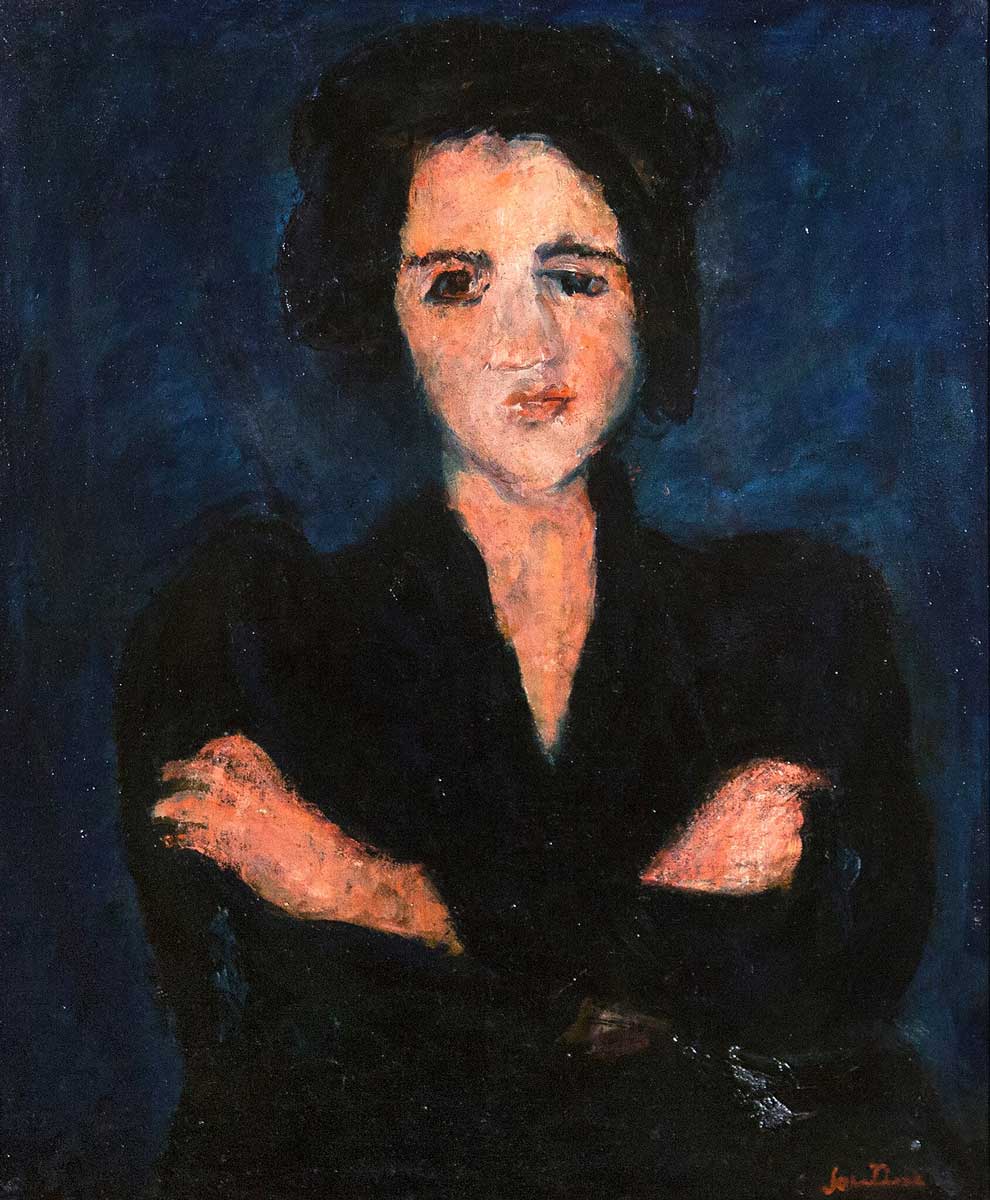
Surprisingly, Chaim Soutine’s paintings found new life as political expressions in his home country. In 2020, Belarusian businessman and head of a major bank, Victor Babarika, announced his intention to challenge the incumbent president of Belarus, Alexander Lukashenko, in the upcoming elections. Lukashenko, who has held power since the collapse of the Soviet Union, showed no signs of relinquishing his authority. Shortly after Babarika’s announcement, the authorities seized the art collection owned by Babarika and his bank. Not long after, Babarika was arrested and imprisoned.
One of the paintings from Babarika’s collection was a work Eva by Chaim Soutine, a portrait of a dark-haired woman with her arms crossed and a resolute look on her face. The image soon appeared on t-shirts and posters and became one of the main symbols of the Belarusian 2020 protest against the rigged presidential election. Curiously, before Babarika purchased Eva and another work by Soutine in 2013, Belarus did not have a single work by one of its most celebrated artists in both private and public collections.