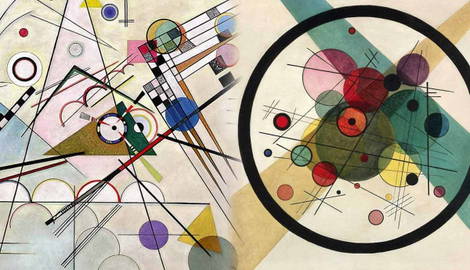

Wassily Kandinsky was one of the most famous and influential pioneers of abstract art. He was also a prolific writer who developed art theories that explained the necessity of abstract art for his era and the spiritual potential of non-figurative expression. Kandinsky paid specific attention to geometry, attributing specific emotional states to forms and angles. Circles were one of the most prominent forms in his works, including the famous Composition 8. Read on to learn more about the symbolism behind Kandinsky’s circles.
The Origins of Wassily Kandinsky’s Circles

Although it is not obvious from Kandinsky’s signature style, his most important teacher was the iconic German Symbolist Franz von Stuck. Von Stuck was a popular—albeit rather conservative—painter who focused on German mythology, the femme fatale archetype, and highly decorative works in gilded frames that were designed by the artist himself. Von Stuck’s conservatism was a conceptual decision that manifested itself in a peculiar use of oil paint: instead of blending the colors into uniform gradients, he applied them in small thin strokes, imitating tempera paintings of the early Renaissance.
The subject matter of his works also frequently referred to Antique mythology or Biblical scenes. Still, despite personal choices, von Stuck was a talented and versatile art teacher. He noticed Kandinsky’s penchant for bold color and the confident use of it and thus forbade him to use it for several months. This limitation forced Kandinsky to pay extra attention to line and composition in his works, mastering the expressive potential of the form.
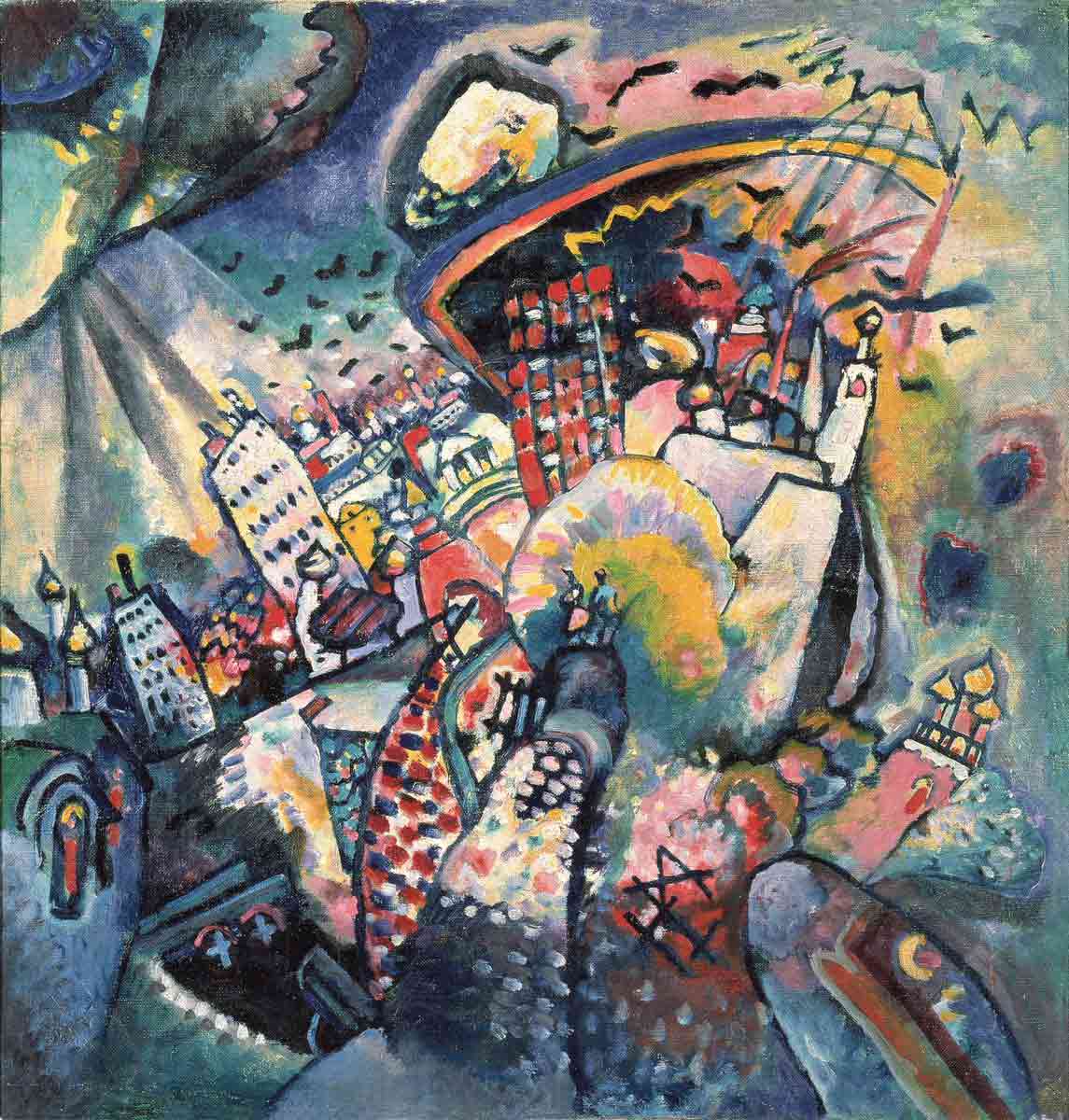
Another key event in his developing art style was his work trip to several remote Russian villages where he encountered folk art. Instead of being confined to canvases and frames, this type of art filled entire houses, covering every wall and every element. This experience taught Kandinsky that art could be a space for one to inhabit and that it could directly affect the human state of mind and being.
Kandinsky’s Writings
Kandinsky was not only an artist, but a writer. He had a deep need to formulate his aesthetic views into a coherent theoretical form, which could partially be explained by his academic background and law career. He obtained a brilliant education and was truly an outstanding lawyer. He almost became a professor before fully transitioning to art. Thus, he was able to argue in favor of the practical and theoretical need for abstraction and its functions as an artistic domain.
At the same time, Kandinsky believed that teaching art was impossible, just like learning to become a painter. The only attainable goal was to learn clear and logical thinking that would form an artist’s worldview and shape their art. Without a coherent system of beliefs and ideas, Kandinsky thought, one’s art was doomed to remain sterile, lifeless, and useless, like an empty nutshell.
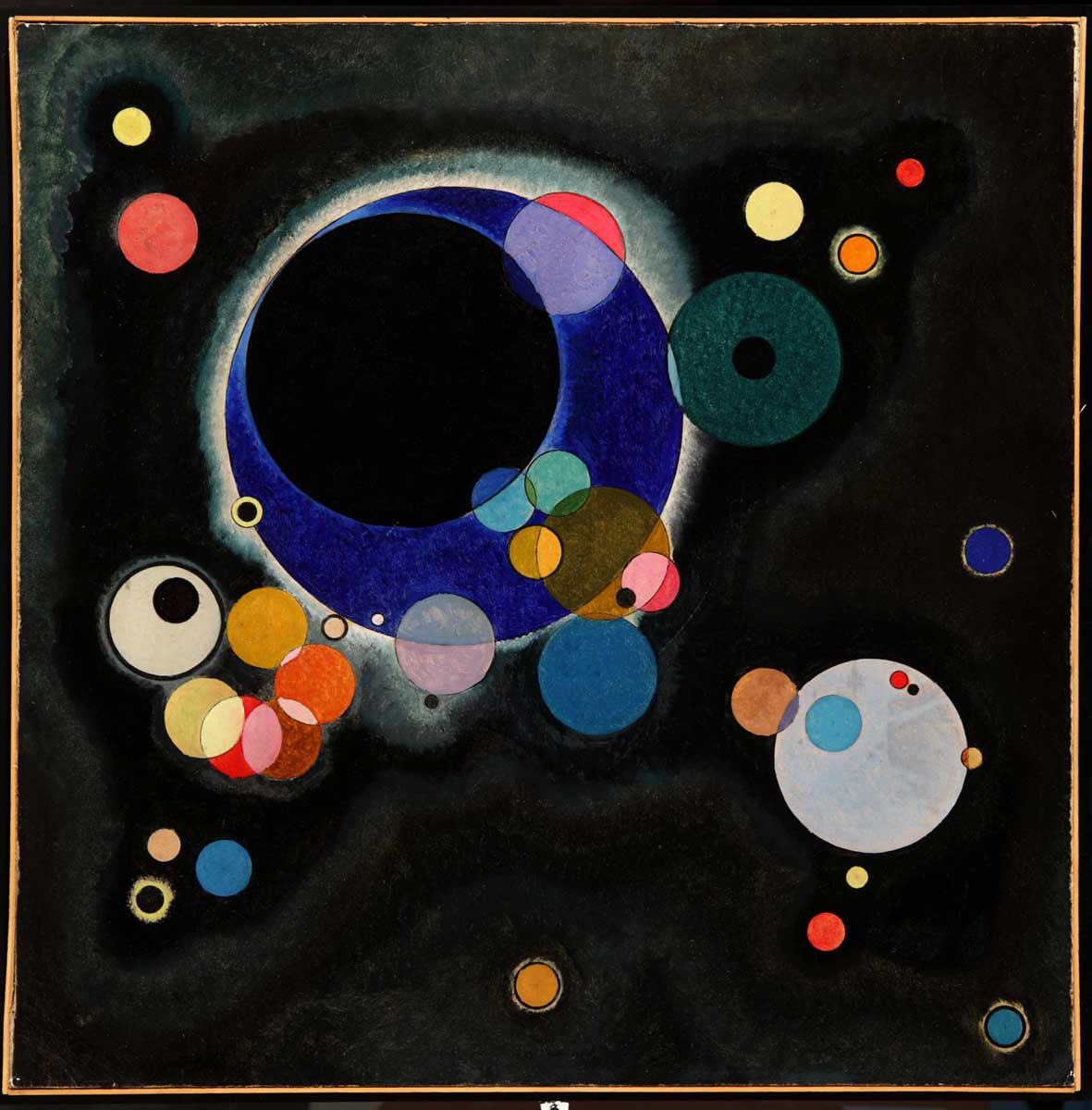
Kandinsky’s approach to art was scientific in its methods but was never truly materialistic. Like many thinkers of the time, he was influenced by spiritualist ideas and Theosophy; believing the task of philosophers and creatives of his age was to bridge together science and religion so that one could support another instead of existing in constant opposition. He believed that the centuries of prioritizing materialistic ideas over spiritual ones had a destructive effect on human perception and that abstract art was supposed to revive it with the power of pure form and color.
Still, he insisted that abstract art did not exist outside the natural laws; rather, it merely discarded their external shell. For Kandinsky, art could be truly great when and only when it followed the cosmic order of things. That order was to be perceived unconsciously but needed to be properly interpreted with the artist’s inner vision. As a Bauhaus professor, Kandinsky taught his students to perceive the inner content of objects and scenes not by rejecting their materiality altogether, but by metaphorically stripping away layers of the decorative and the superficial, gradually revealing the core.
The Classification of Kandinsky’s Work
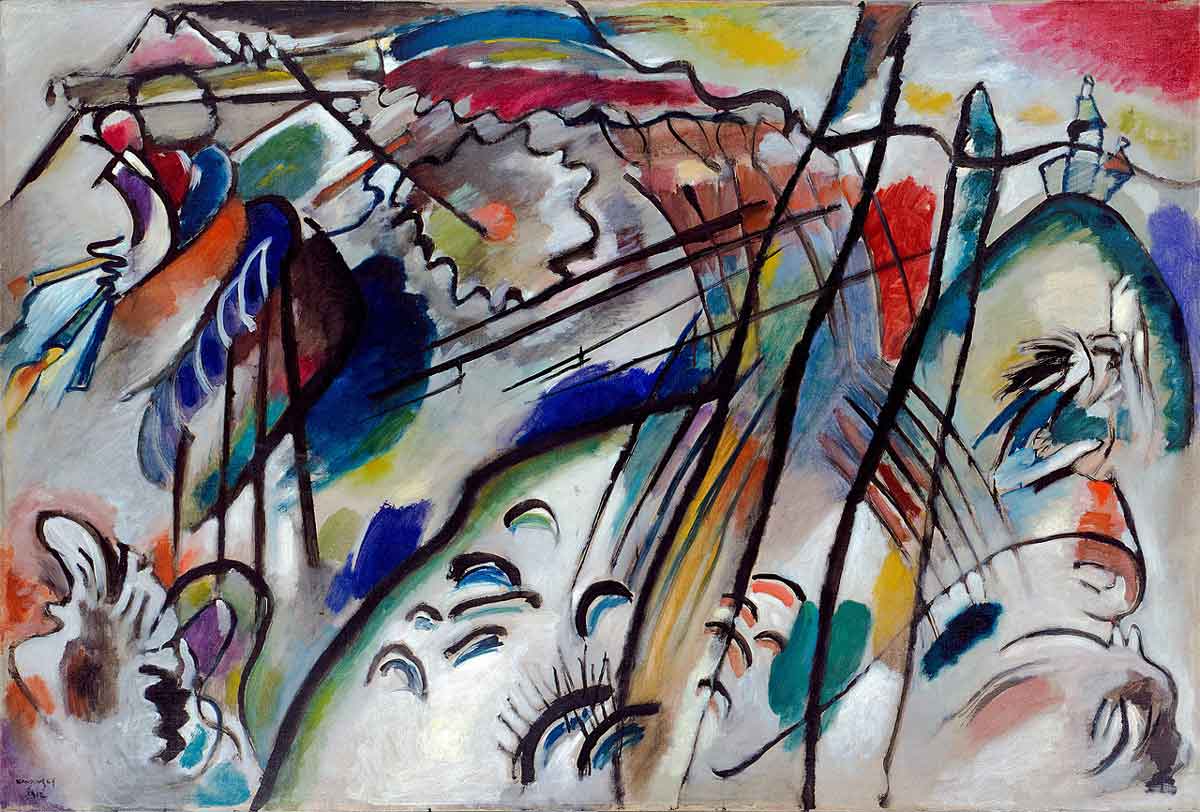
Kandinsky’s penchant for systematization and theoretical explanation manifested itself not only in his theoretical writings but also in the coherent and well-explained classification of his work. Inspired by music, and directly borrowing from its principles, he developed a theoretical framework that divided his abstract work into three major categories, all named similarly to musical pieces.
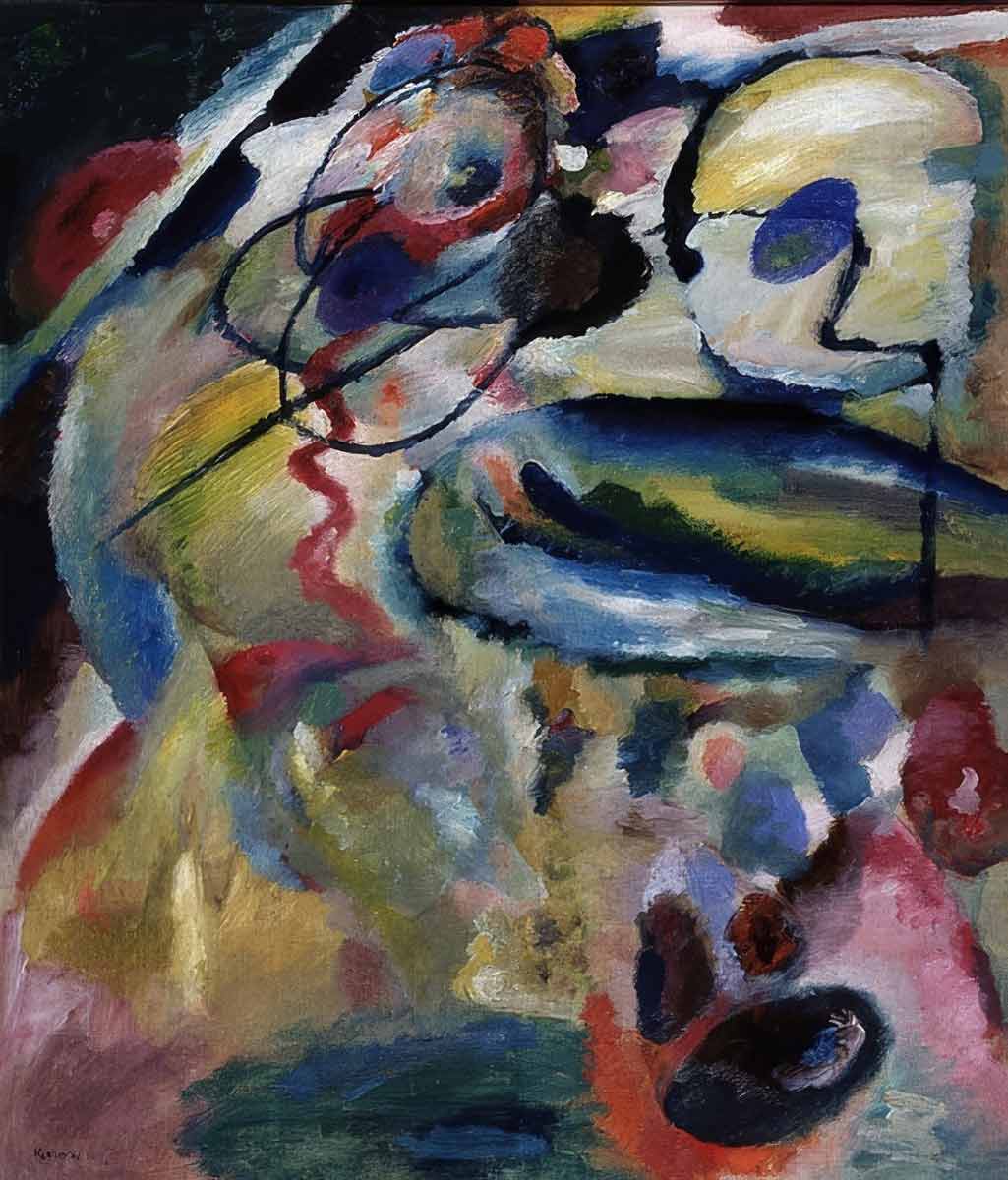
Kandinsky’s Impressions were related to compositions directly dictated by experiences of the natural world. Improvisations were almost unconscious outbursts of creative energy that expressed the artist’s inner state. Finally, Compositions were well-thought-out and calculated conscious expressions created to exude spiritually elevated harmony, like a well-composed opera. For Kandinsky, color was a piano key that belonged to a complex instrument of the human soul. The artist in this case is a musician who chooses which keys to press in order to target specific areas of the soul and evoke particular conditions.
Kandinsky’s Circles: The Role of Geometry in His Art
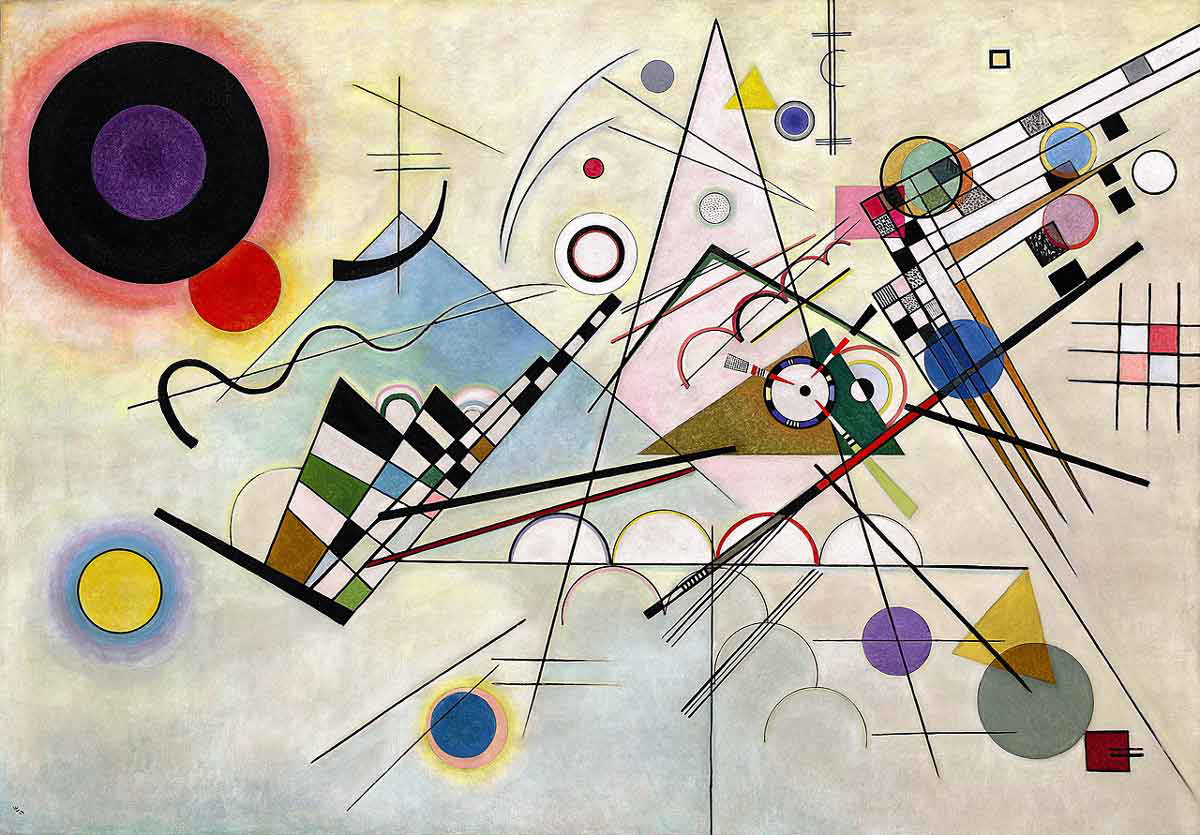
Attributing meanings to geometric figures was hardly new in the history of art and symbols. Particularly, the notion of sacred geometry was widely used in various religions, with artists and architects coding spiritual messages into symbolic geometric forms. For Kandinsky, each simple geometric figure had a particular emotional and spiritual effect ingrained into it. In his book Point and Line to Plane, he explained that a simple point was a starting unit for any visual expression. Immobile at first, in its continuous movement it turned into a line. Lines of different directions and rhythms created expressions and meanings. A point was silent, while lines and forms spoke out loud. A line and a point were thus direct opposites of each other.
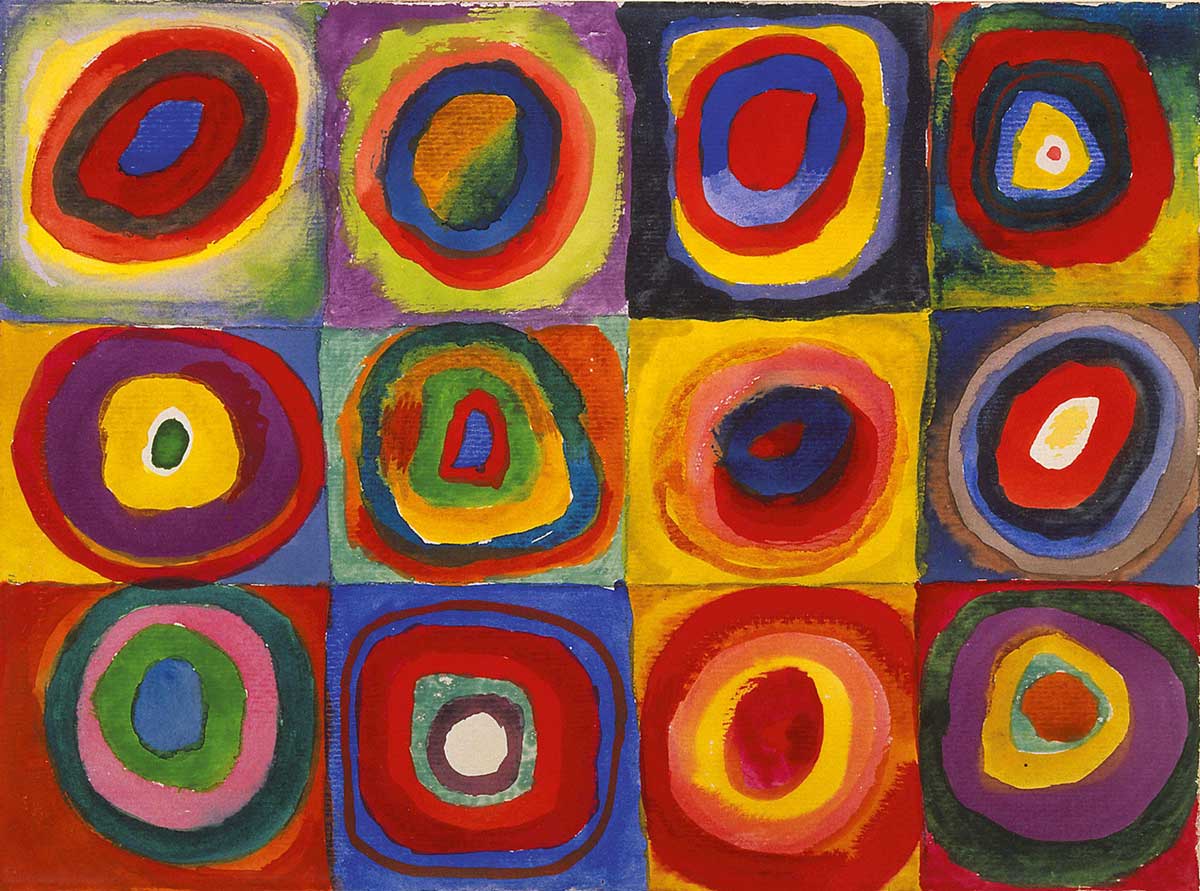
For Kandinsky, a circle represented the perfect unity of all opposites, as it represented an endless number of lines created by the same point at the form’s center. A circle, entirely devoid of angles, was in turn direct opposition to the plane of a triangle, composed of angles only. While triangles represented the process of spiritual development, circles, for the artist, represented the spiritual world as a whole, fitting in all of its elements. Circles represented a movement inwards, deeper into the substance of things and ideas. Each circle contained multitudes of lines and points, encompassing the old and the new, the physical and metaphysical. Similar to the ancient symbolism of a snake biting its own tail, Kandinsky’s circles represented continuous renewal, the cycle of natural processes, and the unification of all things into one.
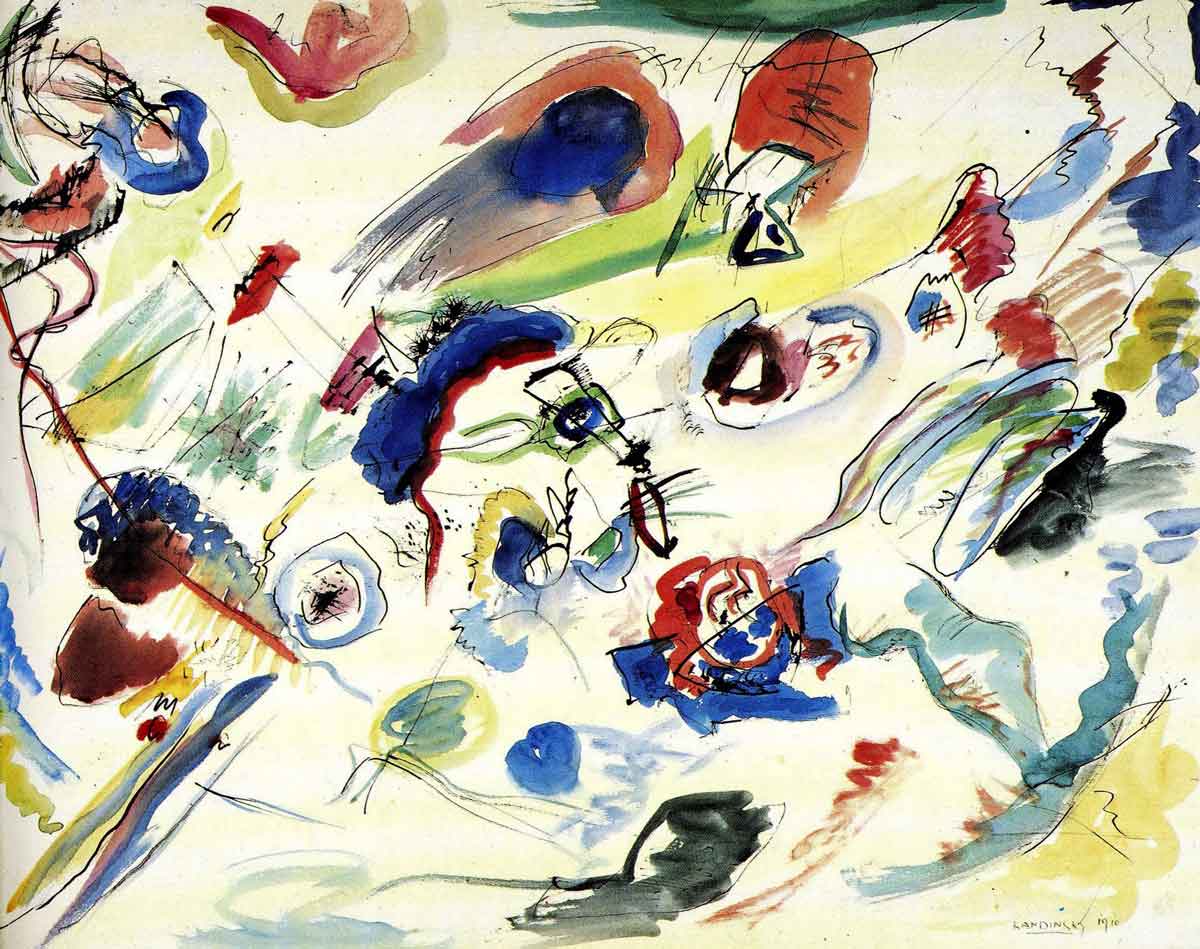
In the physical world, circles referred to both massive planets in space and the smallest atomic particles. Kandinsky, like many of his contemporaries, did not regard the distinction between science and spirituality as necessary. For him, art was supposed to bridge the gap between two domains. Apart from addressing sacred geometry, religious texts, and spiritualist thinkers of his time, Kandinsky was deeply invested in scientific explorations of his era. He wrote that the discovery and studies of atoms were among his principal influences when he developed his theories on abstract art.
Kandinsky’s Circles and Synesthesia: The Origins of His Geometric Symbolism
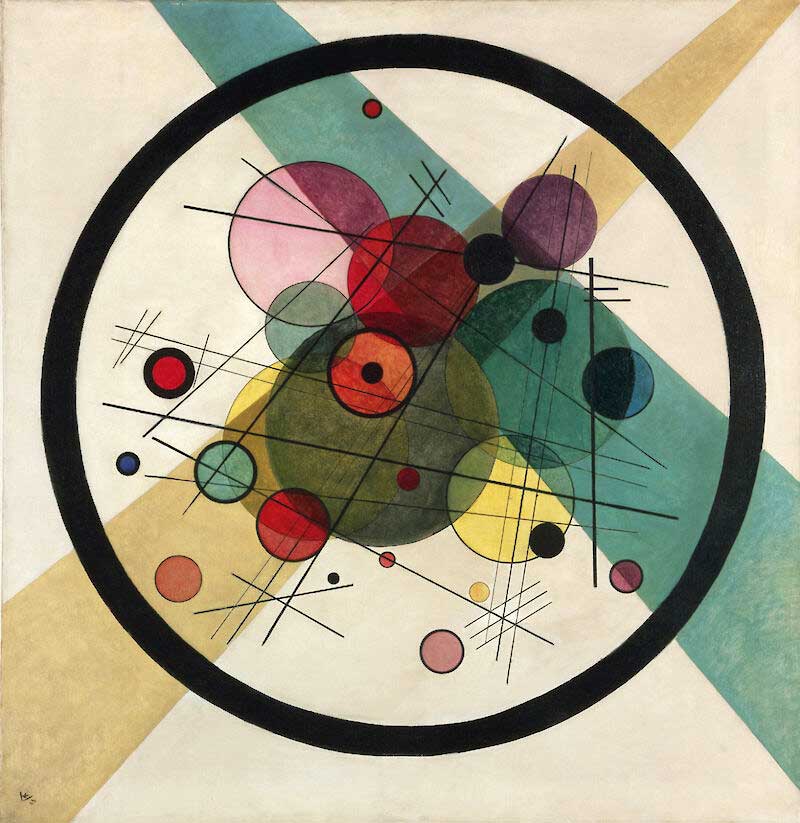
Some researchers suggest Kandinsky had a rare neurological condition called synesthesia. A regular human brain connects physical senses to specific areas of the brain that help us recognize colors, flavors, textures, and words. Inside a synesthete’s brain, the paths leading from external stimuli to sensitive areas of the brain are mixed. Thus, such a person can literally hear color, associate letters with textures or even tastes, and attribute emotions to geometrical forms. Most importantly, these attributions happen without any conscious effort. In his essay Concerning the Spiritual in Art, Kandinsky mentioned a case described by a Dresden doctor. His patient had confused senses of color and taste, and characterized the taste of a sauce as blue, even in blind tests. The same doctor encountered similar phenomena in other patients and noticed that each synesthete had a different set of senses and associations.
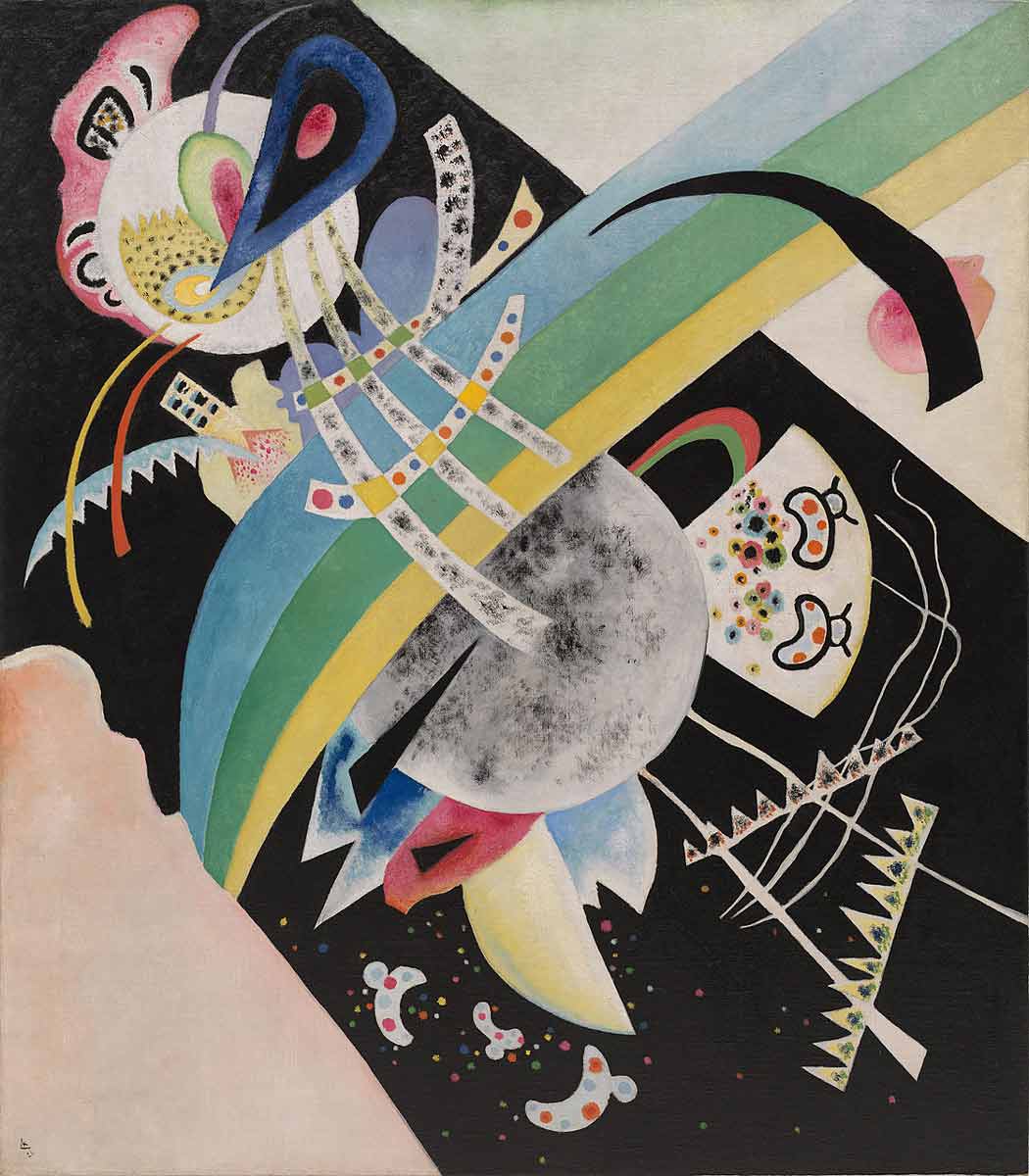
In his writings, Kandinsky referred to synesthesia as the expression of a higher level of consciousness that was available only to a select few of his generation. Developing such senses for him meant to ascend the entire humanity to the next stage of development. In many of his writings, Kandinsky referred to the inner sound of artworks. Many artists and writers of the time found inspiration in music as the most abstract of art forms and thought of it as an aid towards achieving abstraction in visual art.
Piet Mondrian found inspiration in jazz, while Kandinsky was preoccupied with Wagner, Scriabin, and Schoenberg. Some Kandinsky experts believe he also had synesthesia, with his brain connecting sounds to colors and visual forms, which could explain his preoccupation with music. However, others think he used it as an inspiration rather than actually experiencing it.