
Kazimir Malevich was the famous Polish-Ukrainian master of abstract art. He is best known as the founder of Suprematism and a prominent art theoretician. Apart from creating avant-garde art, Kazimir Malevich made some design pieces and architecture projects, though his understanding of these disciplines was often unconventional. Read on to learn more about Kazimir Malevish’s dive into the world of design.
1. Kazimir Malevich’s Design For a Perfume Bottle

Since the beginning of the 20th century, ongoing arctic exploration has been a hot topic in Europe. News about local nature and Indigenous culture fascinated everyone, and thus, brands decided to both celebrate and capitalize on it. In 1909, the Russian perfume company Brocard created a fresh scent called Severnyi (meaning Northern) and needed to come up with an appealing bottle design.
At the time, Kazimir Malevich already had a reputation among his peers as an art theoretician and avant-garde creative, yet this reputation did not bring him any financial stability. Deeply immersed in ideas and concepts, he disliked doing commercial work. And yet, he needed money, so he signed the contract with Brocard. For decades, nobody knew about this project, as Malevich did not acknowledge it despite the great popularity of the perfume.
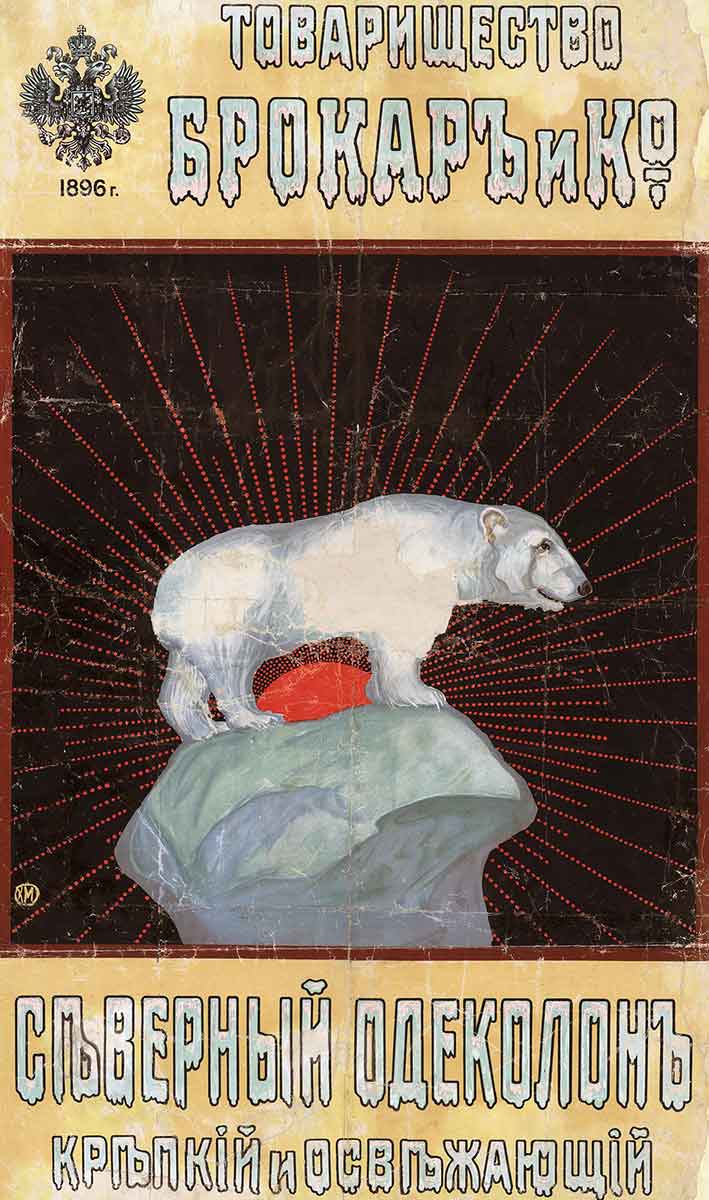
While designing the bottle, Malevich went against all the rules of perfume packaging of his era. Instead of making an elegant bottle that would easily fit in one hand, he created an asymmetric form with many angles and a heavy lid. To imitate an iceberg, he created a model from clear craquelure glass that no one previously used for cosmetics. On top of the lid, he placed a polar bear with a charming little tail. The same bear, although in a more detailed version, soon appeared in advertisements and posters for the brand.
2. Malevich’s Fashion Design
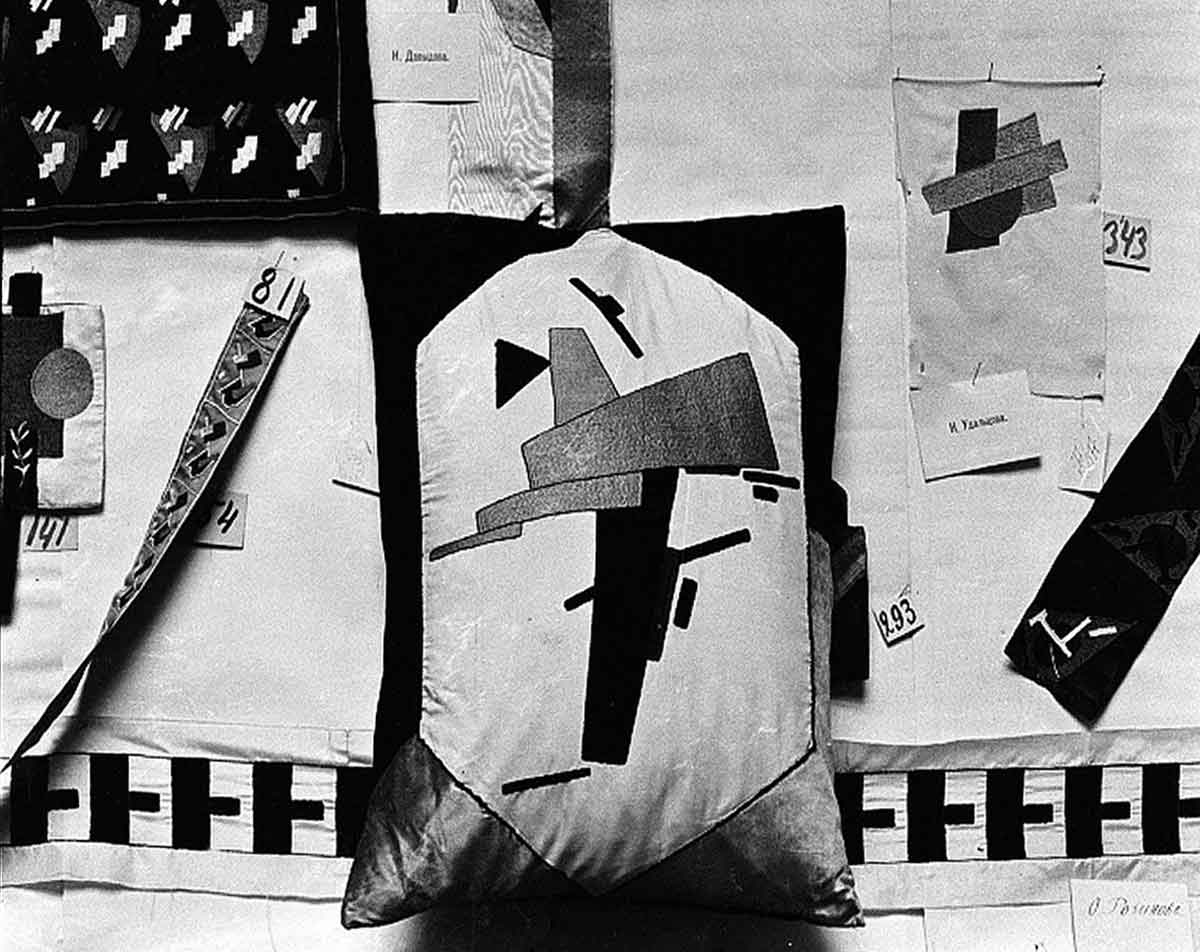
Practicality was never Malevich’s strongest side, so he rarely created actual wearable designs. However, he succeeded in decorations. Avant-garde artists had a profound interest in traditional crafts and folk artmaking techniques. Embroidery was one of them. To support and revive traditional workshops in villages, young artists often traveled there and offered folk masters new modern designs. Artist Alexandra Ekster led such a workshop in the Kharkiv region (present-day Ukraine). In 1916, a group of Ukrainian embroidery masters (all women) presented an entire exhibition with embroideries based on Malevich’s Suprematist paintings. Soon, from flat embroideries, they moved to create purses, sashes, and other accessories. The basic object design was basic, which balanced the geometric innovation of Malevich’s paintings. Unlike Suprematist’s paintings at the time, these embroidered objects actually became popular accessories.
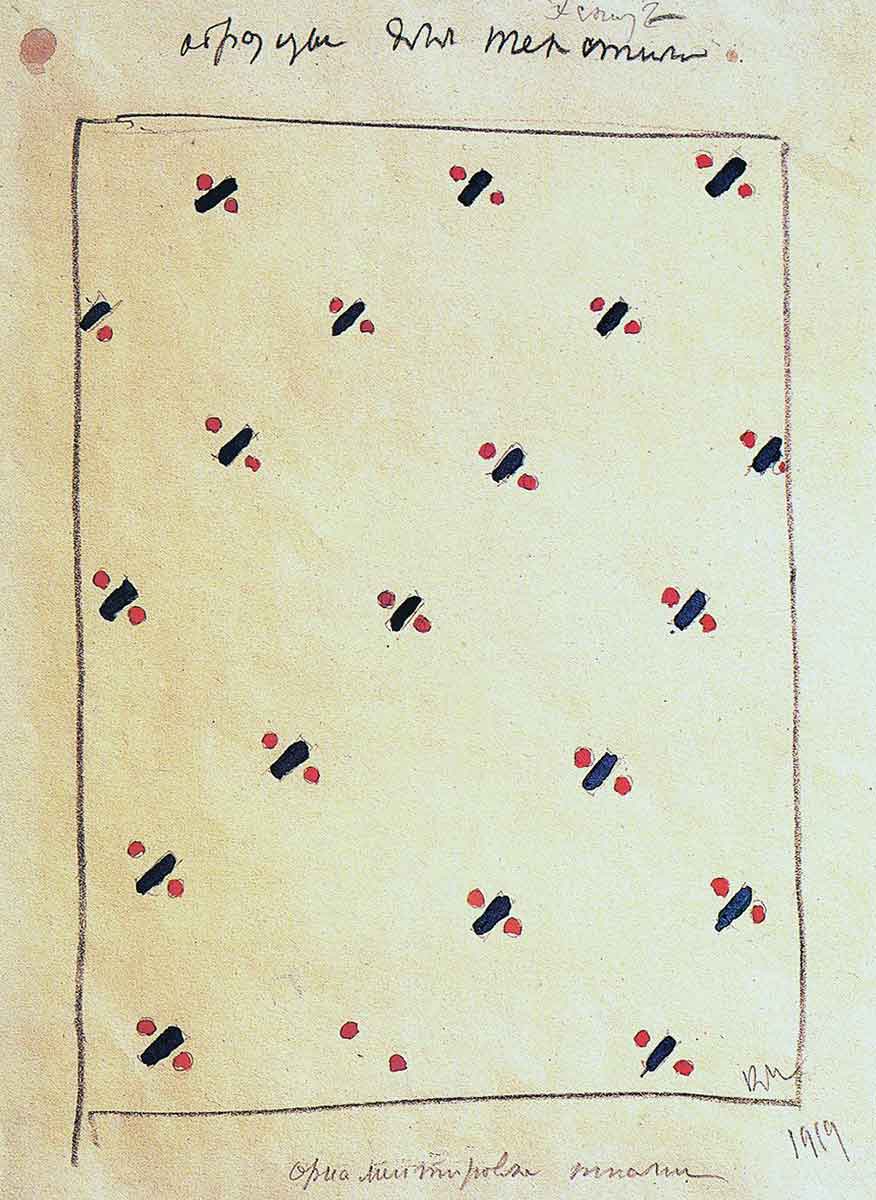
Apart from embroideries outsourced to Ukrainian masters, Malevich created several models of Suprematist clothing. According to his concept, attire, furniture, and all household objects had to match the architectural style to create a harmonious experience in which forms and colors could be appreciated and utilized to the fullest extent. He designed textiles with Suprematist prints (this genre of design was popular among the early Soviet artists, particularly women) and drew several sketches for dresses—all primary-colored, with asymmetric geometric prints and soft rounded shoulder seams.
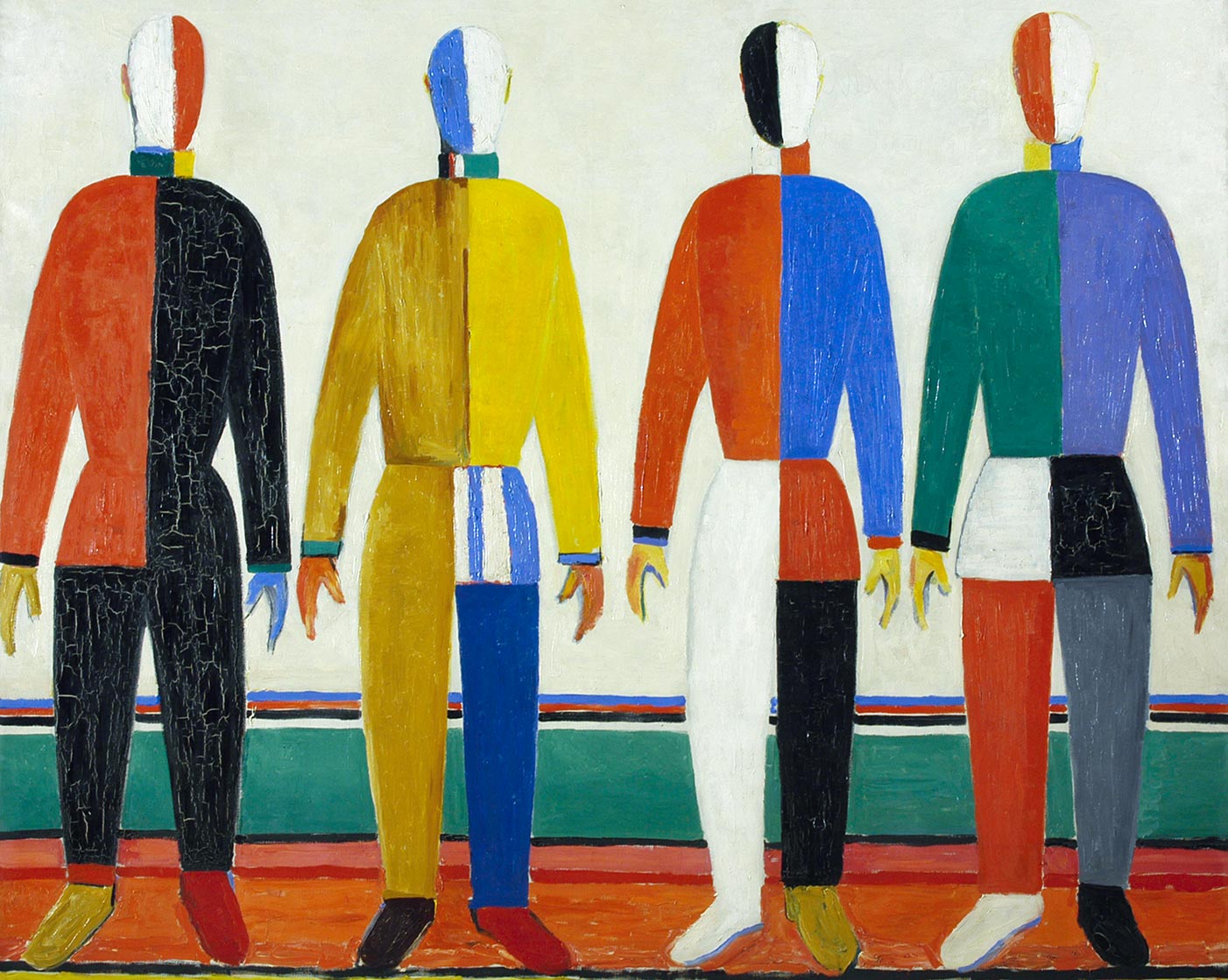
It is unlikely that Malevich’s dress designs ever came to life during his lifetime. Unlike artists Luybov Popova and Varvara Stepanova, who turned textile design into a wearable art form and actually launched production in the first decades of the Soviet Union, Malevich was less interested in giving his ideas a physical form. According to the artist’s contemporaries, his mother actually knit sweaters and scarves based on his designs and gave them as gifts to the artist’s friends and colleagues. Still, decades later, Malevich’s designs found their way into fashion and are occasionally referenced in designer collections.
3. The Iconic Faceted Glass
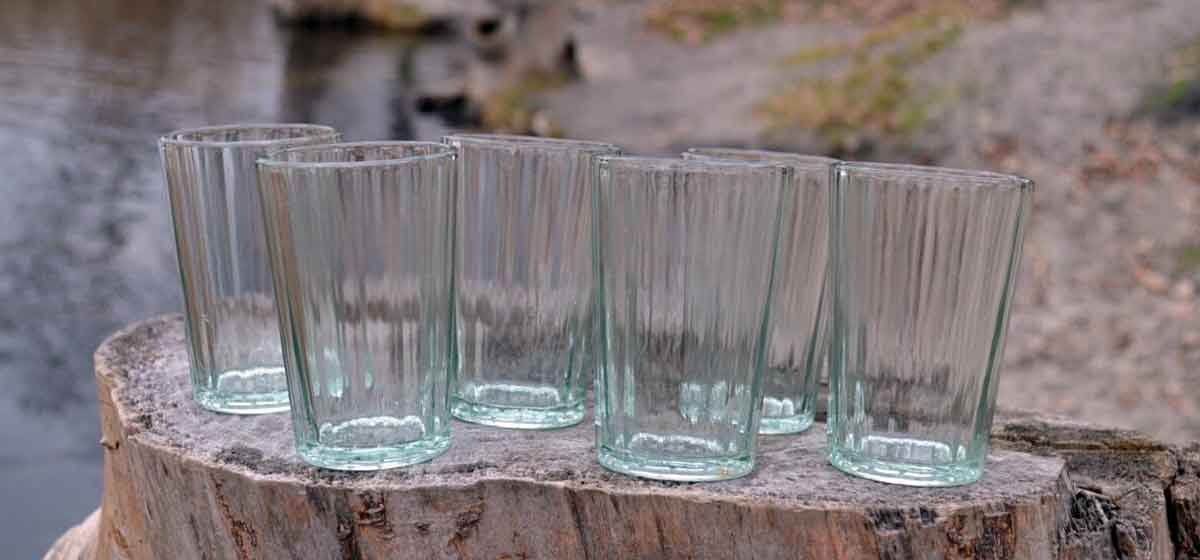
One of the undisputed symbols of Soviet daily life, rarely recognized by foreigners, was a faceted drinking glass. Made from thick clear glass, it was cheap, relatively hard to break, dishwasher-safe, and readily available in stores. These glasses were both symbols of a happy childhood, as they were used in Soviet soda fountains, popular among children, and emblems of working-class alcoholism. These glasses had different volumes and either 16 or 20 facets. Collectors of vintage items still hunt these glasses on Eastern European flea markets.
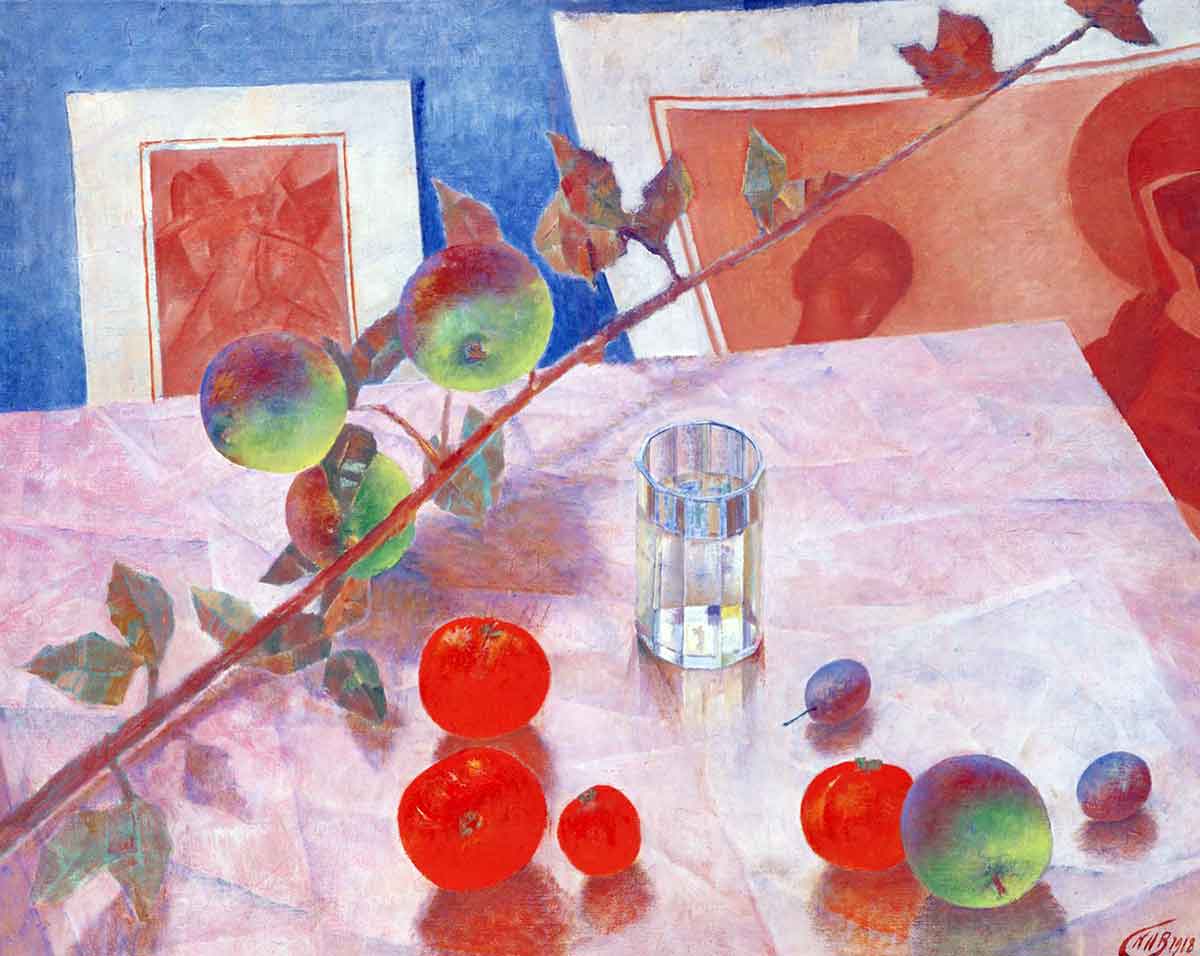
The origins of the iconic glass are not entirely clear. According to a legend, Kazimir Malevich himself came up with the design. In 1927, Malevich went to Germany to exhibit his art and to visit the Bauhaus school. There, he was introduced to various prominent European artists, including Walter Gropius himself. Upon arriving back in the USSR, Malevich was arrested on charges of espionage. While in prison, he tried to warm himself by drinking hot water but noticed that a regular glass burned his hands. After several weeks, he was released, yet the idea of creating a faceted glass that would remove excessive heat allegedly stuck in his mind.
However, most art historians doubt this theory. Perhaps the connection between faceted glasses and Soviet avant-garde came from numerous still-lifes painted by Soviet Cubists and Futurists, which incorporated these glasses.
4. Suprematist Teapot
Before the Russian Revolution, porcelain factories in the Empire mostly created designs inspired by Art Nouveau and those referencing 18th and 19th-century designs. Russian factories were among the largest in Europe, and their products could be found in aristocratic houses in the Netherlands, France, and Great Britain. However, the Revolution halted production, denouncing the elitist bourgeois tastes.
The new country needed to form a coherent visual and ideological identity as soon as possible, so it turned almost every production into a propaganda tool. The porcelain industry was no exception—its shapes and designs needed to be transformed so that everyday objects would reflect the new ideology. In its early years, the Soviet Union strived to move away from traditional artistic references and forms. Traditional painting, sculpture, and design were rooted in elitism, while the new forms had to be easily understandable and universal.
In 1923, art historian Nikolai Punin was appointed creative director of the former Imperial Porcelain Factory in Saint Petersburg. Punin was a well-known promoter of the avant-garde and, particularly, Suprematism invented by Malevich. He employed many young artists who tried to apply their abstract geometric studies to practical objects. Practicality was equally important as ideological purity.
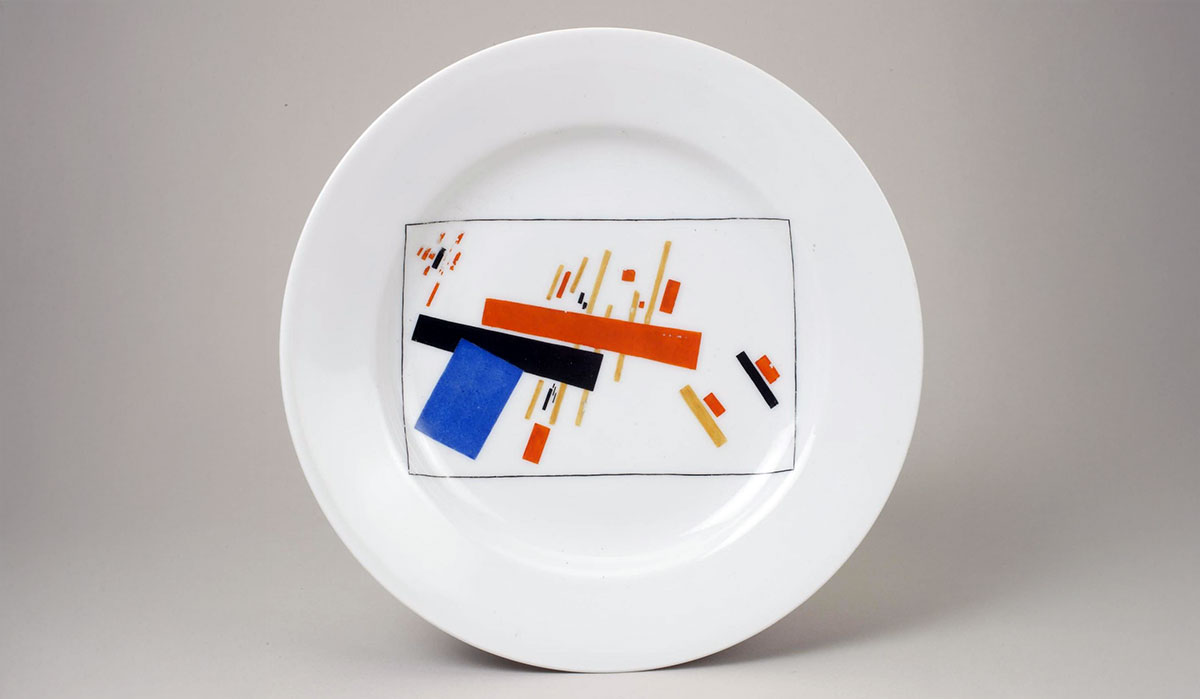
Kazimir Malevich, however, had little preoccupation with practicality. His focus was color and form and their possible interpretations. He quarreled with other artists, like the famous Constructivist Vladimir Tatlin, about the supremacy of practical purpose over aesthetical qualities. Similar to Bauhaus professors, Tatlin firmly believed that form had to follow function. Malevich, on the contrary, focused on visual rhythms and geometric balance.
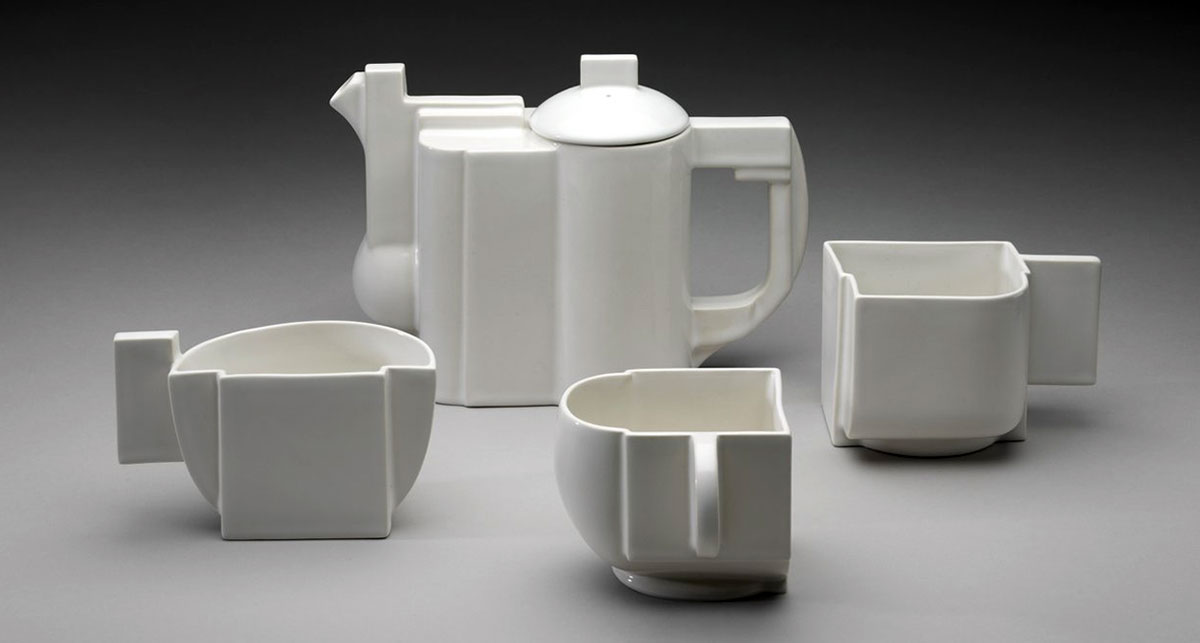
In 1923, Malevich presented a Suprematist tea set: the pot was constructed from numerous rectangular blocks, and cups were seemingly cut in half. Although the artist did achieve visual harmony, the set proved to be extremely impractical and uncomfortable to use. His first wife, Kazimira Zgleits, complained about the teacups’ shape, yet soon started using them to scoop flour out of a large sack. Still, the porcelain set was too complex and hard to make to be used for scooping.
5. Kazimir Malevich and Architecture
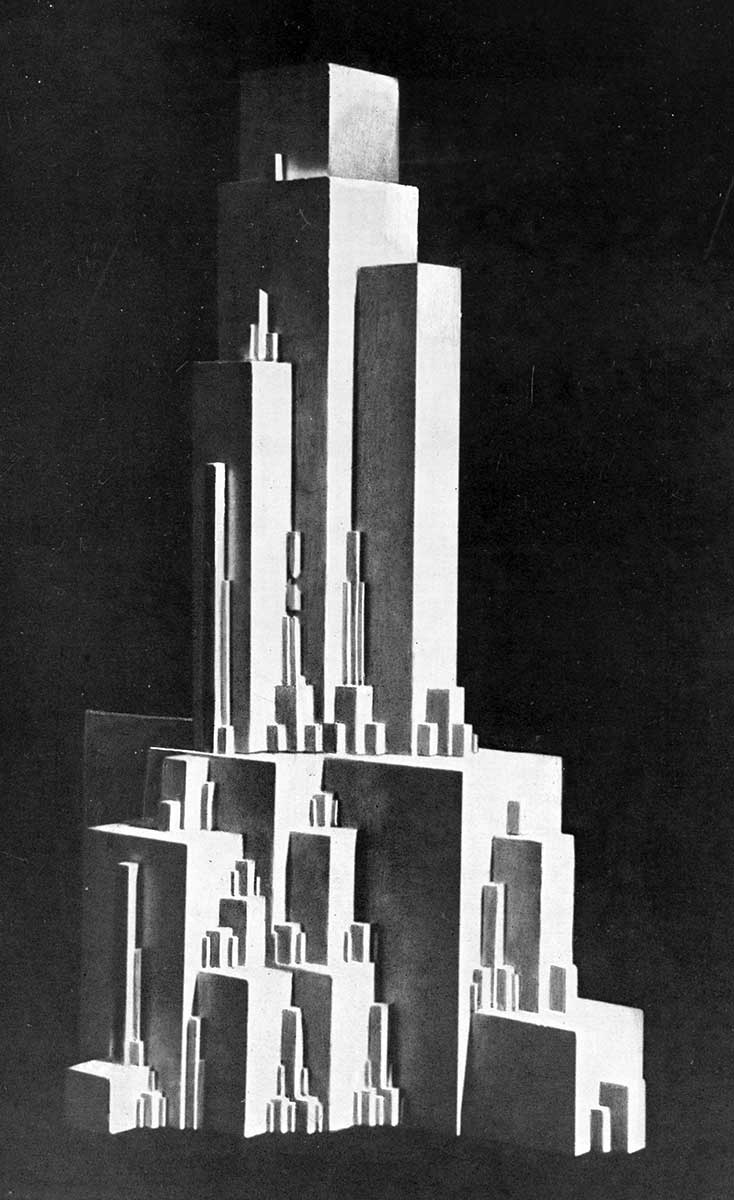
Malevich’s vision of porcelain actually grew out of his temporary interest in architecture, but not with the type that made one’s urban life more comfortable and practical. As often, he focused on utopian ideas and pure fantasies. In Malevich’s architectural concepts, humans were like birds that build nests on trees: they settle and live there, but no one could say that housing birds is a tree’s primary function.
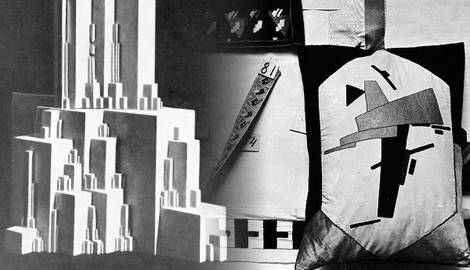
Malevich constructed models of skyscraper-like structures he called Architectons. Built from rectangular blocks, Architectons had no practical function and represented a general concept of architecture and design. Planits were more detailed blueprints that featured floor plans and even furniture. Still, these blueprints forced inhabitants to adapt to architecture and not vice versa.
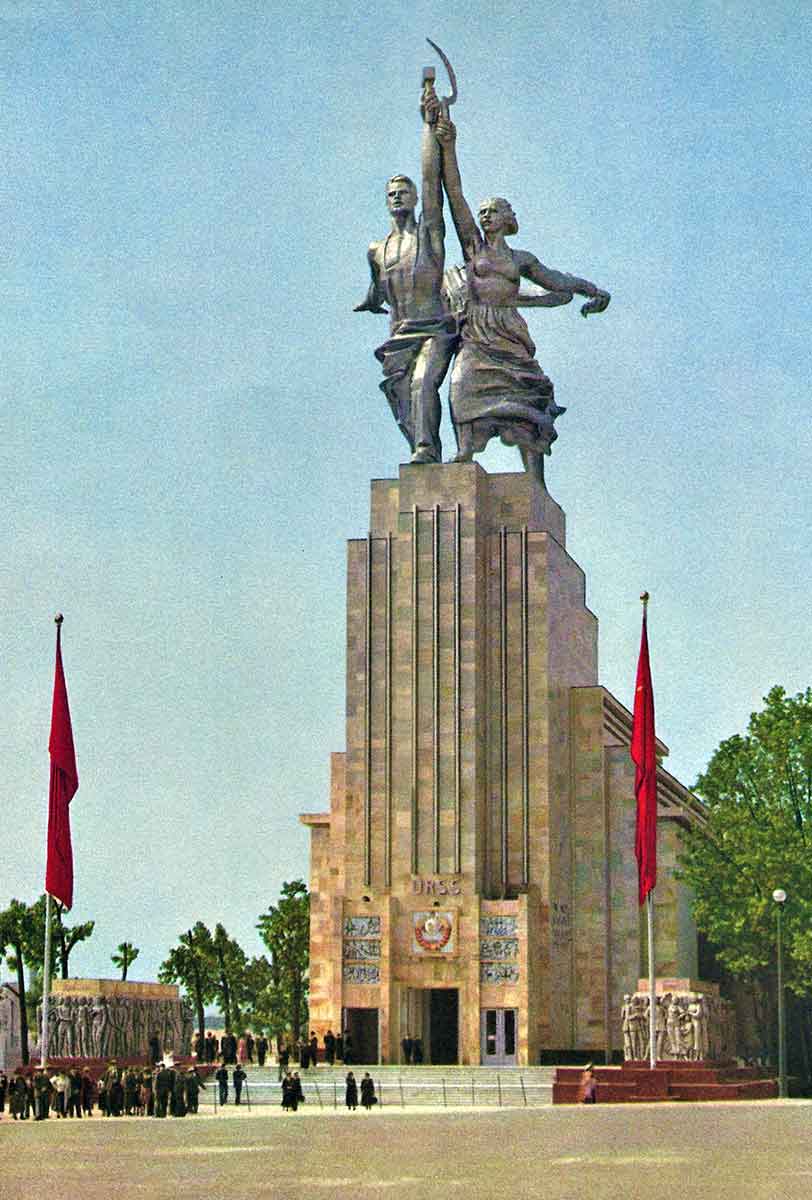
Despite its monumental impracticality, Malevich’s futuristic Architectons found its way into Soviet Modernist architecture. Rectangular structures became the basis for the Soviet pavilion of the 1937 Universal Exposition in Paris.