
In all of Camus’ literary works, we see themes related to sleep, tiredness, and fatigue recurring over and over again. For many of his characters, their most profound moments occur when they are either in bed or should be in bed. However, this theme has been neglected in the scholarly literature. Here, we offer an overview of Camus’ most significant literary works and the role played by sleep in each of them.
An Overview of Camus’ Literary Work
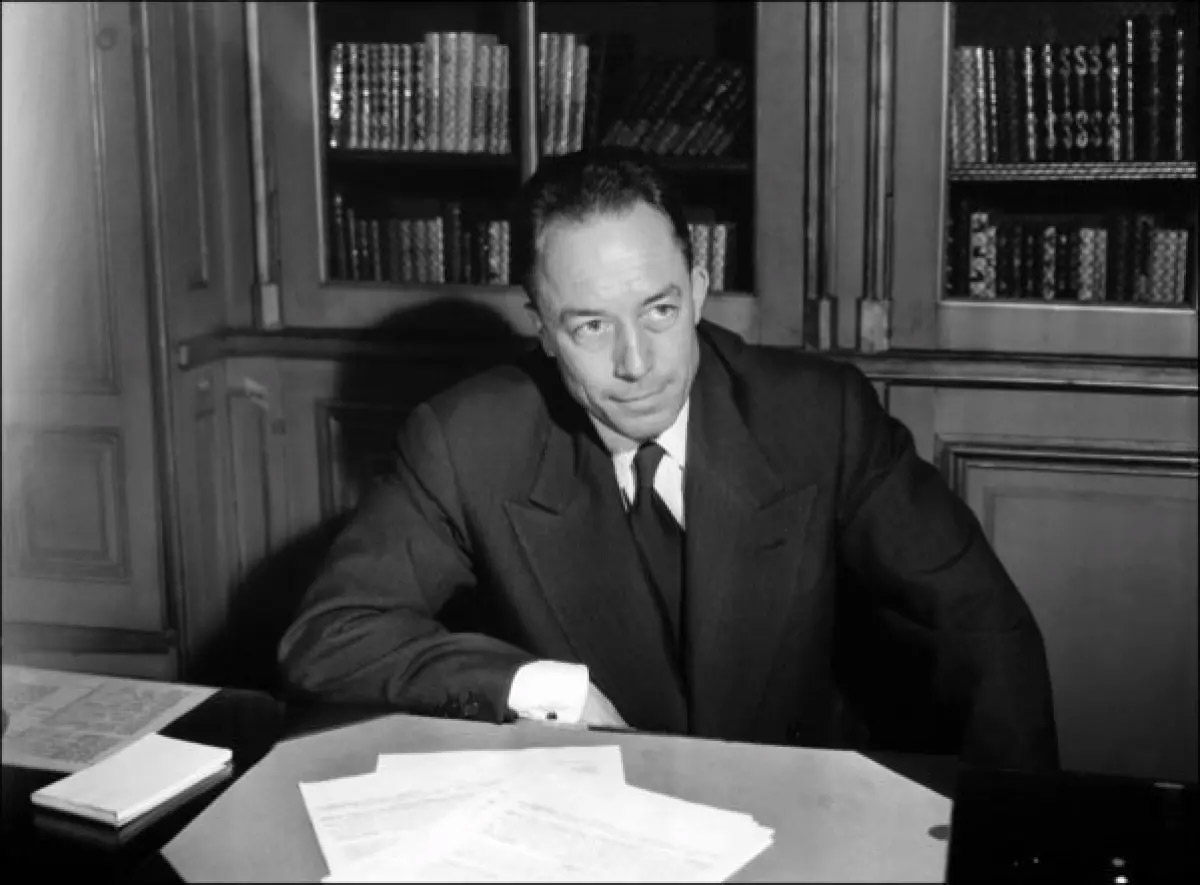
Albert Camus wrote his work in cycles. He planned to tackle a subject from three distinct angles: a novel, an essay, and plays. For example, his first cycle was focused on the philosophical idea of the absurd. The absurdity of life was then addressed through his novel The Stranger, the essay The Myth of Sisyphus, and the plays Caligula and The Misunderstanding.
For the second cycle, Camus’ topic was rebellion. For this, he wrote the novel The Plague, the essay The Rebel, and the plays The Just Assassins and State of Siege.
Camus’ third cycle was supposed to focus on the topic of love, but his plan was derailed due to the furor over the publication of The Rebel. In the text, Camus was highly critical of Marxism and modern Communism.
After the backlash from the left, Camus felt so isolated and alone that his plans for cyclical works were thrown off completely. Instead, he wrote a collection of short stories that would be published under the title Exile and the Kingdom. One story that was originally meant to be part of this collection took on a life of its own and was published separately as The Fall.
Here we will look at all the works just mentioned with a special eye open to how Camus uses the motif of sleep. As we shall see, sleep (or the lack of it) is a major preoccupation with Camus.
Sleep in Part One of The Stranger
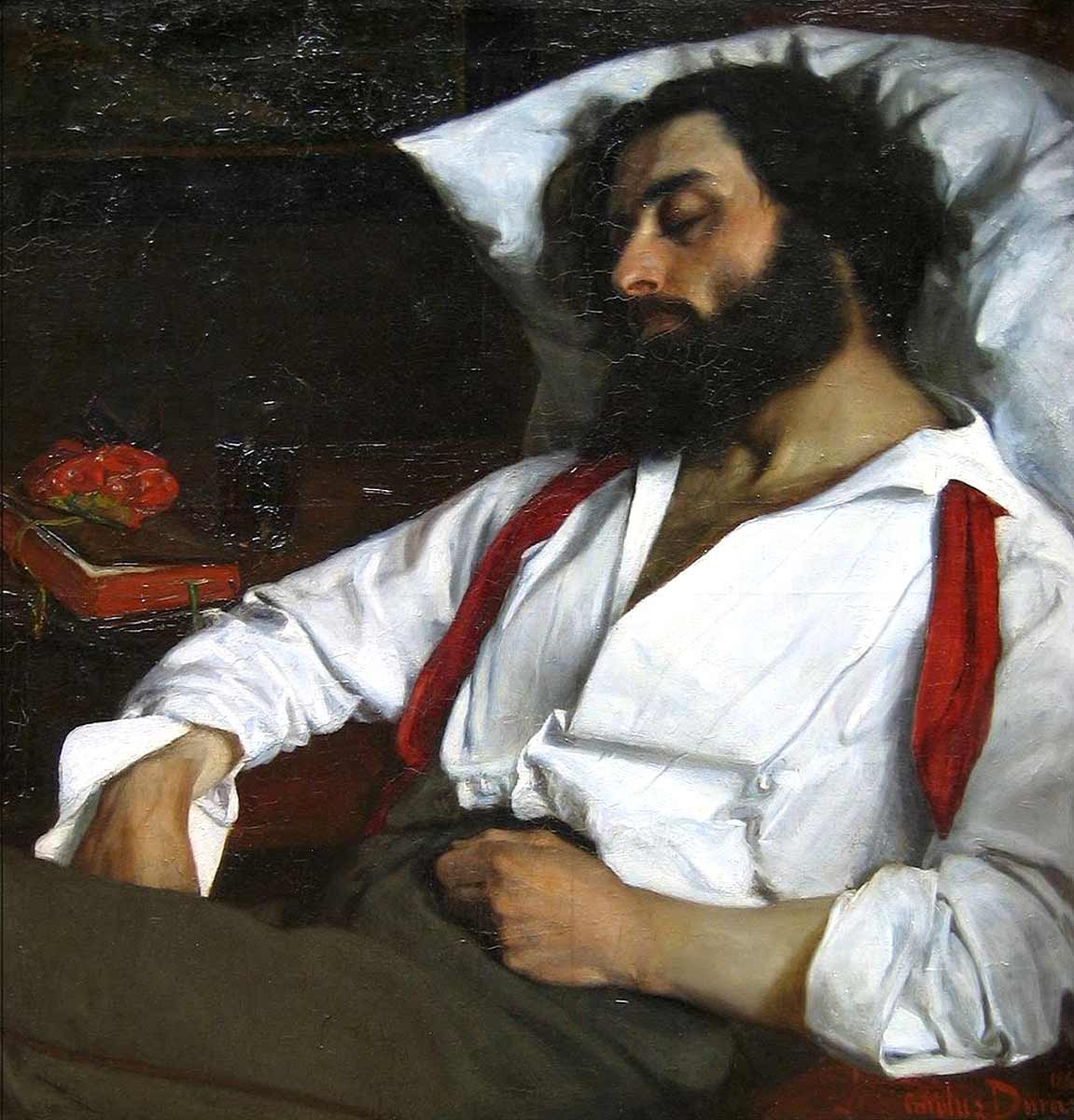
Today, the most well-known of Albert Camus’ works must be The Stranger. In this short novel (in English translation, it is a little over one hundred pages), the narrator and central character, Meursault, sleeps a lot.
When we first meet Meursault, he is traveling to a care home where his mother was, up until very recently, a resident. Meursault is on a bus, traveling across the North African desert. We learn that he slept for most of the journey. Meursault’s mother has died, and in accordance with custom, he and some of her closest friends will sit up all night in vigil next to her coffin. Despite drinking coffee, Meursault sleeps several times throughout the night.
The second chapter begins with a reference to sleep: “When I woke up, I understood why my boss hadn’t seemed very happy when I asked for two days off: today is Saturday.” Something to note here is that a realization about something accompanies Meursault’s awakening. In this case, it is why his boss was, in a way, upset with him.
That day, Meursault goes to the beach and meets Marie Cardona, a woman who used to work in his office. They swim together, then fall asleep in the sun.
On Monday, Meursault goes back to work. He drinks too much wine at lunchtime and needs to go home to sleep it off. It is when he returns home after work that day that he agrees to have dinner with his neighbor Raymond, which sets the plot of the novel in motion.
On the day of the murder that leads into the second half of the novel, Meursault has difficulty waking up. Marie needs to call his name and shake him several times to rouse him.
Sleep in Part Two of The Stranger
The first chapter of the second half of The Stranger takes place after Meursault’s arrest for murder. He is surprised to be asked about his feelings during his mother’s funeral. He says he was tired and sleepy and not really aware of what was happening that day.
Meursault sleeps sixteen to eighteen hours a day. Interestingly, after Meursault describes his sleeping habits, he mentions a newspaper clipping found in his cell. It concerns the story of a man who returns to his family home after several years away and is murdered by his mother and sister, who do not recognize him. This is the plot of Camus’ play The Misunderstanding, which, as we shall see, sleep plays a large part.
After Meursault’s trial, in which he is found guilty of murder and sentenced to death, he is visited in his cell by the prison chaplain. They discuss Meursault’s crime and his view on life, during which Meursault becomes angry and explodes in rage. Afterward, he is exhausted and sleeps for a long while. When he awakes, he experiences a revelation about the meaning of life.
Sleep in The Misunderstanding and Caligula
We have already mentioned Camus’ The Misunderstanding. In the play, Jan returns to his family home, a hotel in central Europe, after making his fortune. His mother and sister do not recognize him, and they murder him, taking him for an anonymous rich stranger.
Unbeknownst to him, Jan’s sister Martha and his mother routinely drug and then murder their affluent guests. Like all previous guests, Jan, who keeps his identity a secret, is drugged with a spiked cup of tea and, when soundly asleep, is thrown into a river and left to drown.
Of particular interest to us, the mother in the play frequently mentions her tiredness. It is only when she discovers Jan’s true identity that she “wakes up” to a revelation about life and the human condition: that there is value in the world, a mother’s love for her son.
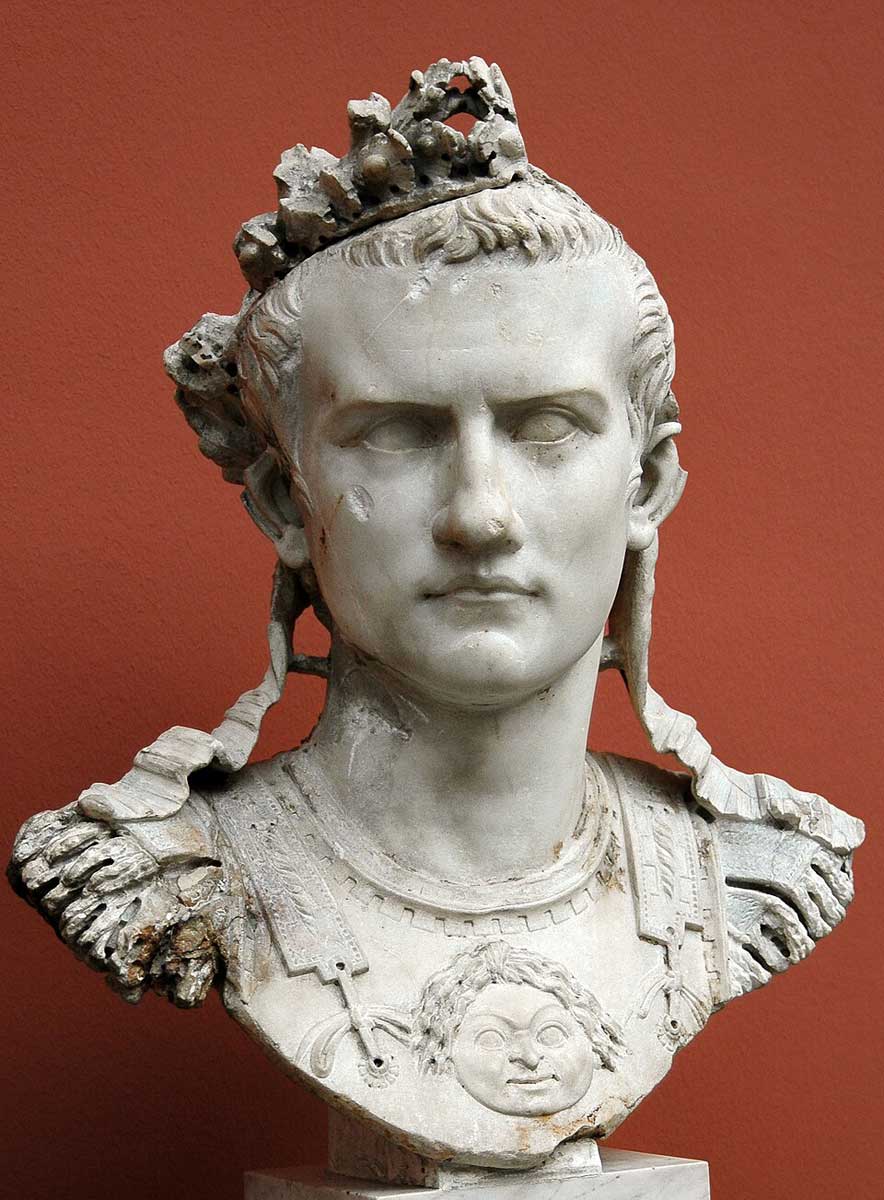
Caligula begins with a search for the eponymous Roman emperor who is missing. His sister and lover, Drusilla, is dead. When Caligula appears, he has been awake for days and has experienced a revelation about life and the human condition: “People die, and they are not happy.” Later in the play, Caligula’s lover, Caesonia, says that he sleeps only two hours a night.
The Plague: A City of People Asleep on Their Feet

The Plague takes place in Oran, Algeria. Camus characterizes the city as a place that induces sleep. When we first meet Dr. Rieux, the man later revealed as the narrator of the story, we see his sick wife sleeping. She is shortly sent away to a sanatorium. When she leaves, Camus explicitly mentions that she is installed in the sleeping car of the train.
After the plague strikes, Camus describes the people of Oran finding themselves “hoping for nothing more than the sleep of plague.” He then goes on to describe habituation to the conditions of the plague.
The city is under quarantine, with no one allowed in or out. Anyone outside of the city at the time quarantine was declared is separated from their family and friends until it is lifted (and no one knows when that will be). In addition, there is the constant threat of painful death; everywhere, people are falling mortally ill, covered in painful buboes. Despite the tragedy and horror, people eventually get used to it and walk about in a stupor, as if asleep on their feet.
However, there are moments, ironically, usually in the middle of the night, when people wake from this kind of sleep and see their situation clearly. This is what Camus means by apparently healed wounds opening suddenly.
The novel ends with the warning that the plague is not gone but asleep and able to awaken at any time.
Sleep in the Stories of Exile and The Kingdom
In Exile and Kingdom, we see Camus’ interest in people who sleep communally and those who sleep alone. In The Adulterous Woman, we see this reflection: “But who can always sleep alone? Only men who are cut off from others by vocation or misfortune, men who lie down every evening with death.” Janine’s husband, Marcel, ends up sleeping alone while she creeps outside for her revelation.
Like Janine, D’Arrast in The Growing Stone has difficulty sleeping, and, like Marcel, he is excluded from the nighttime reverie.
In The Guest, Daru cannot sleep properly with his “Arab guest.” Here, Camus discusses the camaraderie among men who share sleeping quarters.
We can compare this with the Renegade and Jonas. In their stories, they end up sleeping alone in little cell-like places. Both of them are outsiders in their communities.
Camus returns to the idea of tiredness and fatigue. We saw this with the mother in The Misunderstanding and the sleepwalking population of Oran during the plague. In The Silent Men, Yvars is old and tired; his body experiences constant fatigue from manual labor. In the story, there is an ever-present theme of tiredness and old age.
Sleep in The Fall

When we meet Clamence in The Fall, it is in Amsterdam, sometime after a troubling incident in Paris.
The Fall is told as a kind of dialogue between Clamence and a stranger he meets in a bar. We never hear his interlocutor speak, but occasionally hear Clamence respond to things the man must be saying. Several times, as he is telling his story to his interlocutor, Clamence mentions that he is tired and cannot think clearly.
In his account of his old life and his discovery of what he calls “the judge-penitent,” Clamence often references sleep. For example, he refers to debauchery as a “prolonged sleep.” He twice mentions a man who slept on the floor every night in solidarity with a friend in prison. Later, Clamence asks his interlocutor if he would be prepared to sleep on the floor for him.
In the end, Clamence, the only man who knows what a judge-penitent is, wants to go outside while all of Amsterdam is asleep.
Conclusion on the Motif of Sleep (Sleep on It!)
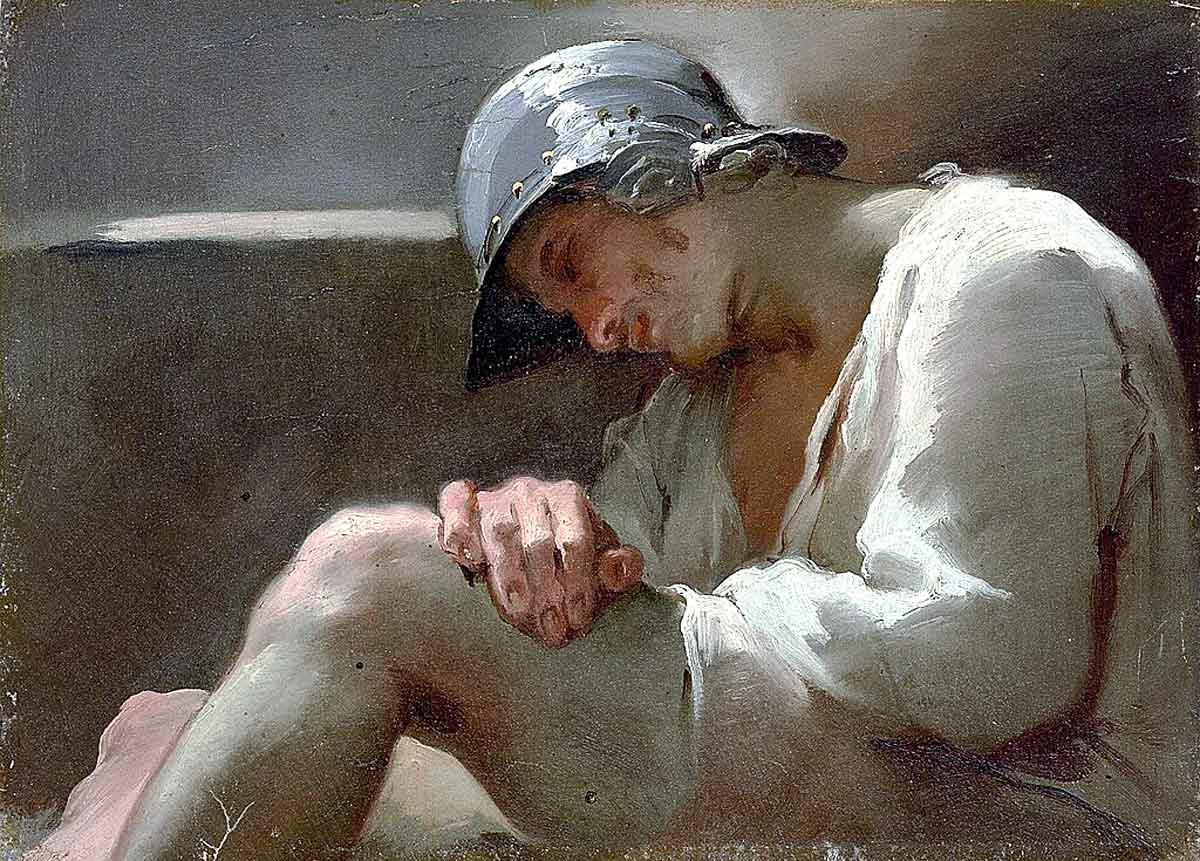
We have seen that sleep was a recurring motif for Camus. Again and again in his literary works, he returns to the ideas of tiredness and fatigue, sleep and its absence. Often, characters are seen to have spiritual ‘awakenings’ either after a lack of sleep or upon waking. In many of Camus’ works, the key events occur while his characters are in bed.
Sleep or being awake when one would usually be asleep is usually associated with loneliness and isolation in Camus’ works. Many of his characters illustrate Camus’s struggle between solitude and solidarity, as they are either shut away to sleep alone or unable to sleep communally with others.
Camus was deeply influenced by Nietzsche (in his essay on the absurd, The Myth of Sisyphus, he claimed that Nietzsche showed the way), and one of Nietzsche’s most profound ideas was of a demon revealing a great secret about life, one night, during a person’s loneliest of loneliness (Gay Science 341).
There is also the idea of people sleepwalking through their lives. They are awake in a literal sense but not in a spiritual sense. Camus uses this idea to portray nihilism and people who are tired of life.