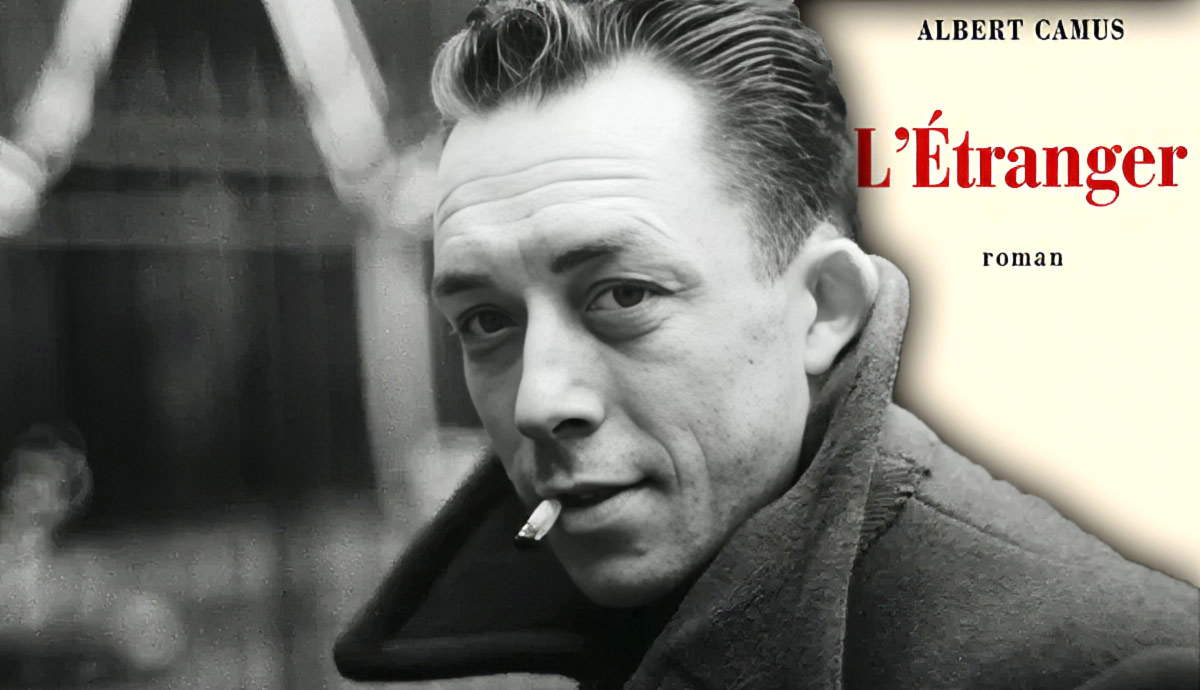

The Fall (1956) is one of Camus’ most ambiguous texts. The ending leaves readers with more questions than answers. For instance, we are left wondering who the narrator really is and was talking to. What we do know is that Camus wrote the novel as a damning critique of the moral narcissism dominating the French intellectual scene of which he was himself a member. Here, you will get a close reading and reveal which character represents a mirror held up to society by Camus.
Who Is Jean-Baptiste Clamence?
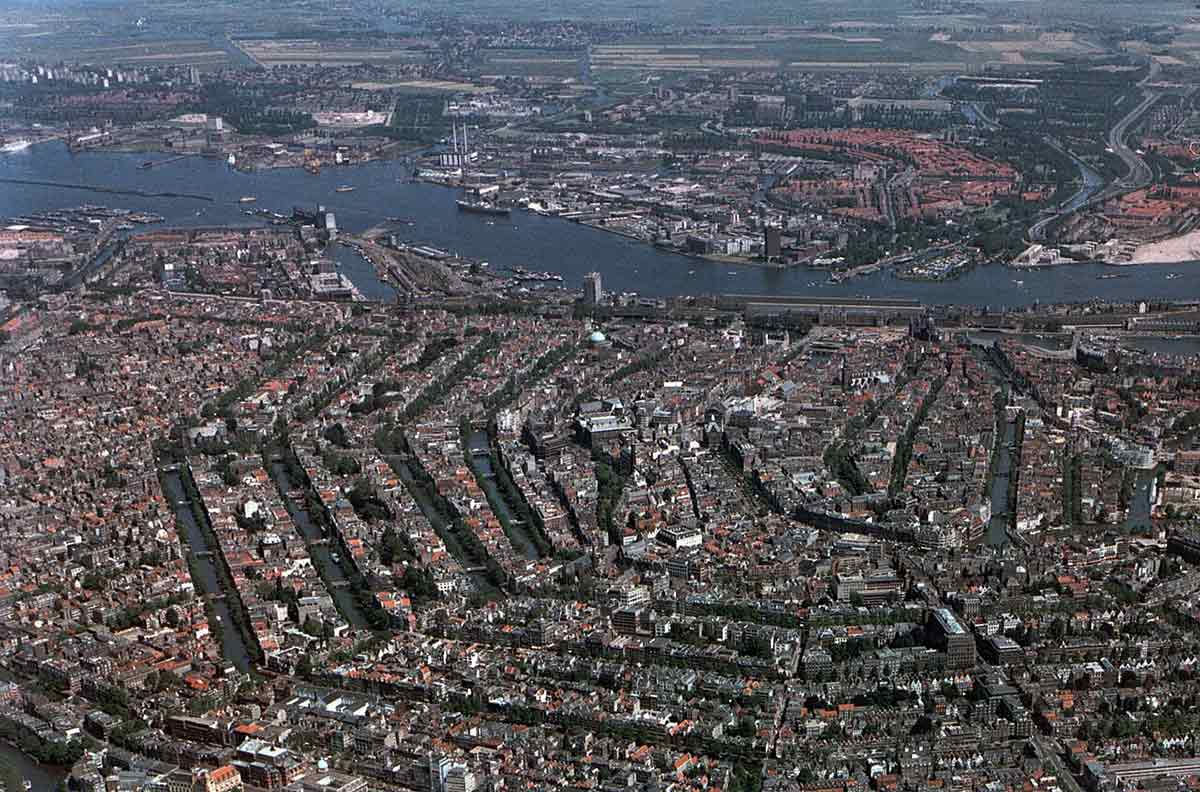
The Fall is written in the first person and set in Amsterdam. The first chapter introduces Jean-Baptiste Clamence. He is a fine talking educated man in his 40s, a former lawyer.
He strikes up a conversation with an unknown interlocutor. We never hear what this person says; instead, we must infer his side of the conversation from Clamence’s responses. We learn that he and Clamence are both French, are the same age, and are from similar middle-class backgrounds. This is interesting in itself as they are drinking in a place where people from their backgrounds would not be expected to drink.
The establishment is what we might call a dive bar. It’s a rough place frequented by pimps and low-lifes. Clamence’s interlocutor is only in Amsterdam for a few days. He will spend most of his time with Clamence, whom he meets by chance, listening to his story. After their first meeting, Clamence pays for the drinks and offers to show his new friend the way back to his hotel. They agreed to meet again the next day.
The First Meeting

When they next meet, Clamence tells his interlocutor all about his old life as a lawyer in Paris. We learn that in his professional and personal life, he would go out of his way to do good deeds. As a lawyer, he represented widows and orphans whenever possible. If any were poor, he would not charge a fee.
But he did not do this simply out of the goodness of his heart. Clamence admits that he loved being thought of (and thinking of himself as) a good person and doer of good deeds. As such, he would always keep an eye out for people in need. His heart would leap for joy if he spotted a blind person who needed help crossing the road or if someone needed a hand with their luggage.
As far as everyone else was concerned, Clamence was an all-around good guy. He thrived on this self-image. But that was in the past. Now, he works giving legal advice to the lowlifes in the Amsterdam dive bar. Enigmatically, he refers to himself as a “judge-penitent.” Both his interlocutor and we, the readers, will have to wait to find out what he means by this.
Adding to the mystery, Clamence mentions a strange experience he had in Paris. Out of nowhere and without being able to locate the source, he repeatedly hears the sound of laughter.
Clamence describes two other key events in his life that profoundly affected his self-image. The first involves a humiliating altercation in a busy street, and the second an unpleasant discovery in his love life. Let us take a closer look at both these events.
Road Rage Humiliation

The first event Clamence recounts to his interlocutor occurred during what we might today call a road-rage incident. An annoying man on a motorcycle breaks down at a set of traffic lights. Clamence, being Clamence, sees this as an opportunity to get out of his car and help.
However, this man doesn’t want any assistance and rudely tells him what he can do with his offer of help. Onlookers gather, and a man leaves the crowd to berate Clamence for supposedly attacking the motorcyclist. Other road users start honking their horns as the newcomer threatens Clamence. In the confusion, the motorcyclist gets his engine working and drives away. Distracted, Clamence is sucker-punched. He walks back to his car amid the honking of horns and meekly drives off. As he passes the man who hit him, Clamence hears himself being called “pathetic.”
What bothers Clamence is being hit and not being able to hit back. This is made worse by the presence of spectators. He daydreams of knocking out the man who punched him and of catching up with the motorcyclist and giving him a sound beating. These fantasies force Clamence to reassess his self-image.
Previously, he imagined how others must see him and thought of himself in the same way. Now he compares how others see him with his revised self-image. He becomes aware of the difference between one’s inner self and motivations, on the one hand, and outward pretense on the other.
Love Life Let Down
Clamence has little difficulty finding romantic partners. But it is not love, as we might imagine it, that he is looking for. While he is not seeking attachment or someone to love, he expects his partners to love him. Until a particular incident, he simply assumes that his current lover thinks him perfect, faultless to the core.
Then one day, he discovers that the lover has revealed his inadequacies to someone. He is stunned. He did not think it possible that she could find any fault with him. Previously, he spent no time worrying about what his lovers thought of him. In response, he devotes himself entirely to winning their hearts. Then he proceeds to abuse them. His idea is to become so awful to them that they should want nothing more to do with him, but be so in love with him that they are blind to his faults and awful behavior. When he succeeds, he moves on to the next woman.
This event, however, causes Clamence to reevaluate himself. He is not concerned with any moral repercussions of his behavior. Rather, he is forced to realize through his actions that (a) people can see fault in him and (b) he cares about what people think. Here we see again the conflict between Clamence’s inner self and how others see him. And, in addition, the conflict between his motivations for acting and his self-image.
Clamence next tells his interlocutor about a third event that had a huge impact on his life and would become a catalyst for his new life in Amsterdam.
The Woman on the Bridge

One night, as he walks home after spending the evening with a lover, Clamence crosses the Pont Royal bridge in Paris when he notices the young woman. She has her back to him, staring into the Seine. The next thing he hears is a splash and then a scream. He chooses not to look. For the next few days, he makes a point of not reading the newspapers.
This cowardice is completely contrary to his self-image and that which he projects to others. Everyone, including himself, would have expected him to dive into the river and attempt to save the suicidal woman. But, he did not. Worse, he kept his head down and pretended that nothing was happening.
Before Clamence reveals these incidents from his past, he tells his interlocutor that he has started to feel ill and asks if he minds going for a walk. Afterward, he asks to be helped home. Before parting company, they arranged to meet at 11 am the next day in the bar. From there, they will visit the island of Marken and see the Zuider Zee, during which Clamence will continue his story.
The Second Meeting
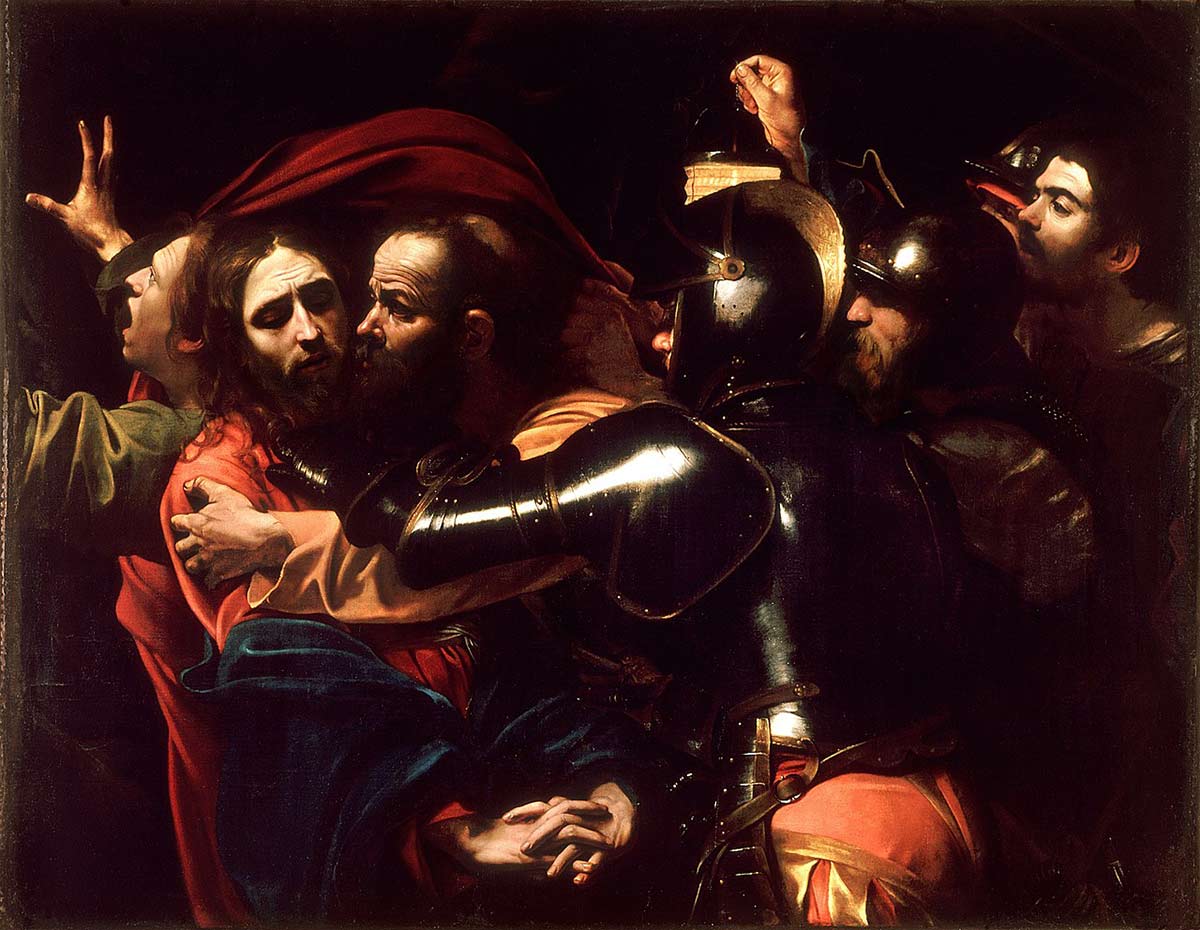
Clamence picks up from where he left off and tells his new friend about his relationships with old friends. Due to his newfound awareness of his inner self, he now sees the falseness and pretense that were fueling these friendships. He even contemplates suicide to test his friendships, only to realize that this would only provide those who know him a chance to playact their emotions, just like he had done.
He comes to the lucid realization that everyone is always judging everyone else.
In his newfound lucidity, Clamence believes he has discovered a disturbing truth about human existence. Happiness is only forgiven if shared, but to find happiness, one should not be concerned with others. There seems to be no way out of the paradox.
More realizations come to him. For example, he realizes that everyone wants to believe they are unique because there is something special about them that is unearned. People want to be praised for things they acquire by chance or forgiven for things that were not under their control. In other words, it is simply because of who they were destined to be at birth that has the most significant impact on their lives. This relates to the absurd and the yearning for meaning in a meaningless universe.
The Absurd
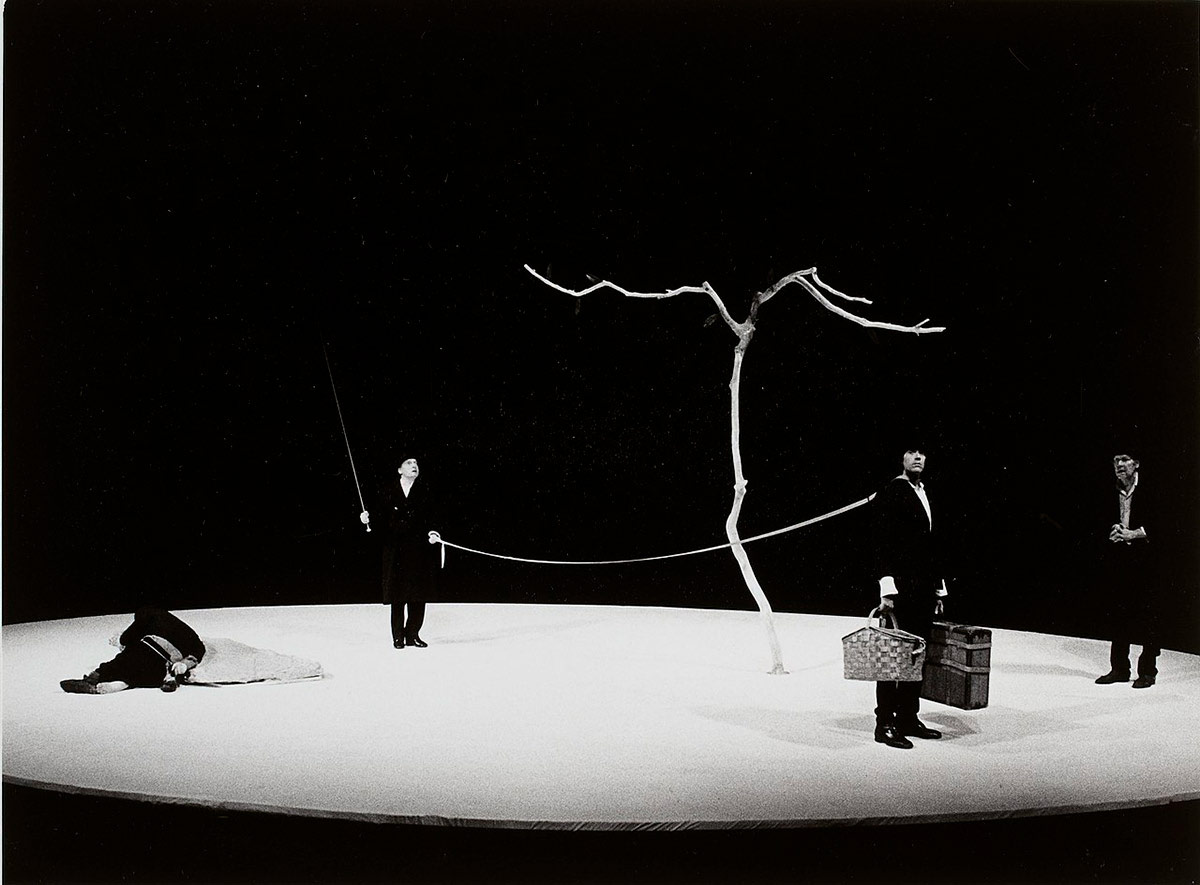
Forced to examine his life, Clamence realizes he had never taken anything very seriously before. Life, for him, was treated like a game which he played to the best of his ability. Here we can see that Clamence is both similar and very different from one of Camus’ previous characters, Meursault from The Stranger.
For Camus, we experience the absurd when we are exposed to a clash between the seriousness with which we necessarily have to treat life and the realization that life is meaningless. Life is meaningless not in the sense that we cannot live meaningful lives, but because it does not come with a built-in meaning.
During the conversation, Clamence hints at something he has at home that the police are looking for. What this is will be revealed on the final day.
Continuing his account, Clamence talks about how he wanted people to look at him and see on the outside what he sees on the inside. So he starts acting in a way to change people’s opinions of him. On one occasion, he asks a restaurant manager to get rid of a beggar whose presence is putting him off his lobster. Contrary to expectations, he composes treatises in favor of the death sentence. He even considers spitting in the faces of blind people, realizing then how much he resented them all along. However, the opinions of him remain unchanged. People are too busy thinking about themselves to pay close attention to others.
Clamence tells his interlocutor, as they prepare to board the boat home from the island, that he wants to explain what he means by a “judge-penitent” but first must talk about the “little ease.”
Evening and the “Little Ease”
Clamence begins by telling his new friend about how, exhausted by trying to change people’s opinions of him, he threw himself into romances with women. He met one woman whose idea of love came from all the romance magazines she would avidly read. But the relationship did not last. She tried to starve herself to death before running off with a man who more closely resembled those she’d read about in magazines.
Having failed at romantic love, Clamence tried debauchery and embarked on a life of hard drinking and womanizing. This too failed when his body could not cope with all the abuse he subjected it to.
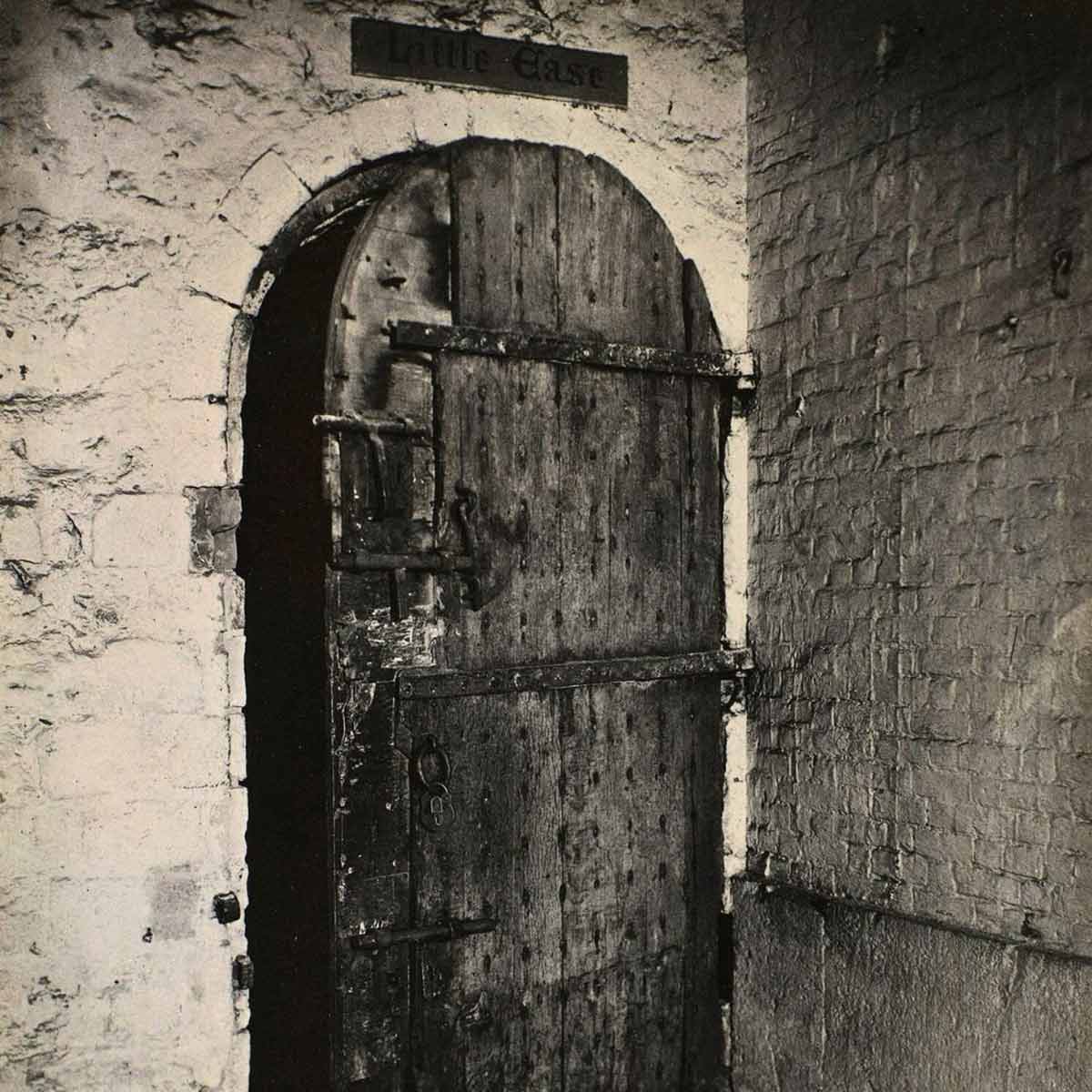
What he was looking for were distractions from the reality of life as he sees it. But, as he discovered, the human condition is inescapable. For him, life is marred by a perpetual sense of guilt, but he does not know what he is guilty of. To illustrate this idea, he describes a medieval punishment known as the “little ease.”
Essentially, this was a prison cell in which prisoners could be kept in a constant state of discomfort. The ceiling was too low for anyone inside to stand up fully, and the walls were too close together for them to stretch out their legs when lying down. According to Clamence, the agonizing cramp of not being able to fully extend their limbs eventually makes the person inside the “little ease” feel their guilt. The idea of innocence, for them, becomes only the joy of being able to fully stretch out.
Clamence’s point is that human beings are made to feel guilt simply by life itself and the human condition. We can never metaphorically “stretch out our limbs” and experience full freedom. So far, the best we can do is try to run away from our lack of freedom.
This is what Clamence did when he lived a life oblivious to others, when he attempted to lose himself in a romance, and again in his short-lived life of debauchery. However, he says he has now found a solution. He asks the interlocutor to visit him at home the next day.
Visit at Clamence’s Home

Clamence is in bed when the interlocutor arrives. One of the first things he tells his new friend is that a lot of what he has said over the past few days is not strictly speaking true. But, he asks, does it really matter if the facts are accurate if the story reveals something true anyway?
We will discover in this final chapter that Jean-Baptiste Clamence is not even his real name. He admits that his intention is not simply to pass the time with someone and tell his story, but to have a plan in mind that he has kept hidden until now.
We also find out that his interlocutor is himself a Parisian lawyer. This is significant because Clamence says he tailors his story to fit his audience and seeks to become a mirror to whomever he is speaking to. If the idea is that the interlocutor sees himself in Clamence’s story, a mirror image in fact, then it may well be that Clamence’s claim to have once been a Parisian lawyer may be entirely fictional. This revelation ought to put us, readers, on our guard.
In a densely packed final chapter, Camus crams in three key ideas: Clamence as a failed “pope”; the theft of the Van Eyck painting, “The Just Judges”; and the idea of being a “judge-penitent.” Let us take a look at each of these in turn.
Popes, Just Judges, and Judge-Penitents

He tells a story from his past (or makes one up) about his experiences in a prison camp in North Africa during the war. One of his fellow prisoners, disillusioned with the Catholic Church due to its support for Italian fascism, decides they need a new pope.
Clamence is elected and takes the role seriously. One day, terribly thirsty in the hot desert prison, he drinks water he was supposed to give to a dying man. He rationalizes his act and forgives himself. In doing so, he rises above the depth to which he has sunk. The lesson Clamence learns from this is that we should forgive popes, but only because that will make us feel superior to them.
The painting mentioned in The Fall is a real-life painting that was stolen from a Cathedral in Ghent. Clamence shows the painting to his interlocutor and explains that after it was stolen, it ended up at the bar where they first met. Traded for a drink, it used to hang on the wall until Clamence told the owner what he actually had on display. He was allowed to take it home for safekeeping. The interlocutor is given various reasons why Clamence enjoys keeping the painting. One of the more interesting reasons is that he relishes the idea that a copy of the painting is on display at the Cathedral in place of the stolen original. This means that visitors are admiring false judges, which he thinks is a good metaphor for life.
Finally, Clamence reveals what a “judge-penitent being” is. Put simply, it is the act of decrying oneself for all one’s mistakes and misdeeds, but doing so in such a way as to hold up a mirror to society; to show one’s audience they too are guilty of the same things. At this point, the penitent becomes the judge. Clamence has tailored his story exactly so that his interlocutor will see himself in what he has heard. He will then voluntarily return to Clamence in order to be judged.
Clamence is a perfectly crafted portrayal of the kind of moral narcissism that leads people to denounce themselves and everyone else for supposedly unforgivable sins, but at the same time, placing themselves above others as authority figures on the subject.
Camus’ target included people like Jean-Paul Sartre and other middle-class intellectuals who turned a blind eye to workers suffering in Soviet prison camps, whilst decrying in the name of the workers the very system that privileges them over working men and women.
Clamence wants to shed his guilt over being born into an easy existence and to alleviate his dismay at the apparent inauthenticity of everyone around him. However, he does so by attempting to start a movement in which everyone in the world is made to feel exactly like he does and think exactly like he does. This was Camus’ indictment of the narcissism that blighted the intellectual scene. We are left with two questions: was he correct, and if so, is this still the case today?