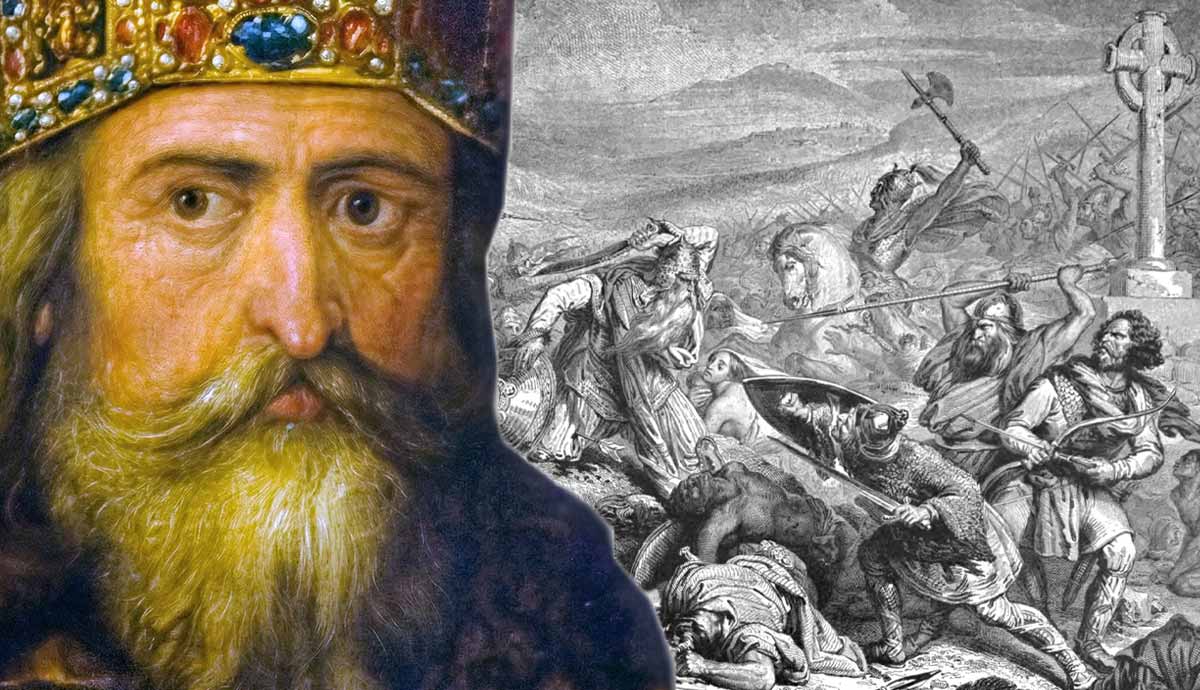
Between the years 772 and 804, the Frankish King Charles, better known as Charlemagne, waged war against his northeastern neighbors, the Saxons. In the preceding centuries, the Franks and Saxons had been tribes migrating and fighting together for or against Rome. Now their paths had diverged. The Saxons were pagans with tribal leaders, while the Franks were Christians with a charismatic, strong king. By the late 8th century, war was inevitable. This conflict would result in the eventual absorption of most of Saxony into Francia, the decline of paganism, and the migration of Saxons across the kingdom.
Map and Timeline of the Saxon Wars

| Year(s) | Key Events |
| 772 | Charlemagne invades Saxony, captures Castle Eresburg, and burns the sacred pagan Irminsul pillar. |
| 773 | While Charlemagne besieges Pavia in Italy, the Saxons raid Francia and burn Castle Buraburg. |
| 774 | Charlemagne responds by dispatching four military detachments into Saxony. |
| 775 |
Assembling at Düren, Charlemagne takes Castle Syburg, restores Eresburg, defeats Saxons at Braunsberg (River Weser), takes hostages from Eastphalian (Hassi) and Angrian (Bruno) lords, and subdues Westphalians at Lübbecke.
|
| 776 |
Saxons attack Eresburg and Syburg. Frankish forces repel them to the River Lippe. Charlemagne marches from Worms, forces surrender, and introduces forced Christian baptism for assimilation.
|
| 777 |
Charlemagne holds a general assembly at his new palace in Paderborn. Many Saxons convert and accept baptism, but Saxon rebel leader Widukind refuses and flees to the Danes.
|
| 778 |
While Charlemagne campaigns against Arabs in Umayyad Spain, Widukind returns to burn Frankish churches and monasteries. Charlemagne races back and defeats the rebels near the River Eder.
|
| 779 | Charlemagne defeats Saxon resistance near Bocholt and advances into Westphalia, securing hostages beyond the River Weser. |
| 780–781 | Two years of relative peace as Saxon lords submit to baptism and swear fealty. |
| 782 |
Widukind launches a new rebellion and nearly annihilates a Frankish army. Charlemagne rushes to the Aller and Weser rivers, defeats the rebels, and orders the execution (beheading) of 4,500 Saxon captives.
|
| 784–785 | Charlemagne winters at Eresburg to continuously rout Saxon rebels. Widukind surrenders, swears fealty, and receives baptism. |
| 789 | Subdued Saxons are integrated into the empire, participating alongside Frankish forces in a campaign against the Slavs. |
| 794 | Saxons gather in revolt at Sindfeld but surrender without fighting after being surrounded by two Frankish armies. |
| 798 |
Charlemagne devastates the region between the Elbe and Weser rivers to crush a revolt, effectively ending his major military engagements in Saxony.
|
| 804 | Marks the final integration and absorption of Saxony into the Frankish kingdom after 32 years of continuous conflict. |
The Path to Charlemagne’s Wars Against the Saxons

To fully understand the wars between Charlemagne and the Saxons, it is necessary to revisit the time of his grandfather. While religion played an important role in the conflict, it was primarily a territorial war. Charles Martel (Martel means “the hammer”) first engaged the Saxons in AD 718 because three years previously they had attacked Austrasia, one of Charles’ provinces. Until that time, the Saxons and the House of Charles, known as the Carolingians, had been at peace. But the Saxons seem to have considered Charles Martel to be weaker than his father Pepin II, so they took advantage of the change in power. Charles was, in fact, in prison during their raid and waited until his position had improved to take revenge.
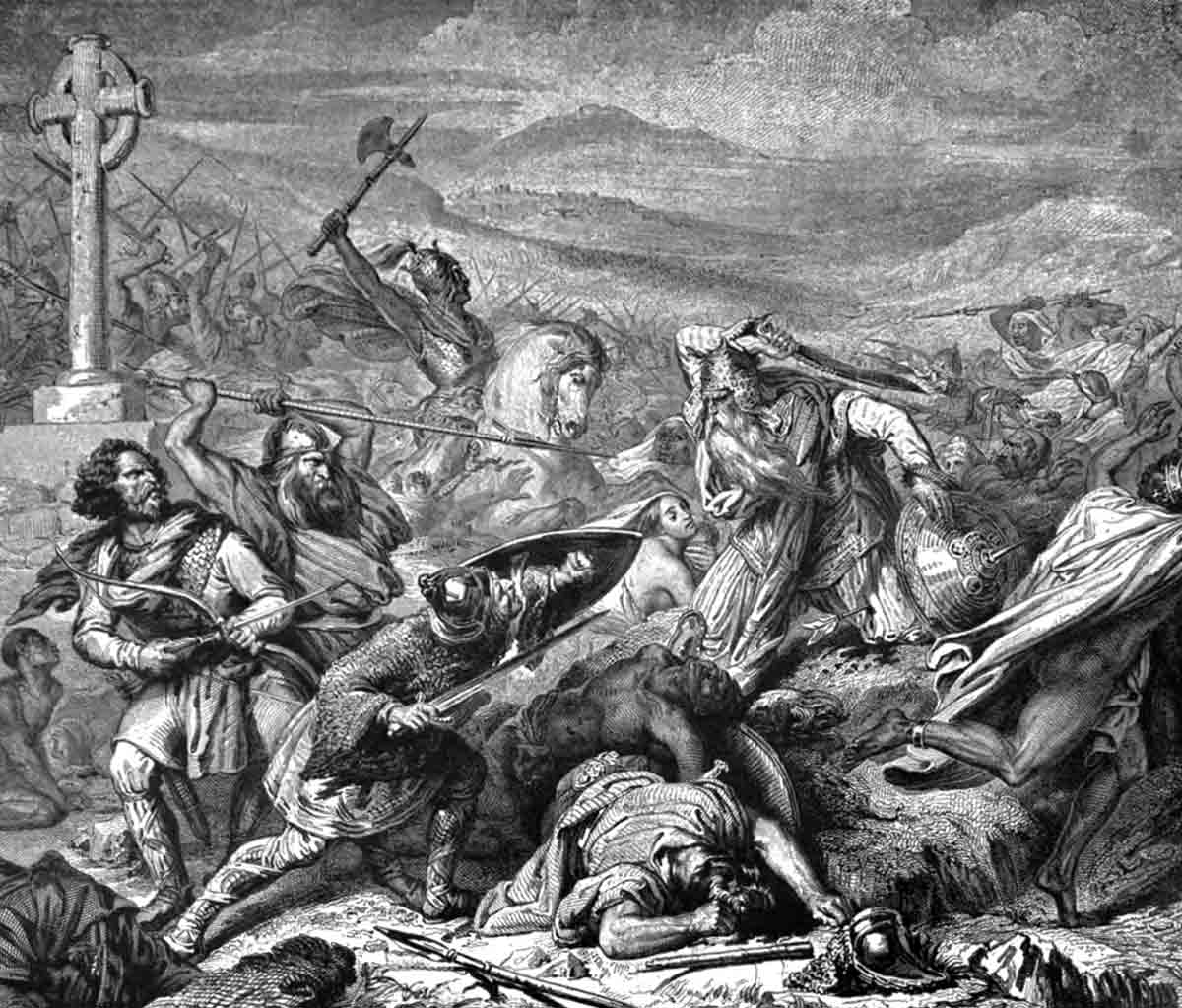
While Charles was sick in 723, the Saxons once again took the initiative and invaded Francia. The following year, Charles Martel led a large force to punish them. The sources record little about this time, but it is clear that the peace that Charles formed did not last long after his death.
After Charles Martel died in 741, the war continued sporadically through Pepin III’s (also known as “The Short”) reign until 758, after which he secured peace with the Saxons. After many campaigns in Saxony, Pepin made the Saxons surrender, promising a tribute of 300 horses annually. After 758, the troublesome Saxons would not become a problem again until 772, when Charlemagne began his conquest of the provinces of Saxony.
The Sacred Tree and the Spark of Holy War

The border between Francia and Saxony primarily ran along a plain with small sections of mountains and forests. This border created tension between the villages closest to the border. Einhard (a close friend and biographer of Charlemagne) wrote that raids were common in both directions. Neither he nor the Royal Frankish Annals (a semi-official yearly chronicle from the 740s to the 810s) mention who fired the first shot, but what we do know is that Charlemagne was ready to channel his namesake and bring the hammer.
He started in 772 by invading Saxony, taking Castle Eresburg, and burning the Irminsul, a sacred tree trunk or pillar representing the axis of the cosmos and an important Saxon religious artifact. Charlemagne was so confident that this would deter any future attacks that in 773-774, he led a campaign against the Lombards, besieging their capital, Pavia, and installing himself as their king.
However, rather than subdue the Saxons, this desecration enraged them. In 773, a Saxon army invaded Francia and attacked the castle of Buraburg, burning homes and striking fear into the hearts of the locals. Einhard would later add, “never was there a war more prolonged nor crueller than this, nor one that required greater efforts on the part of the Frankish people.”

In retaliation, Charlemagne sent four detachments into Saxony in 774. The following year, Charlemagne assembled in Duren and launched his invasion of Saxony. He captured Castle Syburg and restored Castle Eresburg, which the rebels had attacked during the last Saxon incursion. Charlemagne continued his invasion until he reached the bank of the Weser near Braunsberg, where he encountered a Saxon force. A battle ensued, and the Franks, most likely due to superior numbers and weapons, defeated the Saxons.
After the battle, Charlemagne divided his army and marched his men toward the River Oker. There, Hassi, an Austreleudi or Eastphalian Saxon lord, gave hostages and swore oaths of fealty to Charlemagne. More Angrian Saxons, under Bruno, also gave hostages. After taking these hostages, Charlemagne went back to the other part of his army, still defending the River Weser.
Near Lubbecke, the Franks and Westphalian Saxons fought another battle where the Saxons again lost and were forced to give Charlemagne hostages. An addendum to the Royal Frankish Annals adds that before Charlemagne returned, a group of Saxons was able to enter the camp at Lubbecke and slaughter many soldiers while they were sleeping.
Widukind and the Rise of Saxon Resistance

While campaigning in Saxony, Charlemagne heard that the Lombard leader Hrodgaud was inciting Italy to rebellion. Once again, thinking that he had subdued Saxony, and with winter approaching, thus ending the campaigning season for 775, Charlemagne waited until the following year to handle him.
In 776, Charlemagne entered Italy and killed Hrodgaud before Easter. Alas for Charlemagne, the Saxons took this opportunity to attack Castle Eresburg and destroy its walls. They sought to destroy Castle Syburg as well, but they could not enter as they had done previously, and their attempts at siegecraft proved futile. As the Saxons labored to destroy Syburg, the Franks regained their courage and launched an attack. They drove the Saxons back to the River Lippe and slaughtered many of them. Once Charlemagne heard of the Saxon attack, he gathered his forces in Worms and launched an attack.

The Royal Frankish Annals suggest that Charlemagne’s reactions were becoming increasingly aggressive. Charlemagne’s anger burned brighter than before, and he drove the Saxons back, instilling great terror into their hearts. They surrendered, handed over hostages, and converted to Christianity. Conversion was a new stipulation most likely to encourage assimilation into the empire.
No battles took place in 777, but Charlemagne did host an assembly in his newly constructed palace at Paderborn, which lay in the heart of Saxony. There, many Saxons came to be baptized, creating a temporary calm.
For a third time, Charlemagne thought that the Saxons would no longer be a bother. Because of this, he led a campaign over the Pyrenees Mountains into Umayyad Spain to wage war against the Arabs. While he was gone, Widukind, the principal leader of the Saxon resistance and champion of Saxon pagan independence, led a rebellion against the Franks, burning churches and monasteries. As soon as Charlemagne heard of this breach of loyalty, he raced back to Saxony and met an army near the River Eder. Once again, he was victorious, though he took no hostages. Summer was quickly turning to fall, forcing the king to return to Francia for the winter.
The Massacre of Verden and Retaliatory Terror

In 779, Charlemagne assembled in Duren and launched another Saxon campaign. This time, the Saxons put up resistance near Bocholt, but once again, Charlemagne put the Saxons to flight. Being early in the year, Charlemagne was able to continue deeper into Saxony, moving into Westphalia, where he received hostages from those on the other side of the River Weser. This battle concluded his campaign for that year. The years 780-781 proved to be peaceful years with Saxon lords submitting to baptism and fealty.

The year 782 proved to be a turning point in the Saxon wars. Not because the war would turn in either the Saxons’ or the Franks’ favor, but because King Charlemagne would unleash his harshest measures to subdue his most significant thorn. The year began well with the king assembling Saxons, Avars, and Norsemen. The only face that was wanting was Widukind. When the assembly was over and Charlemagne had headed home, Widukind showed his treachery and launched another rebellion in Saxony. In fact, Charlemagne had already sent an army to deal with some unruly Slavs. However, they turned aside to deal with Widukind, and in the engagement with Widukind, he nearly annihilated the Frankish army. This unleashed the full wrath of Charlemagne.
Charlemagne rushed into Saxony and met the rebels near the Aller and Weser rivers. Though Widukind was not present, the Saxons met Charlemagne, and he killed many in battle. He took many captives, and Charlemagne ordered 4,500 Saxons beheaded for their treachery.
Widukind’s Submission and the Fall of Pagan Saxony

In the winter of 784-785, Charlemagne did not return to Francia but instead stayed in Eresburg, where he summoned his wife and children. From there, he continually engaged the Saxon rebels and eventually routed them. By the end of the winter season, Widukind entered Charlemagne’s presence and submitted to baptism, swearing fealty.
From this point on, the Saxons were part of the Frankish kingdom. They participated in wars with the Franks, such as in 789, when they led a campaign against the Slavs. However, the Saxons would rise again. In 794, a group of Saxons gathered in Sindfeld against two Frankish armies. Charlemagne led one, and the Chronicler did not mention who led the other. Once they knew that they were outnumbered and surrounded, the Saxons surrendered and swore oaths.
Another revolt occurred in 798, and Charlemagne caused much destruction between the Elbe and the Weser. Thus ended the Saxon Wars for Charlemagne. For the rest of Charlemagne’s life, the Saxons remained pacified, and Saxon lords became increasingly integrated in Francia.