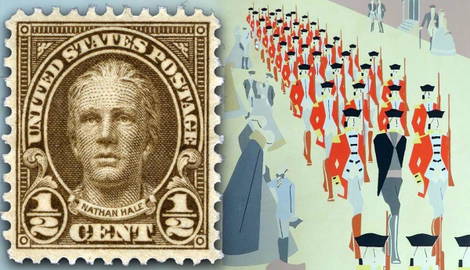

To create an independent nation built on the principles of life, liberty, and the pursuit of happiness, the American Revolution demanded committed participation on numerous fronts. For teacher Nathan Hale, this calling led him to join the Continental Army and volunteer for a dangerous intelligence collection mission behind British lines. While Hale could not have known that his devotion to the Patriot cause would result in his execution by hanging, his final words continue to serve as an inspiration for those who defend American ideals.
Early Life and Education
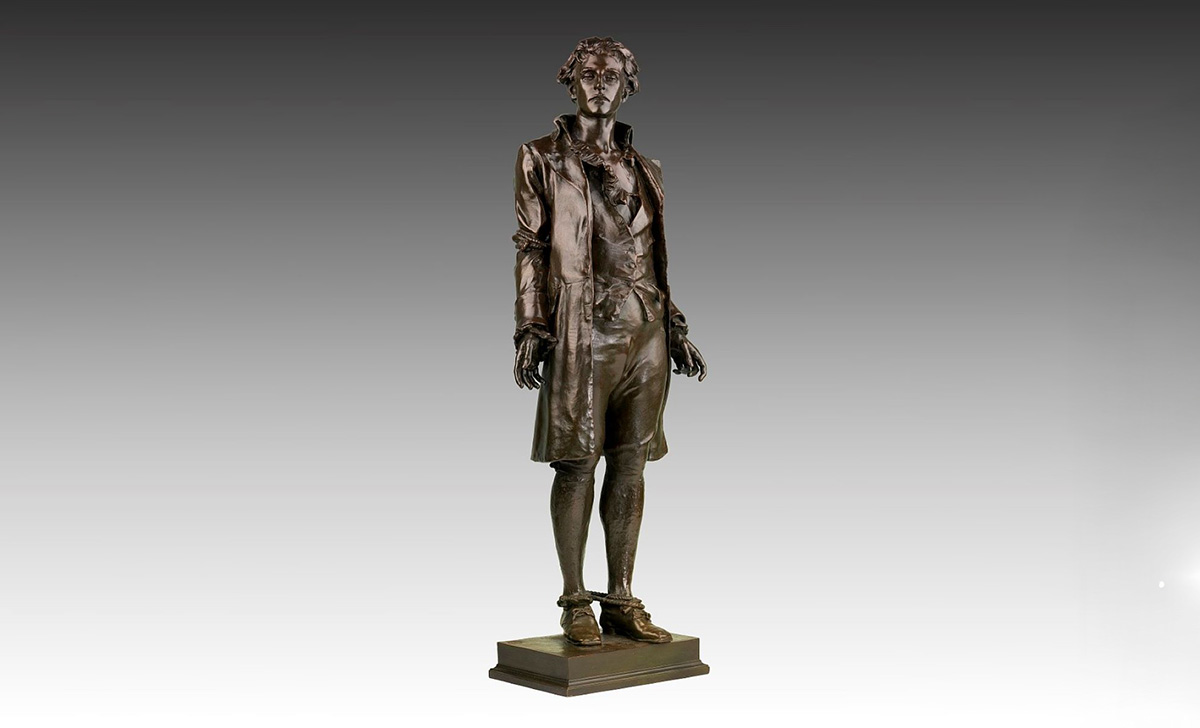
Born in Coventry, Connecticut in 1755, Nathan Hale was raised by Puritan parents that imparted the values of education, diligence, and religion on their twelve children. At just 14 years of age, Hale was sent to study at Yale College with his older brother, Enoch. There, he was an active member of the Linonian Society, a respected debate and literary association that shaped some of the most influential thinkers of early American circles that continues to operate today. The ambitious future soldier excelled in various collegiate subjects and discussion topics not commonly taught in the American colonies including mathematics, astrology, and the morality of slavery. This ability to think critically aided Hale tremendously during the imminent conflict with the British.
Graduating with honors at 18 years-old in 1773, Hale took up teaching to pass on his passion for knowledge to children in East Haddam and New London. Surrounded by ministers in both his family and community, Hale’s faith guided his life decisions, and this likely inspired his intense patriotism and desire for freedom from British colonial rule. While enthusiastic about teaching, Hale did not pursue the profession long before revolutionary causes pulled him towards enlisting in the Connecticut militia two years later. The American Revolutionary War would prove a family affair, and five of Hale’s brothers joined him in fighting for independence.
Countdown to War
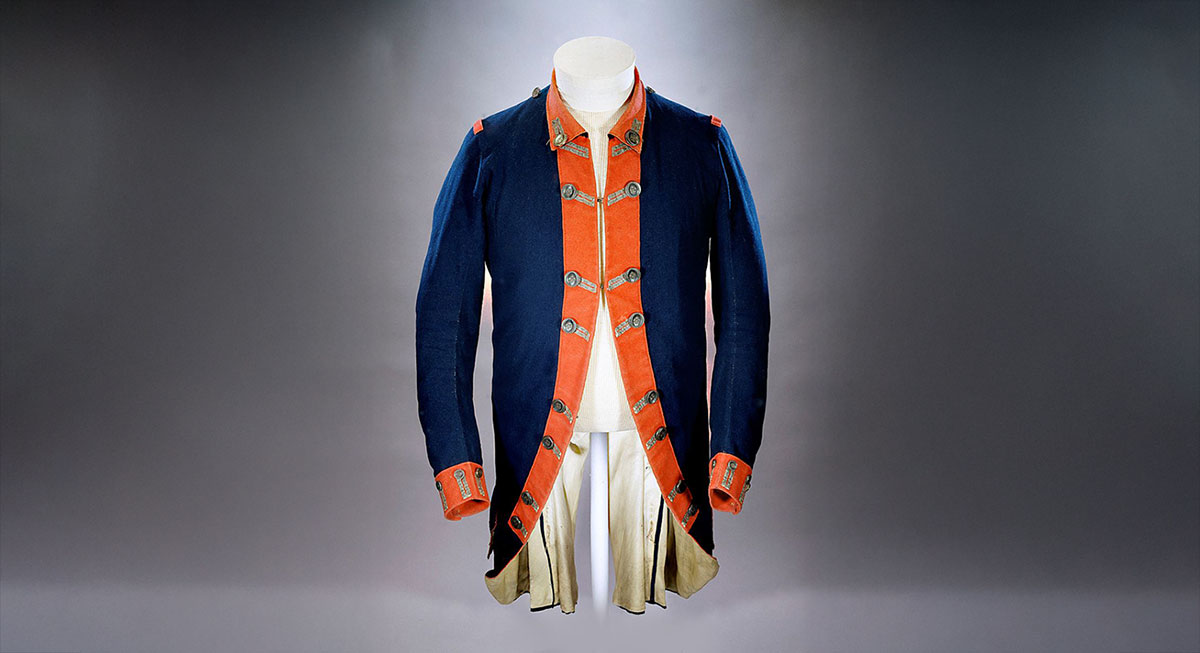
Supporting independence was not a spontaneous decision for Hale. In fact, Connecticut and the broader New England region was the primary target of heavy-handed British actions that inspired locals to join armed patriot resistance. When Hale was a child, the British Parliament passed the 1765 Stamp Act and 1767 Townshend Act, prompting fierce opposition in the northern state by groups such as the Sons of Liberty.
American frustrations at being compelled to pay taxes without political representation in Parliament were amplified by events neighboring Massachusetts. In 1770, five unarmed colonists were murdered by British soldiers in the Boston Massacre. The incident inspired heightened anti-British sentiment throughout the colonies, especially in the northeast.
Three years later, Bostonians protested the Tea Act in the Boston Tea Party. Dressing up as Native Americans, radical patriots dumped a shipment’s worth of tea into the Boston Harbor, and the ensuing British crackdown raised tensions to a boiling point. The following year, Britain imposed the so-called Intolerable Acts, punishing Massachusetts by suspending the colony’s charter and imposing direct rule. Meanwhile, nearby supporters, including Hale, prepared for the possibility of war as Connecticut towns rallied to support their neighbor.
In the year before the formal outbreak of war, Connecticut sent representatives to the First Continental Congress in Philadelphia, expressing prolonged and unanswered grievances to their oppressors. Soon, the “shot heard round the world” marked the beginning of the American Revolutionary War, drawing Hale into the conflict that would end his life.
The American Revolutionary War
When the American Revolutionary War broke out in April 1775 with the Battles of Lexington and Concord in Massachusetts, Connecticut militiamen were among the soldiers who responded to the skirmishes. Connecticut troops achieved the first victory of the war at Concord, cutting off the British on their way to confiscate colonial military supplies. Five of Hale’s brothers were among them, and Hale himself joined shortly thereafter. After the battles, the Redcoats retreated to Boston, where Hale would witness his first significant action of the Revolutionary War.
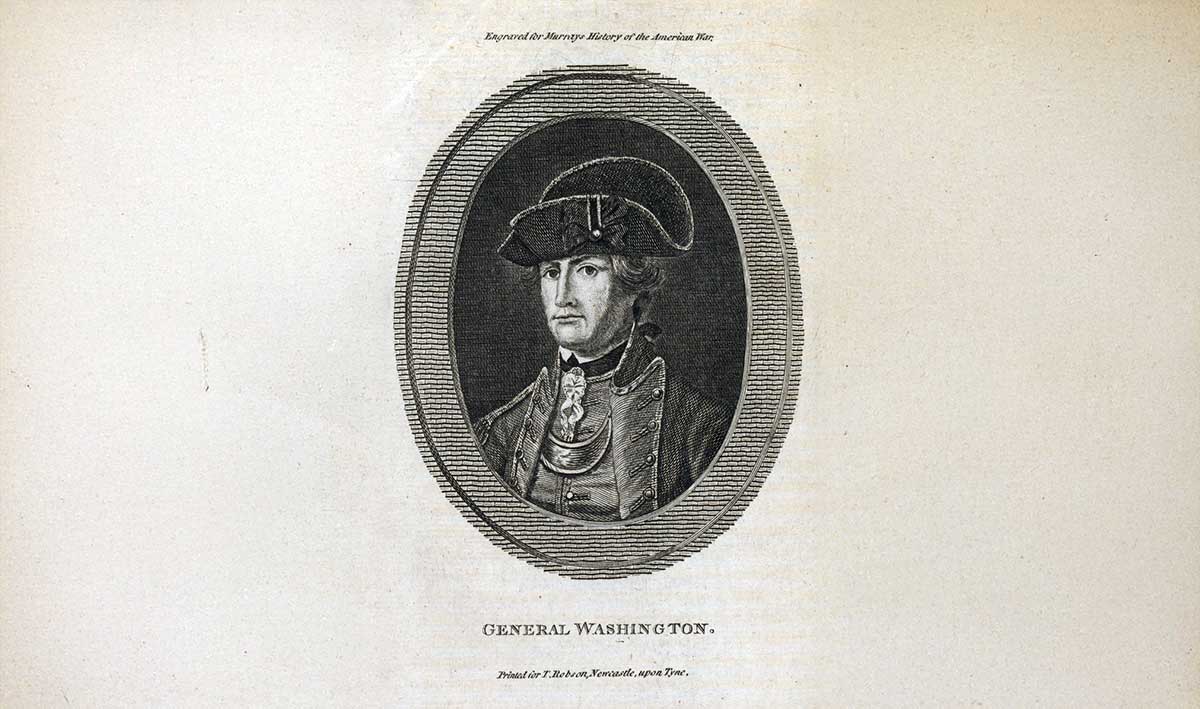
Due to his prestigious college education, Hale was appointed as a first lieutenant when he volunteered to serve in the Continental Army. He saw action in the months-long Siege of Boston, during which revolutionary troops blocked British movements out of the city and restricted incoming enemy supplies under the command of future president and general George Washington.
After fortifying the Dorchester Heights overlooking the harbor with artillery brought to Boston by Henry Knox, the Continental Army won its first major operation of the war by forcing the British to evacuate from Boston. Although he had not experienced active combat, Hale was appointed captain in the 19th Connecticut Regiment and helped to fortify positions in New York City. While the young officer was a dependable leader, his most dangerous missions were yet to come. Soon, Hale would be involved in major espionage activities to support the Continental Army’s movements and operations.
Espionage Missions
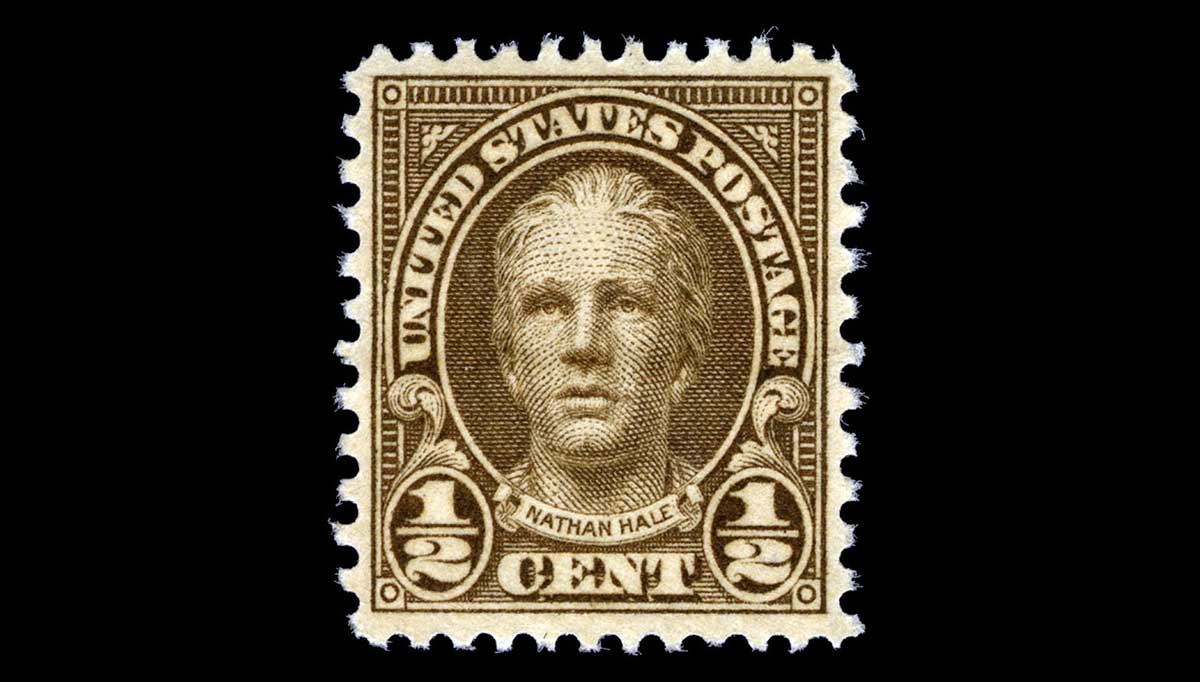
In September 1776, Hale was given command of a company of the newly formed New England Rangers with orders to gather intelligence of enemy positions. Intelligence collection behind enemy lines was a dangerous activity, but General Washington desperately needed information on the enemy after suffering a major defeat at the Battle of Brooklyn Heights on August 27, which forced the Continental Army to retreat from Long Island into Manhattan. Just two months after the colonies formally declared independence on July 4, 1776, the Continental Army could not afford another defeat.
Those who volunteered as spies could offer unmatched value to the colonial cause. A patriot at heart, Hale offered to carry out the operation despite his comrades’ refusal. While many of Washington’s troops were willing to die in battle, few welcomed the possibility of unarmed capture or execution by the British. Undeterred and alone, Hale departed during the night of September 8, 1776.
Headed towards Long Island, Hale disguised himself as a schoolteacher roaming New York seeking employment. The spy, armed with his Yale degree, covertly noted down the locations of British defenses, their dispositions, and unit strengths. The intelligence would certainly prove invaluable to Washington and the Continental Army as it faced an uncertain future in the early stages of the war.
Capture and Execution
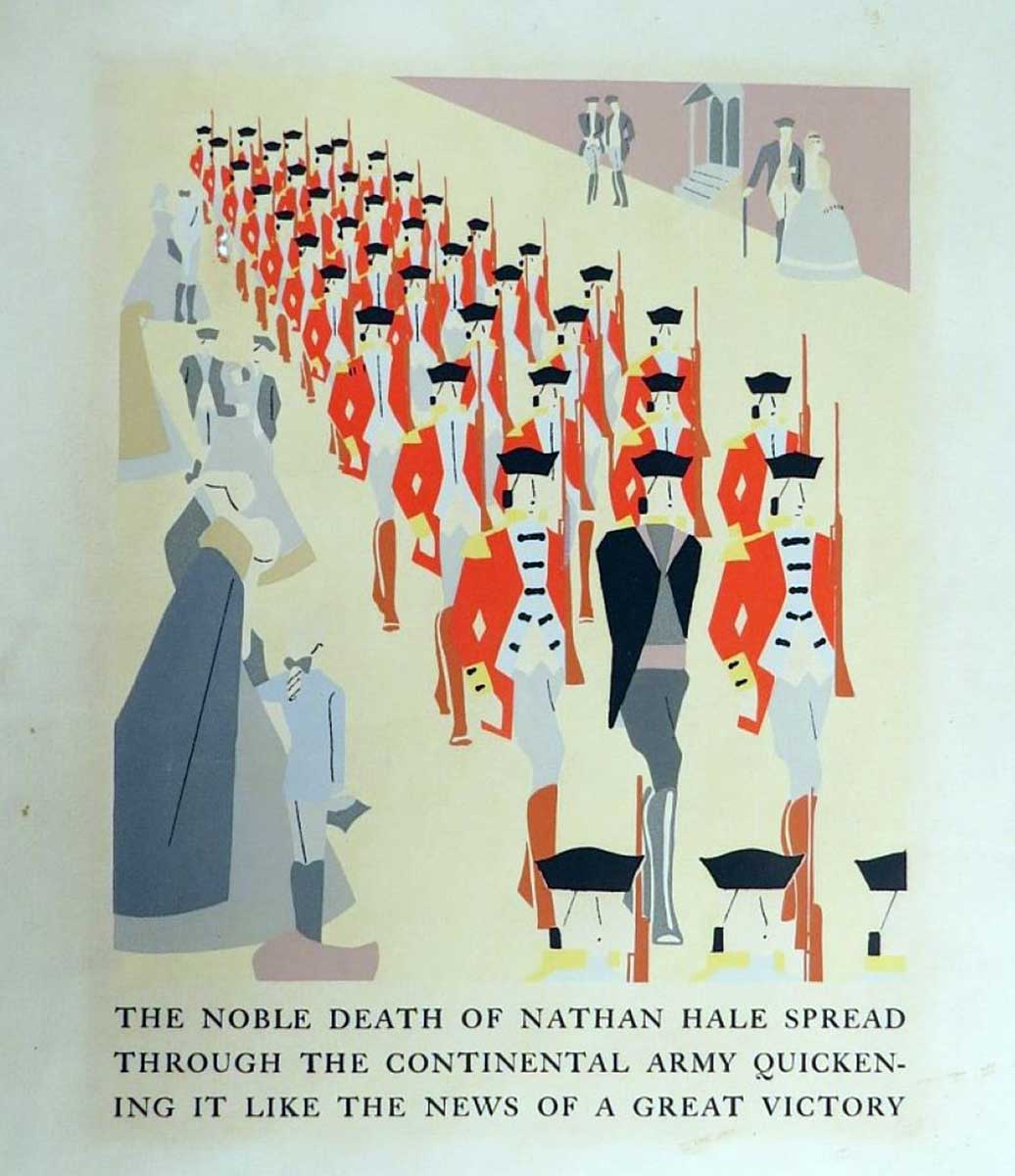
On September 15, Manhattan fell to the British army, negating the purpose of Hale’s mission.
While little is known of Hale’s expedition due to the clandestine nature of espionage and competing accounts, he was caught before he had the opportunity to return to friendly lines.
Given Hale’s detailed notes of the British presence on Long Island, British commander General William Howe refused to believe Hale’s cover story and duly charged him with spying on behalf of the Continental Army. On September 22, 1776, just two weeks after leaving the Continental camp, Hale was executed by hanging.
While Hale’s capture and execution was a blow to Washington’s efforts to recover from the defeat at Brooklyn, his bravery and loyalty to the very end served as an inspiration to the Patriot cause. In his famous last words, Hale proudly asserted, “I only regret that I have but one life to give to my country.” The short but impactful sentiment summarized the colonies’ unifying cause perfectly and served as a rallying cry for the revolutionaries.
Hale’s death inspired Washington to pursue a more organized and secretive approach to espionage during the American Revolutionary War in the years following, choosing mainly private citizens instead of soldiers to act as spies. Even Washington himself was left unaware of the identities of many of his agents. By 1778, in collaboration with Major Benjamin Tallmadge, who had been Hale’s classmate at Yale, Washington created the Culper Ring, a network of spies that provided vital information to the commander-in-chief, informing his decision-making during the remainder of the war. Most spies in the Culper Ring collected intelligence in the British stronghold of New York City, the same location where Hale met his untimely end.
Legacy
As one of America’s earliest spies, Hale left behind a significant legacy. Aside from being a capable military leader, Hale is regarded by organizations like the Central Intelligence Agency as the nation’s first intelligence officer.
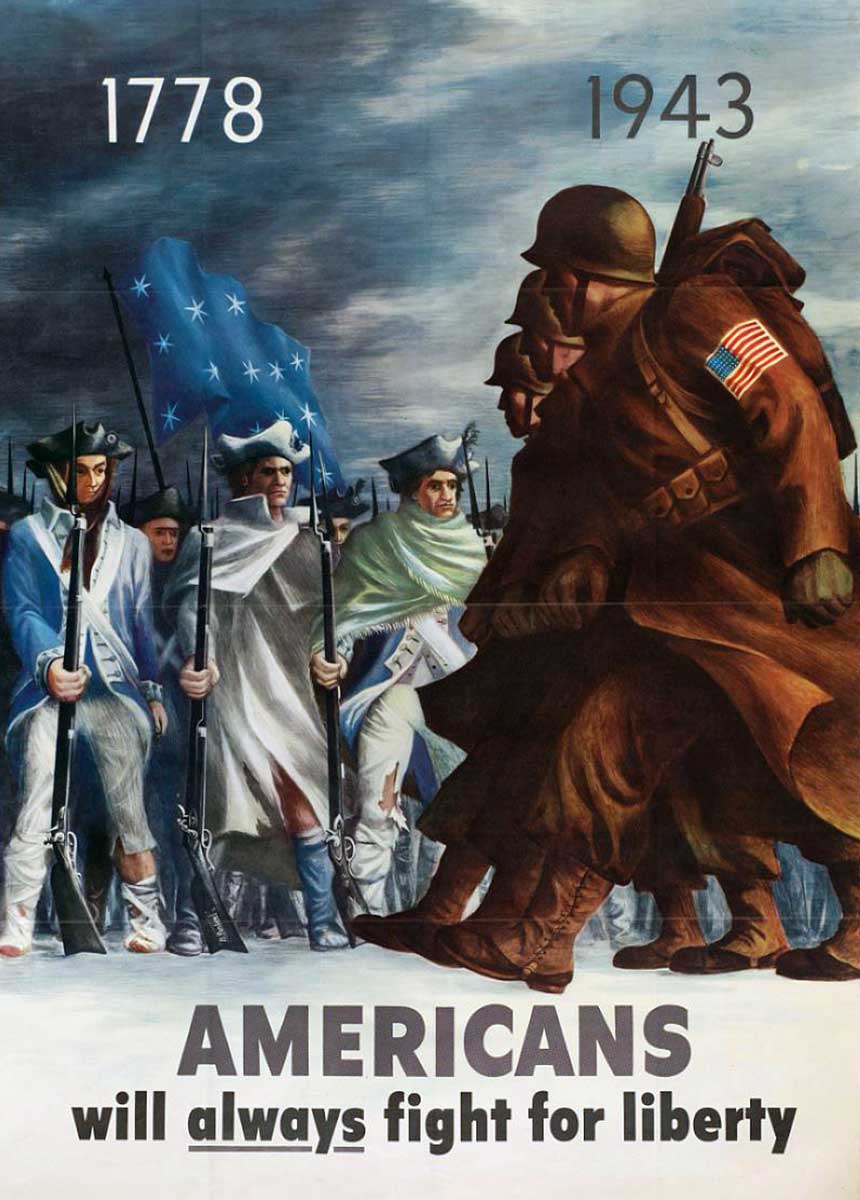
Moreover, Hale’s final words were used to inspire a nation still hesitant about supporting the cause of American independence. The executed spy’s calmness and resolve under certain death impressed even his British captors, who noted Hale’s loyalty in their field notes. Hale’s last words and the circumstances of his death formed a key part of Patriot propaganda in the latter half of the war against Britain, strengthening the colonial cause. His legacy has continued to inspire Americans in the centuries following the American Revolutionary War, and was invoked again in World War II propaganda materials.
Hale is currently honored in dozens of notable locations throughout his home country. His statues grace the United States Department of Justice, the Central Intelligence Agency Headquarters, the Connecticut State Capitol, and at his college residence at Yale University. Hale was one of the earliest American figures to risk his life for the shared fight for independence against British colonial rule. His courage, devotion, and determination have guided the United States for nearly three centuries and will continue to do so in the years to come.