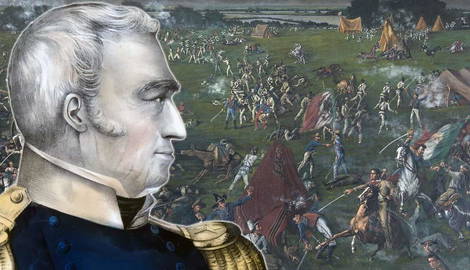

Nearly two centuries later, the Texas Revolution and Mexican-American War are often grouped together as a single event in the expansion of the United States. This association, however, is mostly a fallacy. Although they are inherently connected, each conflict exhibits distinct differences. While the Texas Revolution and Mexican-American War share overlapping features in terms of geography and the political and military leaders involved, the two conflicts were caused by different catalysts and resulted in separate outcomes for the United States and Mexico.
Historical Context
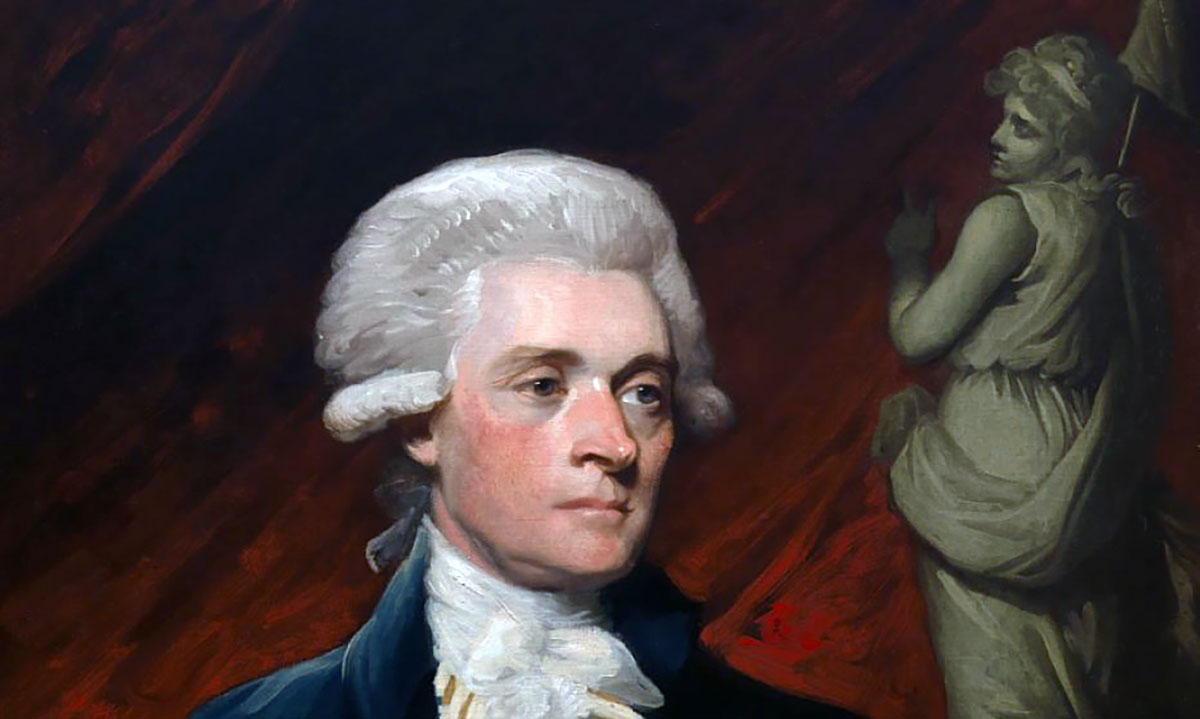
The historical contexts of the United States, Mexico, and Texas in the decades preceding the Texas Revolution and Mexican-American War present a complex web of nationalist movements. For the United States, the early 19th century represented a time when the country largely managed to rid itself of the threat of foreign invasion.
Despite formally achieving independence from Britain in the late 18th century after the American Revolutionary War, the United States continued to experience harassment from the British with the continued occupation of forts in the northern United States, the impressment of American sailors, and restrictions on American trade.
These grievances led to the War of 1812, and after an intense struggle on multiple fronts, the Treaty of Ghent restored the prewar status quo for the United States and British Canada. By fostering closer relations with Britain, the United States had the opportunity to pursue economic development and territorial expansion. American expansion, guided by the idea of Manifest Destiny, threatened Mexican territories towards the south and west.
During this same period, Mexico was in its own struggle for independence from Spain. After a decade of hostilities, Spain recognized Mexican independence in 1821. Less than 15 years later, Texas, then part of Mexico, sought its own freedom. While Mexico attempted to maintain control of Texas, its northern neighbor aggressively sought expansion into Texas as well as
the Mexican territories of California and New Mexico. These respective struggles led to armed conflict through the Texas Revolution in the mid-1830s and the Mexican-American War a decade later.
Causes of the Texas Revolution
Following Mexico’s independence from Spanish colonizers, the newly independent country encouraged American settlers to migrate into Texas to foster population growth, economic development, and offer protection from Native American tribes. While Mexico required settlers to adhere to local religious and legal codes, Americans were incentivized to settle in Texan towns through the empresario system. By 1834, the American settlers had outnumbered local Mexicans and sought to achieve independence from Mexican rule.
The challenges of integrating American settlers into Texas were clear from the outset. Americans, for example, were largely English-speakers and Protestants, while Mexican citizens who were primarily Spanish-speaking Catholics. Moreover, American settlers who were accustomed to state autonomy and a weak federal government resented the centralized nature of the Mexican state. Settlers from the north were additionally unhappy when the Mexican government imposed strict trade and land restrictions that reduced the autonomy of local communities.
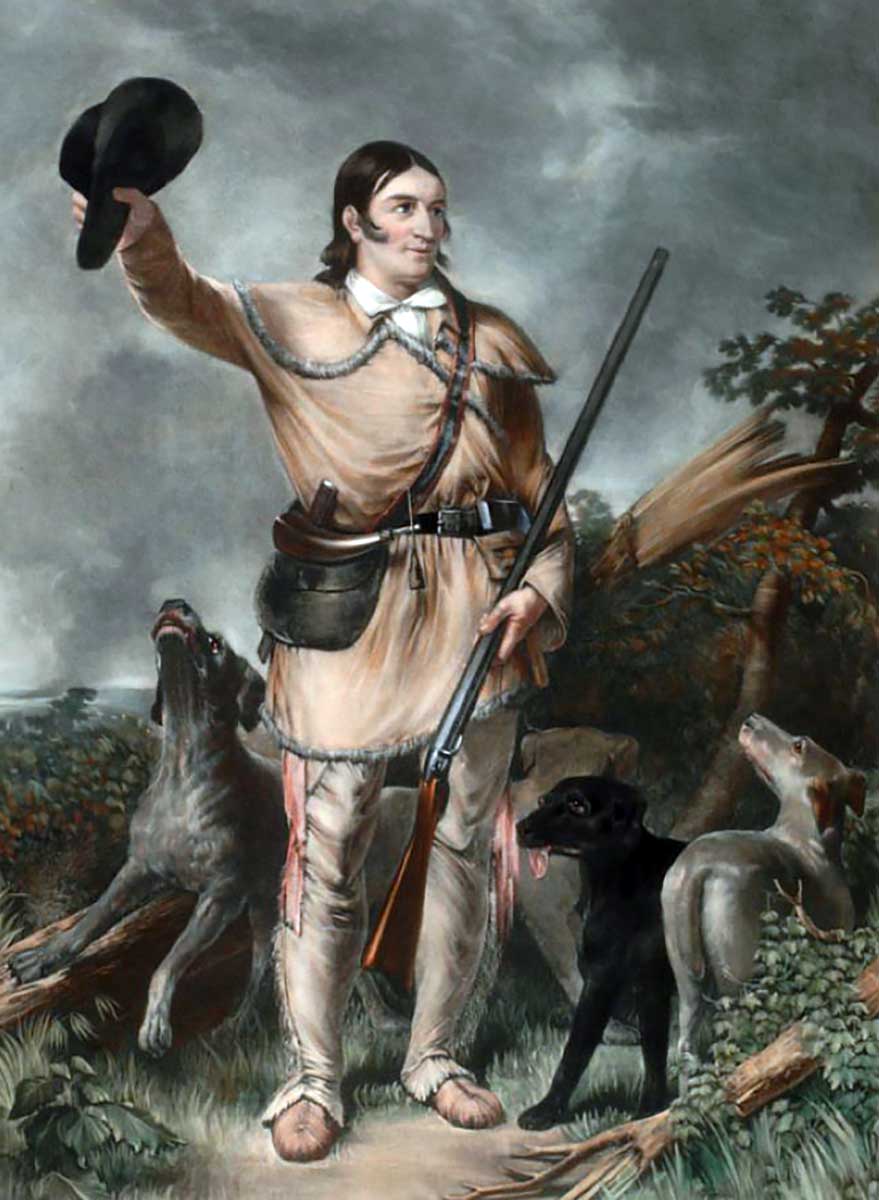
A final frustration of Texas’ new inhabitants arose when Mexican President Antonio López de Santa Anna abolished the federalist Constitution of 1824. The document, largely supported by Texas residents for its economic freedoms, the right to representation, and local autonomy, was replaced by the Seven Laws Constitution, which strengthened the central government’s powers. While not adopted until 1836, the gradual centralization of power in Mexico led to the Battle of Gonzales, marking the start of the Texas Revolution on October 2, 1835. Figures including Davy Crockett and James Bowie jumped to defend Texas in resulting skirmishes.
Outcomes of the Texas Revolution
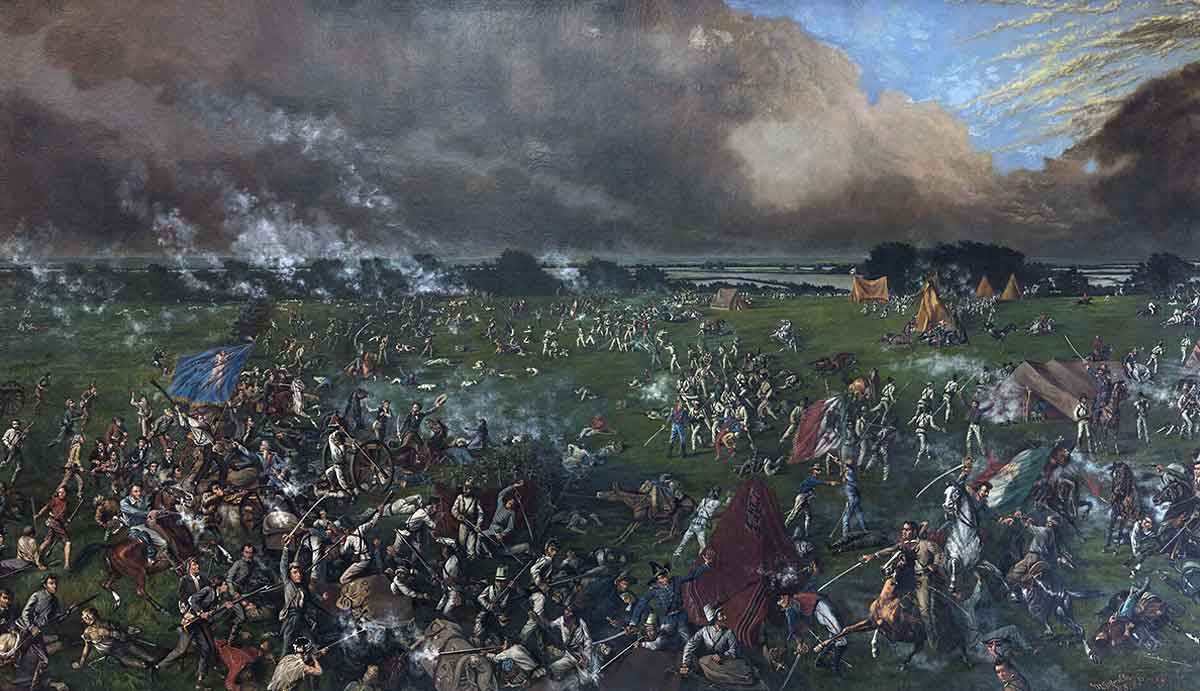
After six months of fierce clashes including the Siege of Bexar, the Siege of the Alamo, the Goliad Massacre, the Texas Revolution came to an end following Texan victory at the Battle of San Jacinto on April 21, 1836. General Santa Anna was captured during the battle and recognized the independence of the Republic of Texas in exchange for his freedom. Under its first president, Sam Houston, Texas laid claim to a vast expanse of land including parts of the modern-day American states of New Mexico, Oklahoma, Kansas, Colorado, and Wyoming in addition to Texas itself. While Texan citizens sought to exploit the newly acquired land, its official borders proved uncertain and required further negotiation, which presented significant challenges.
As a nascent country without established governance or resources, Texas struggled to properly achieve its citizens’ visions of autonomy. Economic volatility, the failure to obtain international recognition, and ongoing violent skirmishes with Native American and Mexican populations disrupted Texas’ ability to thrive. As a result, many Texans were in favor of becoming part of the United States.
While many American political leaders were keen to annex Texas, the process took nearly a decade to complete due to domestic and international considerations. While the Texas Revolution was successful, the new Mexican government that assumed power after Santa Anna’s fall did not recognize Texan independence, and as such American annexation would be seen as an act of war. Debates about slavery within the United States and overseas influence from France and Britain designed to inhibit American expansion all served to prevent the immediate annexation of Texas.
Annexation of Texas and Resulting Border Disputes
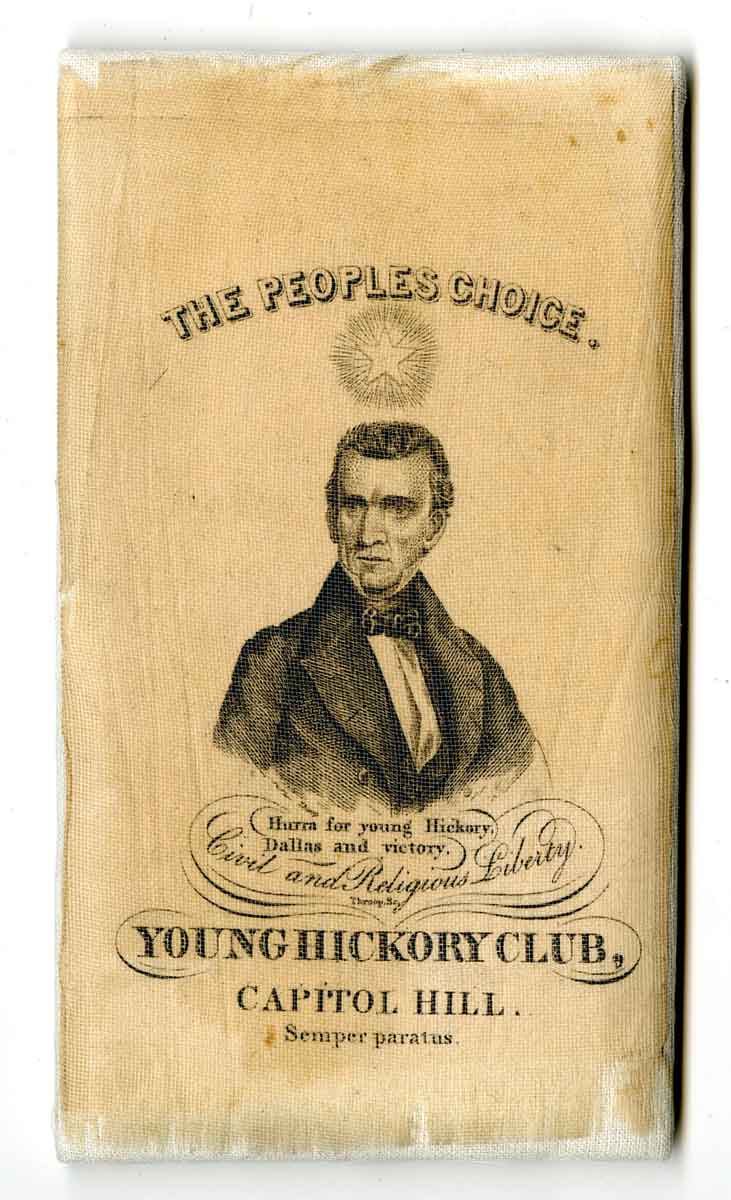
In November 1844, Democratic candidate James K. Polk won the presidential election after running a campaign vowing to annex Texas. This encouraged incumbent President John Tyler to work with Congress to pass a Texas annexation bill prior to Polk’s inauguration. On December 29, 1845, Texas was formally admitted to the Union as the 28th state. The move immediately stirred backlash from Mexico. Worried about growing American influence, Mexico interpreted the annexation as the illegal seizure of a rebellious province.
Disputes over Texas’ boundaries further heightened tensions between Mexico and the United States. After integrating Texas into its union, the United States recognized the Rio Grande River as the state’s southern boundary. Mexico, however, recognized the Nueces River 100 miles to the north as the frontier.
In response to the border dispute, President Polk sought a diplomatic solution and dispatched Louisiana attorney and future senator John Slidell to Mexico as an envoy to negotiate a solution to the Texas dispute and to offer the purchase of New Mexico and California from Mexico for $30 million. When the Mexican government refused to meet with Slidell, Polk provocatively sent American troops to the disputed border region.
Polk’s intentions were met on April 25, 1846, when Mexican forces opened fire on United States soldiers, an incident now known as the Thornton Affair. After accusing the Mexican troops of “shed[ding] American blood on American soil,” the president secured congressional authorization to declare war against Mexico over two weeks later.
The Mexican-American War: Battles in Texas
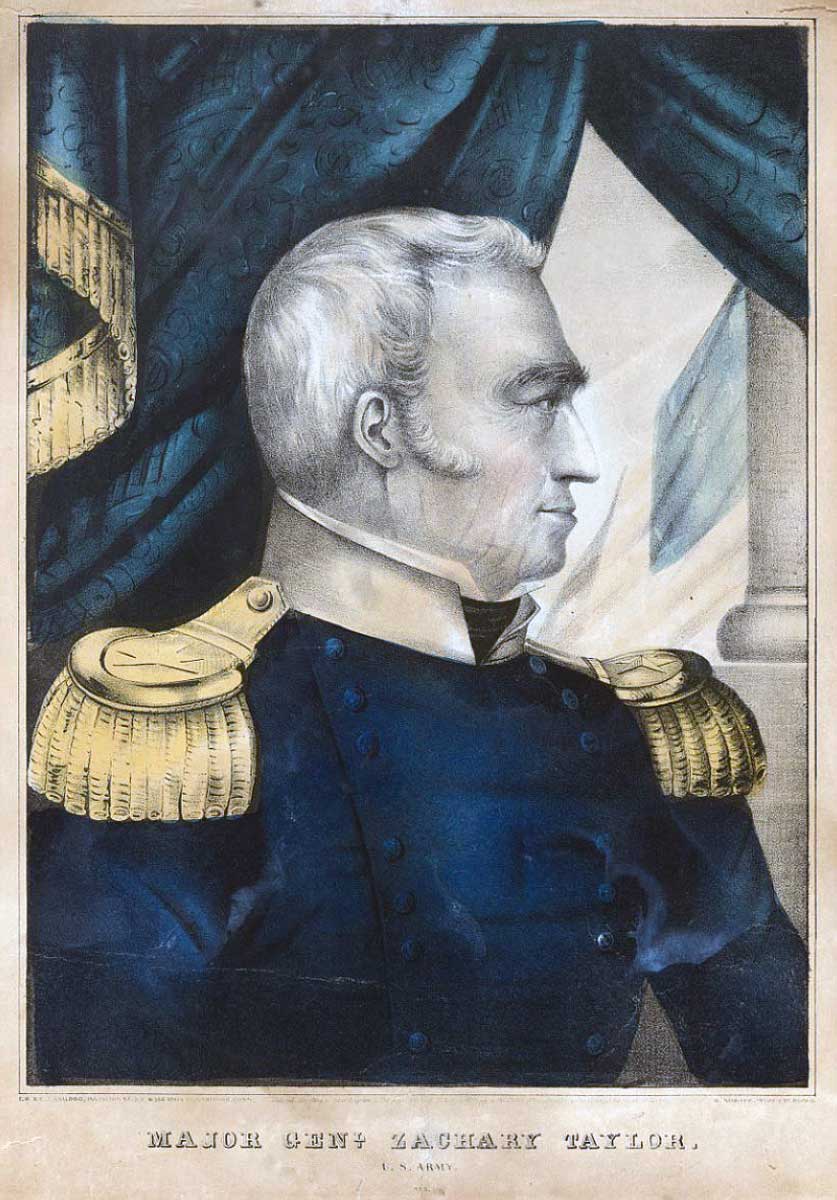
While the Mexican-American War began nearly ten years after the Texas Revolution, the two conflicts share Texas as a common battleground. After the Thornton Affair, several military engagements took place in the disputed region. For example, at the Battle of Palo Alto, General Zachary Taylor led American troops against Mexican forces under General Mariano Arista in the first major engagement of the war. On May 8, 1846, Taylor’s effective deployment of his maneuverable light artillery enabled the United States to achieve a decisive victory despite being heavily outnumbered.
The following day, Taylor led the pursuit of the retreating Mexicans and engaged them at the Battle of Resaca de la Palma, where the reinforced Mexican Army was once again defeated. The exchange forced the Mexican troops to withdraw to the opposite side of the Rio Grande, leaving behind their weapons and supplies. These two successes allowed the United States to relieve the ongoing Siege of Fort Texas, repelling the Mexican assault.
The battlefields of Texas not only gave opportunities for American troops to gain experience and raise morale before embarking on operations deeper into Mexico, but General Taylor exploited the accolades he earned for his victories by successfully running for president in 1848. Although he had survived many hardships on campaign, Taylor died in July 1850 at the age of 65, less than two years into his term.
Mexican-American War Outcomes
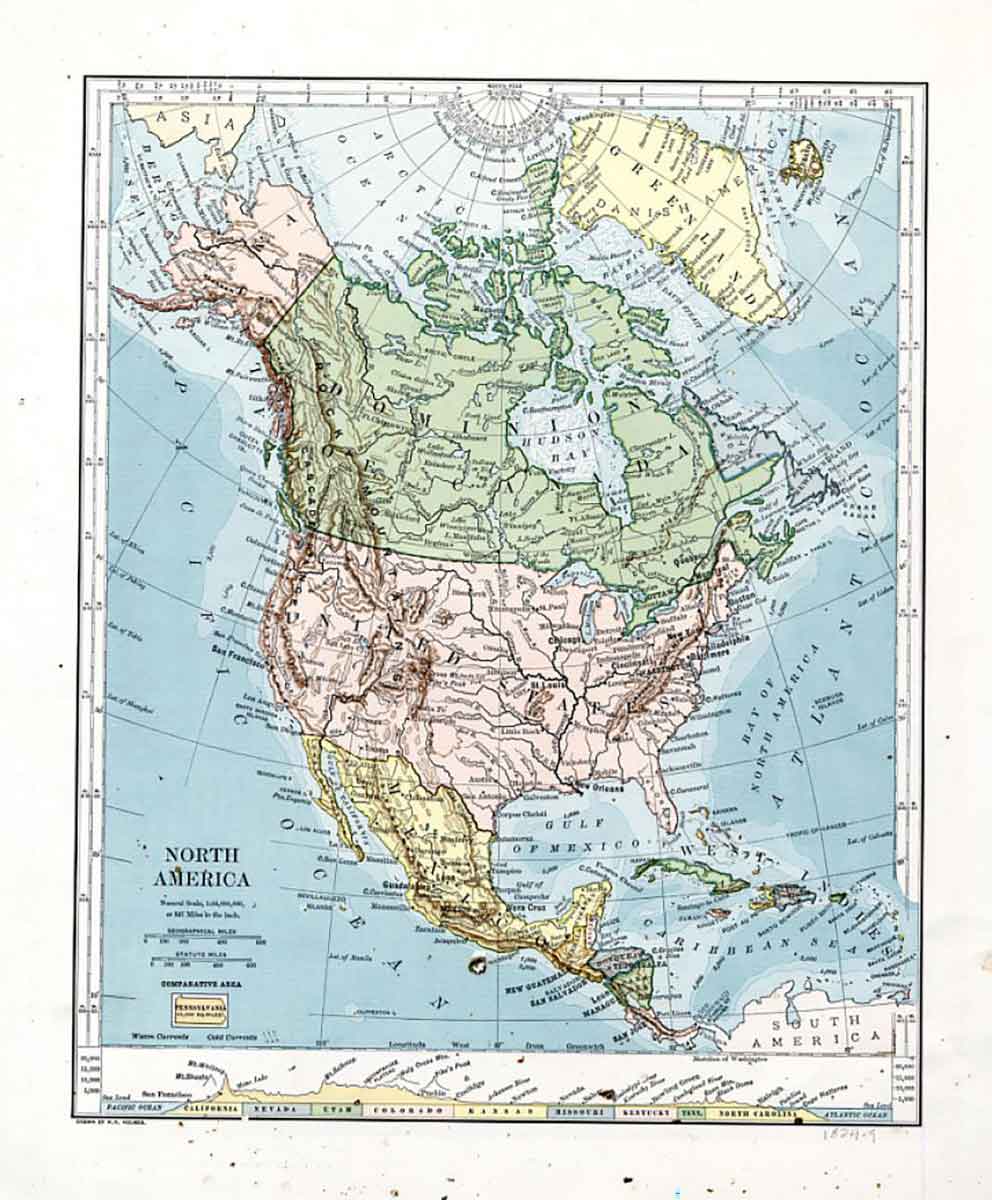
After the United States sealed its victory in the Mexican-American War by capturing Mexico City, the Treaty of Guadalupe Hidalgo was signed on February 2, 1848. The agreement gave the United States 525,000 square miles of new territories including all or part of California, Nevada, Utah, Arizona, New Mexico, Colorado, Wyoming, and Texas. While Mexico received $15 million in compensation, the Texan border dispute was also resolved in the United States’ favor by placing its southern border on the Rio Grande.
While these arrangements fulfilled the United States’ desire for expansion towards the Pacific coast, the outcomes of the Mexican-American War were less beneficial to other populations in North America. Mexican families faced the dilemma of relocating within Mexico’s newly appointed borders or choosing to remain in their homes as full American citizens. The large number who remained behind have continued to influence society and culture of the region to the present day.
Simultaneously, the war left Native American tribes vulnerable to American settlers headed west, forcing them out of their ancestral lands. In the decades following the Mexican-American War, the California Gold Rush and subsequent settlement resulted in Native Americans being dispossessed of large tracts of land. The provocative American actions which led to the conflict and the negative impact on Native Americans following the war have contributed to the war’s controversial legacy in the present day.