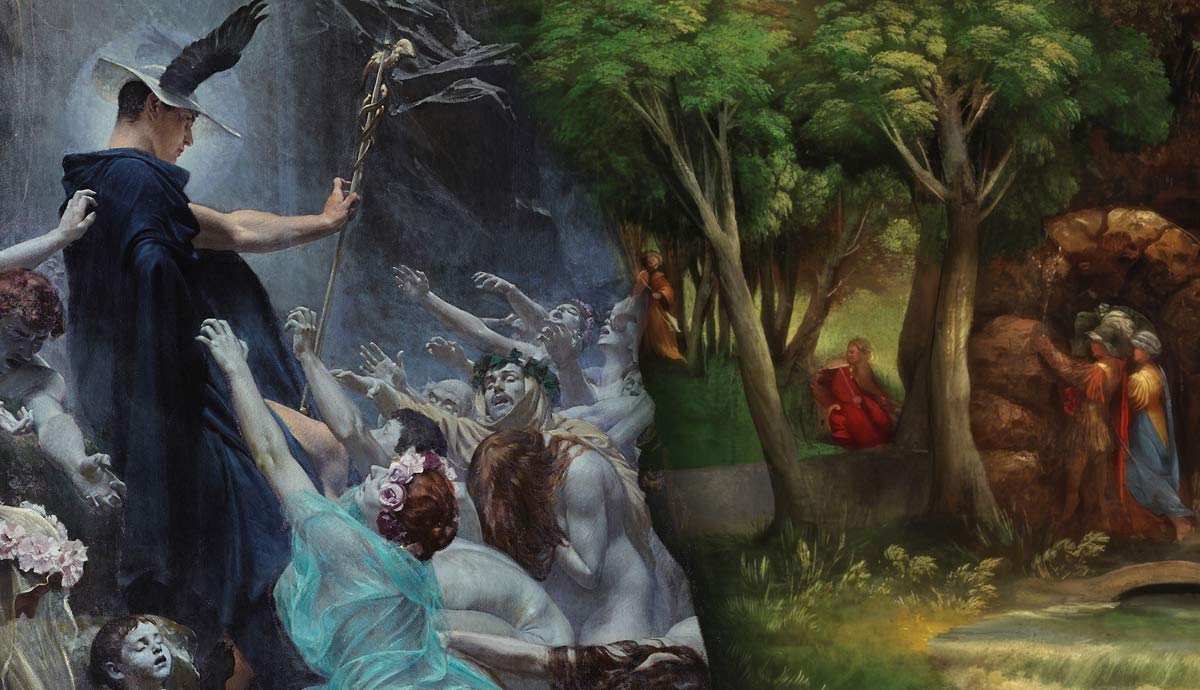

For the ancient Greeks, death wasn’t the end. It was the beginning of an eternity in the underworld where a soul could be rewarded, punished, or simply ignored depending on how they lived their life. Getting to the Underworld, however, was a journey; one that involved a ferryman named Charon, who demanded payment for his duty of ferrying souls across the dreaded waters of the Styx.
Who Is Charon?
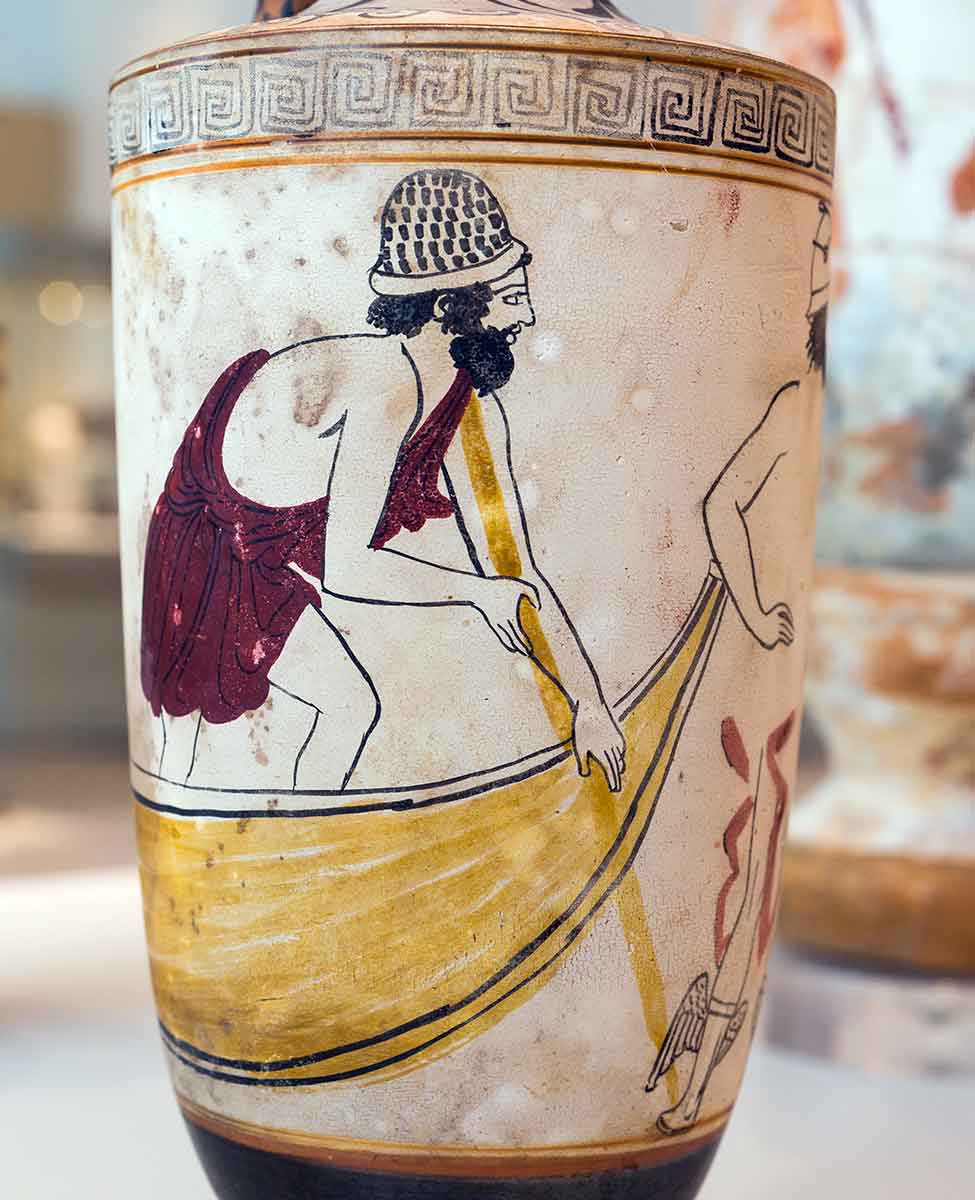
The ominous nature of Charon is immediately apparent from his parentage. The traditionally accepted genealogy is that he is the son of Erebus, the primordial force of darkness, and his mother is Nyx, the primordial goddess representing night.
The explanation for his name is open to debate. It is thought to be a poetic form of the Greek χαρωπός, meaning “of keen gaze.” The Sicilian historian Diodorus Siculus suggests the concept may have originated from an ancient Egyptian source, but there is no solid evidence to support this. However, it is salient to note that in ancient Egypt, there were close analogs to Greek deities that may have influenced the formation of Greek belief. In this case, the minor deity Aken stands out, as he was tasked with ferrying the dead across the waters to the Egyptian afterlife, and is mentioned several times in the Book of the Dead.
Although an Egyptian etymology for Charon is dismissed in modern academia, there is a plausible reason it has traction. It is a well-known fact that Greek belief was influenced to a certain degree by outside sources, including those of Egypt (especially in later eras). This much is even stated by Herodotus, who claims the appellations of the 12 gods were brought by the Egyptians and adopted by the Greeks.
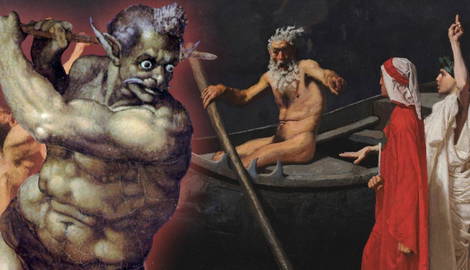
Charon may also have been influenced by the Etruscan deity Charu, who was the god of Death itself and was believed to ferry the dead into the underworld. Likenesses, however, differ, and Charu was depicted as a fearful demon, often with a hooked nose and animal ears and even wings. He carried a hammer to break down the doors of tombs so he could retrieve the bodies.
Visions of Charon
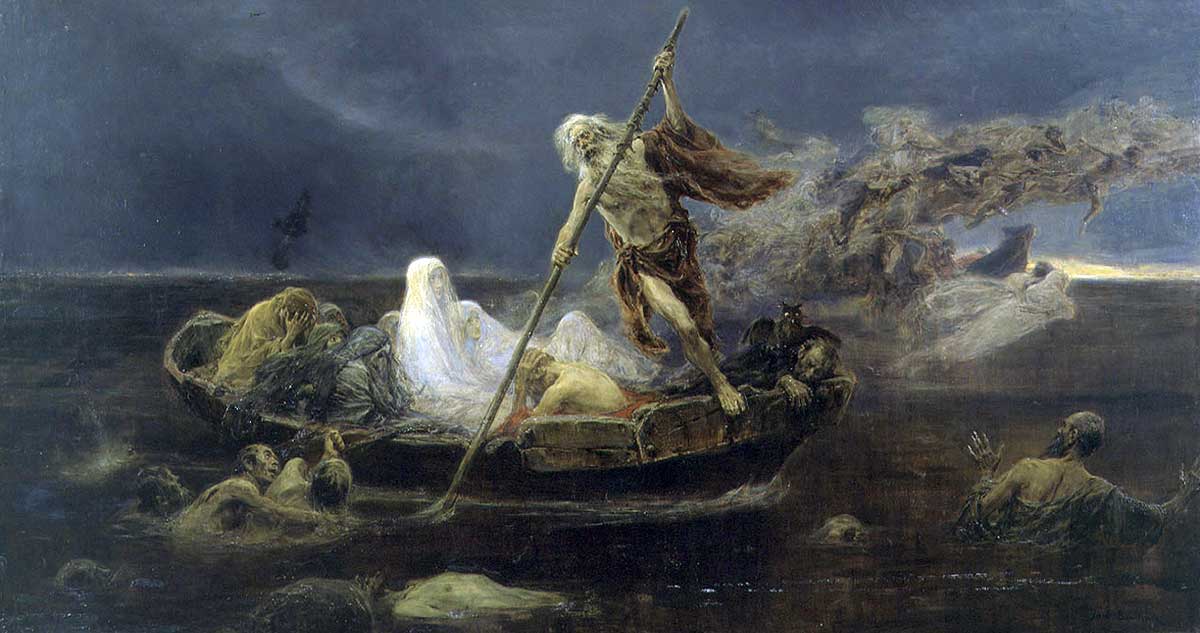
Throughout the millennia, from ancient Greece into the modern era, even to today, Charon exists as a character of myth and fiction. Variations of his appearance have changed little, and they generally fit the dynamic of an angry boatman.
The origins of Charon in literary works are fragmentary, and much of it is lost to history. One of the oldest surviving mentions comes from Pausanias (2nd century AD), quoting the Minyas, a 6th-century BC poem that exists only in fragments. Here, Charon is mentioned simply as a ferryman.
“Then the boat on which embark the dead, that the old ferryman, Kharon (Charon), used to steer, they found not within its moorings.”
More vivid depictions followed in later centuries, especially in the Roman era. Virgil (70 BC to 19 BC) describes Charon in the Aeneid as having a long “hoary” beard, uncombed and unclean, while his eyes are like hollow furnaces, and his “obscene” clothes are greasy and full of dirt. His boat is an old rust-colored wherry (like a skiff), echoing the undignified journey of death and Charon’s task. He is a “surly” man, and the poor souls who have not undergone proper burial rites and have no resting place for their bones must wait for a hundred years on the shore before Charon takes them across.
1st century AD Roman poet Seneca paints a similar picture, writing of Charon being clad in foul garb, with haggard cheeks and an unkempt beard. He is a fierce character, brave enough to fight against Heracles (and lose).
Charon was also the subject of satirization, and Lucian (2nd century AD) does a good job of deriding the tradition of placing an obol (coin) in the mouth of the deceased to pay the ferryman. He notes that the living have no idea what currency is legal tender in the Underworld, and further states that even if it were possible to pay Charon, it would be better not to, because who wants to go to Hades anyway?
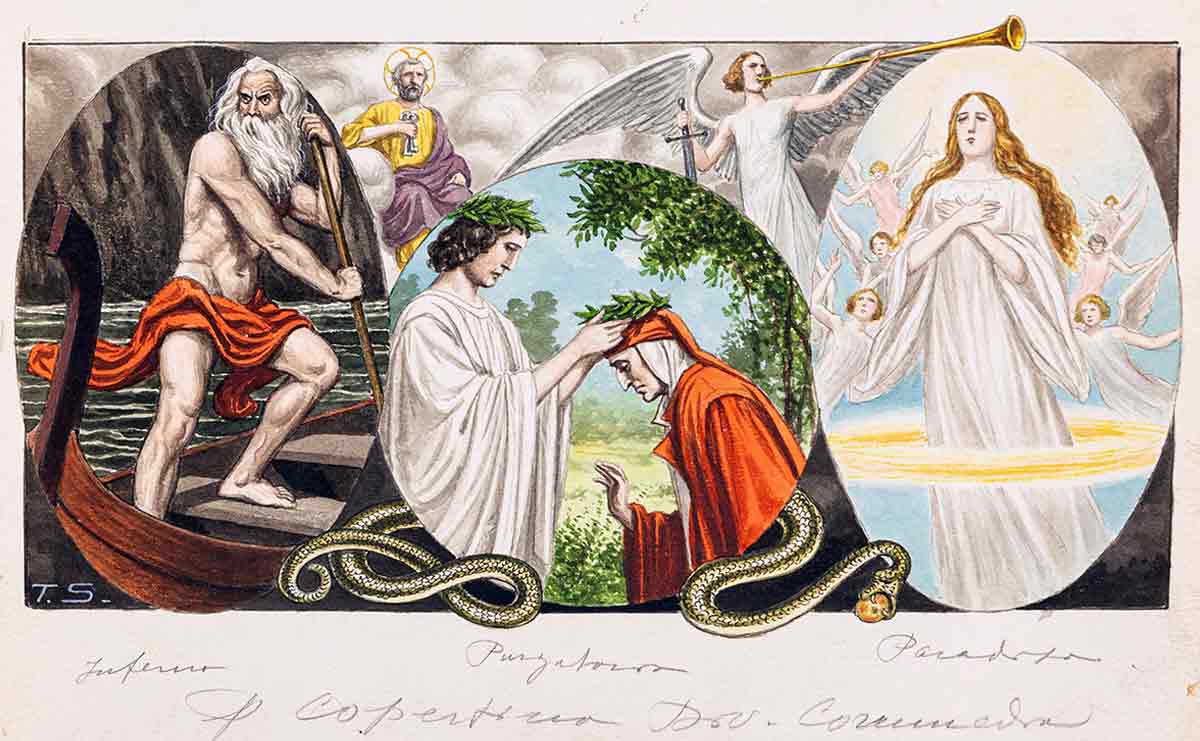
In the Middle Ages, Charon was largely absent from literary works and survived through commentary and an effort to record the beliefs of the ancients. That is, until Dante Alighieri came along and breathed new life into the ferryman of the dead.
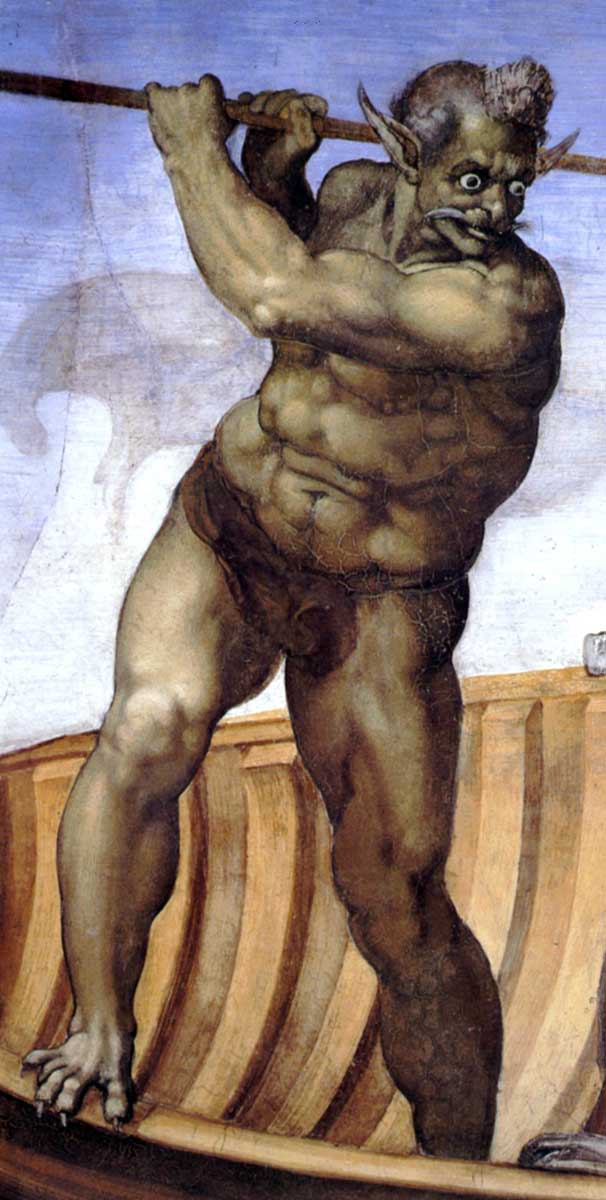
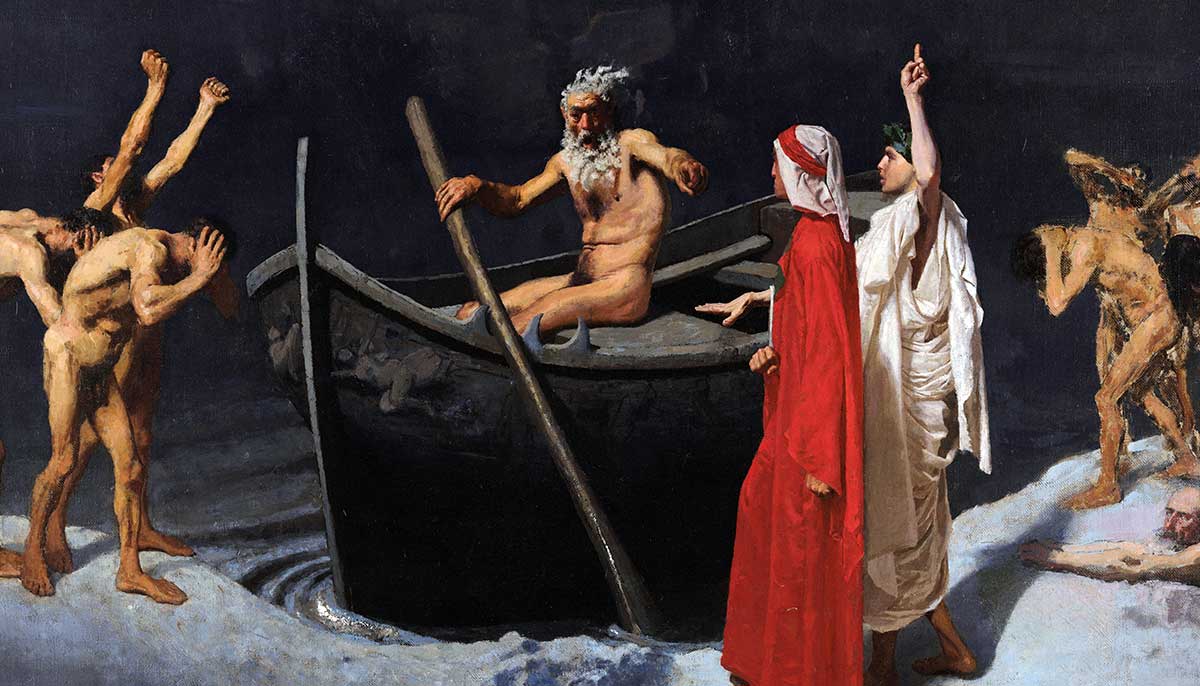
Dante’s Charon is transported into and transformed in a Christianized setting. He is no longer simply a scruffy herder of the dead, but rather a demon employed in the grand carnival of Divine Justice.
“Charon the demon, with the eyes of glede,
Beckoning to them, collects them all together,
Beats with his oar whoever lags behind.”
Dante’s version certainly wasn’t the last mention of Charon. He is a popular character in modern fiction, crossing millennia of history to appear on modern television screens, largely unchanged in essence as a ferryman for the dead across the waters of the Underworld. From vases to ancient and modern literature and finally to cinema, Charon evolved from something functional to a fully developed character.
In the movie Percy Jackson & the Olympians, Charon makes an appearance as a pale figure in a dark robe who only accepts drachma as payment for his services of transportation across the Styx. This is in contrast to his character in the book, where he is portrayed as stylish and witty; a major break from traditional depictions, although the flashy exterior falls away upon entering the Underworld.
In Netflix’s Kaos (2024), Greek mythology is revisited in a comedic contemporary setting, and Charon is portrayed by Ramon Tikaram as a cynical, moody character (dressed in casual clothes) dealing with issues of betrayal. He is also portrayed as gay, as a former lover of Prometheus.
Paying the Ferryman
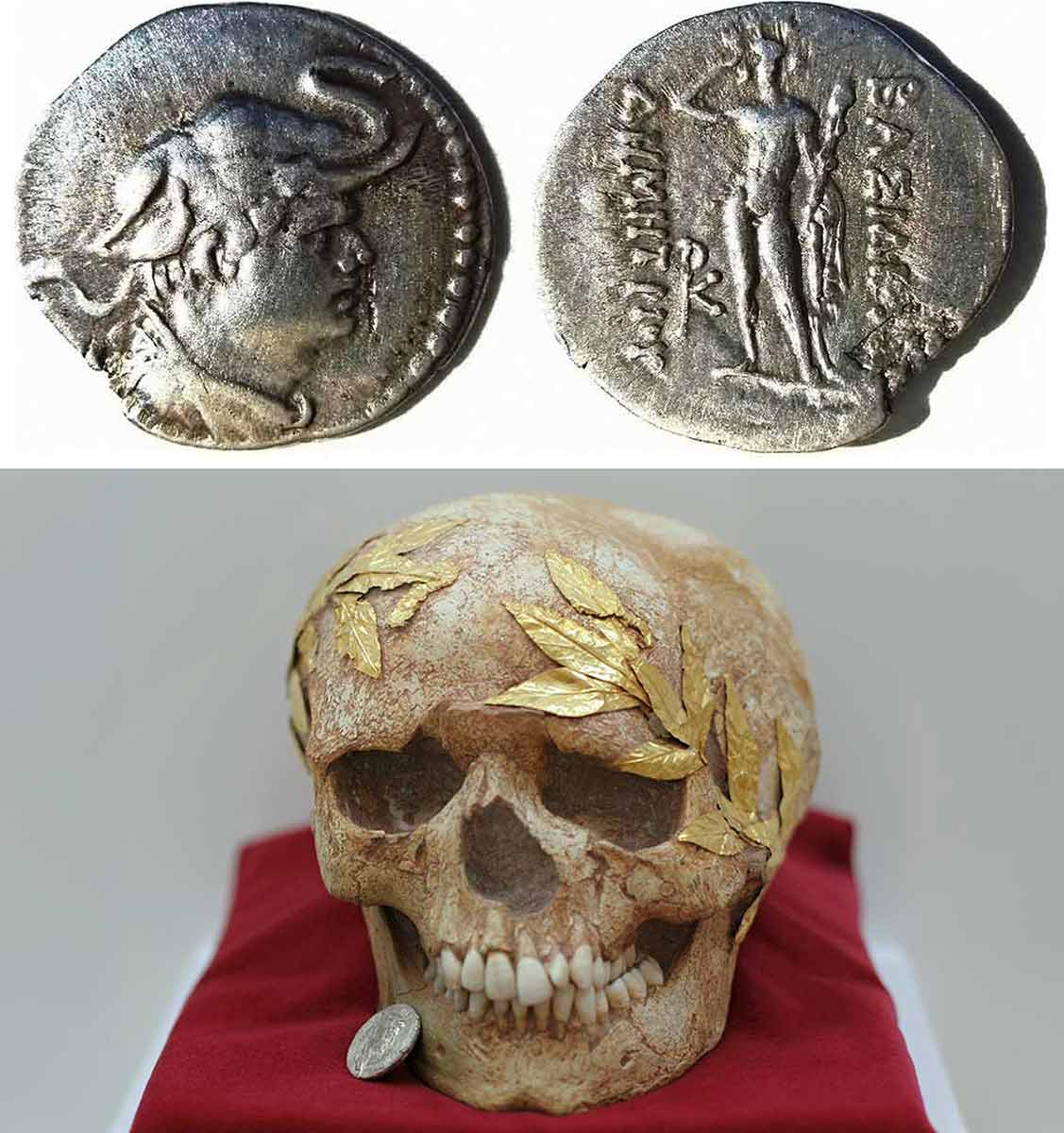
Traditionally, Charon was thought to demand coinage in the form of an obol, a coin of low value, to ferry the dead across the Styx (or the Acheron in some versions). As a result, the literary tradition suggests bodies were often buried with an obol in the mouth or in the hand, although in reality, archaeological evidence reveals that this practice wasn’t universal and very few burials actually contained any money. In even rarer cases, bodies were buried with two coins. In literary tradition, Charon could ferry people or the dead both ways, although this being tied into the two-coin burials is speculative rather than based on archaeological or written evidence of ancient Greek funerary practices.
The idea of covering the eyes with coins is a more modern invention that has little basis in ancient customs. Despite the lack of archaeological evidence, the custom was perpetuated in literature, if for nothing other than its poetic impact as an act of respect for the dead.
Famous Encounters
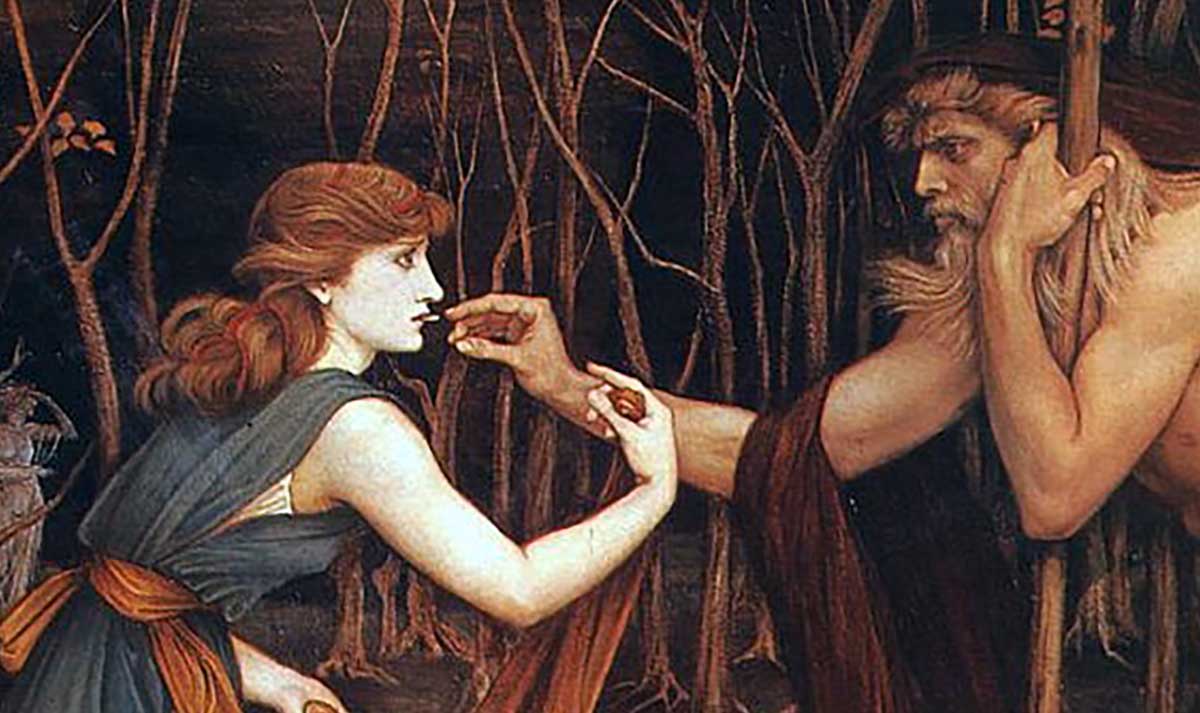
In ancient literature, many heroes and heroines had encounters with Charon, as only through him could one pass into the Underworld, a place which features significantly in the ancient Greek stories.
As part of his Labors, Heracles had to travel to the Underworld to capture Cerberus, the three-headed guardian dog. He avoided paying Charon for the journey across the Styx (or the Acheron) by using brute force. Charon’s failure angered Hades, who sentenced him to a year in chains.
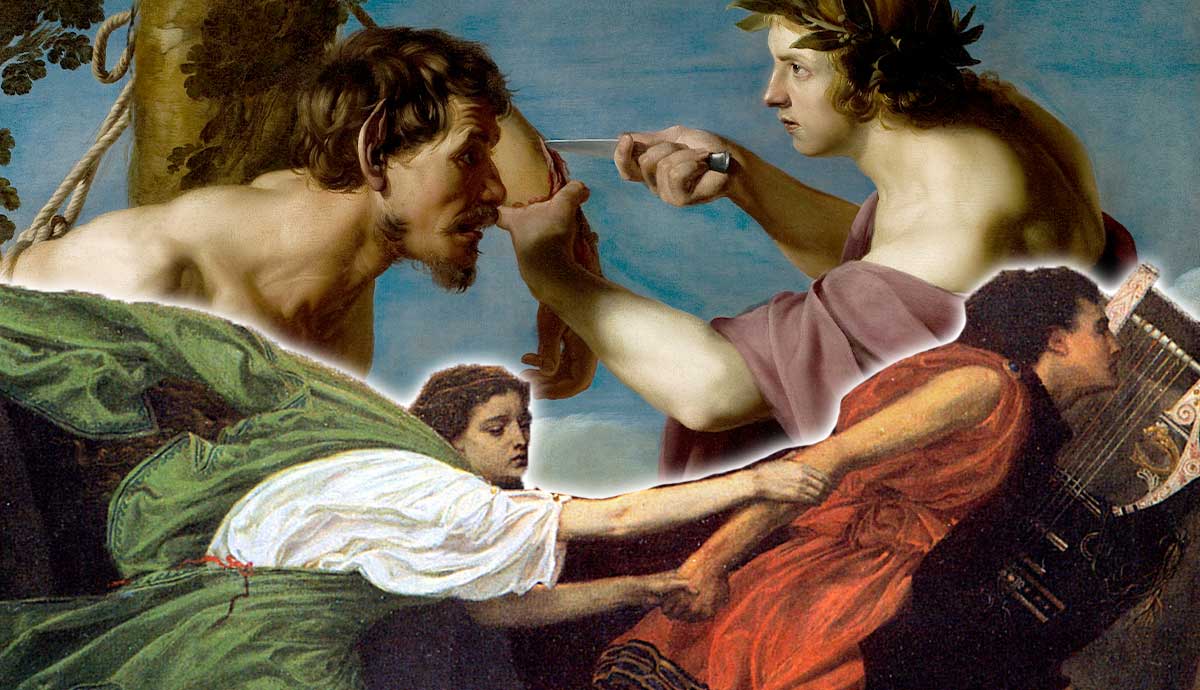
In his quest to find his dead wife Eurydice, Orpheus charms Charon with his lyre rather than pay the fee, thus gaining entrance to the Underworld. This story, however, seems part of the broader mythological tradition as it is not mentioned (at least by naming Charon) in any of the ancient Greek texts. Orpheus does charm many in the Underworld, but charming Charon is a Roman elaboration based on assumption rather than any actual mention of the event in early sources.
In the Golden Ass by Lucius Apuleius (2nd century AD), Psyche journeys to Hades and pays the covetous ferryman twice: once to enter the realm of the dead and once for the return journey. In Virgil’s Aeneid, Aeneas books passage across the waters with the help of the Sibyl of Cumae, who shows Charon a golden bough, sacred to Persephone, who rules over Hades.
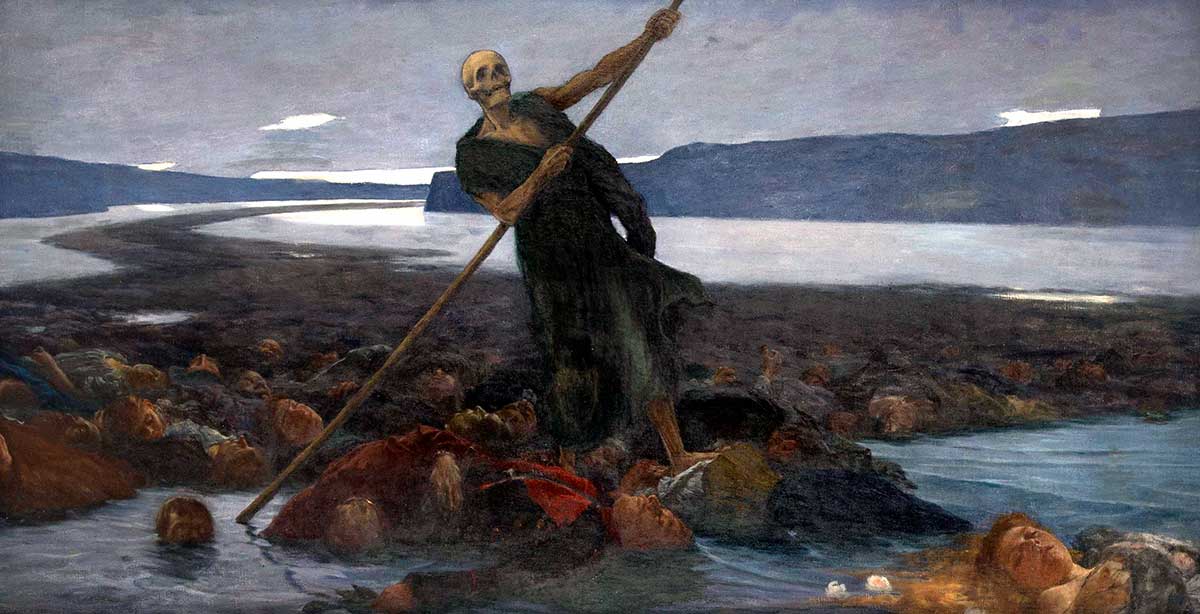
Charon is not a central character in Greek myth, but he plays an important role, representing divine order and the debts that are owed to the dead. His reliable loyalty to his job echoes through the millennia, and he outlasted all the cultures that wrote of him, standing as a symbol of resilience to the present.