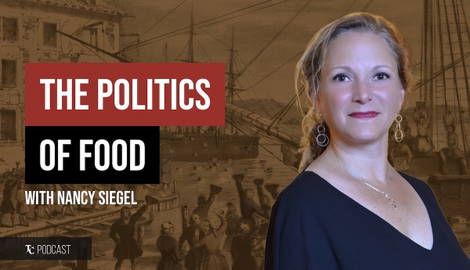

During the American Revolution, politics and rebellion didn’t just happen in the halls of government or on the battlefield. Culinary history shows how these also played out in kitchens and around the dinner table.
In her latest book, Political Appetites: The Power of Food in Revolutionary America, art and culinary historian Dr. Nancy Siegel examines the role food played in the Revolution and the decades that followed.
In this episode of TheCollector’s podcast, we explore the many stories that culinary history has to tell—from the women who influenced the Revolution through tea and cakes to the marginalized cooks and herbalists who helped shape colonial foodways. We also consider what recreating a centuries-old recipe in a modern kitchen can teach us about the past.
Because foodways and culinary traditions hold memory and meaning, around the time of the Revolution, food could function as a means of protest—and as a means to celebrate a new nation.
The Culinary History of Revolutionary America

The Boston Tea Party is perhaps the most familiar example of food and politics intersecting during the American Revolution. In 1773, colonists protesting British taxation dumped hundreds of chests of tea into Boston Harbor, turning an everyday commodity into a powerful symbol of resistance. Tea drinking, once an ordinary part of colonial life, had become a political statement.
But the relationship between food and the Revolutionary War extended well beyond this famous act of protest. Culinary history offers a much wider picture of the period, showing how everyday practices, household traditions, and culinary knowledge reflected changing political and cultural identities.
It also highlights people whose contributions are often overlooked in conventional histories, including women, enslaved African cooks, and Indigenous herbalists, whose knowledge and labor helped shape colonial foodways.
A New Book and Documentary Bring Revolutionary Food History to Life
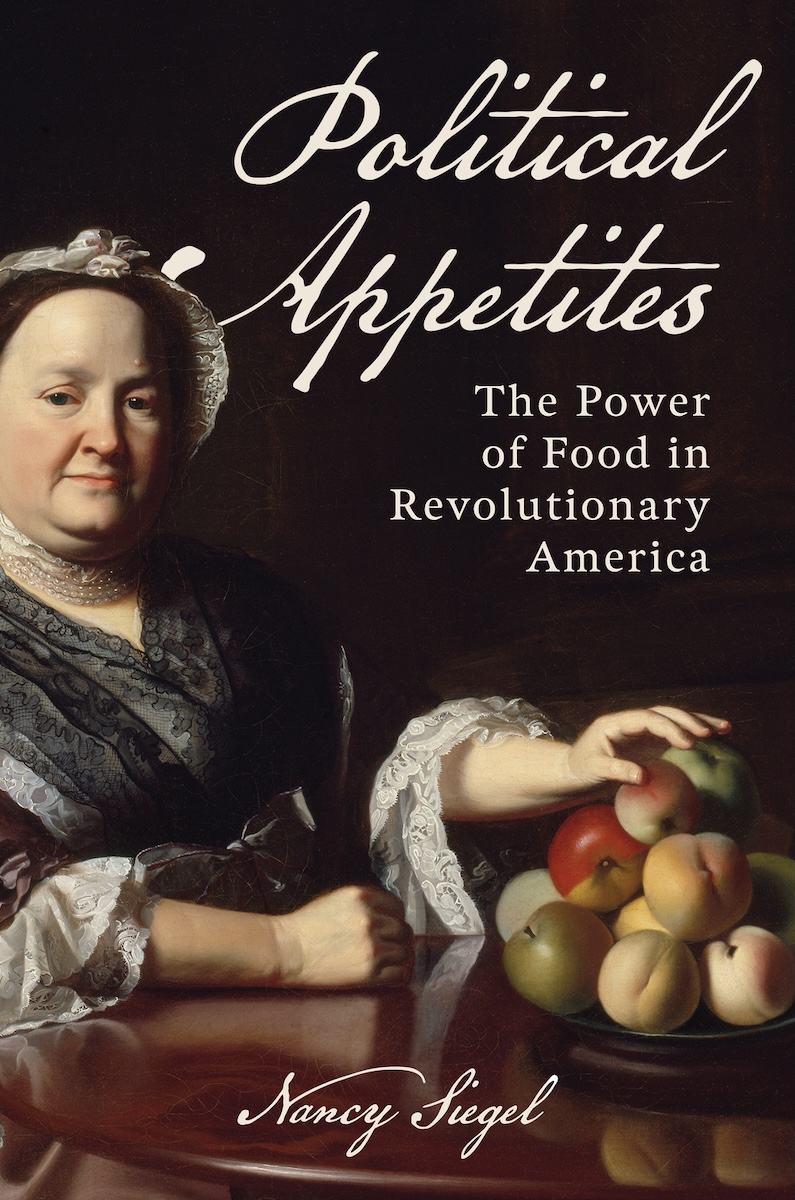
Political Appetites: The Power of Food in Revolutionary America traces the relationship between food, politics, and national identity from the 1765 Stamp Act crisis through the early 19th century.
Drawing on historical recipes, artworks, and material culture, Dr. Siegel explores how food became a form of political expression. Her research also takes her into the kitchen, where she recreates centuries-old recipes to better understand the people of the past.
Dr. Siegel’s book also inspired Feeding the American Revolution, an original documentary from WMHT Public Media that premieres December 10, 2026. Both projects offer a fresh perspective on the American Revolution, bringing the people, traditions, and everyday experiences behind the nation’s founding into focus.