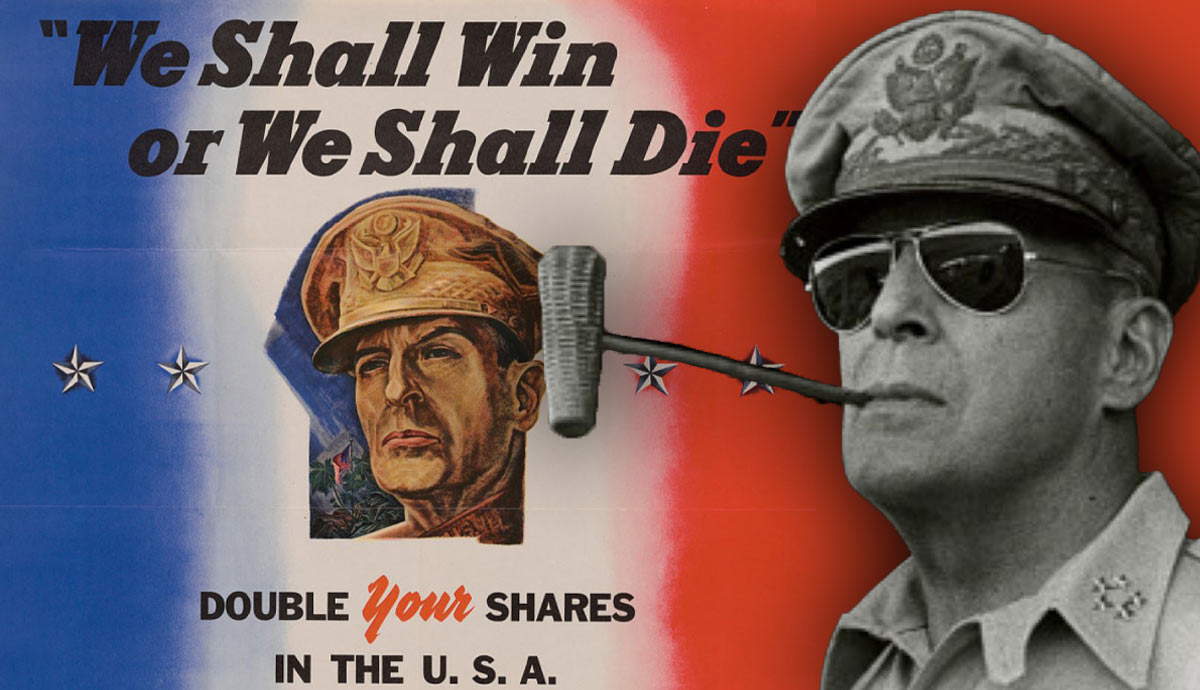
During the Great Depression, thousands of broke WWI veterans gathered in Washington DC to protest the Government’s failure to help them. Fearing an insurrection, the Hoover Administration ordered the military to clear out parts of Washington DC. This event escalated and turned into an assault, leading to the collapse of Hoover’s public support before the 1932 election, the erosion of Hoover’s remaining political support, and the eventual rise of FDR’s New Deal coalition.
What Was the Bonus Army and Why Did They March?
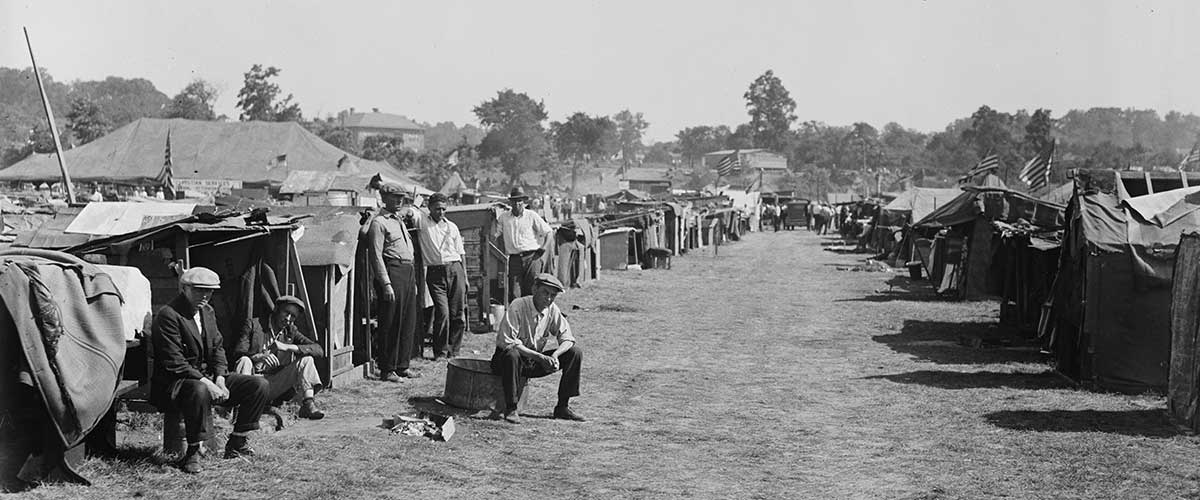
After American forces contributed to the Allied triumph in WWI, Congress passed a law known as the World War Adjusted Compensation Act that offered lifetime bonuses to veterans. However, these bonuses (often just over a dollar a day) would not start paying out until 1945. After the Great Depression shattered the American economy in 1929, many veterans struggled to make a living, leading to calls for Congress to start paying the benefits earlier than anticipated. In 1932, several hundred veterans gathered in Oregon to organize a protest march on Washington.
Led by veteran Walter Waters, the protestors arrived in Washington in June. They now numbered 1,500 and set up a camp south across the Anacostia River. They called themselves the Bonus Expeditionary Force, or the Bonus Army. Other camps began to be established around the city and more jobless veterans arrived to join the protest. Public sympathy for the veterans began to grow and their numbers swelled to around 20,000. The House of Representatives offered to give the veterans an emergency bonus, but the Senate rejected it after President Herbert Hoover announced he would veto the bill. This sent tensions soaring and fears began to grow that the veterans would become restless.
Protest marches on Washington DC were historically rare. Yet, a notable precedent had been set earlier that year when 25,000 unemployed Pennsylvanians marched on the Capitol to protest the lack of government assistance. The march failed, but there was no major violence. Waters and other veterans hoped that they could succeed where the Pennsylvanians had not. Hoover began to worry and ordered the Army and DC Police to gather near the camps. The stage was set for an ugly clash.
Hoover’s Hooverville: Life in the Anacostia Flats Encampment
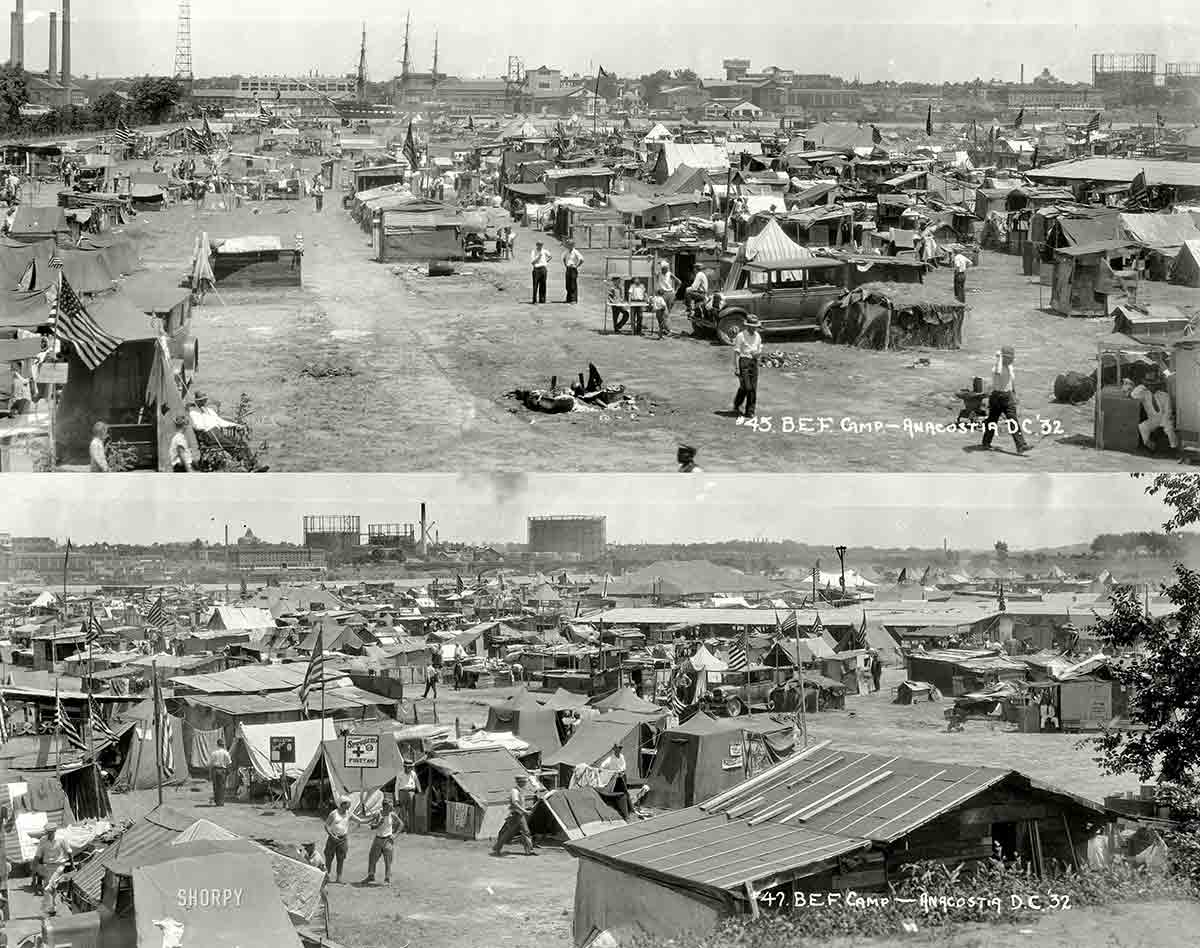
The onset of the Depression in the US saw the rise of what were referred to as “Hoovervilles”: collections of shacks and shantytowns that housed homeless and jobless people. The term Hooverville was coined by Democrats to highlight President Herbert Hoover’s responsibility for the failure of the US government to improve living conditions during the Depression. When the Bonus Army descended on Washington DC, the veterans established a series of Hoovervilles, the most famous one being in Anacostia Flats.
The camp in Anacostia was very well organized and cleaner than most Hoovervilles due to the fact that the veterans running it sought to impose discipline on the protestors. Ditches were dug for sewage, an internal police force was organized, alcohol and fighting were banned, and there was even a post office. The Anacostia camp became known as Camp Marks after a local police captain who sympathized with the marchers. The rules and regulations created by the camp’s organizers meant that it was safer and cleaner than most Hoovervilles around the country.
However, the living conditions in Camp Marks were still very poor. Many marchers and their families bathed in the Anacostia and Potomac Rivers, which resembled open sewers at the time. Food and supplies were scarce and had to be brought in by sympathetic locals. Additionally, while the camps were more racially integrated than most of American society was for a long time, racial and ethnic tensions were real and threatened to destabilize the camps.
Why Did the Government See Veterans as a Communist Threat?
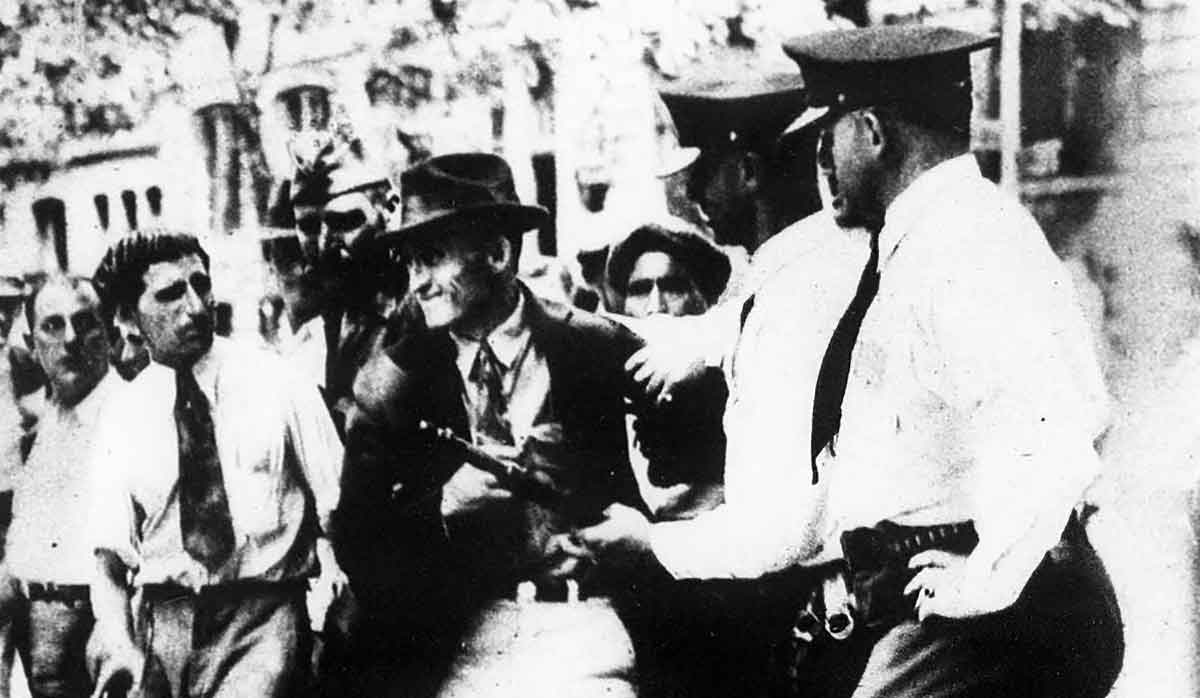
Most of the marchers were not motivated by any specific ideology. They were nonpartisan and did not threaten a violent revolution. However, protest movements in the interwar period were always vulnerable to infiltration by hardline elements hoping to impose their own agenda. So it was with the Bonus Army when the Workers Ex-Service Men’s League arrived in DC. This organization, a front for the Communist Party of the United States, aimed to stoke confrontations with the police to foment revolution in the capital.
Waters and other Bonus Army leaders despised the communists and hoped to maintain a good relationship with the police. They banished the WESL from the main camp and disavowed any revolutionary activities. Nonetheless, the ~500 men of the WESL still encamped in the city, posing a threat to the authorities and the Bonus Army’s organization. Their leader, John Pace, was a noted provocateur who often instigated fights with local authorities around the country. Later on, he admitted to Congress that he was ordered to infiltrate the march by the CPUSA.
Members of the Hoover Administration became convinced, based on biased intelligence assessments, that the Bonus Army was a communist attempt to take over the United States. Notwithstanding the willingness of the Bonus Army’s leaders to sideline the communists, their mere presence motivated the government’s decision to expel the veterans. The racial integration of some of the camps, including Anacostia Flats, also convinced some of the Hoover Administration officials that the Bonus Army was a communist front. General Douglas MacArthur, who was eager to crack down on the civil unrest, finally gained a pretext with the presence of communist elements in the Bonus Army’s camps.
MacArthur, Patton, and the Assault on Pennsylvania Avenue
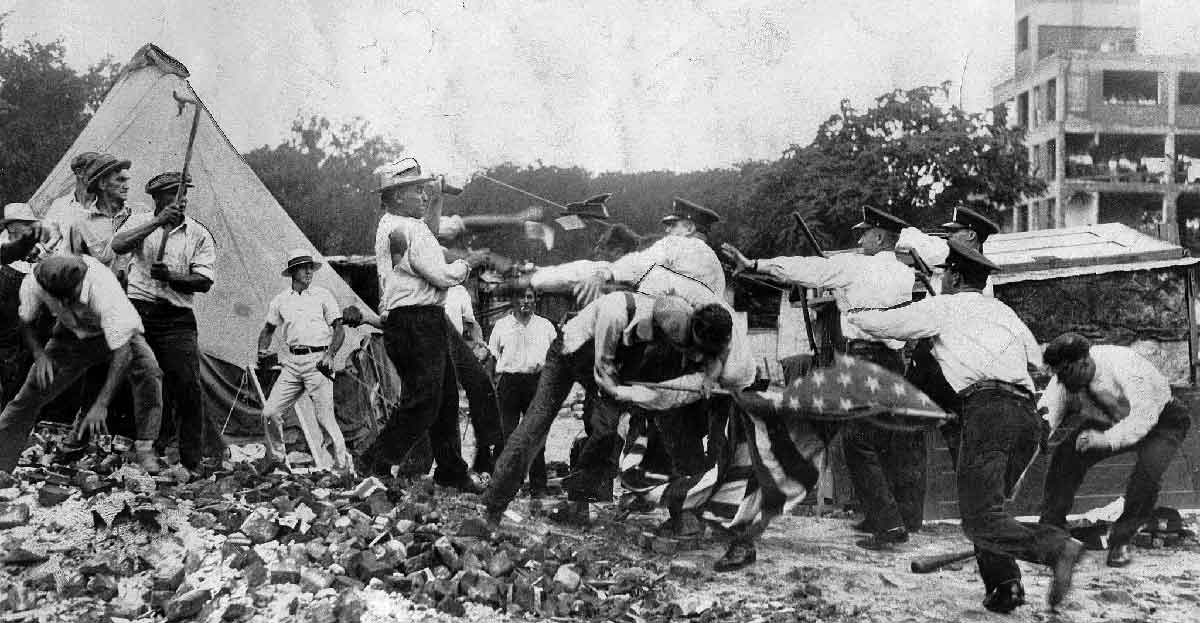
Around a month into the protest, President Hoover finally had enough. He ordered the Army Chief of Staff, General MacArthur, to take an armed force to clear the camp. MacArthur ordered 800 soldiers and 800 policemen, including cavalrymen and six tanks, to charge down Pennsylvania Avenue. The marchers were surprised and there were clashes, but few fatalities. Some of MacArthur’s subordinates, including Major Dwight Eisenhower, urged caution, but MacArthur pushed forward. Major George Patton, commanding a small force of cavalry, encountered a WWI veteran who had saved his life in France. The unsentimental Patton ordered him to be cleared from the area and claimed not to know him.
President Hoover was pleased with the clearing of the camps on Pennsylvania Avenue, but he did not want the army to cross the Anacostia River and attack Waters’s main camp. He issued a direct order to MacArthur to halt before the river. However, MacArthur ignored the orders and crossed the 11th Street bridge. His men attacked the camp and dispersed the marchers. Dozens of veterans were injured, and although two marchers had been shot and killed by police earlier that day, MacArthur’s troops arrested 21 others as they cleared the camps. Most of the tents and homes erected by the veterans were destroyed and they subsequently retreated from the city.
While the administration’s supporters welcomed the clearing of the camps, most of the American public was outraged by the sight of war veterans being attacked by the state instead of Congress paying their bonuses. Democrats used the incident to portray Hoover as brutish and unempathetic. MacArthur and Hoover’s claims that only 10% of the marchers were veterans were disproven and mocked widely. This had serious ramifications for the upcoming presidential elections.
Did the Attack on the Bonus Army Cost Herbert Hoover the Election?
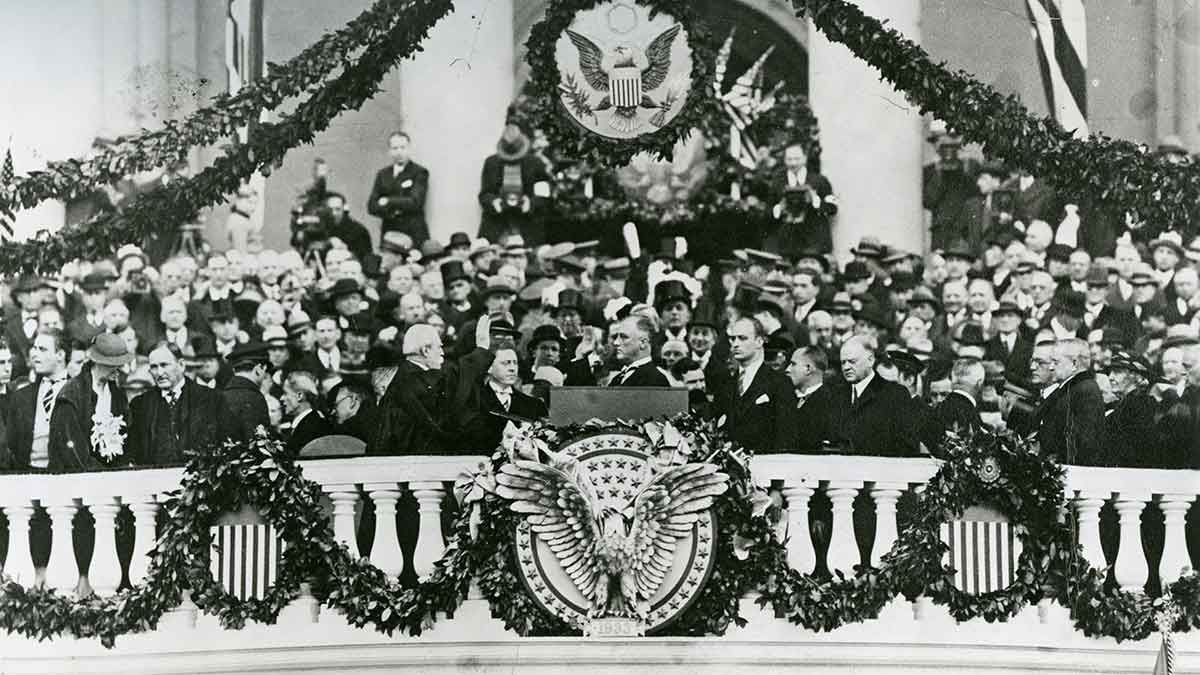
Upon seeing photographs of the military action against the Bonus Army, Democratic presidential candidate Franklin Delano Roosevelt reportedly remarked, “Well, this elects me.” Even people who may not have agreed with the demands made by the Bonus Army were horrified by their heavy-handed treatment.
In the years after the Wall Street Crash of 1929, there was a perception that Hoover and his allies were out of touch with the conditions that ordinary Americans had to face. Notwithstanding efforts by Hoover to alleviate the crisis, the crushing of the Bonus Army helped reinforce this perception in the minds of voters who were still undecided. Many veterans and their families, traditionally a Republican voting bloc, ended up switching to the Democrats. FDR was right in that people’s disgust helped him at the polls, although it was not the sole reason for his landslide victory.
In November 1932, Roosevelt and the Democrats won a crushing victory. In addition to gaining control of both houses of Congress, FDR won 42 out of 48 states in the presidential election, one of the most lopsided electoral victories in American history. Roosevelt knew that the best way to win over people’s trust was to treat them fairly if they were suffering. Hence, when another veterans’ protest march occurred in 1933, FDR’s wife, Eleanor, went to meet them with food and music. This reinforced the notion that a Democratic-controlled Washington would help people rather than use overwhelming force against them.
How a Failed Protest Created the GI Bill
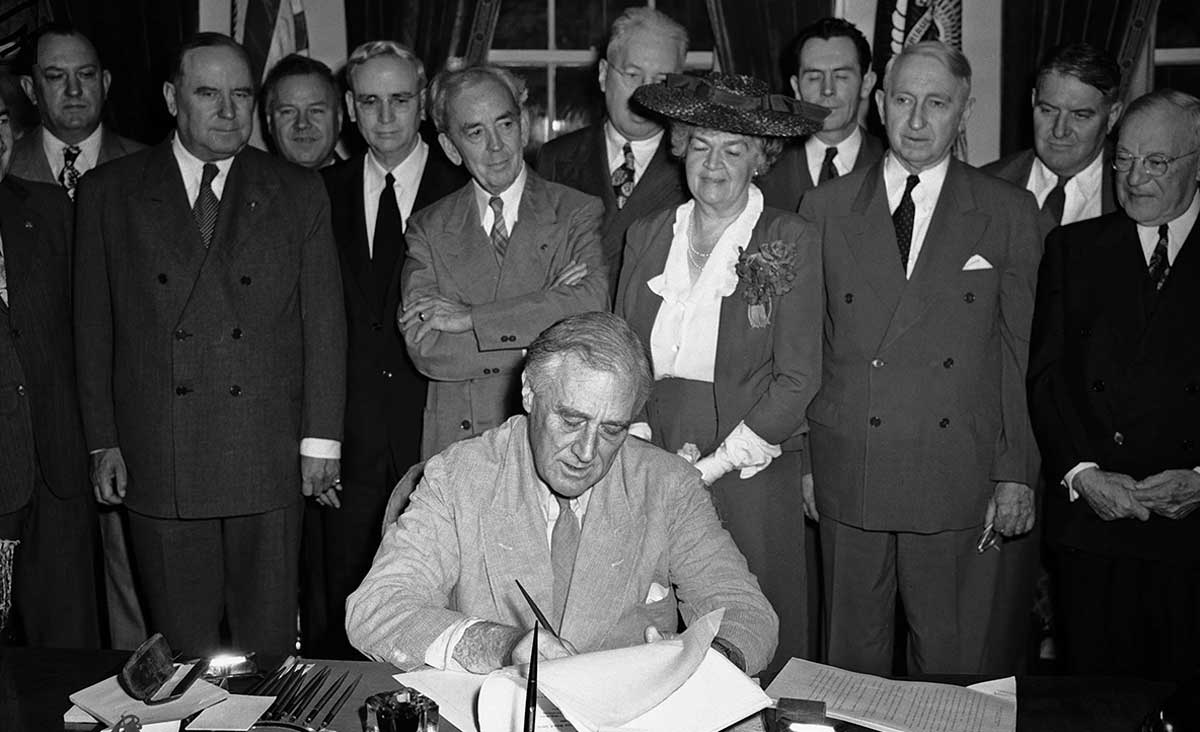
When it became apparent that the Allies would emerge victorious in the Second World War, American lawmakers feared the prospect of another Bonus Army march or a surge in political violence if the 12-million servicemen and women were not reintegrated into the economy properly. This helped encourage support for the GI Bill. The original WWI veterans had their bonuses paid to them in 1936 despite some opposition from the White House. This time, the benefits would be far more generous.
Instead of a lump-sum payment, the GI Bill offered different forms of support for returning servicemen and women. The government paid up to $500 per year for tuition, which could cover most universities in the country. The Veterans Administration offered to cover up to 50% of loans (between $2,000-$4,000) offered to veterans by private lenders. Additionally, veterans were offered $20 per week for 52 weeks while they searched for work after their discharge. These benefits were far more generous than what Congress offered to returning servicemen and women after WWI and contributed to the supercharging of the American economy in the postwar period.
The Bill had several drawbacks. Foremost among them was the fact that Black and Hispanic veterans were often denied these benefits because they were administered at the local level. The law itself was colorblind, but the US government did little to enforce an equitable rollout. This meant that Black and Hispanic veterans were disproportionately involved in the protest movements that arose in the 1950s and 1960s. Despite these issues, the GI Bill was one of the most wide-ranging laws benefiting WWII veterans in the world and helped to avoid a repeat of the unedifying scenes in 1932 when the US army marched against its veterans.