
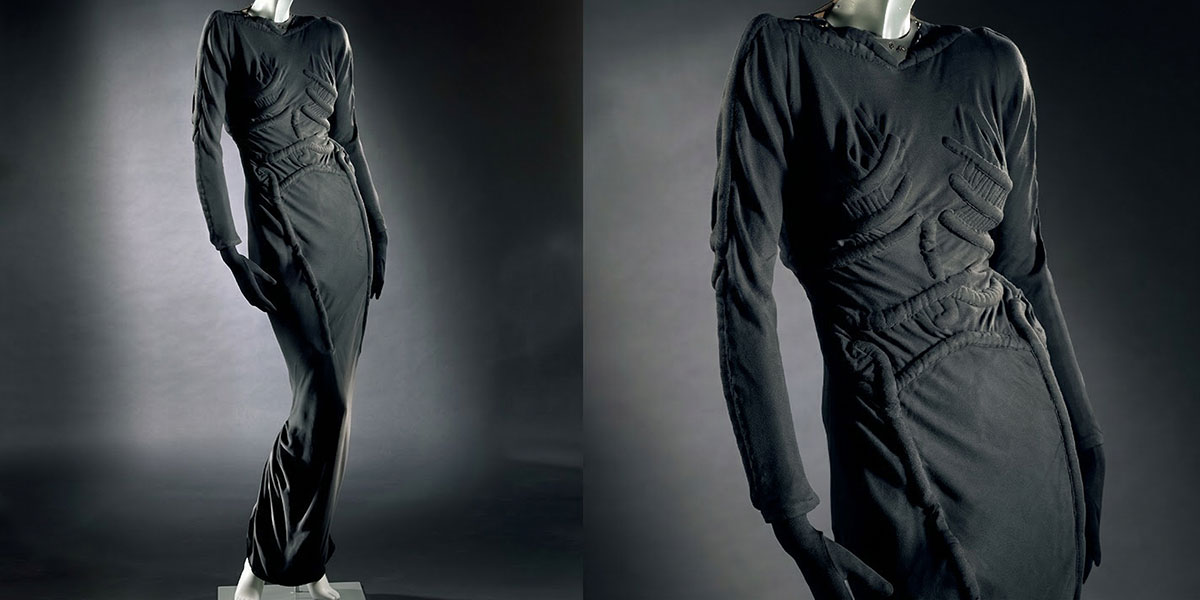
One of Elsa Schiaparelli’s most iconic pieces is the Skeleton Dress (1938). Real bones and white silk hugged the woman’s curves. Ribs shaped her torso, and a spine rippled down the back. This piece was not just a dress; it was a vision, an entire story. At a time when couture was all about elegance and restraint, Schiaparelli turned it into visual storytelling, into art. Let’s explore Schiaparelli’s groundbreaking designs, feminist resonance, and enduring legacy revived today by Daniel Roseberry’s visionary reinterpretations.
Elsa Schiaparelli: Fashion’s Surreal Genius
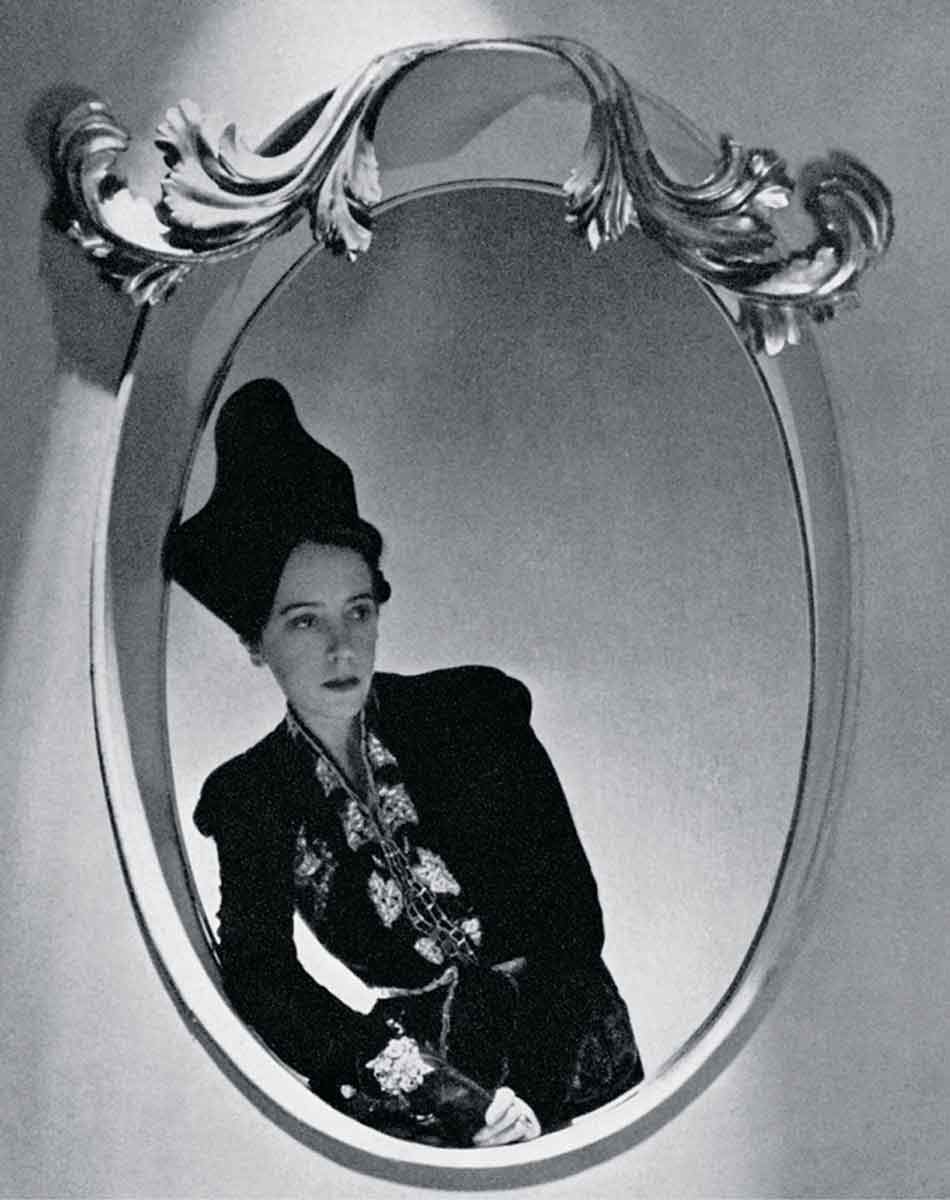
Nicknamed fashion’s “mad genius,” Schiaparelli was the darling of 1930s Paris, a provocateur who moved easily among artists like Salvador Dalí, Jean Cocteau, and Man Ray. They all shared the same visions about transformation, illusion, and they blurred the boundaries between reality and imagination.
However, Elsa Schiaparelli’s fashion went well beyond mere visions. Her art reimagined how a woman’s body could be treated; she did not just dress it or decorate it. In her hands, surrealism escaped the gallery and entered daily life. The question her work still poses is radical: how can fashion, that most intimate of arts, transform the body from an object into imagination itself?
Surrealism Meets Fashion: Paris in the 1930s
Paris in the 1930s was the place to be for the avant-garde scene. Surrealism, an avant-garde movement founded by André Breton, was on the rise at that time. In salons, ateliers, and cafés, Surrealists met and discussed ideas about challenging the perceptions of reality, dreams, the subconscious, eroticism, the inexplicable, and the bizarre. Elsa Schiaparelli fit right into this circle not as a visitor, but as a prominent figure. Under these influences, she managed to transform her ideas into wearable pieces of art.
The movement drew attention to automatism, juxtaposition, and the irrational. Furthermore, it explored erotic fantasies, ethereal dreamscapes, and disturbing visual associations. The male Surrealists depicted women as muses and objectified them. Even though Schiaparelli was deeply involved in the movement and its social circle, her approach towards women was completely different. She clearly understood Surrealism’s principles and applied them to the body, turning the female silhouette into a canvas of conceptual exploration.
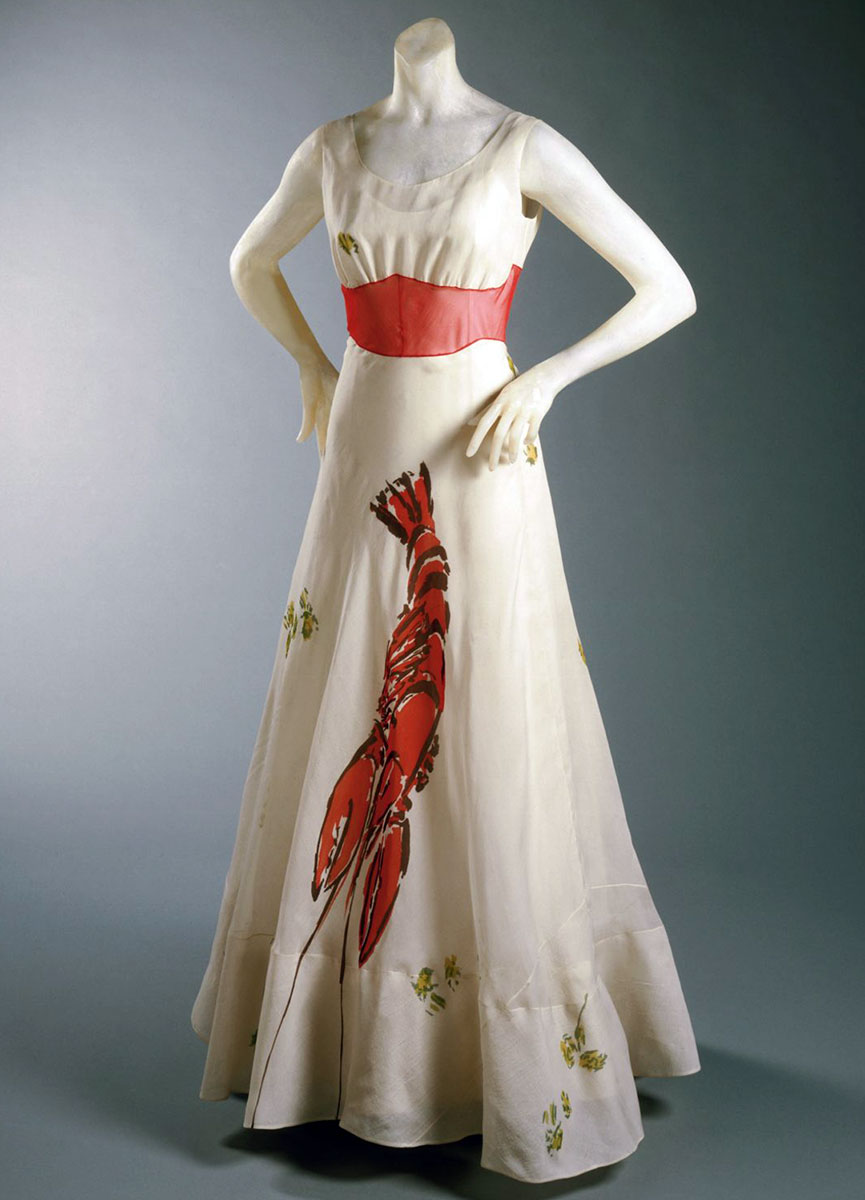
She worked closely with many Surrealists to bring her visions to life. For example, Salvador Dalí painted lobsters on her gowns. Man Ray captured the fantastical universes of her designs, and Jean Cocteau designed dramatic motifs. Schiaparelli’s atelier became a cauldron boiling with ideas. She tested Surrealist philosophy with experiments on materials. Thus, zippers became statements, silk became an element of surprise, and garments became performative objects.
However, like any true artist, Schiaparelli drew inspiration from many sources, such as contemporary exhibitions and artworks. For instance, the 1936 International Surrealist Exhibition in London left a huge mark on her. The exhibition presented shocking contrasts and disturbing sculptures that she would later introduce into her own designs. She was the only couturier of that time who could incorporate such eccentric surrealist elements into fashion and actually make it both wearable and intellectually provocative.
The Surreal Body: Schiaparelli’s Key Designs
Schiaparelli’s designs were the meeting point of surrealist art and fashion. The Lobster Dress (1938) is an iconic example of that. Dalí painted the lobster, an erotic symbol in the surrealist vocabulary, across the skirt of a simple evening gown made of silk. The dress transformed the body into something playful yet provocative. On the one hand, having a sea creature on a formal dress was something original and amusing. On the other hand, it was shocking, as Surrealism meant to be in all its notions.
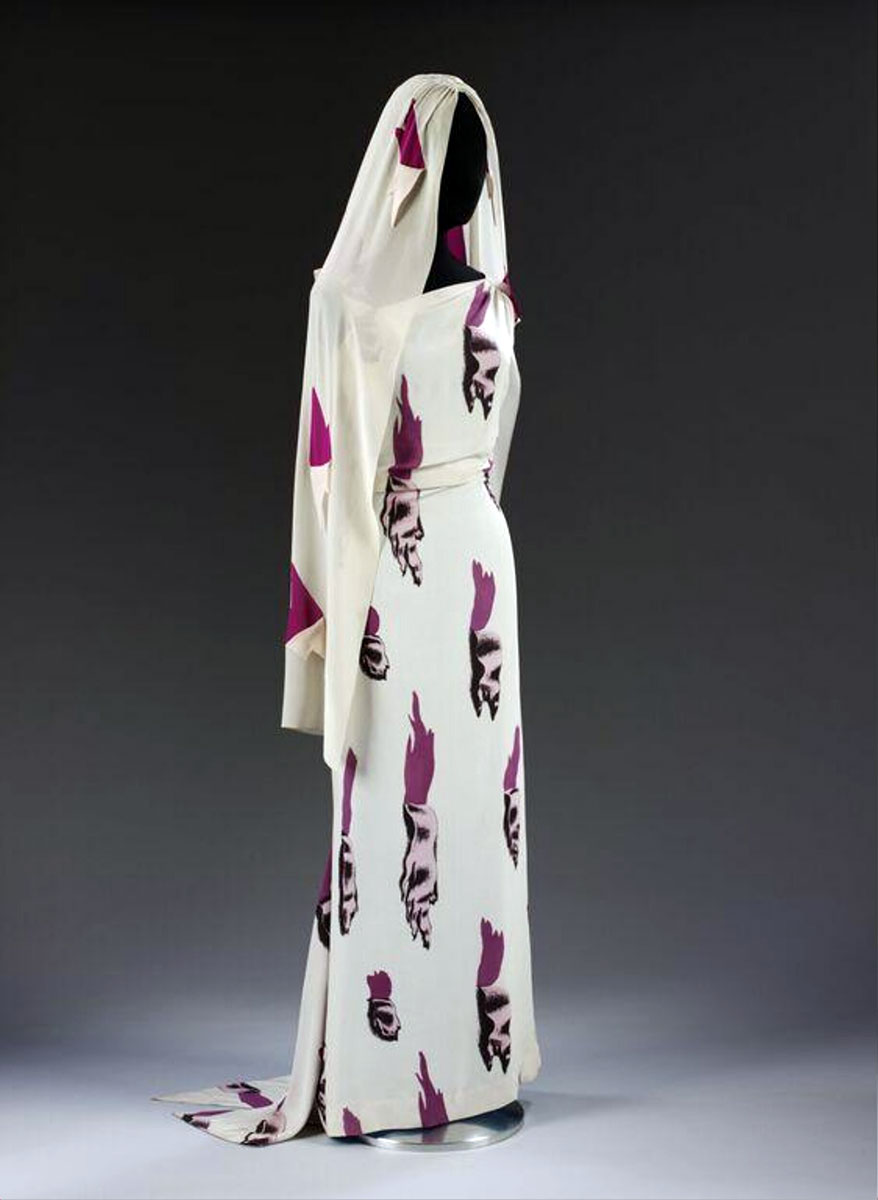
In the same spirit, she created the Tears Dress. She rendered shimmering tears in embroidery and appliqué, from the top to the bottom of the dress. It was the designer’s own way to capture the fragility and the violence of this human state. Next, she made another shocking piece, the Skeleton Dress. That is, a dress with white silk stitching that outlines the human anatomy. Hence, the body itself becomes the ornament, the decoration that merges scientific precision and theatricality.
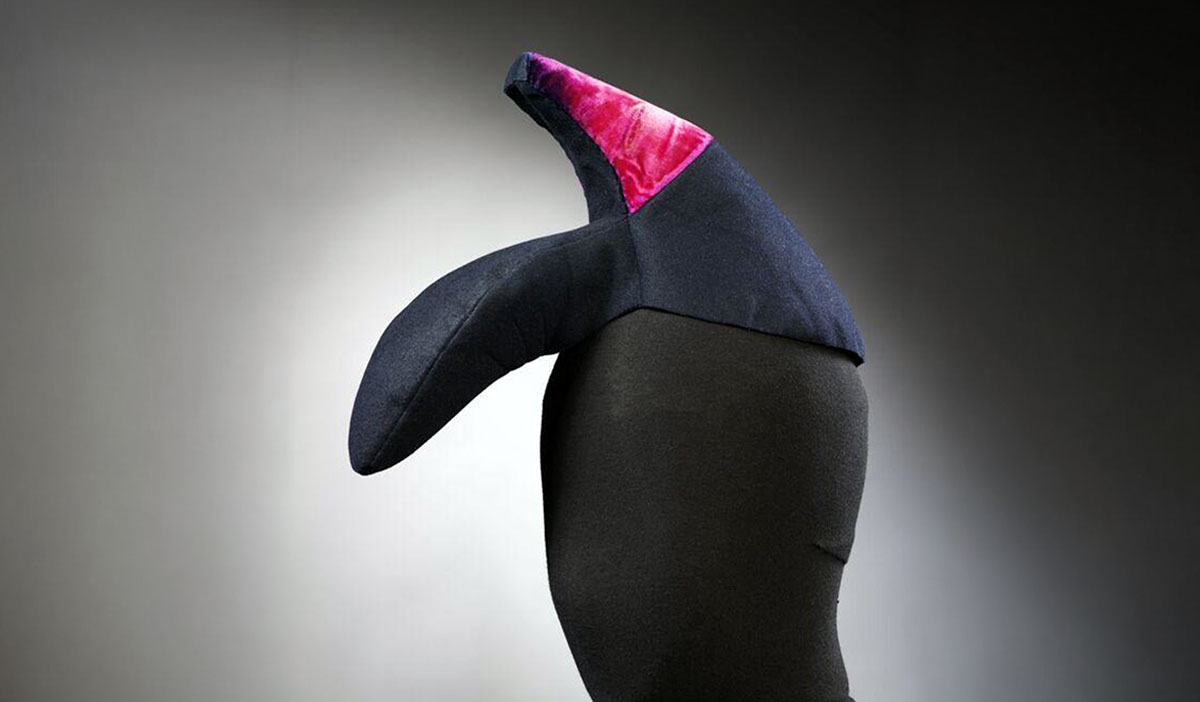
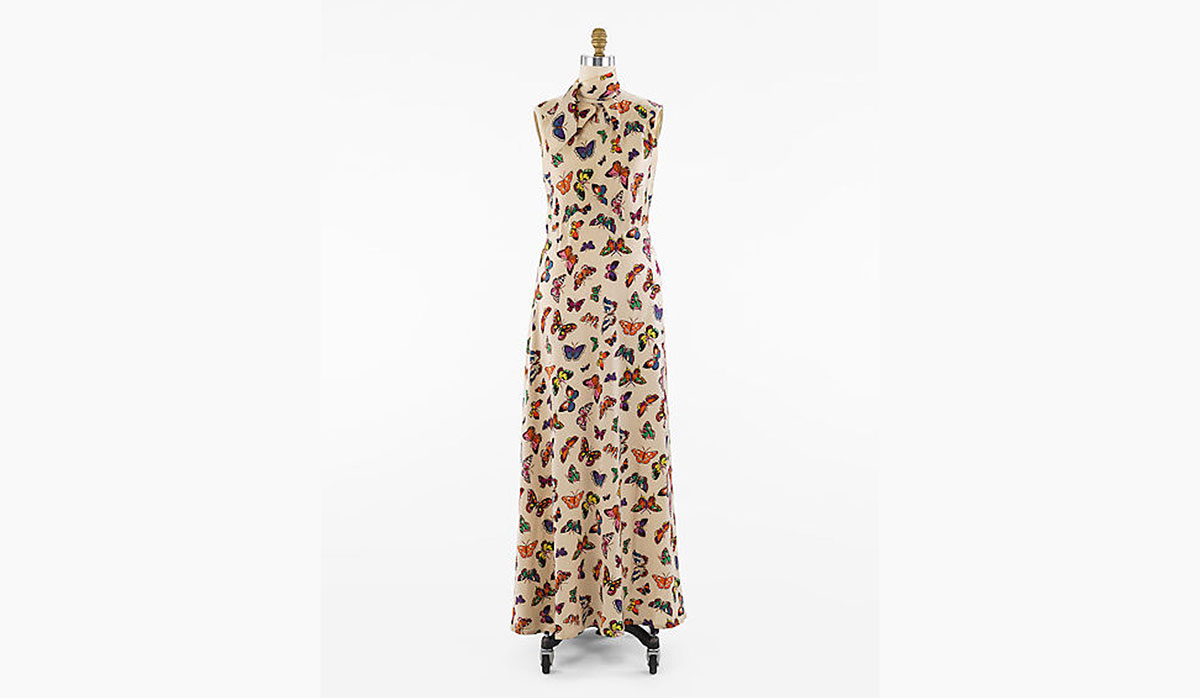
Another piece Elsa Schiaparelli created was iconic and surrealist to its core: The Shoe Hat (1937). Working with Dalí on the design, she basically turned footwear into headwear. It was her way to transform an everyday object into a wearable absurdity. Her Butterfly Dress (1938) had delicate wings printed or appliquéd onto the skirt. It evoked a sense of movement with metamorphosis, inviting the wearer to inhabit the delicate boundary between human and creature.
Schiaparelli embroidered and painted on silk, taffeta, and velvet with extra attention to detail. Every little thing on her garments was thoughtfully placed there. These designs are just a few examples of what she offered to the fashion and art world. Elsa transformed the female body into a canvas, ready to present surrealist concepts. Her persistence in intellectual engagement is what made her fashion so special and original. It proved that this art form was much more than just decoration and frivolity. It was a way to explore one’s identity, cultural inquiries, and psychological expeditions.
Redefining Femininity
Surrealism was generally a male-dominated movement, even though several female artists were part of its social circles. The male general consensus was that women were passive objects of desire. However, Elsa Schiaparelli actively opposed this predicament and treated women as they truly were: smart, intelligent, and beautiful in all possible and bizarre ways. Socialites and actresses of the time adored her creations and wore them constantly. They became Schiaparelli’s embodiments of theatricality and wit, and transformed the act of dressing up into a statement of empowerment. The dress itself became a performative act, challenging the boundaries of conventional femininity and beauty.
This transformation has been noticed by several scholars. Whitney Chadwick spoke of the female Surrealist artists and designers who, through humor, fantasy, and irony, restored the woman’s position. On a similar note, Xavière Gauthier explored how women critiqued and destabilized the male gaze using the Surrealist language. Thus, erotic imagery became a scene of female empowerment and self-determination. Both Chadwick and Gauthier made very accurate observations that applied to Elsa Schiaparelli; her work indeed reflects all these principles, as she reimagined the female body both as aesthetic pleasure, but for itself, no one else, and intellectual involvement.
These qualities were expanded through humour, spectacle, and theatricality. Her pieces provoked surprise, laughter, and curiosity, providing women with the chance to attract attention on their own terms. Once again, she redefined femininity as something other than passive or purely decorative. The woman who wore her designs became an active participant in an extensive discussion on fashion, art, and philosophy.
Reception and Cultural Impact
Elsa Schiaparelli’s designs were eccentric for their time. Naturally, this raised criticism, as not everyone understood Schiaparelli’s originality and boldness. Some said her creations were shocking but whimsical, while others said they were controversial and not elegant enough for the world of fashion. In popular magazines, such as Vogue and Harper’s Bazaar, journalists and editors saw her audacity and praised her originality. At the same time, they wondered about the wearability of some of her theatrical pieces. The combination of Surrealism, humor, intellectuality, and impeccable tailoring earned her the title of fashion’s “mad genius,” capturing both admiration and awe.
The designer’s influence went well beyond Paris. Women of the high society, as well as cinema icons, such as Wallis Simpson and Marlene Dietrich, often wore Schiaparelli designs. The general public was quite fascinated too. They loved the Lobster Dress and the Shoe Hat, and they wanted to be part of the artist’s surrealist world. Moreover, museums and collectors acknowledged the innovative character of her garments. So, they began acquiring her clothes and preserving them as cultural artifacts and works of great artistic importance. Right from the start, Schiaparelli’s clothes were not made only for commercial purposes.
The critical discourse surrounding Schiaparelli also highlighted the gender dynamics of the fashion industry at the time. Male designers paid attention to technical skill and exotic elements. Schiaparelli, on the other hand, told a story. Of course, this made her both respected and scrutinized by her colleagues for breaking traditions. Yet no one can deny that she was acknowledged, even from the early stages of her career. Quickly, she became a prominent figure in the fashion world, a status that inspires to this day.
Reinvention: Schiaparelli Today
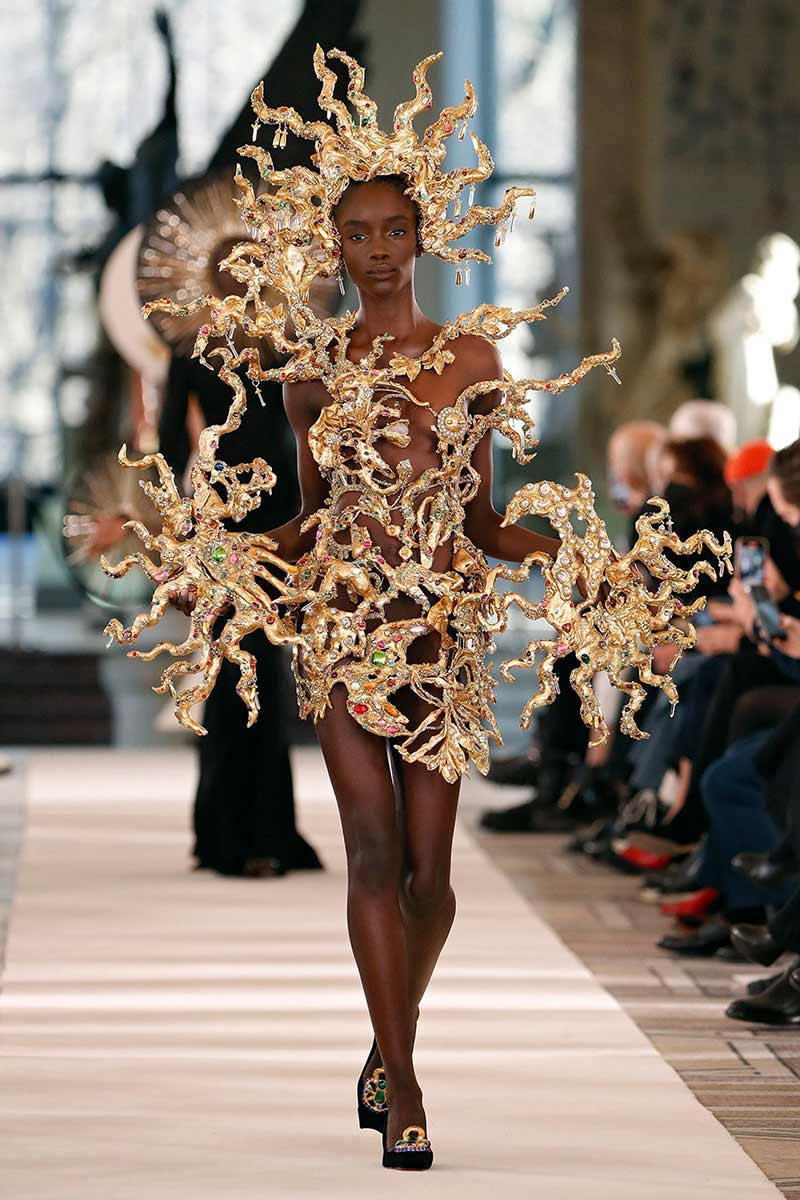
In the 21st century, her influence and reputation are still strong. This is evident in the reinvention of her fashion house under the creative direction of Daniel Roseberry. In 2019, when he took over, Roseberry resurrected the brand’s surrealist and theatrical DNA. His haute couture collections, especially Spring/Summer 2022 and Fall/Winter 2023, are characteristic of his ability to emulate Elsa Schiaparelli’s creative genius in the contemporary era.
Roseberry has revisited many of Schiaparelli’s original designs and transformed them into new, contemporary garments. To do so, he has used new materials and technologies. For example, while revisiting the Skeleton Dress, he created anatomical corsets and bone elements from gilded metal and bronze, giving a more robust feel to the design. Another recurring symbol of Schiaparelli that Roseberry revamped is the dove, a symbol of freedom and transformation. He created a bodice with a golden dove that Lady Gaga wore at the 2021 U.S. presidential inauguration, making it iconic.
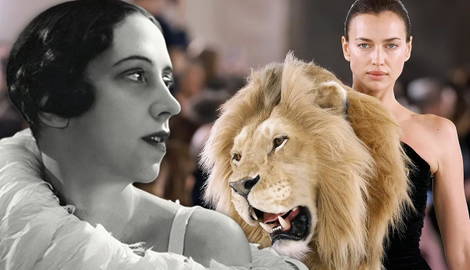
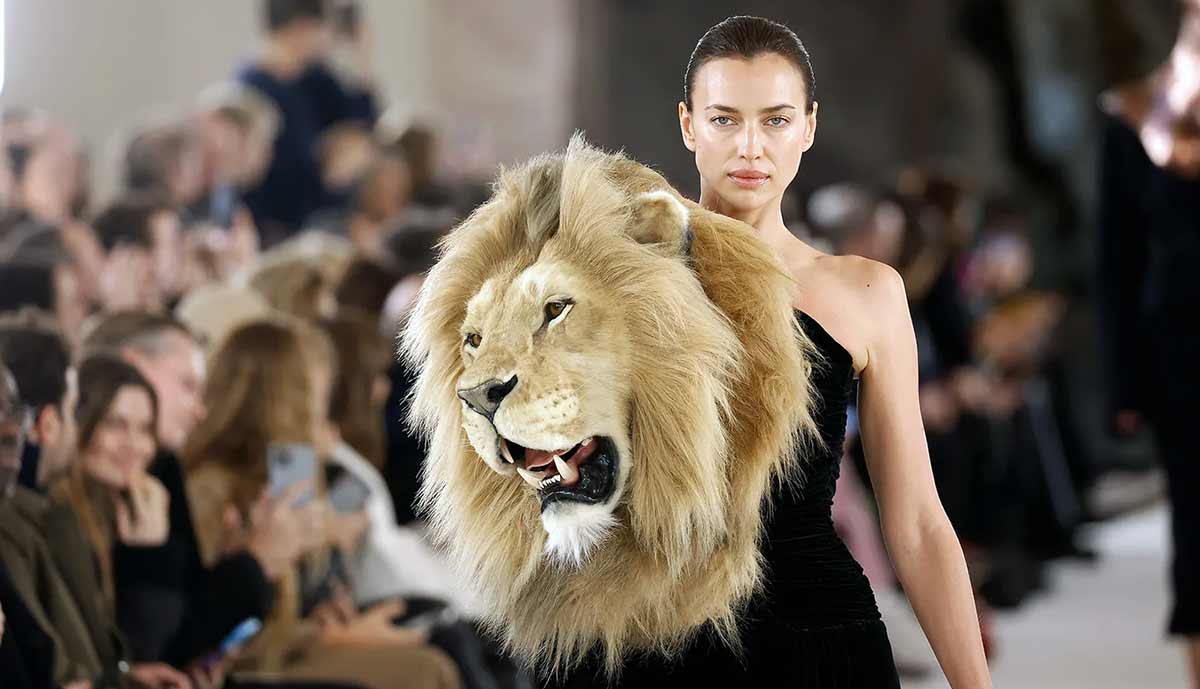
The 2023 fashion show featured models wearing hyper-realistic animal heads inspired by Dante’s Inferno. It sparked a global conversation that echoed similar themes from Schiaparelli’s 1930s collections: shock, beauty, and playfulness. Therefore, Roseberry’s success lies in his ability to channel Schiaparelli’s surreal sensibility into contemporary designs. His personal interpretation revolves around the same dualities as Elsa Schiaparelli: discipline and delirium, humor and grandeur. In our time, fashion is becoming increasingly minimal, clean, and maybe even conceptual. Roseberry for Schiaparelli brings back the notion that fashion can be wearable sculpture too.
Elsa Schiaparelli’s Enduring Influence
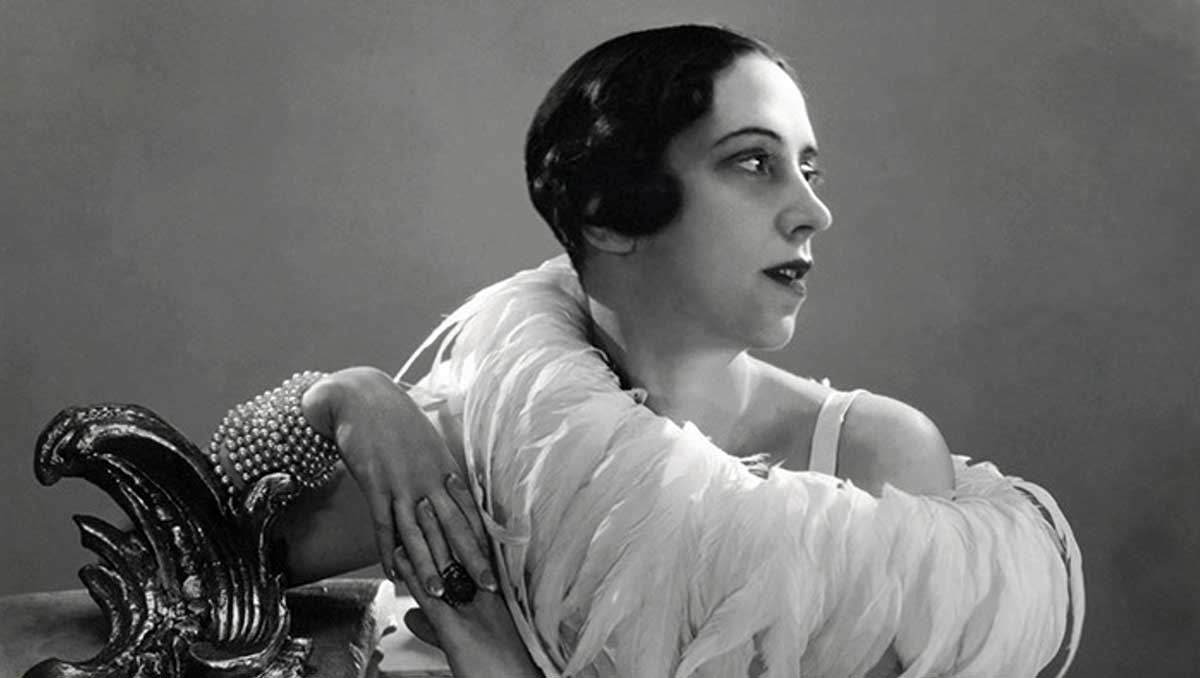
Elsa Schiaparelli’s art remains relevant today because it reminds us that fashion is not just about attire. It is a means of empowerment and a cultural commentary. Her designs are testaments to an outlook that sees the female body as an actively engaged presence, occupying space in ways the owner wants, not as the male gaze usually sees it. Contemporary designers, most notably Daniel Roseberry, but also Iris van Herpen, and others, are inspired by Schiaparelli’s surrealist vision. In the end, Elsa Schiaparelli’s fashion was an audacious, intelligent, and playful assertion that the imagination need not remain confined to canvas, gallery, or text. She showed, decades ago, that the female body could be re-envisioned as art, spectacle, and story, a lesson that continues to inspire both wearers and creators alike.