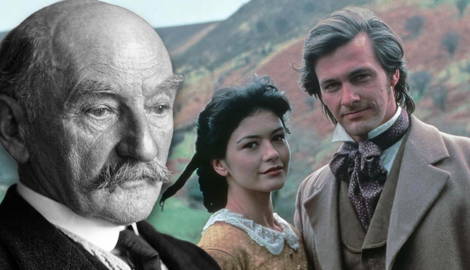

Though Thomas Hardy began writing poetry from a young age, he gained notoriety with his novels. As a Victorian realist, Hardy did not shy away from criticizing Victorian society and was sympathetic toward the declining rural populations in the United Kingdom. Many of his novels are set in a fictional region of rural Wessex in southwest England. Hardy’s novels are often dark, suspenseful, and even controversial, as he illustrated the darker side of human nature within his texts.
Here are ten of his most prominent novels. Most were inspired by Hardy’s own life, the people in it, and the rugged countryside surrounding him.
| Title & Year | Key Characters | Summary & Primary Themes |
| Desperate Remedies (1871) | Cytherea Graye, Edward Springrove, Aeneas Manston | A Gothic sensation novel featuring arson, blackmail, and secrets; follows a lady’s maid navigating mystery and romance. |
| A Pair of Blue Eyes (1873) | Elfride Swancourt, Stephen Smith, Henry Knight | A tragic love triangle exploring social prejudice and moral rigidity; Hardy’s first novel published under his own name. |
| Far From the Madding Crowd (1874) | Bathsheba Everdene, Gabriel Oak, Sergeant Troy | Examines the conflict between independence and impulsive desire through the lens of rural farm life and three distinct suitors. |
| The Hand of Ethelberta (1876) | Ethelberta Petherwin, Christopher Julian | A critique of class mobility and social performance; follows a woman concealing her humble origins to support her family. |
| The Return of the Native (1878) | Clym Yeobright, Eustacia Vye, Damon Wildeve | A tragedy set on Egdon Heath involving failed ambitions, restless desires, and the destructive power of misunderstanding. |
| The Trumpet-Major (1880) | Anne Garland, John Loveday, Bob Loveday | Hardy’s only historical novel; blends romance with the anxieties of wartime England during the Napoleonic Wars. |
| The Mayor of Casterbridge (1886) | Michael Henchard, Donald Farfrae | A “Man of Character” tale focusing on the themes of fate, remorse, and the inescapable consequences of past secrets. |
| The Woodlanders (1887) | Grace Melbury, Giles Winterborne, Dr. Fitzpiers | Explores the painful cost of social aspiration and the contrast between steadfast loyalty and sophisticated betrayal. |
| Tess of the d’Urbervilles (1891) | Tess Durbeyfield, Alec d’Urberville, Angel Clare | A controversial indictment of Victorian social hypocrisy, sexual double standards, and rigid moral judgment. |
| Jude the Obscure (1895) | Jude Fawley, Sue Bridehead | Hardy’s final novel; a bleak critique of marriage laws, religious rigidity, and the thwarting of intellectual ambition. |
Who Was Thomas Hardy?
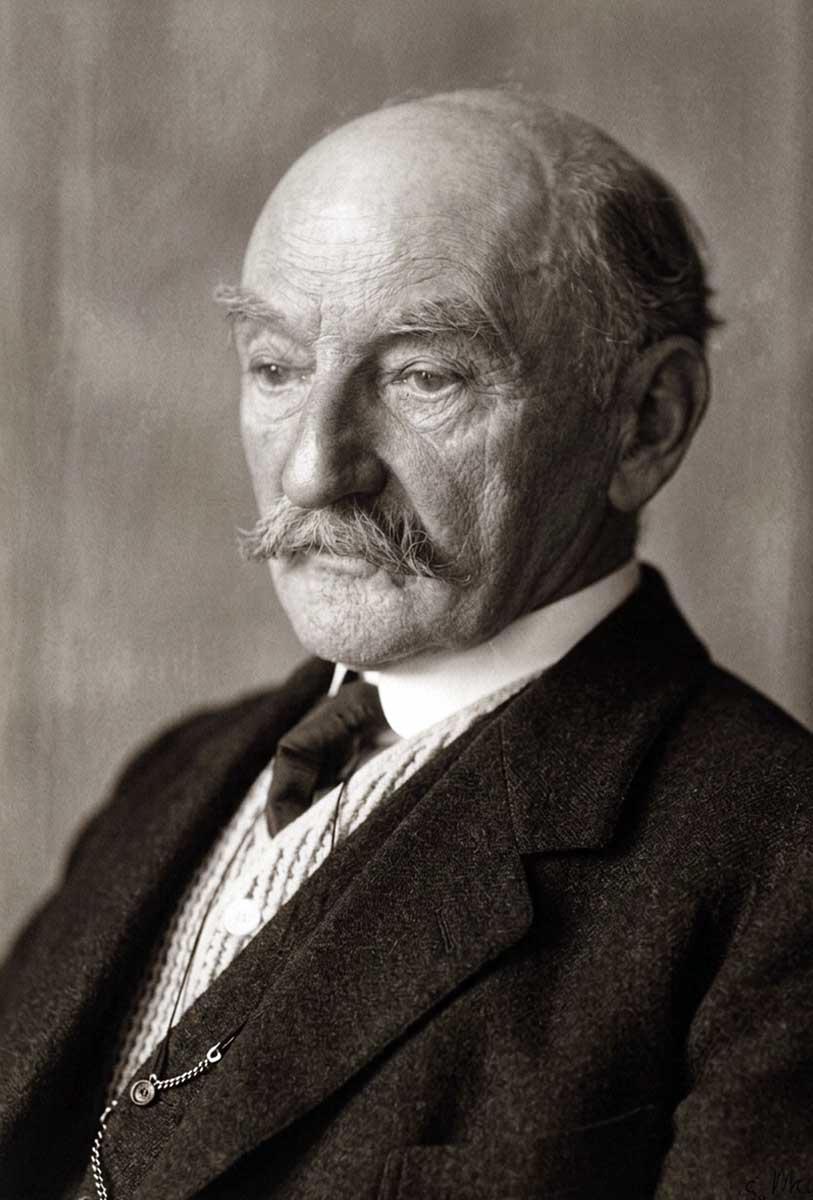
Born on June 2, 1840, in Dorset, England, Thomas Hardy grew up with a father who was a stonemason and a mother who devoted her time to educating her son before he began school at age eight. Hardy demonstrated academic potential. However, his formal education ended at age 16, as his parents could not afford to send him to university. He instead became apprenticed to a local architect and, skilled at the trade, moved to London in 1862 to work in the field. He enrolled in King’s College, London, in that same year.
Hardy never grew accustomed to life in London. He felt inferior to others in the city and was infuriated by the class divisions in its society. He became interested in social reform initiatives and began reading the works of English philosopher John Stuart Mill and English poet and cultural critic Matthew Arnold.
After a few years, Hardy returned to Dorset and settled in Weymouth, where in 1871 he began his writing career. In September 1874, Hardy married English writer and suffragist Emma Gifford. Her death in 1912 profoundly affected Hardy, who fell into a deep depression. He married again in 1914 to an English teacher and children’s writer named Florence Emily Dugdale.
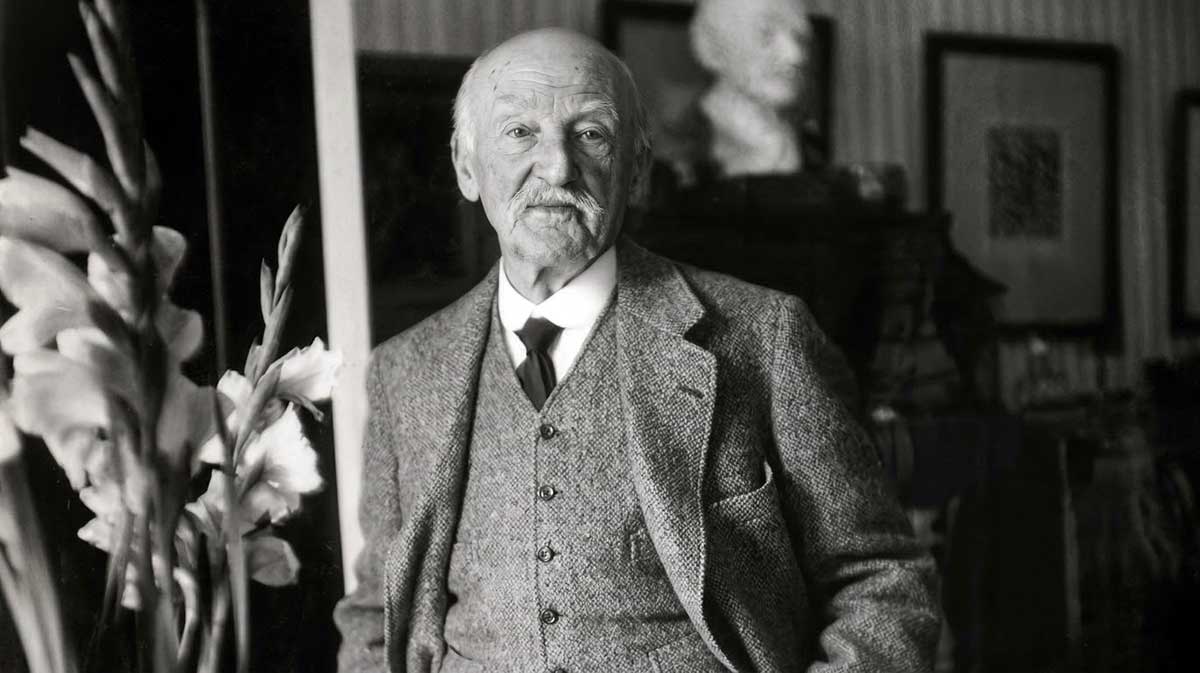
In 1910, Hardy was appointed a Member of the Order of Merit and was nominated for the Nobel Prize in Literature. By 1927, he had received 25 nominations and was a finalist for the prize in 1923.
In his later years, Hardy adopted a Wire Fox Terrier, Wessex, who remained by Hardy’s side as he continued to write. On January 11, 1928, at the age of 87, Hardy dictated his final poem to his wife before passing away.
Hardy’s reflections on such themes as morality, social judgment, class, fate, and remorse were controversial in his own time and remain vital subjects of discussion in the 21st century. Hardy’s ashes can be visited in Poets’ Corner in Westminster Abbey in London.
1. Desperate Remedies (c. 1871)
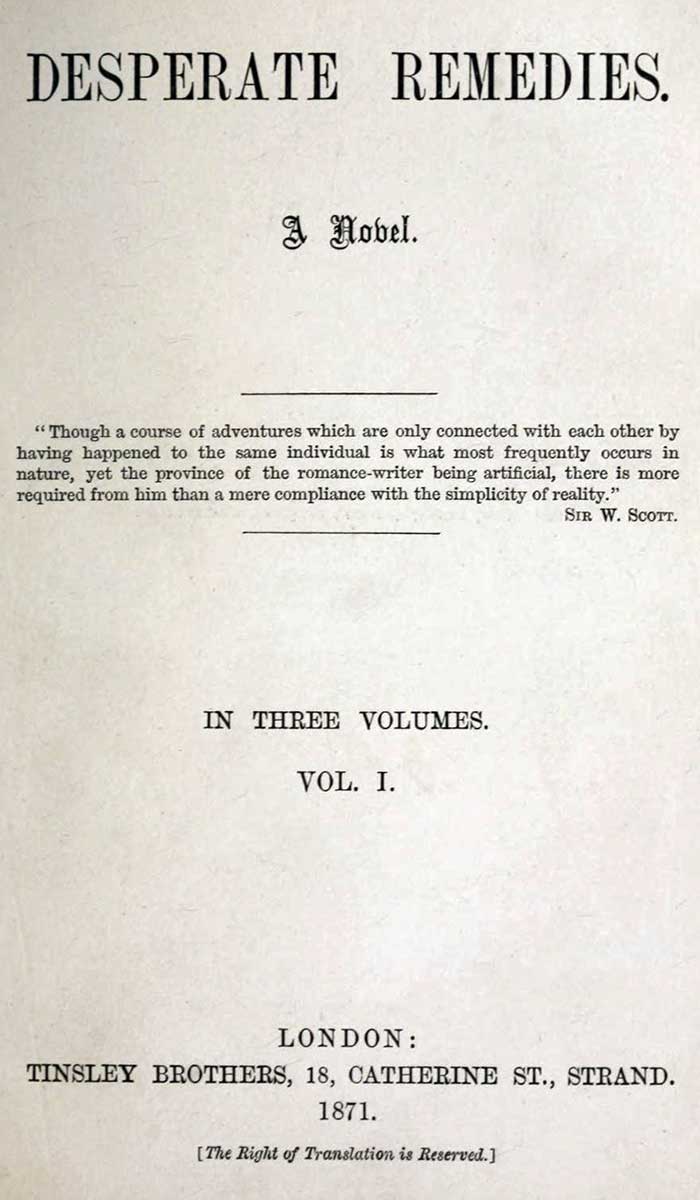
Hardy’s first published novel and one of his lesser-known works, Desperate Remedies, follows Cytherea Graye, who, after her father’s death, seeks employment and becomes a lady’s maid to the mysterious Miss Aldclyffe.
Cytherea falls for the architect Edward Springrove, but complications arise when she discovers he is already engaged. Meanwhile, the sinister Aeneas Manston pursues her, hiding a dark secret involving his supposedly dead wife.
Hardy interweaves gothic suspense into his sensation novel as arson, blackmail, and mistaken identities threaten Cytherea’s safety. Ultimately, Aeneas’s crimes are exposed, Edward’s prior ties dissolve, and Cytherea achieves both freedom and a hard-won future with Edward. The novel was released anonymously by the publisher Tinsley Brothers.
2. A Pair of Blue Eyes (c. 1873)
Hardy’s A Pair of Blue Eyes follows Elfride Swancourt, a young, impressionable woman drawn into a love triangle with her first suitor, the earnest architect Stephen Smith, and later the older, intellectual critic Henry Knight. When Elfride’s past with Stephen is revealed, social prejudice and pride undermine both men’s claims to her affection.
Henry’s dramatic rescue binds him to her emotionally, but his moral rigidity soon drives them apart. Seeking security, Elfride impulsively marries another man, then dies tragically. Stephen and Henry confront their failures as they travel together to Elfride toward the end of the novel, both unaware that she had married another man and subsequently died. A Pair of Blue Eyes was Hardy’s first novel not to be published anonymously.
3. Far From the Madding Crowd (c. 1874)
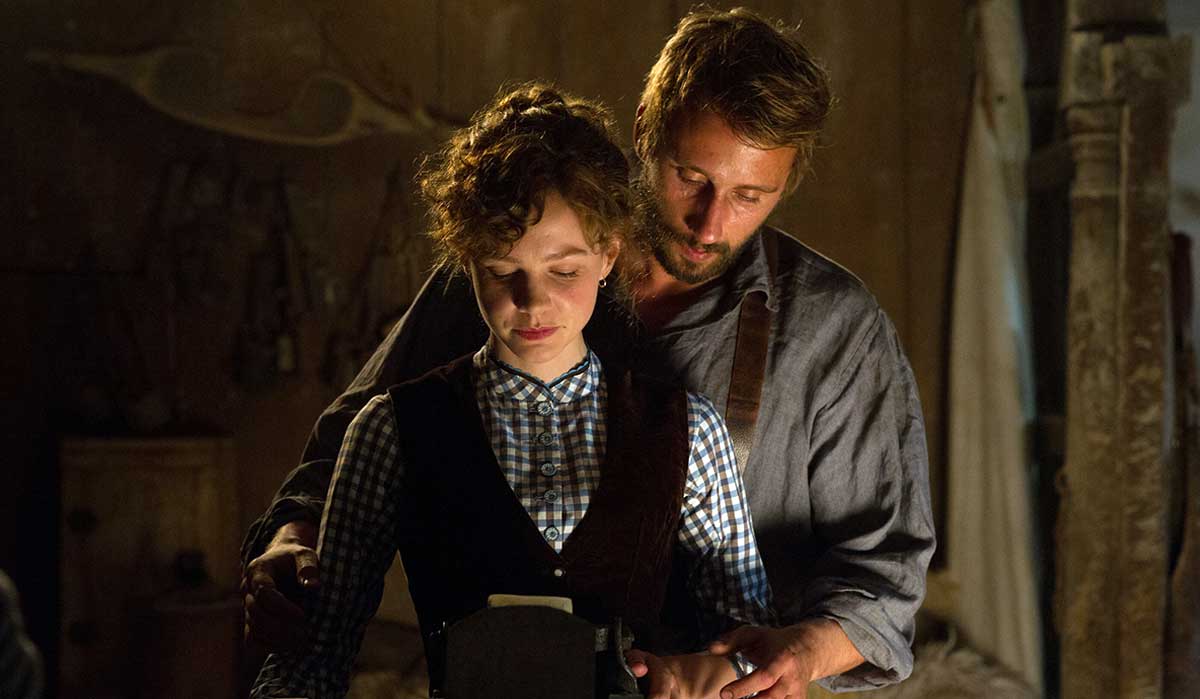
Perhaps Hardy’s most celebrated novel, Far from the Madding Crowd follows Bathsheba Everdene, an independent young woman who inherits a farm and attracts three very different suitors: steadfast shepherd Gabriel Oak, wealthy but lonely farmer William Boldwood, and reckless soldier Sergeant Troy.
Bathsheba’s impulsive marriage to Sergeant Troy leads to heartbreak, financial strain, and tragedy, especially after Sergeant Troy’s neglect. William’s obsessive love culminates in violence when Sergeant Troy briefly reappears. After Sergeant Troy is killed and William is imprisoned, Bathsheba learns the value of loyalty and quietly builds a future with Gabriel, whose devotion endures.
Far from the Madding Crowd explores the conflict between independence and emotional responsibility through Bathsheba’s romantic relationships. By contrasting Gabriel’s stability with William’s obsession and Troy’s recklessness, Hardy critiques impulsive desire and romantic idealism. The novel highlights how chance and social conventions shape people’s lives, with Hardy ultimately arguing that stability, patience, and quiet endurance should be valued over passion.
4. The Hand of Ethelberta (c. 1876)
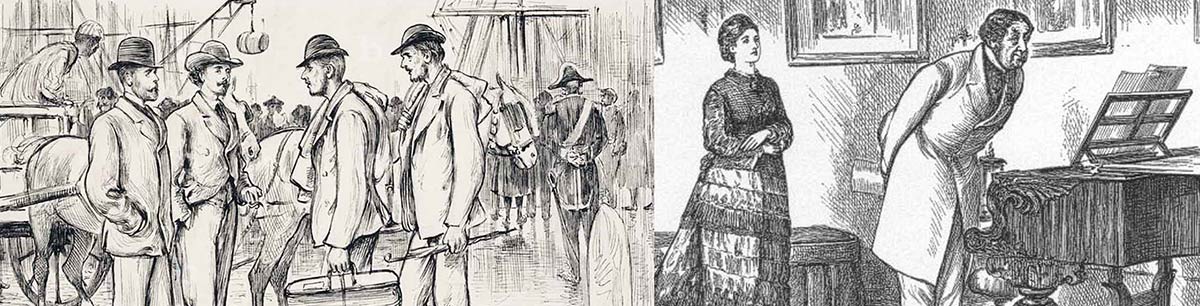
Hardy’s The Hand of Ethelberta depicts Ethelberta Petherwin, a clever, ambitious young woman who rises socially after marrying a wealthy, elderly man, only to have him die soon after their marriage.
Determined to support her large working-class family, Ethelberta becomes a celebrated poet and storyteller while carefully concealing her origins. Pursued by multiple suitors, including the loyal architect Christopher Julian, the aristocratic Lord Mountclere, and others drawn to her beauty and talent, Ethelberta navigates social ambition, romantic pressure, and family duty. Ultimately, she marries Lord Mountclere for security rather than love, only to find the union stifling.
The novel critiques class mobility, performance, and pragmatic marriage. Hardy employs the hallmarks of Victorian realism, a 19th-century literary movement that focused on social issues and the day-to-day lives of people, to depict life in the Victorian era, particularly the experience of ordinary people in rural communities in the southwest of England.
5. The Return of the Native (c. 1878)
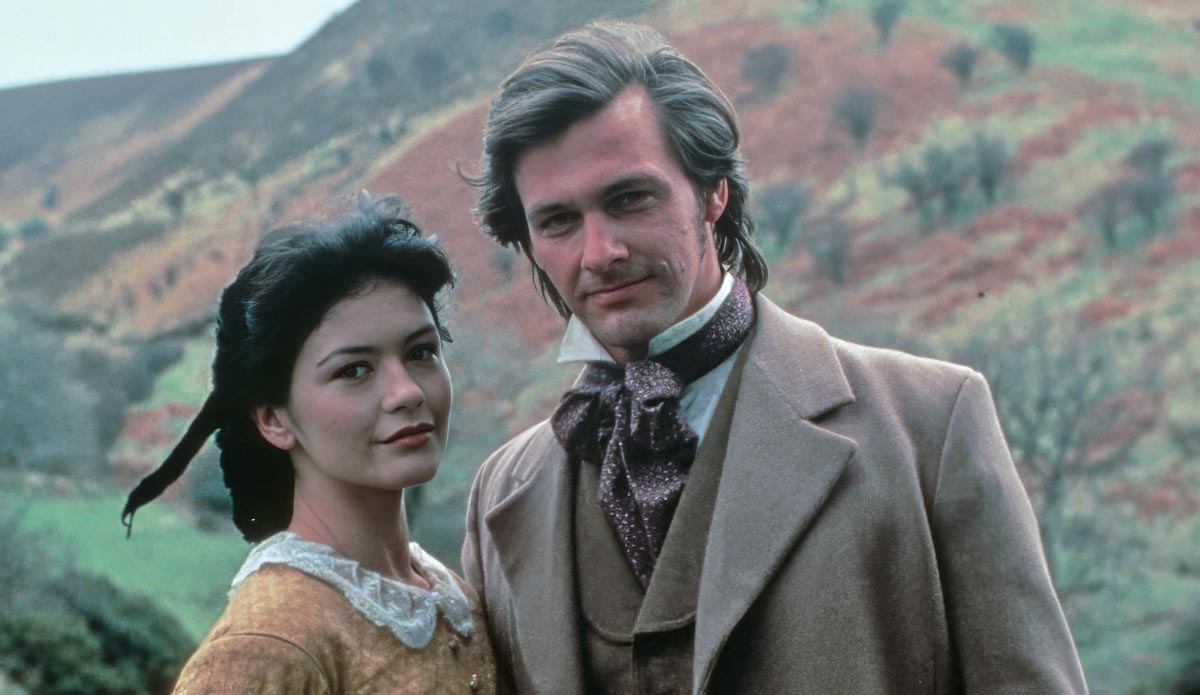
The Return of the Native begins with Clym Yeobright’s return from Paris, in hopes of uplifting his community, but he is met instead by his mother, who disapproves of his marriage to the beautiful, restless Eustacia Vye.
Eustacia dreams of escaping her new home and grows disillusioned as Clym’s ambitions falter. Misunderstandings involving Clym’s cousin Thomasin and her unreliable husband, Damon Wildeve, intensify the tensions within the family.
A tragic chain of events leads to the drowning deaths of Eustacia and Damon. Clym, grief-stricken, becomes a wandering preacher, while Thomasin eventually finds stability with Diggory Venn.
The novel is set on Egdon Heath, a fictional moor of Hardy’s Wessex. Although the area is depicted as rural and largely uninhabited, residents earn their living by cutting the furze that grows there.
6. The Trumpet-Major (c. 1880)
Set during the Napoleonic Wars, Hardy’s The Trumpet-Major follows Anne Garland, who is pursued by the steady, honorable trumpet-major John Loveday, his impulsive sailor brother, Bob, and Festus Derriman, the cowardly nephew of a local squire.
Anne’s household is unsettled by military encampments, wartime anxieties, and the vain attentions of the boastful Festus Derriman. While John’s quiet devotion offers stability, Anne is drawn to Bob’s charm, despite his unreliability.
After romantic misunderstandings, departures, and returns, Bob ultimately reforms and wins Anne’s hand. John, heartbroken but dutiful, withdraws. The novel blends romance with the tensions of wartime England. The Trumpet-Major was Hardy’s only historical novel.
7. The Mayor of Casterbridge (c. 1886)
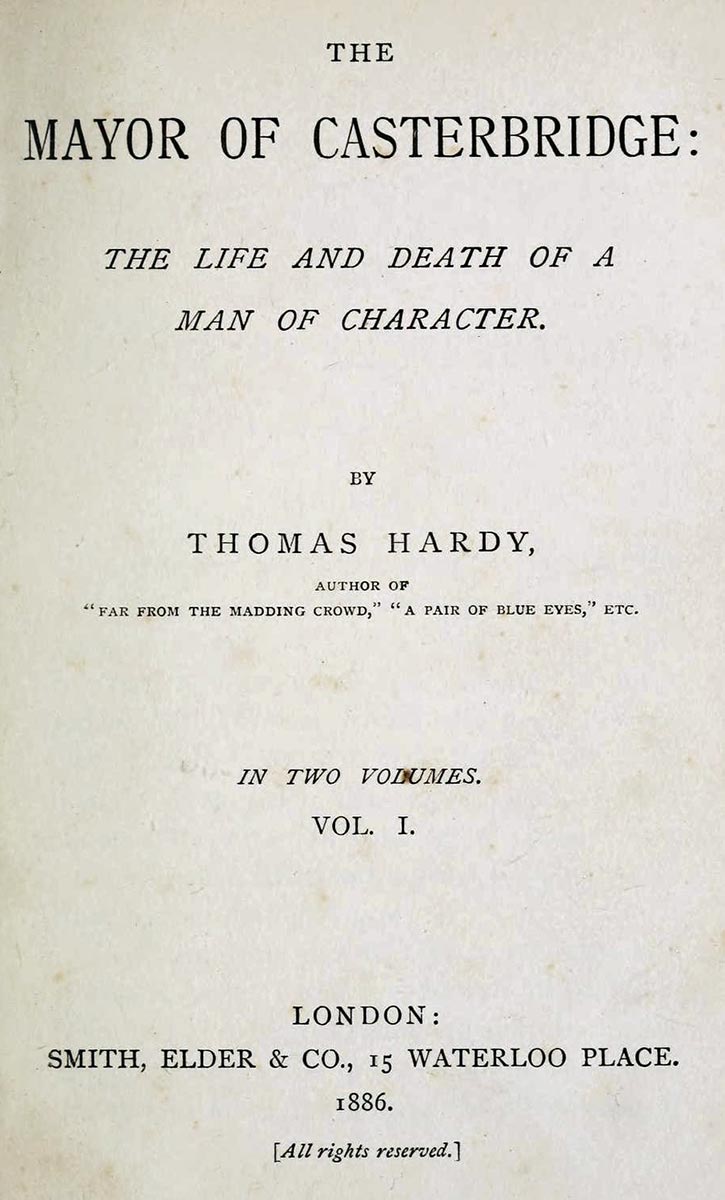
Hardy’s The Mayor of Casterbridge follows Michael Henchard, a hot-tempered laborer who drunkenly sells his wife and infant daughter at a fair.
Years later, now a prosperous grain merchant and mayor of Casterbridge, Michael is shaken when his wife and daughter return. His attempt at restitution is undermined by pride, secrecy, and rivalry with the capable Donald Farfrae, who gradually surpasses him in business and public favor.
Michael’s past deceptions erode his remaining relationships. Bankrupted and isolated, he dies alone, leaving a note asking to be forgotten, embodying the novel’s themes of fate and remorse.
8. The Woodlanders (c. 1887)
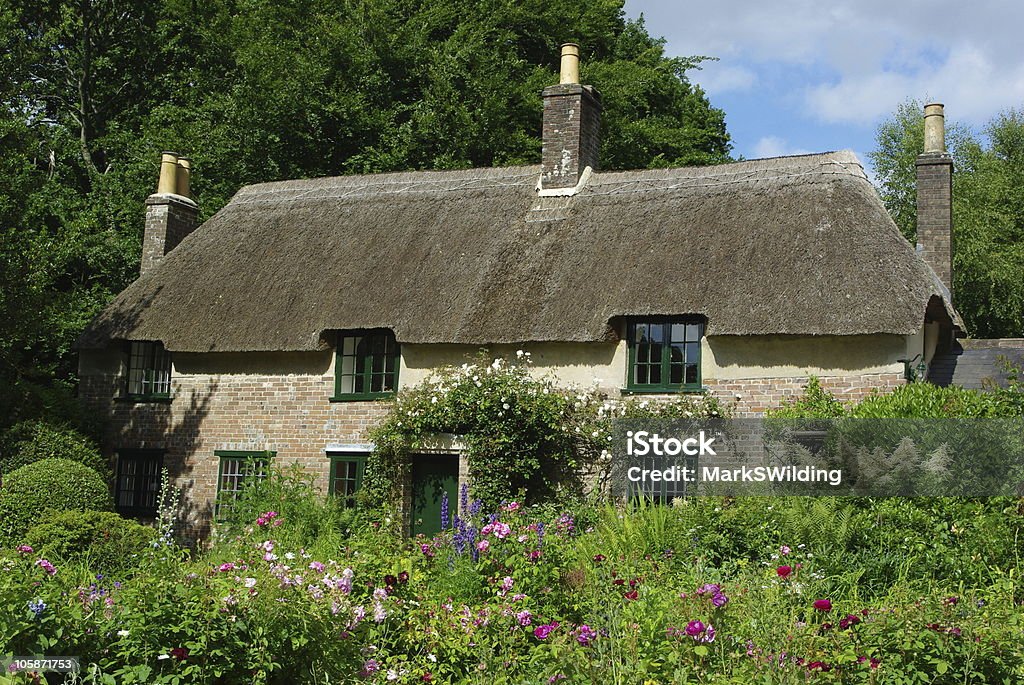
The Woodlanders depicts Grace Melbury, raised above her humble origins by her ambitious father, and Giles Winterborne, the loyal woodsman who has long loved her.
When Grace marries the sophisticated but morally weak Dr. Edred Fitzpiers, jealousy, betrayal, and class tensions unravel their union. Edred’s affairs leave Grace isolated, while Giles’s unwavering devotion leads him to sacrifice his health and ultimately his life to protect her reputation. After Edred seeks reconciliation, Grace realizes too late the worth of Giles’s steadfast love.
The novel explores loyalty, desire, and the painful cost of social aspiration.
9. Tess of the d’Urbervilles (c. 1891)
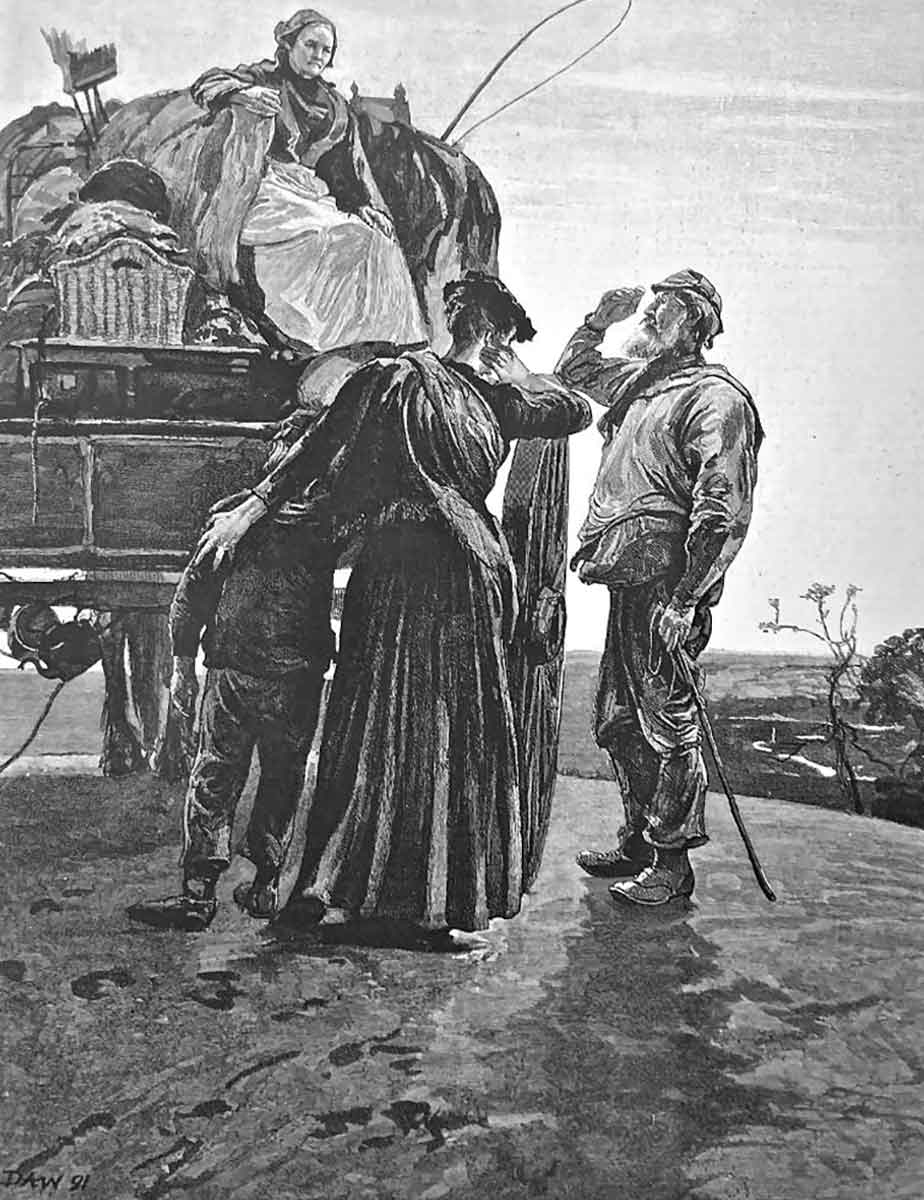
One of Hardy’s most controversial novels, Tess of the d’Urbervilles follows Tess Durbeyfield, a poor but dignified young woman whose family’s claim of a noble ancestry sets her on a tragic path.
Sent to seek favor from the wealthy d’Urberville branch, she is exploited by Alec, an experience that shadows her life. Tess later finds love with the idealistic Angel Clare, but when she confesses her past, he rejects her. Poverty and desperation drive her back to Alec until Angel returns, repentant. Tess kills Alec in anguish and briefly escapes with Angel before her capture and execution.
The novel condemns social hypocrisy and rigid moral judgment and reflects on class, gender, and sexual norms in Victorian society. It exposes the double standards that punish Tess for her victimization while excusing male wrongdoing. Hardy presents Tess as morally pure yet socially condemned, emphasizing the role that rigid social structures have in shaping her tragic life. Through Tess’s suffering, the novel challenges notions of justice and purity, and portrays a society that destroys innocence through hypocrisy rather than compassion.
10. Jude The Obscure (c. 1895)
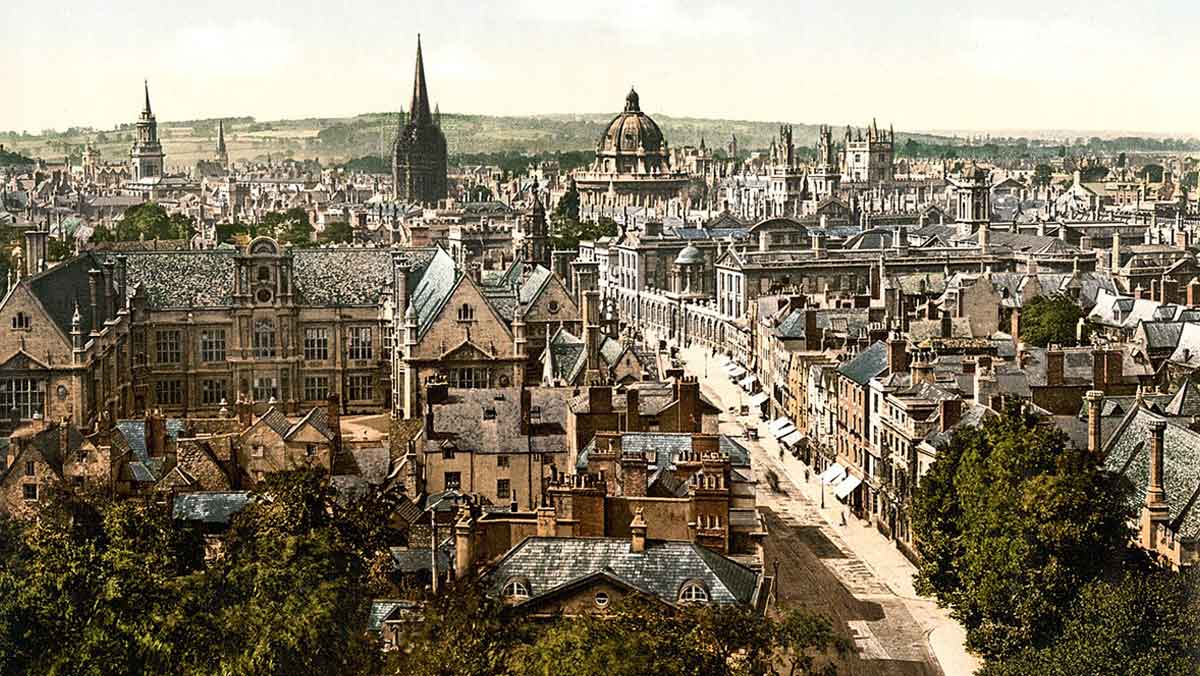
Hardy’s last major work of fiction, Jude the Obscure, portrays Jude Fawley, a bright, ambitious stonemason longing to study at Christminster, a fictional city modeled on Oxford. Trapped by a loveless marriage to Arabella Donn, he later falls deeply in love with his cousin, Sue Bridehead, whose intellectual independence challenges social norms.
Their attempt to live together outside marriage sparks public condemnation, poverty, and instability. The burden worsens when Sue’s children die in a horrific murder-suicide by Jude’s neglected son, “Little Father Time.” Crushed by guilt and societal pressure, Sue returns to her estranged husband, while Jude dies alone and defeated.
The novel critiques social rigidity, marriage laws, and thwarted aspiration.