
Elsa Schiaparelli was more of an artist than a fashion designer. During her fascinating career, she turned symbolic objects and artistic concepts into wearable garments. She was a friend of many renowned artists of the Surrealist movement, interpreting their ideas and adding her own. Read on to learn more about how the great Italian designer brought Surrealism into the world of fashion.
Who Was Elsa Schiaparelli?
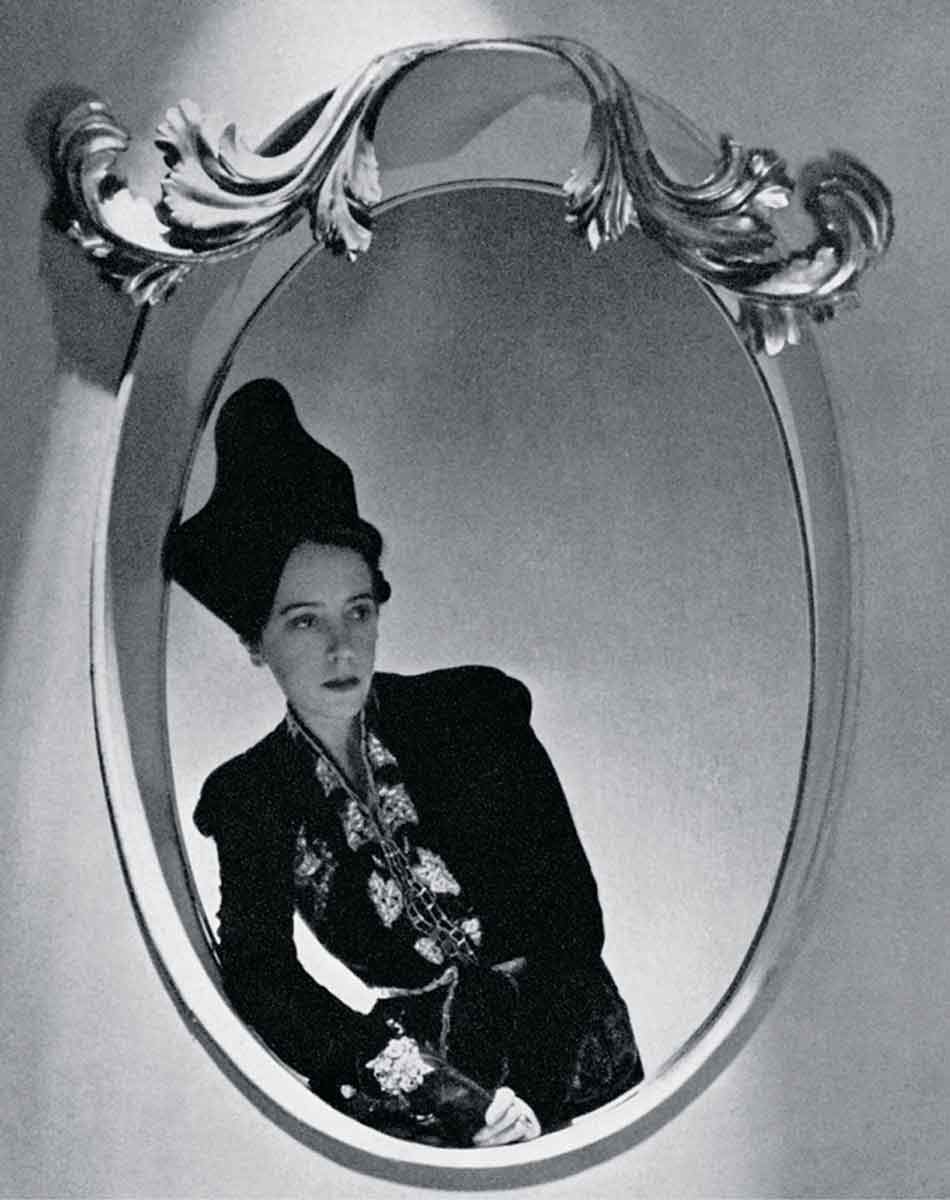
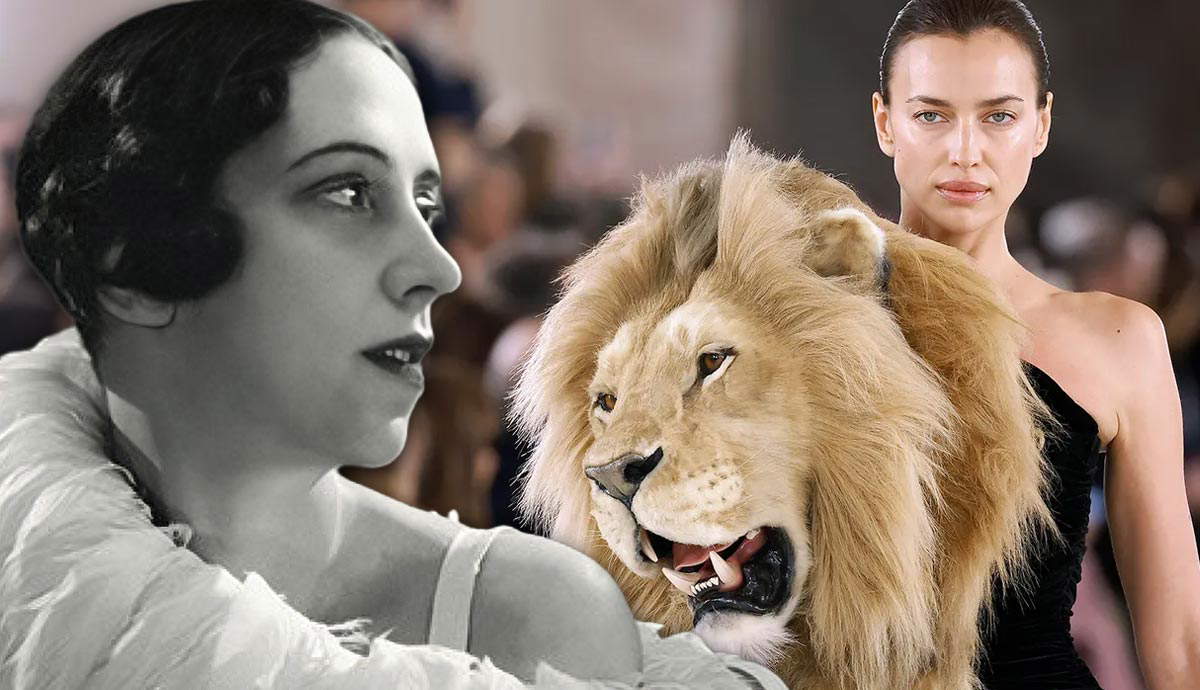
Elsa Schiaparelli was a renowned fashion designer and the only artist capable of interpreting the ideas and style of Surrealism through fashion. She came from a prominent Roman family, with her mother being a descendant of the Medici family and her father and brothers being historians, art collectors, archeologists, and astronomers. There is even a crater on Mars named after Giovanni Schiaparelli, Elsa’s brother who studied the planet in observatories around Europe.
Despite her privileged background and the variety of exciting ideas present in her family, Elsa Schiaparelli’s childhood was hardly a happy one. Schiaparelli’s mother constantly berated her for being ‘too ugly’ in comparison to her younger sister and limited her artistic aspirations. Little Elsa planted flower seeds in her ears and nose, trying to make herself beautiful the only way she could imagine. The seeds, obviously, did not grow, but the dreams of a body becoming one with nature and achieving a supernatural, transgressive beauty persisted.
Suffocated by her family’s conservative lifestyle, Schiaparelli ran away, settling in London and marrying an occultist who claimed to have psychic powers. The marriage did not last long. He left Elsa with their newborn daughter in New York with no explanation. The need to move on and take charge of her life led Schiaparelli to make the first steps of her groundbreaking career.
Marrying Art with Fashion
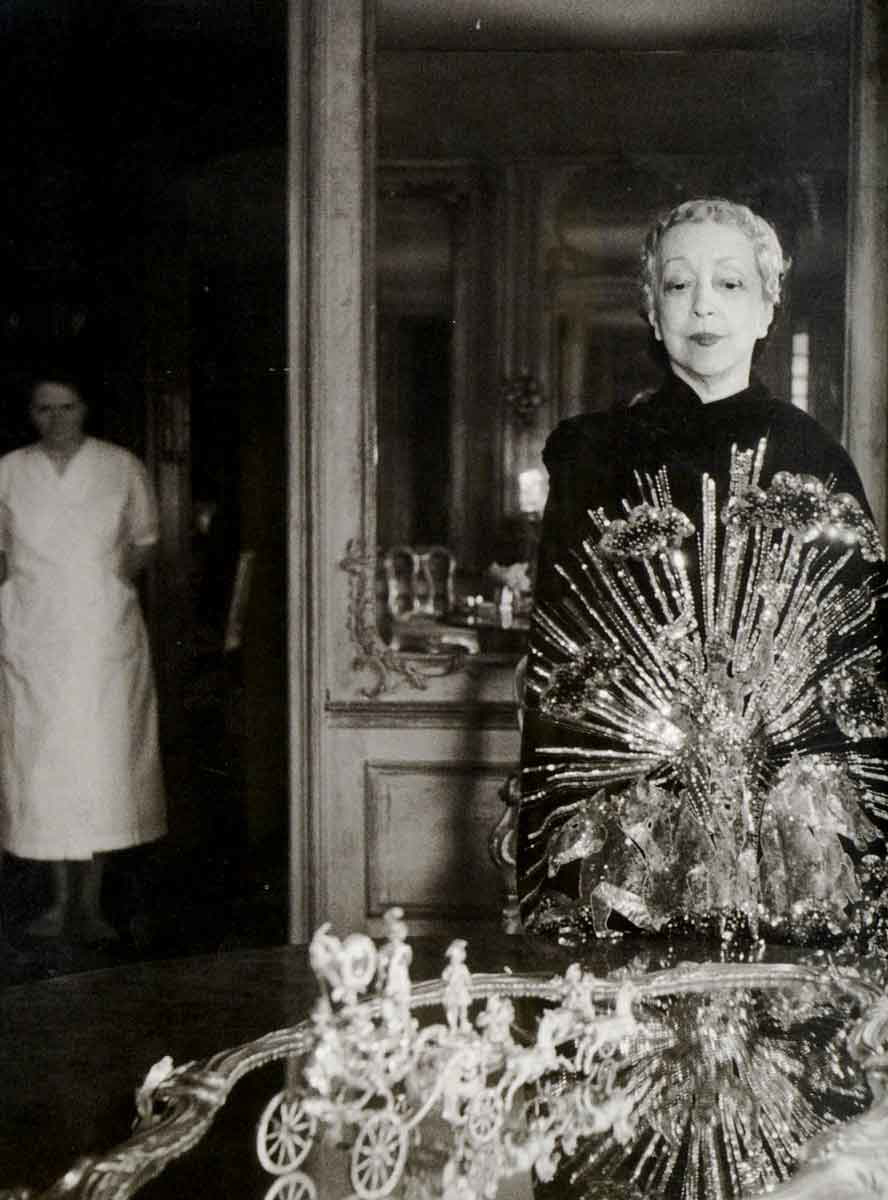
Schiaparelli’s association with art began in 1922, when she met Gabrielle Picabia, the wife of the famous Dadaist Francis Picabia, on her way back to Europe. In Paris, the Picabias introduced her to the most progressive and avant-garde artists of the time, who would soon lead the Surrealist movement. Feeling at ease among these creative minds, she soon started to work on various projects, including helping Man Ray with his Dada projects and assisting the legendary couturier Paul Poiret. Under Poiret’s mentorship, she started to create her own garments. Her social circle allowed her to imagine fashion as not simply wearable pieces but as expressive artistic statements.
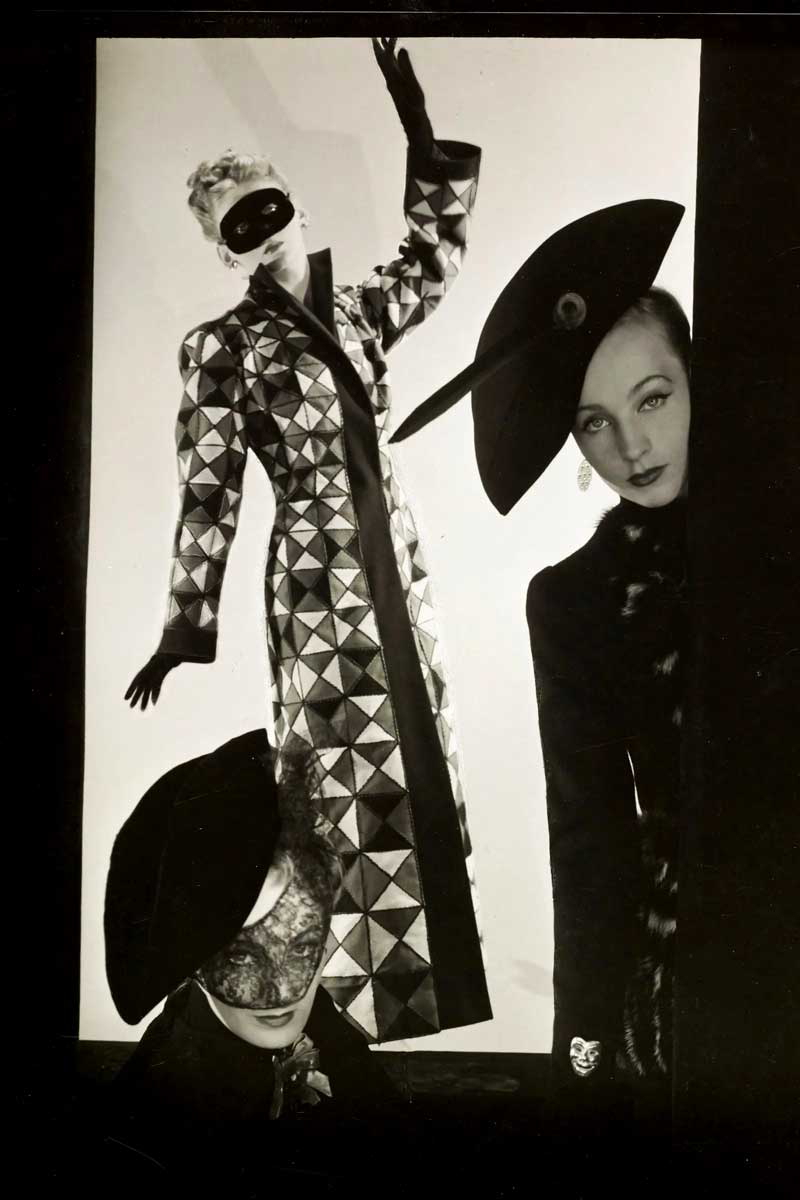
One of the first pieces ever designed by Schiaparelli was a textile interpretation of the Surrealist trompe l’oeil, the illusion of painted objects appearing to be real. Schiaparelli designed a sweater with a big bowtie knitted right into the fabric, which became an instant success. In the following years, she would develop her ideas further, moving from daily wear to couture.
She worked on themed collections, with Zodiac featuring celestial embroidery, and Commedia dell’Arte being an homage to Italian theater and the works of Paul Cezanne and Pablo Picasso.
Not every woman could wear Schiaparelli, but it had nothing to do with blood-curdling price tags. Schiaparelli’s designs required nerve, confidence, a substantial amount of self-irony, and a big personality. Here’s a list of artists Elsa Schiaparelli collaborated with.
1. Pablo Picasso & Man Ray
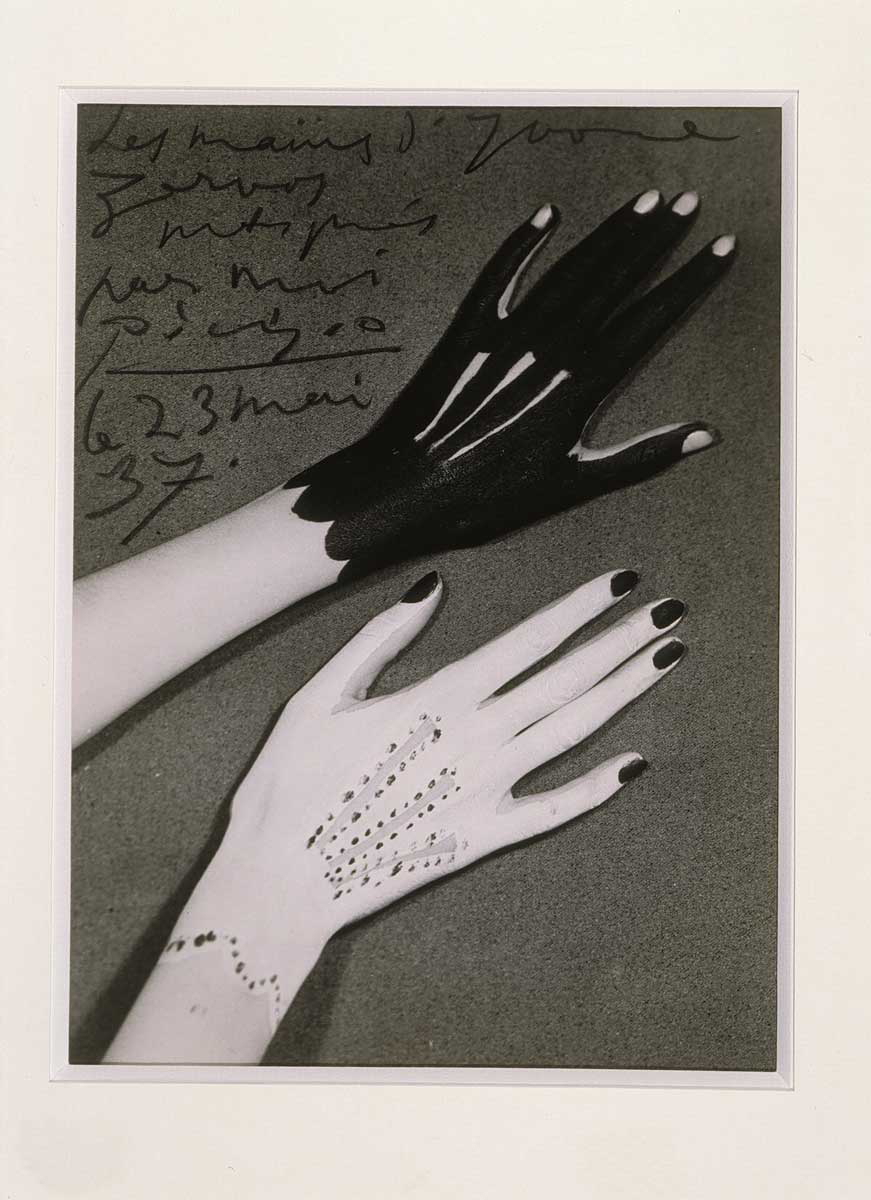
Gloves were important and recurring pieces in Schiaparelli’s career. Yet, the idea for the initial design came to her through the works of legendary artists. Once, Pablo Picasso painted glove-like contours on the hands of a prominent art curator Yvonne Zervos, and Man Ray, the pioneer of creative photography, took a picture of it.
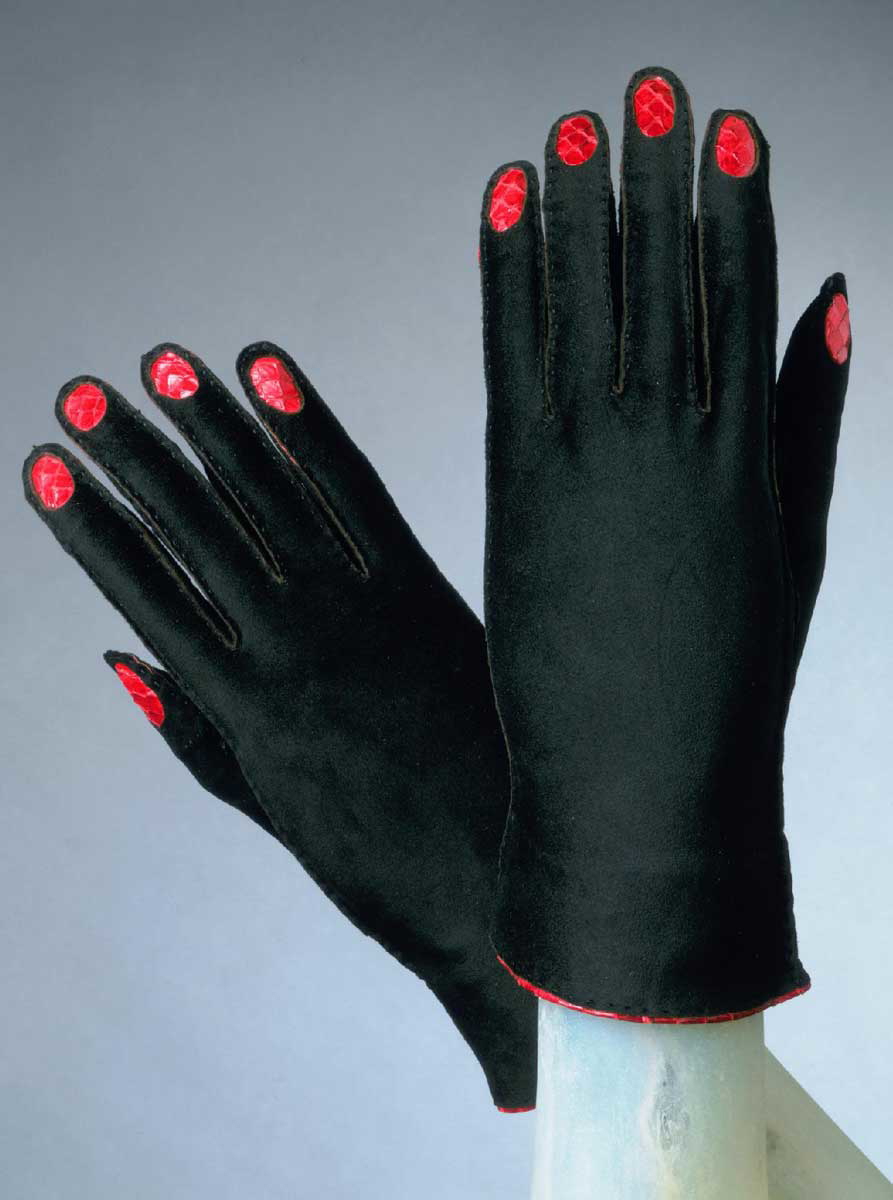
Schiaparelli was intrigued by the idea of gloves, which, instead of covering hands, actually revealed them even further. Her impression of a photograph resulted in a pair of gloves with red nails made of colored python leather. The concept of exposing the unexpected would develop further, with Schiaparelli later designing gloves with claws, gills, and even ripped skin exposing flesh.
2. Salvador Dali
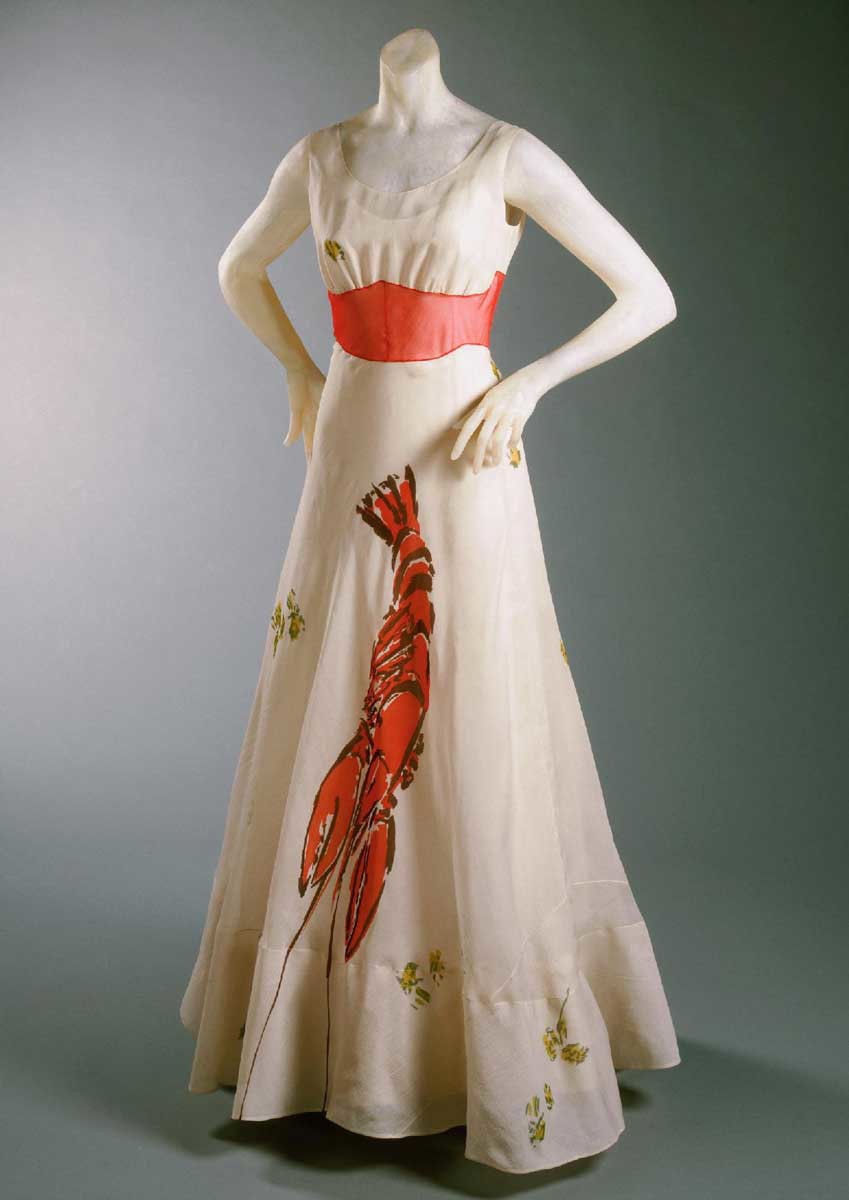
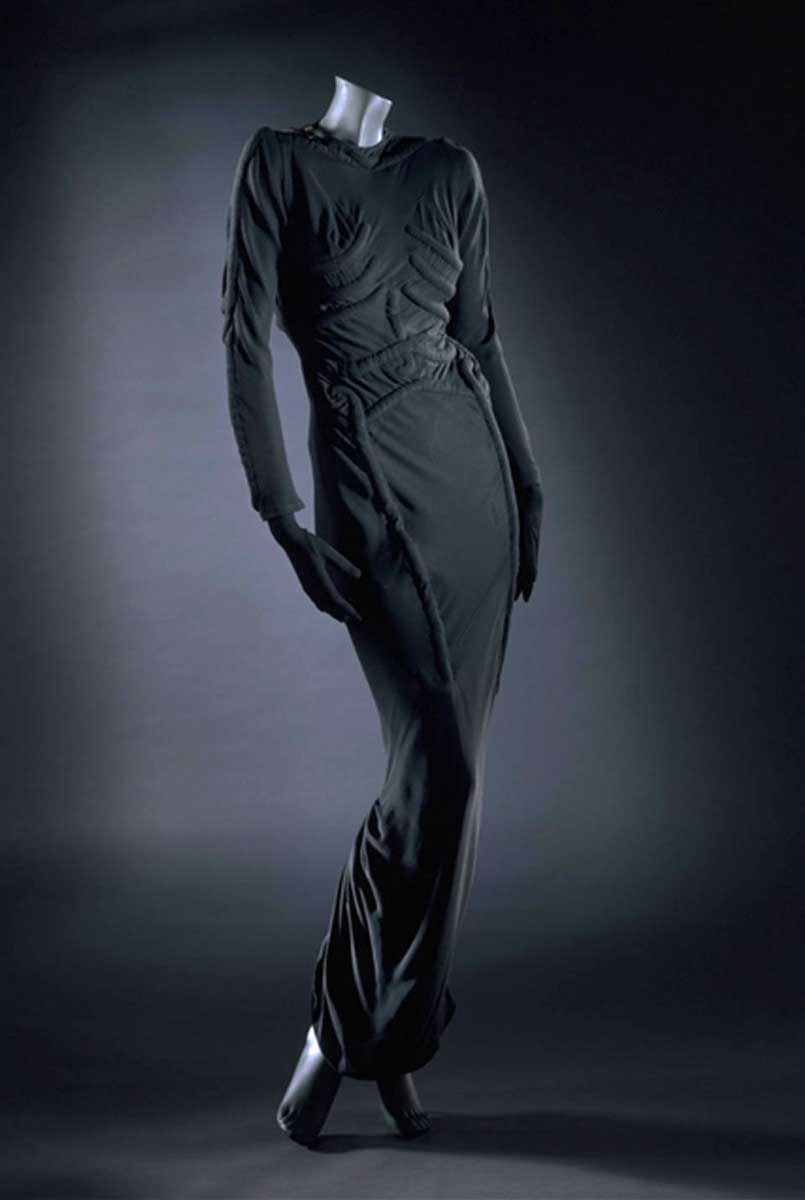
Salvador Dali was a frequent collaborator of Schiaparelli, with one of the most famous pieces undoubtedly being the Lobster Dress. For Dali, lobster was a powerful erotic symbol that contrasted with the pristine white fabric of the dress. Both artists shared a penchant for scandal, resulting in numerous designs worn by the most daring women in Europe. One of the designs featured a skeleton dress with exposed bones stitched on top. Like in the case of Picasso’s painted gloves, Dali and Schiaparelli played with the idea of garments exposing something they normally should have concealed.
Other collaborations with Dali were even more lavish and otherworldly. One of the most sought-after items for Schiaparelli collectors is a perfume bottle for the fragrance Le Roi Soleil which was designed by Salvador Dali in 1946. The gilded box shaped like a giant seashell hid a glass bottle made in the shapes of the sun, waves, and flying birds.
3. Meret Oppenheim
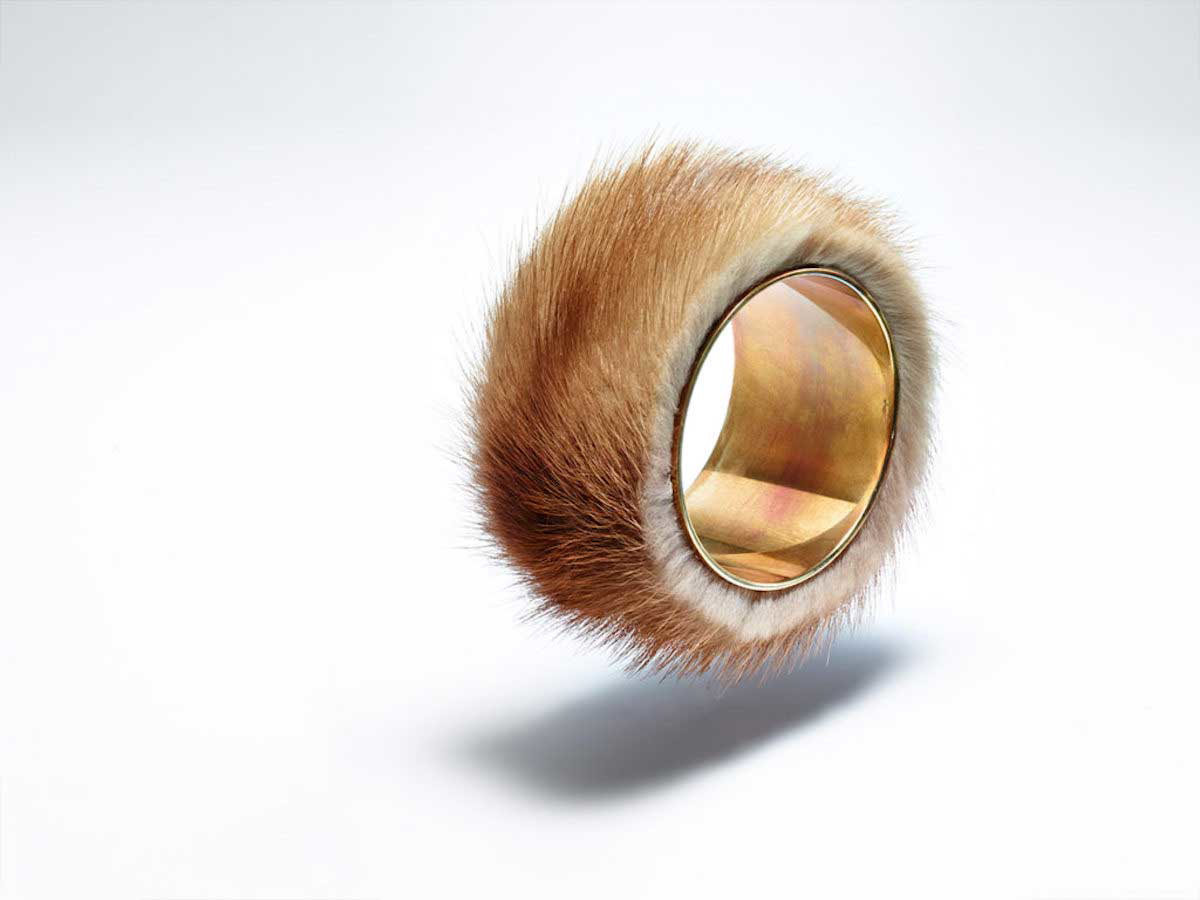
In the 1930s, an unknown yet promising artist called Meret Oppenheim began experimenting with fur and natural materials in her works. For Oppenheim, fur was a marker of wild nature, primal impulses that were still hiding under fashionable dresses, and impeccable manners of the high society ladies. She proposed the design to Schiaparelli, and the designer, known for her love for ambiguity and symbolism, agreed to make it.
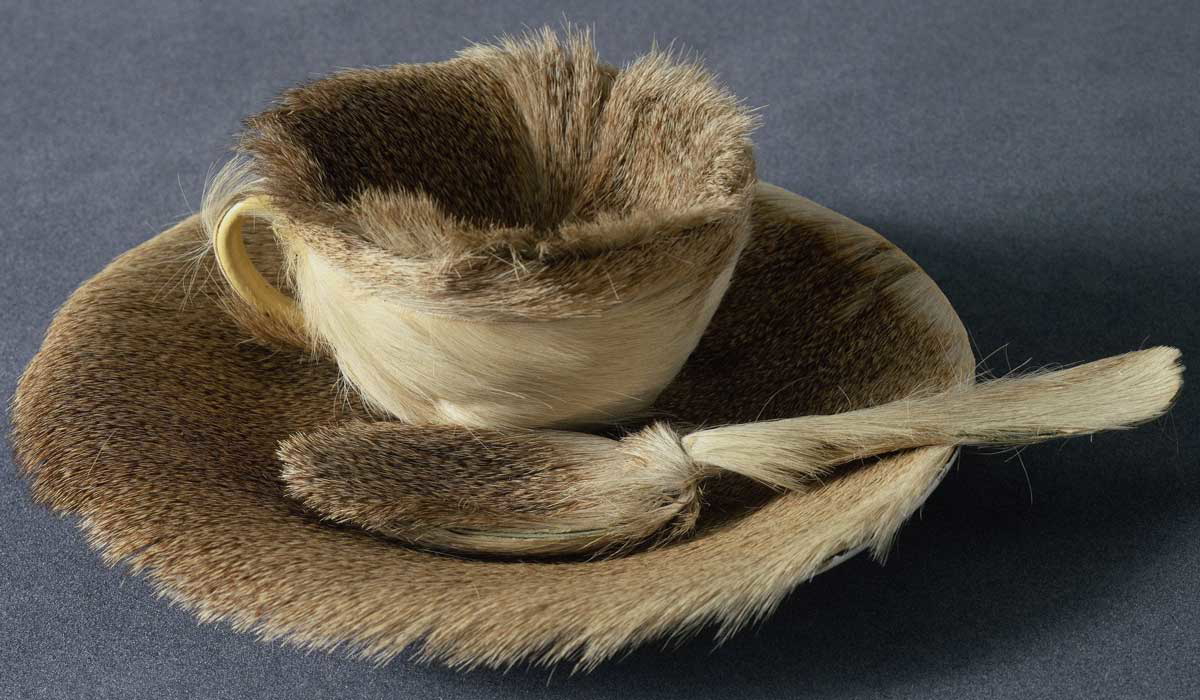
Oppenheim’s bracelets did not just leave a mark on the history of fashion but became a starting point for one of the most famous artworks of the twentieth century. From furry jewelry Oppenheim moved on to furry drinkware, covering a teacup and a saucer with gazelle fur.
4. Alberto Giacometti
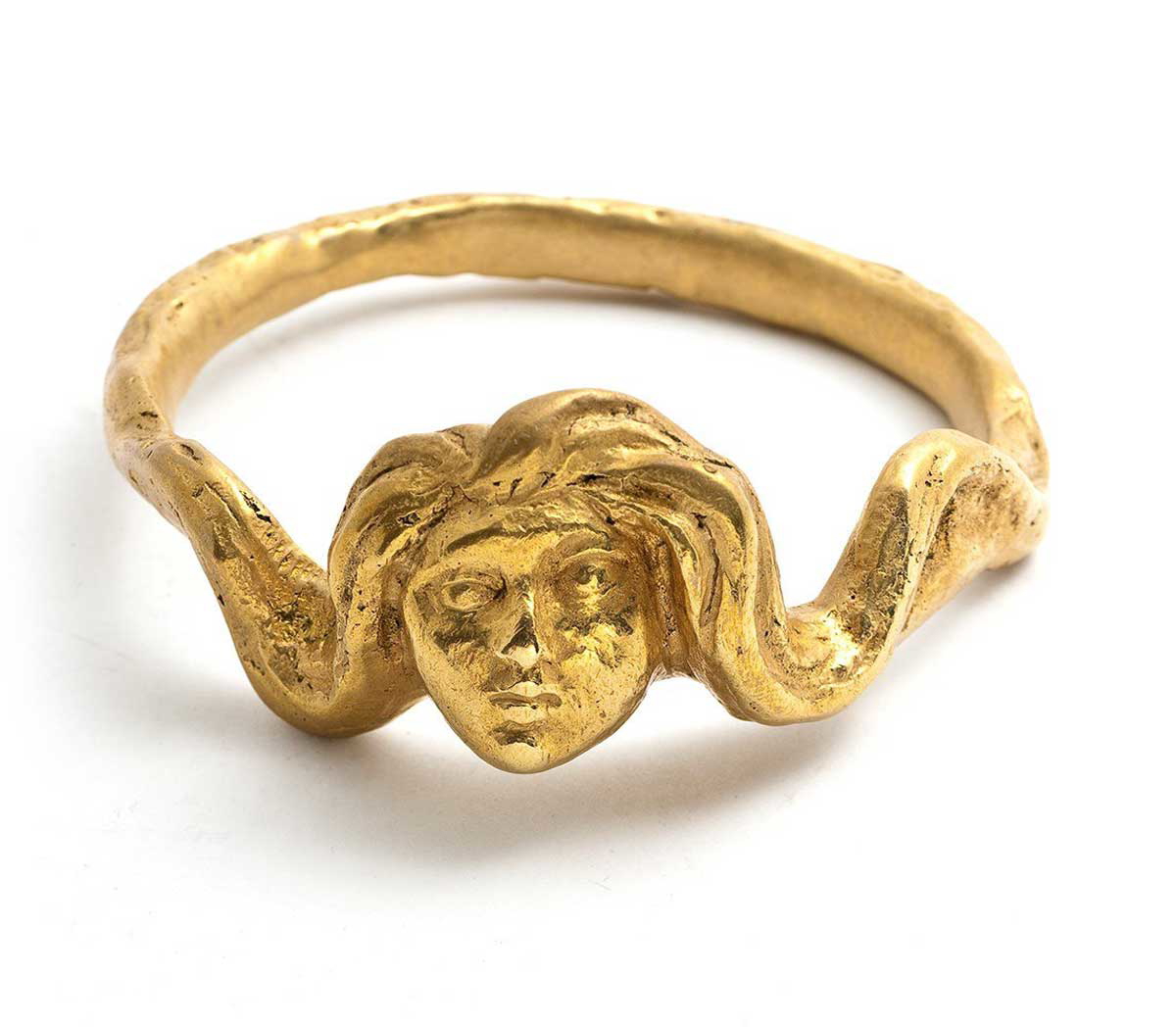
Alberto Giacometti is not the artist immediately associated with exquisite fashion design and glamour. His sculptures and paintings usually emit a sense of abandonment and despair. Yet, he collaborated with Elsa Schiaparelli, creating a collection of jewelry pieces and buttons reminiscent of mythical creatures, like sphinxes and naiads. The over-the-top design of buttons was a unique feature of Schiaparelli’s couture, with some shaped like antique coins, insects, or circus acrobats.
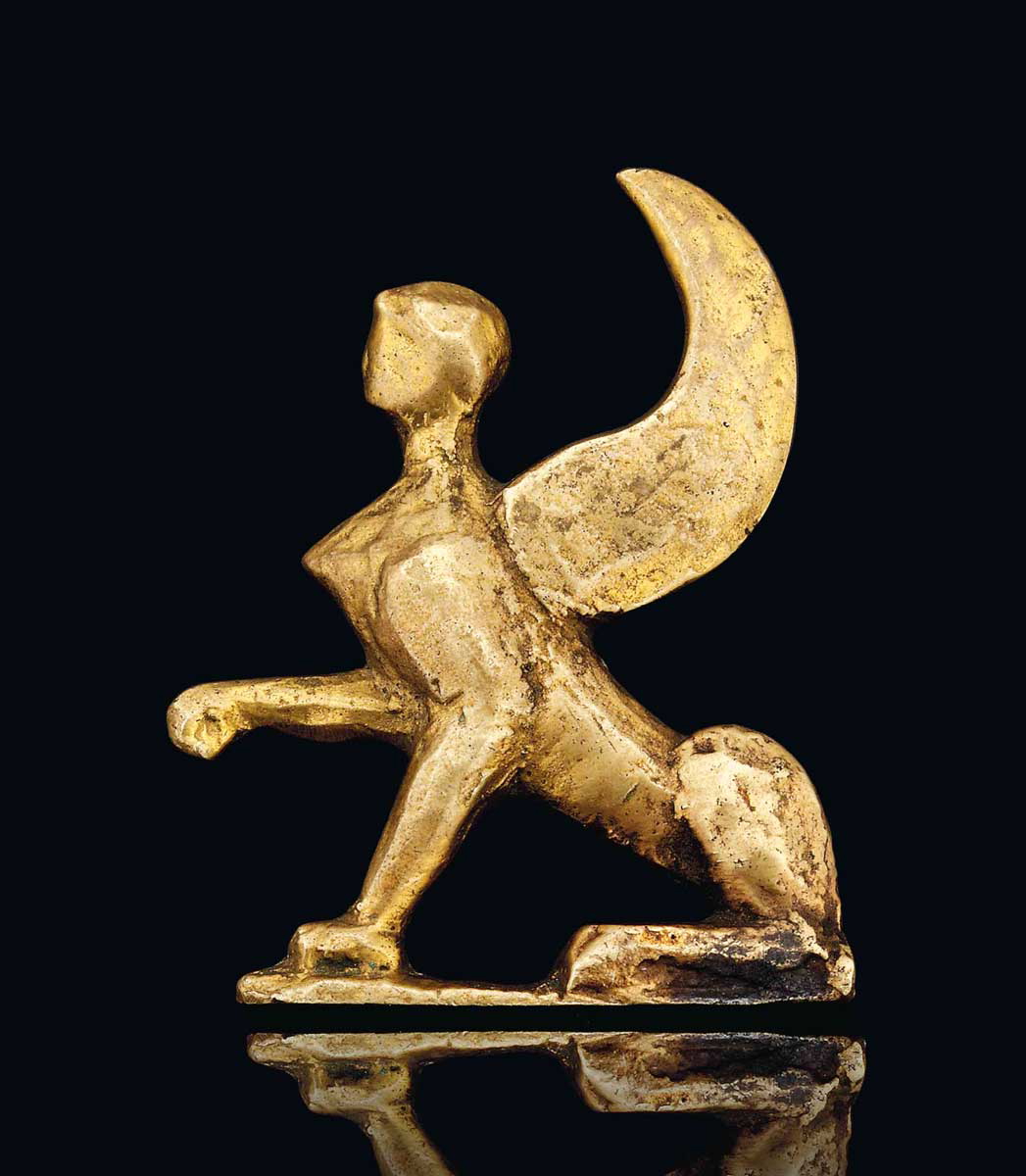
Giacometti was the ultimate sculptor of post-war Europe, expressing the disillusionment and collective trauma of his generation. Nonetheless, he was extremely familiar with the art of Antiquity, especially that of Greece and Egypt. Giacometti also created a series of antiquity-inspired columns that still decorate the rooms of the couture house.
5. Jean Cocteau
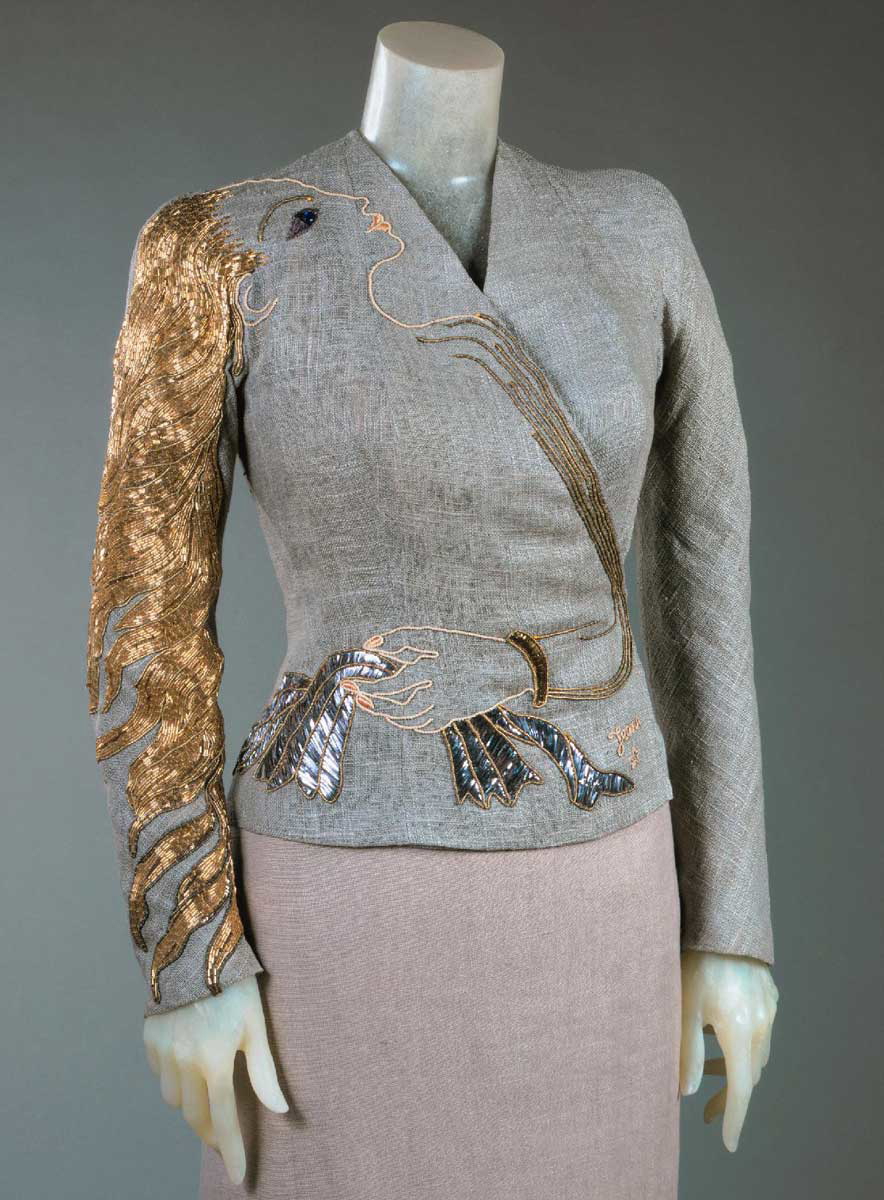
Jean Cocteau considered himself a poet, yet he also made films and paintings. Cocteau was a friend of many famous artists and performers like Amedeo Modigliani and Edith Piaf and was one of the leading intellectual forces of the Surrealist movement.
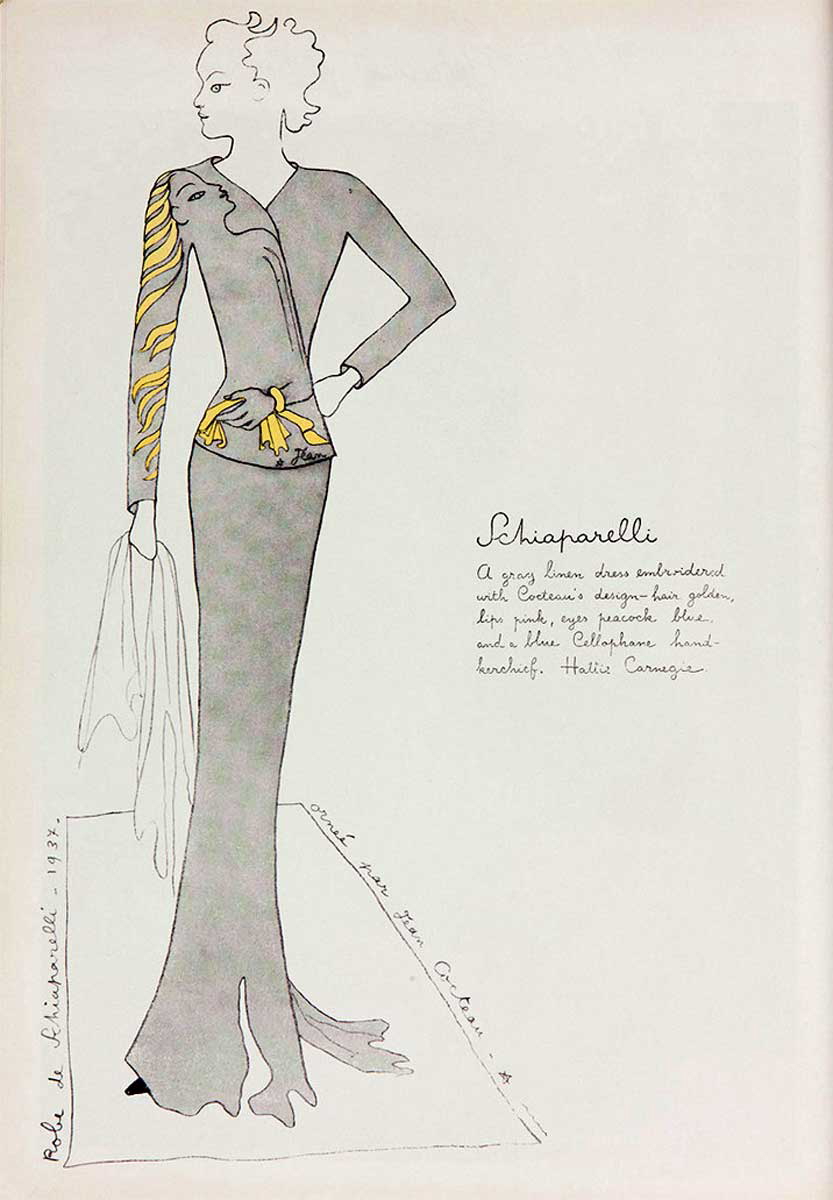
Cocteau’s drawing style was distinctive, with compositions appearing to be made with a single stroke of hand and a minimalist color palette. Elsa Schiaparelli turned one of his drawings into embroidery. Jean also tried his hand at jewelry design, creating pieces that are still being reinvented and sold by Maison Schiaparelli.
6. Leonor Fini
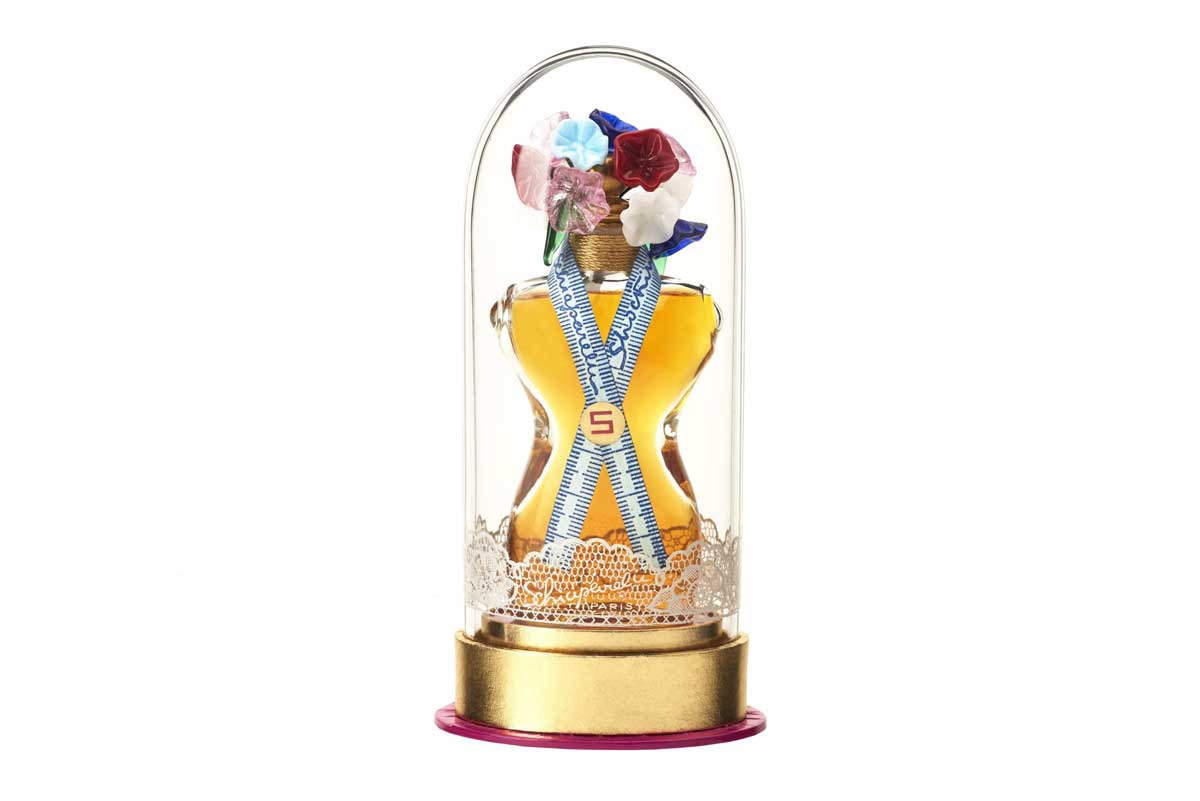
The great Argentinian Surrealist Leonor Fini had a close relationship with Elsa Schiaparelli and was responsible for one of the most iconic designs of the couture house—the Shocking perfume. Launched in 1937, the composition of tarragon, musk, and honey became the signature scent of the brand. Leonor Fini’s bottle was just as innovative as the perfume itself. Shaped as a female torso, or a dressmaker’s mannequin, it was adorned with flowers and covered with a thin glass dome.
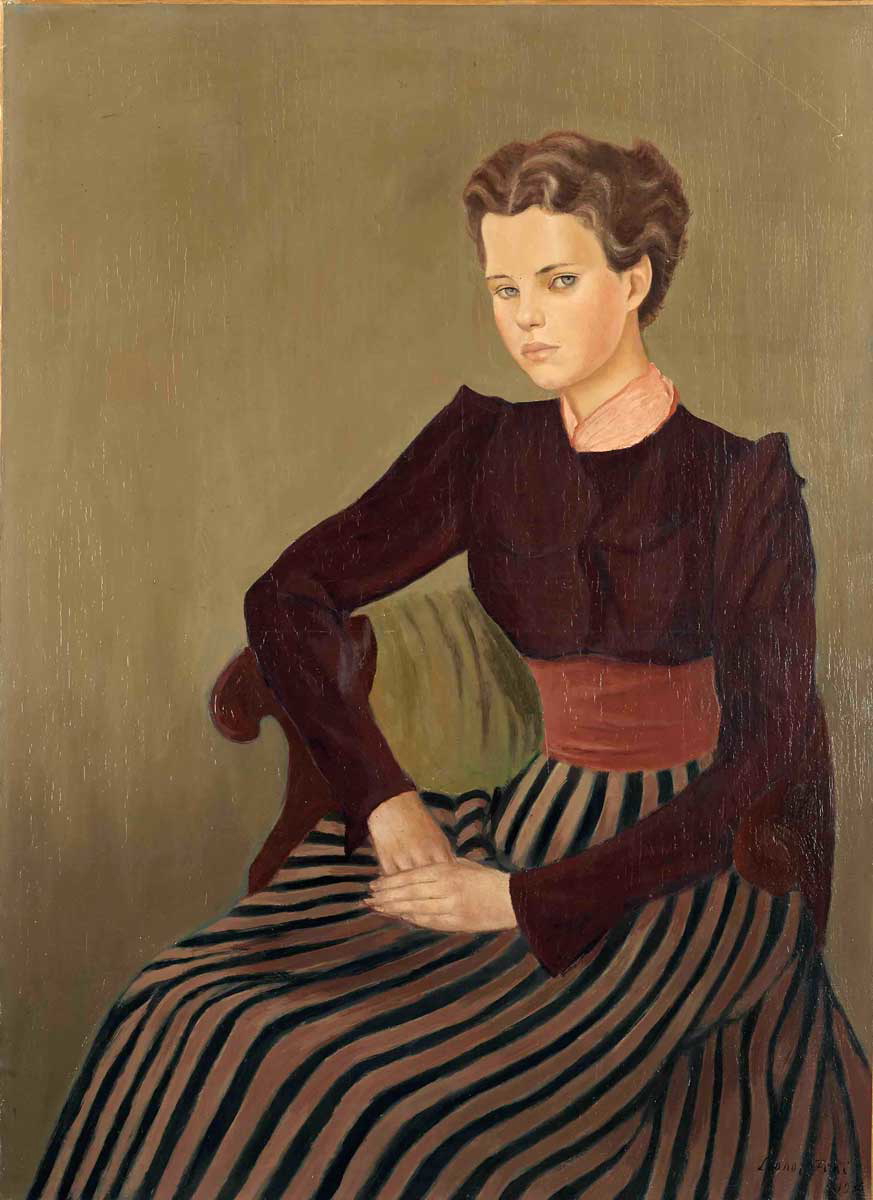
Apart from perfume design and fashion illustration, Fini created more personal artworks, such as the portrait of Elsa Schiaparelli’s daughter Yvonne, affectionately known in the family as Gogo. Gogo would later become a model and actress who, after her mother’s death in 1973, moved on to organize and preserve Elsa Schiaparelli’s archive.
7. Rene Magritte
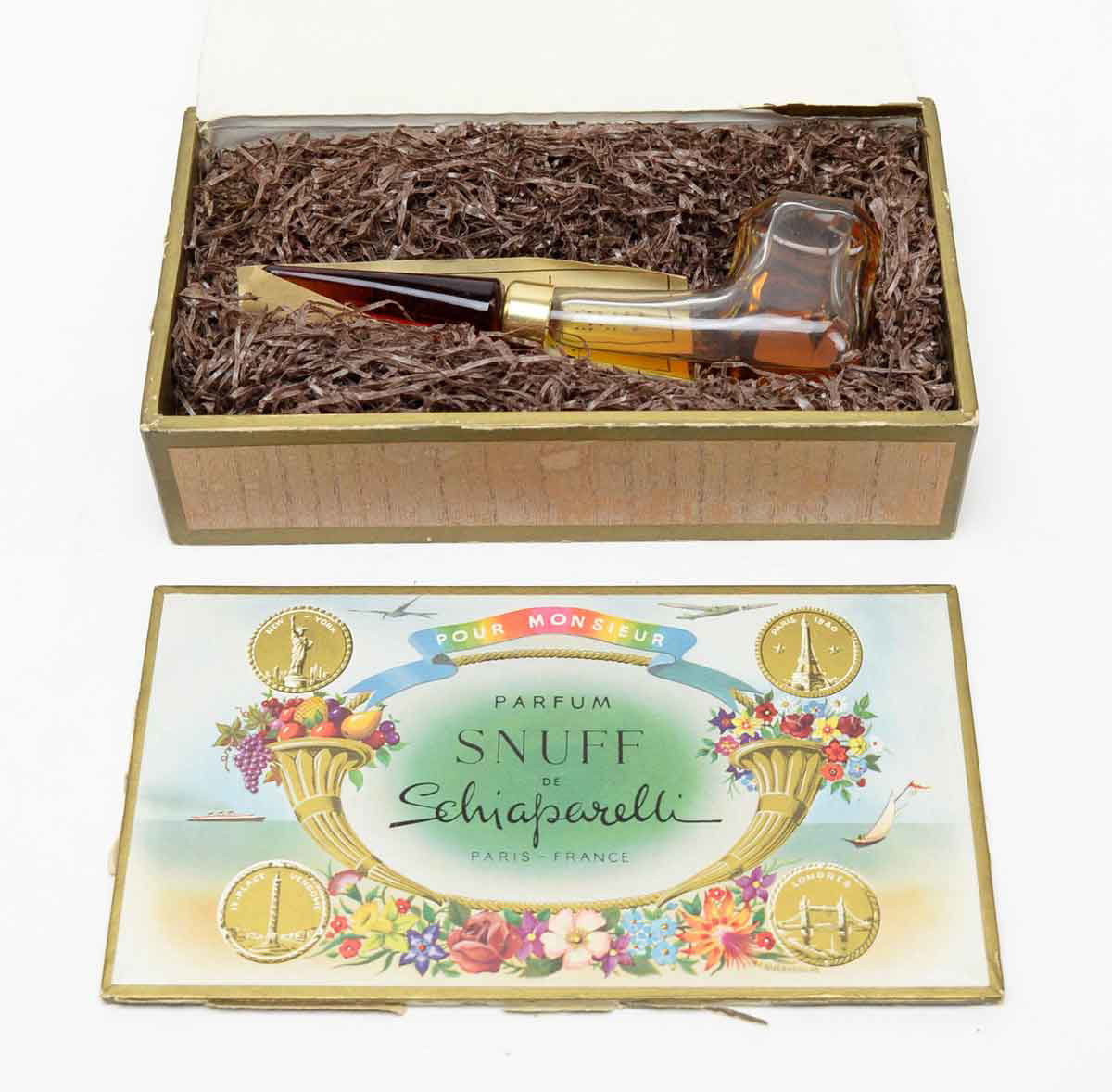
While Rene Magritte had never personally worked with Elsa Schiaparelli, his art inspired some of her iconic pieces. The famous painting The Treachery of Images (more commonly recognized as This is not a Pipe gave birth to the only male fragrance ever created by Schiaparelli. The Snuff perfume (a reference to a popular tobacco brand of the time), packed in a pipe-shaped bottle, presented a composition of lavender, bergamot, pine, and jasmine.
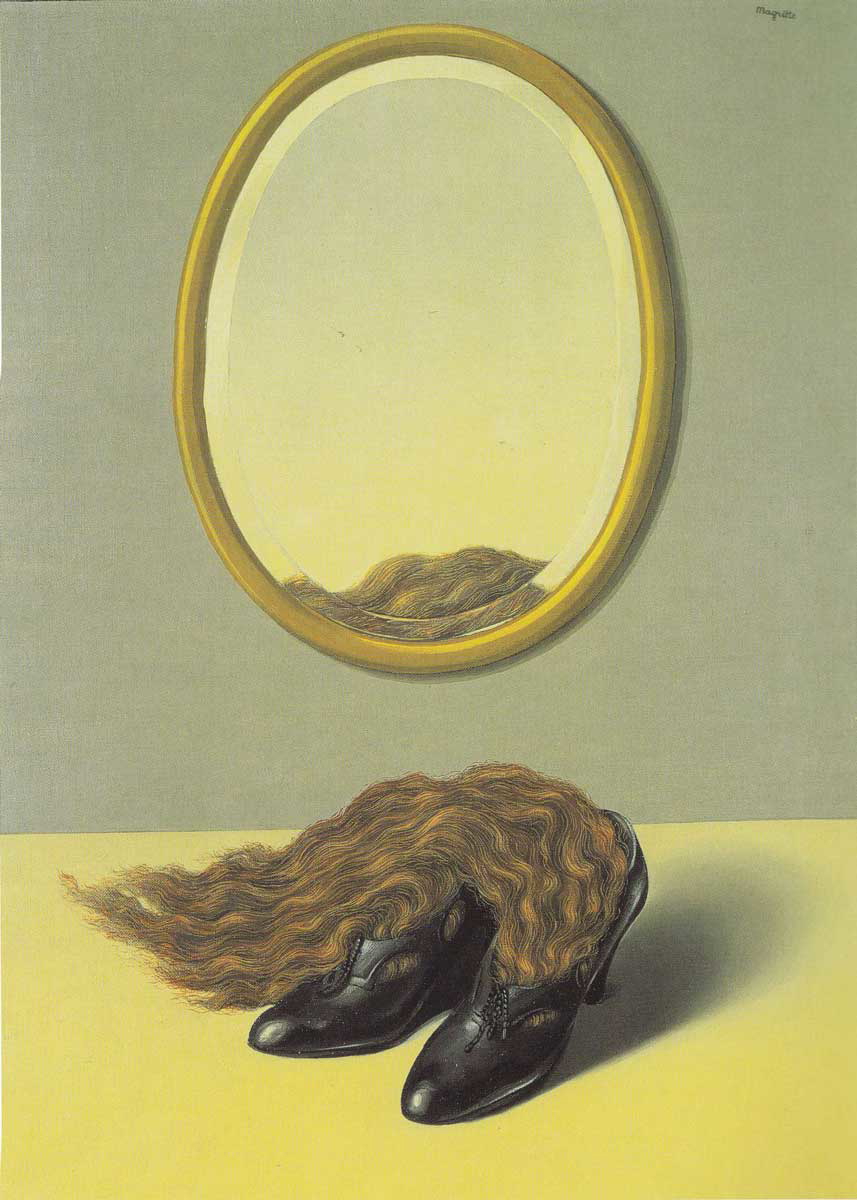
The behind-the-scenes involvement of Rene Magritte was not limited to fragrances. In 1939 Schiaparelli designed a pair of heeled suede boots with monkey hair on the ankles. The design, both repulsive and intriguing, was an homage to Magritte’s work Love Disarmed.
The Legacy of Elsa Schiaparelli
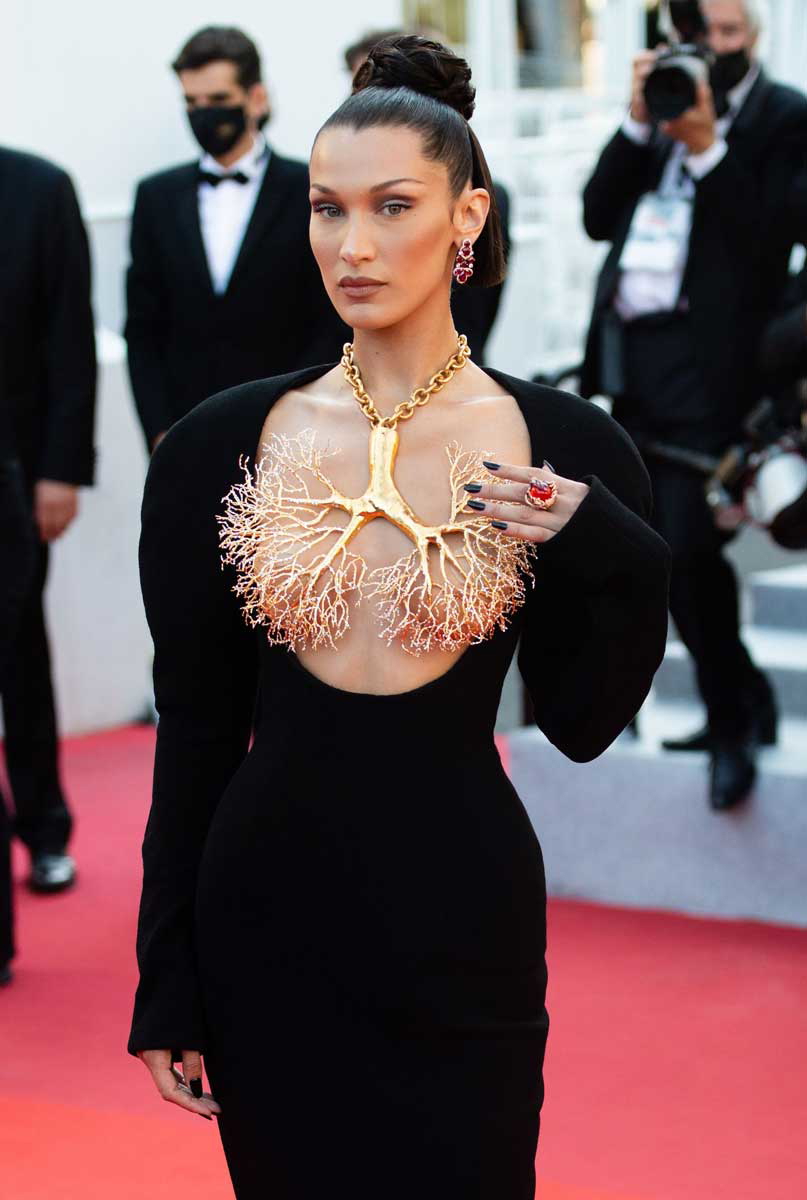
The original Maison Schiaparelli closed its doors in 1954. After World War II was over, the public discarded the pre-war designs in search of something new and free of associations with the traumatic past. Elsa Schiaparelli spent the following decades of her life writing her memoir and living between Paris and Tunisia. The only thing that remained of the original Maison Schiaparelli was the perfume company.
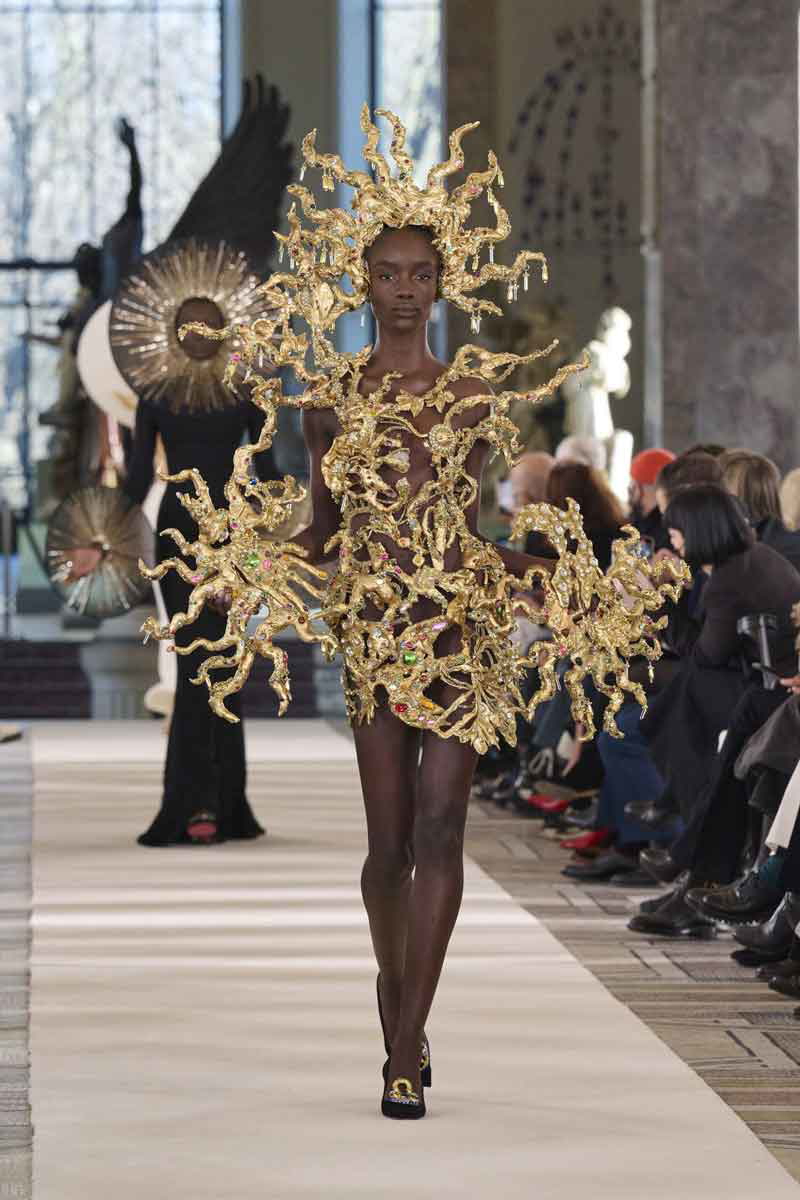
The revival of Elsa Schiaparelli’s legacy happened in 2014, with the couture house presenting several collections inspired—and sometimes directly referencing—the old designs, including the famous Lobster Dress. But the true comeback occurred in 2019 when the American designer Daniel Roseberry was appointed as their creative director. Roseberry took a completely different approach. Instead of copying the iconic pieces or reinterpreting them for the contemporary era, he aimed to work in the spirit of Maison Schiaparelli. Roseberry’s designs are now just as daring, provocative, and mesmerizing as the ones made by Elsa Schiaparelli.