After the fall of Rome in 476 CE, the Eastern Roman Empire, also called the Byzantine Empire, continued to endure. It managed to weather foreign threats, internal divisions, and the natural entropy all empires experience. It survives as the last vestige of Roman glory well into the Middle Ages, right until the cusp of the modern era. Still, through a long series of events, the empire would eventually fall. Unlike the Western Roman Empire, which died with a whimper, the Byzantine Empire ended with a bang, fighting tooth and nail for survival to the bitter end.
The Start of the Byzantine Empire
While we might call them the Byzantines, the citizens of the Eastern Roman Empire would have considered themselves Romans, the heirs of Augustus and the tribes who built their homes on the banks of the Tiber River. The name “Byzantine” was invented by modern scholars to differentiate the Eastern empire from the ancient empire.
After the rise of Augustus starting in 27 BCE, the Roman Empire reached its greatest extent in the early 2nd century CE under the reign of the emperor Trajan. Subsequent emperors would consolidate territory rather than expand further. Even with this consolidation, the nature of the Roman government caused nearly a century of constant civil wars, social upheavals, and economic crises.
In the late 4th century, the emperor Diocletian split the empire into east and west to facilitate administration. He created the Tetrachy, with a senior “Augustus” and a junior “Caesar” ruling in the eastern half of the Empire, and another pair ruling in the west. Following more political, economic, and social upheavals, and now with the added problem of ever-increasing barbarian invasions, the Empire was more definitely split. In 395, with the death of Theodosius I, the Eastern and Western Roman Empires were officially split, with his son Arcadius in the east and his other son Honorius in the west.
The East Survives
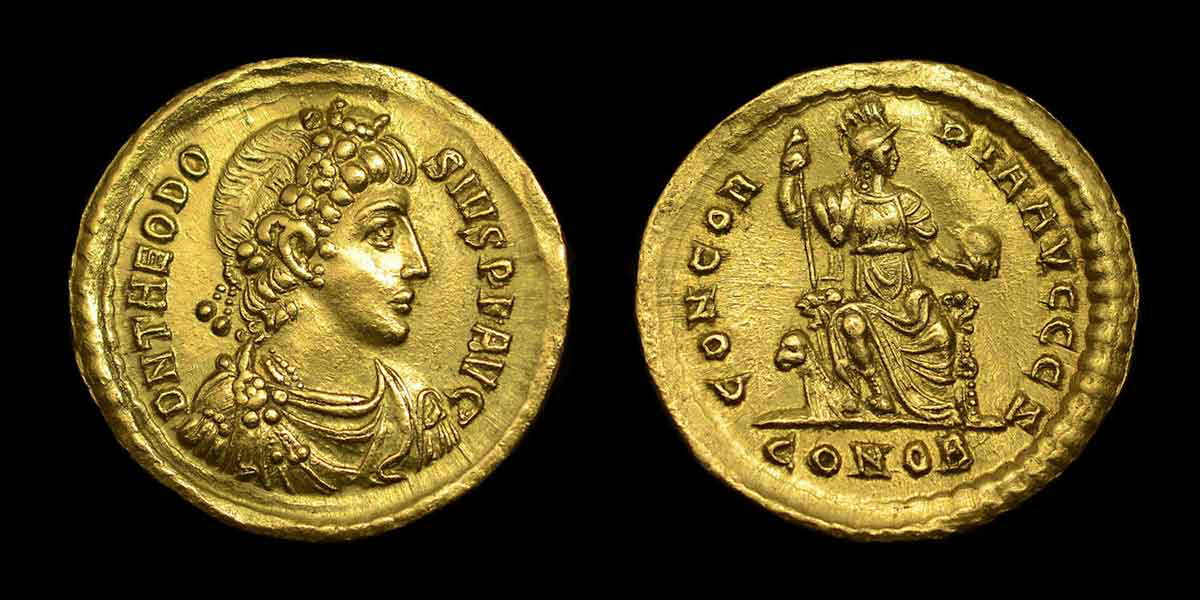
In 476, the Germanic chieftain Odoacer forced the last Western Roman emperor, Romulus Augustulus, to abdicate. Though it is considered to be the fall of the Western Roman Empire, by this point, there was virtually nothing left to fall. Most of Rome’s territory in the west had been abandoned, partitioned out, or outright conquered by Germanic tribes that were migrating westward. The emperor’s deposition put the dead empire out of its misery. In Constantinople, however, things were different.
The Eastern Roman Empire continued to exist, keeping the spark of Roman civilization alive. In the 530s, the Emperor Justinian began a major series of military campaigns to reconquer the lost western territories. Under the command of highly competent generals such as Belisarius, the Eastern Roman Empire managed to retake parts of North Africa, including Carthage, as well as parts of the Iberian Peninsula, Sicily, and Italy. It seemed as if Rome might regain its former glory.
An Unstable Situation
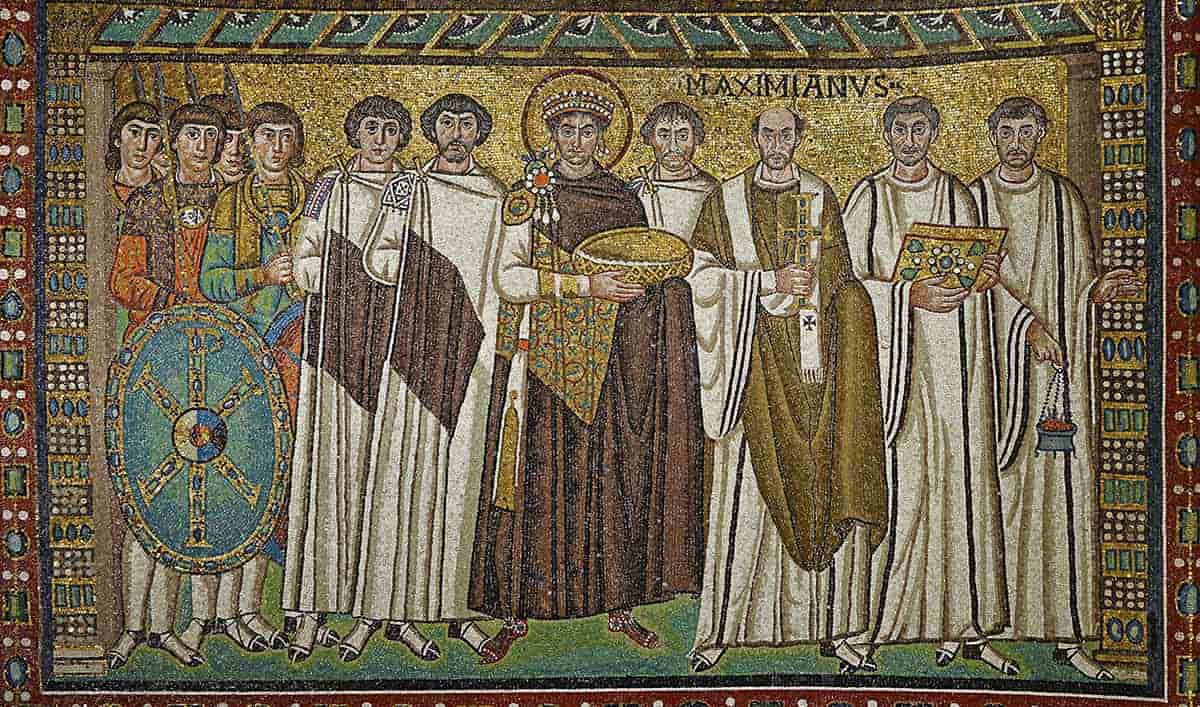
Unfortunately, for all of their successes, the Byzantine Empire was built on shaky ground. The first problem was political instability. Though they were united under a single emperor, civil wars, revolts, and insurrections were commonplace. Court politics was a nightmare of intrigue, backstabbing, and manipulation. The system was so complex that the word “Byzantine” is still used today to describe anything overly complicated, convoluted, and hard to follow. With each civil war, the Empire became weaker, less wealthy, and less able to protect itself against outside forces.
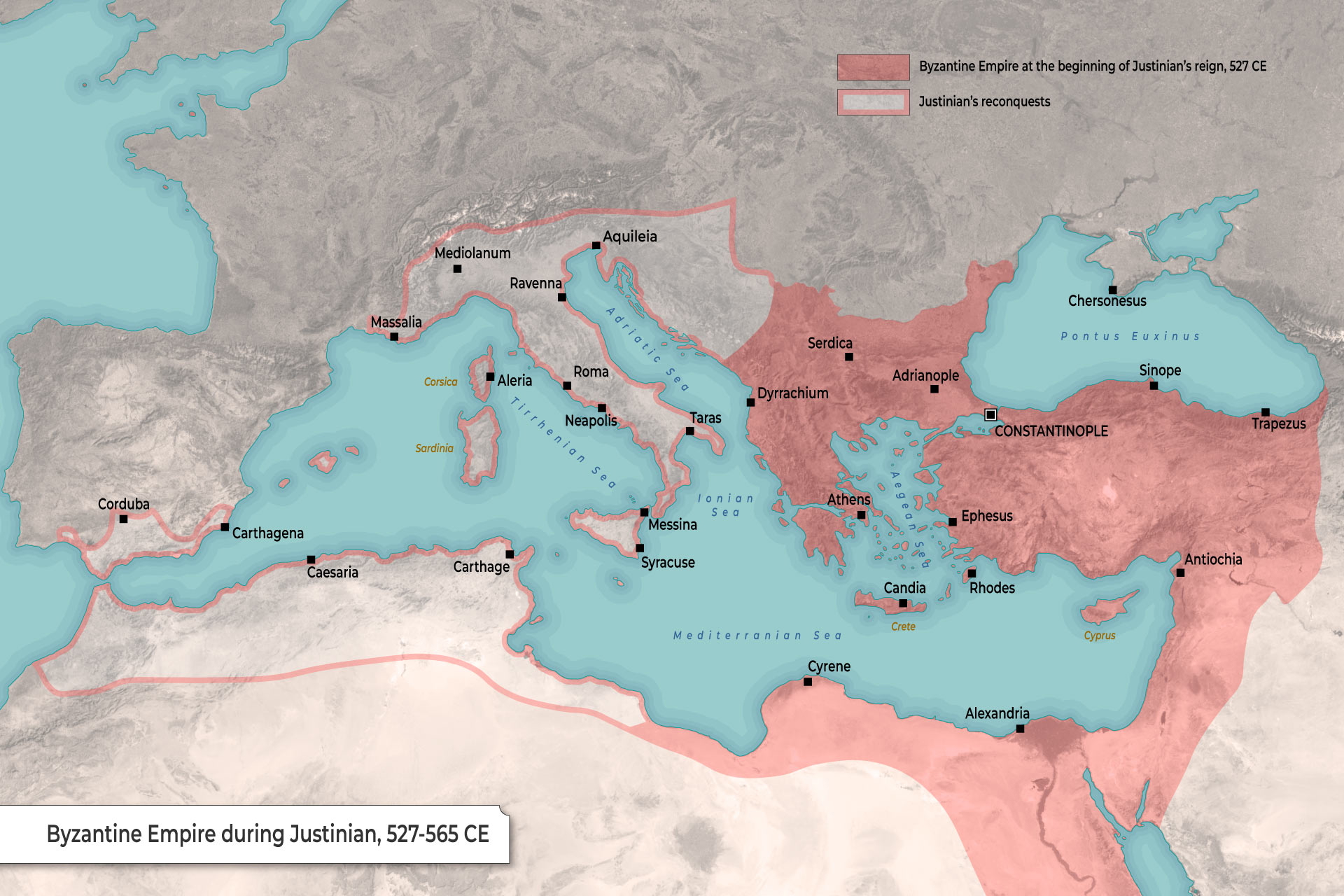
The Eastern Romans were also in a geographically difficult position. There were some advantages, such as the capital of Constantinople being protected by the Bosporus and the Dardanelles, but otherwise, they found themselves surrounded by hostile powers. The eastern frontier was constantly threatened by the Persians, who had plagued Rome since the time of Marcus Licinius Crassus. From the north, Viking and Kievan Rus raiders menaced Byzantine holdings, Bulgaria was a constant thorn in the side, and Normans descended on Sicily and southern Italy, wresting control of those regions from Constantinople. The most threatening, however, was a new threat that emerged from the Arabian Peninsula. In the 7th century, the meteoric rise of Islam carved off large territories in the eastern frontier.
The Empire Starts to Crumble
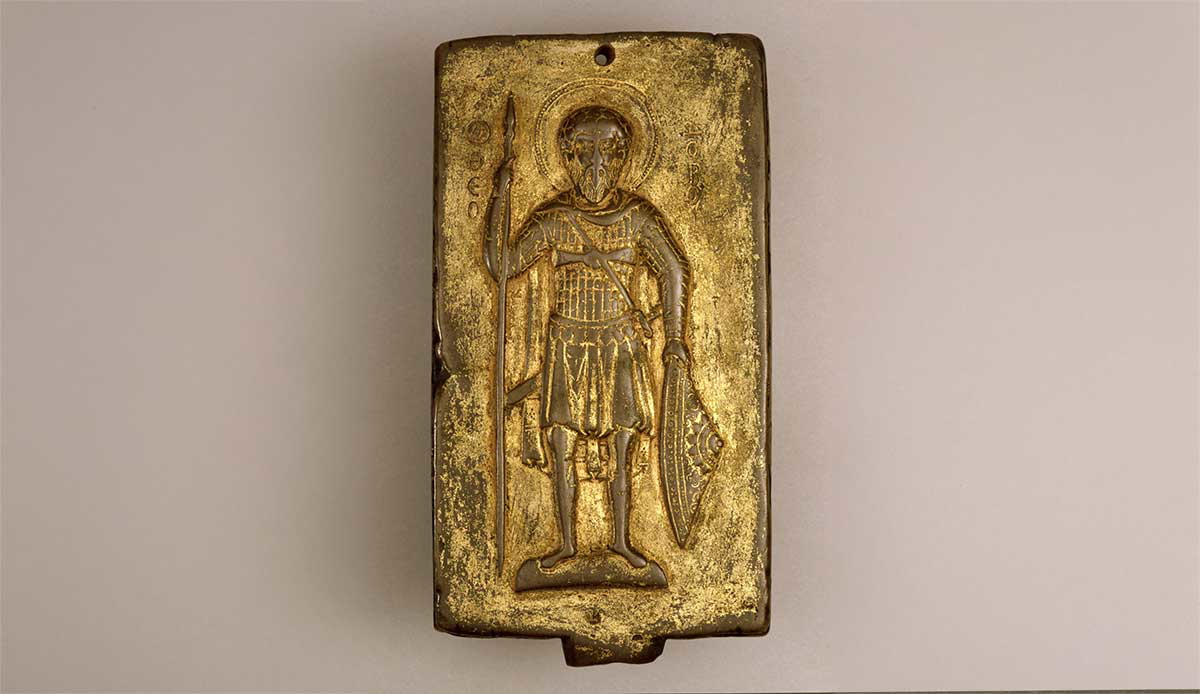
The Byzantines started steadily losing territory, first the gains made under Justinian, and then the eastern provinces. The armies of Islam swept over much of the Levant and North Africa, taking these vital possessions that provided tax income and manpower to support the Empire.
In 1071, the Battle of Manzikert happened. At this battle, the Byzantine Empire fought against the forces of the Seljuk Turks and was crushed. They not only lost the emperor, who was captured in the fighting, but more importantly, lost control over Anatolia, which provided the bulk of Byzantine manpower. With this defeat, the once mighty Byzantine Empire was reduced to its European holdings around the Balkans.
According to Anna Comnena, a Byzantine princess who recorded the events of the late 11th and early 12th centuries, “…the fortunes of the Roman Empire had sunk to their lowest ebb.” In response, the emperor was forced to ask the pope in Rome for aid, an action that directly led to the First Crusade. With the help of the crusaders, they were able to regain some of their lost territories, but were never again able to fully recover.
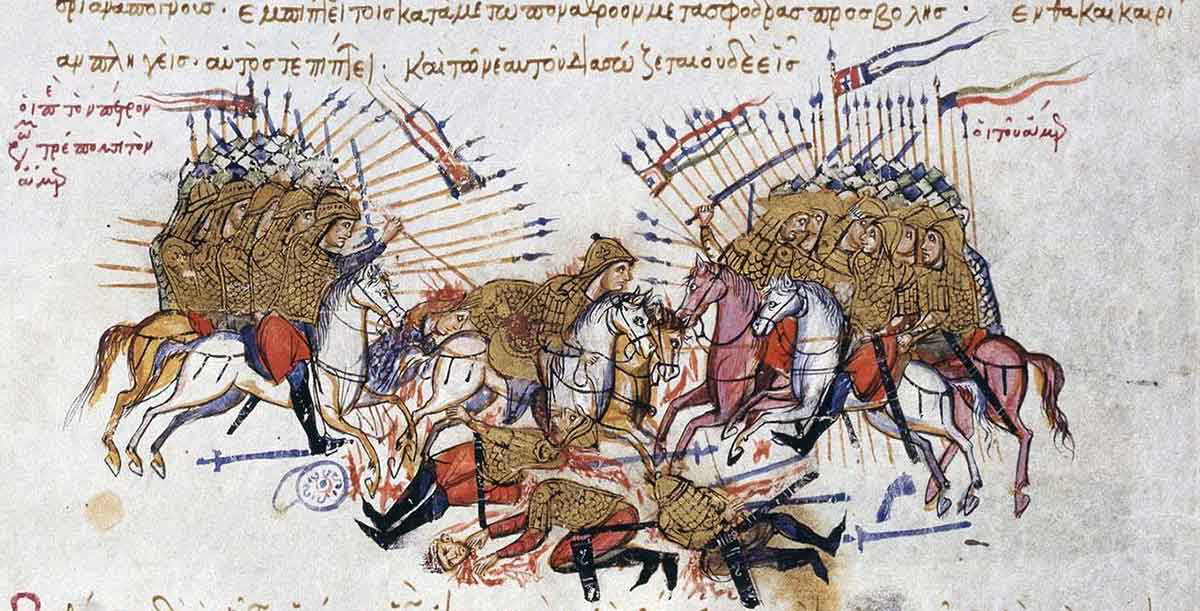
They limped on for another century, when they would be dealt another crippling blow. In 1204, during the poorly planned Fourth Crusade, the crusaders attacked Constantinople itself, capturing the city and driving the Imperial court into exile. They established the Latin Empire of Constantinople, with the legitimate Roman Empire existing in Anatolia. This would exist until 1261, when the Nicaean Empire, a rump state formed after the city was captured, managed to retake Constantinople, destroying the Latin Empire and re-establishing the Eastern Roman Empire, though in a much weaker form.
The Final Days
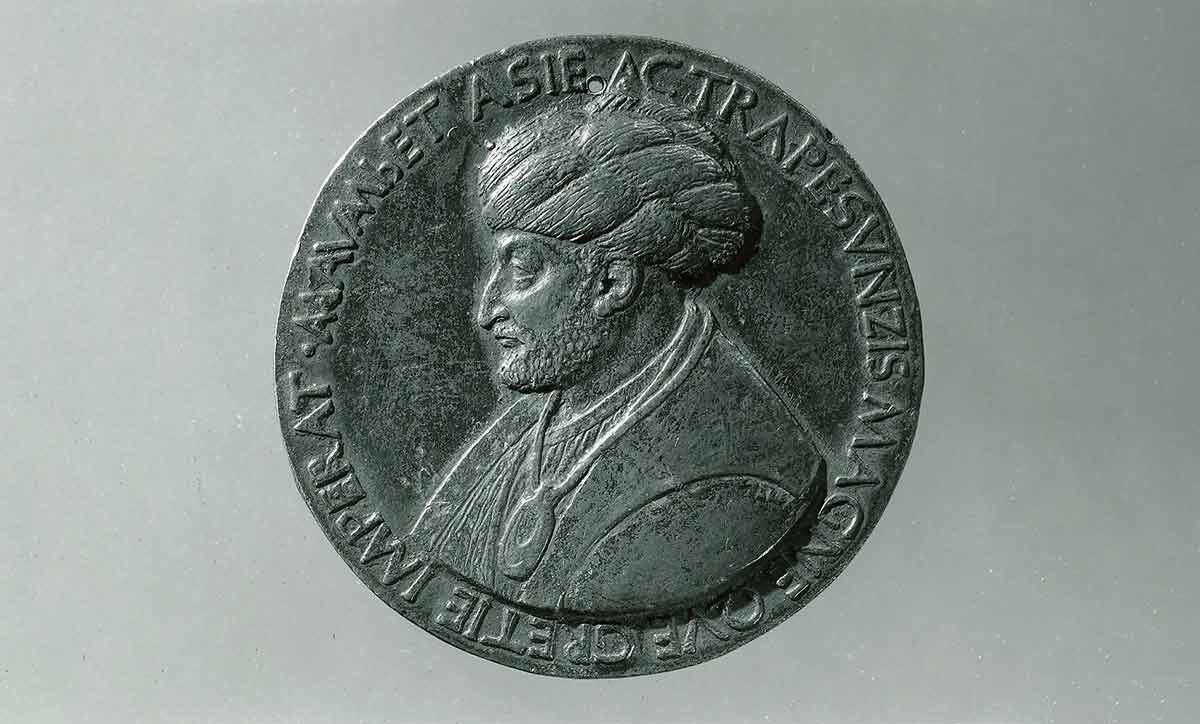
By the 15th century, the Eastern Roman Empire was a shadow of its former self, little more than a city-state. Many of their vital ports and coastal territories on the Adriatic were taken by Venice and other Italian city-states, but by far the greatest existential threat came from the Ottoman Empire.
Since their rise in the 13th century, the Ottomans had been gaining ground, carving off huge chunks of the Byzantine Empire. By the mid-15th century, the emperor in Constantinople controlled the city itself, some coastline in the Black Sea, and the Peloponnese in southern Greece. Even this was an idealized look at the situation, with the government in Greece only paying lip service to the Emperor. The city itself was in a state of disrepair, and the population had plummeted from nearly 500,000 at its height to less than 40,000. Huge districts of the city were abandoned and decaying. In 1453, the Ottoman emperor Mehmed II decided to finish the floundering Byzantine state once and for all.
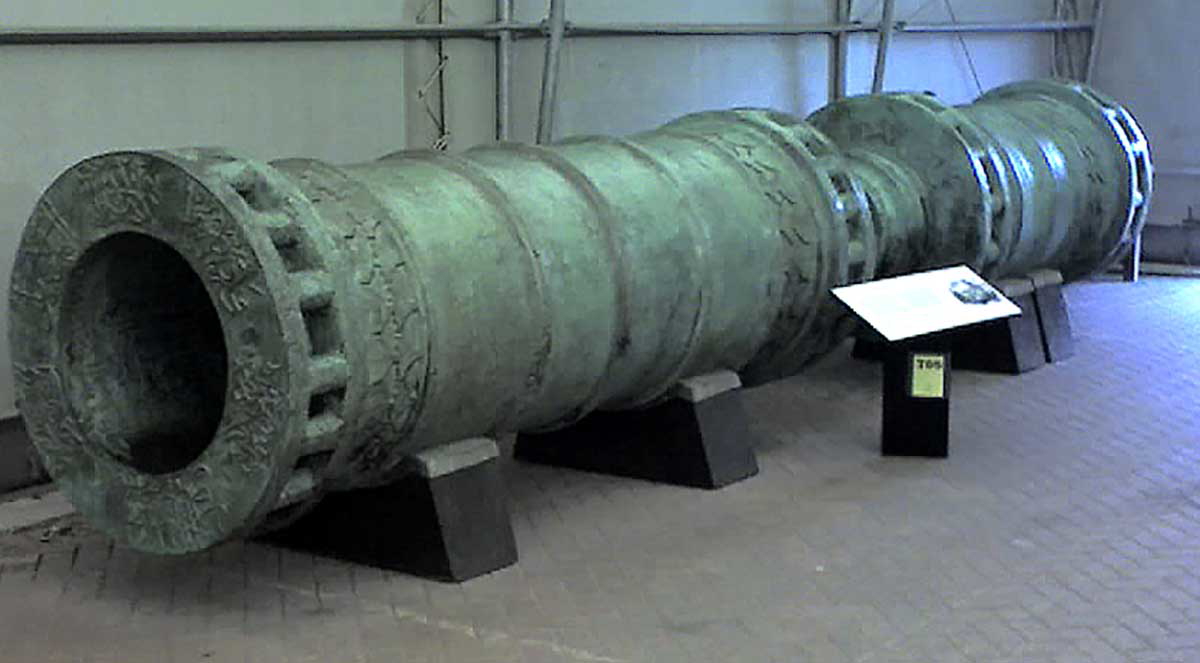
Starting in early spring, the Ottomans began a blockade of Constantinople, setting up forts along the Bosporus to disrupt shipping. Mehmed also commissioned a Hungarian cannon maker to produce a gigantic cannon that would be able to simply blast apart the double Theodosian Walls that protected the city. Knowing the siege was about to begin, the last Roman Emperor Constantine XI begged Europe for aid, but only around 1,500 soldiers from Venice and Genoa, and a few hundred others were willing or able to arrive to help.
In spite of their dire situation, they refused to give in. With the legacy of both Roman and Greek history as a motivator, the defenders prepared themselves to fight to the bitter end. On April 2, the Ottomans arrived. Their plan was simple: besiege the city by land and sea, then use their 69 cannons, including the titanic siege gun, to blast the city into submission or create a breach in the walls to send the infantry through. In response, the Byzantines raised a great chain across the Bosporus to cut off Ottoman ships.
The Roman Empire Continues Fighting
On April 6, the Ottoman cannons opened up on the city. The massive city buster cannon could fire a 1,500-pound stone cannonball over a mile. This and the other cannons pounded the city, tearing chunks out of the walls. The defenders could only fire back with their much smaller guns and repair the damage during lulls in the firing. Through their efforts, the Byzantines managed to keep the double walls intact. Over the next six weeks, the Ottomans tried everything in their playbook, bombarding the city, launching infantry assaults, and undermining the walls. The defenders fought bitterly, and each attempt was repulsed. With Ottoman morale hanging by a thread, Mehmed ordered one final assault on the city. Knowing the end was approaching, the defenders performed a joint Catholic-Orthodox service at the Hagia Sophia.
On May 26, the Ottoman besiegers launched a massive coordinated assault from several directions, hoping to spread the defenders thin. One section of the walls, the Romulus Gate, was defended by Genoese mercenaries under the command of the legendary Giovanni Gustiniani. Two waves were sent against the city, but were thrown back. The third wave was spearheaded by the Janissaries, the elite shock troops of the Ottoman military. During the fighting, Gustiniani was mortally wounded and carried through a small postern gate called the Kirkoporta. In the confusion, the gate was left open, and a group of Janissaries rushed into the opening. Soon, the Romulus Gate fell, and the Ottoman army was able to pour into the city.
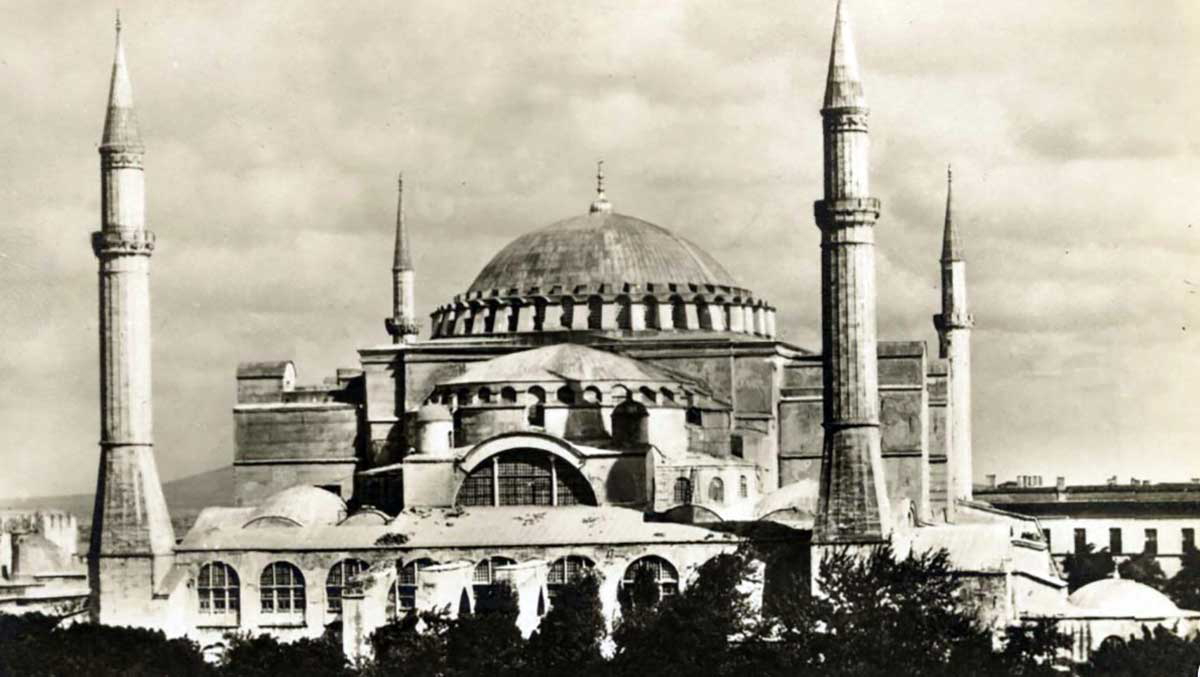
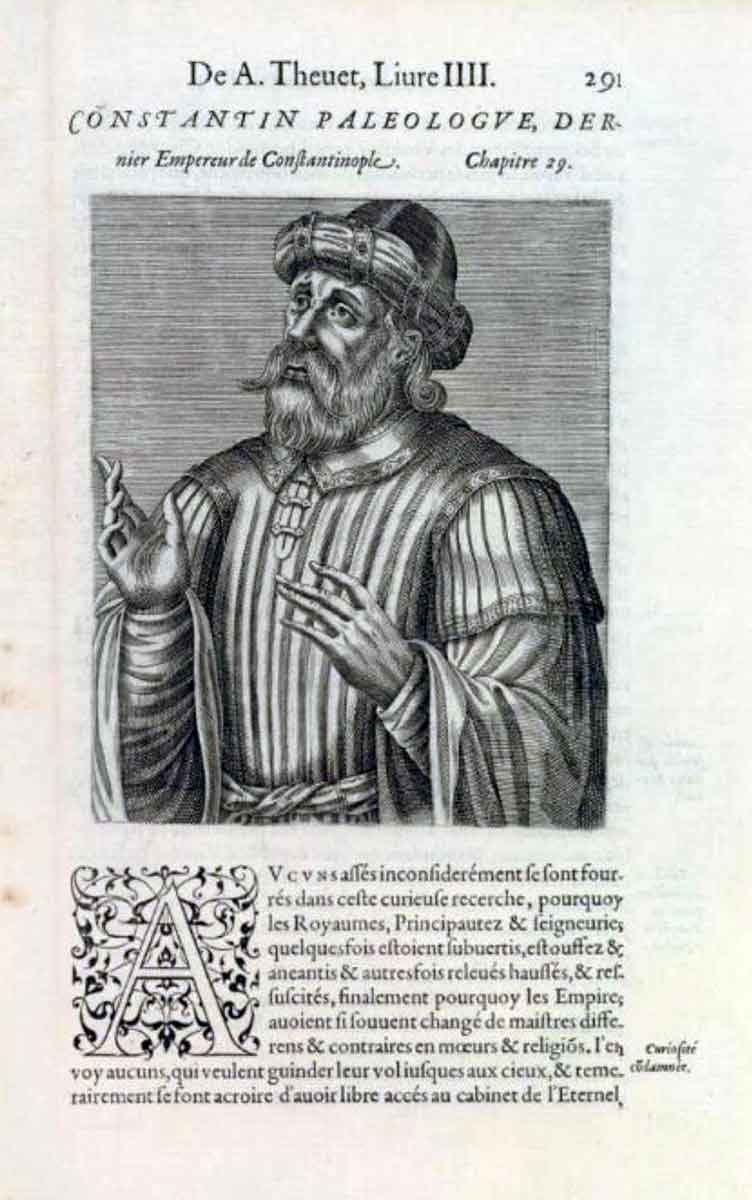
According to tradition, when he saw the city falling, Emperor Constantine XI refused to flee the city, stating, “God forbid I should live as an emperor without an Empire. As my city falls I will fall with it.” He then took off his Imperial regalia and, along with his remaining bodyguards, charged at the onrushing Ottomans. He was killed in the fighting, though his body was never identified. His death marks the end of the line of Roman emperors that stretched back to Augustus. The Ottomans captured the city, mopped up the pockets of resistance, and moved their capital to Constantinople. Thus, with the death of Constantine XI and the fall of Constantinople, the Roman Empire, which could trace its history back to the small village on the Tiber, came to an end.