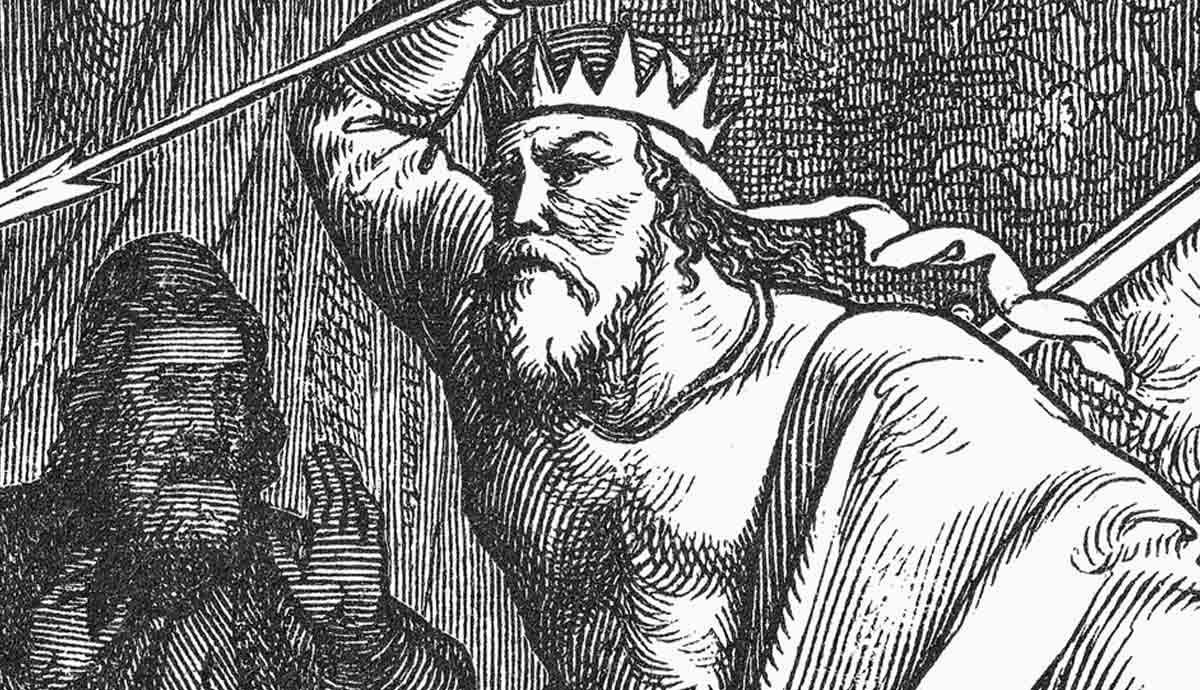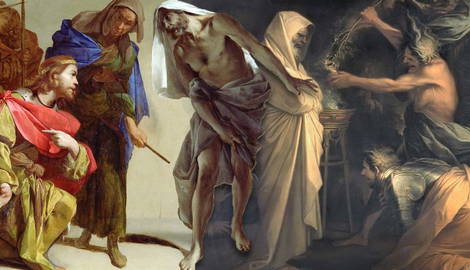

On the eve of his ruinous defeat at Mount Gilboa in 1010 BC, King Saul found heaven silent. Terrified by the advancing Philistine army and stripped of divine counsel, Israel’s first monarch disguised himself and ventured to Endor under cover of darkness. In an act of ultimate desperation, Saul commanded an underground medium to disturb the prophet Samuel’s resting soul. The chilling séance that followed produced the only explicit, waking encounter with a deceased human spirit recorded anywhere in the Hebrew Bible.
Samuel the Prophet Appears Posthumously to Saul in the Bible
The clearest and, arguably, only instance of a person’s postmortem appearance in the Bible is in I Samuel 28. The reign of King Saul, the first king anointed over Israel, is portrayed in the Bible as a tragedy. He becomes king against his will and initially enjoys popularity and success. But due to his weak resolve and struggle to maintain his sanity, Saul’s reign gradually and inevitably descends into failure.
The prophet Samuel is impressed with Saul at first, but later shows little patience for his shortcomings. Samuel is clearly the more influential figure of the two in Israel. When Samuel anoints David the next king instead of one of Saul’s sons, the fate of Saul’s legacy is all but sealed. The reader gets the impression that Saul’s reign was little more than a pretext for David’s dynasty. In the end, Saul takes his own life after a humiliating defeat in battle.
It is toward the end of this tragic story that a strange episode is recorded, the closest thing to a ghost story that the Bible provides.
King Saul Sought the Help of a Spirit Medium in Secret
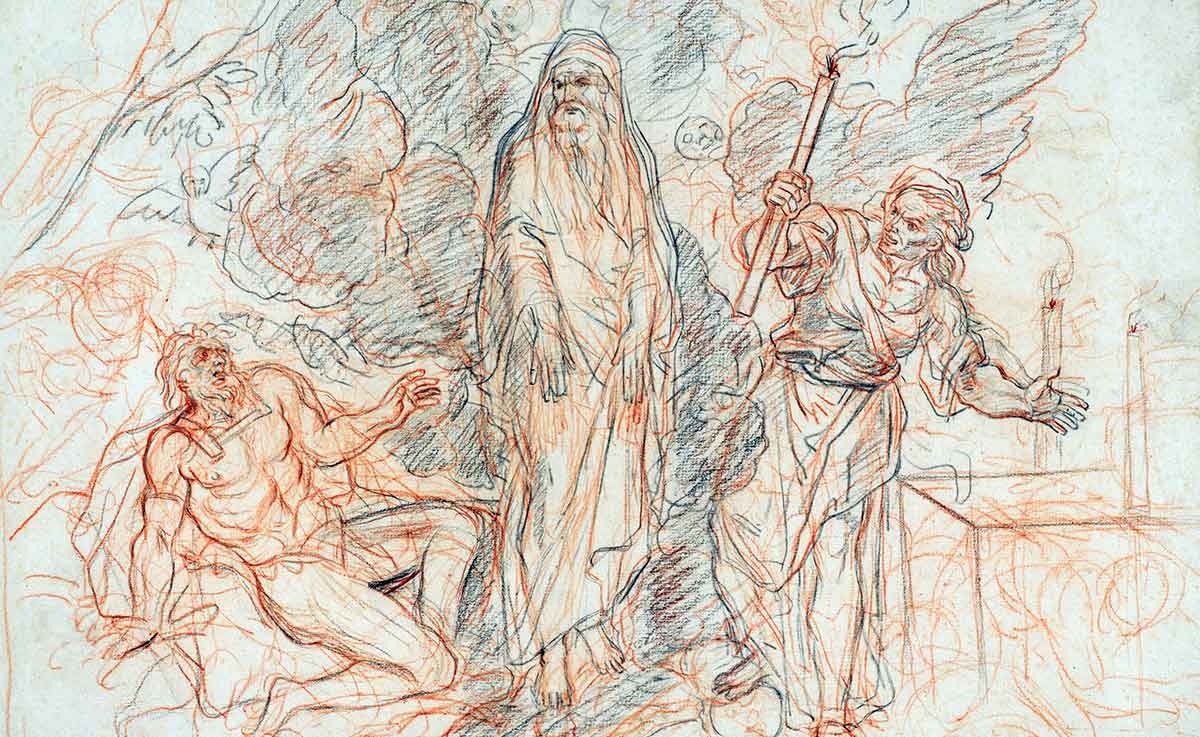
In the story, Israel’s intractable enemies, the Philistines (probably a group of the famed “Sea Peoples” originating from what are now Greek islands), were gathering their forces to attack Israel. The prophet Samuel, upon whom Saul had always depended for guidance, had died. Despite Saul’s efforts to seek divine guidance, the text says that God did not answer. Saul is so afraid of the Philistines that he decides to seek help from a spirit medium in secret. Perhaps through her he would be able to speak with Samuel.
Saul had allegedly banned all mediumship and necromancy from his realm, forcing practitioners underground. Nevertheless, he locates a medium in the town of Endor. Disguising himself and approaching the woman under the cover of darkness, he asks her to contact Samuel’s spirit.
The woman hesitates to lend her skills to the covert king, citing the royal ban on her practice. She states: “You know what Saul has done, how he has cut off the mediums and the spiritists from the land. Why then are you laying a snare for my life to bring about my death?” (1 Samuel 28:9). Saul gives a complex response, swearing in the name of god to grant immunity for an act strictly condemned by Yahweh’s covenant laws (such as Leviticus 19:31 and Deuteronomy 18:10–12). Saul used the authority of the God who had abandoned him to sanction a forbidden ritual, promising royal clemency against his own royal decree.
Samuel’s Postmortem Appearance Seems to Surprise the Medium
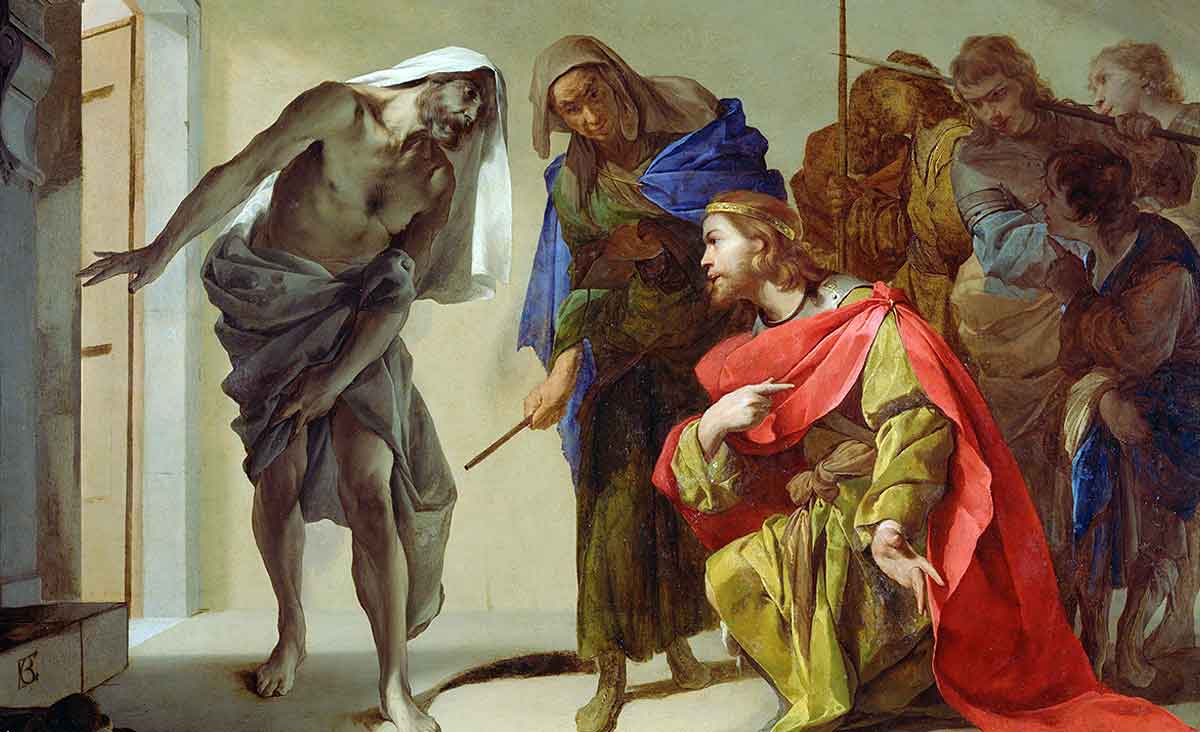
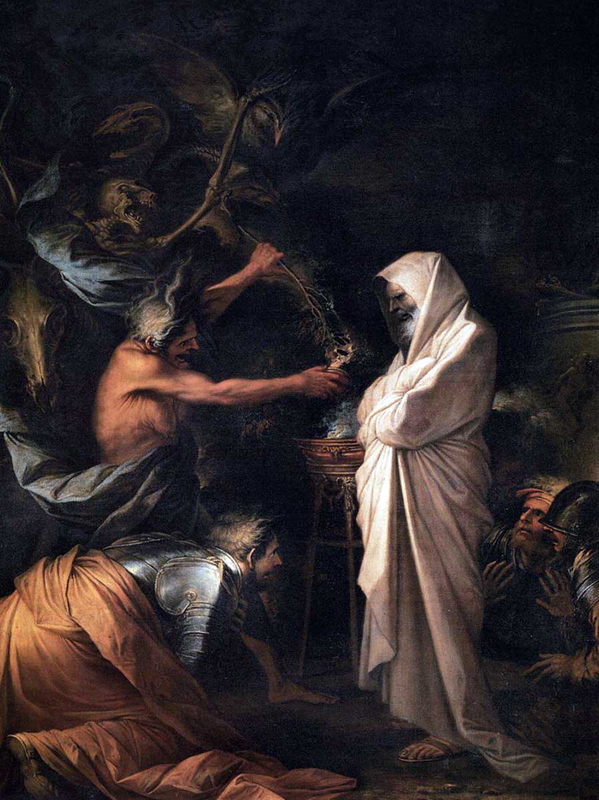
Readers interested in ancient magic will be disappointed to find nothing in the text regarding this medium’s methods. The biblical text refers to the woman as a ba’alat ‘ov, meaning “mistress of the pit.” The ‘ov was a ritual pit dug into the ground believed to serve as a conduit to Sheol, the underworld of the dead. These practitioners used repetitive chants, incense, and invocations directed downward into the earth to entice ancestral spirits or chthonic shades, known as rephaim, to ascend and speak.
Initially, only the woman can see the ascending figure, and she cries out in terror and distress when she sees the figure, suggesting that it was unexpected in some way. When Saul urges her to describe what she sees, she answers: “I see a god (elohim) coming up out of the earth.” In this ancient Hebrew context, elohim designates a majestic, preternatural being or a disembodied resident of the underworld. When Saul pressed for a physical description, she answered that an old man was ascending, wrapped in a robe (me’il). This detail was definitive: the me’il was the signature garment of Samuel. This was the very mantle Saul had famously torn years earlier when Samuel pronounced that the kingdom was torn from Saul’s hands (1 Samuel 15:27–28). Recognizing the prophet, Saul fell prostrate with his face to the ground. Seeing this exchange, the woman realizes Saul’s identity and asks why he has deceived her.
Some interpreters wonder if the woman was surprised because she was not accustomed to encountering the actual ghosts of the dead. As is typical in biblical narratives, tantalizingly few details are provided for answering such questions. But Saul’s encounter with Samuel that night is presented as a waking interaction with the conscious spirit of a dead person.
Unfortunately for Saul, death does not seem to have softened Samuel’s harsh attitude toward him. God, the apparition tells Saul, has become his enemy due to Saul’s disobedience. He then delivers a final, lethal prophecy: the Israelite army would be crushed the following day, and Saul and his sons would join Samuel in the realm of the dead before the next night fell.
Sheol: the Hebrew Underworld
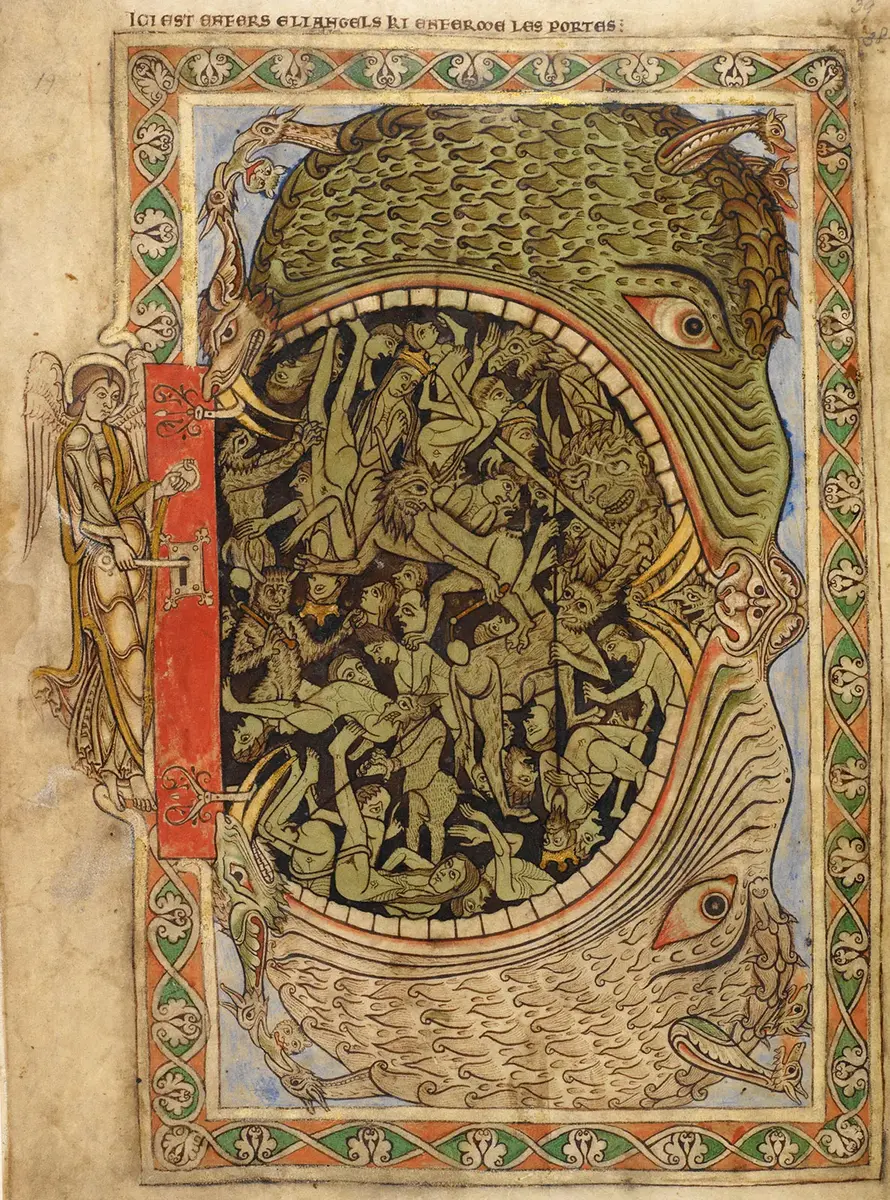
In the Hebrew Bible, Sheol is the subterranean realm of the dead. It is the lowest tier of teh three-tiered universe, with heaven above, earth in the middle, and the watery deep beneath. It is a shadowy, silent underworld to which all mortals descend regardless of moral character. Biblical poetry often pairs Sheol with bor (the pit), shachat (the grave), and Abaddon (destruction). It is described as a fortified city from which no one can return.
Sheol is a place of profound sensory deprivation. It is a land of thick darkness, forgetfulness, and pervasive dust. Job (10:21–22) describes it as “the land of darkness and the shadow of death, a land as dark as darkness itself, without any order.” Sheol is sometimes personified in literature as a devouring monster with an insatiable appetite that enlarges its throat and opens its mouth without measure to swallow entire armies, cities, and empires (Isaiah 5:14, Habakkuk 2:5).
Those who dwell in Sheol are not conscious souls experiencing active torment or spiritual bliss. Instead, they are rephaim, which means “shades” or “powerless ones.” This is because their ruach (life breath) that animated them while alive has returned to God (Ecclesiastes 12:7). What remains in Sheol is a pale, lethargic imprint of the individual, stripped of earthly strength, status, and vitality.
It was only in the late Second Temple era (516 BC-AD 70), with the emergence of Rabbinic Judaism and Christianity, that Sheol was separated into distinct realms, with Gan Eden offering paradise and Gehinnom promising eternal punitive fire.
Angels and Demons Are Not Ghosts
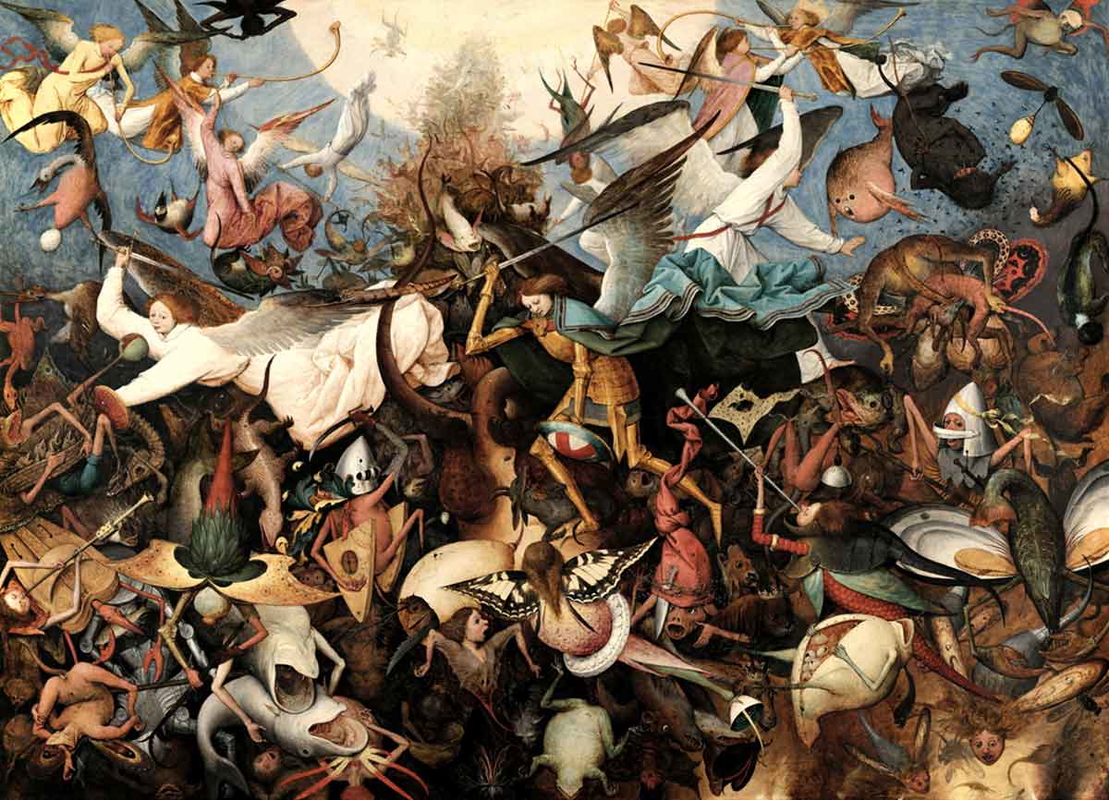
People encounter angels often in the Bible. But unlike ghosts, angels in the Bible are not formerly living human beings. Another difference between angels and ghosts is their bodies. Ghosts are, traditionally, disembodied. Though somehow visible and audible, they have no physicality. Angels, on the other hand, are often mistaken for human beings, even consuming food, fighting with physical weapons, and otherwise interacting with physical objects just like humans do.
In the New Testament, the resurrected Jesus proves to his disciples that he is not a ghost by eating food in their presence and by allowing them to touch his body.
Demons, or “unclean spirits” as they are often called, are also not the spirits of dead people as ghosts are thought to be. Unlike angels, they tend not to appear in bodily form in the Bible. They are not visible, and when their voices are heard, they speak through the humans that they torment or tempt.
Did the Disciples See the Ghosts of Elijah and Moses?
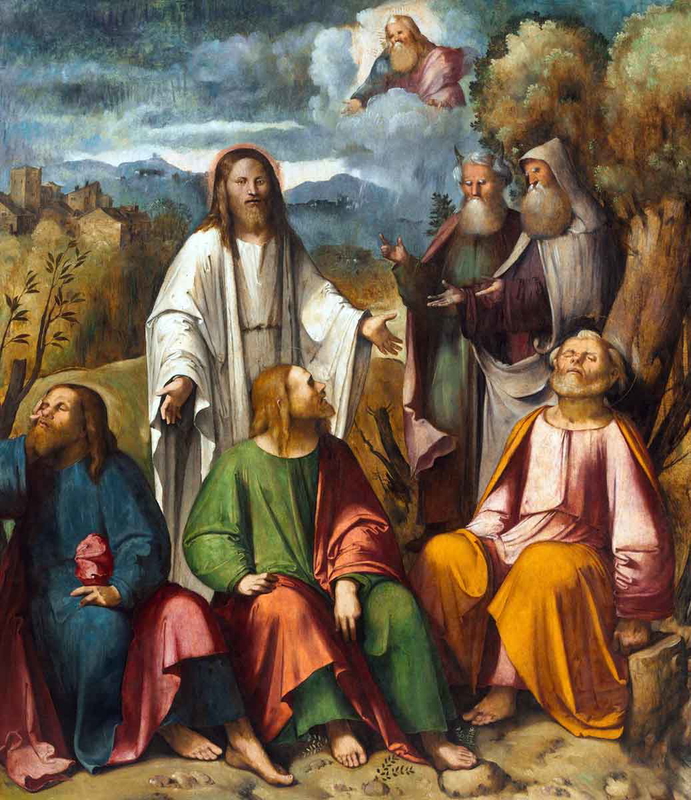
The gospels of Matthew, Mark, and Luke record Jesus appearing in a “transformed” state before three of his disciples on a mountain. He is described in this story as shining like the sun and wearing clothing of white light. Moses and Elijah, somehow recognized by the disciples, appear beside him similarly arrayed. Was this an apparition of Moses and Elijah’s ghosts?
The phenomenon portrayed in this story is probably better described as apocalyptic than as a ghost sighting. Jesus’s transformed appearance echoes the experiences of prophets and others in the Hebrew Bible in which a person is given a window into the heavens. While ghosts are displaced, wandering on earth when they “should be” inhabiting another realm, this episode in the Gospels appears to depict Jesus stepping into that realm, and the disciples being allowed to witness.
Conscious existence after death is assumed or alluded to frequently in the Bible. However, appearances of postmortem souls on earth are rare.