
There are more than three trillion trees on this planet, and roughly 400 trees for every person alive. The vast majority of these trees never get a second glance. Some end up living and dying, untouched by human hands. Others become fuel for fire, or crafted into a fine cabinet.
A rare few become iconic, claiming their own place in human history.
Here are five trees that did just that.
The Bodhi Tree and the Sacred Roots of Buddhism
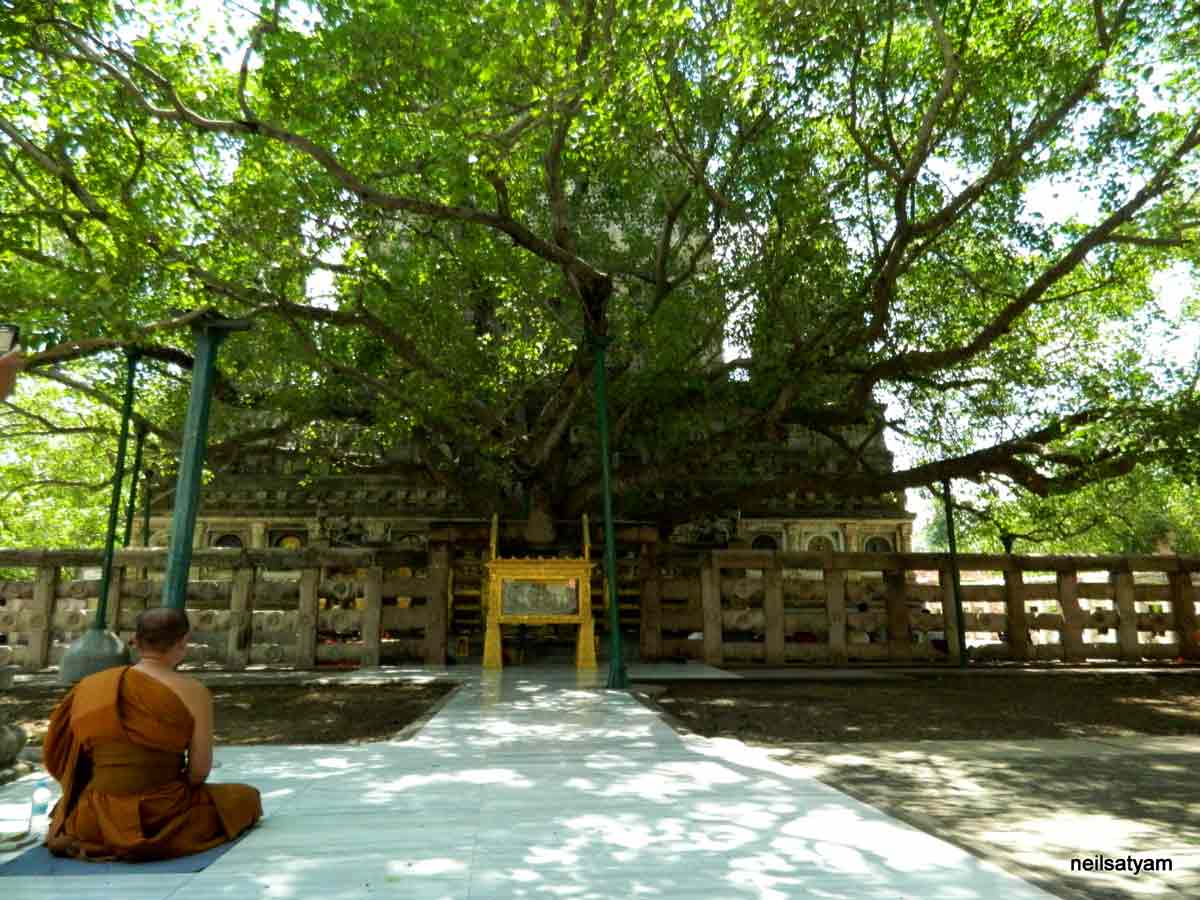
Two and a half millennia ago, Siddhartha Gautama, later known as the Buddha, sat under a Bo tree (Ficus religiosa) and achieved enlightenment. His spiritual awakening led to the development of Buddhism, which spread from northeast India to become one of the world’s most dominant religions, practiced by hundreds of millions of people today.
While the original tree died, it lives on in cuttings that were taken and replanted every time the tree was destroyed. One sapling from the tree was sent to Sri Lanka in the 3rd century BC, where it still lives as the Jaya Sri Maha Bodhi, and represents the oldest tree ever planted by human hands. A cutting from this tree was taken to Bodh Gaya, where Buddha received enlightenment, and was replanted in 1881.
This continuous cycle of destruction and rebirth serves as a perfect mirror of Buddhist philosophy.
The Major Oak of Sherwood Forest and Medieval Legend
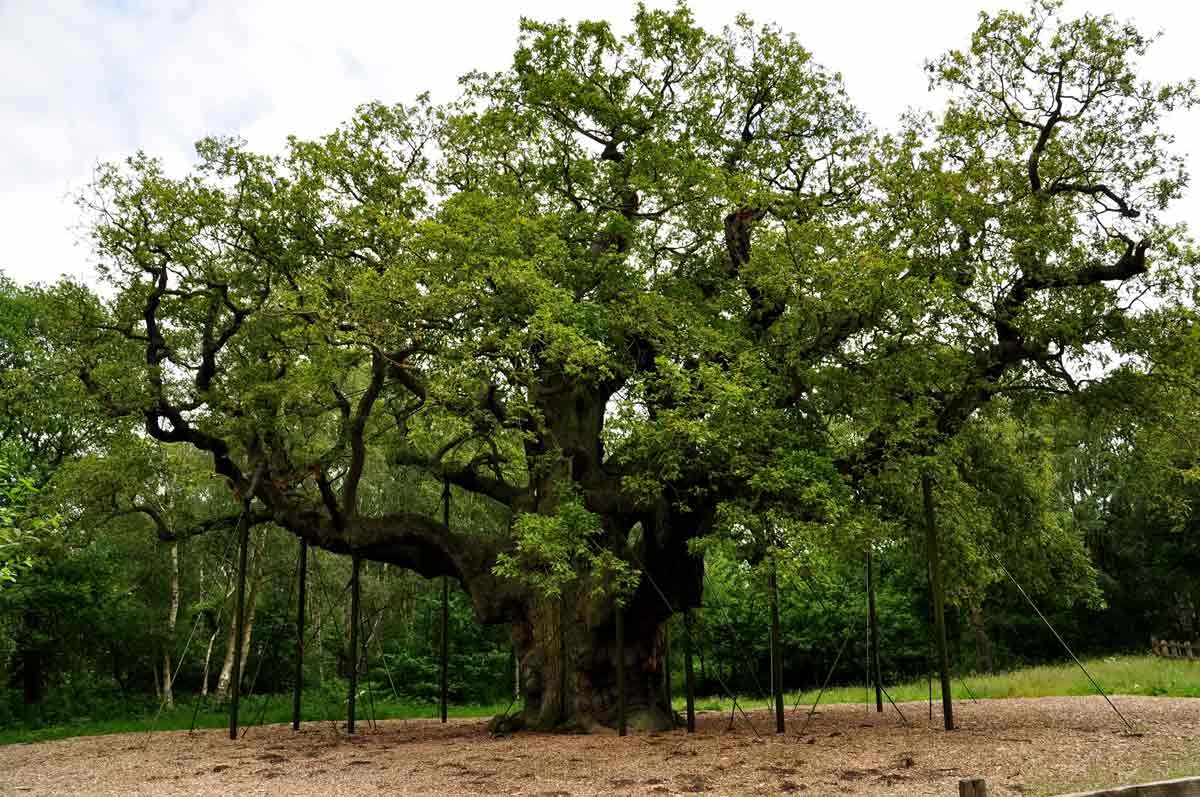
In the heart of Nottinghamshire, England, a grand oak stands, its wide branches spread outward, propped up by struts to support this arboreal grandfather. It is the second-largest oak in England, behind the Majesty Oak in Kent, and is, according to legend, a place where Robin Hood and his Merry Men took shelter.
The tree’s life was studded with drama and historical action, serving as a base for suffragette protests (including Emmeline Pankhurst) and becoming the target of arson by others. Sadly, in June 2026, it was announced that the tree had died due to a number of factors, including dry summers, soil compaction from too many tourists, and the scaffolding that supported its branches, forcing the tree to pump water into branches that would have naturally fallen off and given way to new growth.
An acorn from the tree, however, found its way to the State University of New York College of Environmental Science and Forestry, and was planted in 1926, where it continues to grow.
Newton’s Apple Tree and the Birth of Modern Physics
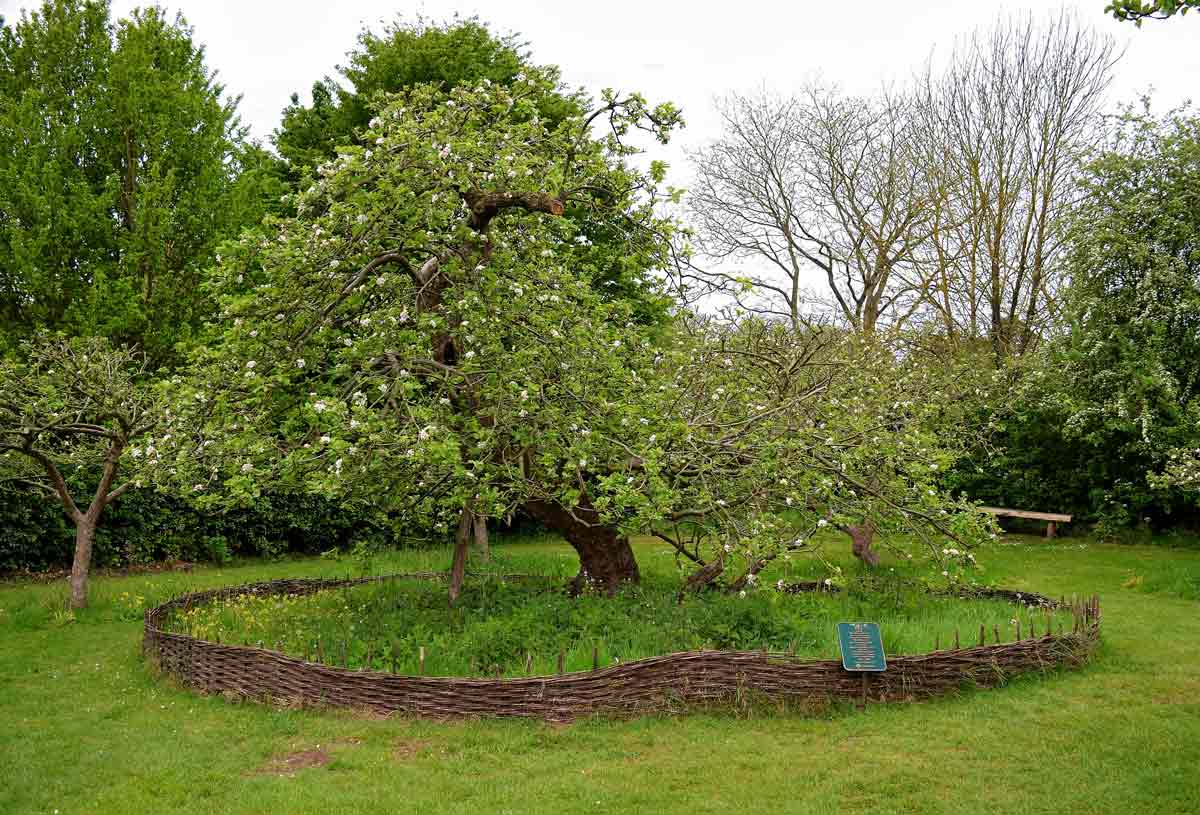
In 1666, Isaac Newton observed an apple falling from a tree outside Woolsthorpe Manor, his house in Lincolnshire. This prompted the polymath to ask questions that led him to discover the theory of gravity.
The tree is a Flower of Kent cultivar and is still alive, growing in the same spot. It was uprooted in 1820 during a gale and miraculously re-rooted itself and continued to grow. Estimated to be between 350 and 400 years old, this legendary tree still bears fruit!
The Anne Frank Chestnut Tree as a Silent Witness to History
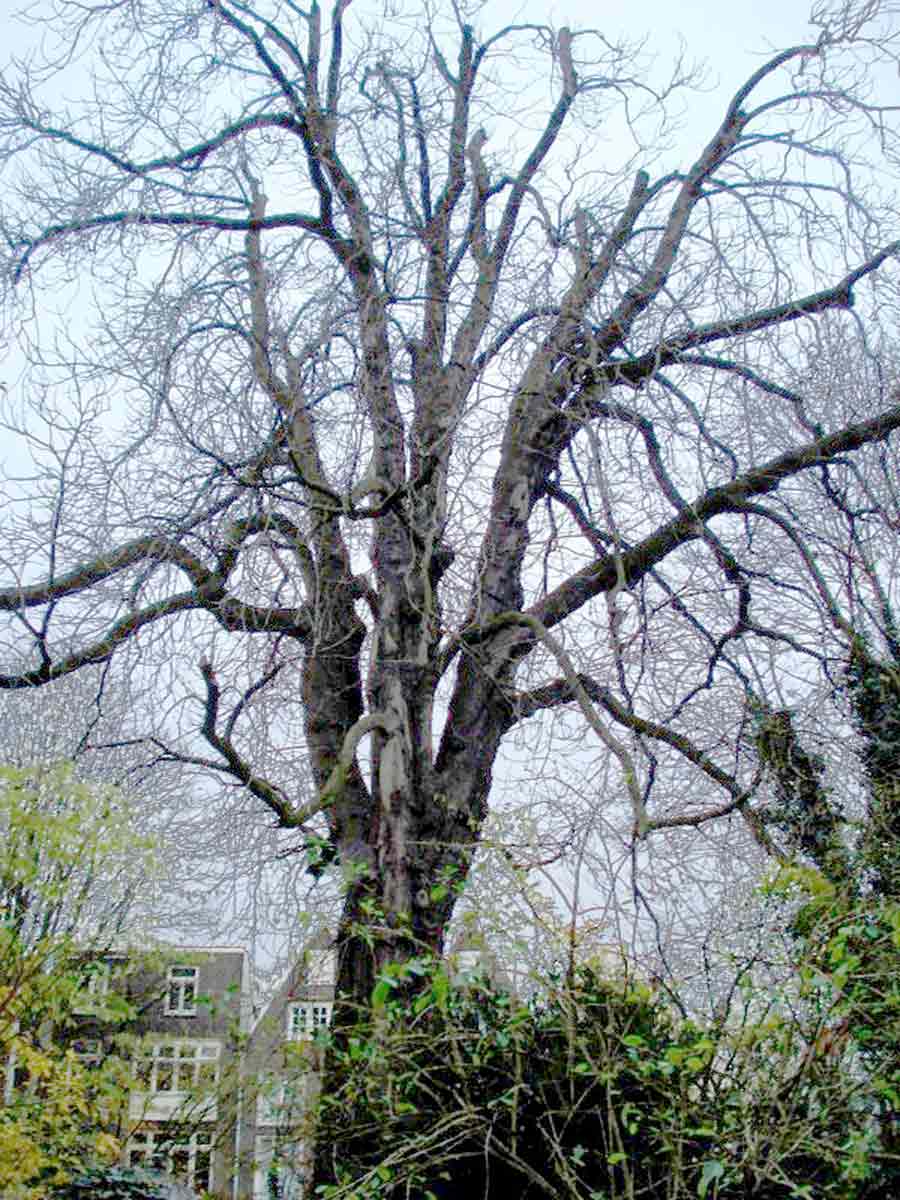
In Amsterdam, a horse-chestnut tree (Aesculus hippocastanum) overlooked Prinsengracht 263, today known as the Anne Frank House, where a young girl and her family hid during the Second World War.
While caged in the attic, Anne would look out the window and stare at the tree, reminding herself of the freedom that existed outside.
“Nearly every morning I go to the attic where Peter works to blow the stuffy air out of my lungs, from my favorite spot on the floor I look up at the blue sky and the bare chestnut tree, on whose branches droplets shine…”
For 170 years the tree bore witness to its surroundings, and despite efforts to save it from deterioration, in 2010 it blew down in a storm. Saplings from the tree, however, are planted all over the world, preserving the memory of Anne Frank and the tree.
The Tree of Ténéré and the Desert Tragedy
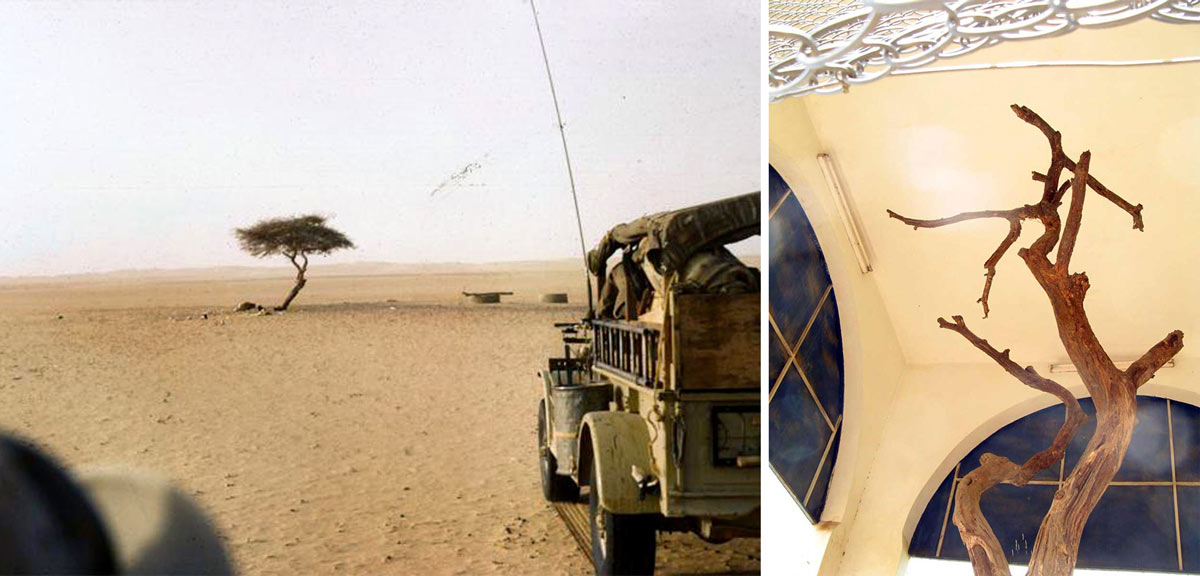
Standing in the middle of Niger, surrounded by 250 miles (400 km) of desert in all directions, was the Tree of Ténéré, the most isolated tree in the world. It was an acacia tree, and it was the last of its group to have survived when that part of the world was wetter. Its roots reached well over 100 feet below the surface and into the water table.
Travelers and truckers used it as a landmark as they navigated this lonely part of the world, and it even appeared on maps. Sadly, in 1973, an alleged drunk driver put an end to the 300-year-old tree, and its remains sit in the Niger National Museum. Today, a metal sculpture marks the site, standing where the loneliest tree in the world once stood.