
One of an artist’s biggest challenges lies in the seemingly impossible task of making something ethereal tangible. It’s easy enough to paint the Apostles, the Temple, or even Jesus Himself— but what happens when artists need to depict the invisible, the Holy Spirit as the very presence of God?
The Iconographic Struggle to Frame a Divine Mystery
The Trinity is not a simple concept to understand.
The premise of the Trinity is that God is 3-in-1. The Creator (Father) God became man and dwelt amongst us. He is called the Son of God (Jesus). An important facet of this is that Jesus did not leave when he ascended into heaven; he left behind a part of himself (the Holy Spirit). The Spirit is just one part of the Trinity, but by far the hardest to visualize.
In a sense, creating artworks about these three divine beings is a theological endeavor that is both daring and brave. How does one accurately depict on a canvas that which is unfathomable?
For many years, the Church regulated images of the Spirit to avoid heresy or “pagan” misunderstandings. Yet the inspired artist does have some ideas to pull from based on biblical metaphors for the spirit. These are wind, fire, water, oil, and the dove.
The Dove as the Universal Symbol of Divine Peace
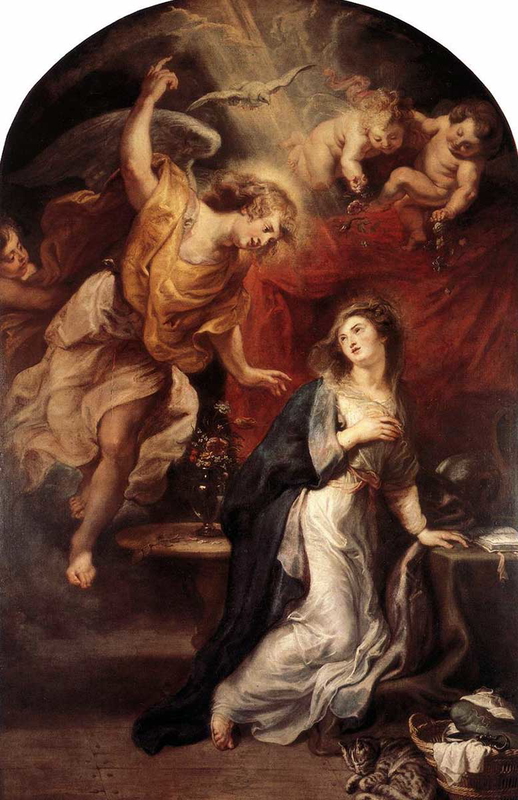
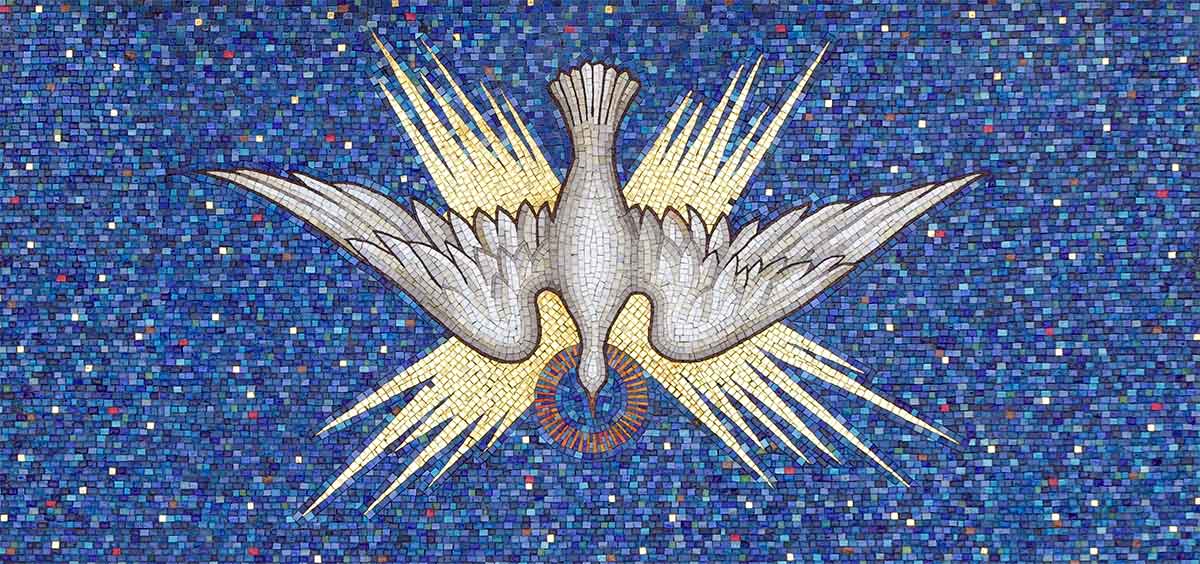
The white dove, basking in glorious light, is perhaps the most popular symbol for the Holy Spirit of God. This imagery is based on the narrative of the Baptism of Jesus in the Jordan River as described in the Synoptic Gospels. As John the Baptist lowered Jesus under the water and lifted him back up, something strange happened:
“And as he was praying, heaven was opened and the Holy Spirit descended on him in bodily form like a dove” — Luke 3:21-22
As the dove landed on Jesus after his baptism, bridging the celestial and terrestrial realms, so too does the Holy Spirit fulfill the same purpose. The Spirit is God-with-us.
In the Peter Paul Rubens Biblical painting “Annunciation” (above), the dove is surrounded by a stream of light connecting heaven to earth, signifying the Incarnation. Such artistic choices cemented the dove as the de facto face of the Spirit in the Western imagination.
Fire and Wind in Masterpieces of the Pentecost
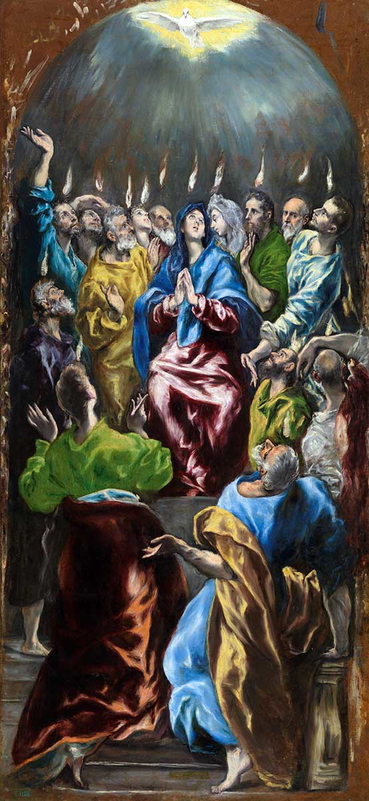
When the Holy Spirit is not depicted as a dove, it (or he) is often shown in fire and wind. This is based on the event of Pentecost described in the Book of Acts, where the promised Helper filled the disciples.
“Suddenly a sound like the blowing of a violent wind came from heaven and filled the whole house where they were sitting. They saw what seemed to be tongues of fire that separated and came to rest on each of them.” — Acts 2:2-3
Wind is the perfect example of an invisible force that artists can depict, but how does one paint “tongues of fire”? Like the flames that did not devour the burning bush before Moses, these Holy Spirit flames were not destructive or threatening.
In El Greco’s painting of the event (above), the Apostles have calm reactions as the warm, flickering flames linger above their heads.
The Controversial Human Depictions of the Holy Spirit
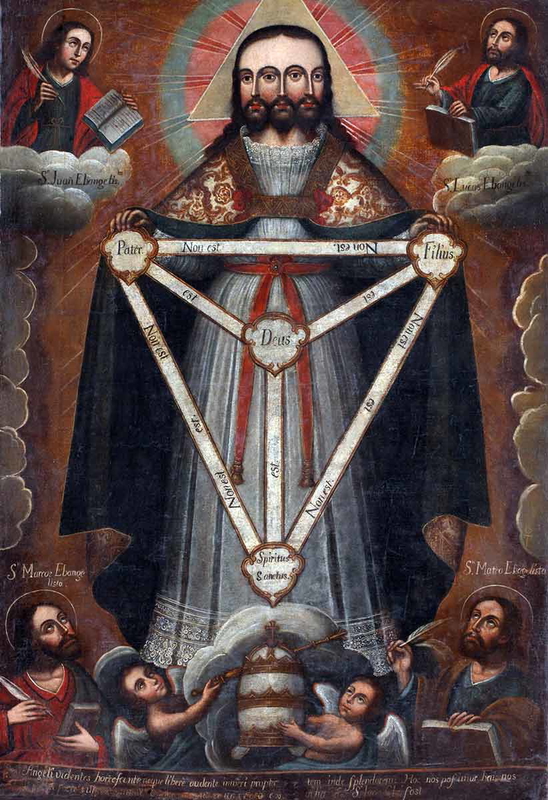
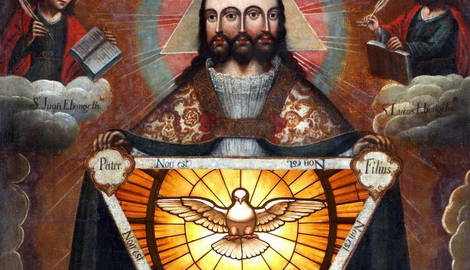
Contrary to popular belief, the Holy Spirit is present from the first page of the Bible, where the Spirit is described as hovering over the waters in the abyss. There’s a fascinating story that follows, where the Lord appears to Abraham as three men (Genesis 18). Some controversial depictions of the Holy Spirit show a three-headed figure.
The painting above shows the somewhat disturbing visual of the Trinity (as three identical faces on the same head).
Pope Urban VIII eventually banned such three-faced human representations of the Holy Spirit in 1628, and Pope Benedict XIV officially banned anything other than the “approved” dove and fire symbols for the Spirit in 1745.
Light and Radiance as the Ultimate Metaphor
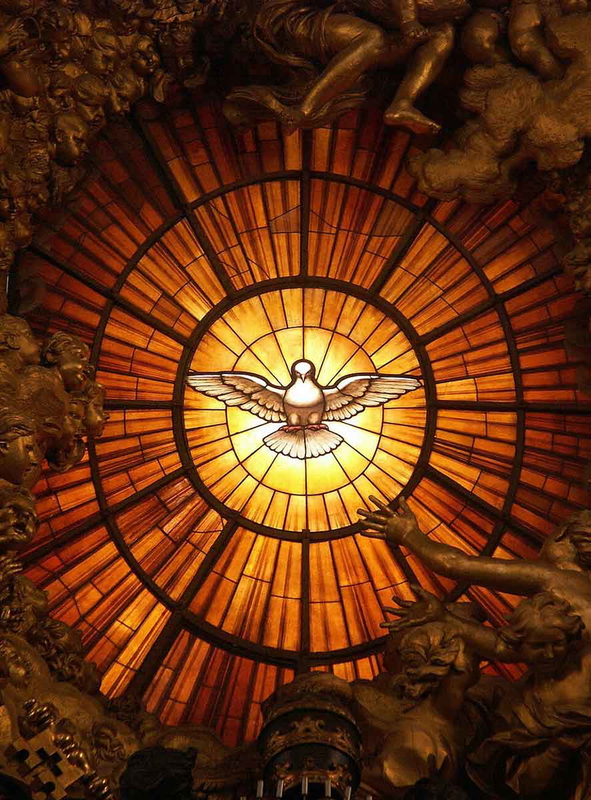
Beyond such literal attempts to paint the Holy Spirit, the more successful metaphor has been toward abstract “glories” of light. In recent years, artists have opted to paint the Holy Spirit in a more subdued, reverent way— through the use of light.
Gian Lorenzo Bernini depicted the Spirit skillfully in his artwork (above). The nimbus or halo of light around the dove is used to distinguish a “divine” bird from a common animal. Bernini’s dove is a work of stained glass that interacts with light, signifying how the church is led by the Spirit to share God’s message. This artwork signifies that natural sunlight is the Spirit’s medium. Chiaroscuro (the masterful use of light and dark) is often used in depictions of the Holy Spirit, where the Spirit is light, contrasted against the darkness of sin.
How Iconography Changed Our Vision of the Divine
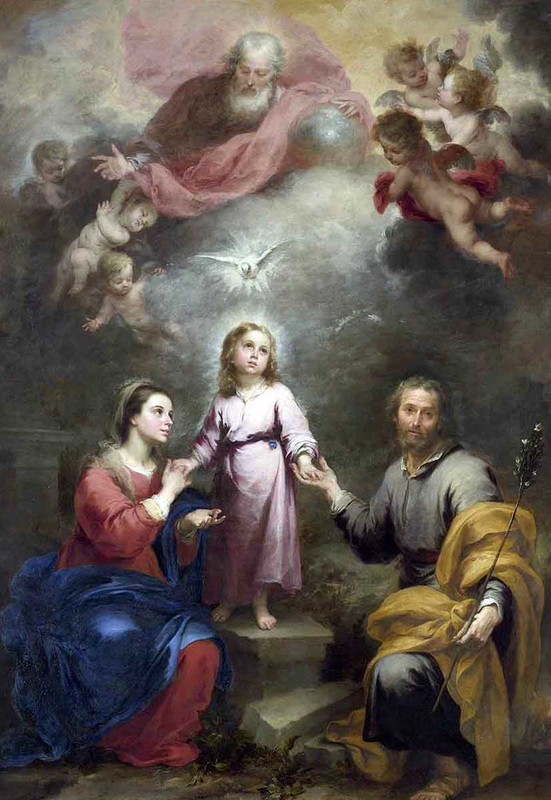
The Holy Spirit iconography used throughout the centuries changed our vision of the divine. The symbols that we use to express concepts of faith are often far removed from their original, intended purpose.
Take, for example, the cross of Christ. Crucifixion was a horrific, socially abhorred act at the time— yet now, little crosses adorn jewelry, chapels, or even bumper stickers. Humanity’s constant need to qualify and understand the divine makes it harder for us to have an accurate perspective when we do catch a glimpse of it. It seems that the more we try to make the Holy Spirit relatable, the more abstract it becomes.
On the other hand, it is a wonder how mere mortals can use the elements of nature to try to represent the most mysterious part of the Godhead. They must surely be inspired, or one might say, Spirit-filled. For why else would one undertake such an impossible task?