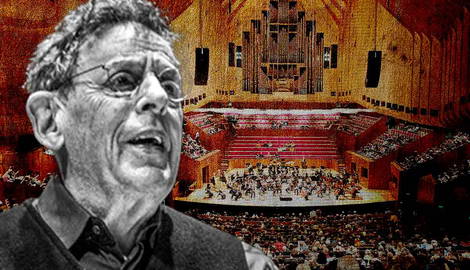
Opera is often considered a high-brow event that only the elite and die-hard fans can understand. However, Philip Glass (b. 1937) stands as a revolutionary figure in the world of opera. Some called him a visionary, others regarded him as the enfant terrible. Glass forged an alternative path in the world of opera through a potent combination of minimalist techniques, collaborations with sought-after names and visionaries, and a commitment to accessibility. We will glance at the history of opera before Philip Glass and discover some of his operas that changed the face of the genre forever.
A Brief History of Opera Before Philip Glass
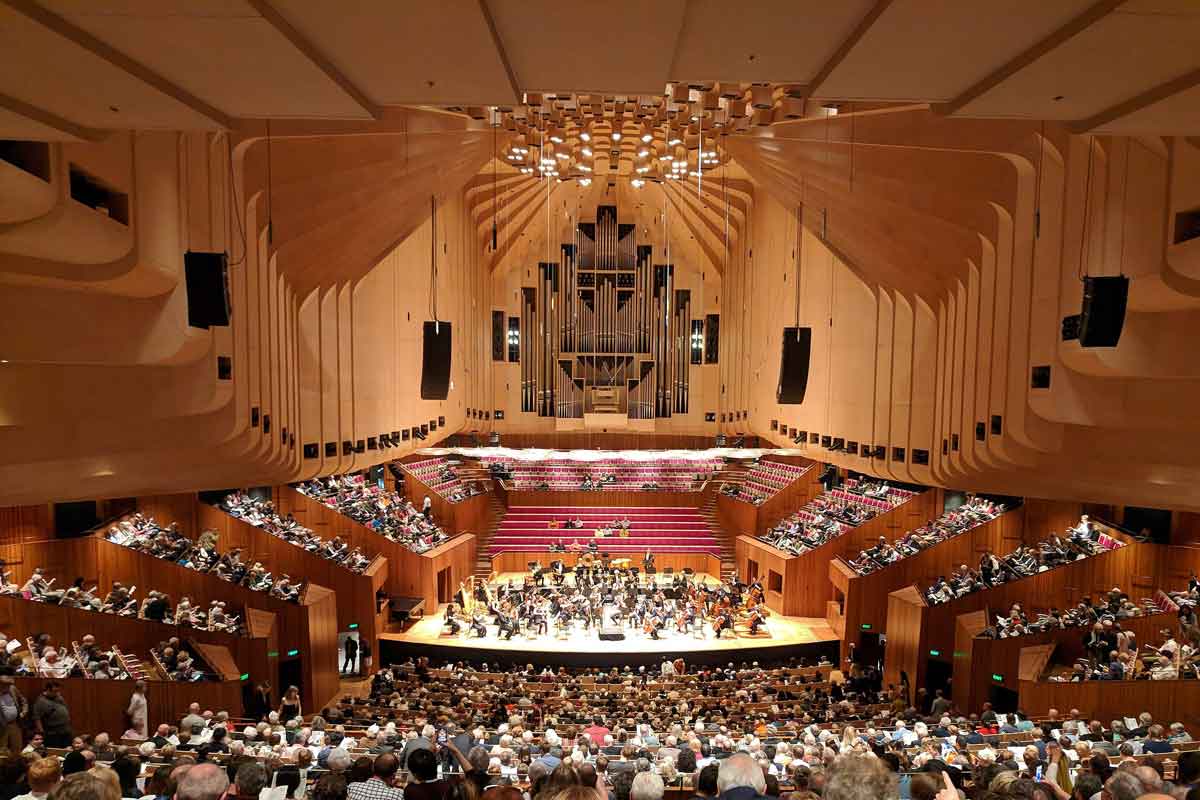
The history of opera stretches back about 400 years and has taken many meanderings. Opera’s journey began in Italy in the Renaissance and has continued to blossom and grow. The earliest operas feature myths, gods, monsters, and heroes, harking back to an idealized idea of what ancient Greek dramas may have sounded like. Greek and Roman mythology played a large part in these stories.
Renaissance (ca. 1450 to 1650)
Dafne, Jacopo Peri, 1597
The first recorded work that is considered a true opera is Jacopo Peri’s 1597 composition Dafne. Claudio Monteverdi is regarded as the first true genius of opera in the Western world. His opera, Orfeo, tells the story of Orpheus and Eurydice and was performed in front of an exclusive audience at the Duke of Mantua’s court. However, it was not a sung opera yet. It was delivered in a style known as recitar cantando, or recitative (“speech in song”).
Baroque (ca. 1650 to 1700)
Giulio Cesare in Egitto (Julius Caesar in Egypt) HWV 17, G.F. Handel, 1724
Opera took Europe by storm, and everyone wanted a piece of the action. It became an expensive affair filled with florid arias and ornate set designs with moving parts. Grandeur and noble simplicity became the catchphrases. Dances, choruses, and a more natural and fluid combination of words skyrocketed opera into the mainstream.
Castrati, male singers who were castrated before puberty to preserve their soprano voices, became the superstars of the day. They had a man’s power and control while displaying a woman’s soprano range. Today, countertenors have taken their place.
Classical Era (ca. 1700 to 1820)
Le Nozze die Figaro (The Marriage of Figaro) Opera, W.A. Mozart, 1791
With the Enlightenment sweeping across Europe, gods and monsters took a back seat and opera became more realistic, focusing on people. The music became more streamlined and less ornate. A prime example is Wolfgang Amadeus Mozart’s Le Nozze di Figaro (The Marriage of Figaro). The opera is based on Beaumarchais’s work on Figaro — a comedic opera with a serious heart: Figaro tries to gain the upper hand over his master and points out inequalities in France. It is said that the play promoted revolutionary ideas that helped to lead towards the French Revolution.
Romantic Era (ca. 1820 to 1900)
Das Rheingold (The Rhine Gold), Richard Wagner, 19th century
Despite the name, the Romantic Era was not about romance… It was about emotions and the pre-Romantic period, Sturm und Drang (“Storm and Stress”) sought to be “tumultuous and [filled with] intense emotions, a refusal to conform to societal norms, and a need to transgress” (Silva, 2022). The ideals of the Sturm and Drang period, especially in Germany, flowed across Europe. Artists across all genres sought to expand their world and give a voice to their feelings. Composers, like Ludwig van Beethoven, broke away from the rigid forms laid down by their predecessors and forged a new path in music.
In Germany, Richard Wagner singlehandedly changed the course of opera. Unfortunately, he was also appropriated by the Nazi Party for their nefarious reasons. He introduced new directions in harmony and expanded the use of the orchestra to convey a range of feelings, and leitmotifs to symbolize people, ideas, and places. The whole opera is based on Wagner’s idea of Gesamtkunstwerk or “total work of art.” His epic opera cycle, Der Ring des Nibelungen, WWV 86, spans four operas and is loosely based on characters from Norse mythology and the Nibelungenlied.
Composers like Puccini and Verdi emphasized emotion and lived experience in their works, like La Bohéme, Madama Butterfly, and Turandot (Puccini), and La Traviata and Rigoletto (by Verdi).
20th Century and Beyond (ca. 1900 Until Today)
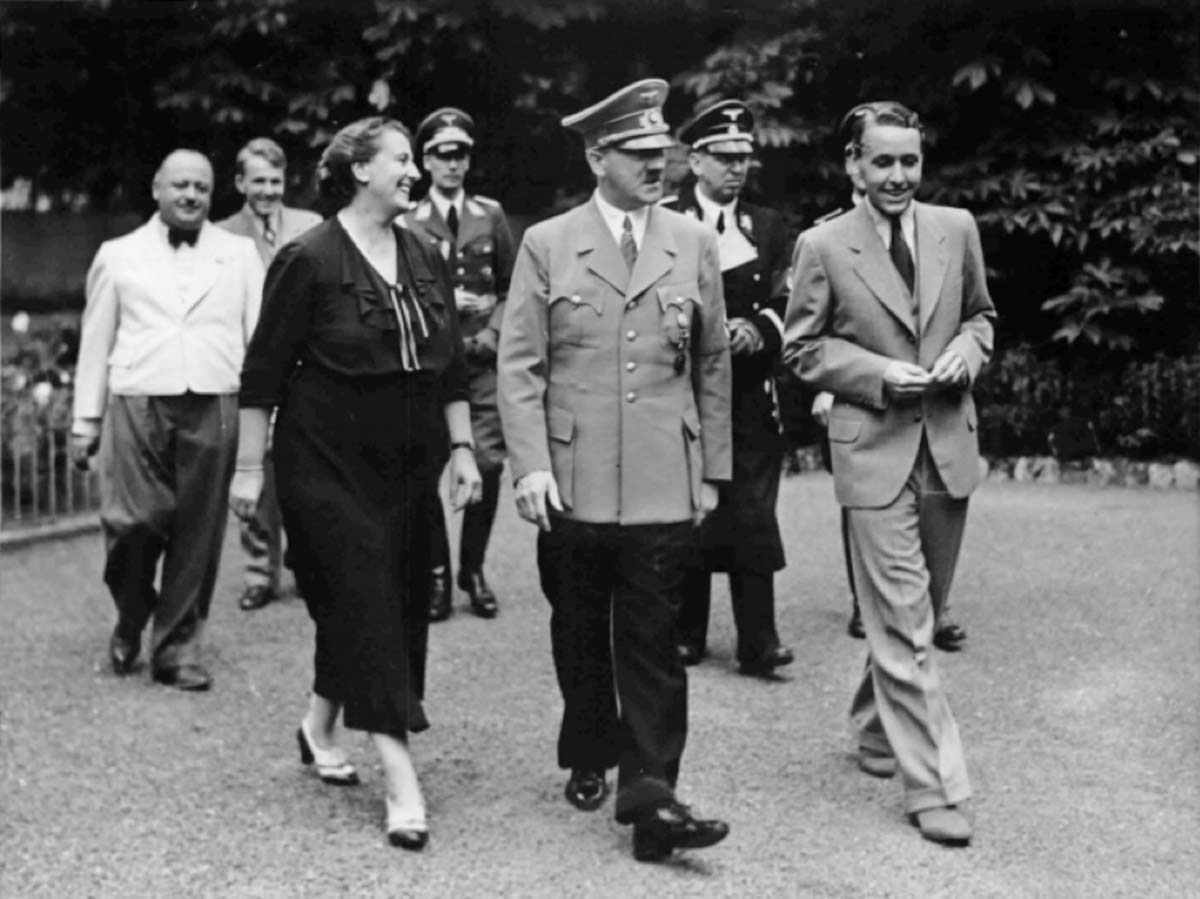
Opera has come a long way from its roots in classical Greek dramas having become all-encompassing and grand. The 20th century became loaded with politics and these two soon clashed. The Nazis appropriated Viking legends for their propaganda machine and Hitler adored the works of Wagner.
Joseph Stalin’s communist policies (known as Socialist Realism) included prescribing what all artists could and could not produce. A prime example is Dmitry Shostakovich’s 1934 opera, Lady Macbeth of Mtsensk which landed him on Stalin’s denounced artists list and in an article in Pravda newspaper. Luckily, Shostakovich survived the attack, and his Symphony No. 5 in D Minor, Op. 47 was offered as an apology.
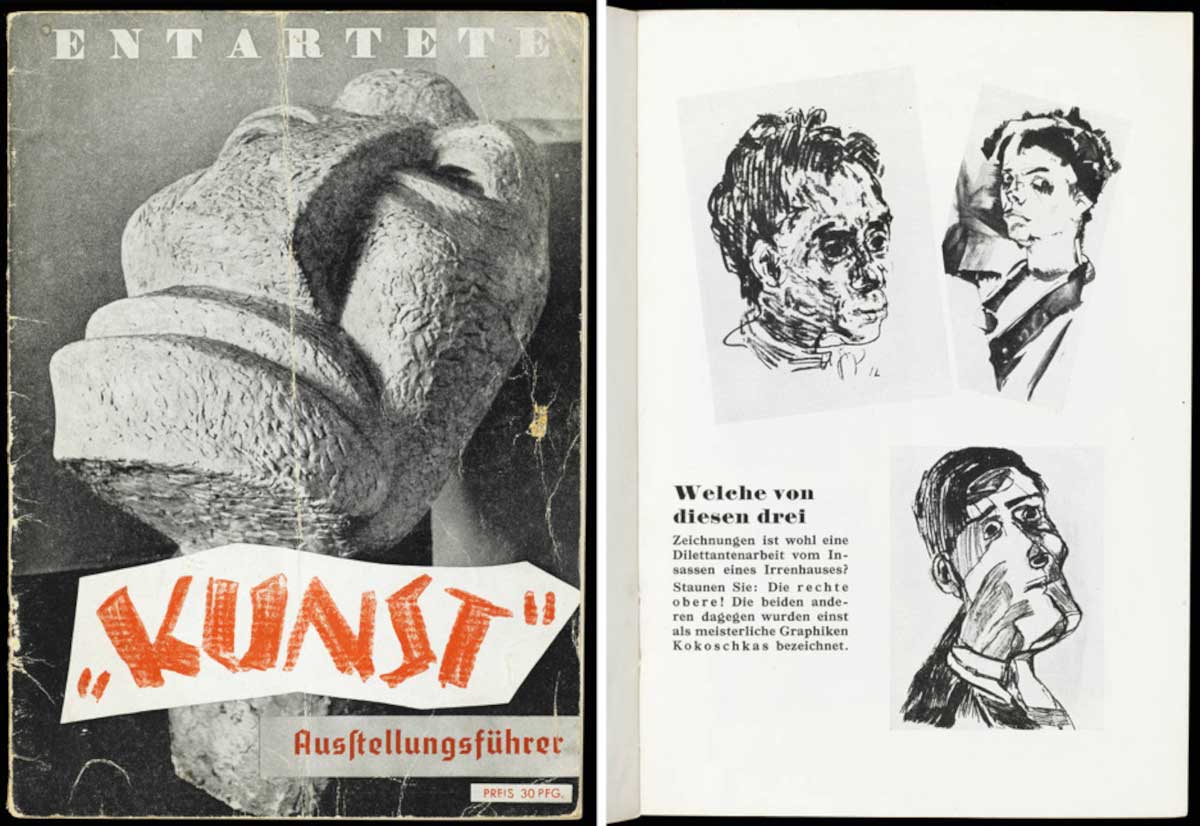
Germany, under the Nazis, also placed restrictions on all forms of art, music, and film — music had to be tonal and free from jazz influences. All forms of art had to exalt the German Motherland and portray racial purity, and obedience. Anything else was considered “degenerate art.”
Benjamin Britten’s 1945 opera, Peter Grimes, turns the eye and ear toward the consequences of mob mentality and small-town life. Opera and politics would also turn their attention to momentous events of the 20th century in John Adam’s 1987 opera Nixon in China. As the title suggests, it refers to Nixon’s historic visit to Chairman Mao in China in 1972. Contemporary issues are also highlighted in opera, for example, the American Opera Project and the NYU Tisch School of the Arts’ Stonewall Operas which were commissioned to commemorate the 50th anniversary of the 1969 Stonewall Riots. The riots sparked the LQBTQ+ rights movement and ignited the Pride movement.
If there is a story to be told, opera makes sure that audiences can enjoy a multisensory experience. The operas of Philip Glass are no different, but he also forged a new path in the opera world.
How Did Philip Glass Revolutionize Opera?
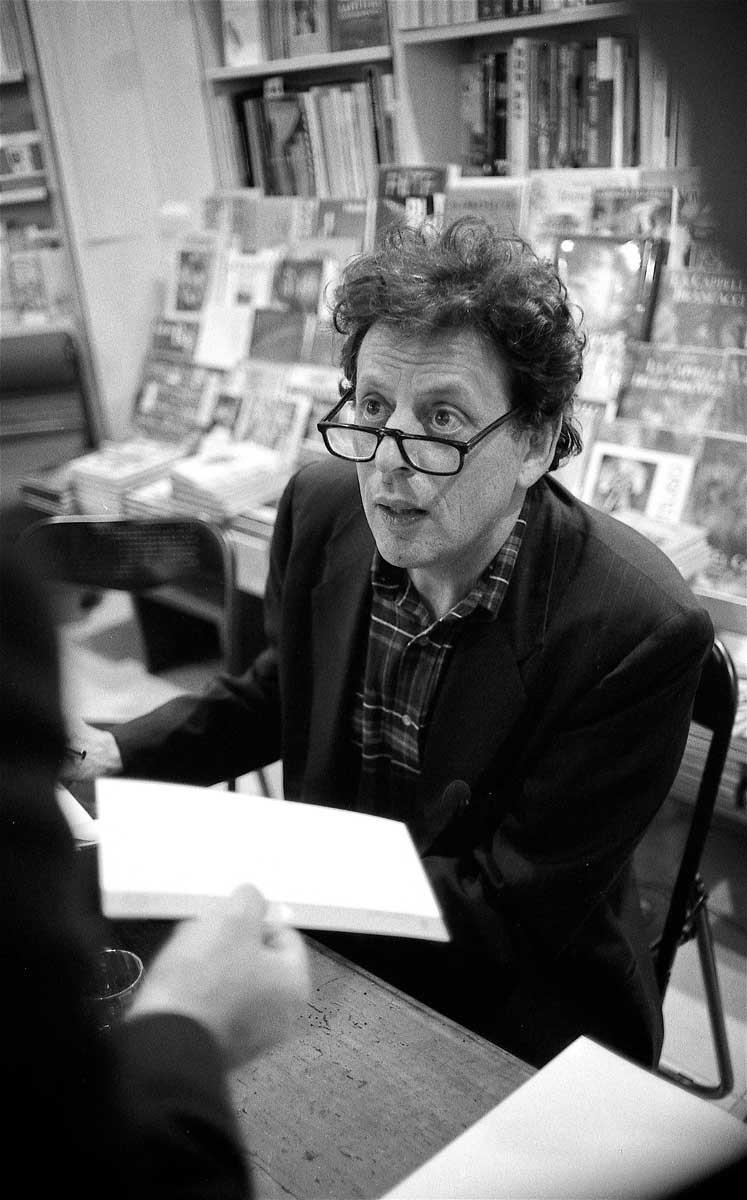
Philip Glass is one of the most influential musicians and composers of the 21st century. He is best known for his minimalist compositions, but his operas are epic masterpieces worthy of any music lover’s attention.
Let us discover how Philip Glass revolutionized opera through his unique minimalist approach and lens.
Einstein on the Beach
Knee Play 1 from Einstein on the Beach, Philip Glass, 1976
Glass composed his first opera, Einstein on the Beach, in 1976. While Glass composed the music, he collaborated with artist Robert Wilson on the libretto. Wilson handled the stage design and directed the production. Instead of following established conventions of plot or narrative arc, Glass’s opera is non-narrative and uses a formalist format.
He threw all the established rules out of the window. Instead of the traditional orchestra, the work is composed for synthesizers, woodwinds, and voices. Audience performances last over five hours without the traditional intermissions — audience members are welcome (and encouraged) to wander in and out of the performance at will.
Further, a series of recurring images are used in juxtaposition to abstract dances to tell the story. Knee Plays, or brief interludes, connect each of the four “scenes.” The fragmented nature of the opera is used to portray the complexities of Einstein’s theories of space and time.
The opera is a culmination of Glass’s minimalist techniques. Repeating musical figures that subtly change as they unfold during a scene creates a hypnotic and meditative atmosphere. Glass uses music to draw the audience into the emotional world of the characters. Combining the aforementioned with rhythm can create a sense of calm or urgency, depending on its use.
Einstein is part art installation, part modern dance, part opera, and a whole avant-garde masterpiece that changed opera and set a new standard for operas in America and the world.
Satyagraha
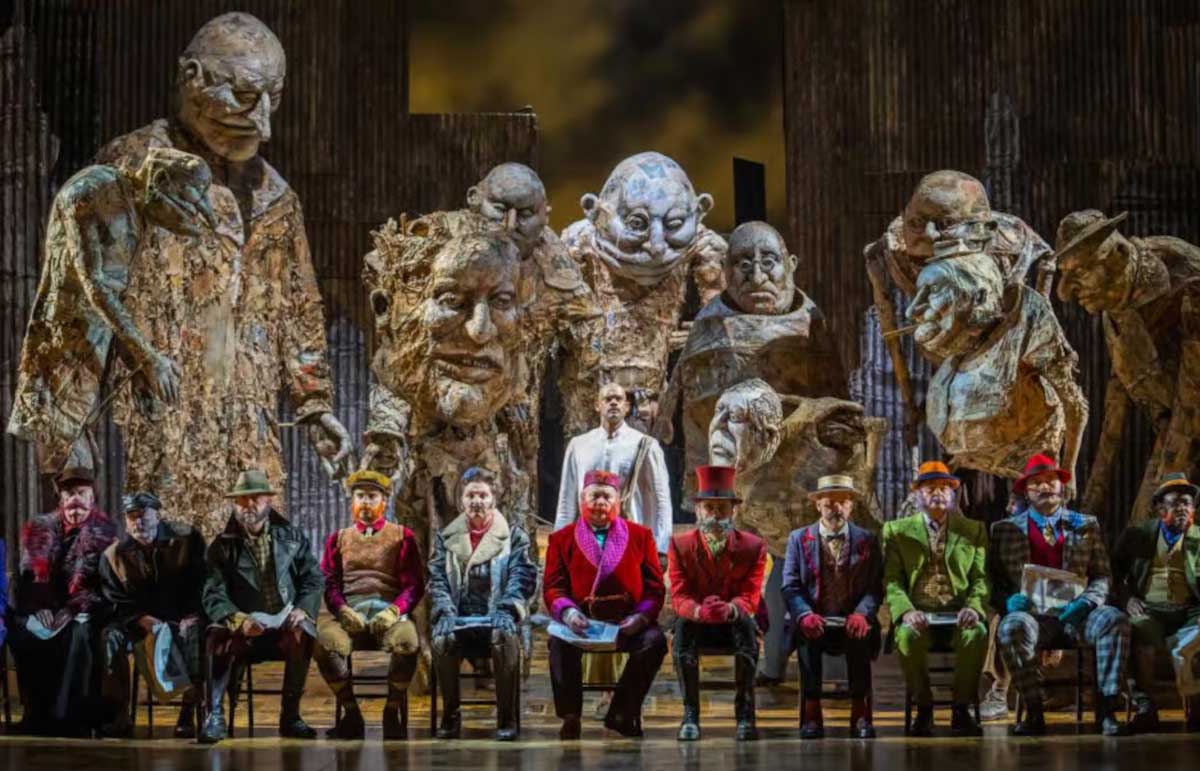
This 1979 opera and libretto is loosely based on an ancient Sanskrit text taken from the Bhagavad Gita. This was his first traditional opera, using an orchestral lineup with a cast of soloists. It is through-composed, meaning the music avoids repetition, but constantly introduces new melodies, rhythms, and harmonies. It also emphasizes the development of new musical ideas to adapt to the story. Wagner’s Ring Cycle and Richard Strauss’ Salome are examples of this from the early 19th. But that is where the Western tradition ends.
The Kuru Fields of Justice from Stayagrah, by Philip Glass, 1979
Scholars have dubbed the opera a “para-opera” because it opposes the musical and dramatic ideas found in Western music. Rhythms are used to underscore the dramatic events unfolding in the opera. In Glass’s typical minimalist style, short, repeated phrases and rhythms expand and contract — the additive and subtractive processes he learned from Ravi Shankar while transcribing Indian music in Paris during the 1960s. This technique creates the idea of a moment suspended in time.
The imagery used in the opera also adds another layer to this multi-sensory experience. This technique is well-suited to the anachronistic plot which weaves into and out of Mahatma Gandhi’s present life and his past in South Africa, where he stood up against the social injustices of the British.
Akhnaten
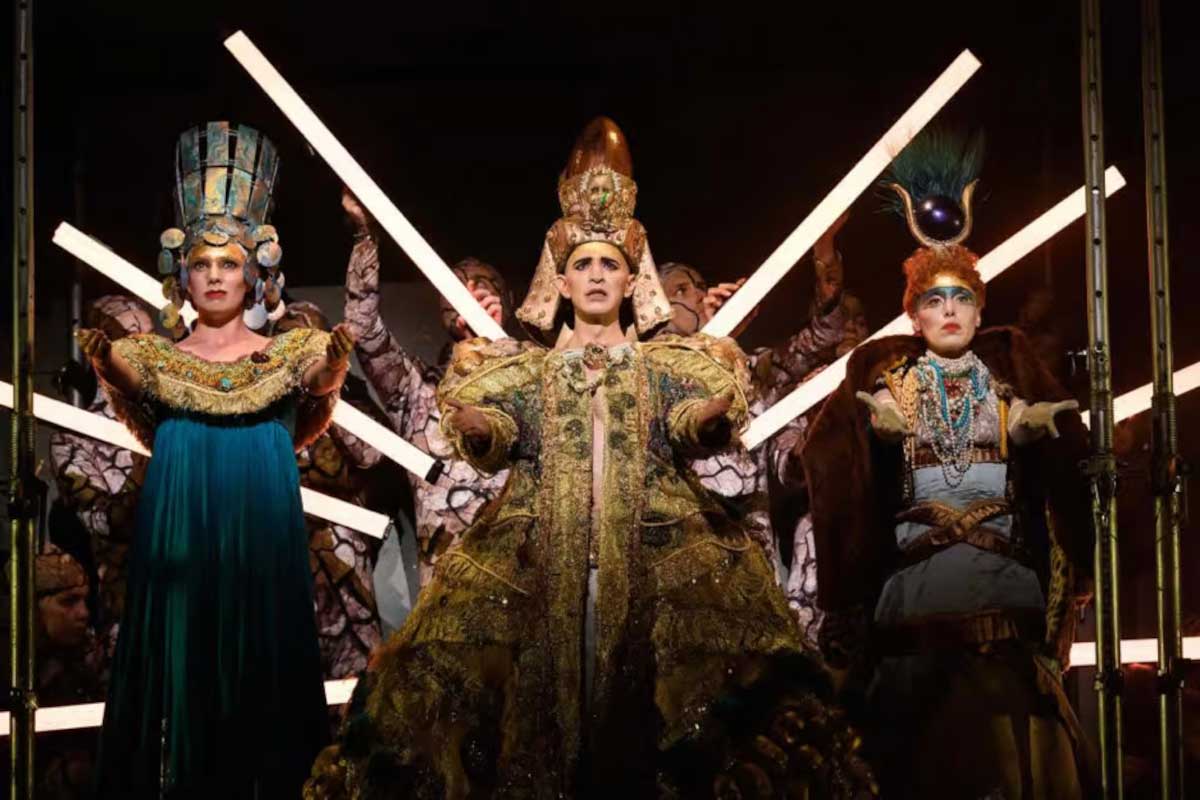
While the premise of minimalism is to strip down art to its most basic form, Glass’s approach is anything but emotionally void. The titular role in Akhnaten (1983) is written for a countertenor — something that is almost unheard of in operatic circles.
Today, there are some contemporary works for countertenors, including “Boy” in George Benjamin’s Written on Skin (2012), Trinculo in Thomas Adès The Tempest (2004), and the Refugee in Jonathan’ Dove’s Flight, (1998) to highlight a few. Nowadays, countertenors (or women) are used in period productions instead of castrati.
In Akhnaten the text is derived from ancient writings in Akkadian, Egyptian, and Hebrew. However, instead of a traditional narrative arc, the story is told through a series of tableaux. It is the visual impact that elevates the opera to a multi-sensory experience. Furthermore, the Pharaoh’s Hymn to the Sun is an emotional and moving experience.
The Fall of the House of Usher
The Fall of the House of Usher, by Philip Glass, 1987
“Poe’s famous horror story has fascinated poets, dramatists and composers for over a century. Poe hints at much, but states hardly anything at all. Is the story real, or is it a hallucination? What are [sic] the relationship between the narrator (William), his friend Roderick Usher, and Roderick’s dying sister, Madeline? Has she been buried alive, or is it a demon from hell who takes such a spectacular revenge at the end? And is the vast house in which they live a living malignant entity? Incest, homosexuality, murder, and the supernatural hang in the air, but then again, such things may exist only in the imagination of the audience” (Philip Glass, 2019).
The opera, composed in 1987, is based on Edgar Allan Poe’s gothic masterpiece and short story, The Fall of the House of Usher, published in 1839. Although the opera is based on Poe’s story, Glass regards it as a “score of eighty-five minutes of musical atmosphere with a simple tale at the bottom of it” and the main aim was not to relay a story but to provide a “scope for an emotional examination of Poe’s world.”
Like Einstein, this opera also uses a fragmentary narrative to drive the storyline forward, but it also gives us a glimpse into the psychological world of Roderick Usher. Again, minimalism features strongly in the opera with gradual harmonic and rhythmic shifts. Other times the slow shifts are replaced by quickly changing time signatures combined with the same harmonies in succession.
Another standout feature is Madeline’s near-constant wordless vocalese on the stage — instead of the traditional aria(s) she is ever present on and off the stage. This helps to heighten the psychological underpinnings of the opera.
Final Thoughts
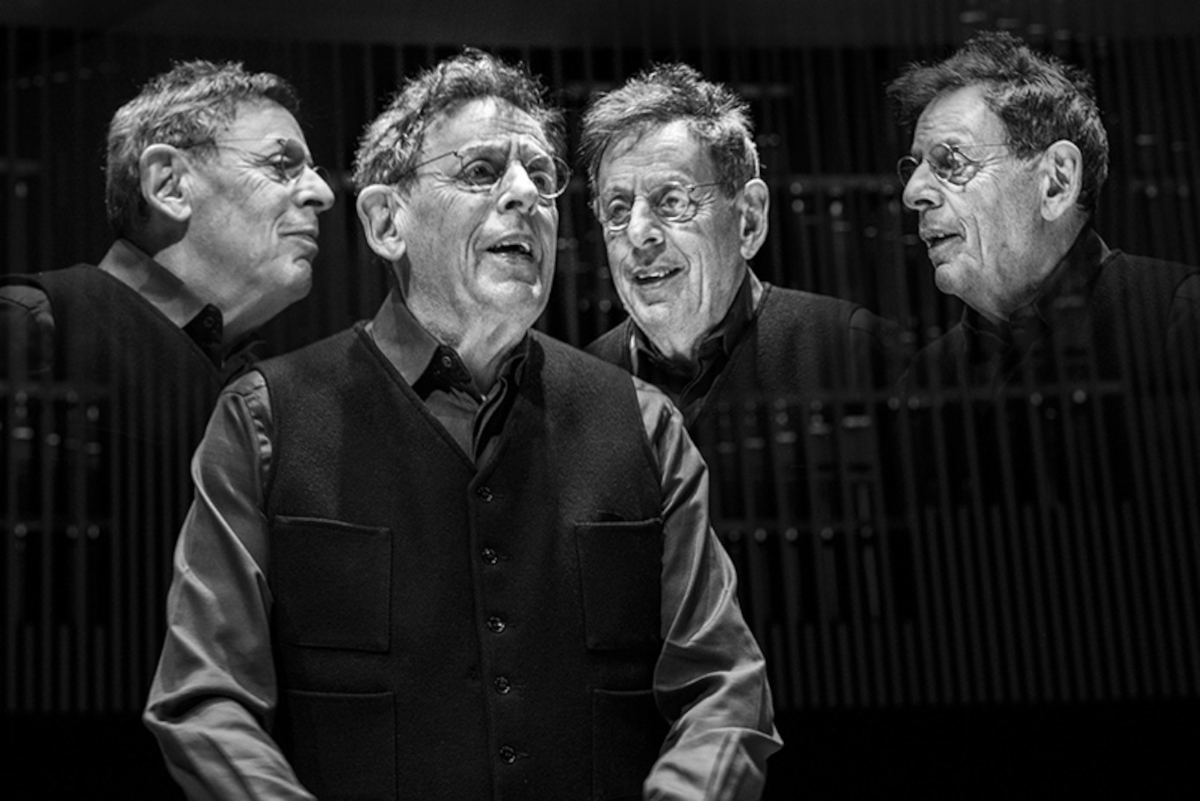
Glass’s unique approach to adapting texts and tales in his storytelling and music inspired new generations of composers to explore the boundaries of opera and open it to a wider audience. His collaborations with legendary names such as Robert Wilson and others throughout his career have driven his operas forward.
Glass specifically writes his operas in a way that allows for clear text declamation, making the words accessible to the audience. The combination of minimalism and a focus on textual clarity continues to push the boundaries of opera. While the music might be minimalist, it gives the visual impact a solid foundation to build upon and express a wide range of emotions.
Although the trilogy of biographical operas (Einstein on the Beach, Satyagraha, and Akhnaten) are epic, long-form works, they still embrace Glass’s minimalist ethos of focusing on rhythm and harmony to drive the storyline forward. The Fall of the House of Usher is one of his shorter works that allows audiences to experience opera without sitting through a lengthy production. His shorter operas make opera accessible to a wider audience and Glass helped to shape the future of the ever-evolving world of opera.
Select Bibliography and Further Reading
Author Events. (2019, July 1). Philip Glass | Words Without Music [Video]. YouTube. https://www.youtube.com/watch?v=taRFqJSCgLk
Bryan, J. H. (2024). German town; Degenerate Art exhibit in Munich. United States Holocaust Memorial Museum. https://collections.ushmm.org/search/catalog/irn1000681 Accessed at United States Holocaust Memorial Museum, courtesy of Library of Congress.
Giannini, F., & Baratta, I. (2017, July 19). Entartete Kunst: The Nazi exhibition condemning degenerate art. Finestre sull’Arte. https://www.finestresullarte.info/en/works-and-artists/entartete-kunst-the-nazi-exhibition-condemning-degenerate-art
Glass, P. (2015). Music without words: A memoir. Faber & Faber.
Page, T. (1989). Philip Glass (1989). In Writings on Glass: Essays, interviews, criticism (pp. 3–11). University of California Press.