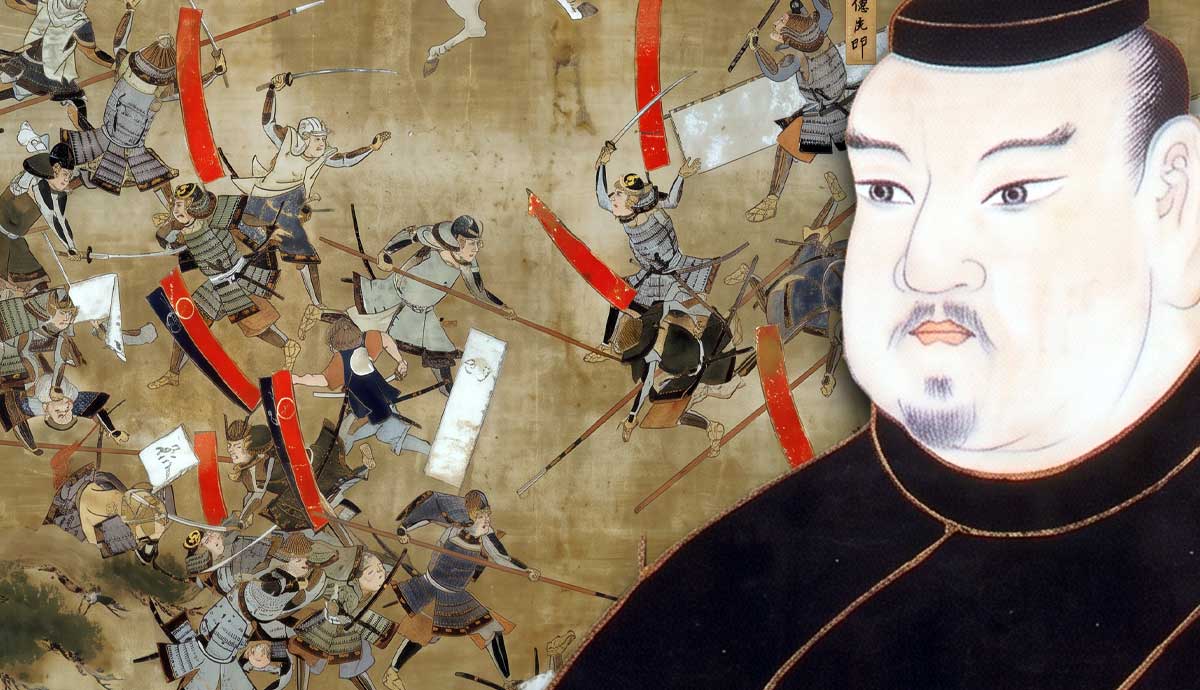

By the end of the 19th century, Western powers had violently redrawn the map of the world and carved up vast territories across Africa and Asia. However, thousands of miles away in the Pacific, one nation would prove to the imperial powers that it couldn’t be carved up as easily as other targeted states. Japan, the island nation, would not only evade colonization, but it would also claim territories of its own.
Sakoku: How Tokugawa Isolation Shielded Japan from Colonial Imperialism
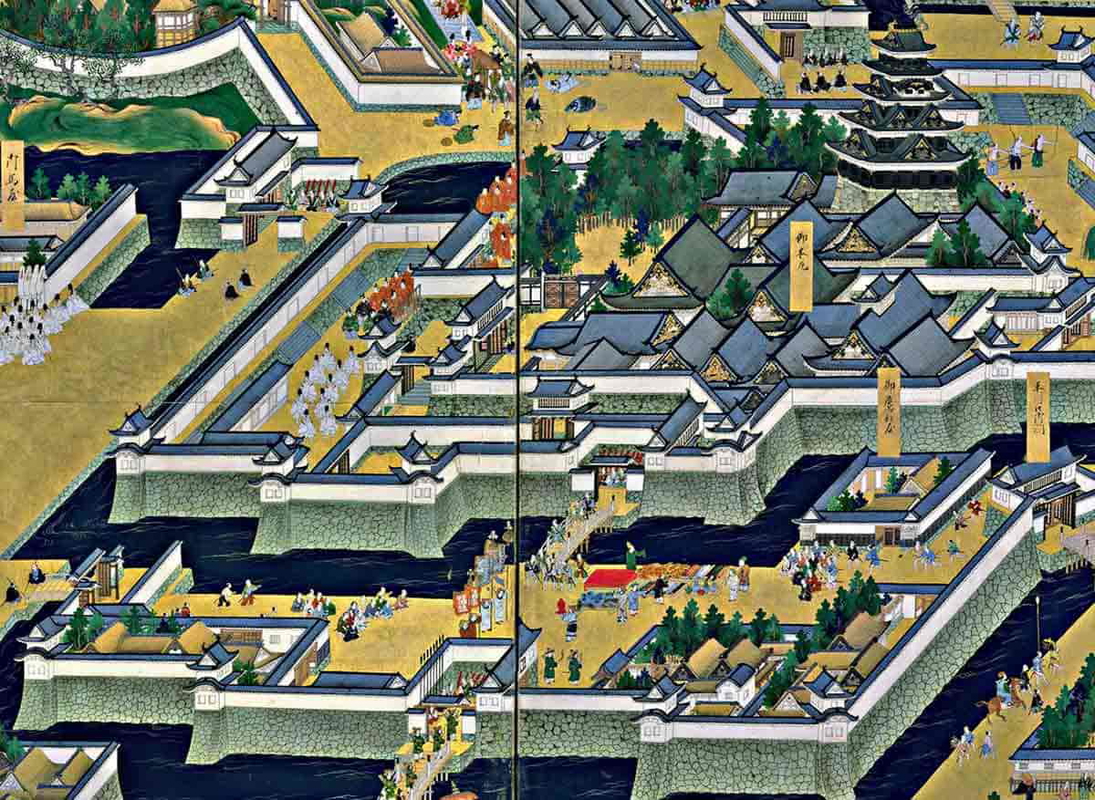
To understand how Japan avoided being colonized, one should look at how Japan existed before Western encroachment. For starters, Japan strictly regulated trade and foreign contacts from 1633 to 1868 under the Tokugawa Shogunate. The period is commonly referred to as Sakoku, meaning locked country.
Although one may think that the strategy made Japan vulnerable, it actually gave Japan one significant advantage – unity. By centralizing authority in Edo and maintaining firm control over local feudal lords, the Shogunate established a strong central organization. This administrative strategy prevented Western powers from fully exploiting regional rivalries, unlike in places like India, Africa, and Southeast Asia where the tactic worked so effectively.
1853: How Commodore Perry’s “Black Ships” Forced a Seismic Turning Point
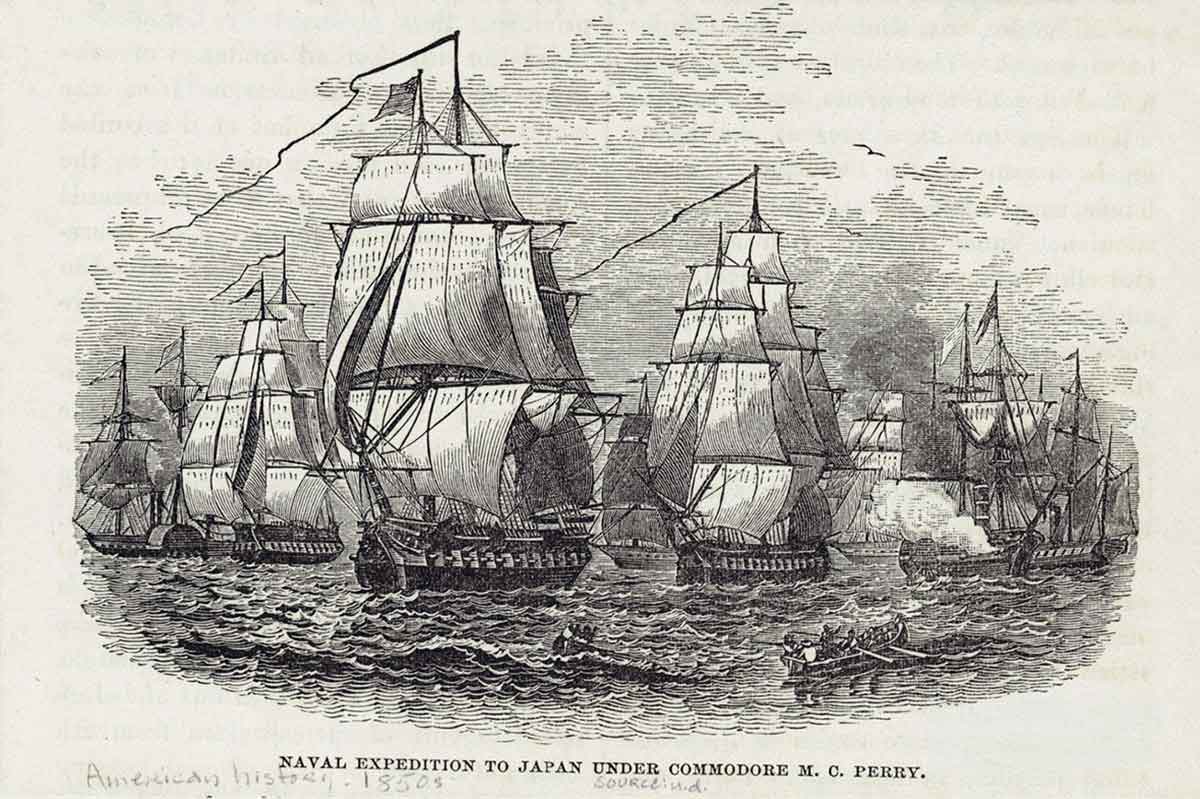
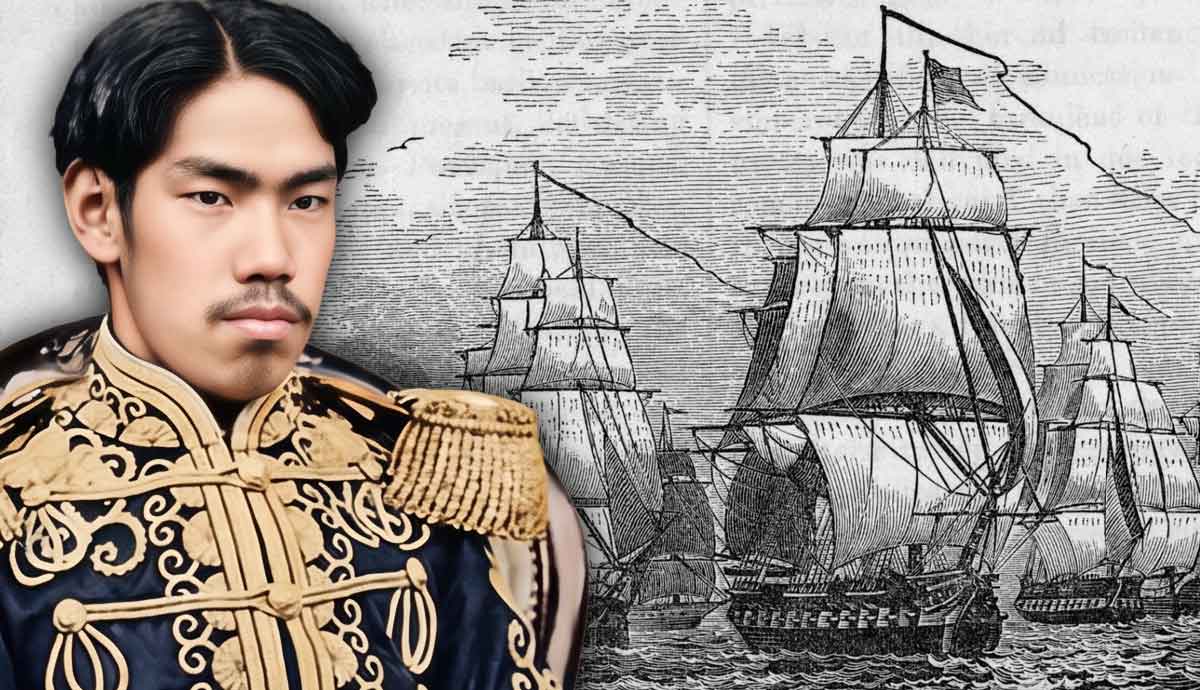
Japan’s relative isolation ended abruptly in 1853 with the arrival of United States Navy Commodore Matthew Perry and his armed steam-powered black ships in Edo Bay, a terrifying sight for a country that still relied on traditional wooden vessels.
Perry was not there to talk as equals. He had come to deliver an ultimatum from the United States government demanding that Japan open its ports to American trade. Japan’s rulers had already seen what happened to China just over a decade earlier. The nation had been forced by the British Empire to open multiple ports to foreign trade and give up Hong Kong through a humiliating treaty known as the Treaty of Nanjing. To avoid a military confrontation, the Japanese leaders yielded to the demands. It was a turning point.
The Meiji Miracle: Rapid Modernization That Built an Asian Powerhouse
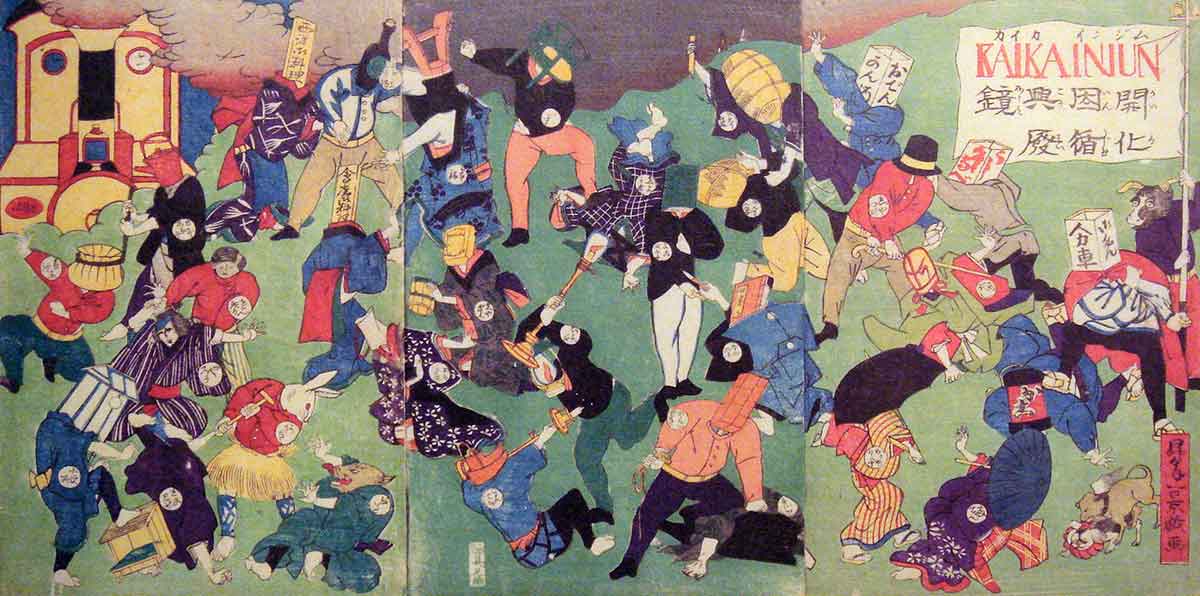
Spurred by the entry of foreign powers and unequal treaties, the Meiji Restoration was a revolution led by a group of reformist leaders who acted in the name of the young Emperor Meiji and overthrew the Tokugawa Shogunate in 1868. The new government set out to transform Japan from a feudal agricultural society into a modern industrial and military power. Over the following decade, the new government abolished feudalism, phased out the samurai class, established a centralized tax system, and started sending students, diplomats, and scientists to Europe and the United States on fact-finding missions such as the 1871 Iwakura Mission.
They were to learn as much as possible about Western legal systems, administrative structures, military technologies, and industrial manufacturing, and adapt those practices in Japan to ensure Japan was on par with Western superpowers technologically.
The island nation also invited foreign experts, known as oyatoi gaikokujin, to teach Japanese workers and engineers how to operate complex industries. In the span of just a few decades, Japan had built modern textile mills, railroads, coal mines, and shipyards. The East Asian nation also bought many powerful warships from British shipyards to create a modern navy. For its army, it made use of the Prussian military model that featured a professional General Staff and fighting divisions. This decision was implemented after a long study of Prussia’s decisive victory in the Franco-Prussian War of 1870 to 1871. The war demonstrated the effectiveness of a modern army formation. By the late 19th century, Japan had railroads and advanced factories, and most importantly, a modern army and navy to protect its territory.
Outmaneuvering Western Powers: Overturning Unequal Treaties and Extraterritoriality
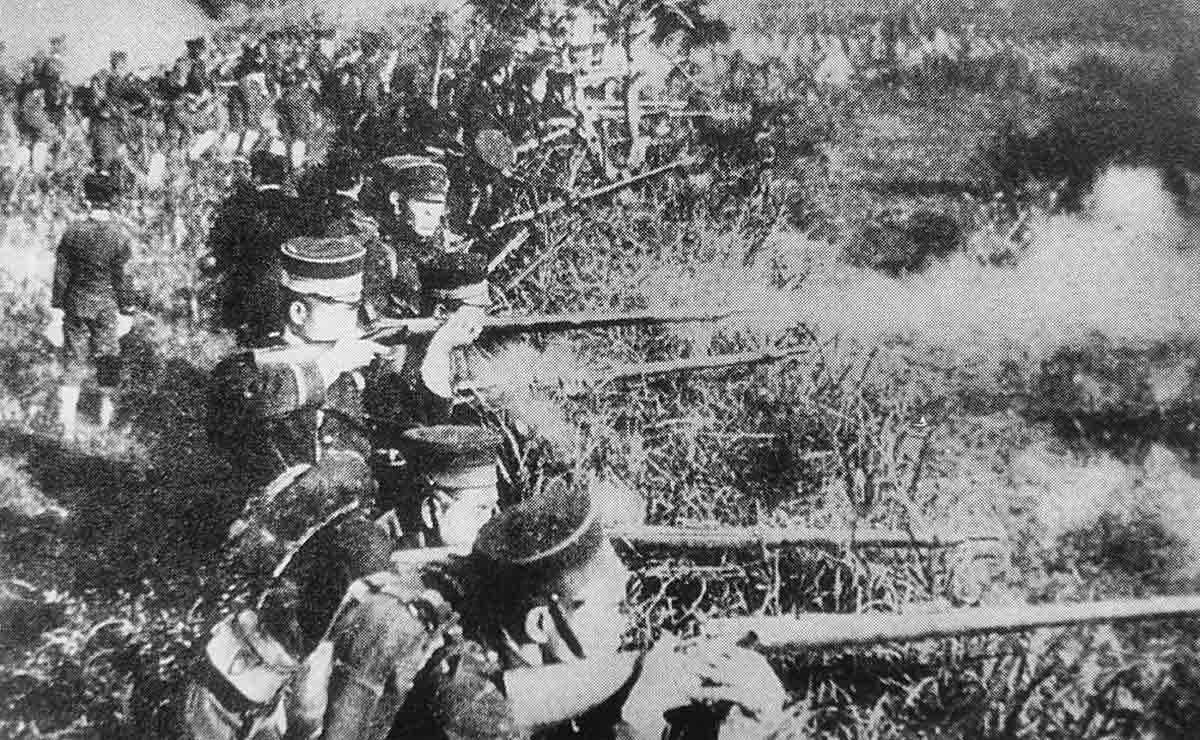
That said, Japan was not completely left alone by Western countries. In fact, Western nations forced it to sign a series of treaties that allowed Westerners to enjoy extraterritoriality in Japan. This meant that if they violated laws on Japanese soil, they were judged in their own consular courts by the laws of their native countries instead of those of Japan. Additionally, the treaties limited Japan’s ability to control import tariffs. Accepting the terms bought Japan critical time to modernize without provoking an immediate armed incursion. With enough pressure from Japan, extraterritoriality was finally ended in 1899. It also gained full tariff autonomy and control of its economy in 1911.
The country’s standing as a sovereign power was further consolidated through decisive military victories. In 1894, it fought and defeated Qing Dynasty forces in the First Sino-Japanese War over control of Korea, and gained its first overseas territories in 1895. Even more stunning was Japan’s victory when it defeated Russia in 1905 over rival ambitions in Manchuria and Korea. For the first time in modern history, a non-Western nation defeated one of Europe’s most formidable powers in a major conflict.
The victory shook the colonial world to its core. By World War I, Japan was considered a legitimate world power, not a territory to be carved up.