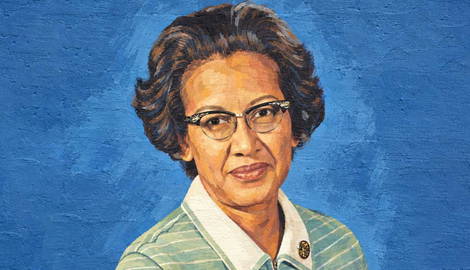

Katherine Johnson worked at NASA for over three decades and, despite the discrimination she faced because of her race and gender, proved herself a trailblazer and a key figure in missions such as Apollo 11. Her work was groundbreaking, as was the work of her fellow Black female colleagues, but only recently did they begin to receive acclaim for their achievements.
The West Virginia Child Prodigy Who Overcame Segregation to Join NASA

Born Creola Katherine Coleman on August 26, 1918, in White Sulphur Springs, West Virginia, Johnson was an exceptionally bright child with an aptitude for mathematics. By age 13, she attended high school on the campus of West Virginia State College, and by 18 she enrolled in the college itself, graduating with a PhD in mathematics in 1937. [1]
She initially took a job teaching at a Black public school until West Virginia decided to integrate its graduate schools in 1939, and Johnson was selected as one of the first three Black students to attend West Virginia University. However, not long after, she decided to leave school to start a family with her first husband, James Goble.
In 1952, when her three daughters had grown older, Johnson and her family moved to Newport News, Virginia, so she could pursue the opportunity to work at the all-Black West Area Computing section at the National Advisory Committee for Aeronautics’ (NACA’s) Langley laboratory. Johnson was successful and began work at Langley in the summer of 1953.
The Critical Space Race Calculations That Made NASA Trust Her Over Computers
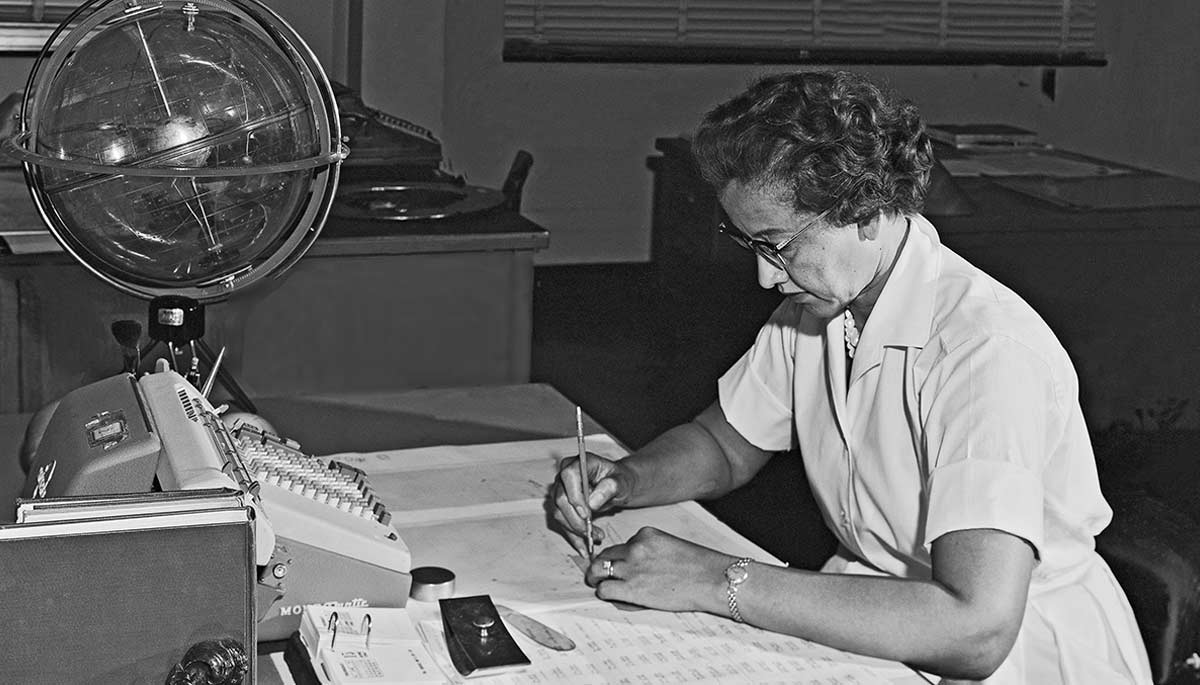
Johnson began at NACA (which later became NASA) on a project in the Flight Research Division where she spent four years analyzing data from flight tests. During this time, her husband died of cancer; she would later remarry. In 1957, the launch of the Soviet satellite Sputnik would change Johnson’s life, placing her at the center of the Space Race. Johnson became a part of the Space Task Group and completed trajectory analysis for America’s first human spaceflight, Alan Shepard’s 1961 mission Freedom 7. [2]
Johnson was pivotal in the success of John Glenn’s orbital mission in 1962, Friendship 7. The flight was extremely complex and required a worldwide communications network which linked tracking stations and IBM computers. The computers were programmed with the equations for the flight, but Glenn wanted confirmation of the numbers in the form of Johnson. Glenn specifically asked for Johnson to run the same numbers through manually before being ready to go. [3] Upon confirmation from Johnson, Glenn agreed to complete the flight. Johnson’s talent and skill at a time when mechanical computing technology was still developing, and her ability to work on space trajectories with minimal technological support were invaluable.
How Precise Trajectory Calculations Secured the Apollo 11 Moon Landing
Following her achievements on the Friendship 7 mission, Johnson earned a well-deserved reputation for her ability to master manual calculations and for her ability to use computers.
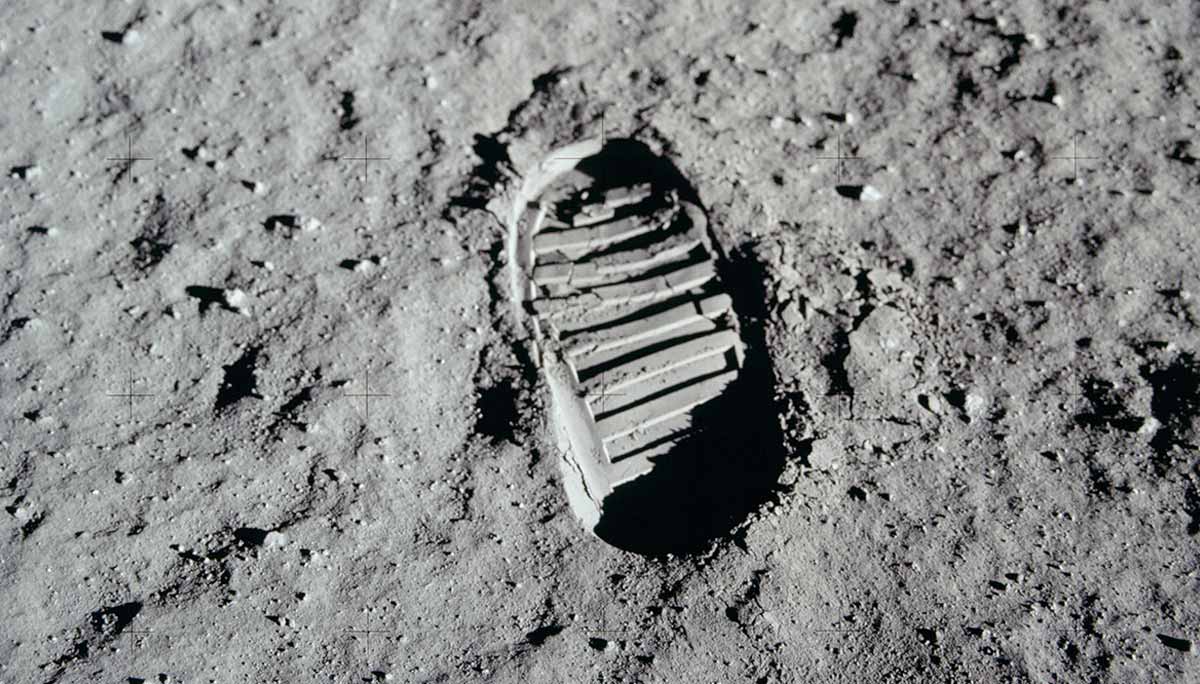
For Apollo 11 specifically, Johnson played a crucial part in calculating the precise trajectory needed for the mission’s safety and success. [4] Johnson was part of the team responsible for calculating where and when to launch the rocket. The team had to determine the precise launch window to ensure that the spacecraft departed from Earth at the optimum time to intercept the Moon. Timing was everything, and even a slight miscalculation could have resulted in missing the Moon entirely.
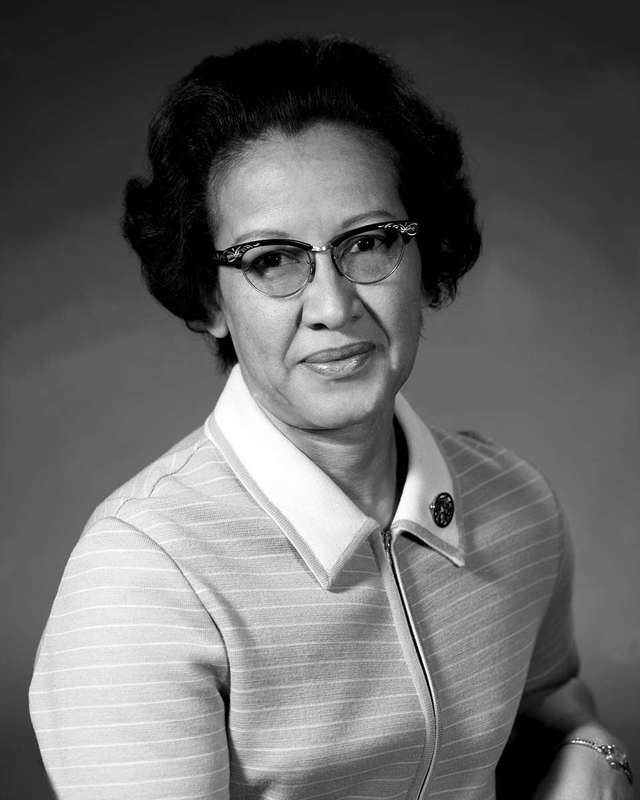
Johnson also calculated the rendezvous paths for the Apollo Lunar Module and Command Module, which were crucial to keep astronauts Buzz Aldrin and Neil Armstrong safe. When the Lunar Module, carrying Buzz and Aldrin, reached the lunar surface, it would need to reconnect with the Command Module, which was orbiting the Moon. Any errors could strand the astronauts either on the lunar surface or in lunar orbit. [5]
Without Johnson’s previous work and her ability to apply it to future endeavors, which involved critical and groundbreaking thinking, the Apollo 11 mission may not have been the success that it was.
How Her Historic Contributions Saved Lives and Inspired Generations in STEM
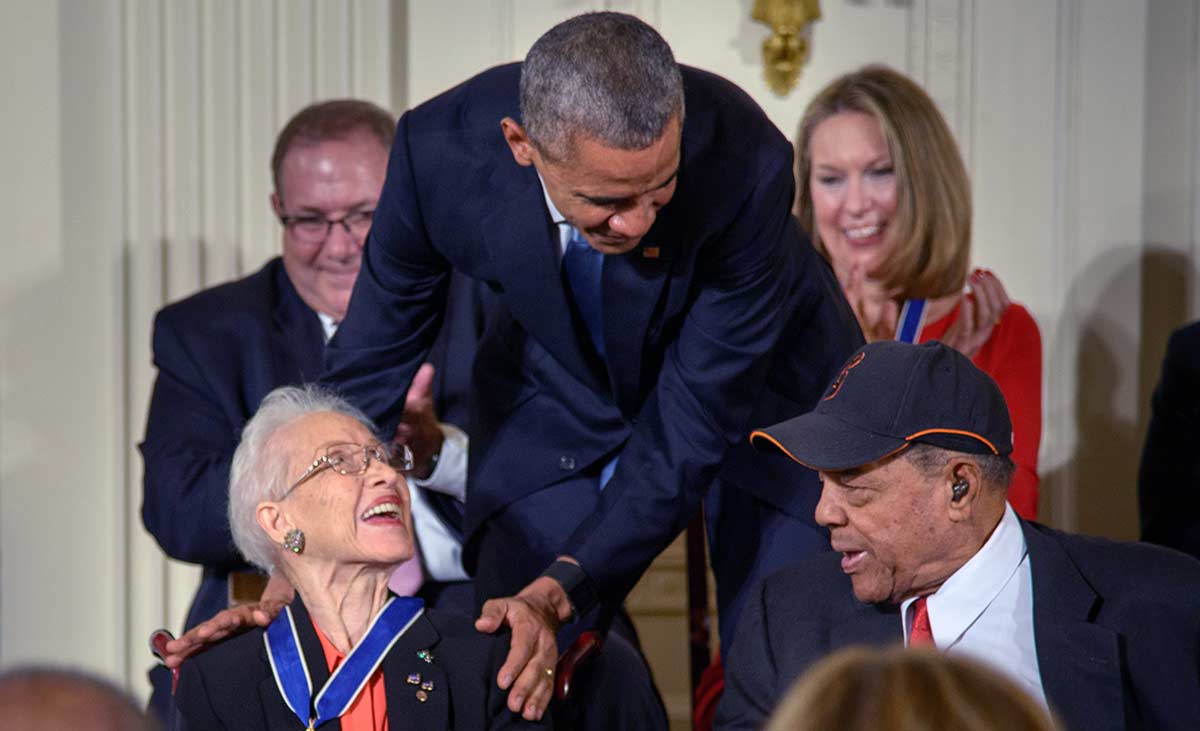
Johnson retired in 1986, after 33 years at Langley. Because of her work, America was able to put the first man on the moon in 1969. In 2015, President Barack Obama awarded her the Presidential Medal of Freedom, America’s highest civilian honor, citing her as a pioneering example of African American women in science, technology, engineering, and mathematics (STEM). The year after, NASA dedicated a new Katherine G. Johnson Computational Research Facility at the Langley Research Center.
Johnson died on February 24, 2020, at the age of 101. She was a trailblazer and an inspiration; not only was she pivotal in the advancements made in space exploration, but she also helped open doors for women and people of color everywhere, especially those interested in STEM.
Sources:
[1]Margot Lee Shetterly, Hidden Figures (Harper Collins, London, 2016), pp. 72-75
[3]https://www.nasa.gov/centers-and-facilities/langley/katherine-johnson-biography/
[4]Margot Lee Shetterly, Hidden Figures (Harper Collins, London, 2016), pp. 244-246.
[6]https://www.nasa.gov/centers-and-facilities/langley/katherine-johnson-biography/