
All but one of the Seven Wonders of the Ancient World, the Great Pyramid, collapsed into rubble long ago. But there was no definitive list of ancient wonders, as different travelers and authors compiled their own lists. With that in mind, we have compiled a list of seven lesser-known wonders of the ancient world, some from beyond the Mediterranean, all of which you can still see today.
1. Petra and the Carved Sandstone City of Jordan
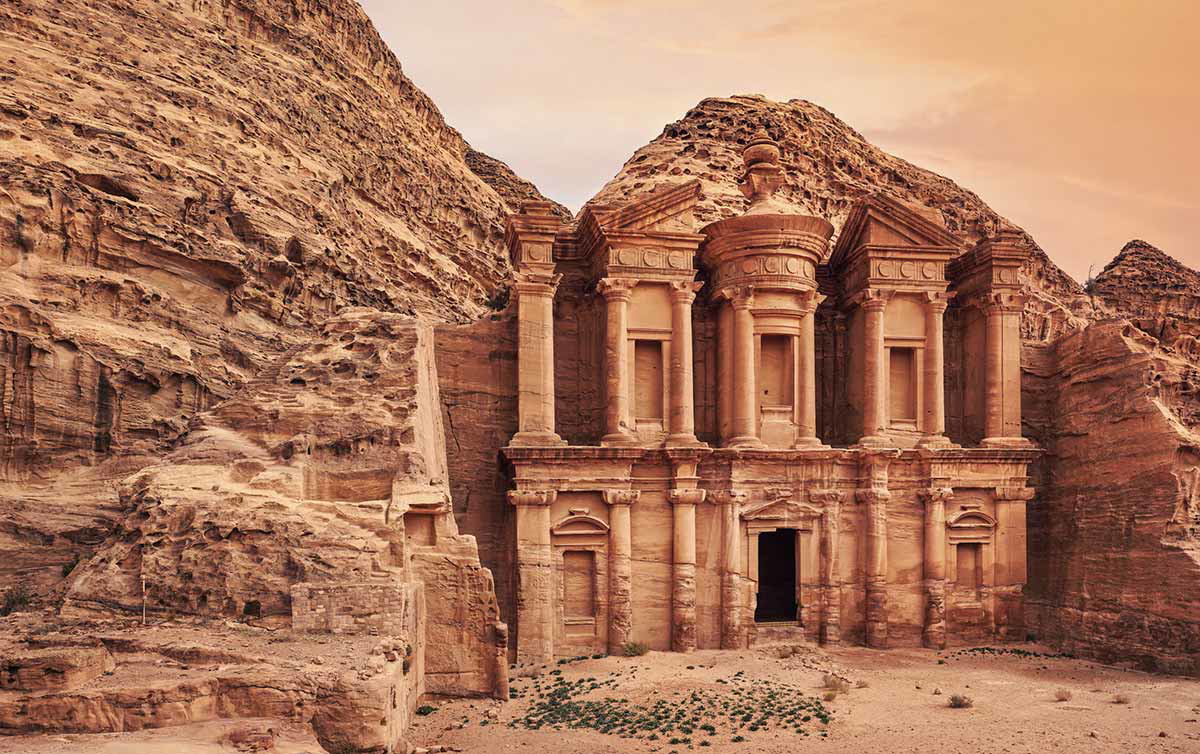
Let’s kick things off with an entire city carved into and out of sandstone cliffs in the desert of modern-day Jordan. The residents of Petra, also known as the Rose City or Raqmu, began building their city in the 5th century BC. They controlled trade in their region by making their city one of the few oases in the surrounding desert.
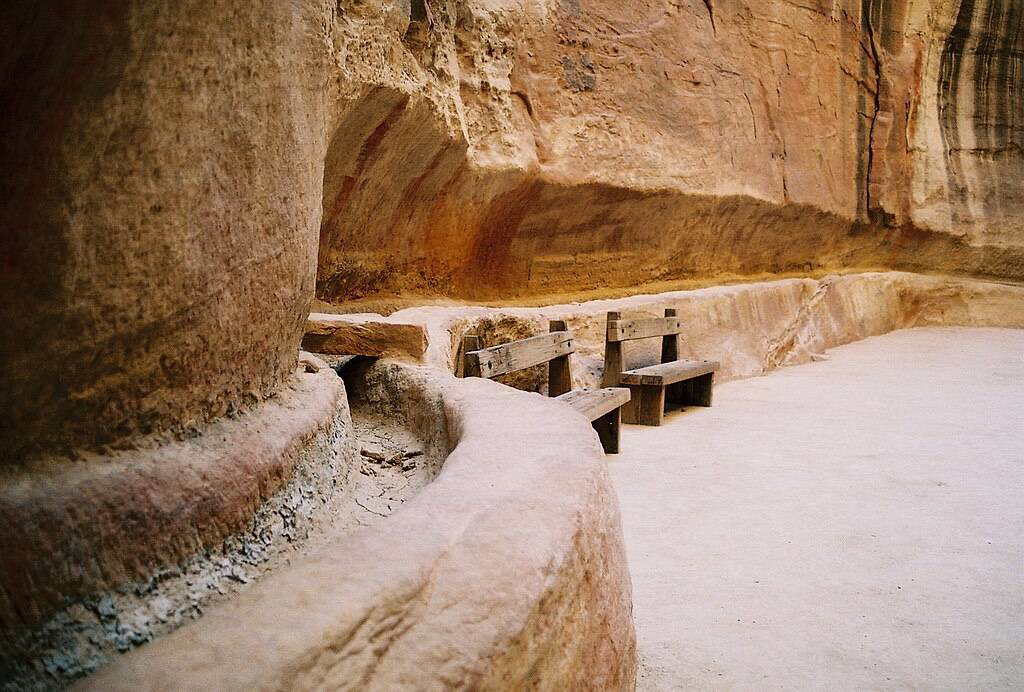
Visitors accessed the city from the east via a narrow, tunnel-like passage in the surrounding rocks called the Siq, which also serves as a waterway. The citizens of Petra also controlled the rain and regular flooding that affected their city by rerouting water into dammed waterways and cisterns, providing the city with water even during droughts.
Its most popular tourist attraction today is Al Khazneh, or “The Treasury,” an elaborate temple carved into a sandstone cliff thought to have been the mausoleum of a king in the 1st century AD. Archaeologists estimate that only about 15% of the original city has been excavated.
As sea trade routes overtook land routes and devastating earthquakes struck in AD 363 and 551, Petra was gradually abandoned by all but local Bedouins. It remained completely unknown to the Western world for hundreds of years until 1812, when Swiss explorer Johann Ludwig Burckhardt disguised himself as an Arab scholar to gain access and “rediscover” it.
2. Roman Aqueducts of Pont du Gard and Segovia
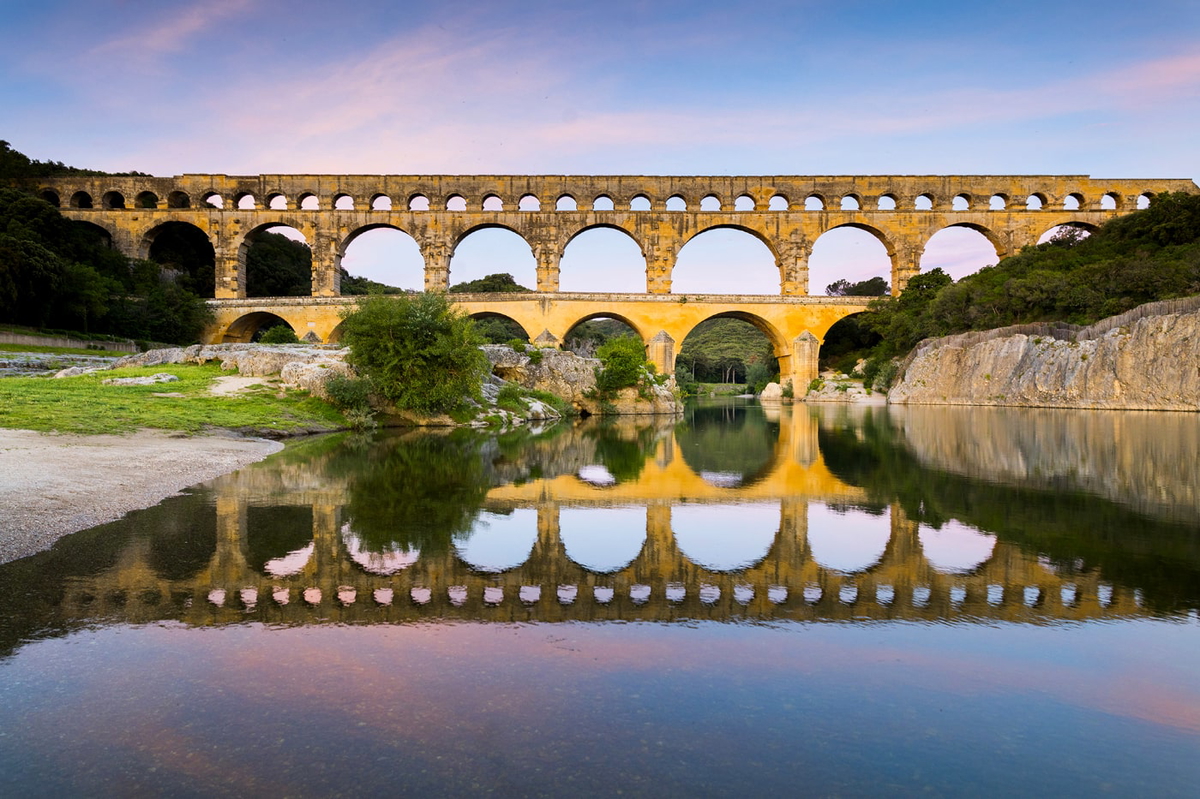
They say Rome wasn’t built in a day, and these aqueducts, monuments of the ancient world, certainly weren’t. Remnants of ancient Roman aqueducts lie across Europe, but two of the most impressive are the Pont du Gard in southern France and the aqueduct in Segovia, Spain.
The Pont du Gard was built in the 1st century AD and is part of an aqueduct that spans over 50 kilometers. Its three tiers of arches make it the tallest of all known Roman aqueducts, and it carried an estimated 40,000 cubic meters of water every day to the city of Nîmes. The bridge is composed of nearly 50,000 tons of golden limestone blocks. The stones were cut so perfectly that they are held together purely by weight, friction, and gravity, with absolutely no mortar used. After the Roman Empire collapsed, the aqueduct’s bridge was still used as a toll bridge, which is part of the reason it still stands today.
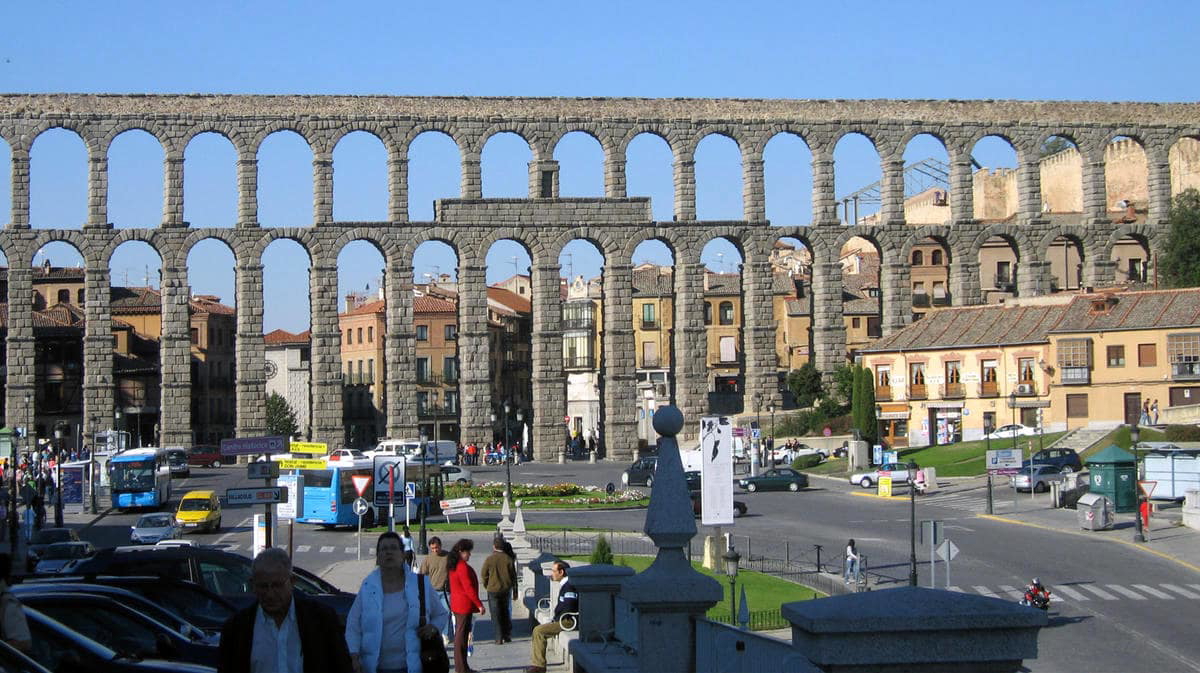
Segovia’s aqueduct was also built in the 1st century AD, and is part of a 17-kilometer span. This aqueduct begins with a series of two cisterns, and, at its tallest, reaches 28.5 meters. It consists of a series of single and double arches, unlike the Pont du Gard, which has three tiers across its length.
The builders originally embedded massive bronze letters into the stone to commemorate the emperor who ordered its construction; likely Trajan or Hadrian. While the bronze was looted or lost centuries ago, the holes left behind in the stone are still visible today. This aqueduct was still delivering water to the city of Segovia from the nearby Frío River until 1973.
3. Göbekli Tepe as the Oldest Known Megalithic Temple
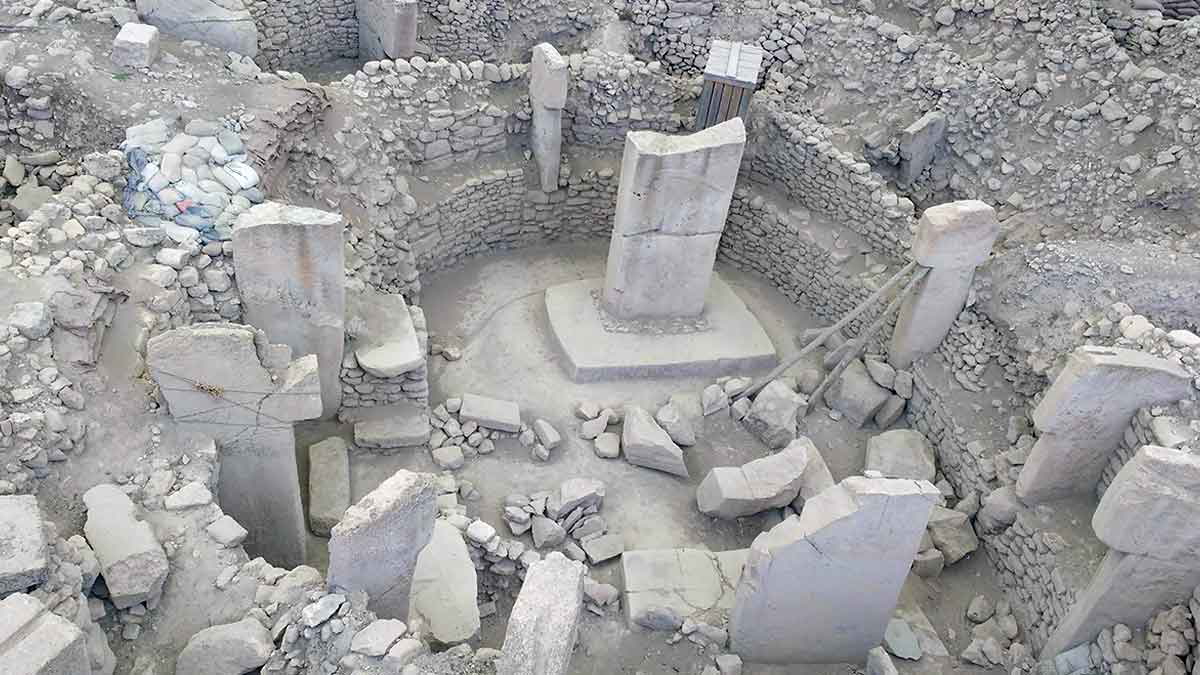
This monument, whose name is Turkish for “Potbelly Hill,” is a site in Turkey thought to be the oldest temple or ritual site in the world, a true wonder of the ancient world. Its original purpose isn’t entirely clear, but the stone ruins were erected sometime between the 10th and 8th centuries BC. It predates both Stonehenge and the Great Pyramids of Giza by roughly 6,000 to 7,000 years, completely shattering previous timelines of monumental architecture.
The ceremonial mound on which Göbekli Tepe sits measures about 300 meters in diameter, and its largest pillars, the world’s oldest-known megaliths, weigh up to 10 tons. The site was found in 1963, but researchers at the time thought its stones indicated a Byzantine cemetery. The ruins were not excavated until 1993, when their age and size were fully revealed.
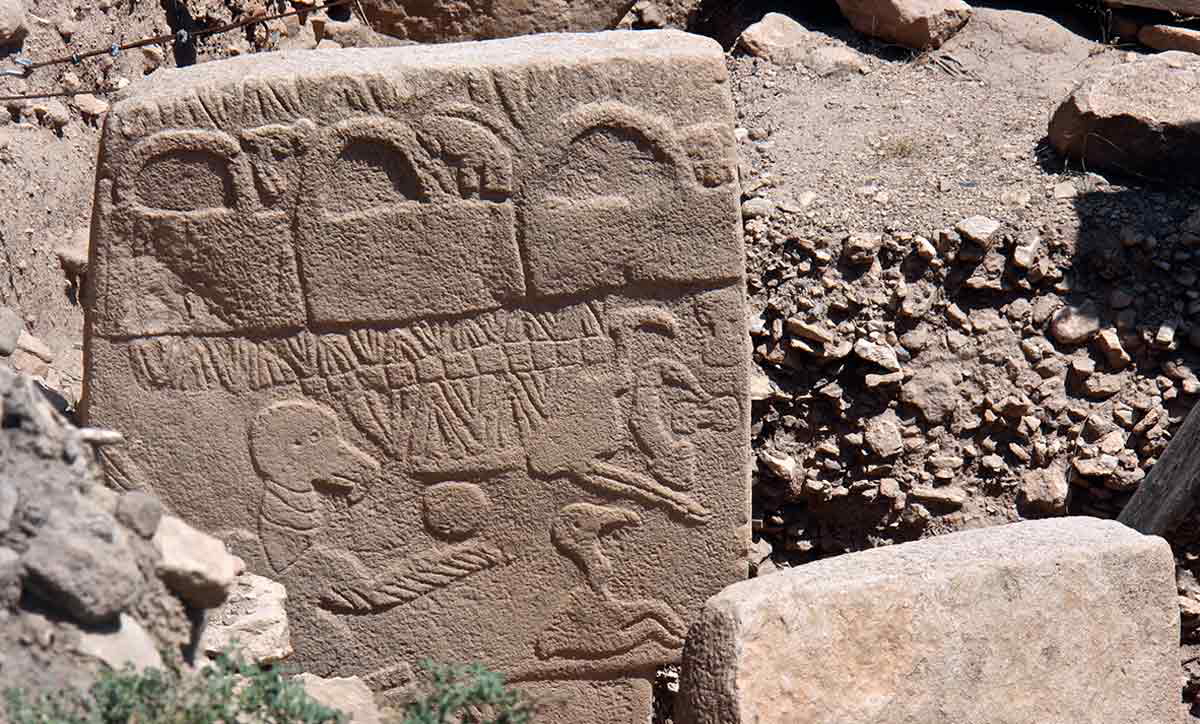
The monumental T-shaped limestone pillars, some standing over 16 feet tall and weighing up to 10 tons, are adorned with intricate bas-reliefs of wild animals, including foxes, lions, boars, scorpions, vultures, and snakes.
For reasons still unknown to modern archaeologists, the site wasn’t simply abandoned by its builders. The enclosures were deliberately backfilled with refuse, soil, and stone, a monumental task that ironically preserved the pillars perfectly for millennia.
4. Newgrange Passage Tomb and the Winter Solstice
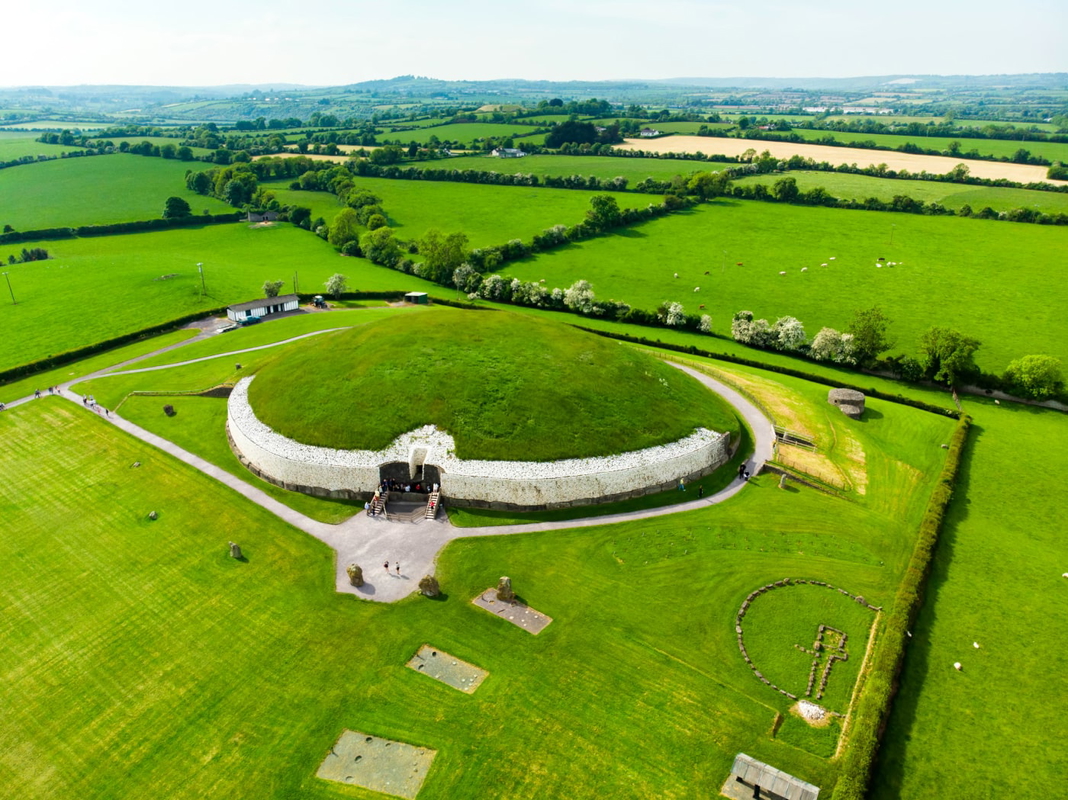
Newgrange is an enormous, prehistoric passage tomb in eastern Ireland. It was built around 3200 BC, about 500 years before Stonehenge. It resembles a large, flattened dome-shaped sports arena. At 76 meters across, it’s quite an engineering marvel for the Neolithic human society.
The structure is called a passage tomb for obvious reasons. It features a long passageway flanked by tombs and offerings to or for the dead. A circle of standing stones surrounds the mound, which is thought to have been added later.
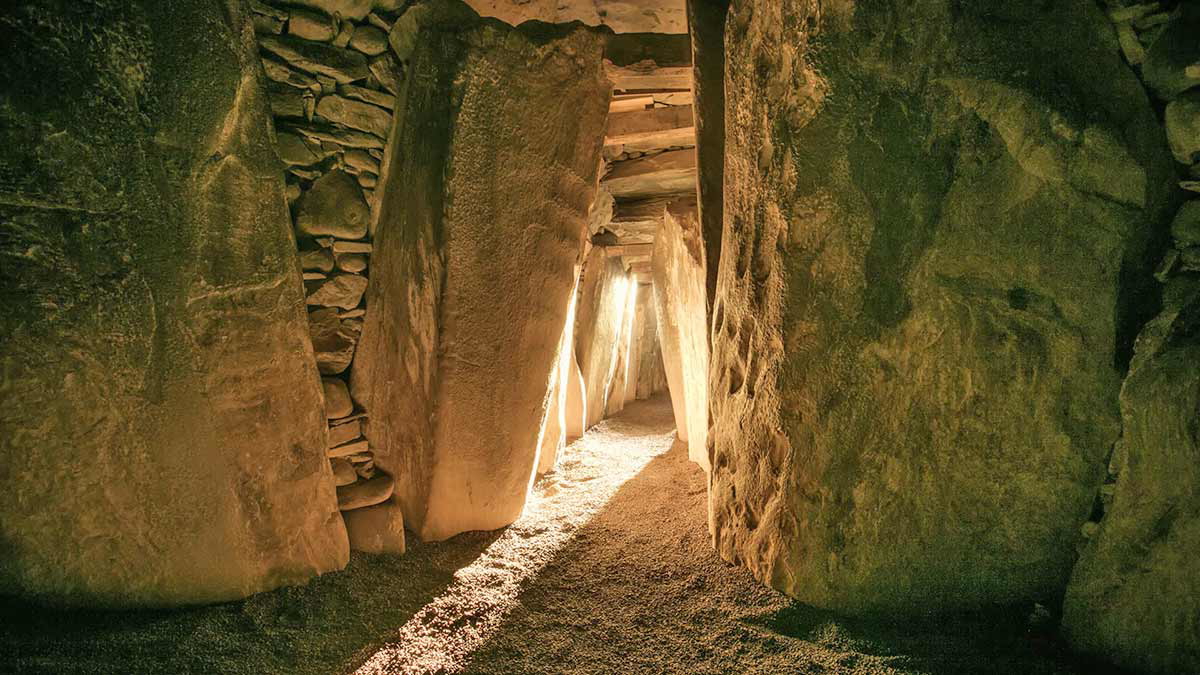
The site is decorated with spectacular Neolithic rock art. The most famous example is the massive Entrance Stone, which features highly elaborate triple-spiral (triskele) carvings. Because these spirals were created before metal tools existed, they represent an astonishing level of artistic skill and dedication using only stone chisels.
One of the most spectacular architectural facts about the site is that the large room inside the dome is filled with sunlight only on the winter solstice. The people who built Newgrange possibly used this feature as an enormous calendar that told them when winter had reached its peak and the days would soon become warmer and shorter.
5. Leshan Giant Buddha and Chinese Hydraulic Engineering
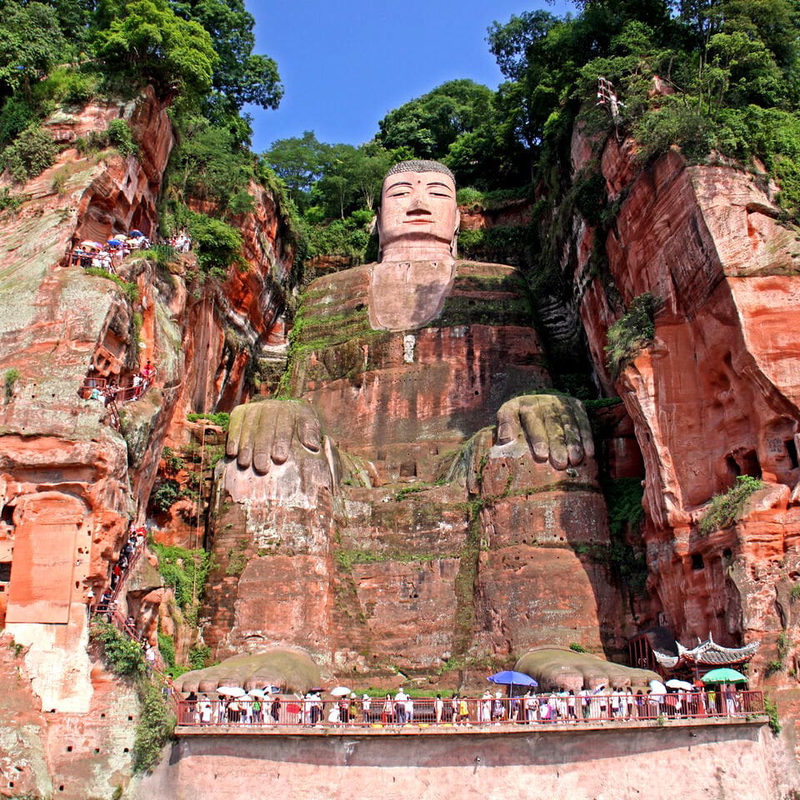
This giant statue’s construction began in AD 713, when a Chinese monk decided that a statue of the Buddha might calm the violent waters of the nearby rivers.
In AD 803, the 71-meter-tall statue was completed at the intersection of the Min and Dadu Rivers in southern Sichuan province. It contains a network of drainage channels behind the facing that carry rainwater away from the front of the statue to reduce erosion.
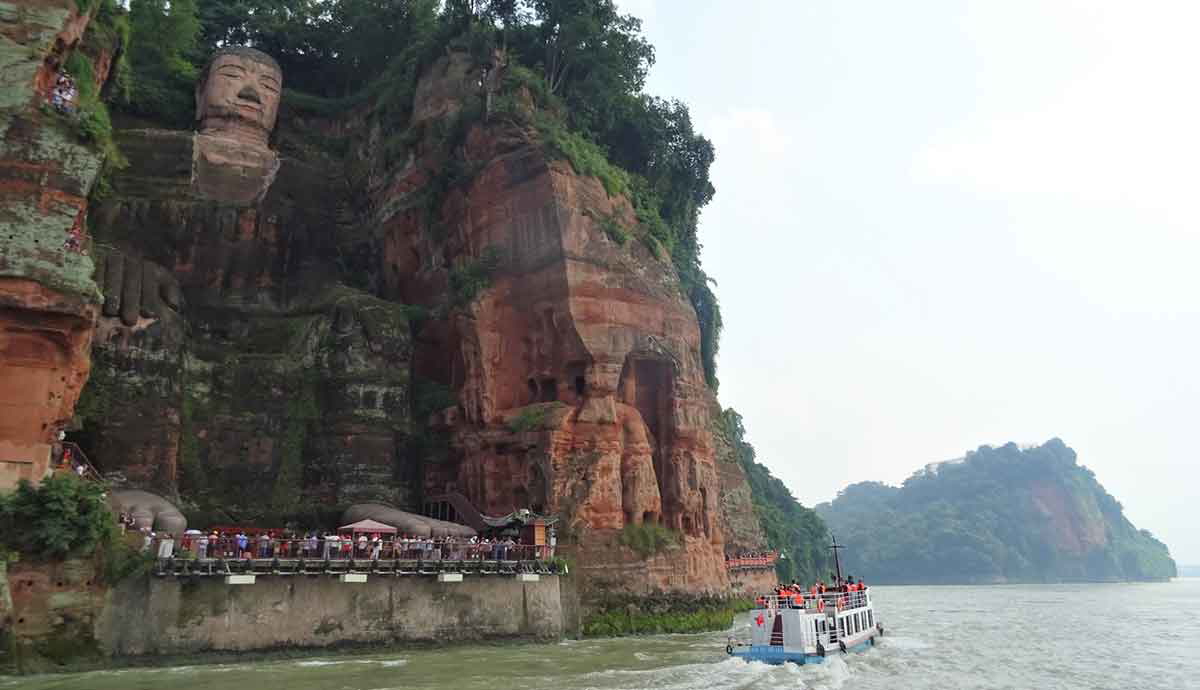
The Buddha was also originally protected by a 13-story wooden structure. The shelter was destroyed by the Mongols. It is the tallest pre-modern statue in existence and the largest Buddha statue in the world. Without a doubt, this was a true wonder of the ancient world.
Interestingly, so many rocks fell from the cliff during its construction that the current was altered, and the rivers’ intersection became safe for passing ships. Today, it is known as the Leshan Giant Buddha, in reference to the nearby town of Leshan.
6. Sigiriya and the Sky Citadel of Sri Lanka
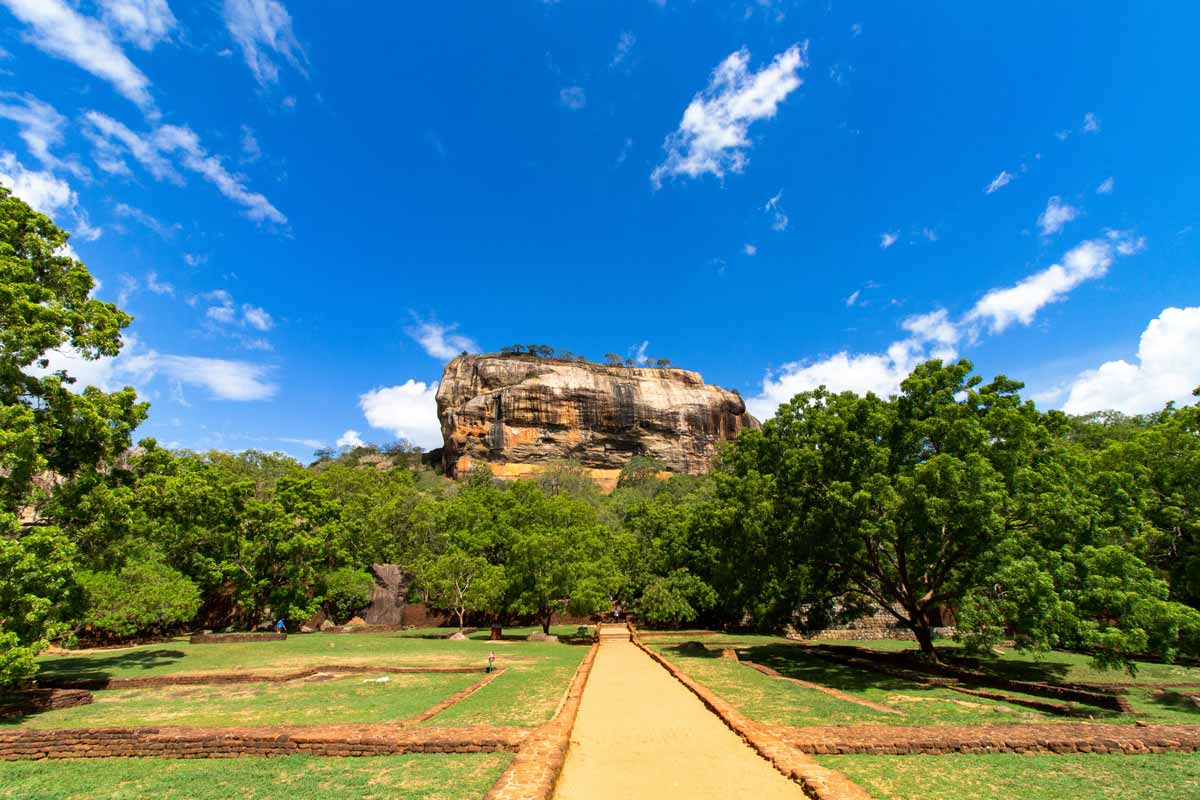
Sigiriya, often referred to as “Lion Rock,” is an ancient fortress and palace complex built in the 5th century BC bu King Kasyapa atop a massive column of granite nearly 200 meters tall. Located in the northern Matale District of Sri Lanka, it was surrounded by jungle. Despite the massive effort required to build it, the complex only served as the capital for 18 years. Following the death of Kasyapa, it became a monastery until it was abandoned in the 14th century.
It gets its name from a monumental gateway halfway up the rock. Visitors had to walk through the open jaws of an enormous brick-and-stucco lion to reach the summit. Only one colossal carved stone paw survives today.
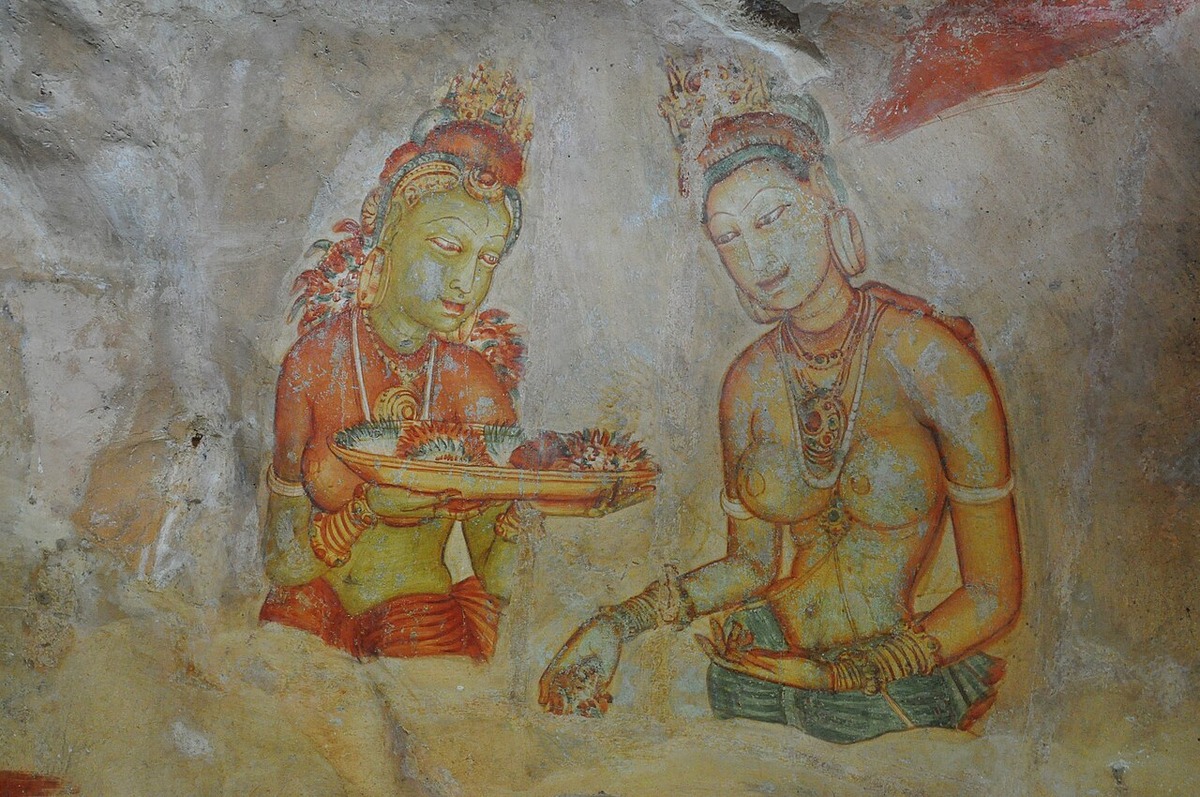
Along the ascent, Kasyapa ordered a section of the rock face highly polished so that he could see his reflection in it. Over the centuries, visitors to the abandoned fortress scratched poems and thoughts into this “Mirror Wall.” Some ancient graffiti dates from the 8th century and has helped linguists study the Sinhalese language.
Sheltered in a shallow cave on the rock face is a gallery of remarkably well-preserved frescoes. Painted using earth pigments, they depict beautiful celestial nymphs or royal concubines. While it is believed the paintings once covered a massive section of the western rock face, only a handful survive today.
7. The Terracotta Army and the Silent Legion of Qin Shi Huang
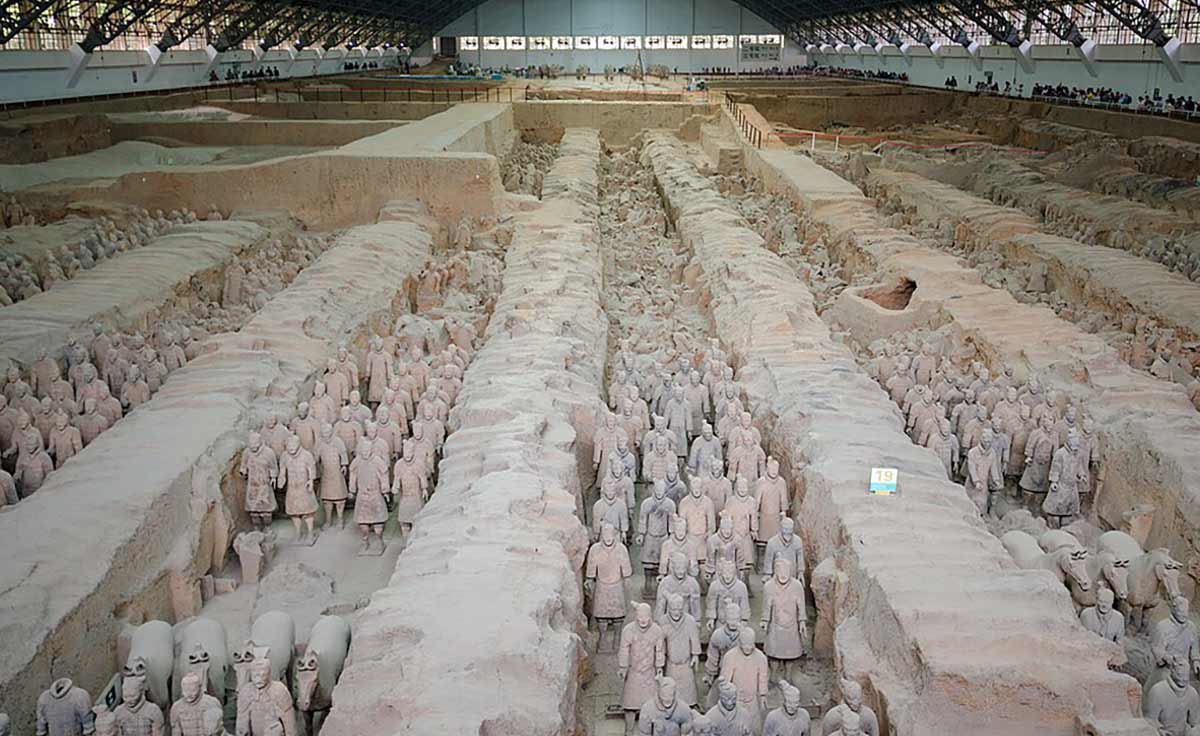
The Terracotta Army is a colossal subterranean funerary complex created for the first emperor of a unified China, Qin Shi Huang, in 246 BC. The army would serve him in the afterlife.
The buried army was discovered accidentally by local farmers in 1974. Excavations have revealed over 8,000 soldiers,130 chariots, and 520 horses. Each is handcrafted with distinct facial features, expressions, hairstyles, and uniforms reflecting their specific rank and regional origin. While the warriors appear to be made from plain grey clay today, they were originally painted in vivid colors and coated in protective lacquer.
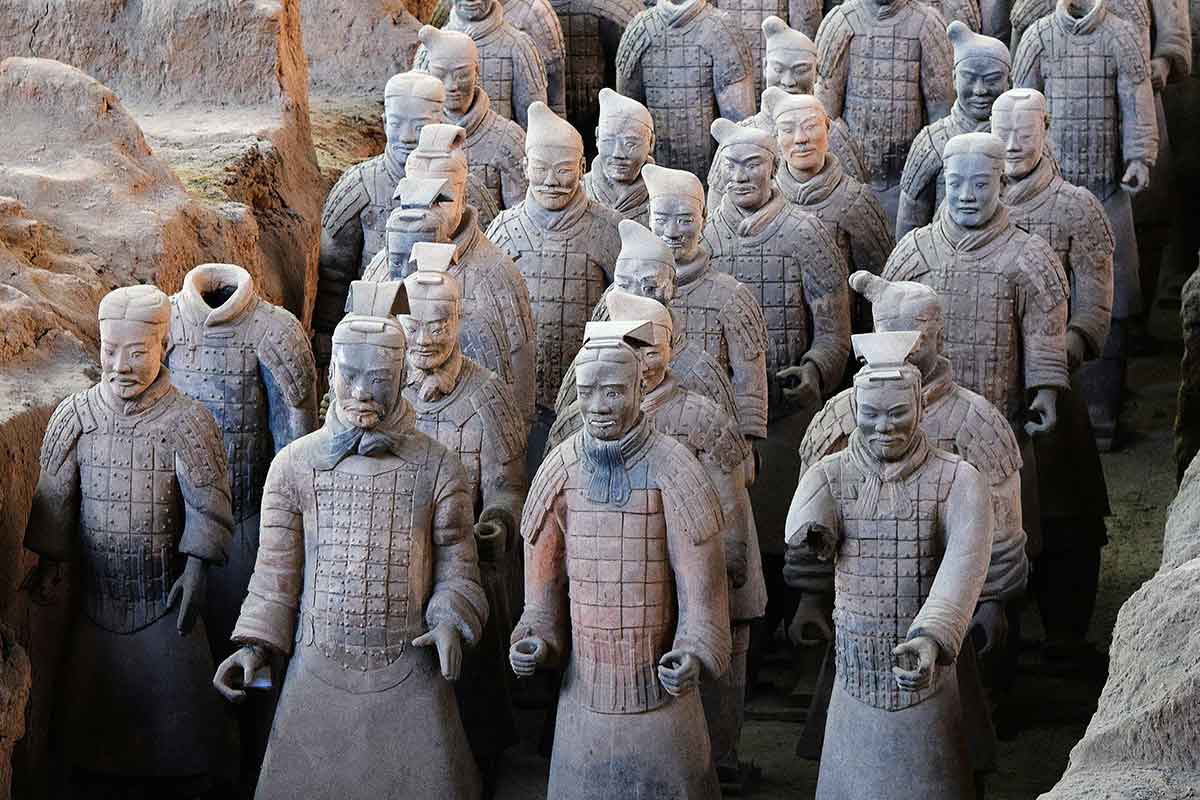
While the warriors are the most famous element of the funerary complex, it was actually a massive subterranean kingdom. There are also non-military clay figures, including court officials, acrobats, and musicians.
Not wanting to risk fragile artifacts, archaeologists have never opened Emperor Qin Shi Huang’s central burial mound. This will probably only happen when improved technology can ensure better preservation.