
In the late 1880s, a series of horrible murders shook London. Five sex workers were slaughtered at night and mutilated, with their murderer fleeing without a trace. The perpetrator sent numerous letters to the police, mocking their efforts to find him. Decades later, a British Impressionist Walter Sickert became one of the suspects. Could it be true that the famous painter was the murderer all along? Read on to examine the evidence against Walter Sickert.
Who Was Walter Sickert?
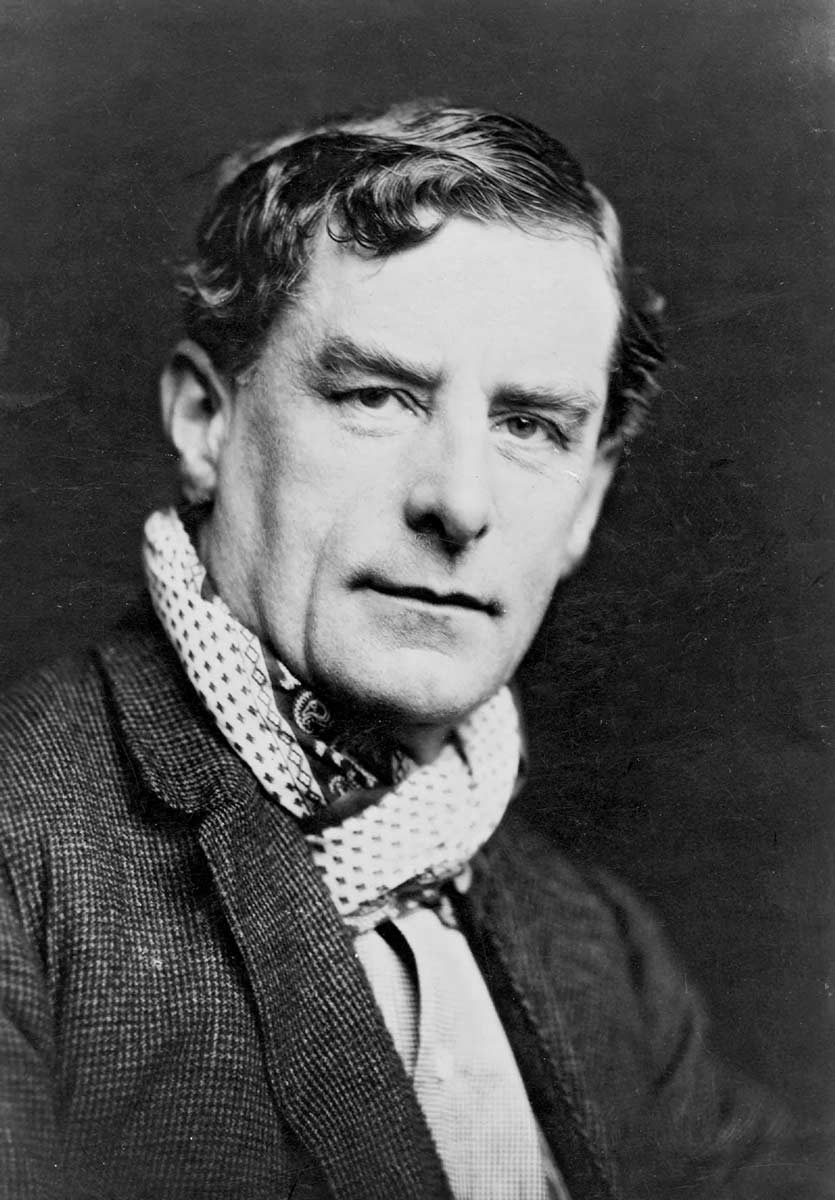
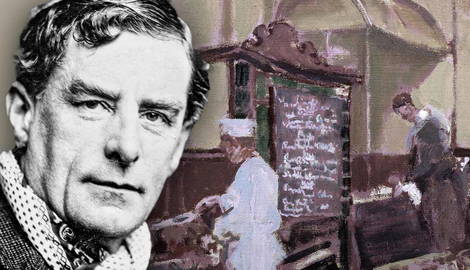
Once dubbed the most important British painter of all time, today Walter Sickert is an almost obscure figure, known mostly to those deeply invested in the history of European Impressionism. A student of Edgar Degas and James Whistler, he was a successful and recognized painter and a former actor, who brought his dramatic ambitions on canvas. His preferred subject matter was music hall stages and intimate domestic scenes that always implied much more context than was demonstrated.
Sickert’s identity was notoriously fluid and prone to sudden transformations, just like his appearance, tastes, and habits. No one could pinpoint his political views since he kept giving out extremely contradictory information. In his routine, he was secretive, too. He simultaneously rented several studios in different parts of London, with the addresses often unknown even to his wife. He had an unnerving habit of disappearing for days without warning, sometimes unexpectedly leaving her alone at the cafe table. Sickert was comfortable enough in both high society gatherings and in the poorest slums, fueled by his well-known misanthropy.
The Whitechapel Murders
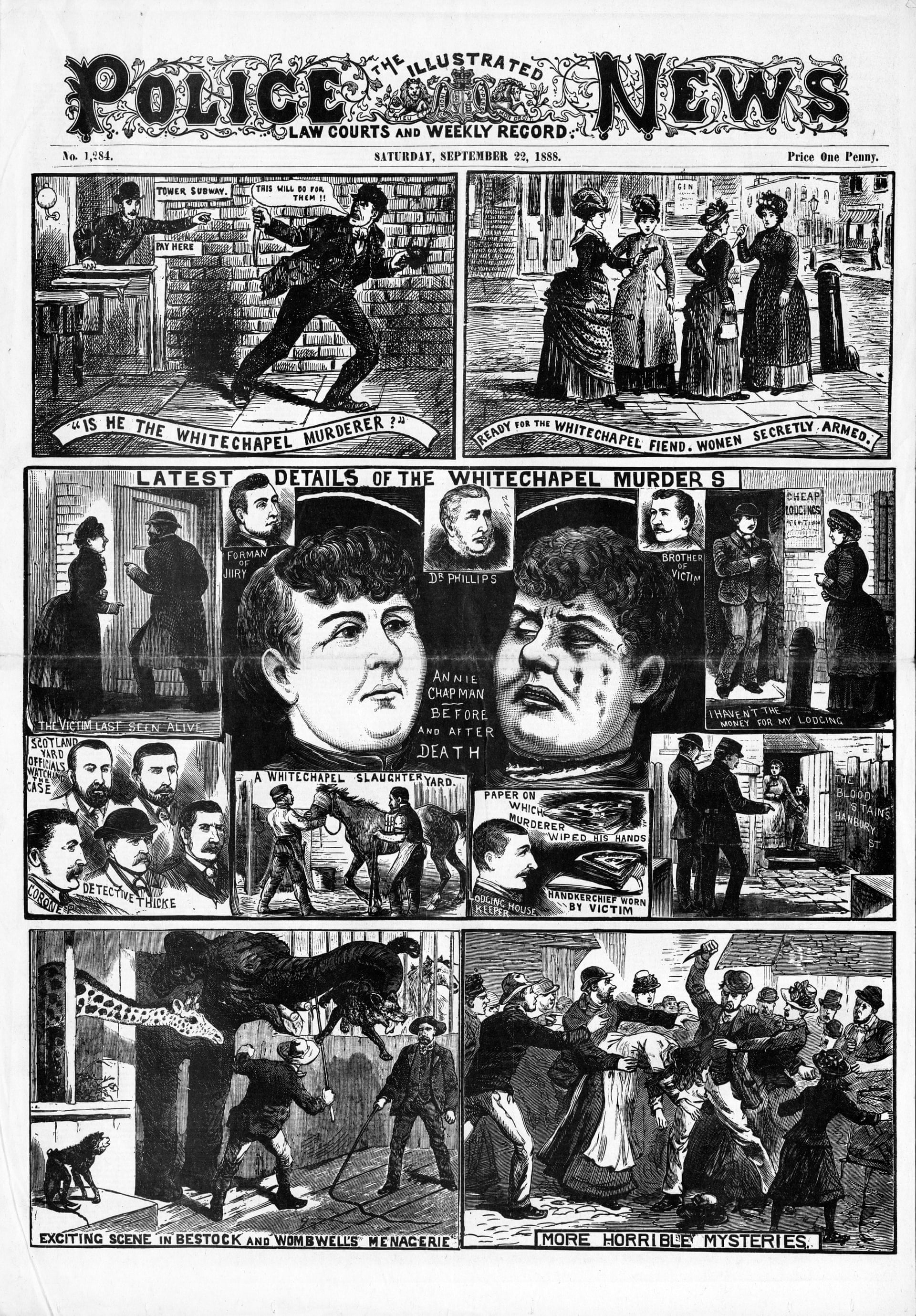
In the 1880s, London was a bustling, overgrown city. Due to overpopulation, crime and disease were rampant in poor neighborhoods. From 1888 to 1891, a series of five murders shook the impoverished Whitechapel district, in which Walter Sickert had one of his studios. Five sex workers were slaughtered and mutilated, with their intestines exposed.
One of the most disturbing details of the Whitechapel murders was the fact that some of the victims’ body parts, like ears or kidneys, soon ended up in newspaper offices of police stations, sent there as gruesome souvenirs from the murderer. The police received more than 200 letters from the alleged murderer, describing the details of his crimes, future plans, and bitter jokes. One of the letters was signed with the name Jack the Ripper, thus creating the image of the killer. However, after extensive analysis, most were labeled as hoaxes, organized either by news reporters or random attention-seekers. At some point, writing Ripper’s letters became a popular hobby. The moral panic in the city reached an all-time high, with women refusing to leave their homes. Several suspects were arrested, but the murderer was never identified.
Sickert’s name occurred in the Jack the Ripper investigation for the first time in the late 1950s, among a long list of other suspects. The main motivation to include him on the list was his strange series of paintings he created two decades after the murders. There were, however, other unnerving details. As reported by his friends, he once introduced himself as Jack the Ripper to a group of women passing by, causing them to flee in horror.
Camden Town Murder
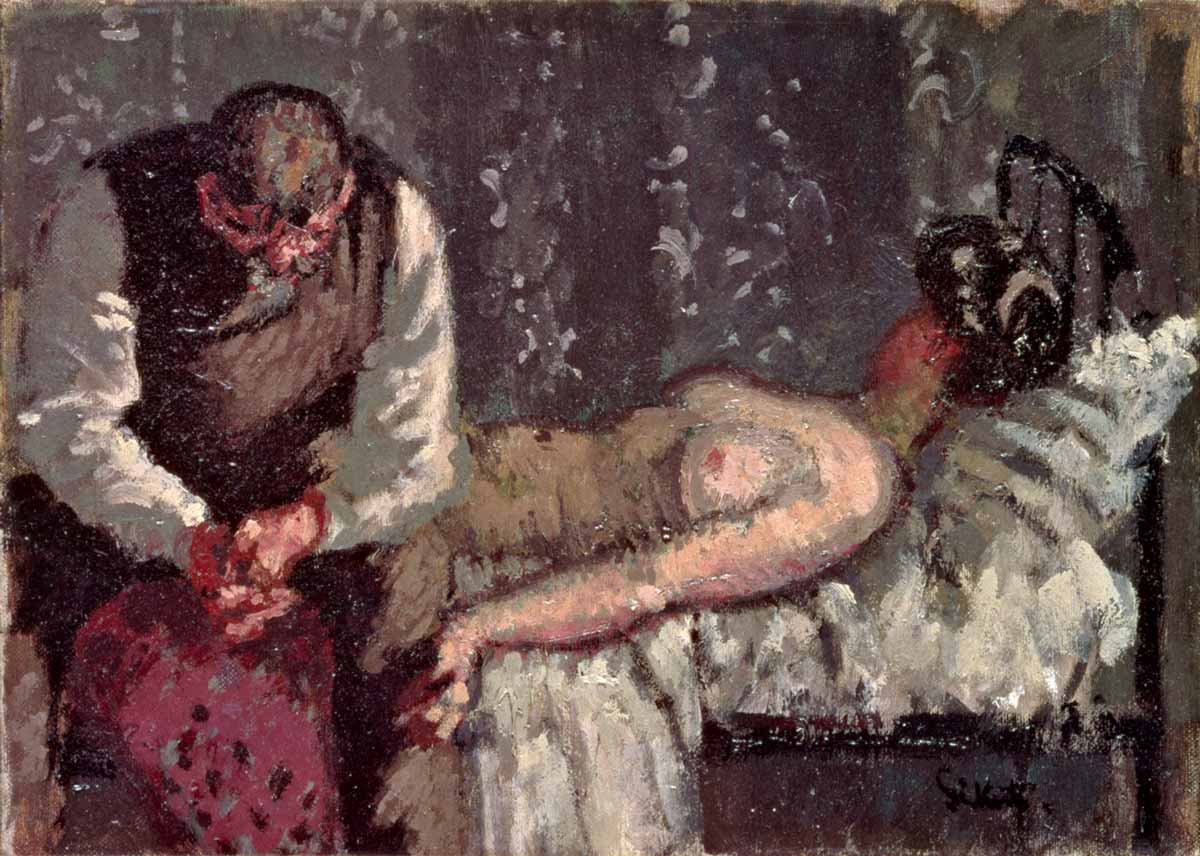
Less than two decades after the first string of murders, another tragedy occurred that reminded Londoners of the nightmare that was seemingly over. A 22-year-old Emily Dimmock and her boyfriend Bertram Shaw rented two rooms in the Camden Town neighborhood. Shaw knew that Dimmock used to make money from sex work, but he believed she quit after the couple moved in together. September morning, coming back from a night shift at the train kitchen, he was surprised to find the room doors locked. After asking the landlady for keys, he was shocked to find their bedroom in disarray, with closets and drawers opened. Emily lay on their bed nude and lifeless, with her throat slit.
Among other evidence in the room, the policemen found a postcard from a friend or a client (as it turned out, Emily did not abandon sex work after all), offering to meet the night before the murder occurred. The card’s sender was soon identified and arrested; it was an artist Robert Wood, who had a habit of sending handmade postcards to sex workers he frequented. Still, Wood was acquitted due to lack of evidence.
Sickert’s Ripper Series
No one paid any extraordinary attention to the fact that Walter Sickert was present both at the Wood’s train and at the crime scene on the day of the murder. Soon after the news of Emily Dimmock’s murder reached the police, Sickert, who rented a studio nearby, showed up at the doorstep and asked to see the gruesome scene. A famous artist known for his penchant for the dark and the macabre, he was not an entirely unexpected guest on the scene. Moreover, the bohemian London circles were obsessed with the murder, linking it to the unsolved Whitechapel series, so the public interest was high enough.
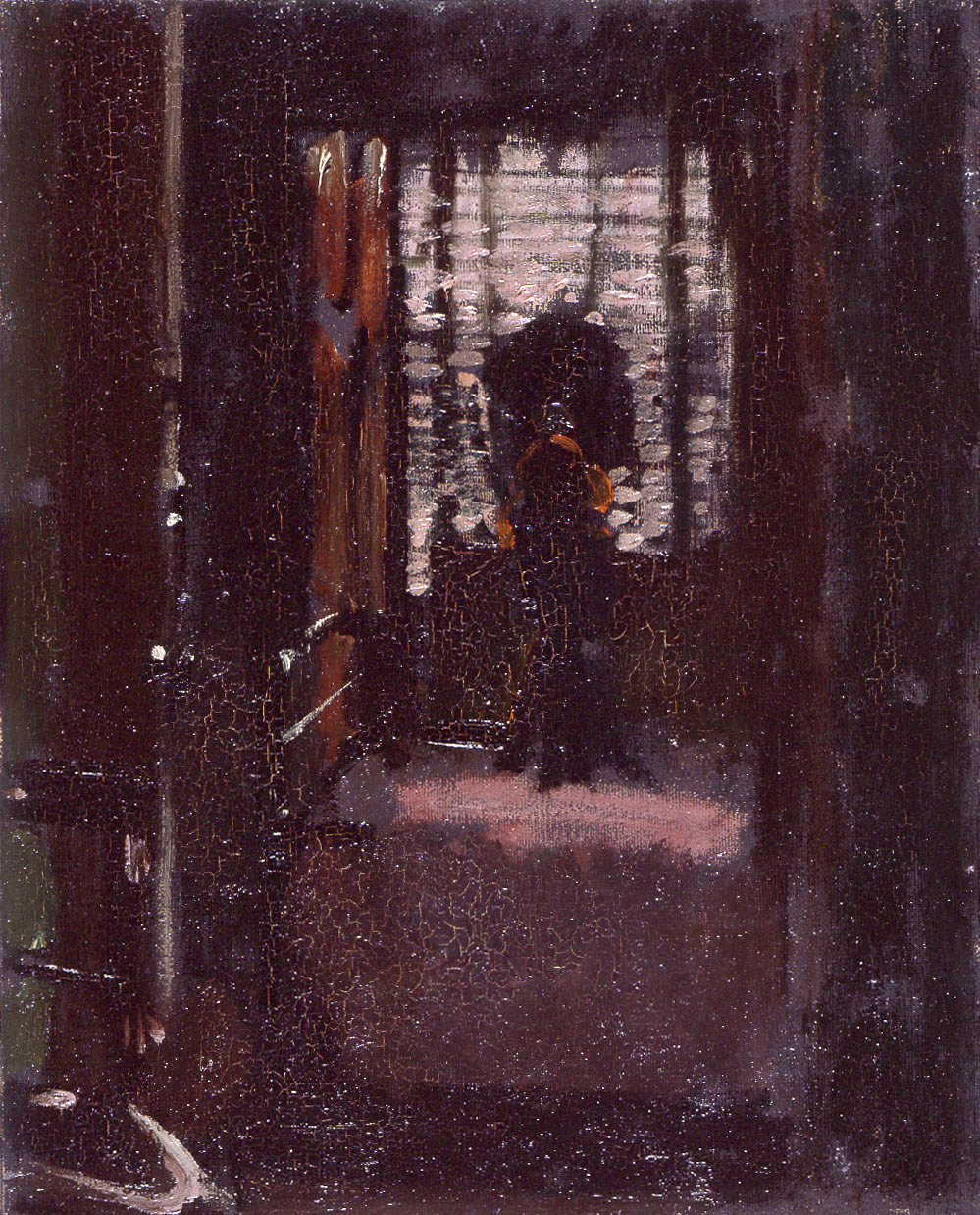
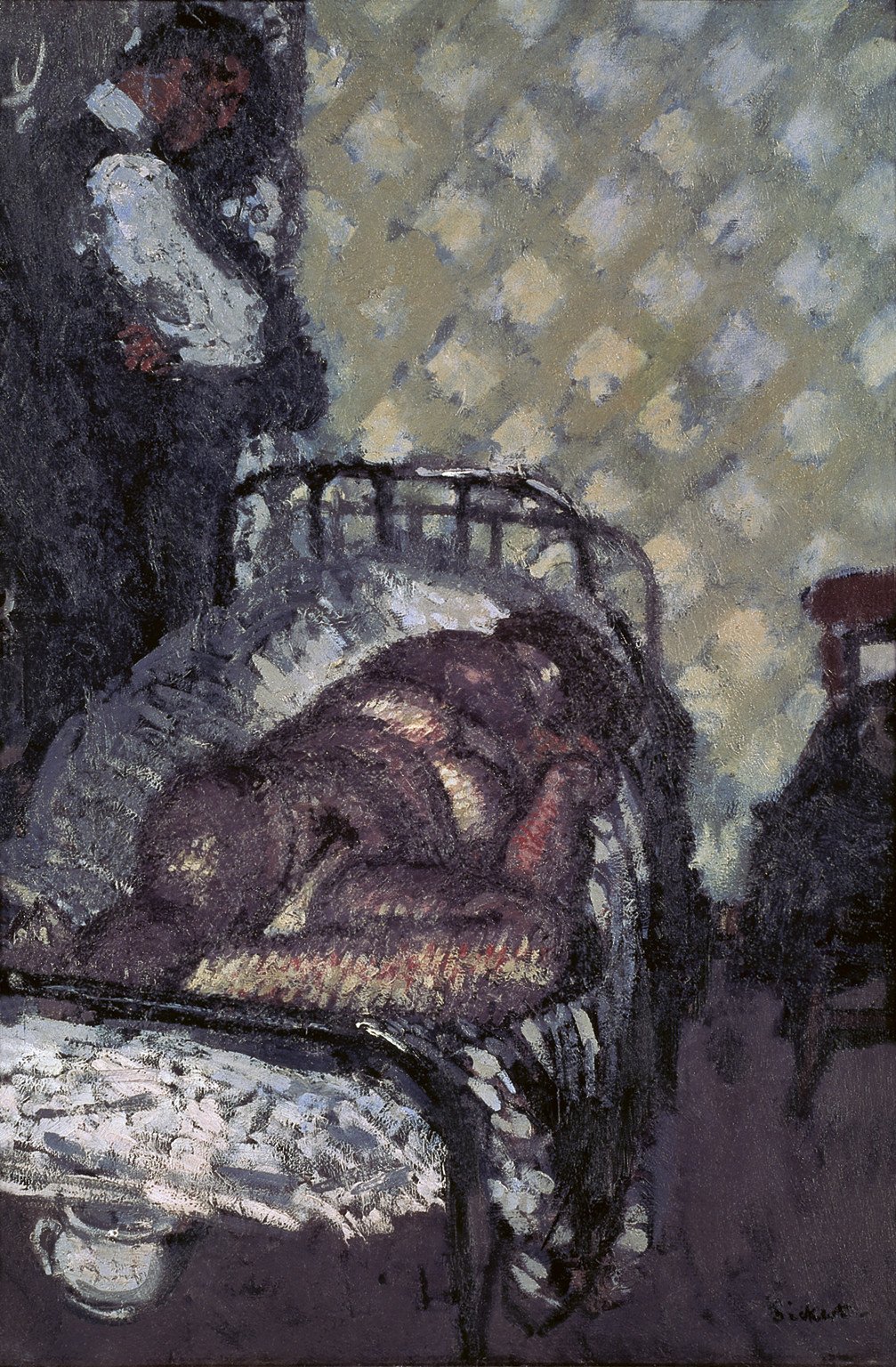
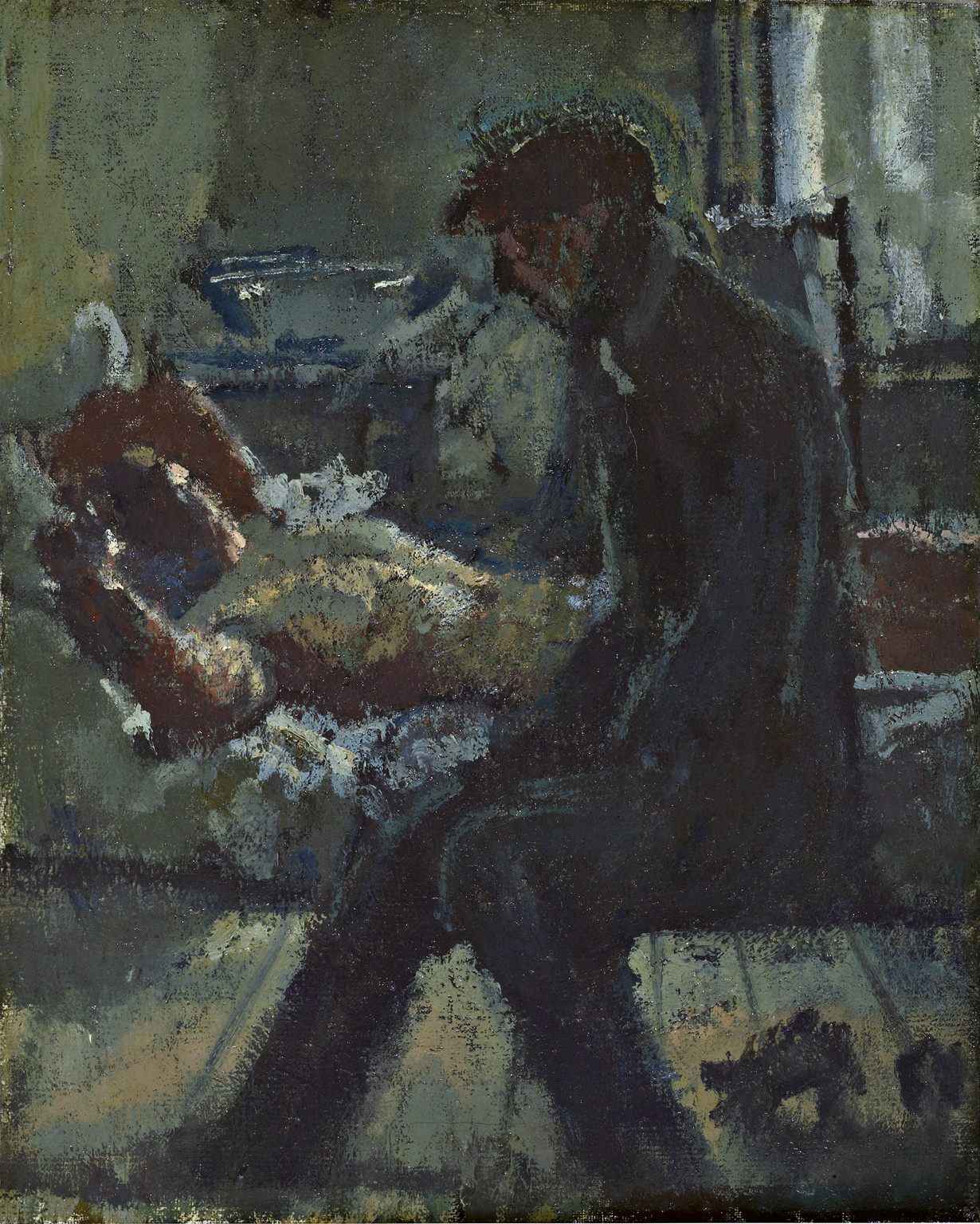
Soon after the murder, Sickert completed a series of paintings titled Camden Town Murder, a sequence of images showing a fully-dressed man seated next to a nude woman. There is no blood visible on the painting, but the title suggests the woman is dead. Some researchers noticed the unsettling similarities between the details from the Ripper crime scenes and Sickert’s compositions. Another, even more disturbing work was revealed slightly before the murder. The canvas Jack the Ripper’s Bedroom also depicted Sickert’s studio.
Patricia Cornwell’s Investigation
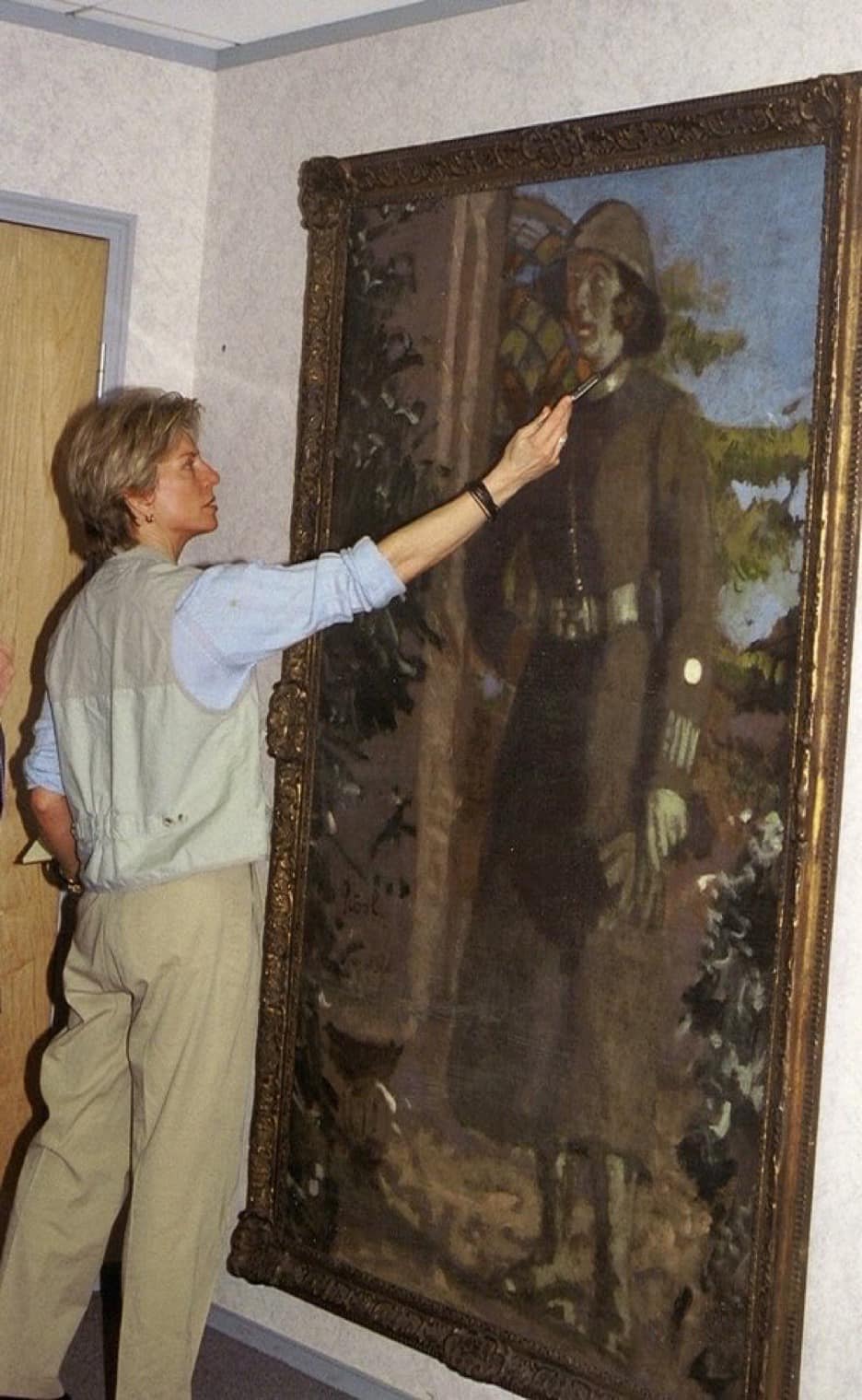
In the early 2000s, a former crime reporter and successful novelist, Patricia Cornwell, set out to prove that Walter Sickert was the man behind the unsolved murders. She came up with this version after reading a biography of Sickert and studying his works. In 2002, she published the results of her investigation, followed by a 2017 re-edition with extra evidence. The book caused a stir in the art world and provoked many controversies.
Cornwell believed that Sickert’s motivation to kill developed from an early childhood trauma. According to the author, Sickert was born with a genital fistula that was treated by a series of painful and dangerous surgeries while he was still a child. This pain could allegedly lead to impotence and fear of intimacy, further developing into aggressive and violent misogyny. As stated by Cornwell, Sickert hated women, especially sex workers, since their profession was centered around something Sickert could not have.
Aimed to prove Walter Sickert’s involvement with the murders, Cornwell accidentally became one of the most prominent collectors of the artist’s work worldwide. Allegedly, she even destroyed one of his works in search of the artist’s DNA samples. However, Cornwell vehemently denied this fact and insisted she would never sacrifice an artwork for her research. Walter Sickert was cremated, meaning that no DNA evidence could be extracted from his body. Yet, Cornwell’s team used his personal belongings to collect samples and compare them to those found on stamps and envelopes of various letters allegedly sent by Jack the Ripper.
While studying Sickert’s whereabouts during the Whitechapel murder series, Patricia Cornwell found several of his letters that stated he was in Paris at the time. However, knowing Sickert’s secretive and manipulative habits, she suspected he might have lied about his location to cover his role in the murders. Moreover, she discovered that some of the letters sent by Jack the Ripper were written on expensive paper that Sickert also owned and used frequently.
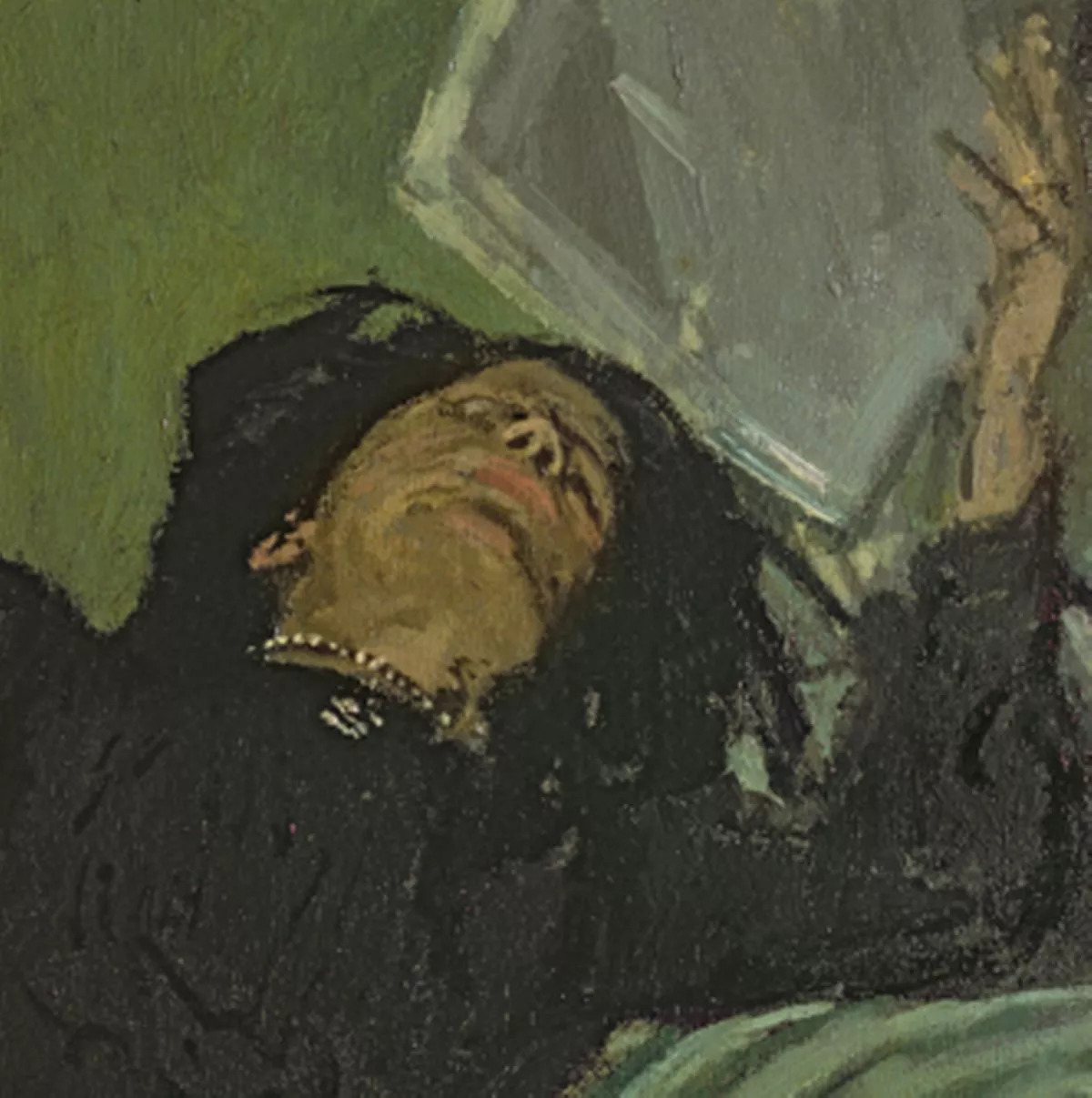
Another piece of evidence was Sickert’s work itself. Some parts of it, mostly portraits of unnamed women, had striking similarities in angle in composition to newspaper photographs of Jack the Ripper’s victims. Although the interest in the case was shared by many at the time, Cornwell linked possible similarities to serial killers’ frequent obsession with their deeds and their public recognition.
Could Walter Sickert Really be the Killer? Researchers Doubt
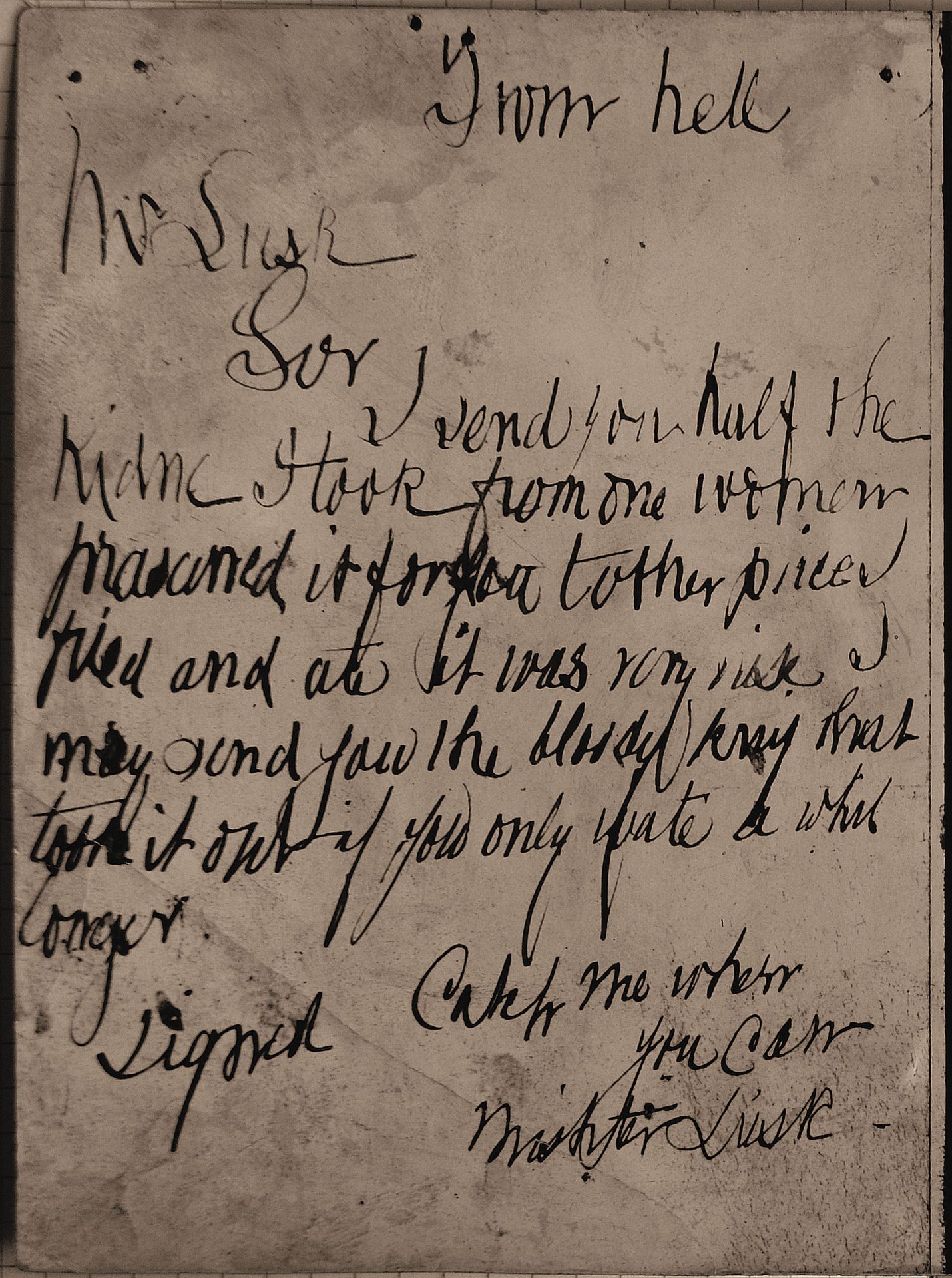
Despite the many details painstakingly recited and written by Cornwell, most other art experts believe her version is too far-fetched and fictionalized to be true. As a crime writer, Cornwell seemed to turn Sickert into a character, with motivations and thoughts artificially inserted into his actions. Her emotion and a personal, although understandable, dislike for Sickert make the revelation look too good to be real.
Most importantly, many facts from her story do not match the evidence from Sickert experts. The story about Sickert’s birth defect that could have triggered deep trauma and homicidal tendencies is highly contestable since this information came from a rather distant relative of the artist. Claims of impotence were also questionable since contemporaries often gossiped about swarms of illegitimate children Sickert had fathered. Generally, the long list of negative traits compiled by Cornwell mostly painted a picture of Sickert as an extremely unpleasant human being, which does not necessarily make him a serial killer.
The DNA analysis referred to by Cornwell’s supporters as the definitive proof of Sickert’s guilt is also very questionable evidence. The quality of DNA extracted by the investigators was not nearly enough to offer a clear result. What it did show, however, was that the DNA on one of the Ripper letters matched the DNA of Walter Sickert and also to the DNA of up to 10% of the world population. Cornwell herself admitted that the DNA test result was not as effective proof as she expected it to be.
Moreover, other investigators pointed out that the letter used for the analysis was largely considered a forgery. Thus, even if the DNA match was accurate, this could mean that Sickert was one of the legions of Ripper imposters who flooded newspaper offices and police stations with forged letters. The matching stationery was always doubtful evidence: although the paper Sickert used was rather expensive, it was never too exclusive.