
Vincent van Gogh’s (1853-1890) oeuvre ranges far and wide. The Post-Impressionist artist began his career at the age of 27 and painted around 900 paintings until his death in 1890. The artist showed impressive artistic evolution, which turned him into one of the most famous painters in the world today. Out of his vast collection of works, his portraits form a significant portion. They are not only important indicators of the development of his style, but they also act as a tribute to the people in his life.
The Relevance of Van Gogh’s Portraits
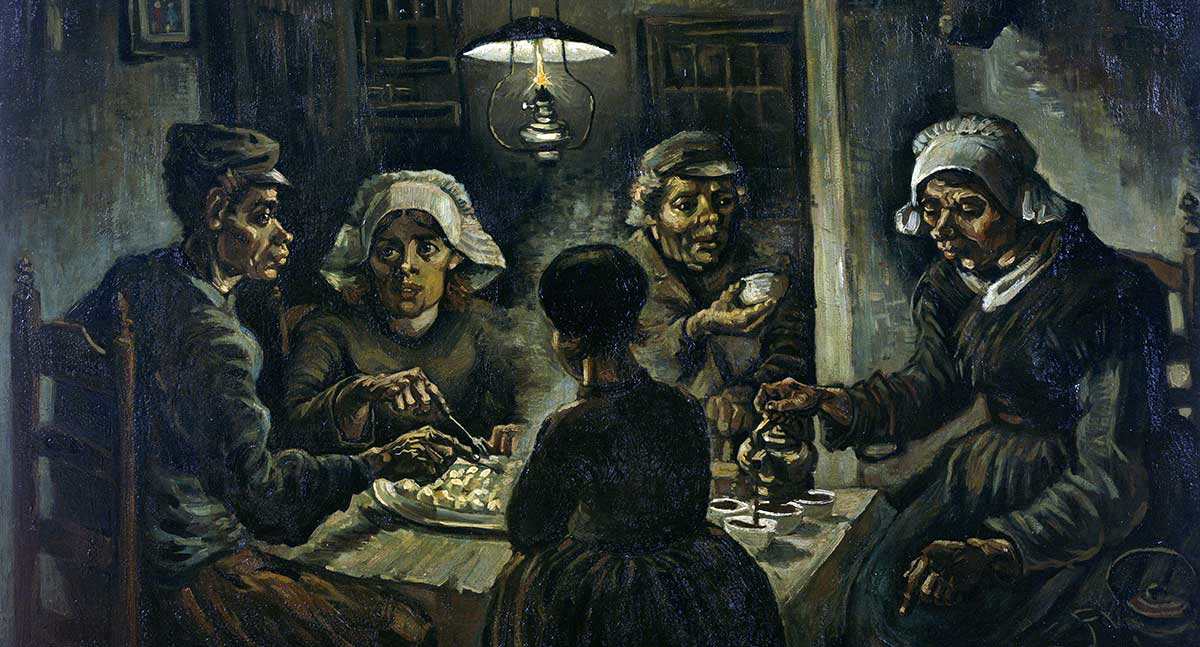
Vincent van Gogh was an intentional artist. He chose his subjects with great care, and they often signified something for him, such as the simplicity of peasant life, the liveliness of sunflowers, or the beauty of nature depicted in his landscape paintings. In all his works throughout his career, Van Gogh was concerned with capturing the essence of his subjects and showing their true character through color and form. From a regular cooking pot in the background to the central subject of a painting, every element in his works was carefully composed. This is what creates a very unique style that is easily recognizable as Van Gogh’s.
The artist applied this same rule to painting portraits and carefully chose the colors and pictorial elements to immortalize his subjects. The characteristics of the final painting depended on how he viewed the person and how he wished to express his perception of them. Vibrant colors, robust brushstrokes, and close attention to detail characterize these portraits. His choice of subject for his portraits also depended on how interesting and unique a person’s appearance was. Van Gogh did not demand perfection from his subjects; instead, he searched for unconventional qualities that stood out. He expressed his thoughts in a letter to his sister Willemien in 1890:
“And yet that’s what should be painted, because then one can realize, compared to the calm ancient portraits, how much expression there is in our present-day heads, and passion and something like waiting and a shout. Sad but gentle but clear and intelligent, that’s how many portraits should be done, that would still have a certain effect on people at times.”
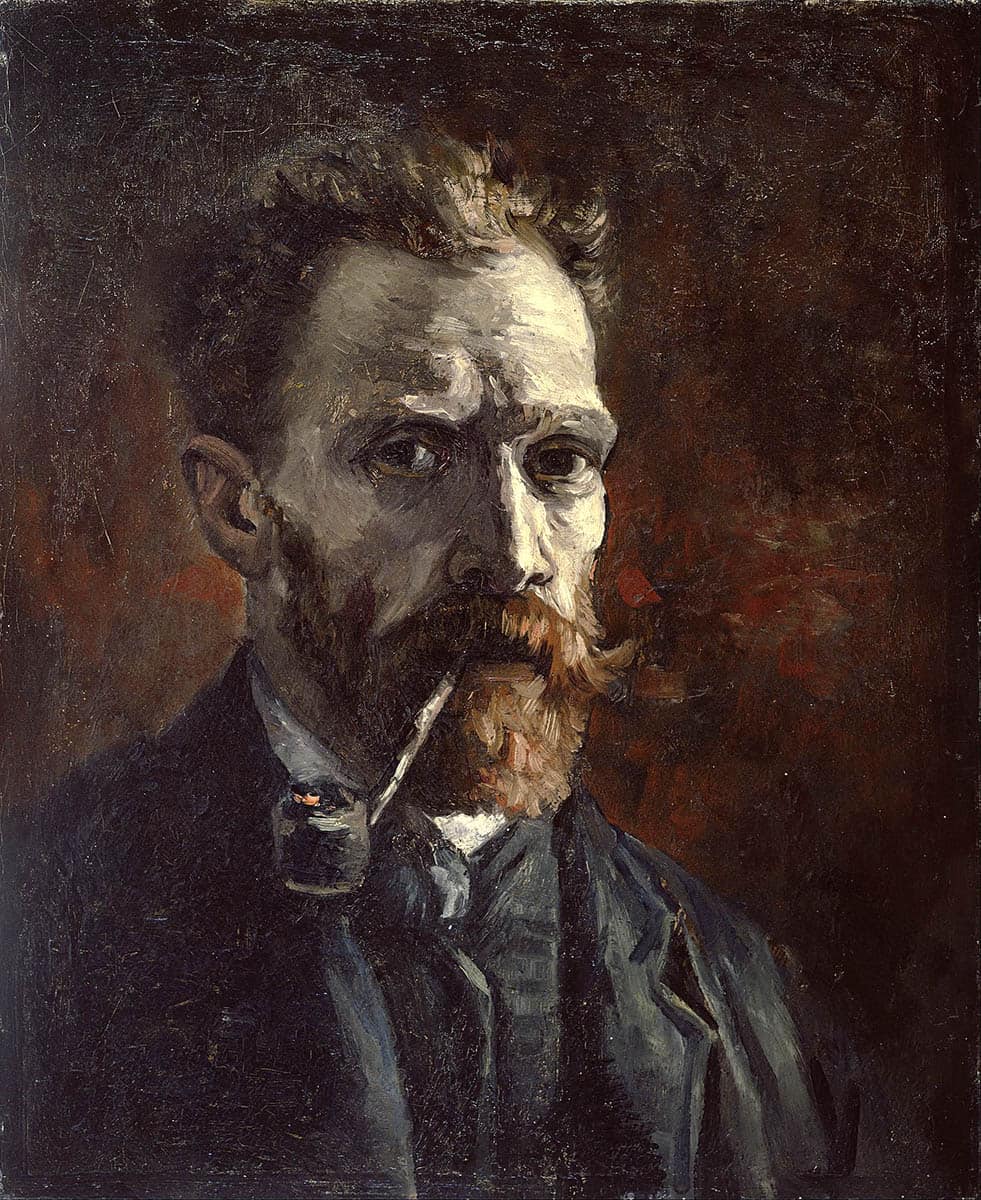
Expression and color thus became the starting points for Van Gogh when painting a portrait. He let go of the tradition of painting realistic portraits and instead focused on emphasizing the character of the person he portrayed. The portraits painted by Van Gogh also tell us something about the people he considered important enough to paint. These works are a valuable repository of information about the artist’s personal life, which in turn creates a better understanding of his art. Out of a number of portraits he made, there are a few that immortalize the people who made a lasting impression on Van Gogh, either through their physical appearance or what they symbolize.
1. Portrait of Joseph Roulin (1889)
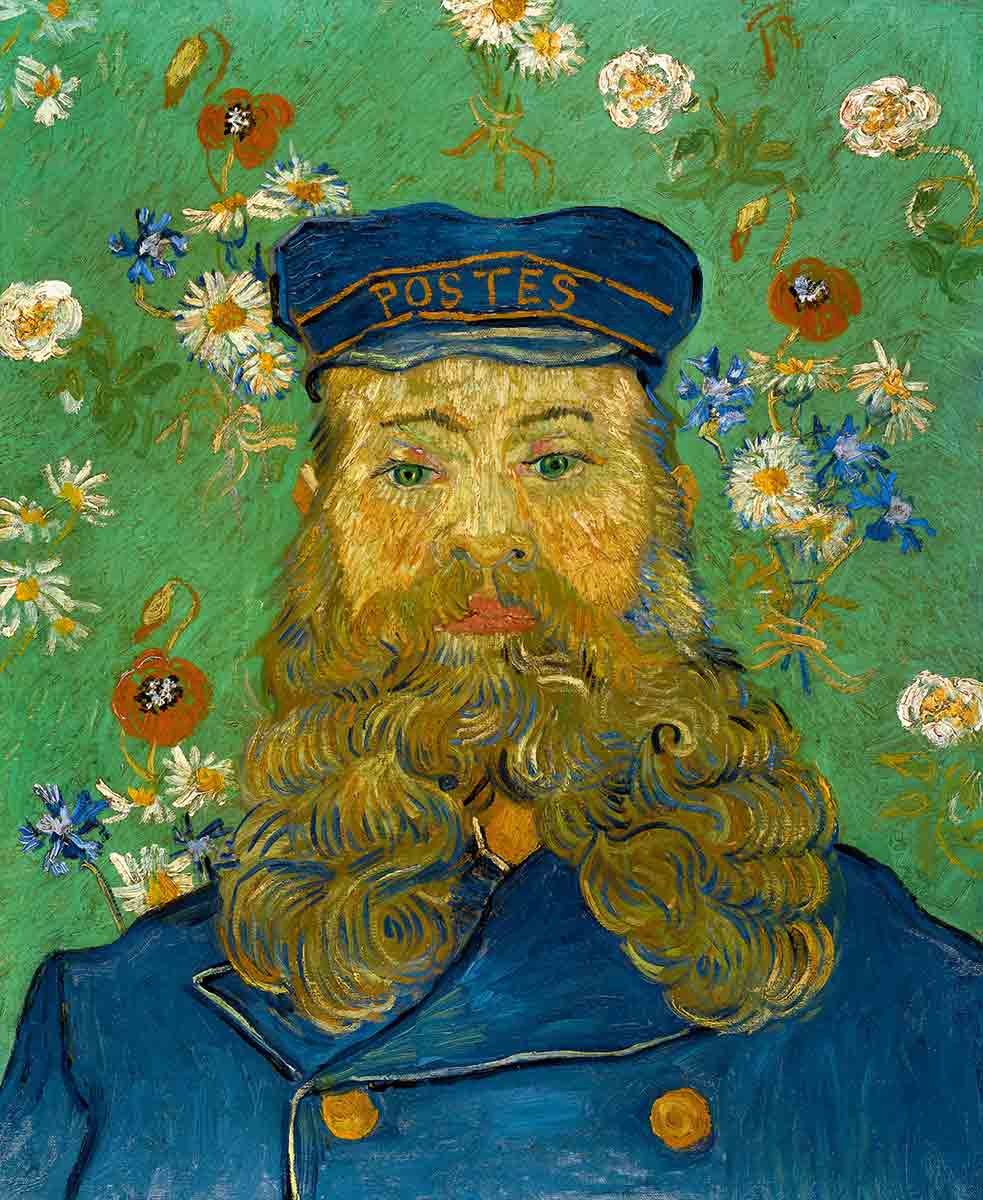
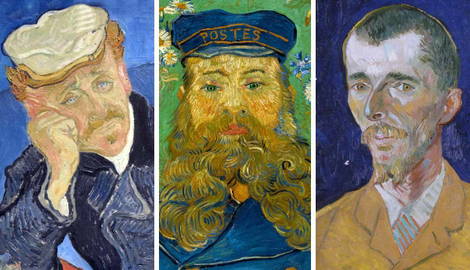
This portrait of Joseph Roulin sheds light on Van Gogh’s style and his social circle from his Arles period. Roulin was a postmaster at the station in Arles, Southern France, where Van Gogh spent approximately two years of his life from 1888-89. The artist was not well-liked in Arles due to his hermit-like persona and eclectic attitude. However, he managed to find a real friend in Roulin. Van Gogh sent many letters and paintings by post to his brother Theo in Paris. This led to multiple encounters with Joseph Roulin, and the two soon became close friends. This portrait of Roulin was thus a way for Van Gogh to express his admiration for his humble, supportive friend, who he described as having a Socratic head.
The above version from 1889 is not the only portrait of Roulin—Van Gogh made six portraits of his dear friend between August 1888 and April 1889. In each of them, Roulin is wearing his dark blue postman uniform and has a full beard. In this particular portrait, currently in the Kröller-Müller Museum in the Netherlands, the background is covered in flowers like poppies, daisies, and roses, creating a beautiful decorative wallpaper.
2. La Berceuse (Woman Rocking a Cradle), portrait of Augustine Roulin (1888-89)
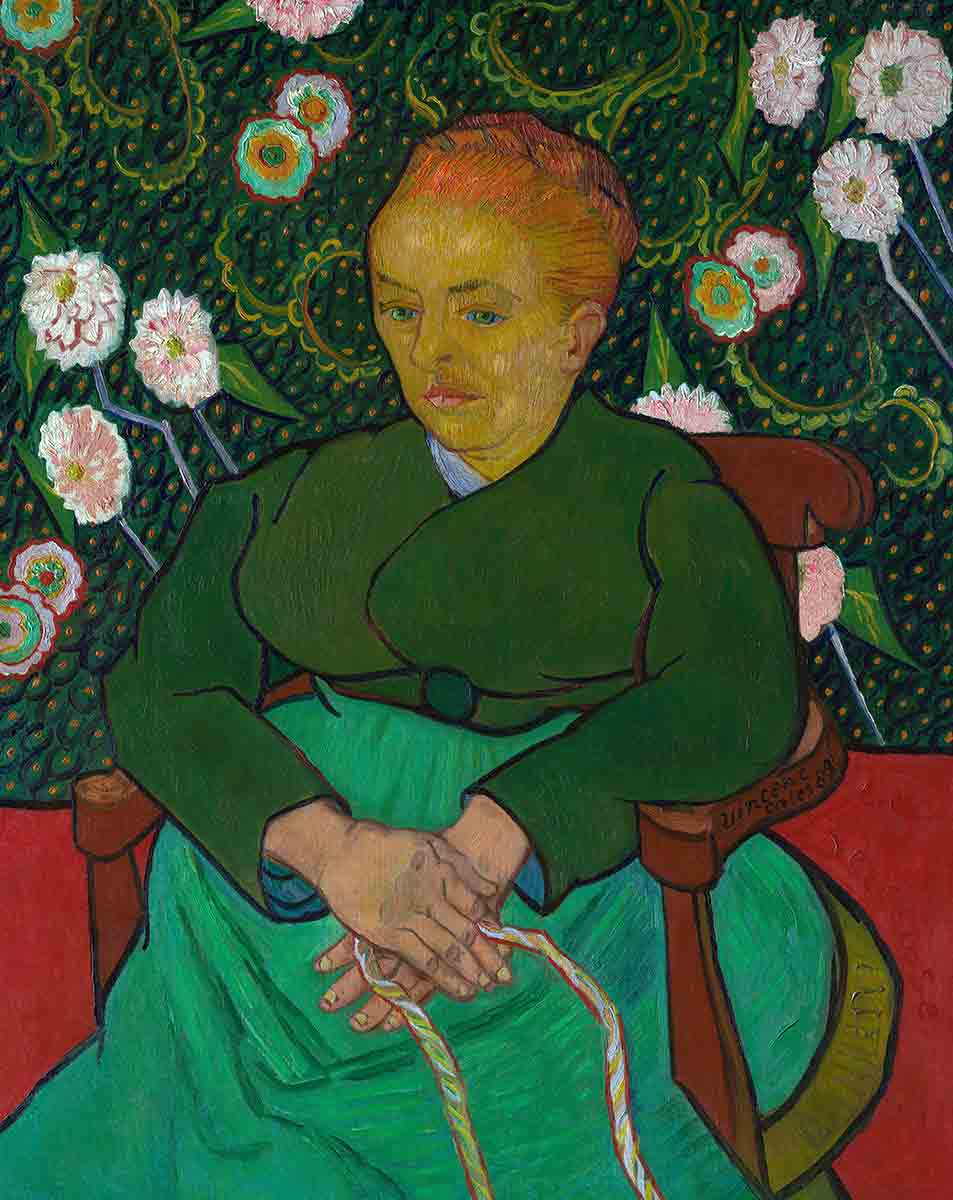
La Berceuse was a portrait of Augustine Roulin, wife of Joseph Roulin, which Van Gogh considered a notable achievement in the development of his style and oeuvre. La Berceuse was painted as a symbol of motherhood through the image of the warm, motherly face of Lady Roulin. Berceuse in French also translates to lullaby. In this portrait, she is seated on a rocking chair and is shown holding a piece of string to rock a baby’s cradle. The entire composition is dominated by shades of red and green. Similar to the portrait of Joseph Roulin, La Berceuse also features an intricate background of swirling floral decorations.
The Berceuse was supposed to be more than just a portrait. When Van Gogh was painting his famous Sunflowers, consisting of seven different paintings, he decided to create a decorative ensemble by combining it with the Berceuse. The idea was to display the Berceuse in the middle with a painting of sunflowers on each side of it, which would form standard lamps or candelabra at the sides. Van Gogh considered this ensemble in order to bring out the colors of each painting. In a letter to his brother Theo, Van Gogh also expressed his wish for such a portrait to be hung in the cabin of a boat of Icelandic fishermen to remind them of their homes.
3. Portrait of Eugene Boch (1888)
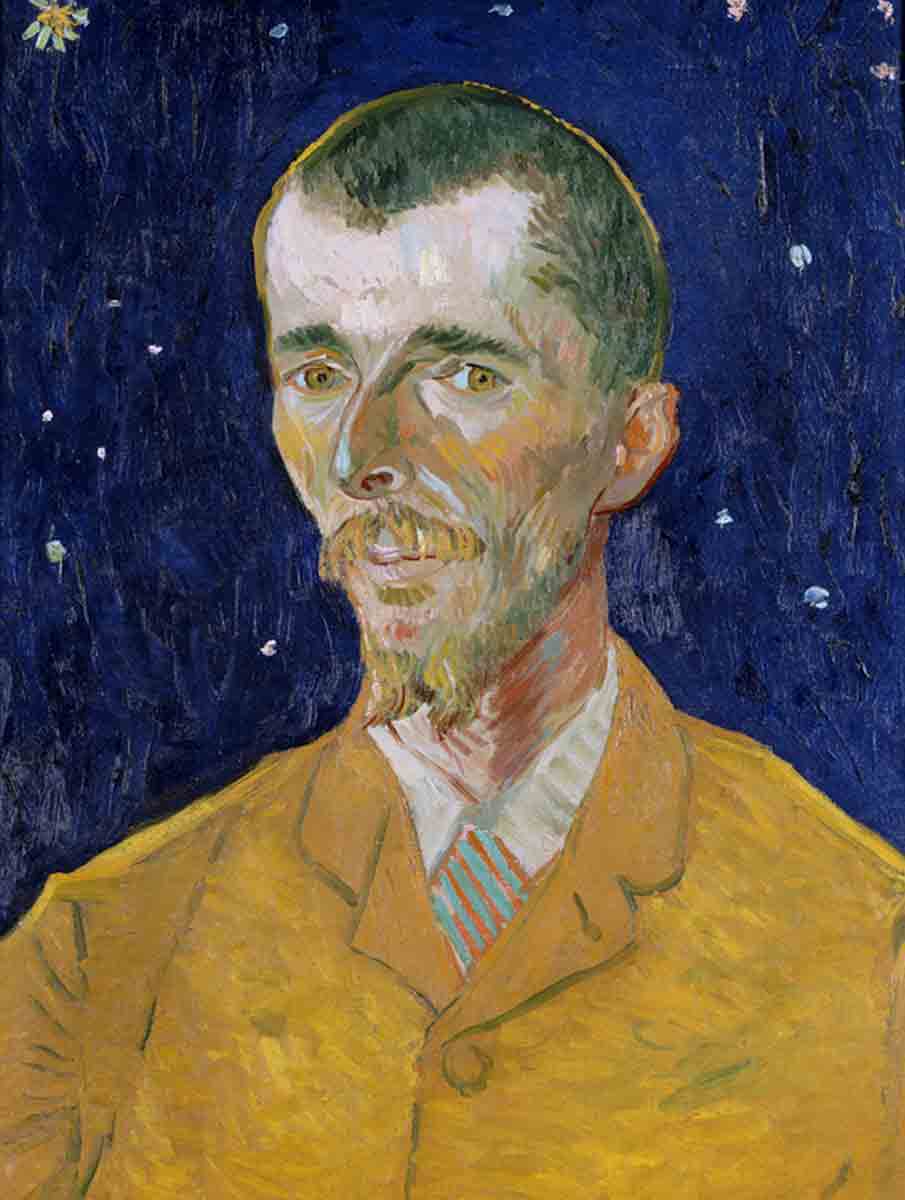
A Belgian Impressionist painter friend of Van Gogh’s, Eugene Boch’s portrait is a beautiful one. The background depicts an infinity of deep ultramarine night sky with twinkling stars contrasted with the bright eyes and yellow coat of the subject. Van Gogh met Boch when he was working in Arles in 1888 and admired the spirit of the young painter. He described his ideas for Boch’s portrait to Theo at great length, writing, “I would like to convey in the picture my appreciation, the love that I have for him.” The starry background was an addition by Van Gogh to add a beautiful effect to the portrait, which was actually painted inside an apartment.
Even though Eugene Boch was not one of the more important people in Van Gogh’s life, the latter gave immense thought to the portrait of the young artist. He was fascinated by Boch’s features and wished to capture them with a mysterious character through this work. Van Gogh called this portrait The Poet and allegedly also hung it in his bedroom in the Yellow House. It is now held at the Musée d’Orsay in Paris.
4. Portrait of Dr. Gachet (1890)
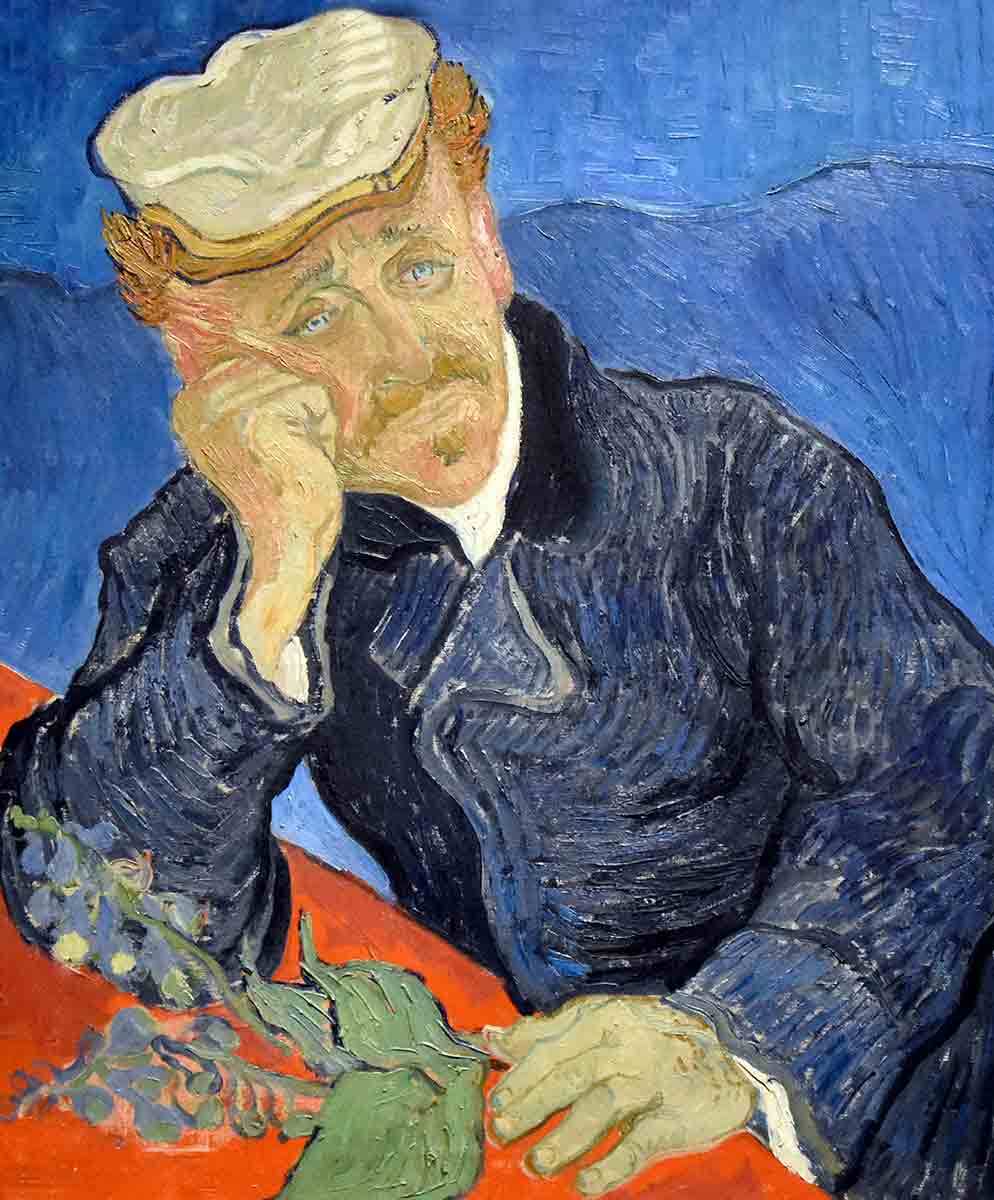
Dr. Paul Ferdinand Gachet was Van Gogh’s doctor from 1889 to the end of the artist’s life in 1890. Van Gogh lived in an artists’ village near Paris called Auvers-sur-Oise during this period of his life under the supervision of Dr. Gachet. This medical supervision was supposed to replace the supervision of the psychiatric institute in Saint-Remy, where Van Gogh had spent the previous year. Theo, Van Gogh’s brother, arranged for Dr. Gachet to take care of the artist’s condition in Auvers, and the doctor was enthusiastic to help.
Dr. Gachet was an avid art collector of works by contemporary artists such as Monet, Renoir, and Cezanne and liked to create engraved prints himself, too. This made him a good fit to look after Van Gogh, and the two men soon developed a friendship. Van Gogh even described Dr. Gachet as something like a new brother due to their similarities in temperament. The above portrait of Dr. Gachet is vibrant, with an intense contrast of blue and red tones, portraying the subject in a pensive state. The doctor is wearing a blue coat and a white hat, holding a twig of foxglove plant in his left hand. The blue background and the doctor’s blue coat add to the melancholic character of the portrait. Overall, this work presents Van Gogh’s free artistic expression in the last year of his life.
5. Agostina Segatori Sitting in the Café du Tambourin (1887)
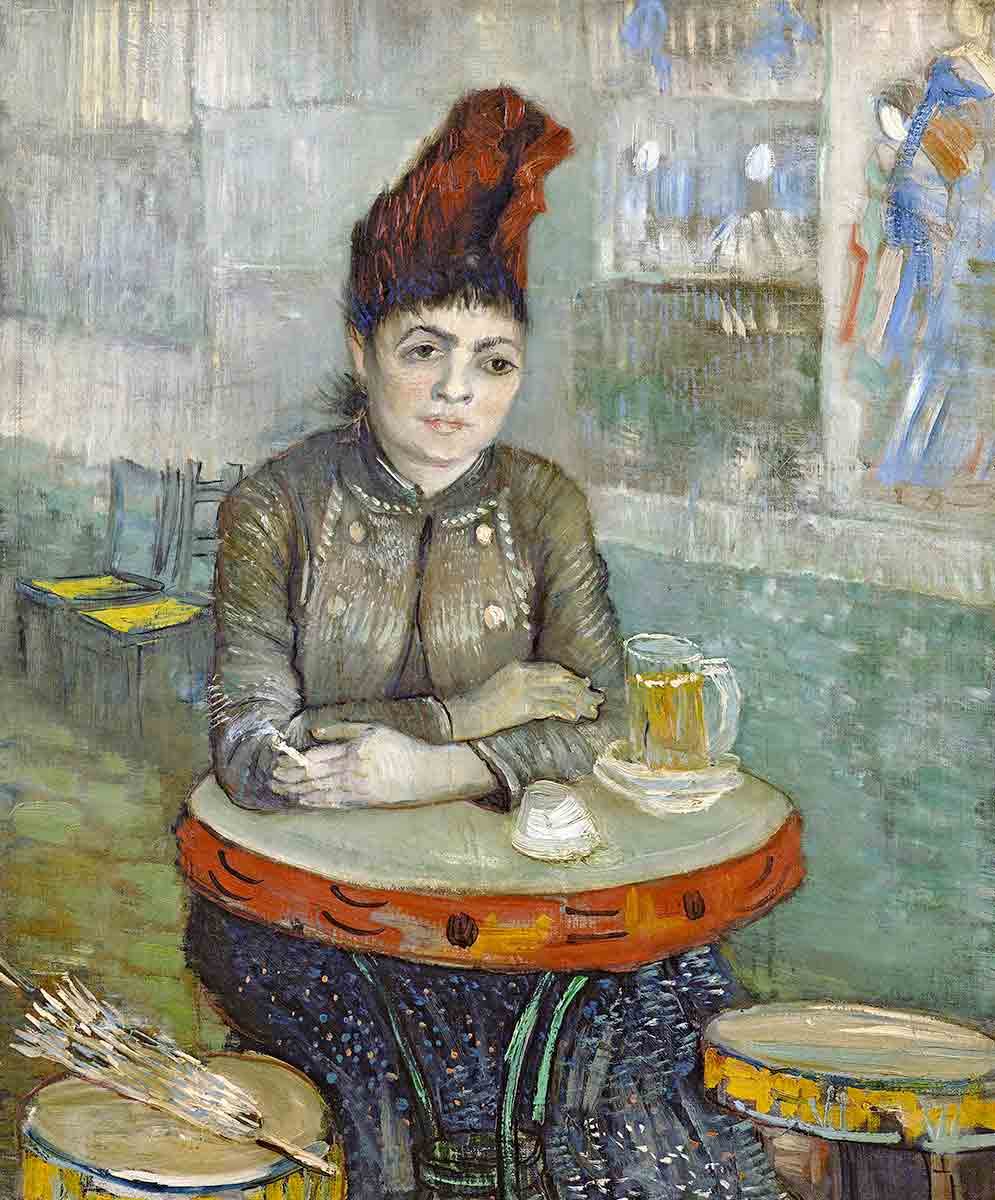
This portrait is of the owner of Cafe du Tambourin in Paris, who also had a short relationship with Van Gogh. Agostina Segatori, an Italian woman, was deeply familiar with the world of art in Paris in the late 1880s. She opened her cafe in 1885, and it soon became the regular gathering place for artists, including Georges Seurat, Paul Gauguin, Emile Bernard, and Louis Anquetin. Before this business venture, she worked as a model for artists like Edouard Manet and Eugène Delacroix, who were well-known. In this portrait, Segatori sits at the table with a lit cigarette in her left hand and a glass of beer on the table. While drinking and smoking by women was frowned upon, she openly indulged in it, sitting in her own establishment in this portrait.
Van Gogh’s relationship with Segatori was brief. However, this portrait is a testament to their partnership. However, the artist referred to his affairs in Paris as unsuitable in a letter to his sister Willemien without directly referring to Segatori. The artist also organized an exhibition to sell his prints at this very cafe. Moreover, 1887 was the period when Van Gogh was experimenting with his style and introducing new elements, such as the use of complementary colors, which makes this work both stylistically and personally significant.