
Vincent van Gogh painted a special painting in November 1888 that depicts an empty chair on a terracotta-tiled floor, with a pipe and some tobacco lying on the seat. At first glance, the work appears to be a simple study, but on deeper observation, one notices the level of attention given to the composition. Van Gogh’s catalog reveals another painting of an empty chair made at the same time, so let’s dive into the story behind these paintings of empty chairs.
The Friendship Between Van Gogh and Gauguin
During the time Van Gogh lived in Paris between 1886 and 1888, he came across a number of artists who were working on establishing their artistic identity in a rapidly changing cultural environment. Among these figures, the French artist Paul Gauguin occupied a particularly significant place in the eyes of Van Gogh. The two became acquainted in November 1887, and Gauguin first witnessed Van Gogh’s work at an exhibition organized by the latter at the restaurant Grand Bouillon-Restaurant du Chalet on the Avenue de Clichy.
One of the deciding factors that resulted in their close friendship was their shared disdain for modern society. Both artists longed for a reconnection with their spiritual and religious roots through the medium of art. Although Van Gogh did not stay in Paris for long after this exhibition and moved to the town of Arles in Provence in February 1888, his friendship with Gauguin was only beginning. The two shared an eventful time in the south of France, and as a result, the stories of their lives and art became intimately connected.
In Arles, Van Gogh rented a small house with four rooms that he called the Yellow House. This was supposed to act as a studio where young artists were welcome to live and work, all the while supporting one another. Gauguin was the first and only artist to live in the Yellow House with Van Gogh.
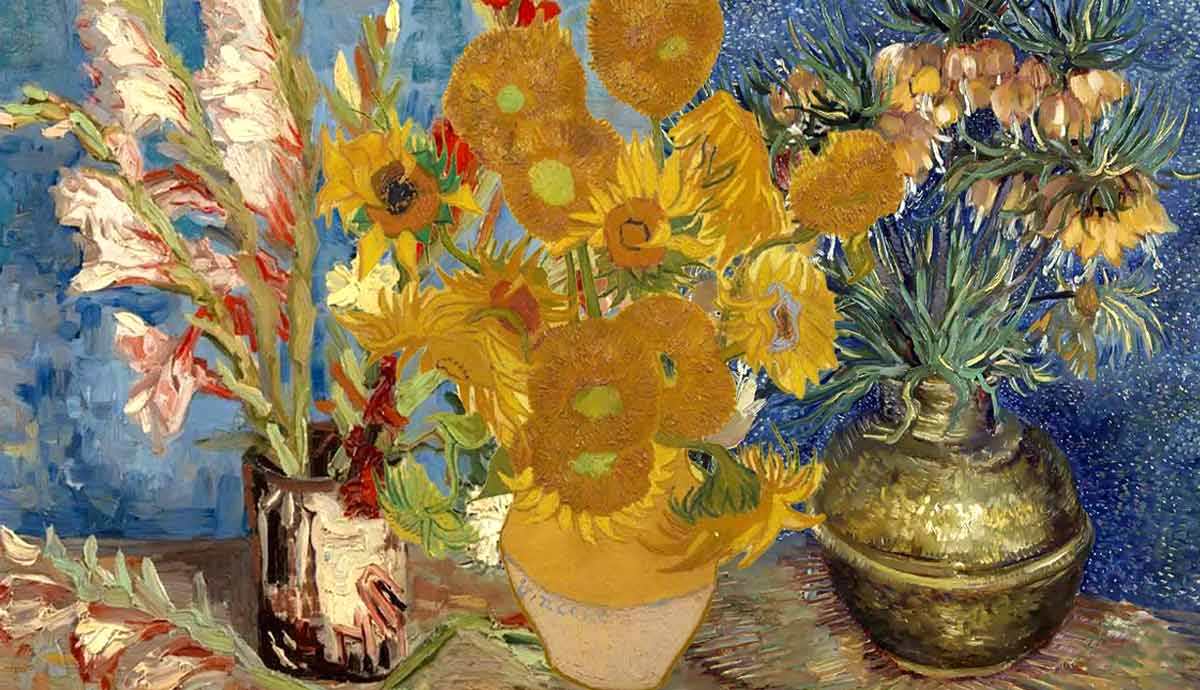
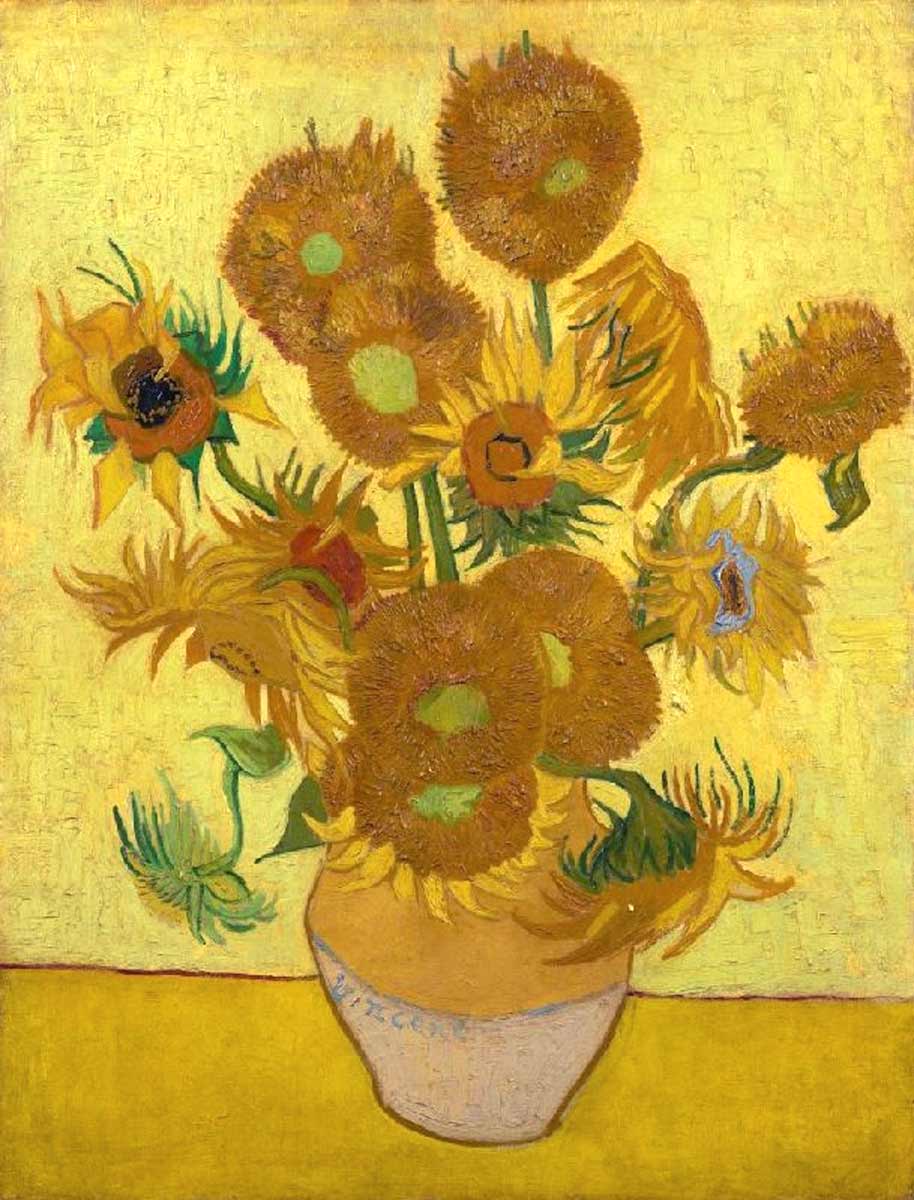
Gauguin came to Arles in October 1888. Van Gogh ensured that his friend’s stay was comfortable and pleasant by arranging his room with beautiful furniture and decorations. At the same time, the Dutch artist was keen to showcase his artistic development to his friend and hung two canvases of Sunflowers in Gauguin’s bedroom with his name signed on the vase.
The two artists were productive during their cohabitation, although their approach to art differed significantly. Van Gogh considered nature and reality to be the foundation of his work, while Gauguin relied on memory, imagination, dreams, and the internal world as his artistic fodder. This difference in their worldviews was manifested in two beautiful paintings that Van Gogh made in 1888: Van Gogh’s Chair and Gauguin’s Chair.
The Chair as a Symbolic Portrait
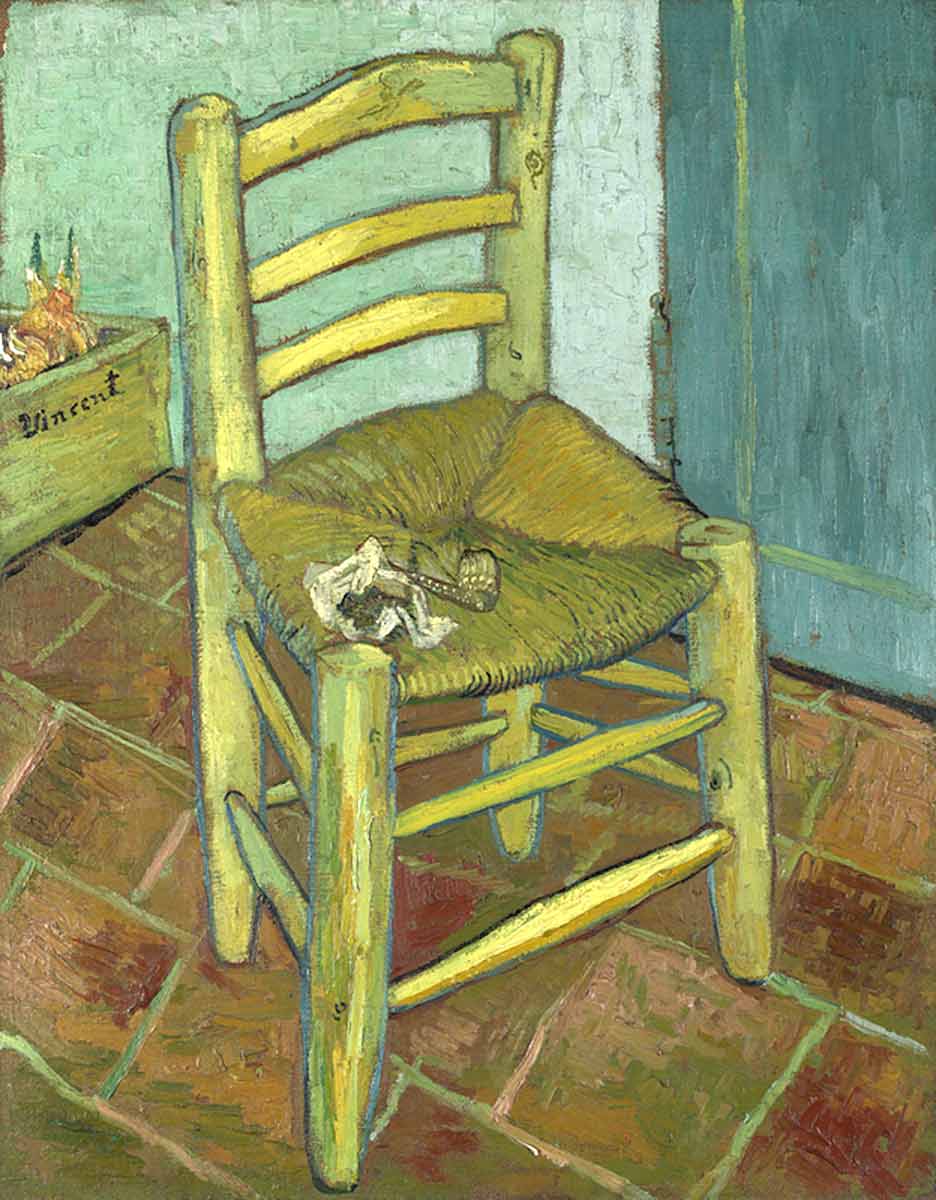
The two paintings, Van Gogh’s Chair and Gauguin’s Chair, were made at the same time by Van Gogh and were intended to hang side by side, facing each other. The titles suggest that one chair belonged to Van Gogh and the other to Gauguin, hinting at their actual purpose as surrogate portraits of the artists. The chairs in the paintings are representations of the two artists, meant to conjure up their presence, as well as highlight the difference in their personalities. Describing these works, Van Gogh wrote to Theo in November 1888:
“In the meantime I can tell you anyway that the last two studies are rather funny. No. 30 canvases, a wooden and straw chair all yellow on red tiles against a wall (daytime). Then Gauguin’s armchair, red and green, night effect, on the seat two novels and a candle. On sailcloth in thick impasto.”
Van Gogh attempted to create compelling portraits through the chairs by capturing the character of each artist. He included different objects in the paintings to add to this character. Van Gogh’s chair is simplistic and has a rustic look, and the only objects present in the painting are a pipe and a pouch of tobacco. This highlights the minimal and simple life that the artist led, similar to the peasants that he so admired in Nuenen.
On the other hand, Gauguin’s chair is an armchair with a more elaborate structure, and it is more polished. Two modern novels lie on the seat of the chair alongside a burning candle, highlighting the French artist’s modern, innovative character.
Another important detail is the difference in the light sources across the compositions. Van Gogh painted his own chair in daylight, while Gauguin’s chair was painted at night under the light of candles and a gas lamp. This could suggest his intention to highlight their different approaches to art. Van Gogh’s attachment to reality is represented through the illuminating light of the sun in broad daylight, while Gauguin’s inclination towards dreams and the imagination is represented through the night hours and subtle, intimate candlelight. The contrast in their worldviews is also highlighted by the opposing color schemes. Van Gogh’s Chair is composed of a contrast of blue and yellow, while Gauguin’s Chair is painted in red and green.
The End of the Studio of the South
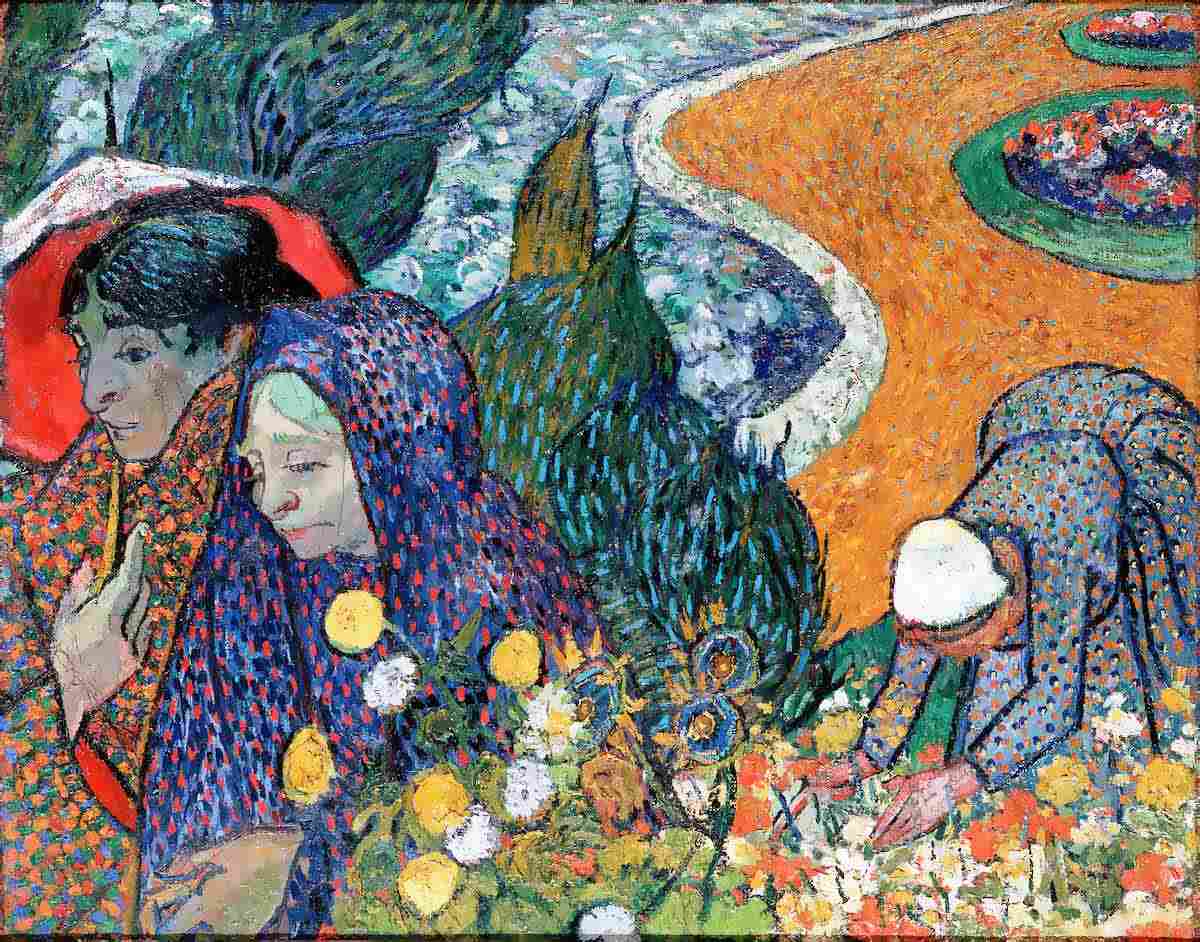
Van Gogh’s pendant portraits of the two chairs marked a fruitful time in the cohabitation of two artists in the studio of the south. However, this period was short-lived, and it ended tragically. The differences in the personalities of the two artists highlighted in the pendants often led to arguments between them. Van Gogh experimented with Gauguin’s method of working from imagination and made the painting Memory of the Garden at Etten (Ladies of Arles) as a result. He even wrote to Theo, “Gauguin gives me courage to imagine, and the things of the imagination do indeed take on a more mysterious character.”
However, the Dutch artist had built his foundation on painting real subjects, particularly peasants in the Brabant countryside who “have tilled the earth themselves with these hands,” as he wrote in 1885. On the other hand, Gauguin had strong opinions about not confining oneself to physical reality and expressing one’s inner world through art. As weeks went by, arguments between the two artists became more frequent. Van Gogh would often get agitated by their fights, until a fateful evening on December 23, 1888, that marked a major shift in his life.
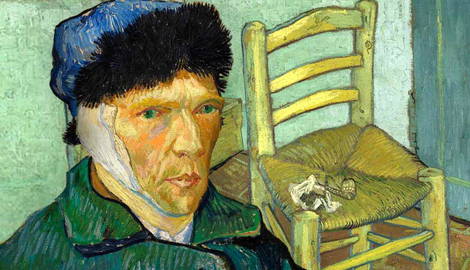
Based on the account of Gauguin, the two artists had an argument, and Van Gogh became agitated and threatened his friend with a razor. Gauguin decided to sleep at a hotel that night, and Van Gogh went back to the Yellow House and cut his left ear off. The police arrived at the scene the next morning, and Van Gogh was admitted into a hospital. Gauguin informed Theo about the incident via telegram and went back to Paris. Having suffered a major mental breakdown, Van Gogh remembered little of these events. He spent the next few months in Arles, going in and out of the hospital on account of his growing distress, but he never stopped painting.
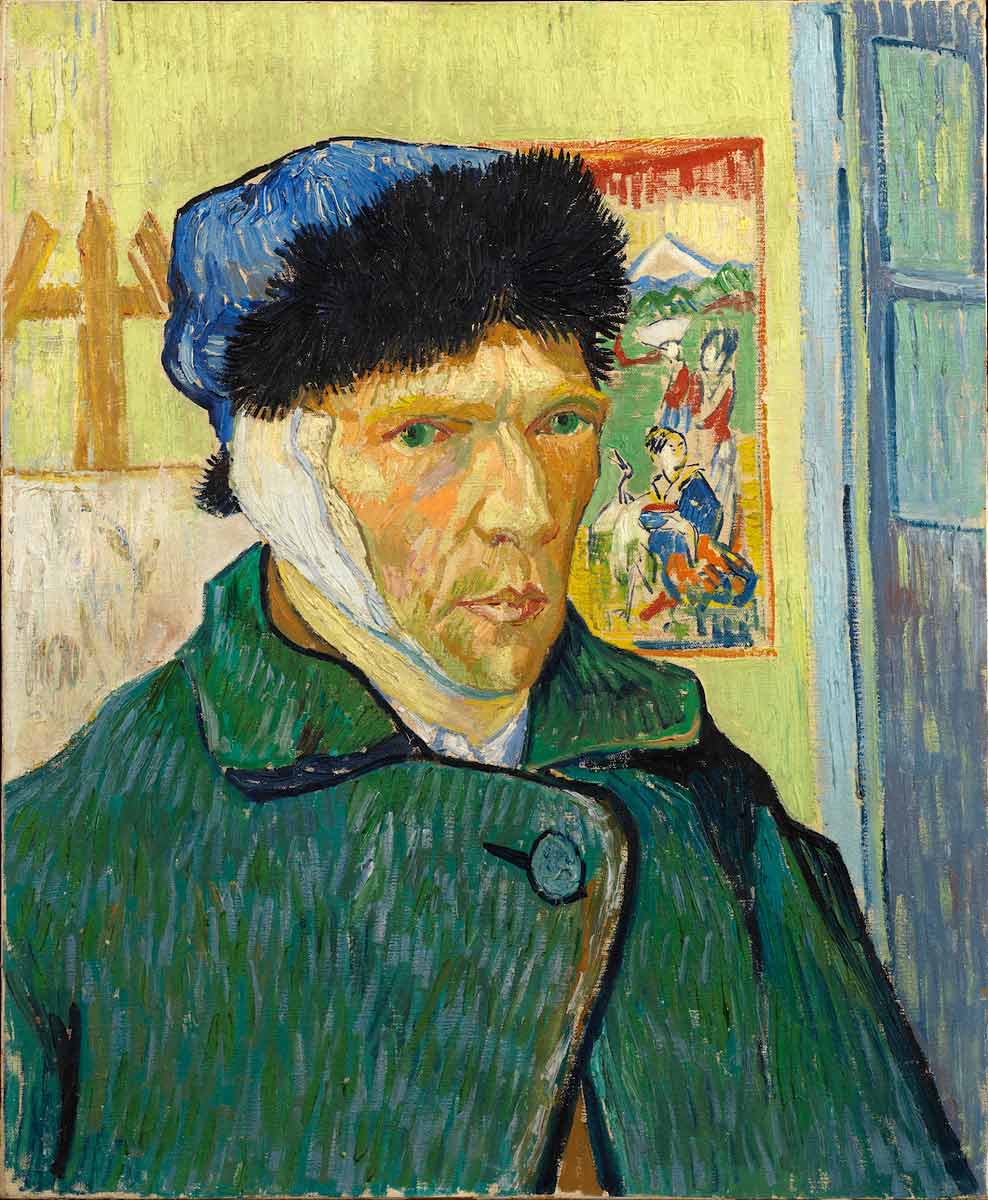
The anecdote of Van Gogh cutting off his ear is a famous one, but the full story behind it is deeply tragic for the artist, his family, and his friend Gauguin. Van Gogh decided to admit himself to a psychiatric hospital a few months after this event and stayed there for a year. A few months after leaving the hospital, the artist committed suicide and died on July 29, 1890. Van Gogh and Gauguin eventually rekindled their friendship through letters after the incident at the Yellow House, but the two friends were never to cross paths again. The paintings of their chairs remained in Theo’s possession as reminders of a calmer, more optimistic time in the friendship between Van Gogh and Gauguin.
The Empty Chair and a Resonance With Mourning Imagery
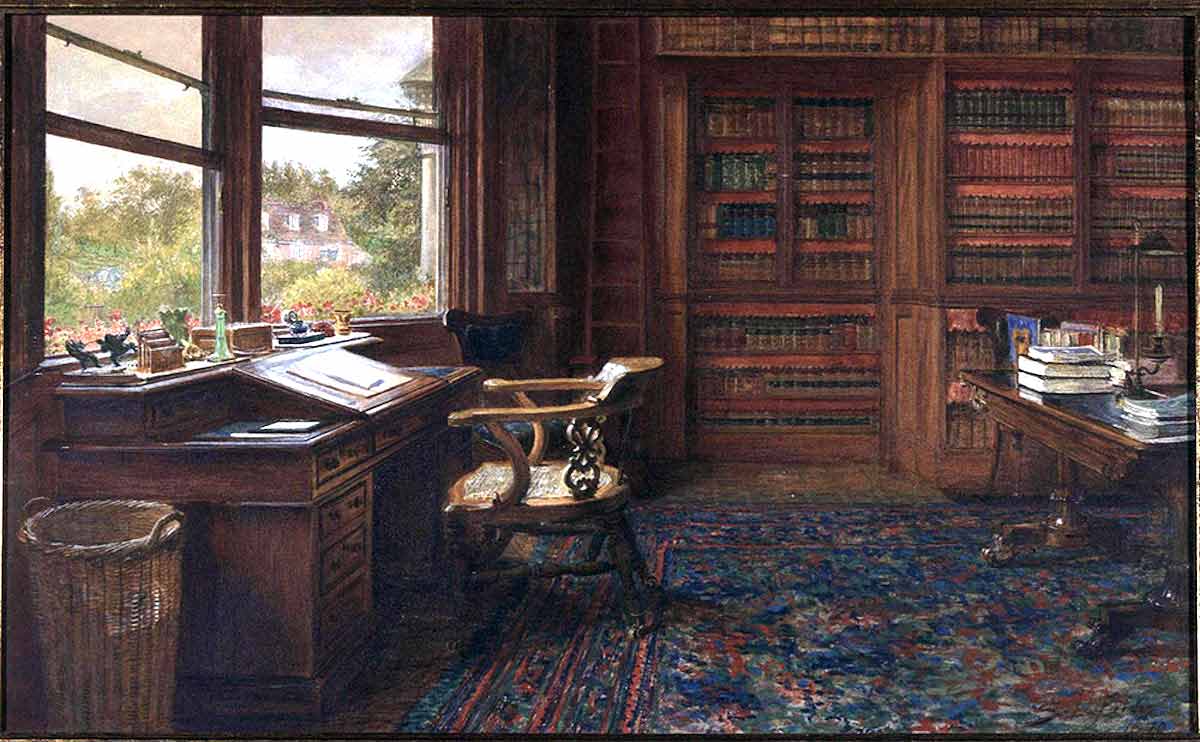
Van Gogh’s paintings of empty chairs, while not made in the context of mourning, are reminiscent of the watercolor made by Sir Samuel Luke Fildes showing an empty chair in Charles Dickens’ study. The watercolor was made after the writer’s death and was meant as a symbol of mourning and loss. At the same time, it was a surrogate portrait of the writer. It was an object that was intimately connected to Dickens’ life, which immortalized him long after his death. Van Gogh was clearly familiar with this work as he wrote in a letter to his friend Anthon van Rappard in 1883, “I hope to get a copy of Fildes, C. Dickens’ Empty chair for you.” Although the artist made no mention of this watercolor in regard to his paintings of the empty chairs, it is possible that Fildes’ concept of vacant furniture as a representation of the person influenced Van Gogh.
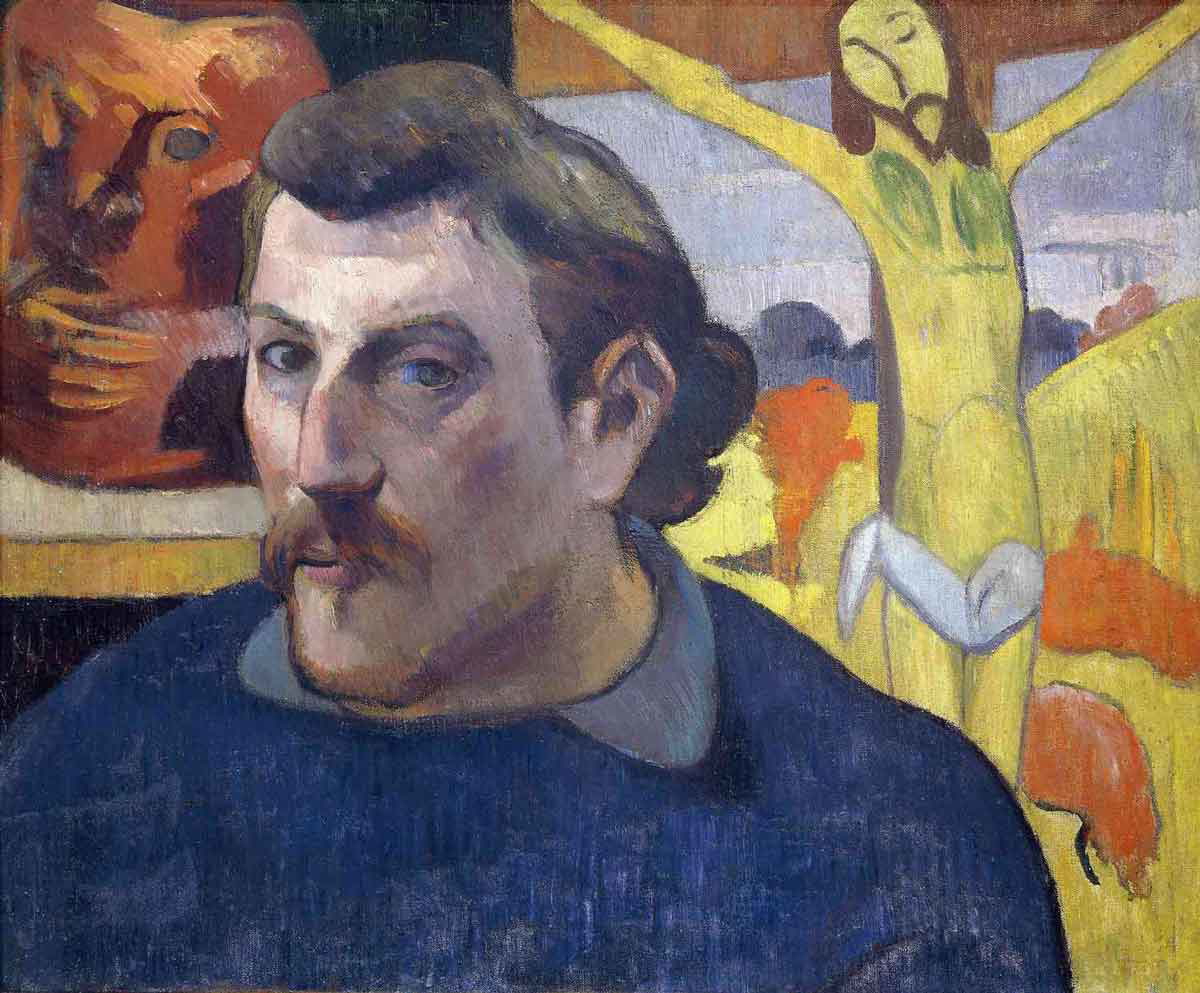
Nevertheless, the concepts of mourning and loss did present themselves in the friendship between Van Gogh and Gauguin after Van Gogh’s tragic death. While he immortalized the friendship between him and Gauguin through the motif of the chair, Gauguin did the same through the sunflower. The sunflower was an important motif in the friendship between the two artists, as Van Gogh used his paintings of Sunflowers as a way to show off his artistic progress to Gauguin. The latter acknowledged this and wrote in January 1889, “your sunflowers on a yellow background which I regard as a perfect page of an essential ‘Vincent’ style,” further making a request to own one of the Sunflowers. Gauguin also painted a canvas titled The Painter of Sunflowers that depicts Van Gogh working. The former was not fond of the genre of the still life himself, but he made an exception.
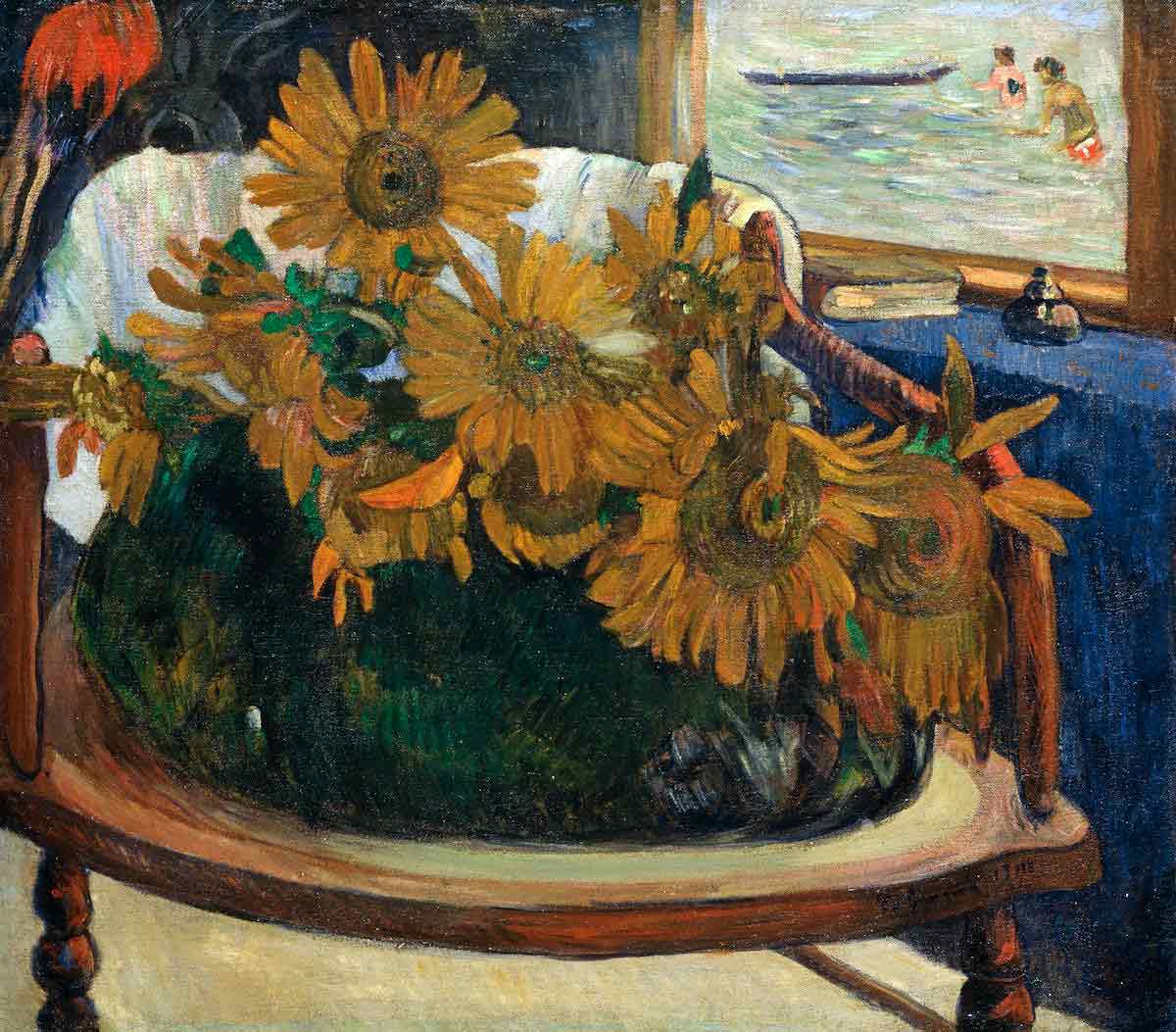
In 1901, 11 years after Van Gogh’s death, Gauguin painted four still lifes of sunflowers while living in Tahiti, and these paintings are interpreted as surrogate portraits of his late friend, embodied by the sunflower. Moreover, the flowers are lying on an armchair, which is a possible invocation of his friend’s surrogate portrait of him.
Van Gogh’s empty chairs were not intended to symbolize absence and remembrance at the time when they were painted, but Gauguin’s sunflowers applied this concept to act as reminders of his late friend. It is interesting to learn that the two artists spent only about three months in close contact with each other, but clearly left a meaningful impression on each other’s lives, with their art serving as a testament to their friendship. The pendants made by Van Gogh in December 1888, originally meant to be hung side by side, now belong to the collections of different museums. Van Gogh’s Chair is at the National Gallery in London, while Gauguin’s Chair is at the Van Gogh Museum in Amsterdam.