
Graffiti used to be considered vandalism and delinquent behavior but has now become a well-respected art form. While some, like Banksy, prefer to stay anonymous, others have made a name for themselves in more “prestigious” art circles. It’s only been about 40 years since graffiti art drawings have been taken seriously, and it’s been an exciting step toward making art more accessible. Get to know the genre with 12 of the most iconic graffiti artworks that have sprung up on streets all around the world.
1. The Giant of Boston, Os Gemeos, 2012
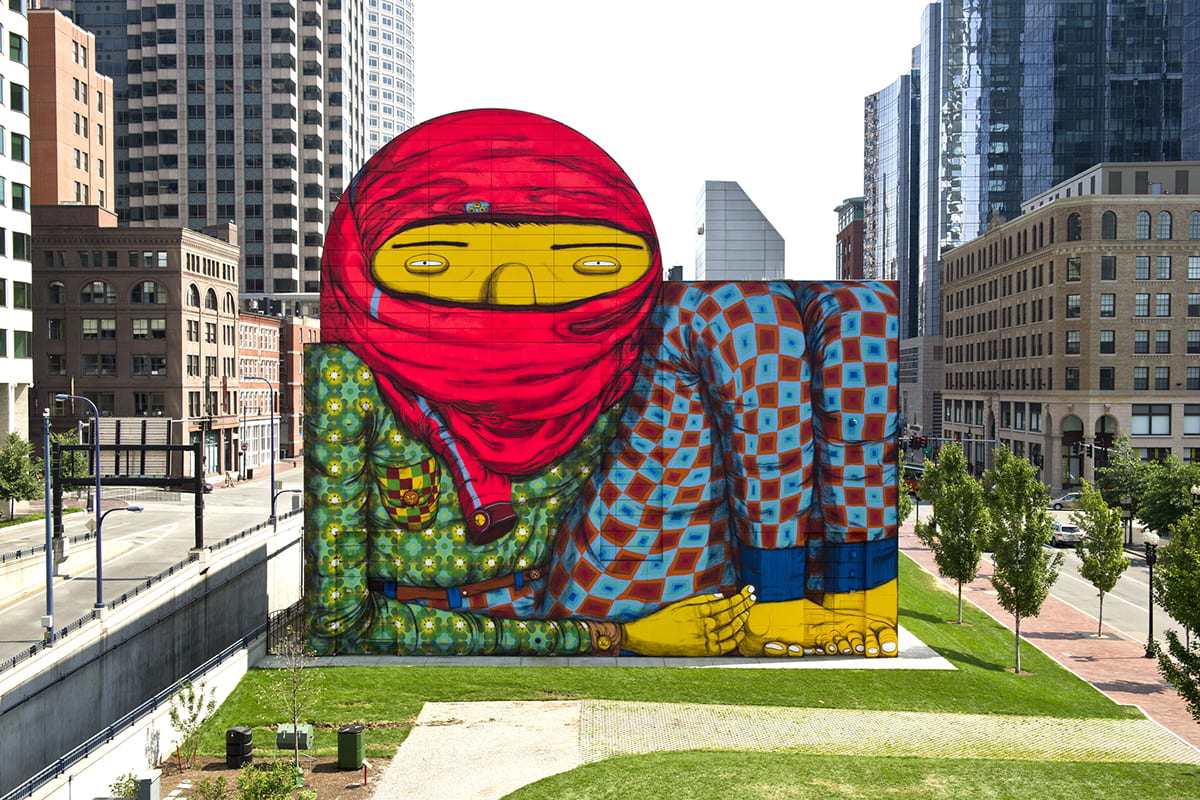
Location: Dewey Square Park in Boston, Massachusetts
Created by the twin duo Otavio and Gustavo Pandolfo from Brazil, The Giant of Boston was a temporary piece of street art made for an exhibition for the Institute of Contemporary Art, Boston. This massive graffiti work occupied 70 square feet and depicted a large yellow character in vibrant colors as he seems to be squeezing himself between the buildings surrounding him. The Pandolfo brothers, known as Os Gemeos, masterfully account for the curves in their unconventional canvas, and although it did spark some controversy, the piece was incredibly popular.
2. Etnias (Ethnicities), Eduardo Kobra, 2016
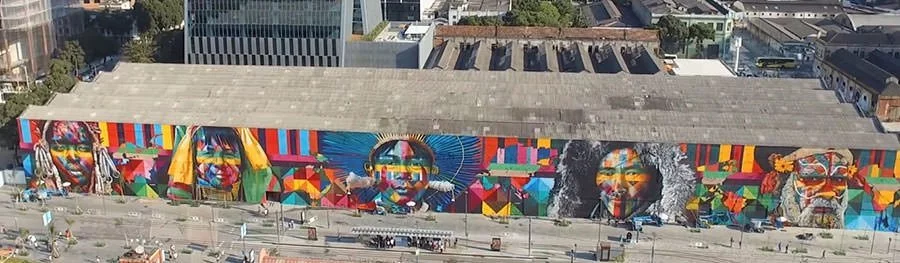
Location: Port District in Rio de Janeiro, Brazil
Using his signature technique of squares and triangles, world-renowned graffiti artist Eduardo Kobra created Etnias for the 2016 Rio Olympics. This impressive feat took two months and covers an area of nearly 30,000 square feet. In fact, it broke the Guinness World Record for the world’s largest graffiti art. Etnias depicts five faces from the five continents to spread the message of all being one. It included the faces of the Huli people from New Guinea, the Mursi people of Ethiopia, the Kayin people of Thailand, the Supi people from Europe, and the Tapajos people from the Americas.
3. The Purple Shall Govern, Shepard Fairey, 2014
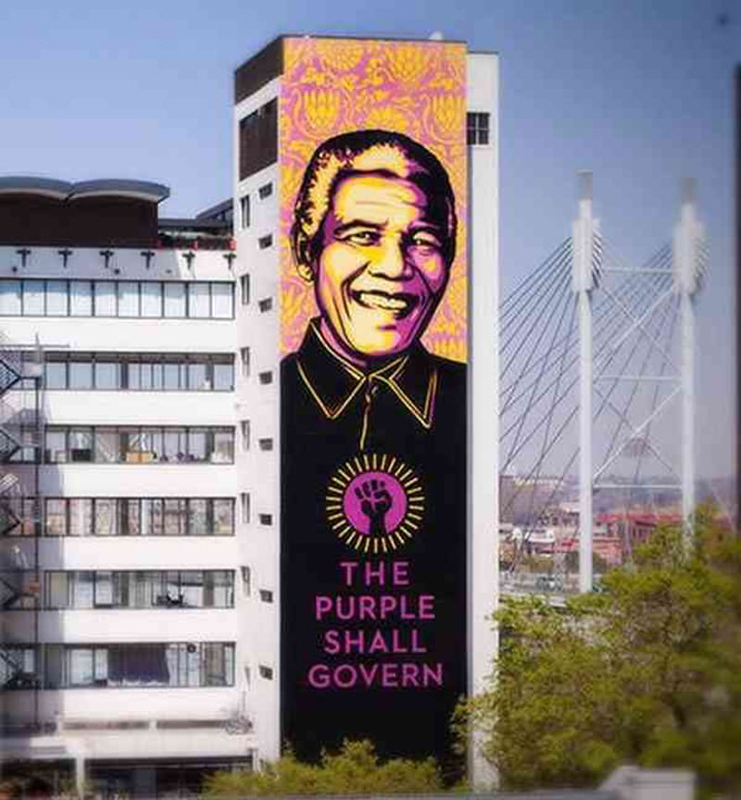
Location: Juta Street in Braamfontein, Johannesburg, South Africa
This iconic graffiti art by Shepard Fairey was created to remember the 25th anniversary of what would later be called the Purple Rain Protest for the anti-apartheid movement in South Africa. The protest got its name after police officers sprayed the protesters with water dyed purple so they could be identified later. Standing ten stories high and covering more than 2,000 square feet, this piece overlooks the Nelson Mandela Bridge.
4. Hands, Pavlos Tsakonas, 2011
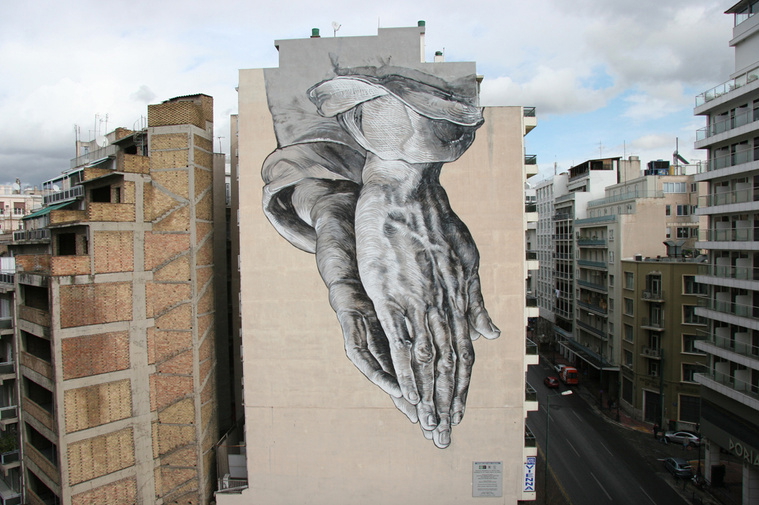
Location: Pireaus St., Athens
Inspired by Albrecht Dürer‘s Praying Hands (1508), the Greek artist Pavlos Tsakonas created this mural in 2011, near the square of Omonoia at the center of Athens, Greece. The mural quickly became a favorite of the public not only because of its impressive nature but also its symbolism, as amid the Greek economic crisis, it was thought to reflect public sentiment. Depending on who you ask, it’s either just praying hands or the hands of god praying to humanity.
5. Robbo Incorporated, King Robbo, 1985
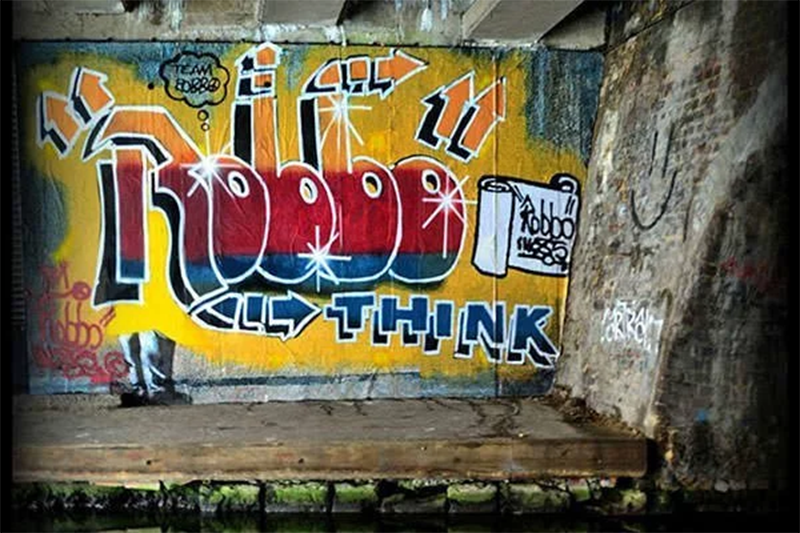
Location: Regent’s Canal in Camden, London, England
John Robertson, known as King Robbo, was a British graffiti artist. In 1985, he created Robbo Incorporated next to Regent’s Canal just underneath the London Transportation Police Headquarters. It became the oldest piece of graffiti in London since all his other work was removed by authorities, except for this one, which was only accessible by water. Interestingly, Banksy, another British graffiti artist, painted over much of King Robbo’s art, which began what was known as a graffiti war. It was only after Robertson suffered a fatal head injury that Banksy ceased fire.
6. Facebook Murals, David Choe, 2005
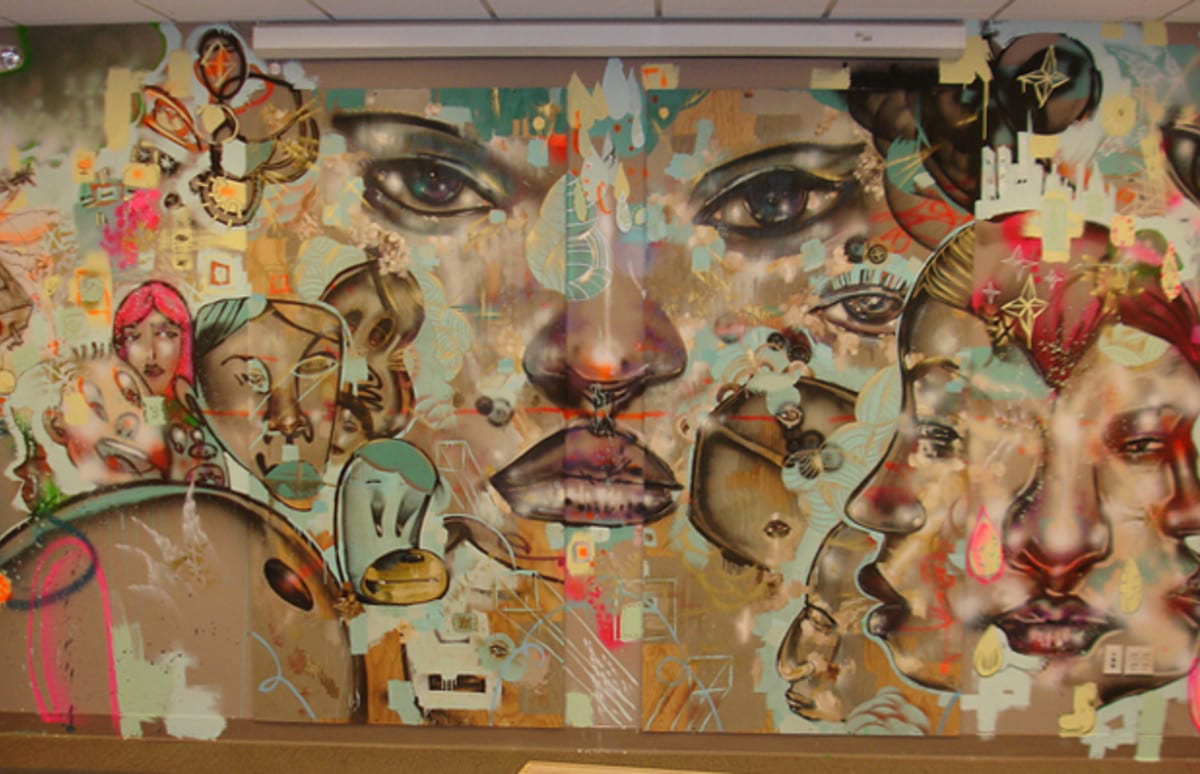
Location: Facebook Headquarters in Palo Alto, California
Sean Parker, the original Facebook president, was a huge fan of David Choe’s graffiti art and asked him to paint a mural at Facebook’s first offices in Silicon Valley. Choe obliged and created a piece that was rather graphic and sexual; all normal themes for the artist. Parker offered Choe two payment options. Either $60,000 or the equivalent in Facebook stock. Although Choe wasn’t convinced that Facebook would be a hit at the time, now almost 15 years ago, it’s lucky that he took the stocks since now they’d be worth well over $200 million. Later, Mark Zuckerberg asked Choe to paint the Facebook headquarters again once they were moved, but using more subtle themes.
7. The Lennon Wall, Various Artists, 1980 (Ongoing)
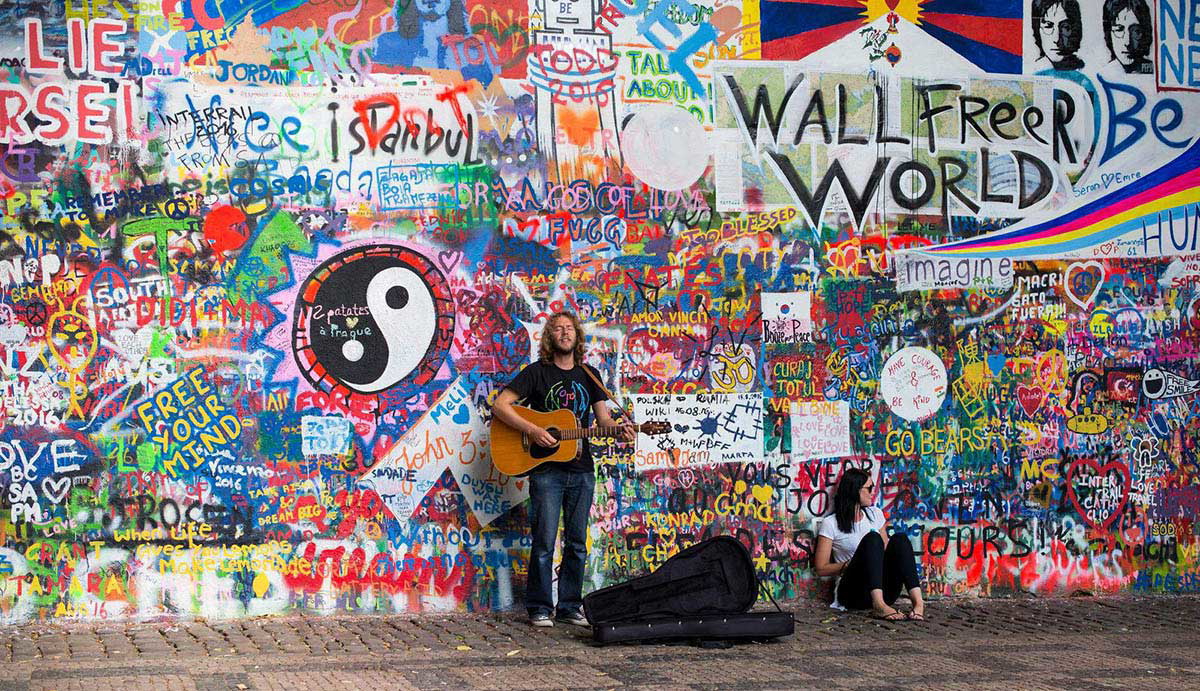
Location: Velkopřevorské Square, Prague, Czechia
While the Lennon Wall has been decorated with anti-establishment messages since the 1960s, it took on a strong cultural meaning after the assassination of Beatles singer John Lennon in 1980. After an initial image of John Lennon was painted on the wall, it became a mural wall dedicated to the singer, a Western symbol of liberation, creativity, and modernity. The wall has since been decorated with numerous political and peaceful Beatles-themed messages and artworks. Police have tried to whitewash and cover the artwork on the Lennon Wall, but artists continue drawing political graffiti messages.
8. Tuttomondo, Keith Haring, 1989
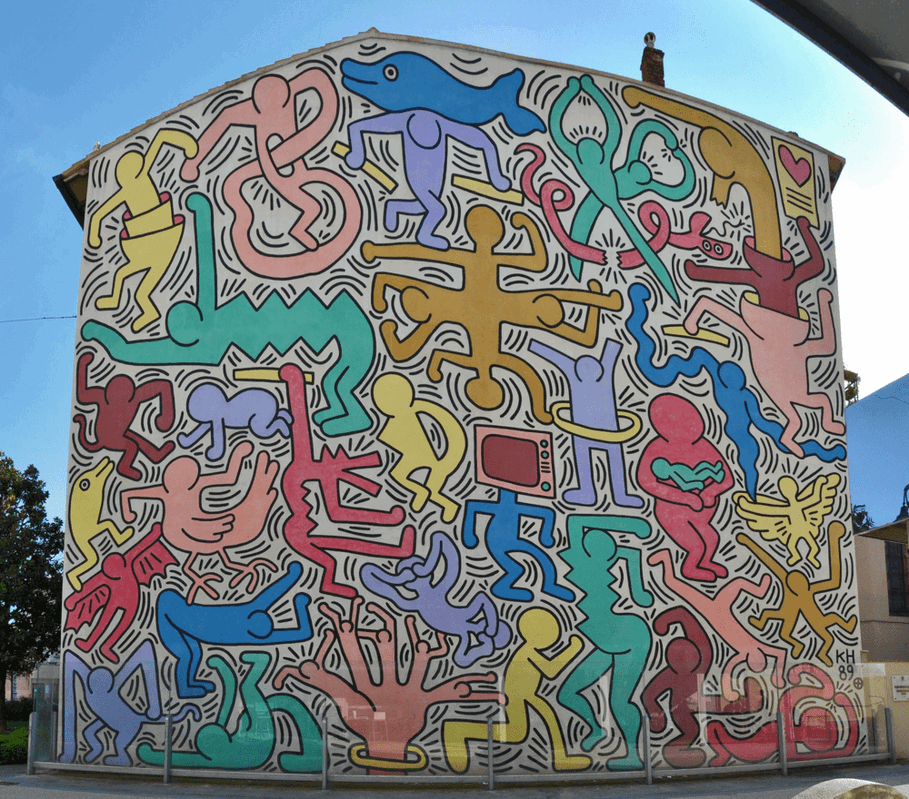
Location: Church of Sant’Antonio Abate in Pisa, Italy
Tuttomondo, which means “all world,” features the iconic figures prominent in much of Keith Haring’s work. Haring met a friend in New York from Pisa who invited him to the city where this mural was created. The figures are intertwined and connected to symbolize unity and world peace. It is the largest mural in Europe, measuring about 180 square meters, and was the last public work Keith Haring would create as he passed away a year later in 1990.
9. My God, Help Me to Survive This Deadly Love, Dmitri Vrubel, 1990
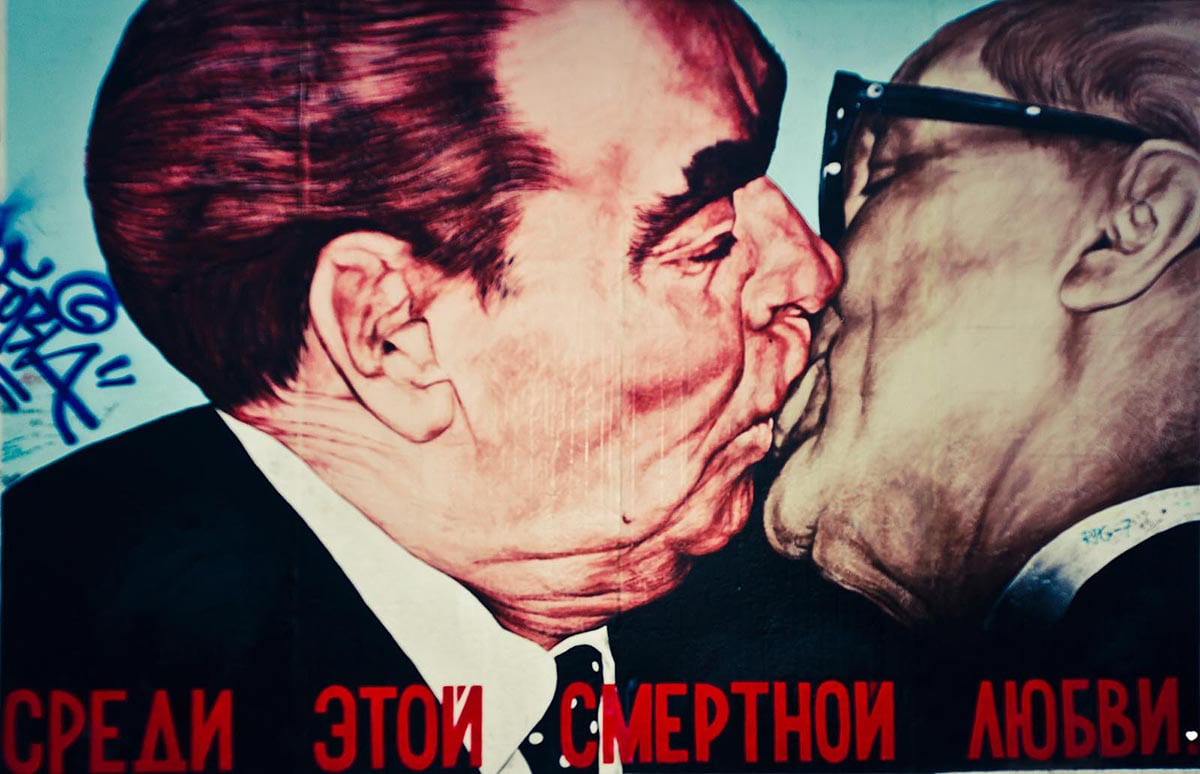
Location: Berlin Wall in Berlin, Germany
In the 1980s, the Berlin Wall that separated East and West Germany was a popular spot for graffiti artists to present their work. Not only was this piece, also known as Fraternal Kiss, one of the most famous works to ever hit the wall, but it’s also one of the most famous pieces of graffiti art of all time. It depicts an embrace between communist leaders Leonid Brezhnev and Erich Honecker, although you might recognize the recent remake called Make Everything Great Again featuring Donald Trump kissing Vladimir Putin.
10. Flower Thrower, Banksy, 2003
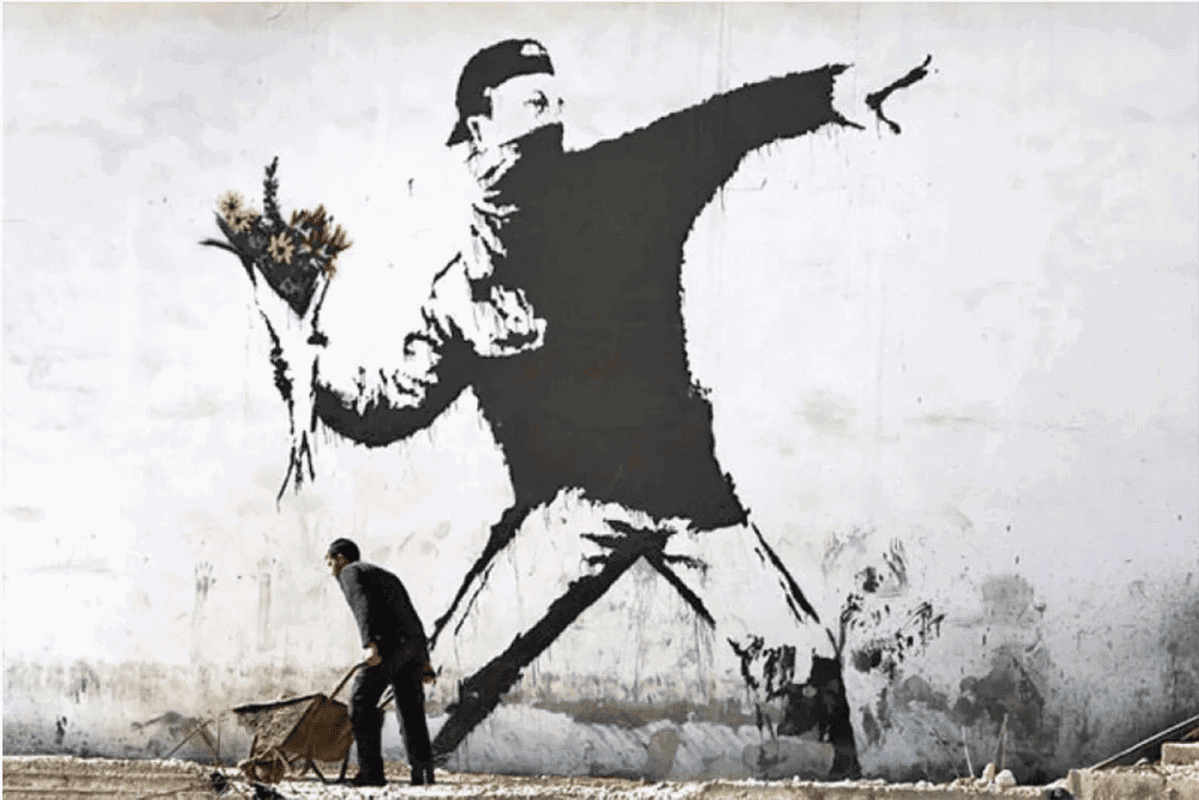
Location: Jerusalem, Israel
This black-and-white stencil graffiti by Banksy (except for the flowers) conveys a powerful message. Located in Jerusalem, an area riddled with war, the piece depicts a rioter poised to throw a bouquet of flowers instead of a bomb. The image is so popular that it’s been reproduced on T-shirts and as prints, and was featured in the 2005 compilation book of Banksy’s work called Banksy Wall and Piece.
11. Crack is Wack, Keith Haring, 1986
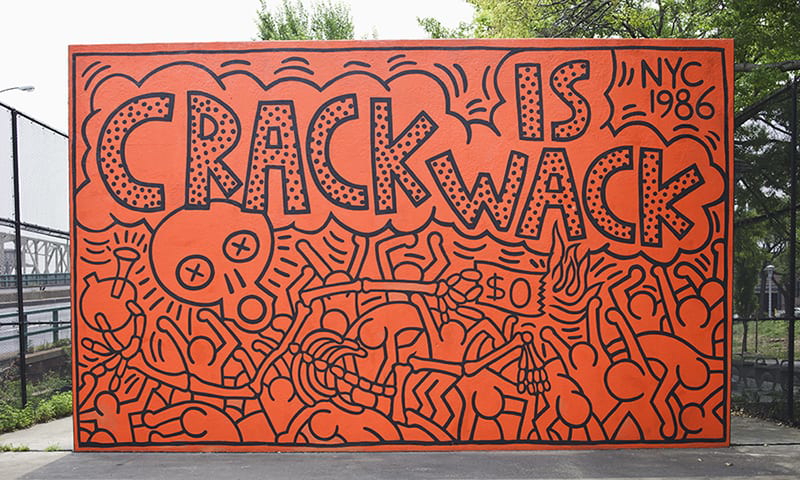
Location: East 128th Street in New York, New York
Here, we’re revisiting Haring with his best-known graffiti art. Crack cocaine was a huge problem in the New York City area in the mid-1980s, and Haring experienced the pain of addiction through his friend Benny, who was using the drug heavily. It was painted near Harlem River Drive, but he was arrested because he didn’t have permission. But Haring was a popular artist at the time, and the mural itself was all over TV – Ronald Reagan’s “War on Drugs” campaign was in full swing – and so when people found out he was in jail, they rallied behind him. Haring was released with a $100 fine. Crack is Wack, known for its graffiti letters, was vandalized with pro-drug messaging, and so eventually, the city allowed Haring to recreate the mural with its original purpose.
12. Balloon Girl, Banksy, 2002
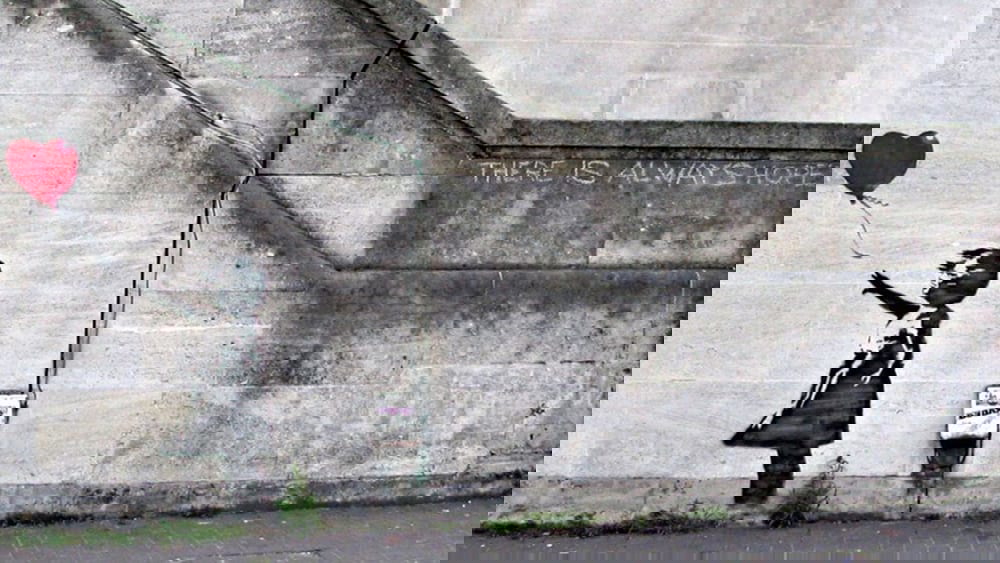
Location: Shoreditch, London, England
Last but not least, we have another piece of Banksy graffiti art. Banksy is arguably the most famous graffiti artist of all time, and he’s broken more barriers for the art form than anyone else has. His most famous work is Balloon Girl. It shows a young girl with her hair and dress blowing forward, reaching for a heart-shaped balloon that’s being blown away. In 2014, the mural was removed from the East London shop where it was created and sold for £500,000. In 2015, a print of the image sold for £56,250. And in 2017, a poll showed that it was the United Kingdom’s favorite artwork.