
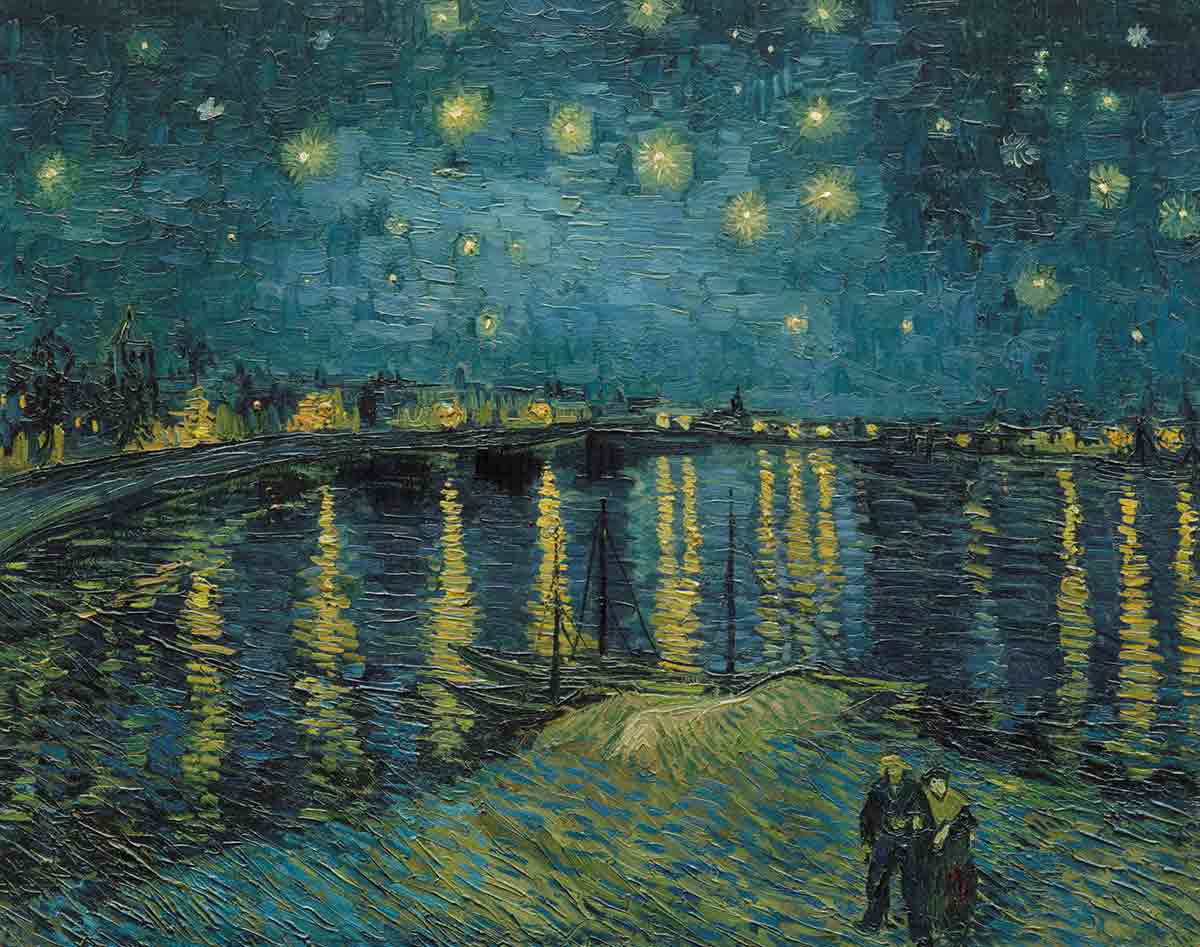
Starry Night Over the Rhône was painted in Arles in September 1888. It portrays a view of the river Rhône at night under a deep blue starry sky, with two figures in the foreground and the gleaming city lights on the horizon. Van Gogh’s Starry Night Over the Rhône was painted at night under the light of a gas lamp, which is why it appears to envelop the viewer into the cobalt sky and capture the essence of the Provençal night.
Van Gogh’s “Starry Night Over the Rhone”: The Night Effect
Van Gogh moved to Arles in the south of France in 1888. He wanted to paint in the light of the countryside and leave the hustle and bustle of city life in Paris behind. In Arles, he was enraptured by the extraordinary light of the sun and painted many works dedicated to capturing the essence of Provençal sunlight. But his fascination was not limited to the light of the sun. Van Gogh had expressed his wish to paint night scenes in multiple letters that he wrote from Arles. He even considered the night to be a better subject to paint because of the variety of colors it offered.
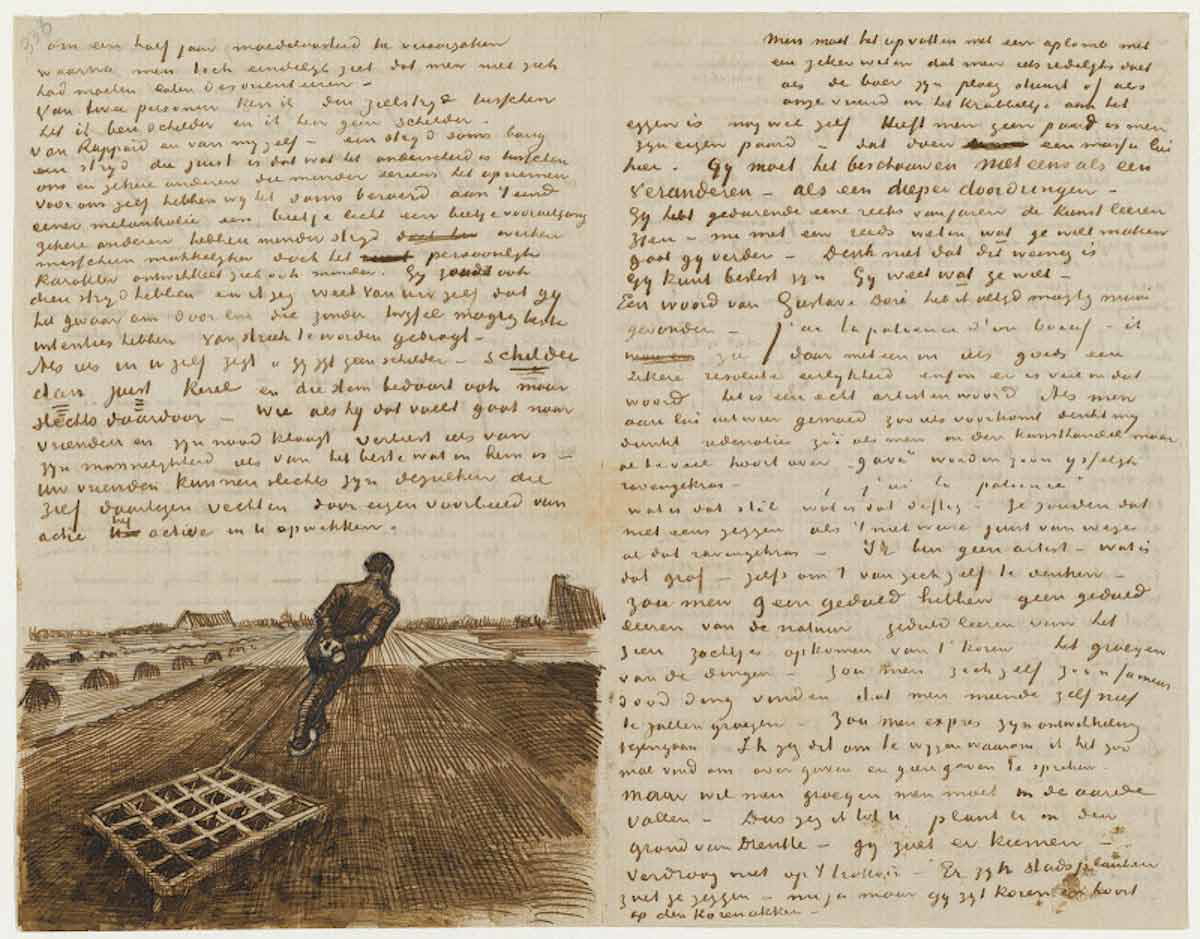
In a letter from September 1888 to his sister Willemein, he wrote, “I definitely want to paint a starry sky now. It often seems to me that the night is even more richly colored than the day, colored in the most intense violets, blues and greens.” He wrote something similar to Theo around the same time: “It often seems to me that the night is much more alive and richly colored than the day.”
Starry Night Over the Rhône seems to be a materialization of Van Gogh’s creative desires. This painting, along with Irises that he painted in 1889 during his stay in Saint-Rémy-de-Provence, was exhibited in the 1889 exhibition of Société des Artistes Indépendants, which was formed as a response to the Salon d’Automne to give a platform to independent artists who deviated from the traditional norms of painting. Van Gogh left the decision to display his works up to Theo and suggested the inclusion of the scene on the Rhône in the exhibition as “that might give others the idea of doing night effects better than I do.” When the exhibition opened, Theo informed Van Gogh that, due to the size of the room, the night scene was “badly placed,” but gave a positive response to the field of irises, describing it as a “fine study, full of air and life.”
Capturing the Provençal Night
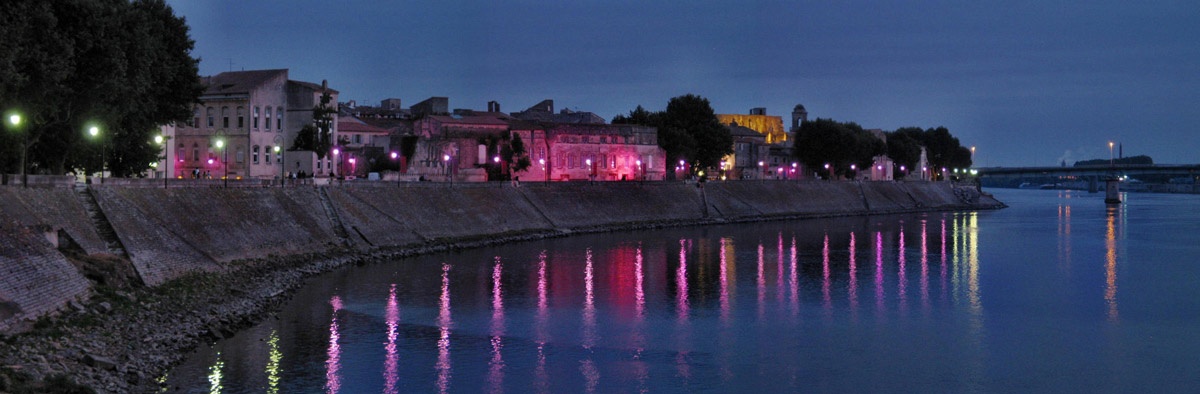
Despite seeming like a dream-like scene, Starry Night Over the Rhône depicts a real place in Arles. The Rhône is a major river that emerges from the Alps and runs through Switzerland and France. In Arles, it splits into two and eventually merges into the Mediterranean Sea. Van Gogh rented four rooms in a house on Place Lamartine in Arles, two on each floor. This came to be known as his Yellow House. It is also where Paul Gauguin stayed with Van Gogh during their short cohabitation in 1888. This house, which was unfortunately destroyed in a bombing in 1944, was only a short walk away from the bank of the Rhône. The river would thus have often been visited by Van Gogh, giving him the opportunity to familiarize himself and carefully study the area and color effects before he painted Starry Night Over the Rhône.
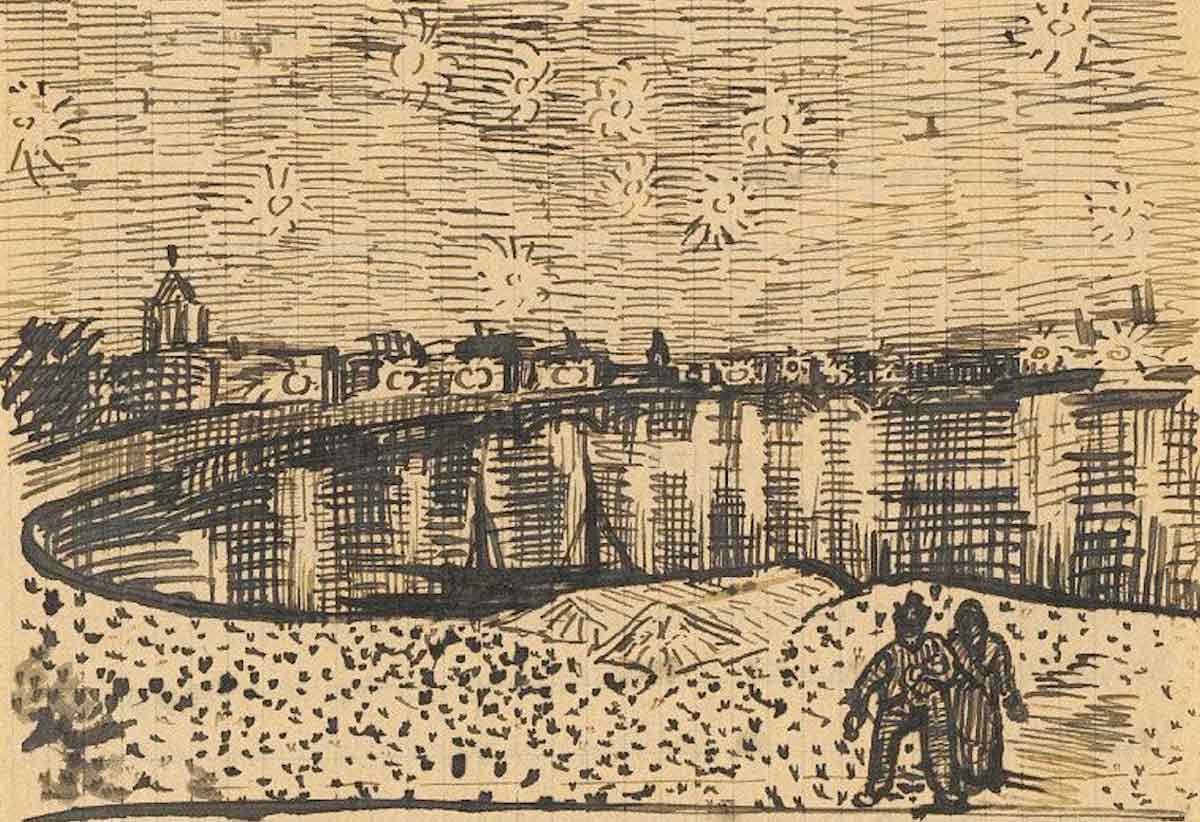
Van Gogh first described this painting in a letter to Theo, focusing on the different colors he used to achieve the night effect: “The sky is green-blue, the water is royal blue, the areas of land are mauve. The town is blue and violet. The gaslight is yellow, and its reflections are red gold and go right down to green bronze.” Starry Night Over the Rhône also depicts the Great Bear or the Ursa Major constellation. Van Gogh painted the starlight with a paler yellow to distinguish it from the gaslight illuminating the town on the horizon, which has more of a gold hue. He also included a detailed sketch of the painting for his artist friend Eugène Boch that depicts the scene with the same brilliance through the use of lines instead of color.
The Colors of the Night
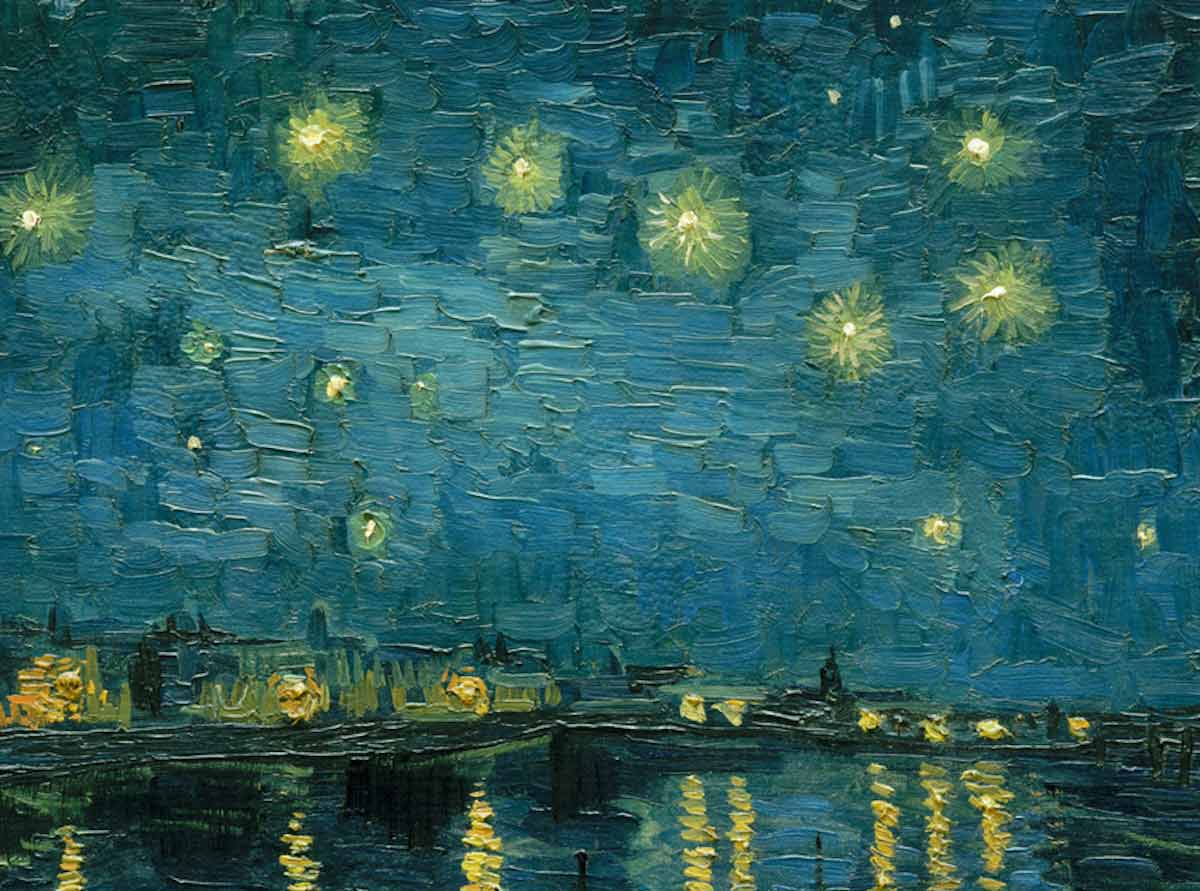
Despite being a night scene, Starry Night Over the Rhône creates a harmony of a myriad of colors that are not limited to dark blues and black. This painting represents Van Gogh’s views on creating night paintings. He clearly stated in a letter that a nocturnal scene is not as simple as “white spots on blue-black” and needs to include a wide range of colors to truly depict the shades of the night. Moreover, Van Gogh preferred to paint night scenes while being outside at night with the subject in front of him, instead of painting in a studio during the day based on previous studies made outside.
Essentially, Starry Night Over the Rhône demonstrated how Van Gogh approached night scenes not through their darkness, but through the light reflected in the dark. He explained how “a mere candle by itself gives us the richest yellows and oranges,” suggesting that the way light is accentuated in the darkness of the night offers a wonderful array of colors to be harnessed on the canvas. The night scene on the Rhône is dominated by blues and punctuated with yellows and ochre. Van Gogh used varying shades of blue, with patches of a lighter shade in the middle of the sky and deep blue around the edges of the canvas.
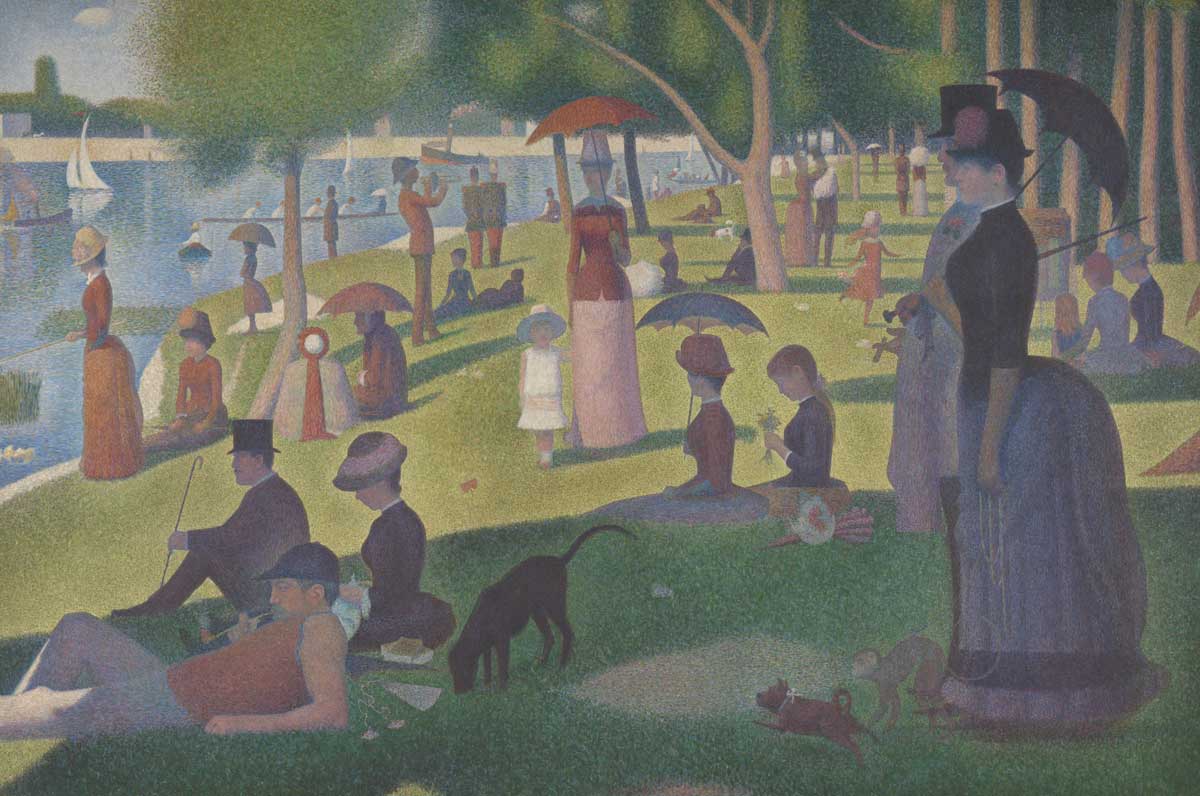
The reflection of the twinkling sky and the gas lights of the town are also created by manipulating the blues, while the bright yellow lights form long lines on the water. On careful observation, layers of colors embedded into the blue become noticeable, such as shades of green in the foreground and violet in the town in the background. Van Gogh also used stippling, which means painting by placing dots and dashes of different colors next to each other to achieve color harmony, in Starry Night Over the Rhône. This technique was pioneered by the French Neo-Impressionist artist Georges Seurat, who contributed to Van Gogh’s development as a colorist.
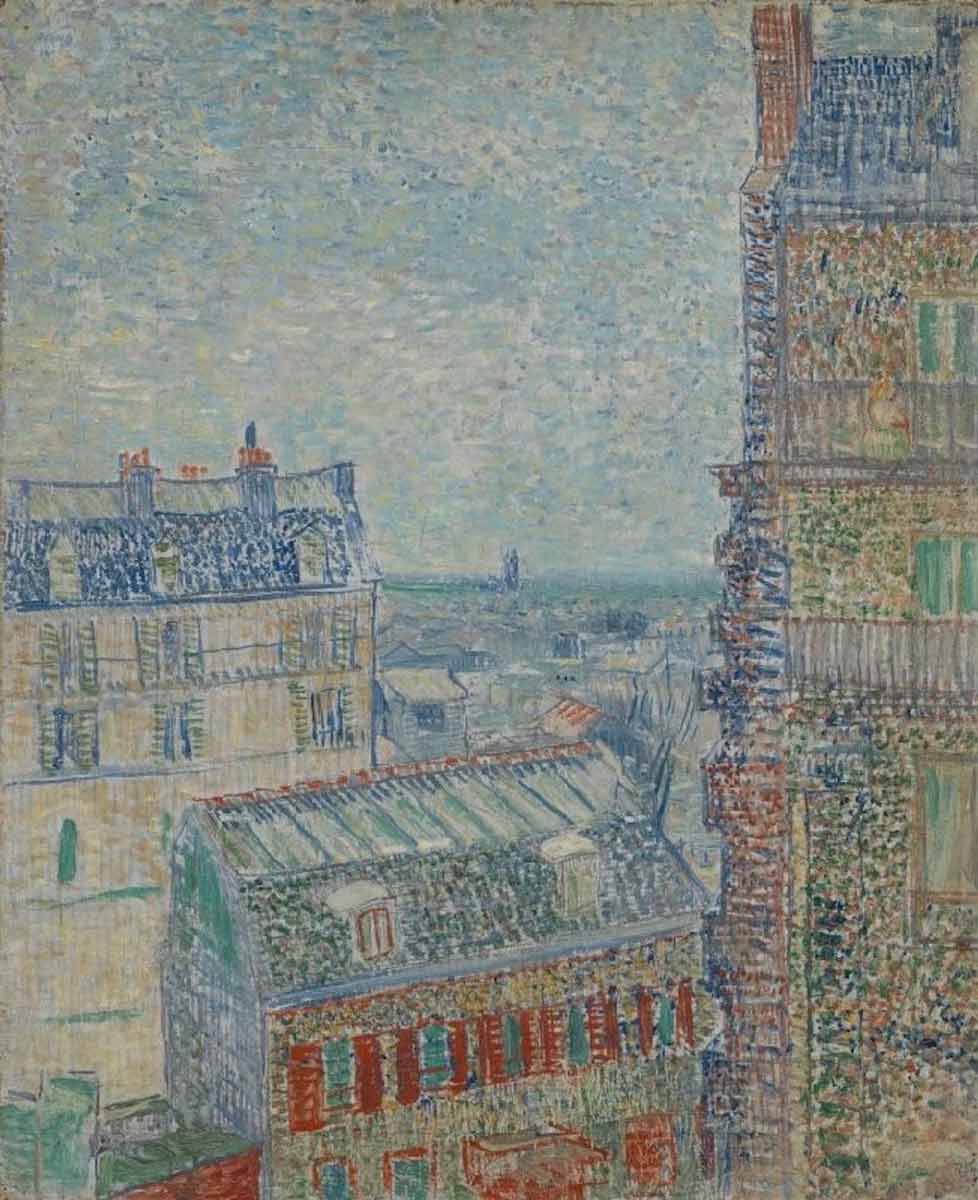
Van Gogh had experimented with Neo-Impressionist stippling in Paris between 1886-87, visible in works such as Red Cabbages and Garlic and View from Theo’s Apartment from 1887. He continued experimenting with it in Arles and implemented it in Starry Night Over the Rhône. The painting shows brushstrokes placed as dashes with thick impasto, making them distinctly visible on the canvas. This use of stippling, along with layering thick paint on the canvas, imparts the painting a specific quality that is unique to Van Gogh; it shows the illusion of movement. This is particularly visible in the brushstrokes on the water representing the reflection of lights, wherein yellow, green, and orange dashes placed next to each other give the impression of the reflections flickering with the water.
A Couple of Van Gogh’s Starry Nights
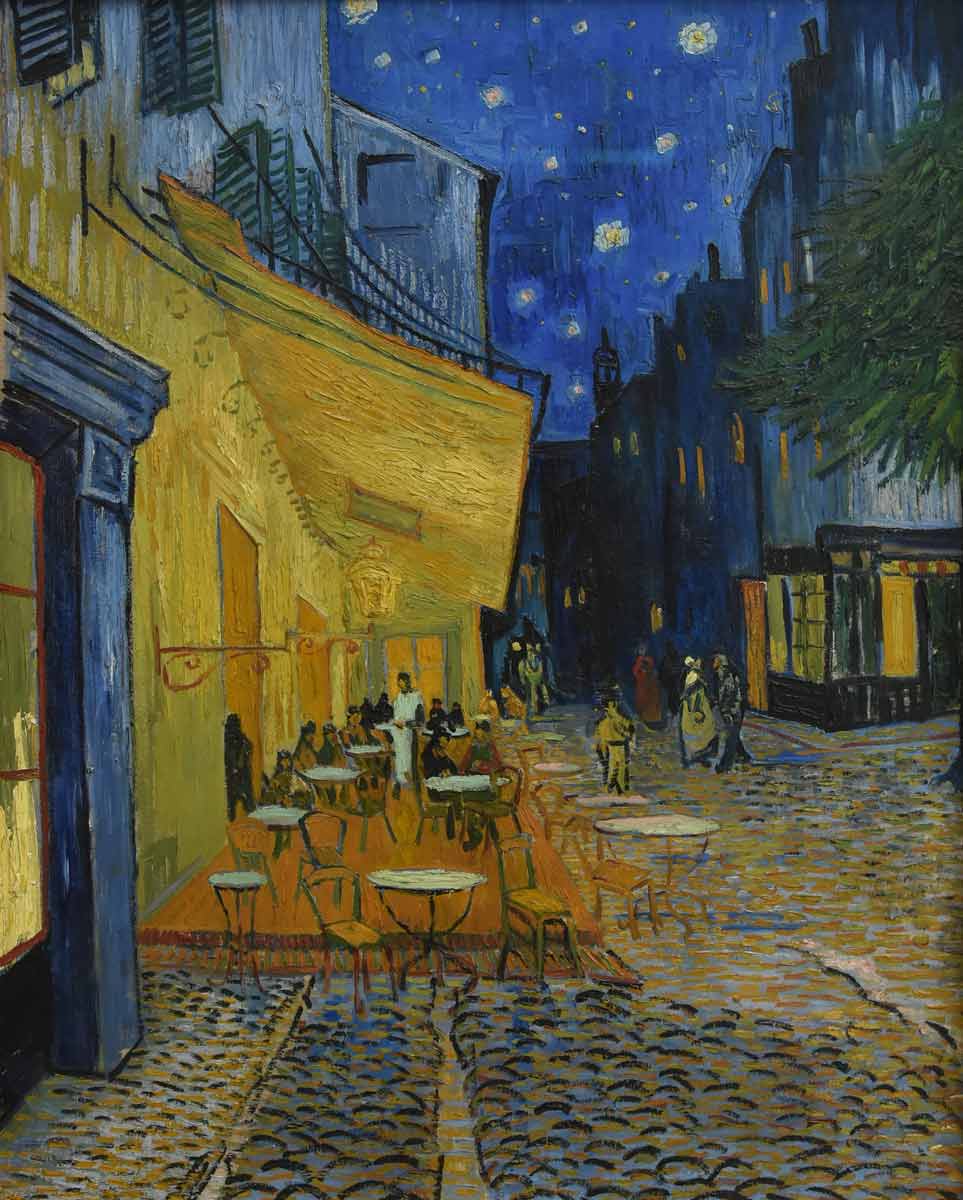
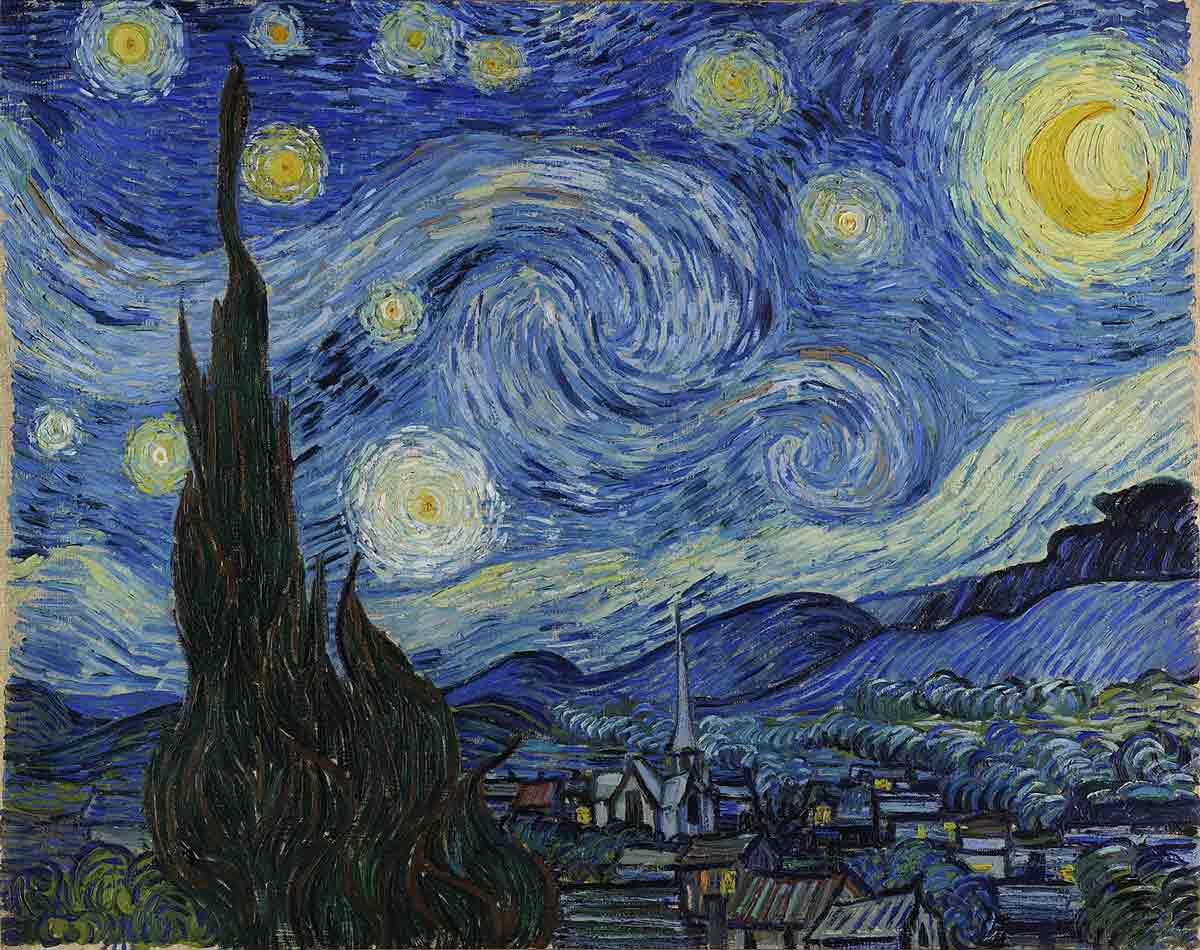
Starry Night Over the Rhône was one of multiple paintings depicting a night scene that Van Gogh painted in Arles. The others included the well-known Starry Night and Café Terrace on the Place du Forum. These paintings, while depicting a night effect with a wide range of colors and powerful lines, have certain differences in terms of their execution. You can observe the evolution of the night sky in these three paintings and how they reflect Van Gogh’s ideas.
Café Terrace on the Place du Forum or Café Terrace at Night was the first in the series of night scenes painted in Arles in 1888. Here, Van Gogh is conservative in depicting the night sky, which is limited to a small portion of the canvas at the top. Still, it is a dynamic night scene accentuated by the lights of the café and the dimly lit windows of the buildings. Describing the colors of this painting in great detail, Van Gogh wrote in a letter, “Now there’s a painting of night without black.” He included shades of green, violet, yellow, and blue to depict a luminous night scene in Arles that became a precursor to the night scene on the Rhône.
In Starry Night Over the Rhône, Van Gogh completely embraced the night. The entire canvas is enveloped by the night sky and its reflection in the water. By choosing a scene on the river, Van Gogh cleverly created a night scene where the depiction of the sky is not limited to the upper corner of the canvas and can take over the entire composition. This is a calm painting that captures the serene atmosphere of the night by the river, away from the town’s gaslight, which remains visible in the background, with a pair of lovers placed at the bottom. This painting was the precursor to the final work with the night sky as its subject, The Starry Night.
The Starry Night came into being when Van Gogh was admitted to the psychiatric institution in Saint-Rémy in 1889. While the scene on the Rhône is serene and marvelous, The Starry Night appears turbulent with the extreme swirling lines of the night sky that command the attention of the viewer. In a way, this painting has a similar dynamic and turbulent effect as potentially Van Gogh’s final work, Wheatfield with Crows, which was painted in Auvers-sur-Oise in 1890.
The Starry Night is also an interesting addition to the series of night effects because Van Gogh subverted his own views on painting nocturnal scenes on the spot at night. This painting was most likely painted indoors from memory with a few imaginative elements, as Van Gogh was confined to his room in the psychiatric institution for most of his stay.
It offers a great contrast to Starry Night Over the Rhône, thanks to its distinct style and creative process. The painting from Saint-Rémy is closer to the ideas Van Gogh learned from Gauguin about abstraction and painting from the imagination, while the Arles painting is very much grounded in a scene observed in reality. Comparing these two works reveals his evolving artistic ideas.
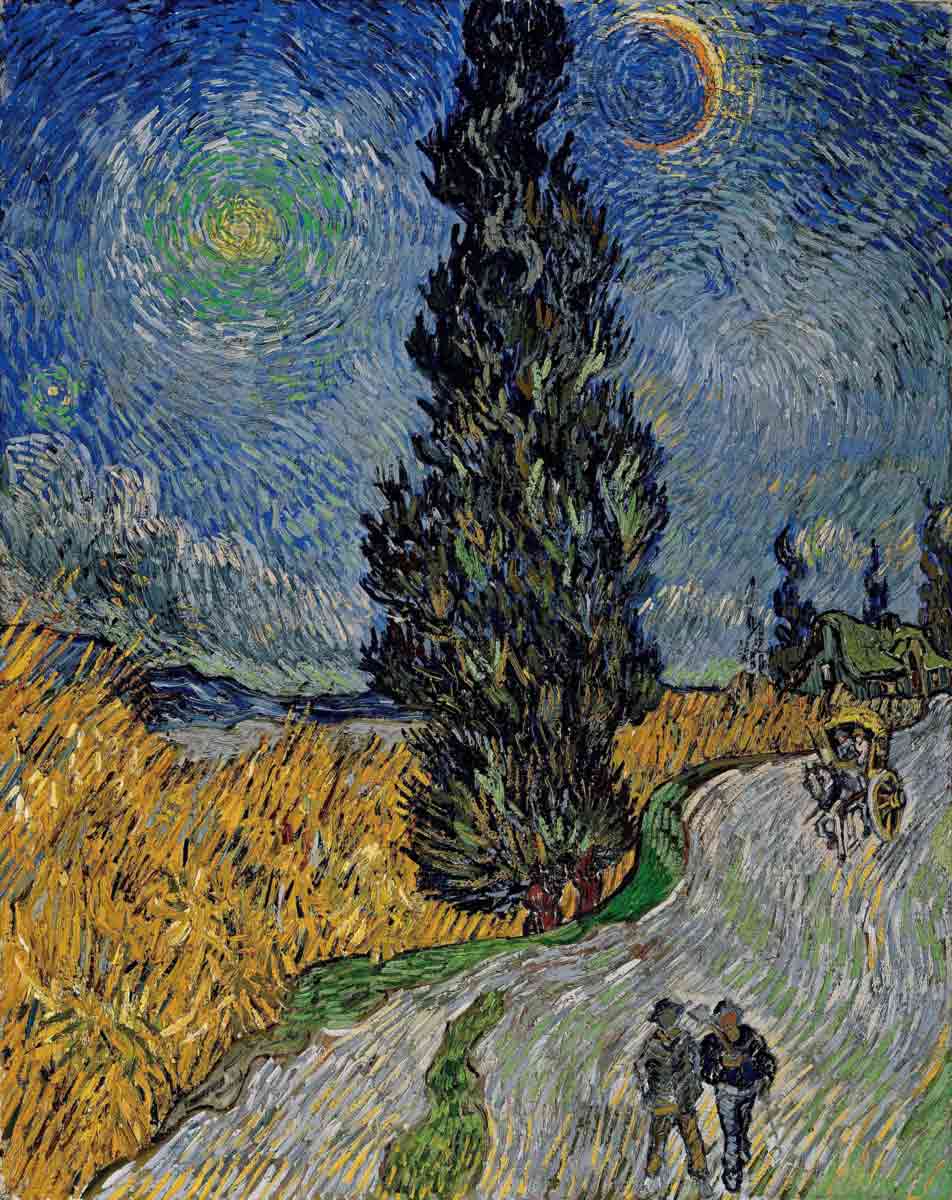
Van Gogh painted another nocturnal scene in Provence right before he left Saint-Rémy in 1890. This piece, titled Country Road in Provence by Night, features a cypress tree under a night sky, with two figures walking in the foreground, similar to Starry Night Over the Rhône. Van Gogh described the painting as “Very romantic if you like, but also ‘Provençal’ I think.” Just like The Starry Night, Country Road in Provence by Night was also probably painted from memory.
Van Gogh considered cypresses characteristic of Provence’s landscape, and this painting may have been created as an ode to the region where he spent almost two years of his life. Unlike the night scene on the Rhône, it is not washed over by the darkness of the night represented by shades of blue. It depicts yellows and greens of the land and a moon giving away a dim light, suggesting a much brighter landscape than Starry Night Over the Rhône.
Van Gogh’s Starry Night Over the Rhône represents the way he perceived the night and his development as an artist that allowed him to present such a luminous nocturnal scene. It is one of the few paintings from Arles that does not center on sunlight, instead focusing on the quietness of the countryside at night. With its serene atmosphere, Van Gogh managed to capture the essence of the Provençal night with vivid colors and brushstrokes in a compelling composition.