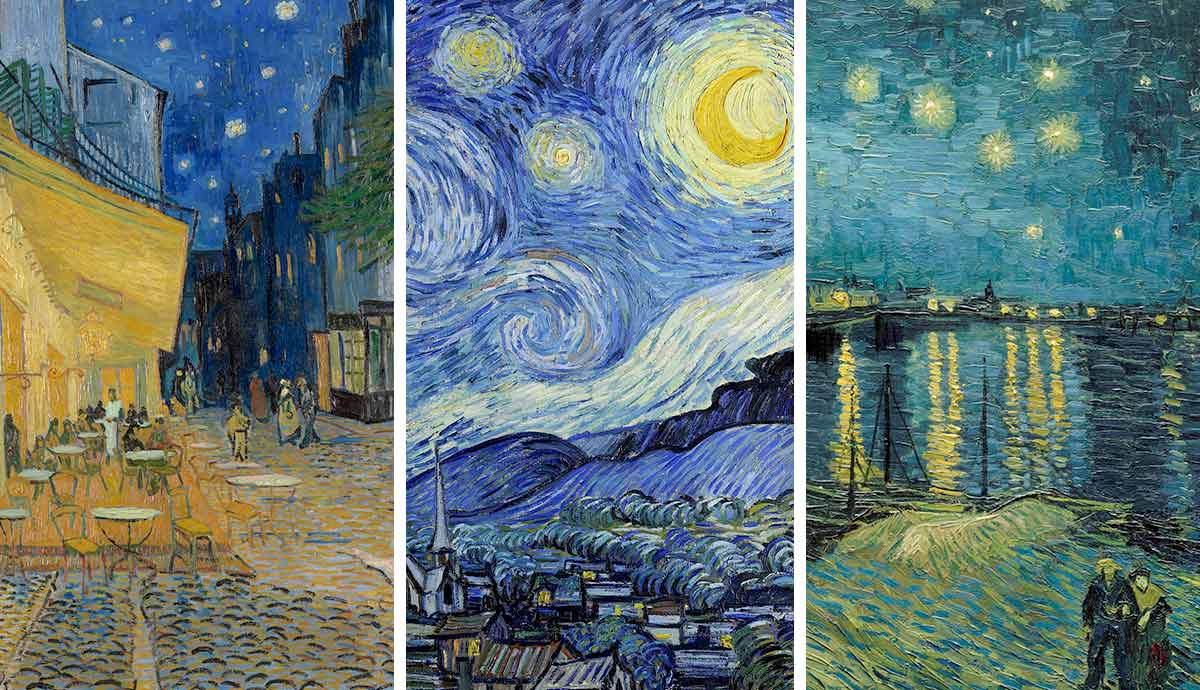

In the summer of 1886, the Dutch artist Vincent van Gogh painted 35 still life paintings portraying flowers in vases, painted in brilliant colors. At that time, the artist was living in Paris in an apartment with his younger brother Theo who was working at the international art dealership Boussod, Valadon & Cie. Van Gogh’s sudden commitment to the subject of floral still lifes marked an important moment in the development of the artist’s style through which he was later able to paint masterpieces such as Starry Night and Almond Blossom.
Van Gogh in Paris: New Discoveries and Financial Trouble
Van Gogh decided to move to Paris in 1886 after spending a few months enrolled at the Royal Academy of Fine Arts in Antwerp, Belgium. He had spent his early development as an artist learning from the tradition of Dutch realist painting, but was aware that new developments in the world of art were burgeoning in Paris. Naturally, he wanted to participate in this dynamic environment and learn the artistic approaches of his contemporaries in order to develop his own style and technique. But more importantly, he wanted to take lessons at the studio of the artist Fernand Cormon. Van Gogh arrived in Paris at the end of February 1886 and soon enrolled in Cormon’s studio, although he only stayed there a few weeks. Nevertheless, his trip to Paris was far from fruitless.
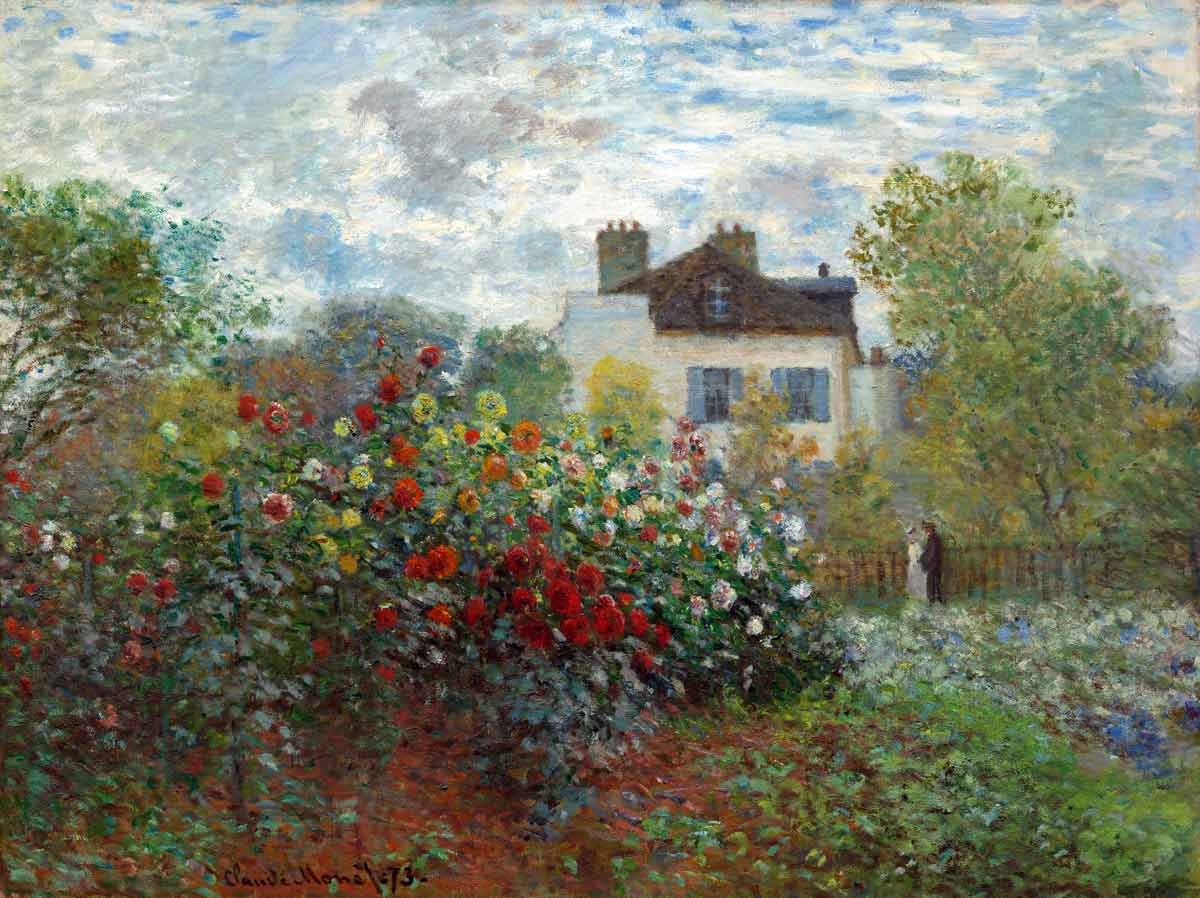
Paris was a major turning point in Van Gogh’s artistic career. Discovering the light, colorful canvases of Impressionist artists such as Claude Monet and Edgar Degas showed him a brand new side of painting, while at the same time forcing him to face the growing reputation of realism as outdated. Not only did he witness avant-garde paintings, but he also became friends with a number of artists, such as Paul Gauguin, Henri Toulouse-Lautrec, Emile Bernard, and Paul Signac. He called this group the Painters of the Petit Boulevard. Each artist had a different theory and style of painting, and Van Gogh learned something from all of them. At the same time, woodblock prints from Japan called ukiyo-e had gained immense popularity in Europe during the 19th century, and the role of these prints in shaping Van Gogh’s style cannot be overstated.
But while the artist was living in the midst of one of the greatest art historical developments in Europe, his financial reality was less glamorous. Sharing the apartment with his brother saved him some money, but the reality was that Van Gogh did not hold a stable job and therefore relied on selling paintings as his source of income. He had hoped that Paris would be a suitable market for his work, but his work was not yet up to date with the modernist taste.
And so Theo took care of the finances, and Vincent focused all his time and energy on painting. He had hoped to develop his skill in figure painting, something that he had worked on both at the Royal Academy in Antwerp and in Cormon’s studio, but models were expensive, and Van Gogh had to look for another way. It was then that the artist turned to painting still lifes of flowers. Flowers were readily available and proved to be incredibly useful subjects for Van Gogh, particularly for his development as a colorist.
Flowers as a Means to Study Color Theory
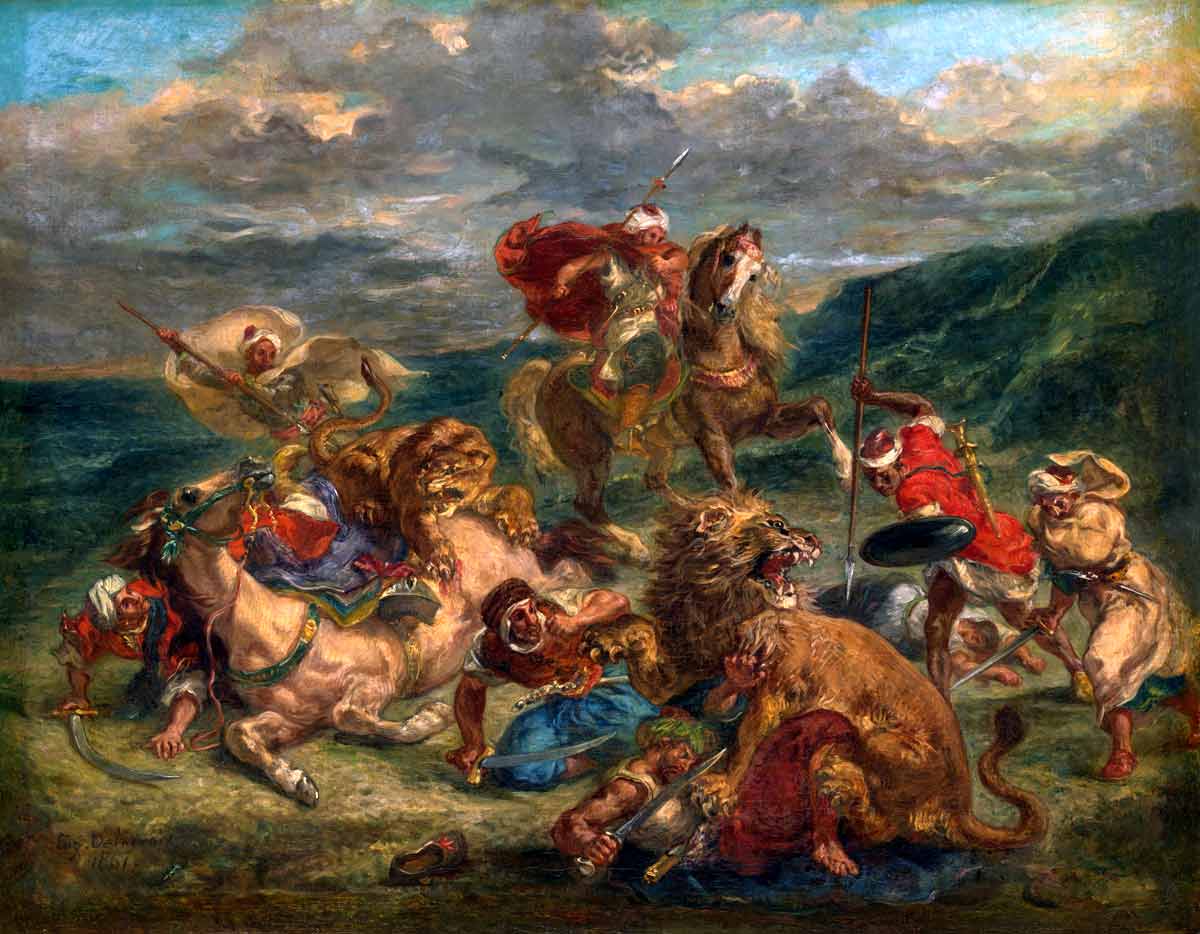
In 1884, Van Gogh read a book by Charles Blanc that laid out a scientific theory of color. The theory proposed the concept of complementary colors: colors that intensify each other when placed together, providing maximum contrast. Blanc included a color wheel in his publication that depicted the complementary colors placed opposite each other: yellow and purple, red and green, and blue and orange. Color theory changed Van Gogh’s approach to color even before he set foot in Paris. “Color expresses something in itself,” he wrote to Theo in 1885, and expressed his admiration for the works of the French Romantic artist Eugène Delacroix who applied color theory in his paintings. Learning about color theory changed Van Gogh’s approach to color in his early days, but it was only in Paris that he could unleash the full potential of this theory by using bright and bold colors.
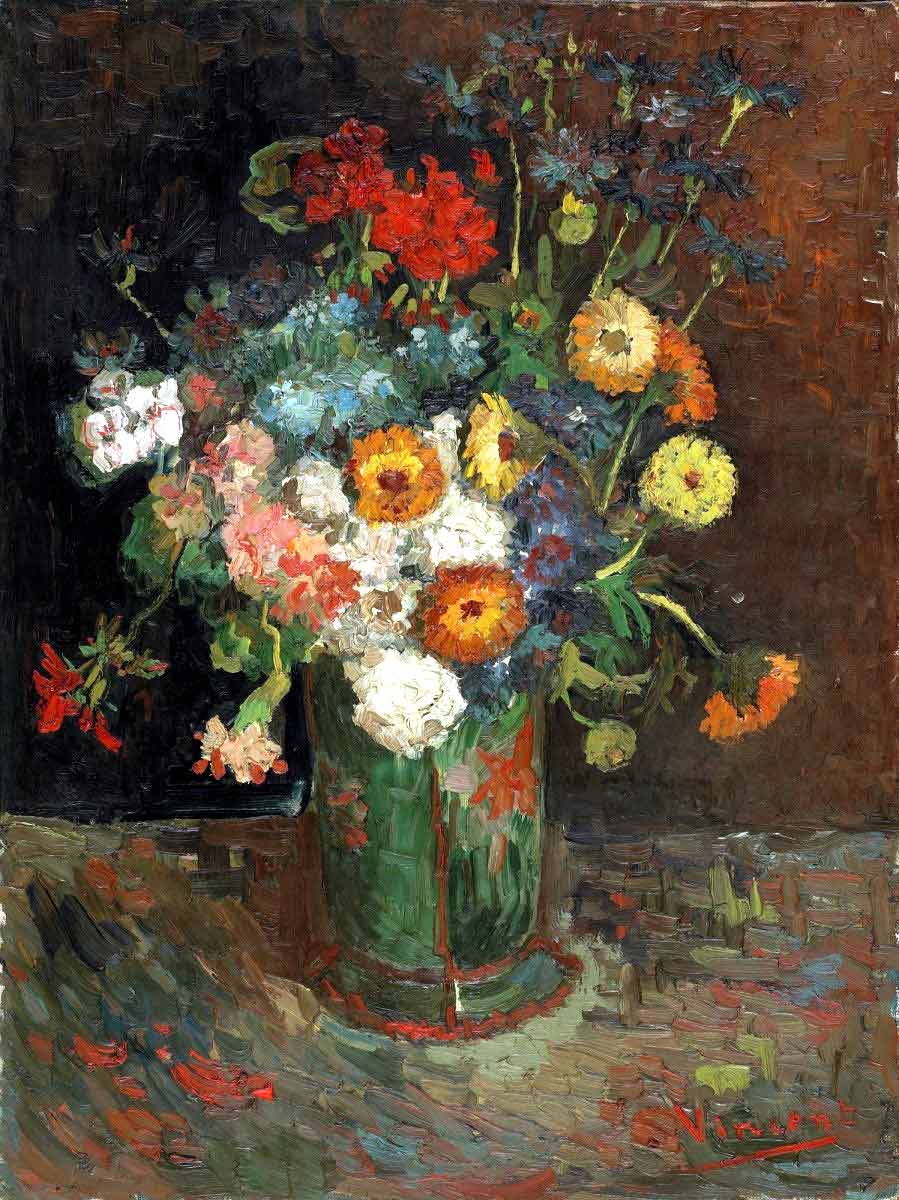
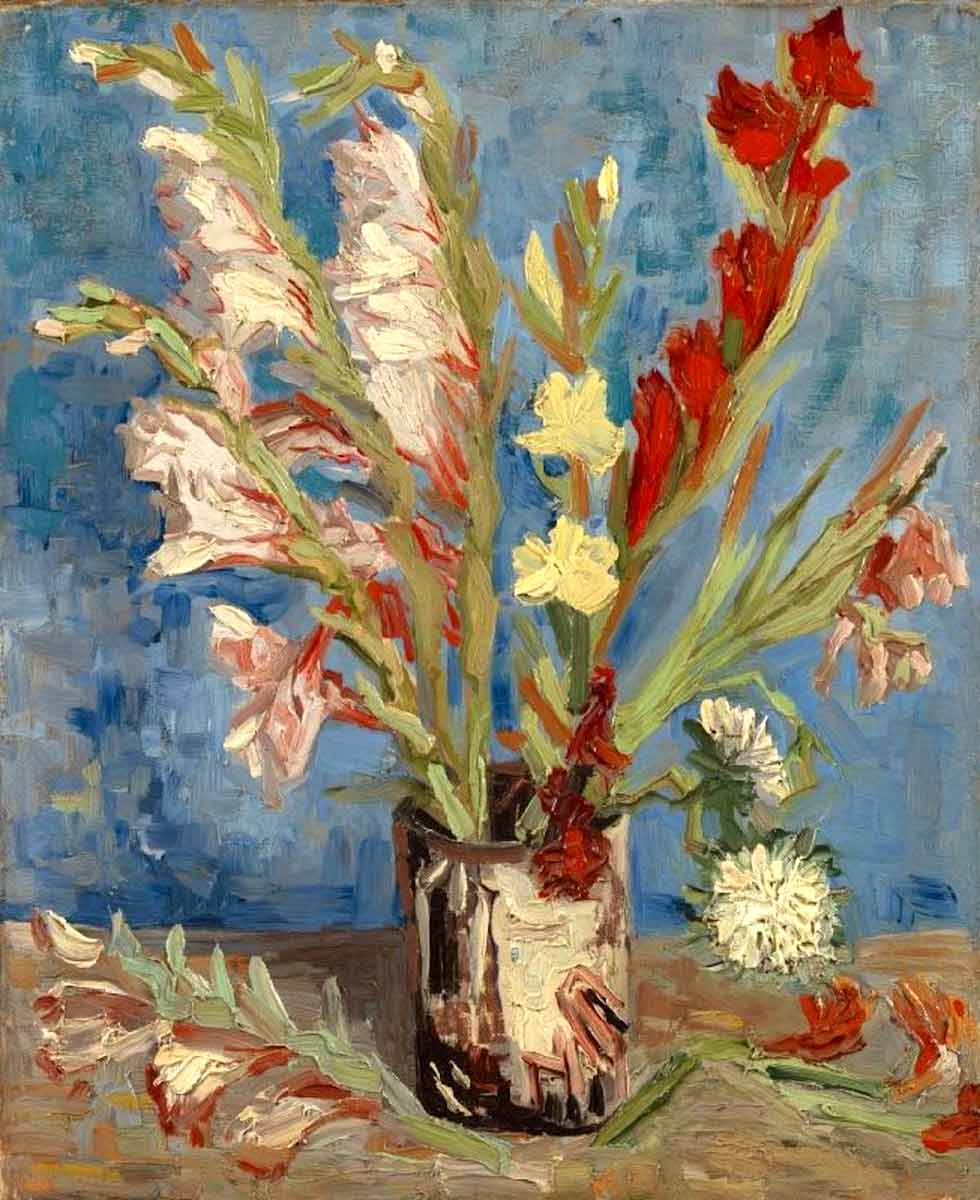
Flower still lifes were a helpful way to practice color theory in Paris. As mentioned above, lacking the money for models, Van Gogh started painting flowers in vases to practice his understanding of color theory. He painted 35 such works, including Vase with Gladioli and Chinese Asters and Vase with Zinnias and Geraniums. Flower still lifes took up a large portion of his summer during 1886, and he took up the project with enthusiasm, as he explained in a letter from October 1886:
“And now for what regards what I myself have been doing, I have lacked money for paying models, else I had entirely given myself to figure painting but I have made a series of color studies in painting simply flowers, red poppies, blue corn flowers and myosotys. White and rose roses, yellow chrysanthemums – seeking oppositions of blue with orange, red and green, yellow and violet, seeking THE BROKEN AND NEUTRAL TONES to harmonise brutal extremes. Trying to render intense COLOR and not a grey harmony.”
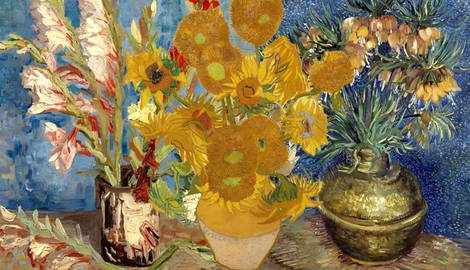
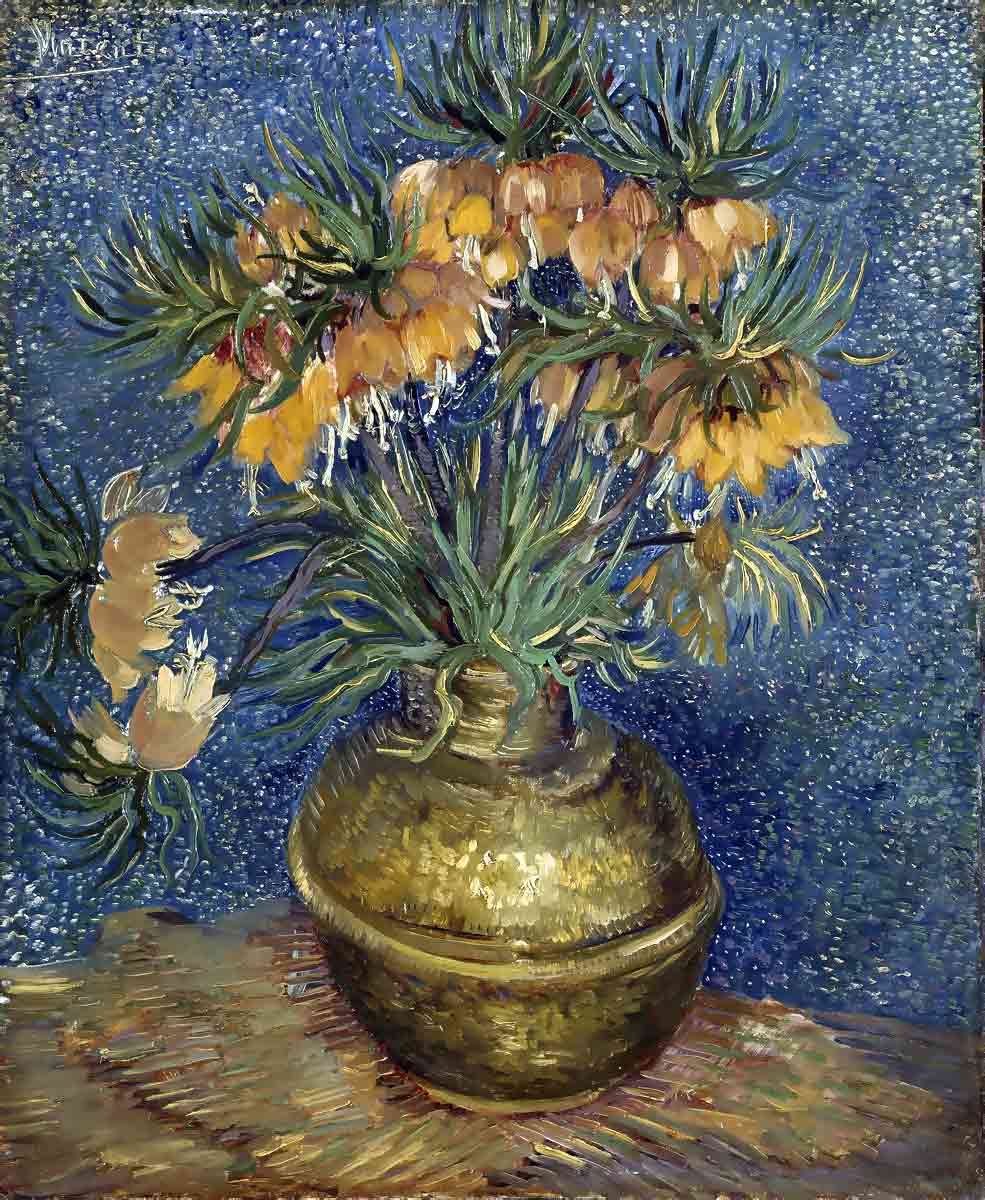
The artist explained his goals with these paintings at length, focusing on harmonizing a set of colors in a composition. Another notable point is that he called these still life paintings of flowers color studies, clearly stating his intentions with these works. These paintings also demonstrate the artist’s interest in different stylistic techniques. For example, the painting Fritillaries in a Copper Vase shows Van Gogh’s experimentation with the Pointillist technique pioneered by the Neo-Impressionist artist Georges Seurat. This style consisted of painting with dots and small dashes, something that Van Gogh implemented primarily in the background of this painting.
Van Gogh would be sent flowers regularly from his acquaintances, and he would paint them almost as soon as they arrived. The genre of floral still lifes offered the opportunity to test a wide range of colors and their interaction with light on the canvas, all the while being cost-effective. This project is today recognized as an important step in the transformation of Van Gogh’s palette from the dark and dull colors of his Dutch period to the bright and intense paintings from his mature years.
Floral Still Lifes, Adolphe Monticelli, and Impasto
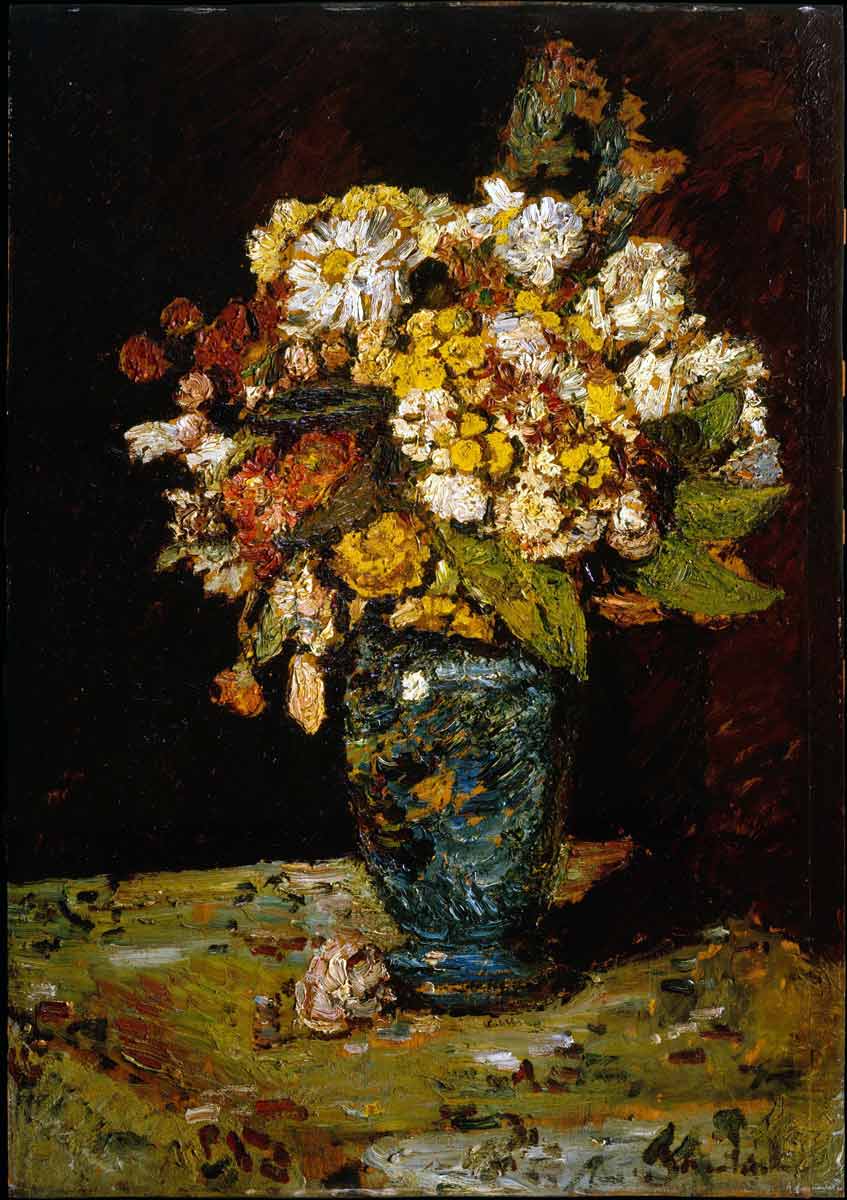
A significant figure who influenced Van Gogh’s style in Paris was the French artist Adolphe Monticelli. Van Gogh witnessed Monticelli’s works in Paris during the summer of 1886 and soon discovered a different way to approach brushwork in his paintings. Monticelli worked with rough and fierce brushstrokes, but more importantly, he applied his paint thickly. Viewing Monticelli’s paintings, such as Flowers in a Blue Vase, resonated deeply with Van Gogh, and his thickly painted color studies of flowers marked the beginning of his experimentation with impasto. This technique is a crucial aspect of Van Gogh’s oeuvre and was never abandoned by the artist. Apart from his bold approach to color, his passionate brushwork featuring thick impasto is what sets Van Gogh apart in the history of European art.
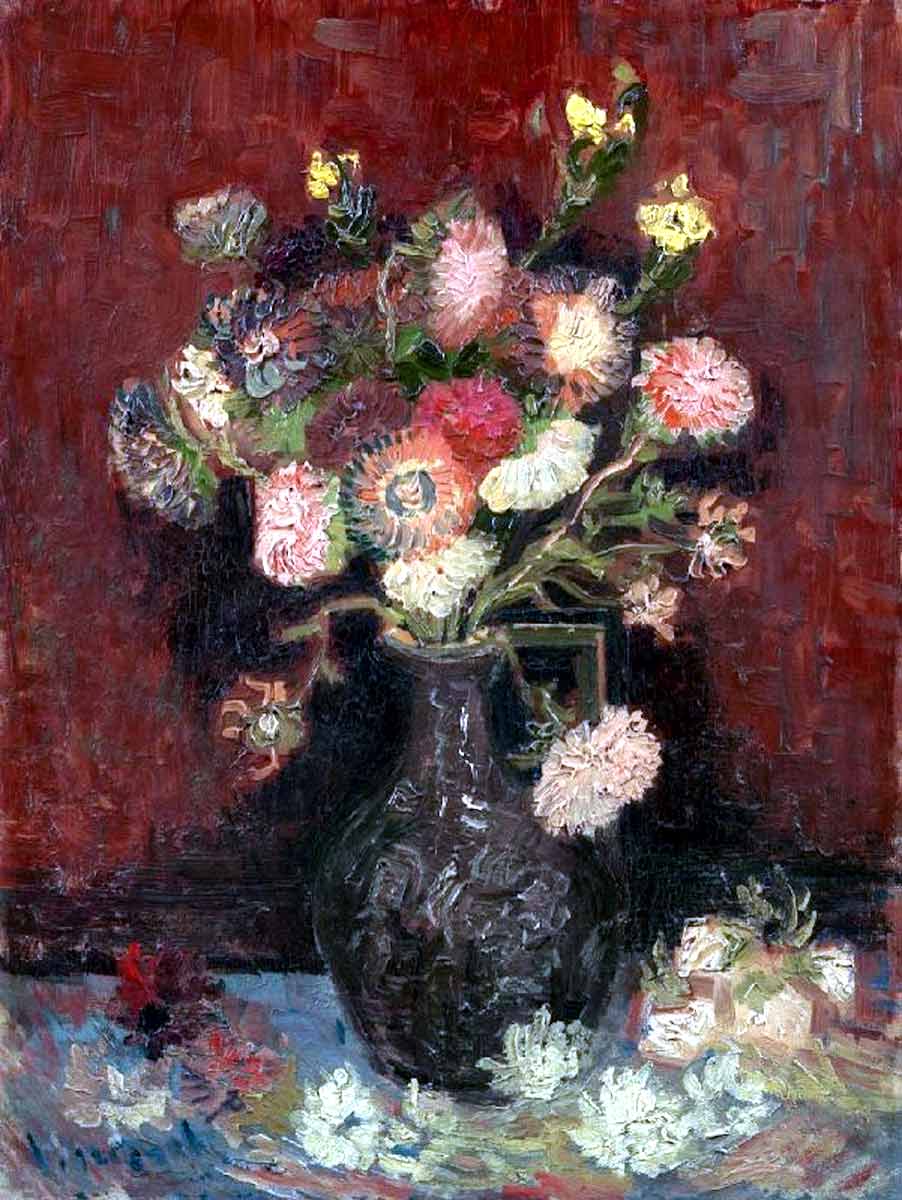
For example, Van Gogh’s Vase with Chinese Asters and Gladioli not only features a wider and lighter palette than works from his Dutch period, but it also shows his impassioned brushstrokes and a generous application of paint. The petals of the flowers are almost three-dimensional, with each individual brushstroke clearly visible. The red background also shows an interesting use of the impasto technique through a basketweave pattern, something that also appears in many of his later still lifes.
The entire painting appears much more dynamic and intense than his works from the previous year, such as The Potato Eaters. The choice of flowers as a subject complemented this newfound stylistic practice as painting flowers required a speedy brush to capture fresh blooms before they wilted. Later in 1888, Van Gogh described his approach to brushwork in a quite straightforward way: “I follow no system of brushwork at all; I hit the canvas with irregular strokes which I leave as they are, impastos, uncovered spots of canvas . . .”
The Commercial Benefit of Paintings of Flowers
Van Gogh also chose to focus on flower still lifes in Paris because of their commercial appeal. This genre was in high demand in the contemporary art market, and many young artists made their living selling still life paintings of flowers. Facing a financial impediment due to the lack of any sales both in Antwerp and Paris, Van Gogh was eager to find buyers for his paintings. This was, however, difficult as the artist was only beginning to understand the taste of the modern market and had not yet discovered a style that was both modernist and unique to him. Flower still lifes appeared as a way out of this issue, but his goals with this project eventually shifted as he discovered the potential of this genre to experiment with color theory and brushwork. Nevertheless, Van Gogh was not able to sell these paintings during his lifetime.
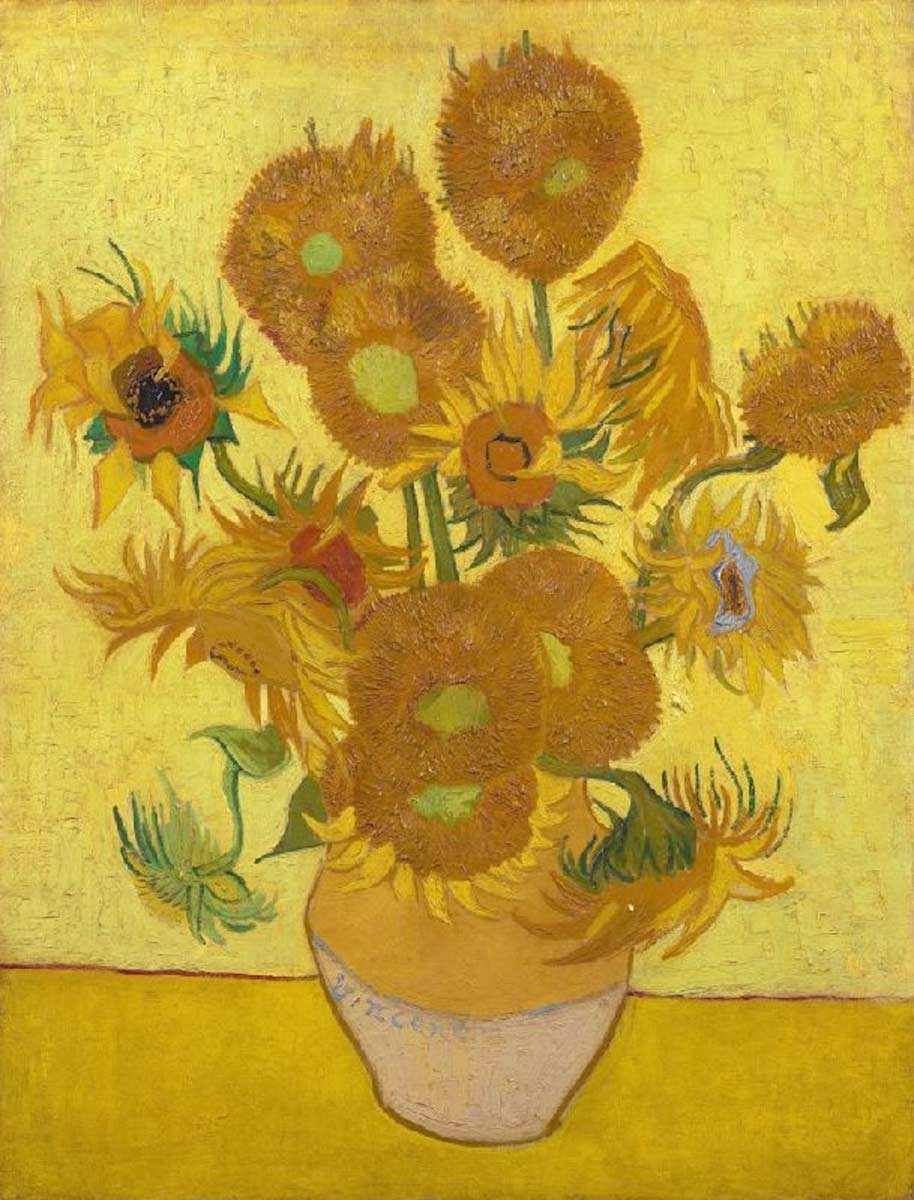
While the decision to paint flowers in Paris was linked both to economic concerns and his technical development as a colorist, Van Gogh continued painting flowers long after leaving Paris. In fact, the still life series of sunflowers that he painted between 1888 and 1889 in Arles became one of his most famous masterpieces. These were made as decorations that he hung in the Yellow House where he lived during his time in Arles and were also meant as saleable paintings.
With Sunflowers, Van Gogh had found a flower that was his. The practice of picking one signature flower was common among artists as it distinguished them in the art market and helped establish their identity among the masses. Not only did Van Gogh place his signature in two of his Sunflowers on the vase, but he also clearly declared his ownership of the flower in a letter to Gauguin from January 1889: “if Jeannin has the peony, Quost the hollyhock, I indeed, before others, have taken the sunflower.”
How Flower Still Lifes and Color Theory Shaped Van Gogh’s Art
The experiments with floral still lifes in Paris were foundational to Van Gogh’s artistic development in the later years. Equipped with the knowledge of new stylistic techniques and color theory, Van Gogh left Paris in February 1888, longing for the peace of the countryside after spending two years in the busy environments of the French capital. He arrived in Arles, a town located in the south of France, that offered him the brilliant natural light, variety of colorful landscapes, and serenity that he needed to continue his work with renewed focus. His letters were now full of detailed descriptions of the color he saw around him under the Provençal sun, such as in this letter to Theo from May 1888: “Many of the subjects here are just — in character — the same as in Holland — the difference is in the color. There’s sulphur everywhere where the sun beats down.”
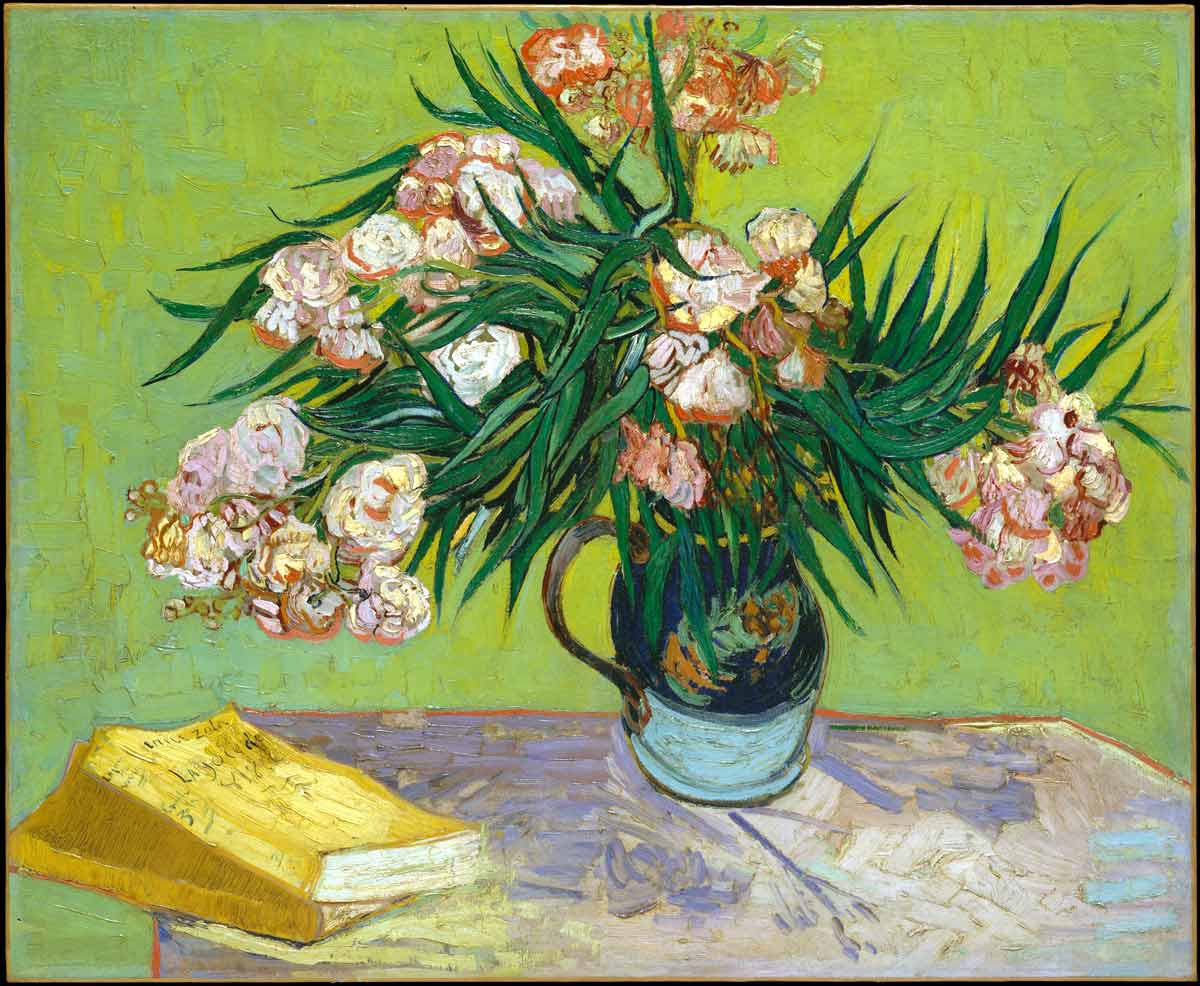
Some notable flower still lifes from his later years include Oleanders, Irises, and Roses. The time in Arles, however, also offered him the opportunity to work with models. These were usually people he knew personally instead of professional models, such as the postman Joseph Roulin, his wife Augustine Roulin, and the Belgian artist Eugène Boch. Nevertheless, portraits of these subjects are a testament to Van Gogh’s mastery of color and brushwork and show his success as a modernist painter who developed one of the most unique styles in European art history.