
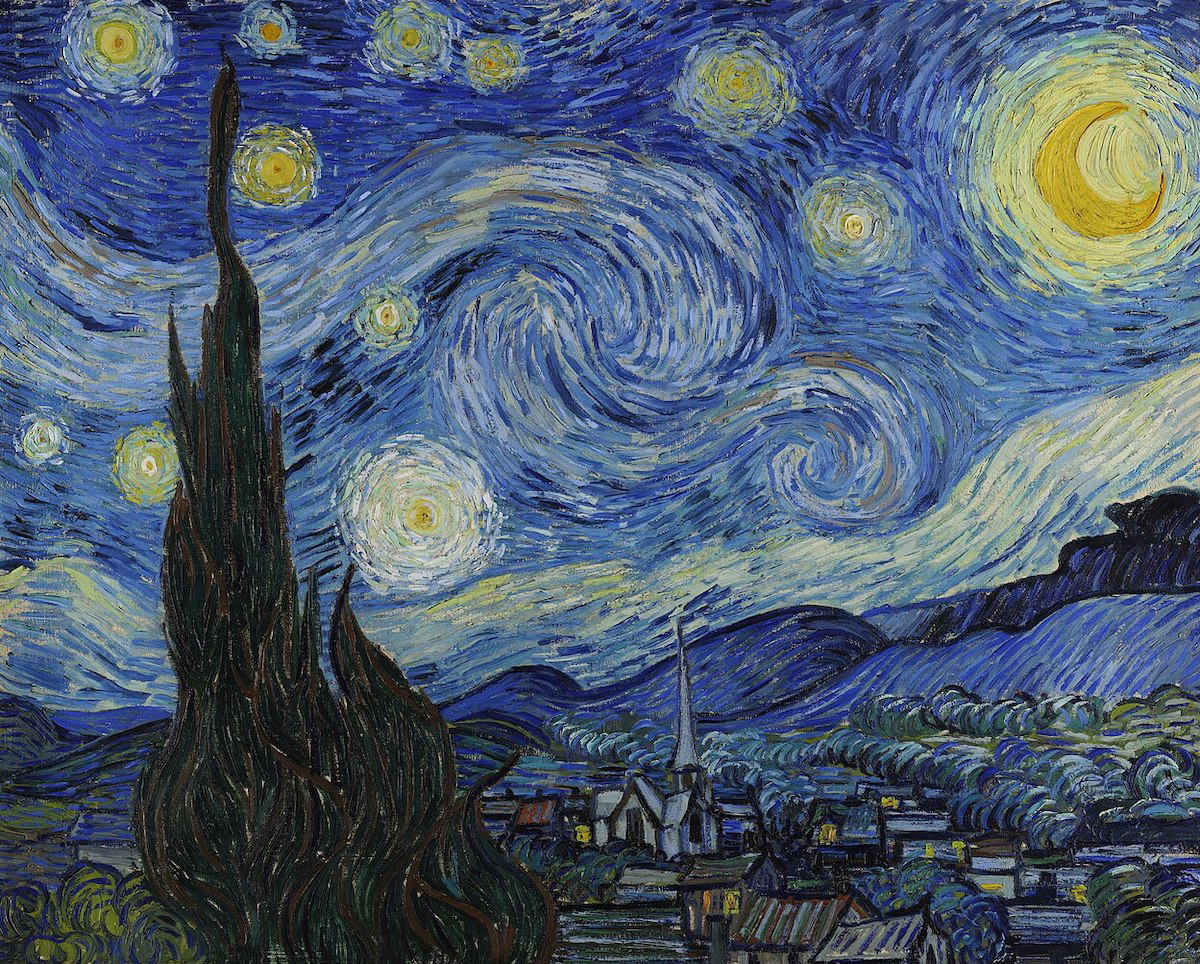
The Dutch artist Vincent van Gogh (1853-1890) is world famous today and known for works such as The Starry Night, Sunflowers, and Almond Blossom. The artist started his career around the age of 27 years and committed to it until the end of his life. During this time, he lived in a number of places throughout The Netherlands, Belgium, and France. However, it was his brief stay in Paris in 1886-87 that led to the development of his unique style and color palette that he is recognized for today.
The Dark Years of Dutch Realism
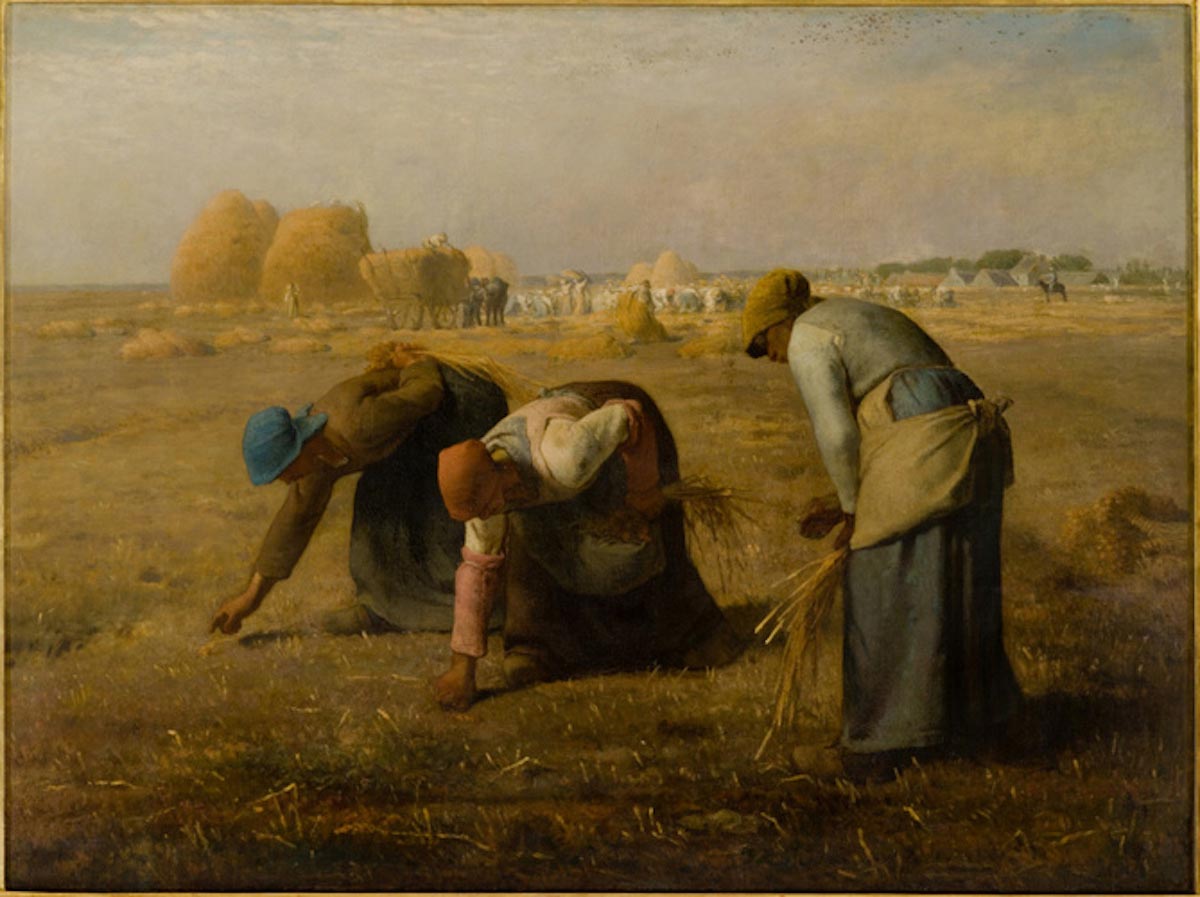
In the 1880s, canonical art in The Netherlands and Belgium dominated the museums and public taste. Old Masters like Rembrandt van Rijn, Peter Paul Rubens, and Titian represented the ideal, and the manner in which they handled form, color, and light was the traditionally accepted and hailed artistic practice. Van Gogh particularly admired Rembrandt and the French artists Eugene Delacroix and Jean-François Millet, aspiring to shape his oeuvre in their styles. His fondness of Millet lay in the artist’s paintings featuring peasant life, a subject that Van Gogh coveted.
In the years between 1880 and 1885, Van Gogh practiced his hand by making copies of works by the artists mentioned above. He moved between different cities in Belgium and The Netherlands during this period, being tutored by his uncle Anton Mauve, who was a well-known painter at the time. Van Gogh made some notable paintings in this period, such as The Vicarage at Nuenen (1885). His works at this time featured the traditional dark palette of Dutch realism, as that was all that the artist was familiar with. He was not yet introduced to the growing avant-garde movement in France.
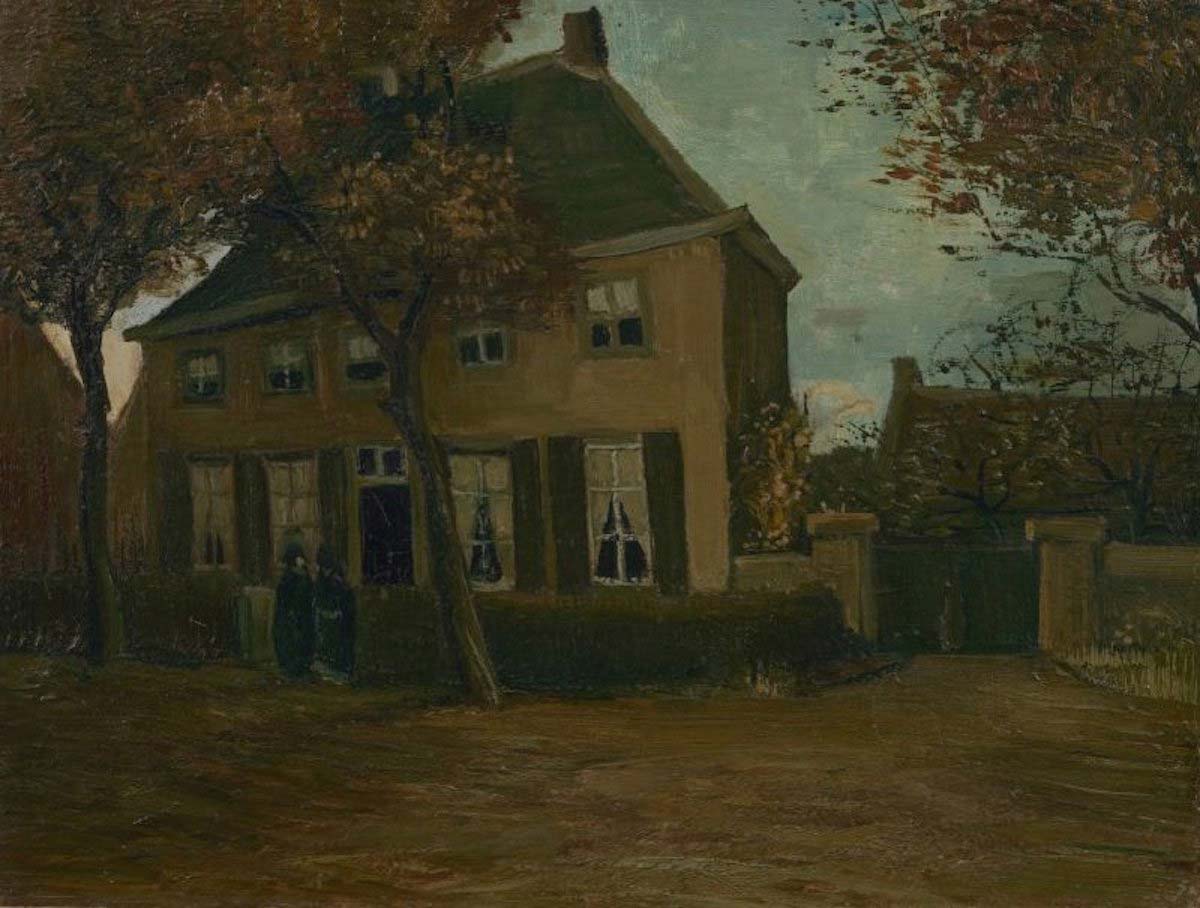
Van Gogh’s last year in The Netherlands was spent in Nuenen at his parents’ house. This period led to the creation of The Potato Eaters (1885), which is today recognized as a masterpiece. He left Nuenen to follow a course at the Academy of Art in Antwerp and eventually arrived in Paris.
A Brighter Light in Paris
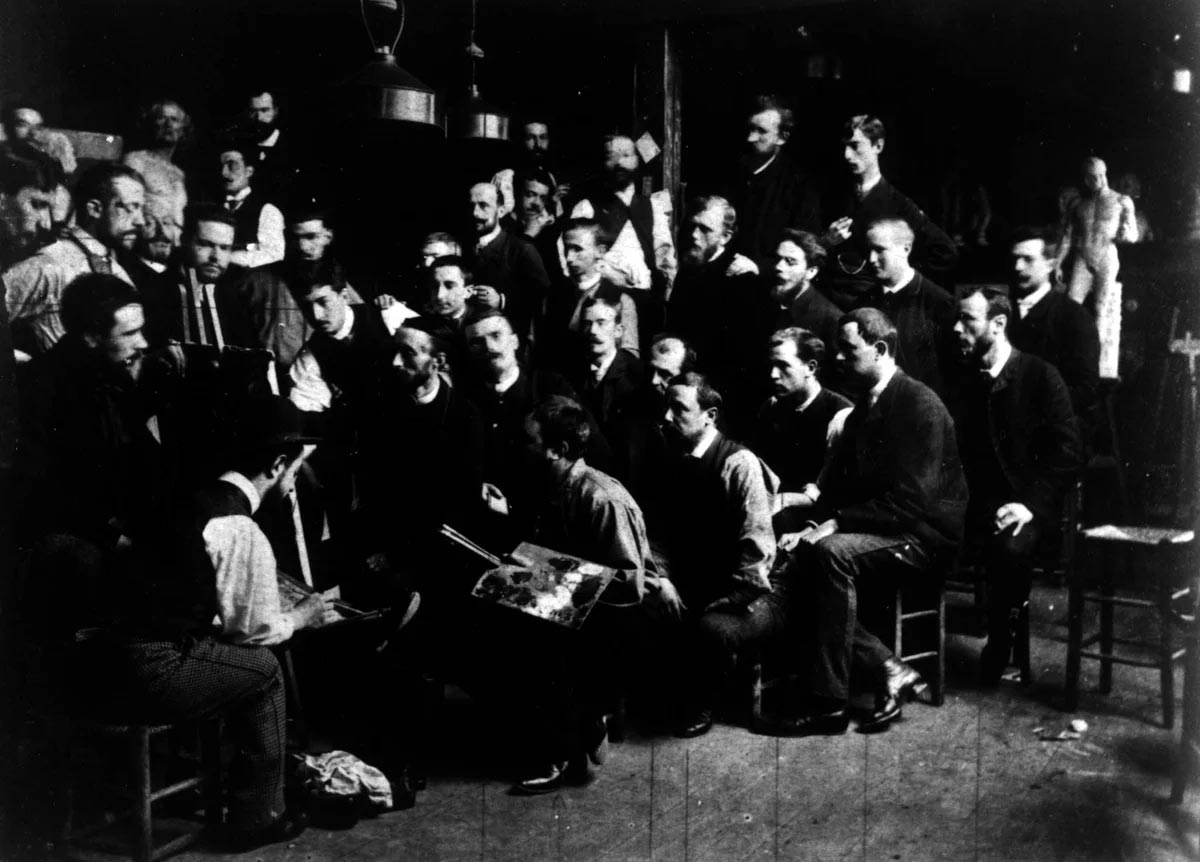
“My dear Theo, don’t be cross with me that I’ve come all of a sudden. I’ve thought about it so much and I think we’ll save time this way. Will be at the Louvre from midday, or earlier if you like.” Van Gogh wrote this letter to his brother on February 28, 1886, hinting that his arrival in Paris was unexpected. Theo, Vincent’s younger brother, was the manager of Goupil art dealers. Through Theo, he saw the works by Claude Monet and other Impressionists for the first time and was in awe of their beauty and vibrancy. Looking at paintings oozing with color was a new experience for Van Gogh and opened him up to the possibility of painting bright canvases in the true modernist style.
In the late 19th century, Paris was the hub of artistic development. Van Gogh’s decision to come to Paris lay in his desire to work amongst modernist artists and learn new techniques. He wrote: “They say that one is relatively freer in Paris and, for instance, that one can decide for oneself what one wants to do.” By the time Van Gogh arrived in the city, the Impressionists were already well-established. The mid-1880s was the period when the younger generation of artists, today recognized as the Post-Impressionists, were experimenting with newer techniques of painting. Van Gogh met some of these artists, including Henri de Toulouse-Lautrec and Emile Bernard, in the studio of Ferdinand Cormon.
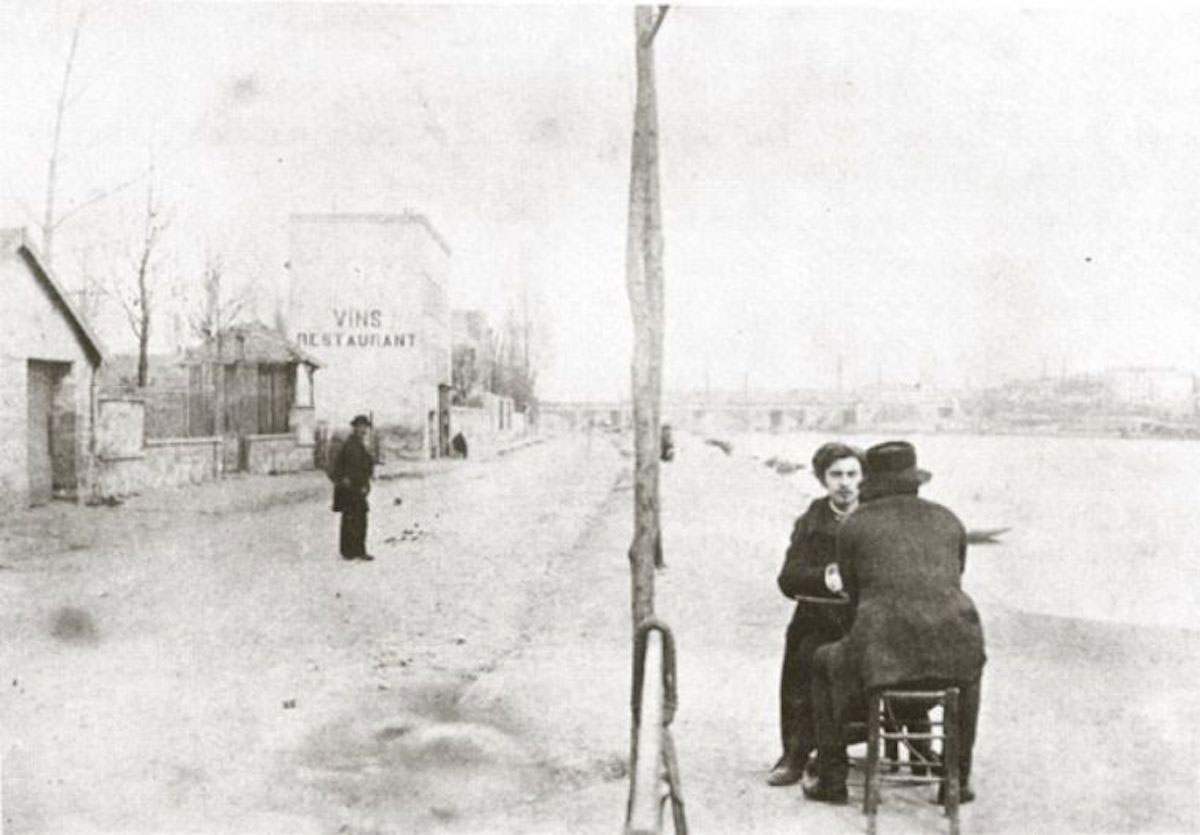
Paris freed him from the rigid rules of Realism and opened him up to experimentation. After improving his drawing technique at Studio Cormon, Van Gogh developed his own style. He became acquainted with the social circle of artists and writers in Paris, which included Bernard, Louis Anquietin Toulouse-Lautrec, and later Paul Gauguin. They discussed different theories and techniques of art at length, inspiring Van Gogh to venture into modernist painting. One of the most important aspects that he experimented with was color, and Paris marked the beginning of his journey as the exceptional colorist he is recognized as today.
New Theories of Color and Brushwork
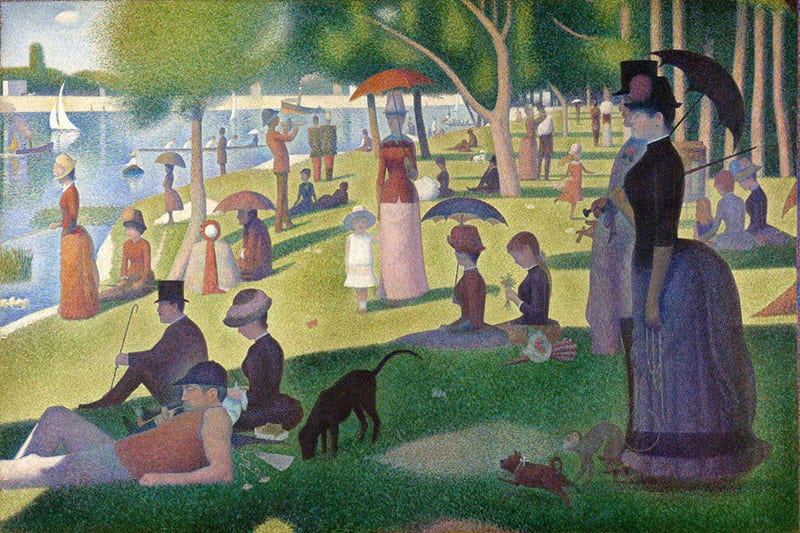
Color was the central focus among young Parisian artists. Several artists had different views on including color in painting to make it visually appealing. For example, Georges Seurat approached color with mathematical precision and aimed to create a visually balanced work of art by applying small dots of unmixed colors throughout the canvas. This can be seen in his most famous work, A Sunday on La Grande Jatte (1884-86). He called this style Neo-Impressionism.
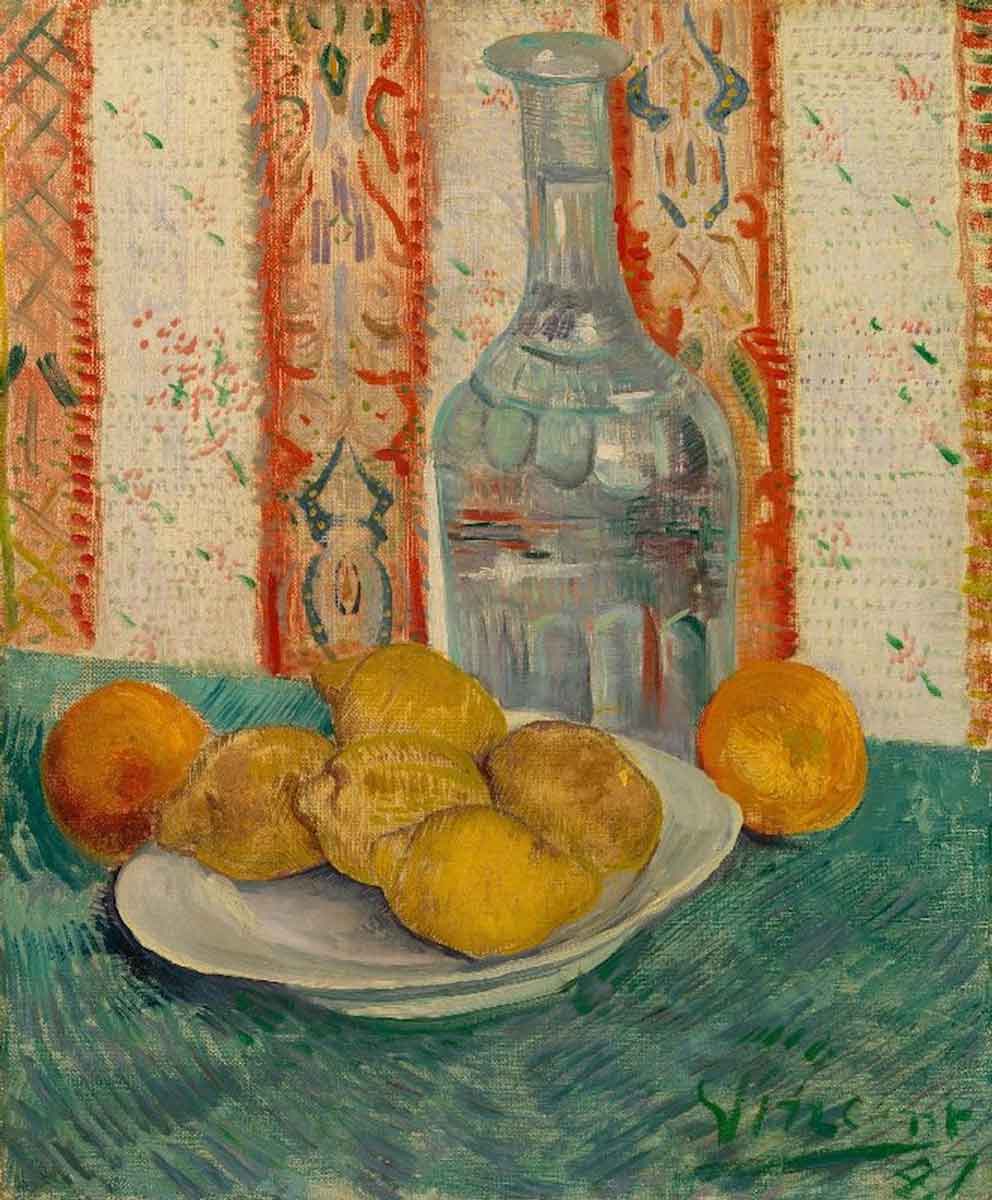
Van Gogh experimented with color religiously in Paris. He began learning and experimenting with the Neo-Impressionist technique in 1886 and familiarized himself with color theory and the system of contrasting and complementary colors. Some of his works from Paris influenced by this style include Carafe and dish with citrus fruit and Boulevard de Clichy, which feature stippling (the use of dots and dashes) and a brighter palette. Moreover, he sought out more urban subjects, such as café life and cityscapes, as well as portraits.
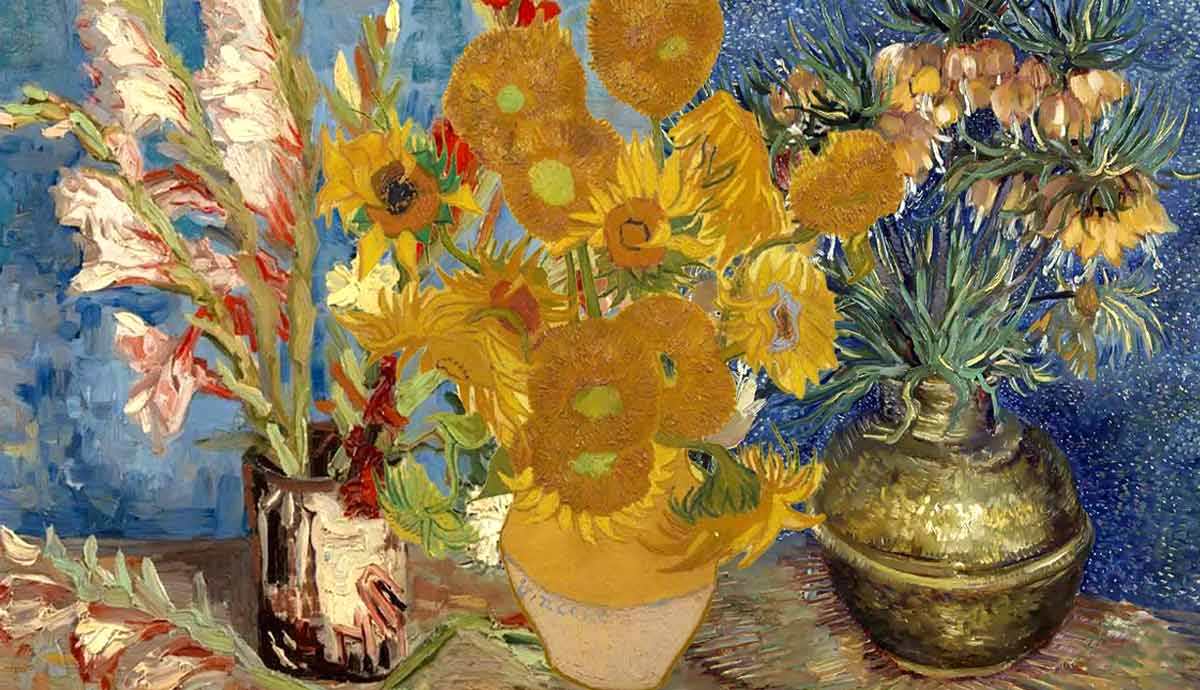
Since hiring models to pose for him required money, Van Gogh took up another subject that allowed him to experiment freely at a low cost: flower still-lifes. Floral still-lifes held commercial value and are one of the most painted subjects by Van Gogh from this period. They allowed him to practice with a range of bright colors. He called them ‘color studies’ and painted 35 flower still-lifes in Paris, such as Vase with gladioli and Chinese asters.
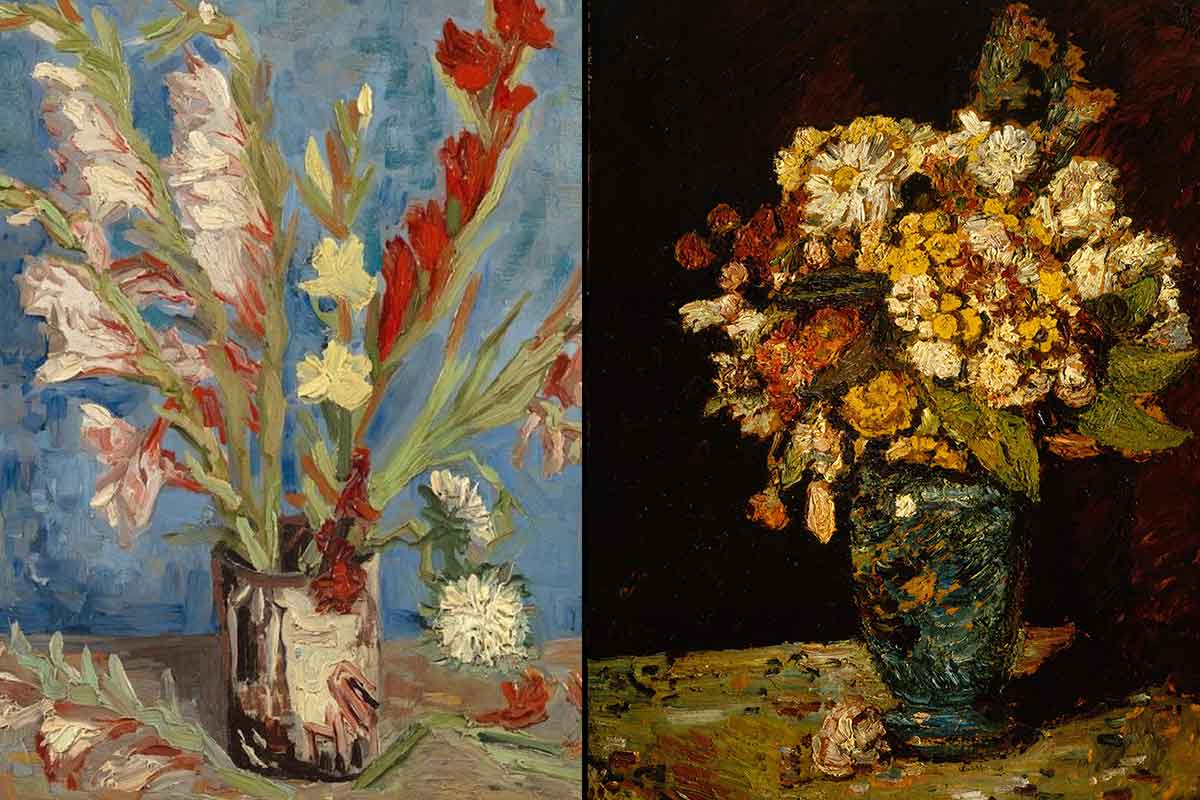
Further, he discovered works by the French artist Adolphe Monticelli (1824-1886) with Theo in 1886. Monticelli painted with a thick layer of paint, and his canvases had a notable texture. His brushwork inspired Van Gogh. This was instrumental in developing Van Gogh’s signature impasto technique, which is evident in his later works. One of Monticelli’s most painted subjects was also floral still-lifes, which was perhaps another reason why Van Gogh chose this genre to hone his palette.
The Japanese Influence
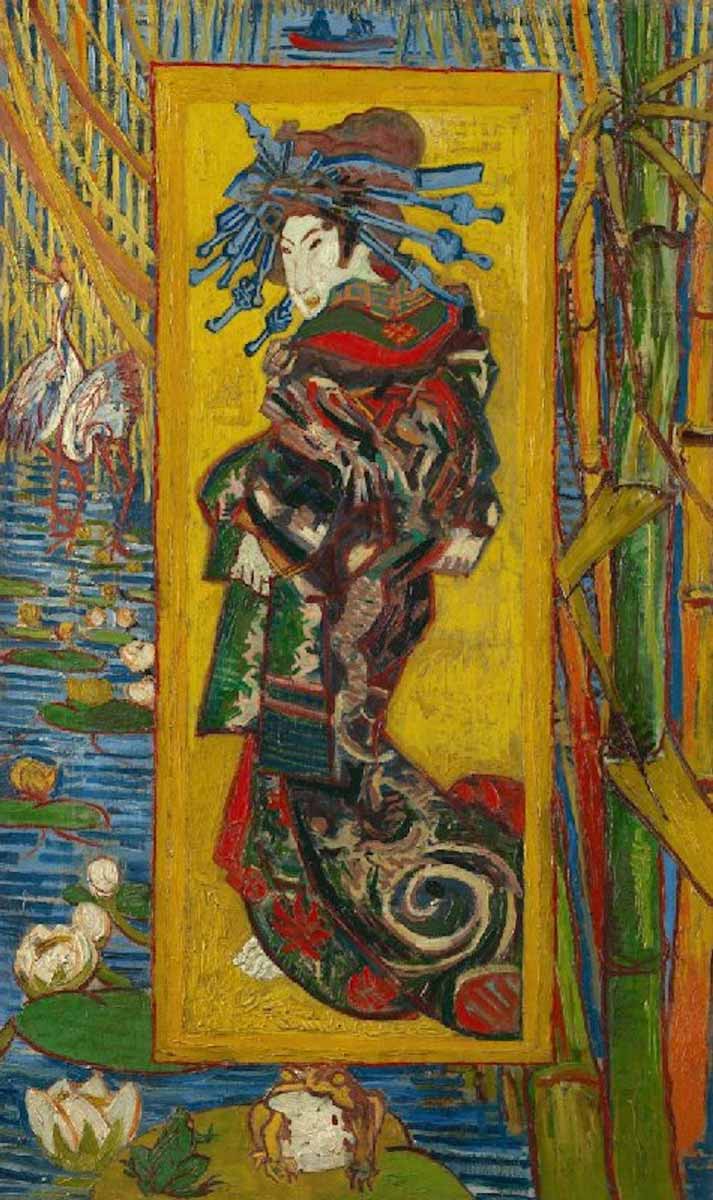
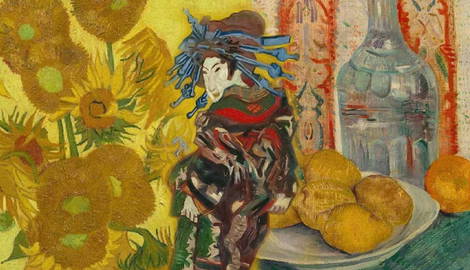
In Paris, Van Gogh discovered Japanese woodblock prints. These prints became famous in 19th-century Europe and inspired the Impressionists. Van Gogh started collecting Japanese prints in Paris and also had access to the collection of the art dealer Siegfried Bing, who contributed to the popularization of Japanese art in Europe. The two-dimensional, simplified compositions and the use of harmonious colors in these prints led to the development of Japonisme, a manner of painting adopted by a number of modern artists, including Van Gogh.
Japanese woodblock prints offered a new technique for using perspective, forms, and colors in European painting. These prints also featured natural subjects instead of city life, which was also attractive to Van Gogh. During this period, the artist made several imitations of Japanese prints to study their properties. Artists like Emile Bernard and Paul Gauguin borrowed heavily from these prints and moved in a different direction than Neo-Impressionism. Towards the end of 1887, Van Gogh also started working alongside these developments.
The Shift in Style With Bernard and Gauguin
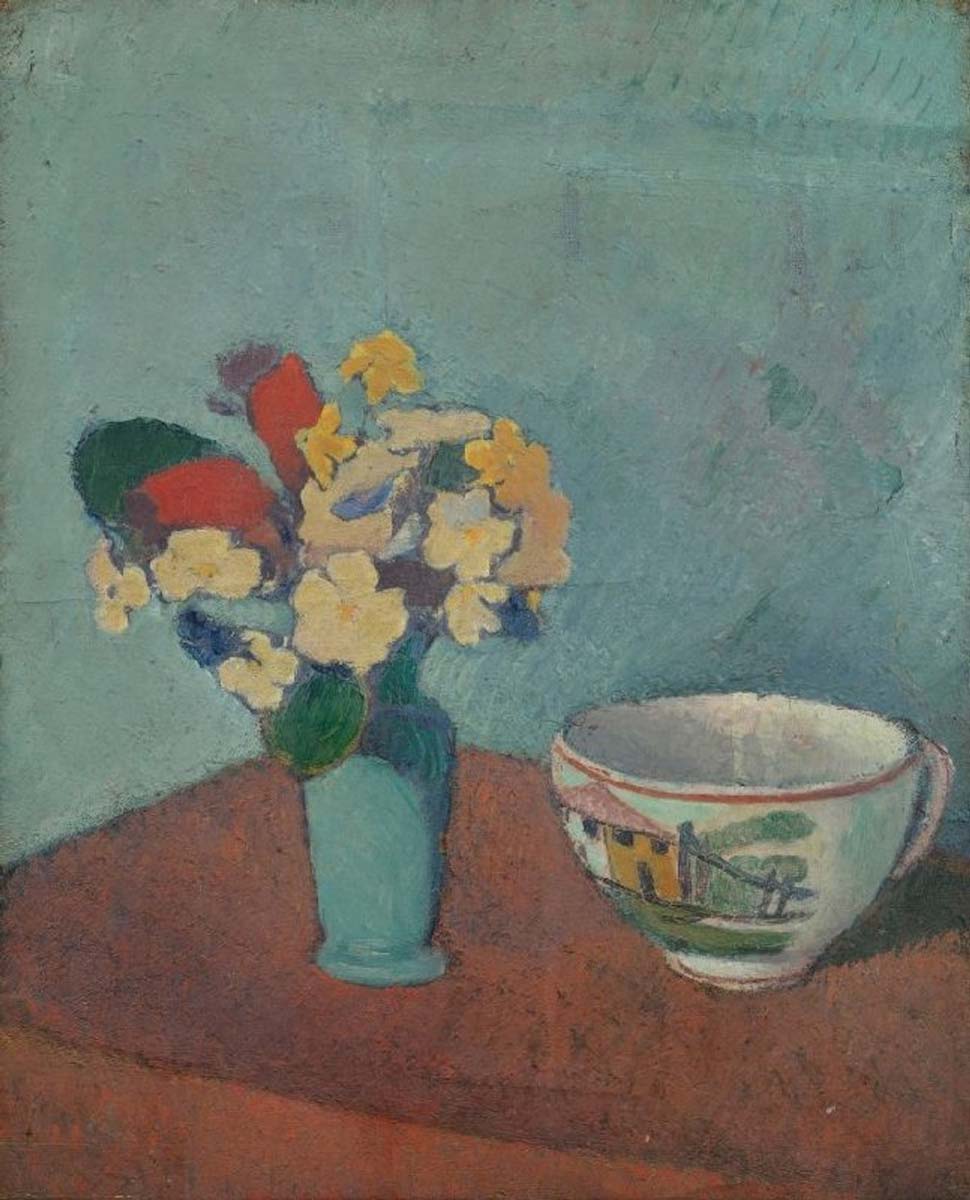
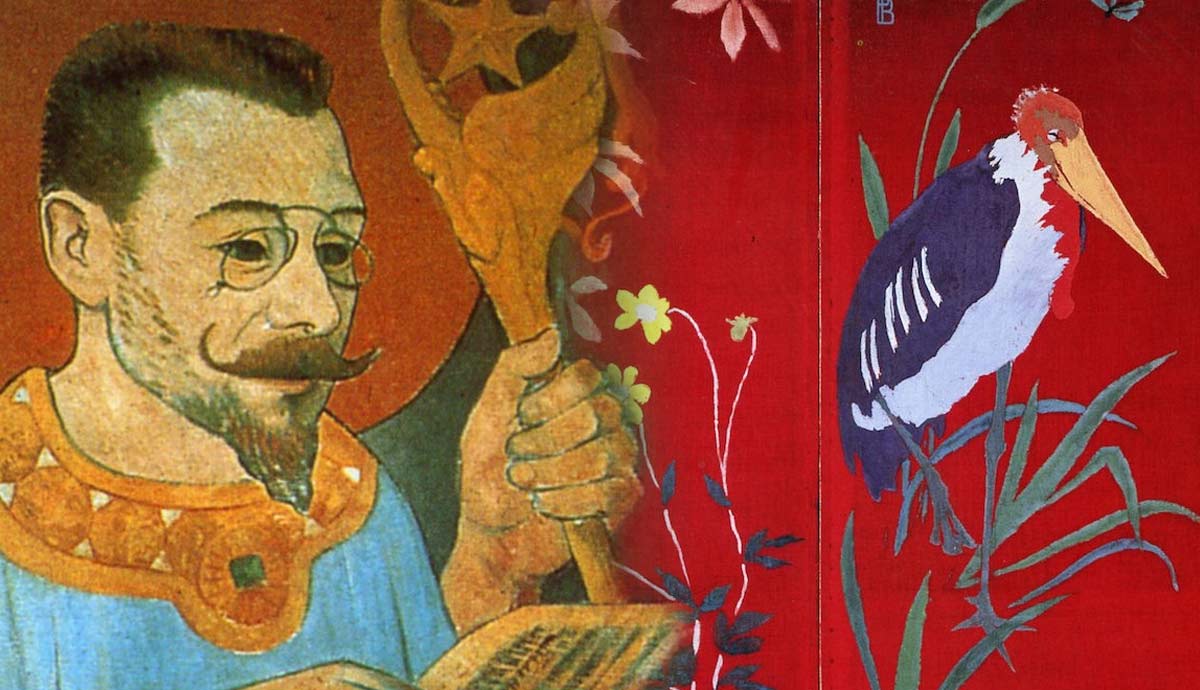
Emile Bernard, who had initially worked in the Neo-Impressionist style, began experimenting with a new style inspired by Japanese prints. He called this Cloisonnism, which was characterized by painting flat compositions with color applied in broad strokes instead of small dots and dashes. This style also featured bold outlines that created partitions among different unmixed colors. The combination of these characteristics created a highly decorative composition and marked an important step in the evolution of modern European decorative painting.
Cloisonnism was also adopted by Paul Gauguin, who Van Gogh met during his last months in Paris. Gauguin and Van Gogh developed a strong friendship that lasted towards the end of the latter’s life. Despite experimenting with the Cloisonnist style, Van Gogh did not borrow the technique of applying colors in a thin, flat layer on the canvas. The influence of Monticelli persisted, and Van Gogh continued using thick impasto.
Van Gogh: Discovering a Personal Style
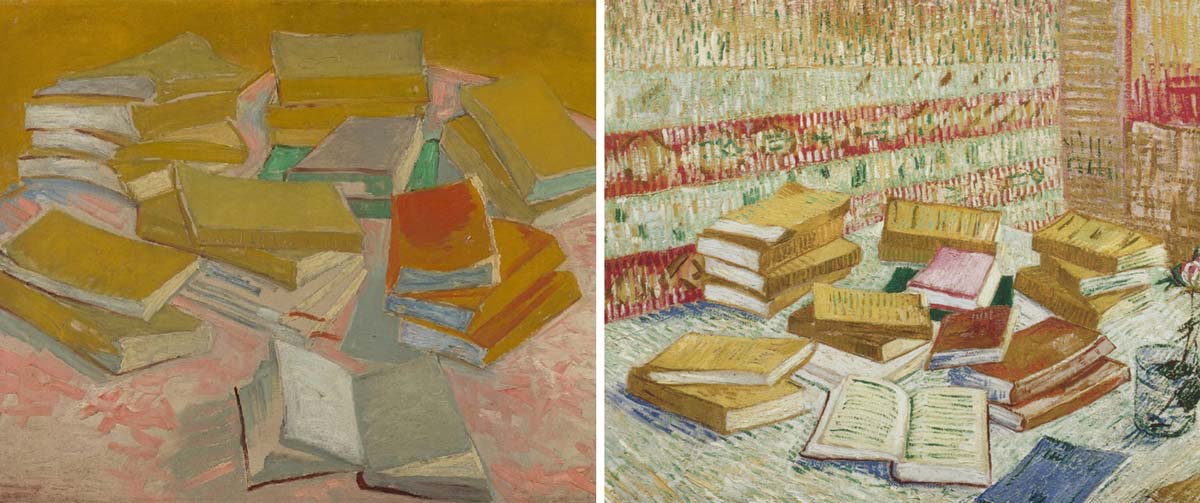
After spending two years in Paris, Van Gogh gained immense knowledge from his modernist contemporaries. He narrowed down his artistic inspirations to Seurat’s Neo-Impressionism, Bernard’s Cloisonnism, Japanese prints, and Monticelli’s impasto brushwork. His experimentation with the new styles he had learned in Paris can be clearly seen in the two versions of the same subject he painted in 1887—Piles of French novels and roses in a glass (‘Romans parisiens’) and Piles of French novels. The first version features the Neo-Impressionist technique, while the second one features the Cloisonnism style. By the end of his time in Paris, the artist did not limit himself to the achievements of either style and instead embraced certain characteristics of both.
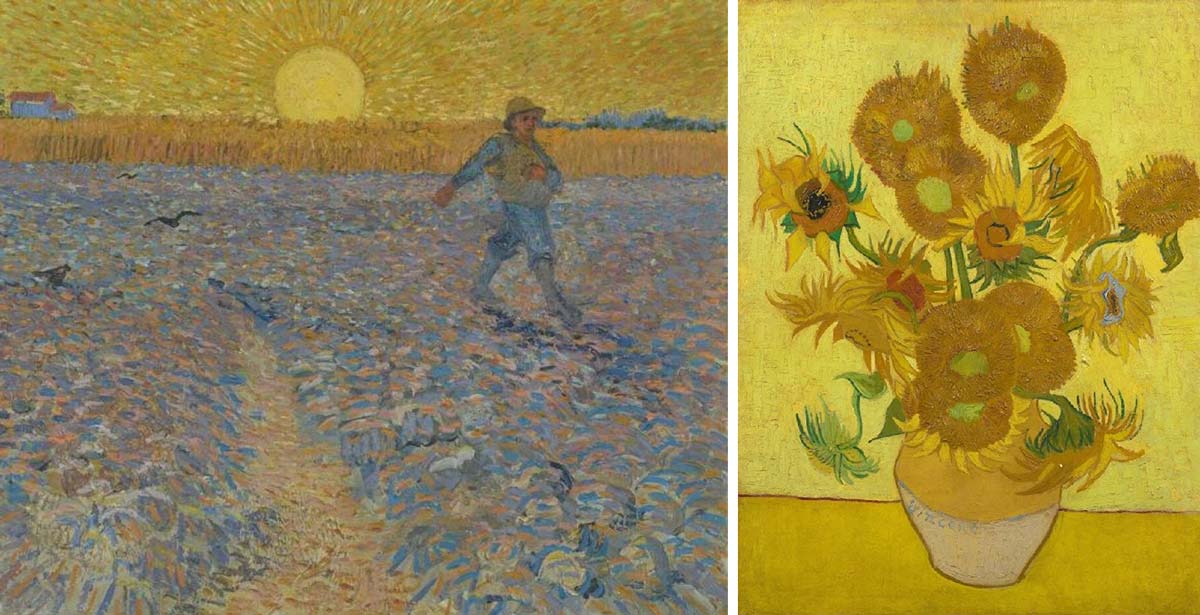
In early 1888, he had had his fill of urban life and longed for the peaceful atmosphere of the countryside, leading to his decision to move to Arles. Van Gogh’s stay in Arles was incredibly productive, and the artist employed the techniques of handling color and brushwork that he had learned in Paris, creating some of his most famous works like the Sunflowers, Sower, and Cafe Terrace at Night. Living in Paris and learning from modern artists completely transformed Van Gogh’s style as compared to his works from his Dutch period. By 1888, his paintings were full of bright colors and thick brushstrokes, which makes them instantly recognizable today.