
Van Gogh’s oeuvre boasts 2,000 paintings and drawings made over a period of 10 years, with a majority of these works revolving around nature. Having spent most of his life in the countryside, the artist immersed himself in capturing natural subjects and even developed a spiritual relationship with nature later in life. However, most of his paintings of the countryside depict landscapes and peasants. Works featuring animals are rare, despite their ubiquitous presence in these areas.
Animals as Subjects in Modern Art
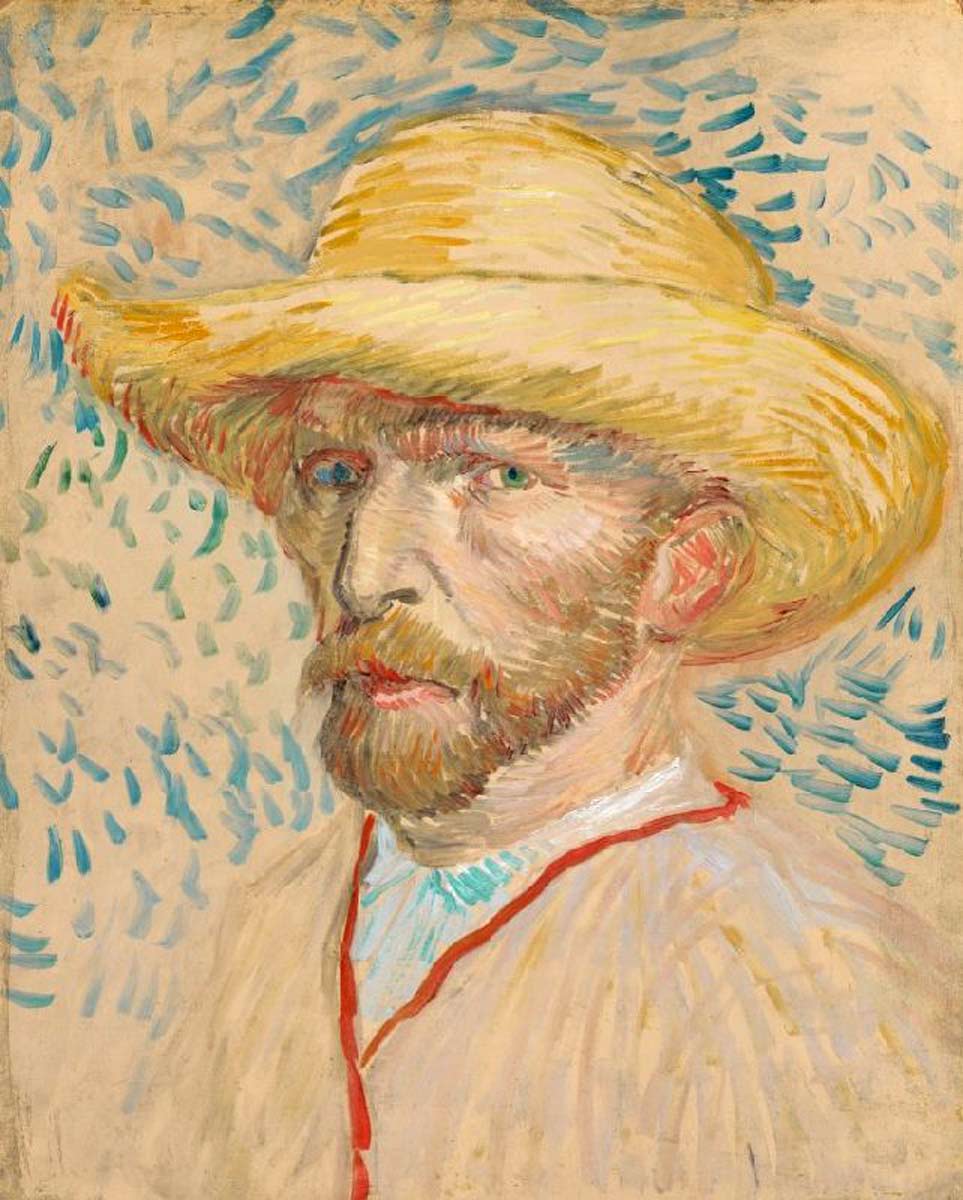
Even when they do appear in Van Gogh’s works, animals are mostly confined to background spaces as supporting elements and rarely function as central subjects. Still, animals do make an appearance in paintings wherein the artist saw it fit to include them.
Painting landscapes of the countryside depicting fields and farms has been a common tradition in European painting and has naturally led to many works featuring domesticated animals such as horses, cows, donkeys, herds of sheep, ducks, etc. In the second half of the 19th century, the Hague School of painters from the Netherlands sustained this tradition with paintings such as The Return of the Flock, Laren by Anton Mauve.
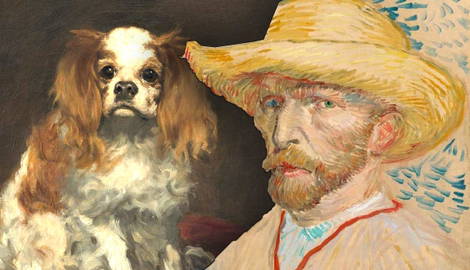
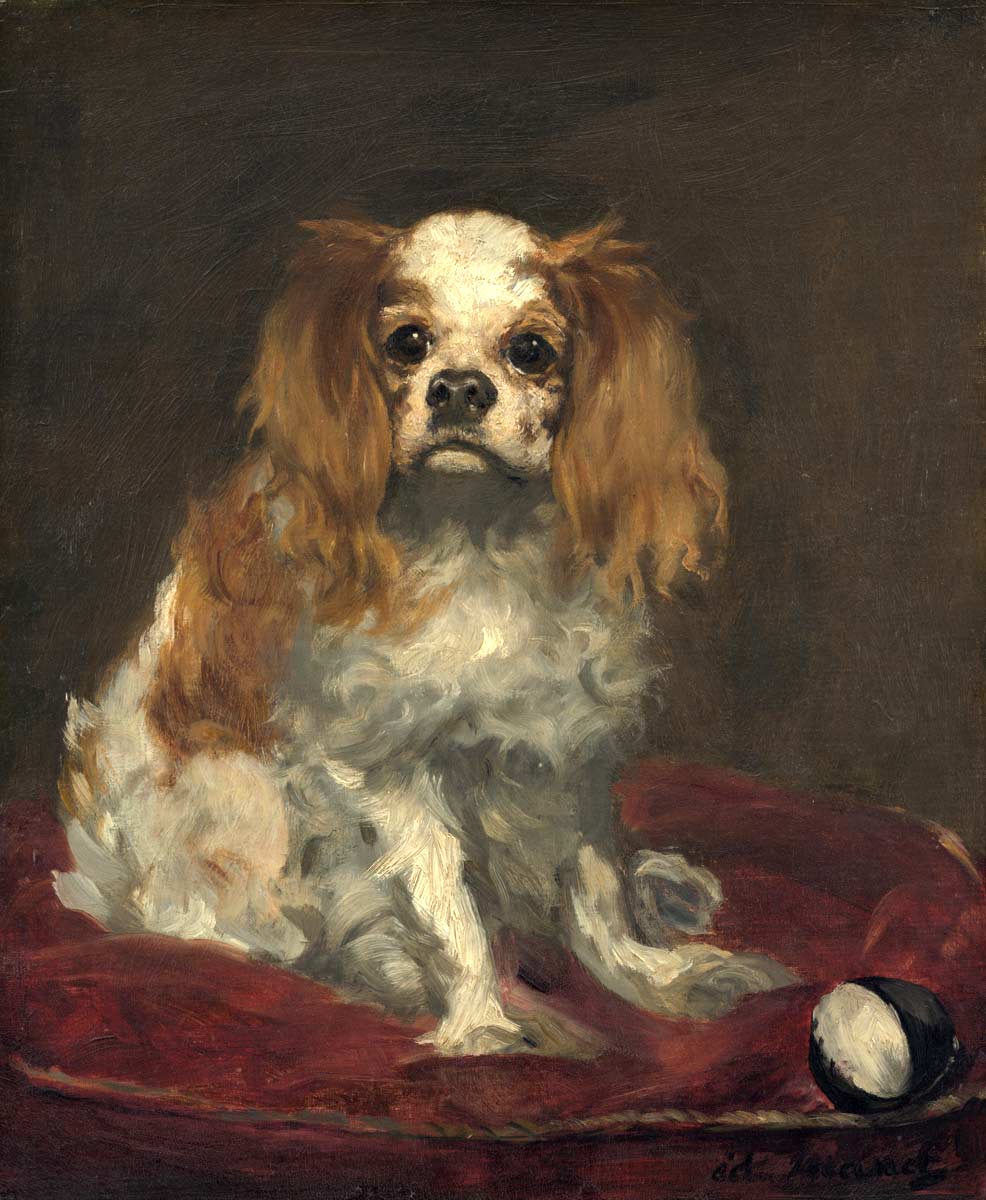
Animals can also be seen in many Impressionist paintings, such as in Edouard Manet’s A King Charles Spaniel from c. 1866 and Mary Cassatt’s Young Girl at a Window from c. 1883-84. The Post-Impressionist artist and Van Gogh’s peer Paul Gauguin too gave space to animal subjects in his paintings such as in his 1885 work Landscape with Cows in an Orchard and Still Life with Puppies from 1888.
Animals were also a common subject in Japanese woodblock prints called ukiyo-e that gained popularity in Europe in the 19th century. Many Impressionist and Post-Impressionist artists took inspiration from Japanese composition techniques to develop their own style, and Van Gogh was particularly fond of these prints. Pet animals such as dogs, cats and birds as well as wild animals made several appearances in ukiyo-e prints. They served different purposes: certain animals were associated with religious beliefs, sometimes animals served as decorative motifs and other times they held personal meaning, such as the depiction of pets. As Van Gogh was an avid collector of Japanese prints and even made several repetitions of them with oil and canvas, he would have been familiar with this subject matter and how it was portrayed by Japanese printmakers.
Van Gogh’s View
Painting animals in some shape or form was therefore common amongst the artists that Van Gogh considered to be his peers. But despite the frequent consideration of fauna as a subject of painting by his fellow artists, Van Gogh was not always keen on doing the same in his paintings. While his primary interest lay in painting country life just like his tutor and a member of the Hague School, Anton Mauve, Van Gogh’s works focused on the people of the land. He was largely absorbed by the task of capturing the life of the peasants who worked on the land and made a large number of drawings and paintings featuring this subject in a very specific style as is evident in the painting Woman Lifting Potatoes from 1885.
Describing the effects he intended to achieve with his peasant paintings, he wrote, “You see, I really have wanted to make it so that people get the idea that these folk, who are eating their potatoes by the light of their little lamp, have tilled the earth themselves with these hands they are putting in the dish, and so it speaks of MANUAL LABOUR and — that they have thus honestly earned their food.”
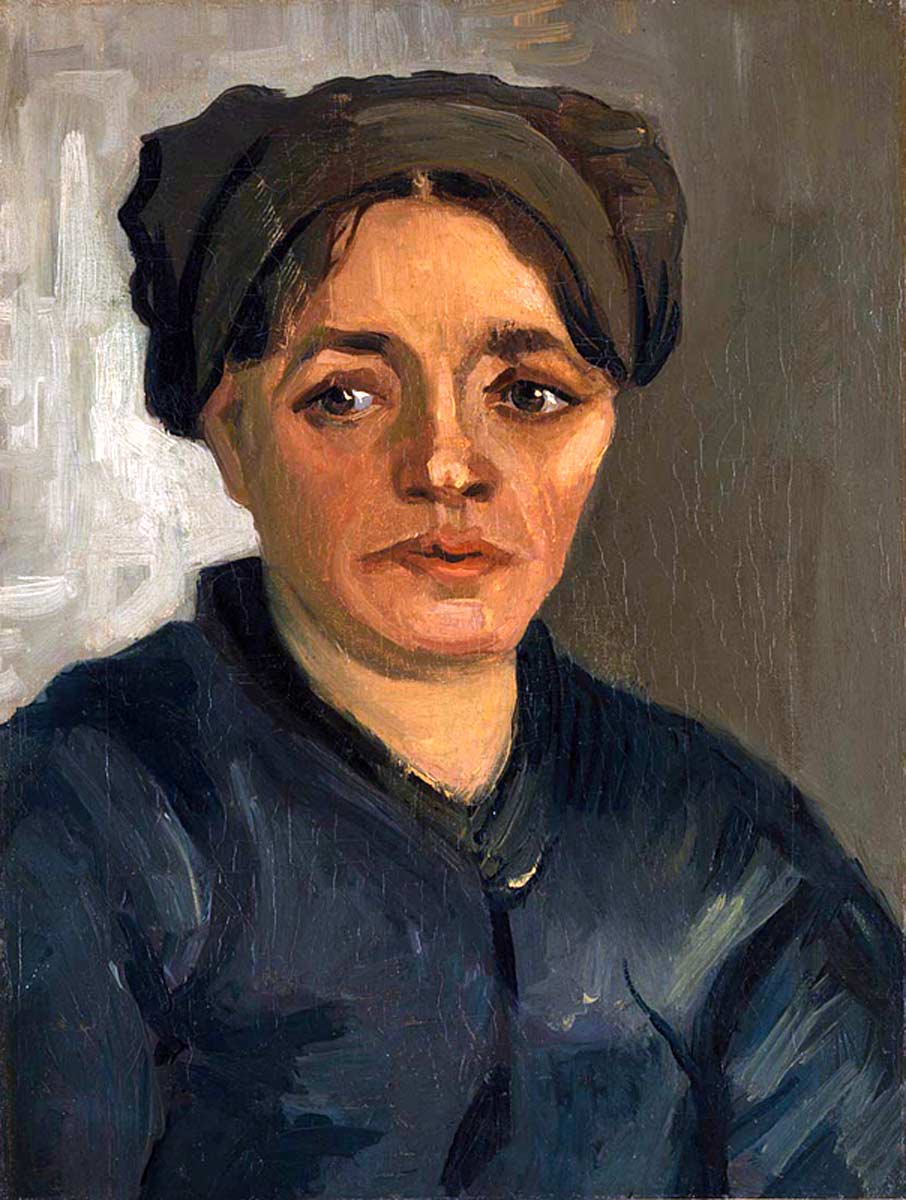
During the time he spent at his parents’ house in Nuenen in 1884-85, Van Gogh’s efforts resulted in 50 portraits of peasants from the province of Brabant in the Netherlands, as well as his masterpiece The Potato Eaters. This interest in painting peasant life was in part a result of Van Gogh’s admiration with the French artist Jean-François Millet who gained recognition as a painter of peasant life in the 19th century. Van Gogh comments on Millet and his work in multiple letters written throughout his life and made numerous repetitions of his paintings. He explained his dedication to painting peasants in a letter to Theo from 1885: “When I say that I’m a peasant painter, that is really so, and will become clearer to you in future; I feel at home there. . . I’ve become so absorbed in peasant life by continually seeing it at all hours of the day that I really hardly ever think of anything else.”
Despite spending a great amount of time in fields and natural settings in order to capture the subject of the peasant, Van Gogh paid significantly little attention to the animals populating these areas. While paintings of animals are few and far between, they are not entirely absent from his oeuvre. He gave special attention to fauna in some paintings, usually because he was visually intrigued by the subject or because the animal added character to the scene he was portraying. A few of the paintings also focus on animals not usually found in farms or everyday settings. Let’s analyze Van Gogh’s works of art that feature animals!
“Oxcart” and “Cart With Black Ox” (1884)
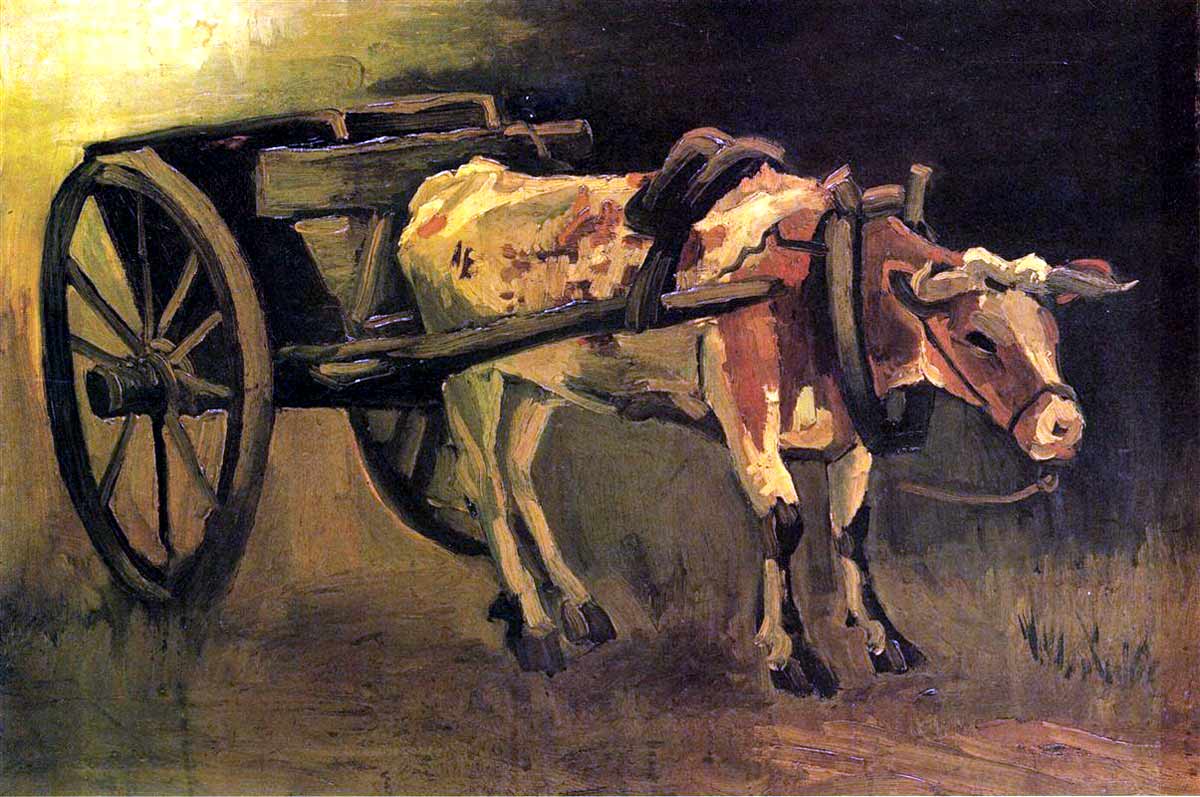
This painting dates back to Van Gogh’s early years as an artist that he spent at his parents’ house in Nuenen. He started taking art seriously as a profession at the age of 27 and initially began working with making sketched copies of paintings by Rembrandt or Millet as well as studies of laborers. While Impressionism was already a well-established movement in France by this time, Van Gogh did not witness a painting with light and bright colors until 1886.
He stuck to the traditional rules of Dutch art that he had observed with great attention in his own works, visible through his use of dark colors and inconspicuous brushstrokes in Oxcart and Cart with Black Ox. Both paintings depict an ox hitched to a cart as its central focus. One animal is red and white while the other is black with white legs. The background hints towards a field setting, although it does not consist of many details.
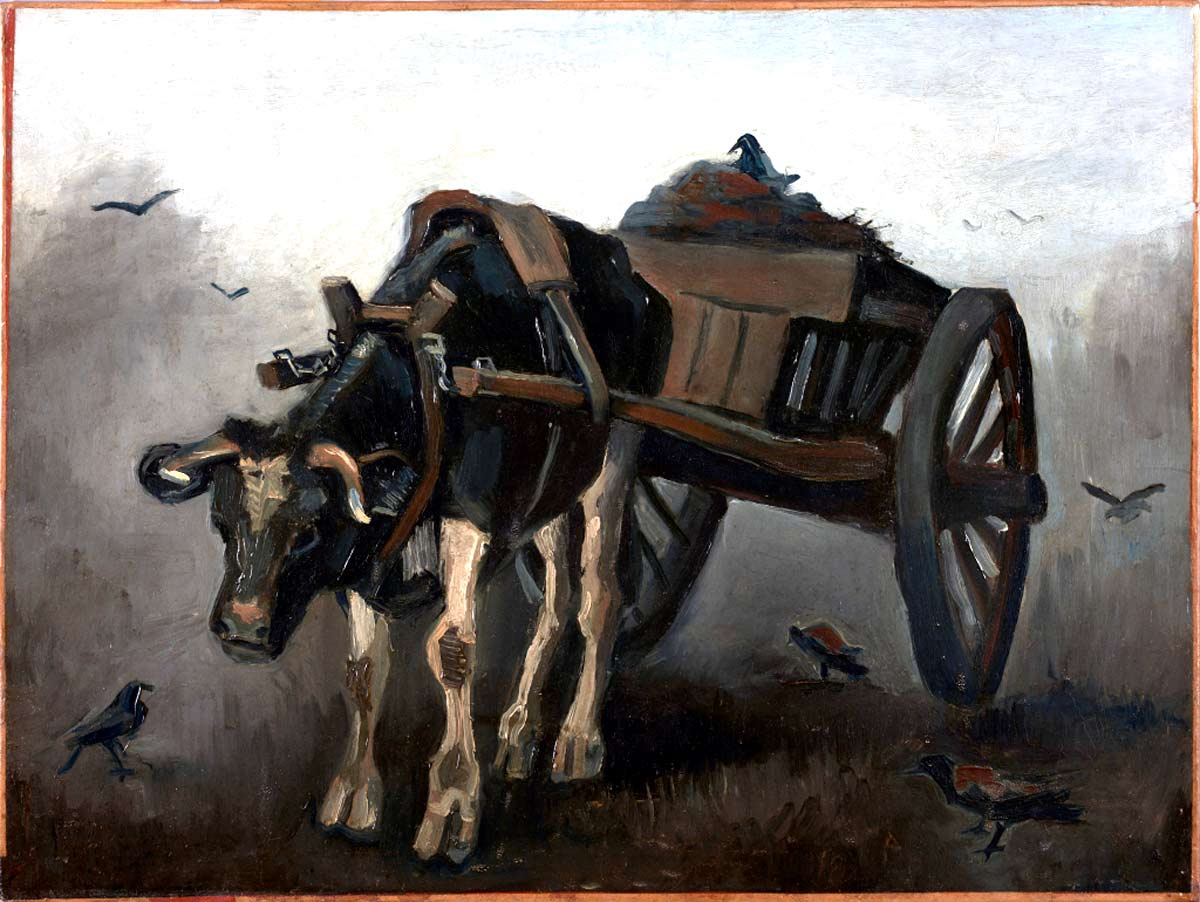
Paintings such as these, with the animal as the main subject, are not typical of Van Gogh, but it is possible that the artist was practicing his command of colors and the brush by painting these as studies. These compositions also allowed him the opportunity to practice painting complex mechanisms such as that of the cart, something that he also attempted in the several paintings and drawings of weavers on a loom that he made in Nuenen. The painting Oxcart was most likely a reference to a work by his teacher Anton Mauve titled Oxcart on a Country Road from 1867.
Flying Fox (1885)
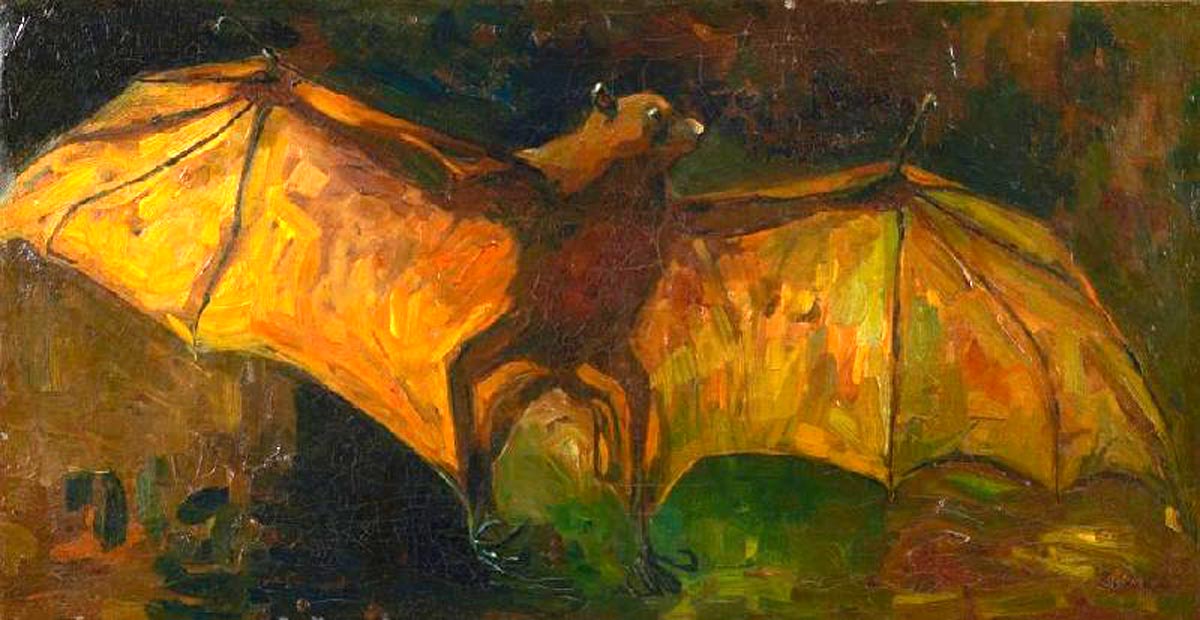
This painting of a flying fox made in 1885 is an isolated subject in Van Gogh’s oeuvre. The work depicts a taxidermied fruit-eating bat from a tropical region with its wings fully expanded outwards, as if in mid-flight. The fact that this animal is not alive and is rather stuffed is evident from the posture of the creature that appears to be on display. At the same time, Van Gogh did not depict it within an enclosure, perhaps to give the effect of the bat flying in its natural setting.
Either way, this species of bat was not native to Europe and rare animals like these would be brought into the continent as collector items. Access to such a subject was likely possible through Van Gogh’s friend Antoon Hermans who lived in Eindhoven and had a collection of 300 rare animals and birds. In Flying Fox, the surroundings of the bat are dark and blurry with only one light source placed directly behind the animal to illuminate its wings.
“A Crab on Its Back” (1889) and “Two Crabs” (1889)
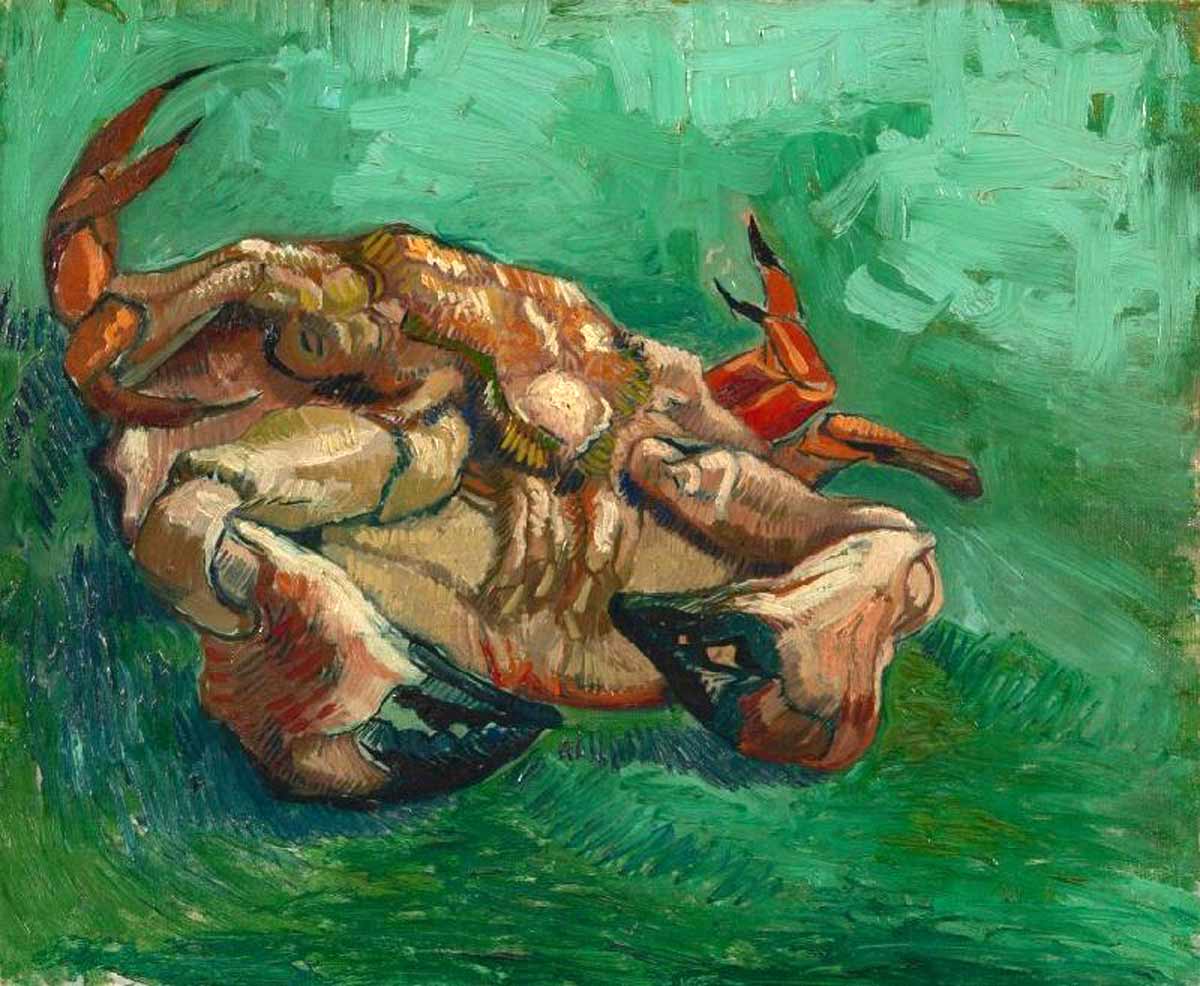
These two paintings featuring crabs demonstrate that Japanese prints did inspire Van Gogh to paint animals. These prints featured this subject and the artist attempted to create his own rendition of it in these two paintings. Crab on Its Back featuring a single crab was painted when Van Gogh was living in Arles. During this time, he was experimenting with the rules of color theory set out by Charles Blanc which is evident in the palette of this composition. The crab is painted with different shades of red and the background is a vibrant green. According to color theory, red and green are complementary colors that enhance each other’s vividness when placed next to each other.
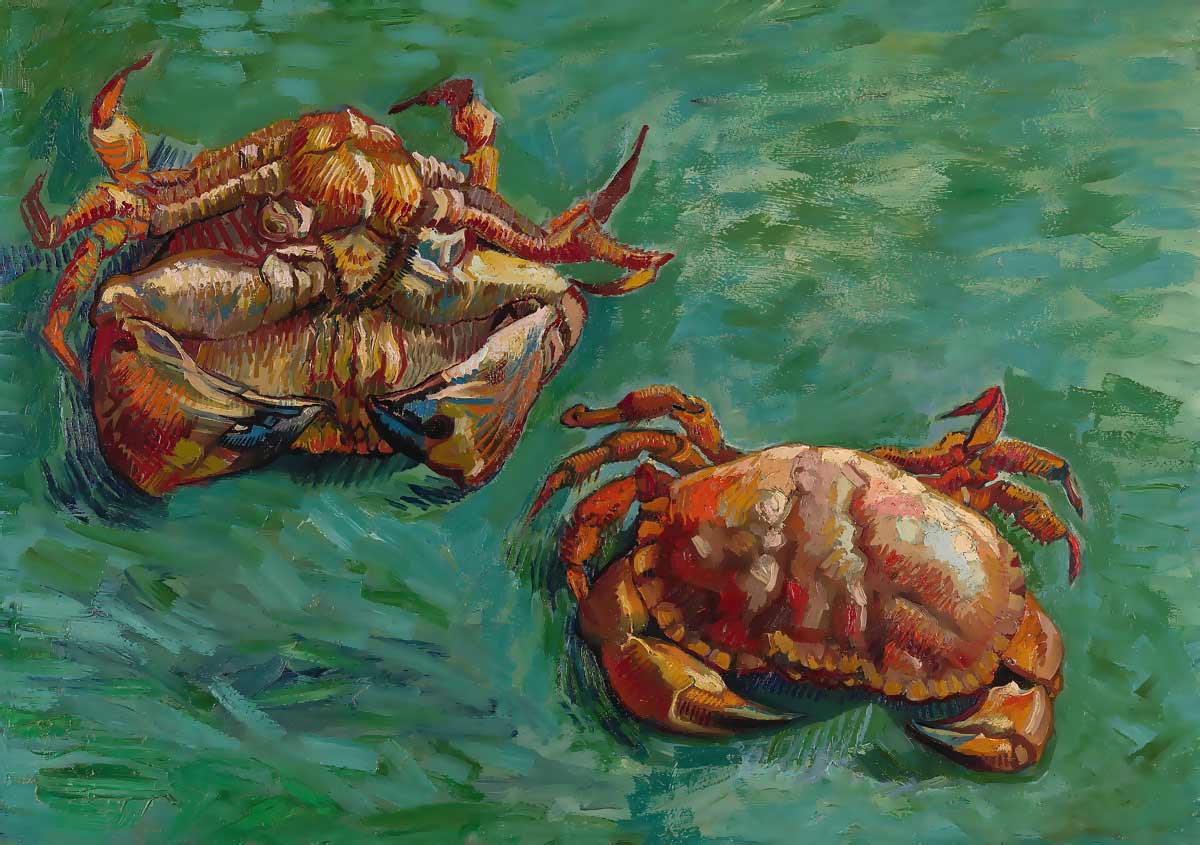
Two Crabs, painted in Arles during Van Gogh’s stay in Provence, depicts two crustaceans, with one flipped on its back. It is unclear whether Van Gogh painted two different crabs or the same crab twice in the same composition. Nevertheless, these paintings are examples of the artist’s grasp of color theory as well as his ability to depict the complex anatomy of a crab. The fact that he chose to paint this animal on two different occasions suggests that the subject was compelling enough to satisfy his artistic curiosity.
“Giant Peacock Moth” (1889)
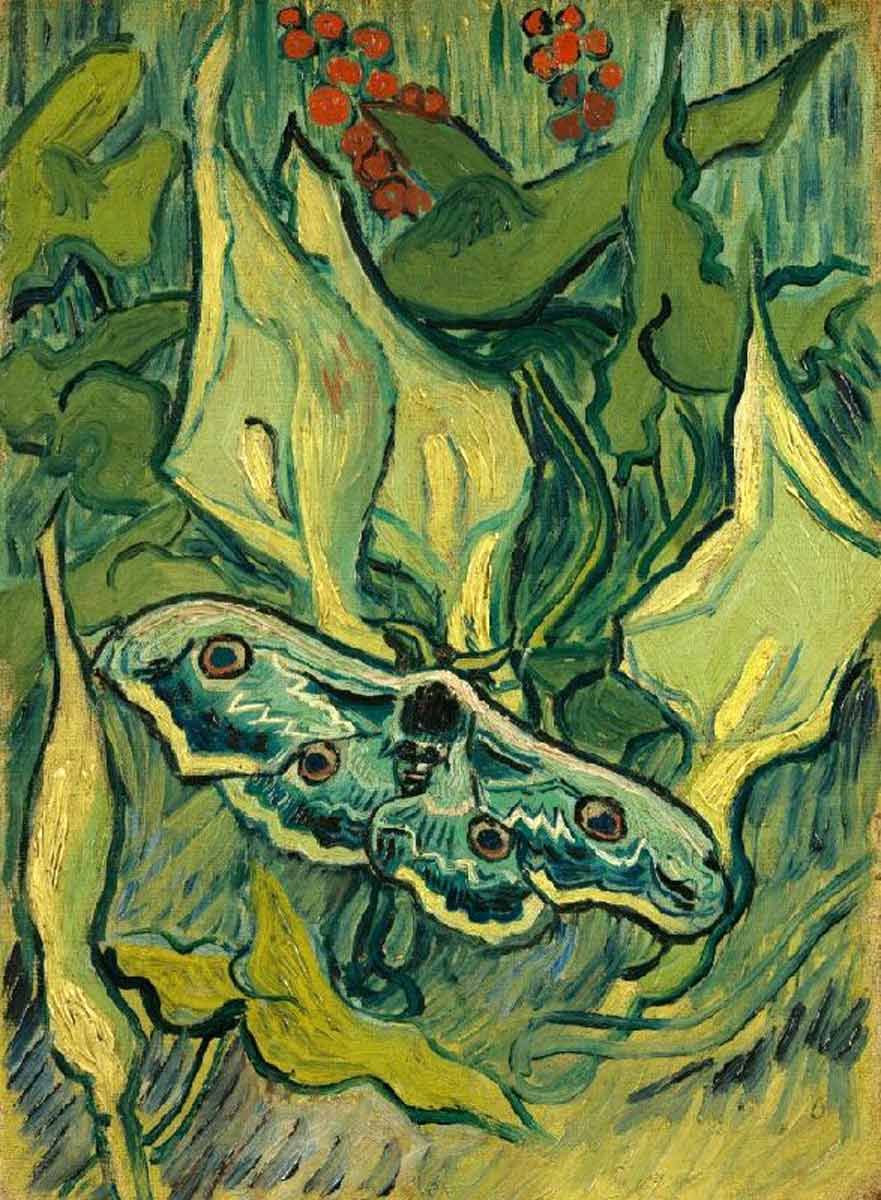
This painting of a Peacock Moth native to Europe was made during Van Gogh’s one-year stay at the psychiatric hospital in Saint-Rémy in the Provence region between 1889 and 1890. As he was not allowed to leave the premises of the hospital as a patient, he spent most of his time looking for subjects in the walled garden of the institution which is where he first discovered the Peacock Moth. He chose the subject very intentionally and found it to be visually intriguing and worthy of painting. This was not often the case with his paintings of animals, which is what makes this work interesting.
Describing his encounter with the animal that he remarked as being quite big in size, he wrote to Theo: “Yesterday I drew a very large, rather rare night moth there which is called the death’s head, its coloration astonishingly distinguished . . . To paint it I would have had to kill it, and that would have been a shame since the animal was so beautiful.”
It was not common for Van Gogh to impart such a detailed description to an animal from an artistic perspective. He ultimately could not let go of the subject and used his drawing of the moth as reference for the painting. This was one of many works that he painted in the garden of the hospital at Saint-Rémy.
Van Gogh’s “Cows” (1890)
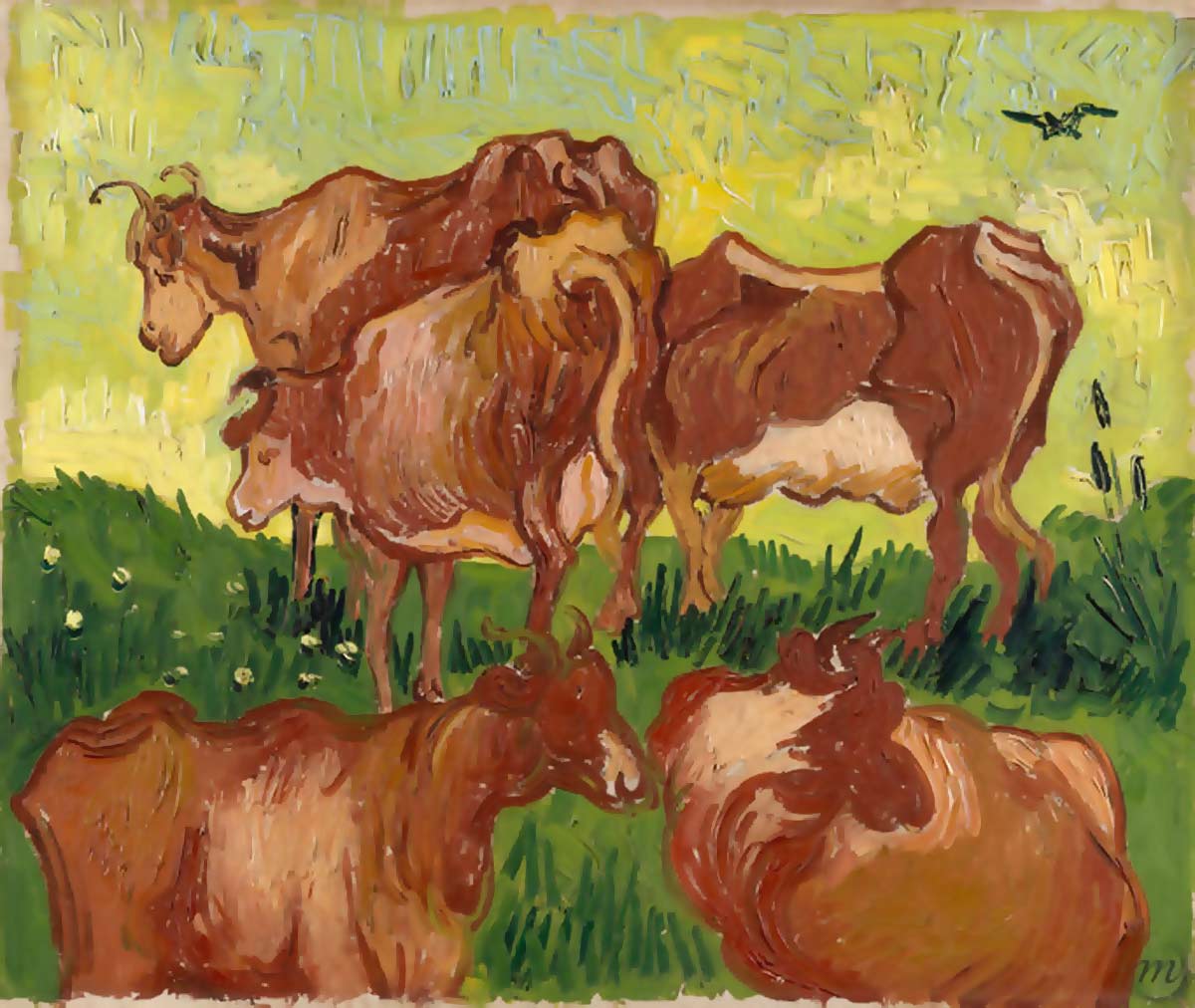
Even though Van Gogh had this subject readily available in the countryside, the painting Cows from 1890 was painted as a copy of a print. At the time, Van Gogh was living in Auvers-sur-Oise which was an artists’ retreat close to Paris. He was staying there under the supervision of Doctor Paul Gachet, a physician and amateur artist who was well-known among the artist circles in Paris. Gachet used to make etchings under the pseudonym Paul van Ryssel with an etching machine in the attic of his house.
He made an etching of the painting Study of Cows by Jacob Jordaens, which then served as a reference for Van Gogh’s painting. This process of painting a copy from another copy was a fairly new exercise for the artist, but making drawings and paintings after other artworks was a common practice for the artist.
In Cows, Van Gogh used bright greens, yellows and browns. The contrasting yet harmonious colors, the bold use of line as well as the unique interpretation of forms renders Cows as a testament to Van Gogh’s development as a modern artist that is especially noticeable when compared to his handling of the similar subject of oxen in Nuenen.