
Contemporary American artist Janine Antoni defies the borders of conventional art by challenging human perception and physical senses. Through her complex installations and photographic projects, Antoni explores the transformation of materials and the physical presence of a body in space. Many of her works relate to notions of femininity and motherhood. Read on to get familiar with seven remarkable works by Janine Antoni.
1. Gnaw, 1992: The First Groundbreaking Work by Janine Antoni
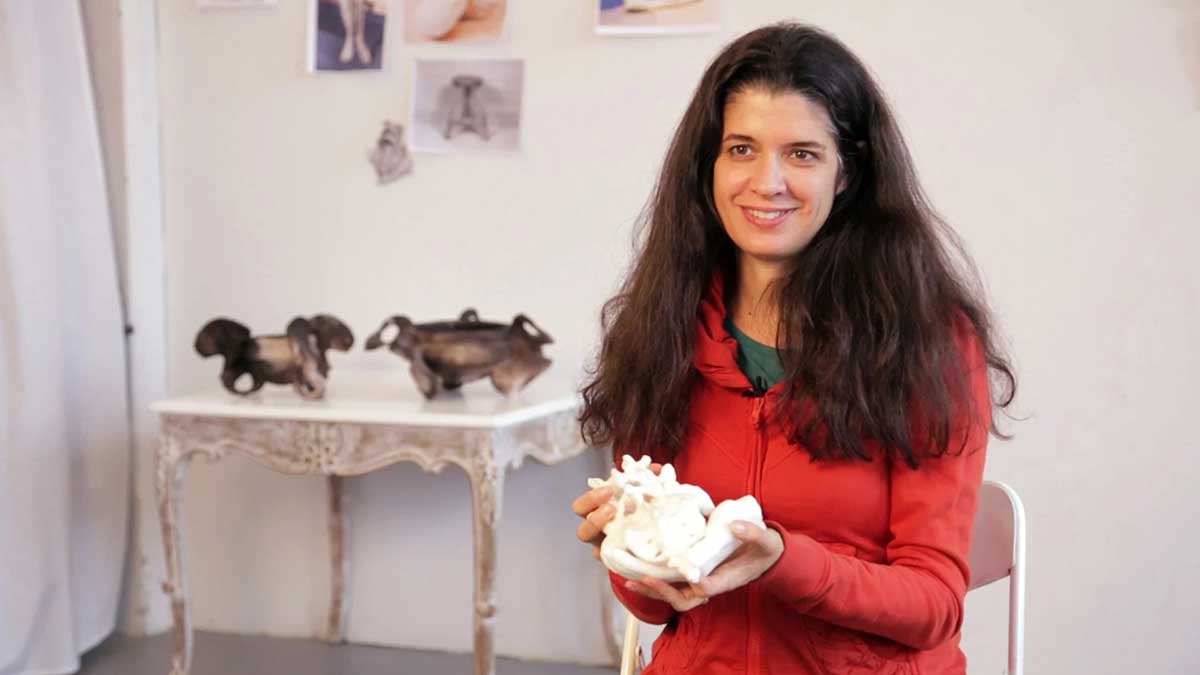
Born in the Bahamas, Janine Antoni moved to Florida in her teens and received her artistic training there. As a foreigner, she paid extreme attention to the acts and motions that made her different from others. She also noticed the interaction of the body with space, known or unfamiliar. Upon discovering the works by Ana Mendieta in her student years, Antoni was anxious about the potential of her artistic career. She believed Mendieta, as well as other, then almost unknown, feminist artists working with their own bodies and natural materials, have said it all already. Still, she realized how unjustly ignored artists like Mendieta were, and continued to develop her expressive language.
One of the first works by Janine Antoni that made her a recognized contemporary artist was the 1992 installation Gnaw. The artist took two cubes of lard and chocolate, 600 pounds each, and reshaped them using her teeth. Antoni then melted the chewed chocolate to cast 27 heart-shaped packages, and the chewed lard to create 135 tubes of bright red lipstick by mixing it with beeswax and pigment.
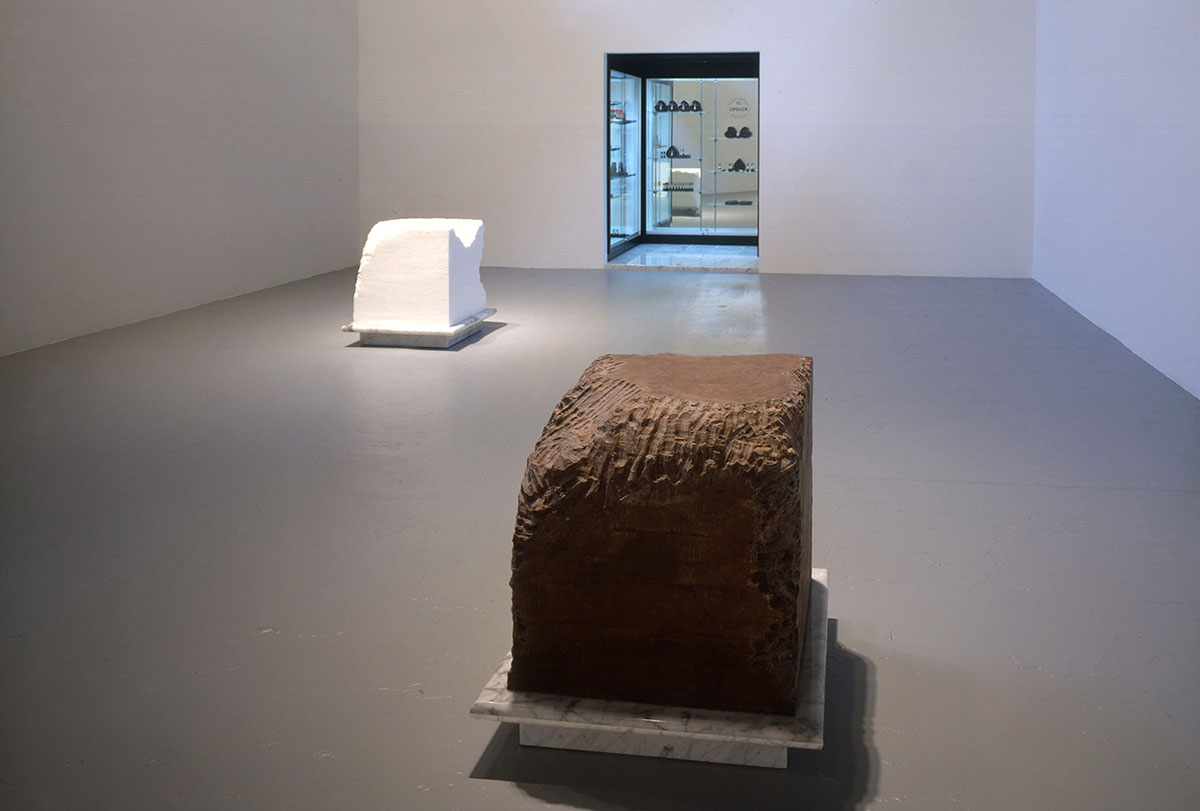
Despite her obvious tactile involvement in the work, Antoni never shared images of her actually chewing the chocolate. This was a deliberate gesture: an image of the artist crouched on the floor with her teeth sunken into the 600 lb cube of chocolate would irreparably ruin the viewer’s focus. Antoni’s idea was to concentrate her audience on the tactile qualities of the piece, imagining their own interaction with it and observing the bite marks.
Gnaw is the exercise in tactile perception, referencing the way babies perceive the world by chewing objects, and exploring the borders of the desired and the repulsive. Chocolate, lipsticks, and heart-shaped trinkets are all associated with femininity as something desirable and appealing, while lard and saliva, inevitably present in the installation, tend to repulse the onlooker. Moreover, Antoni marks lard as the feminine-coded material due to a higher fat percentage than men. By chewing on lard and turning it into makeup, the artist reflects on the cannibalistic side of beauty standards and desire.
2. Lick and Lather, 1993
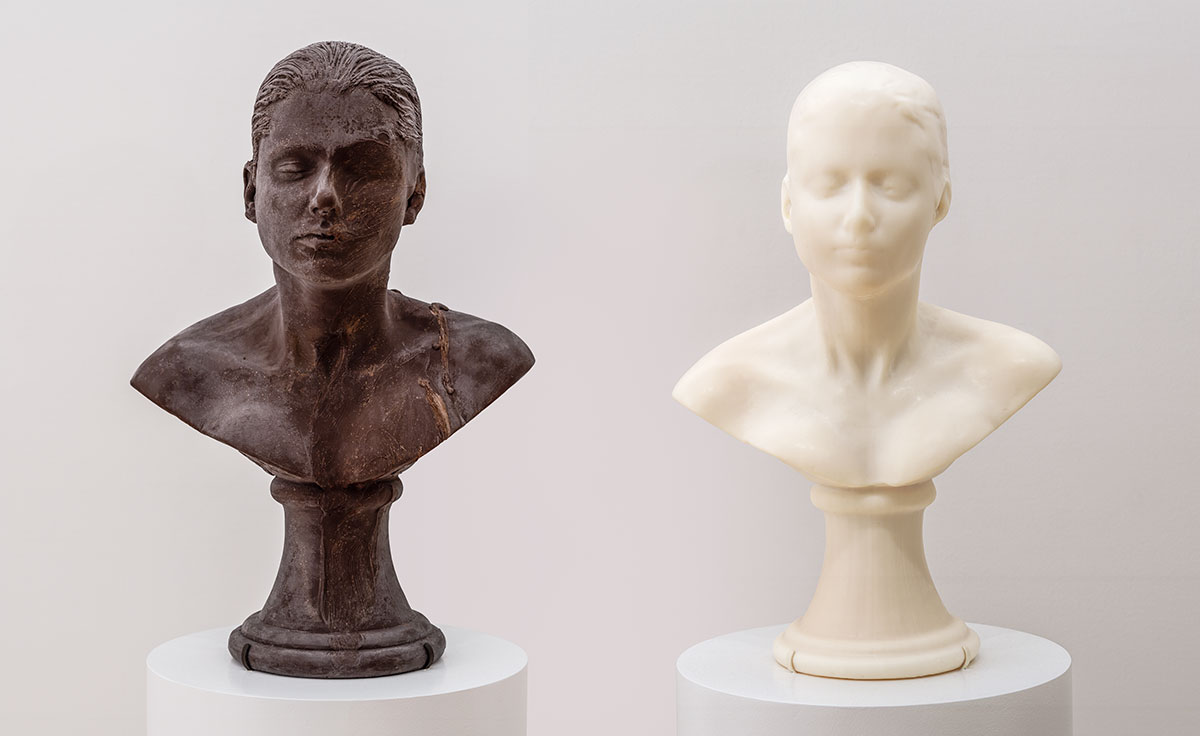
Similarly to Gnaw, Lick and Lather explored the concept of transformation—both material and conceptual. She cast a series of life-sized bust self-portraits, seven from chocolate, and seven from soap. Identical at first, soon they became nothing alike, as the artist reshaped them through the natural intended use of their materials. She licked chocolate and bathed with soap, and soon the figures lost their precise contours and gained individuality. By reshaping her face and body, the artist distanced herself from her self-portraits. Traditionally, cast sculptures have been perceived as the direct reflection of the natural world, but in Antoni’s case, they keep living and transforming independently.
Both eating and bathing are regarded as self-care practices. Through them, Antoni destroys and alters her own reproduced images: caring for her real self, she compromises the copies. The traditional bust form is as important as the transformation of materials: the licked chocolate surface resembles patina and scratches on aging bronze sculptures. Decades later, Antoni would use the molds left from the Lick and Lather project in her installations, reinventing not only her old art but her old self, in appearance and identity.
3. Loving Care, 1993
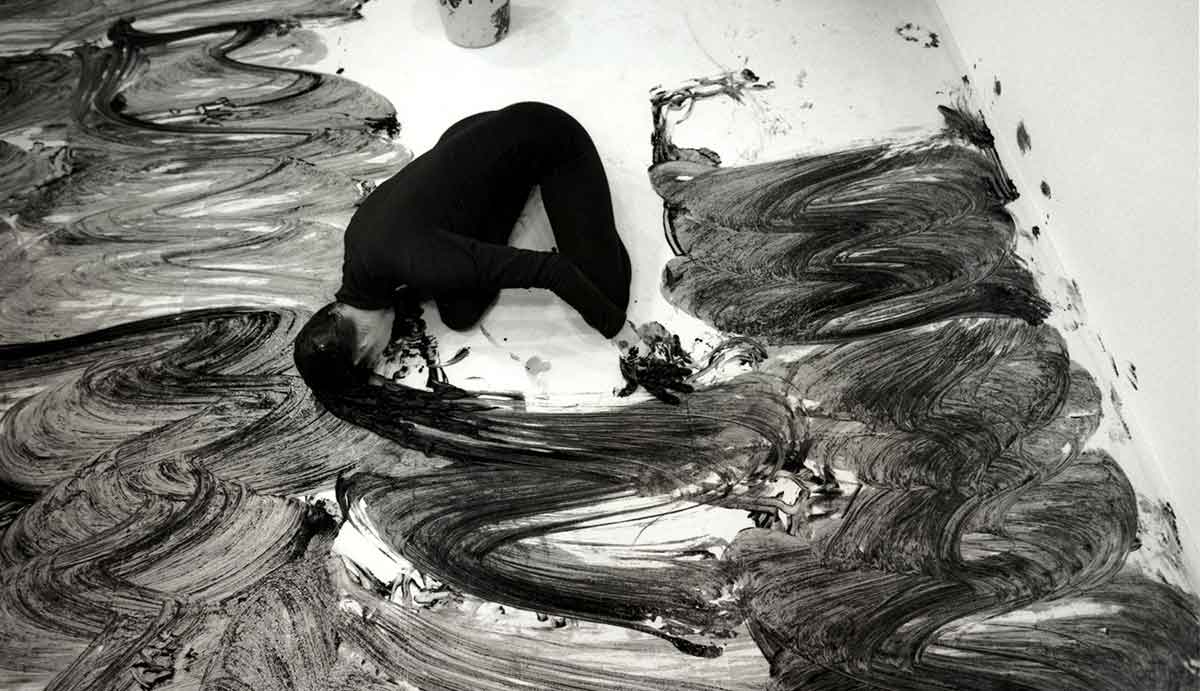
Unlike the previous two works mentioned on this list, Loving Care required the artist’s presence and direct observation of her actions. During the performance, the artist dipped her hair in Loving Care hair dye and painted the floor with it as a brush. Gradually, she covered the entire floor with paint, pushing the visitors out of the gallery room. Thus, the artist was not only present in the scene but actively claimed the space for her work and expression. The act was not only about painting but also mopping: she recalled how her mother wiped the kitchen floor, pushing everyone outside. For a few minutes, the kitchen space was entirely hers—reclaimed and occupied.
Loving Care also referenced iconic works of art and styles of the 20th century. The broad strokes made by Antoni’s hair looked too familiar to monumental Abstract Expressionist canvases. Another reference was the art of Nouveau Realisme master Yves Klein. Klein used female models as his brushes, covering their nude bodies in paint and asking them to roll on the stretched canvas. These models were passive instruments that helped realize the idea of a great male artist and were stripped of their agency. Antoni, on the contrary, takes the initiative in her own hands and uses her own body on her own terms.
4. Slumber, 1994
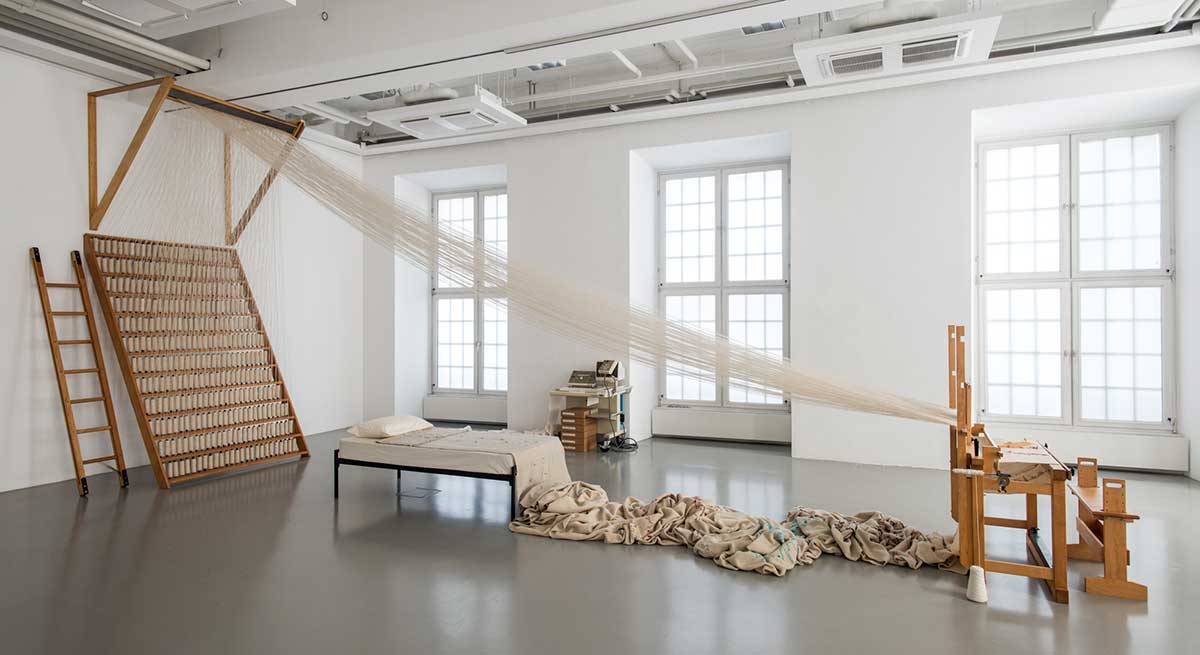
One of the most famous and critically renowned works by Janine Antoni, Slumber once again blended public with private and explored the activities traditionally identified as feminine. For several weeks, Antoni spent her nights inside the art gallery space with an electroencephalograph attached to her head to record her eye movement during sleep. Each morning, she weaved the REM data from the machine into a blanket she would cover herself with the following night. The blanket could never be finished completely, only interrupted by the artist’s conscious choice or her death. In Slumber, Antoni both crafted her dreams and let them comfort her sleep. Since the piece was essential performative, she made a very private and individualized act public and visible using both traditional techniques and modern technology.
5. 2038, 2000
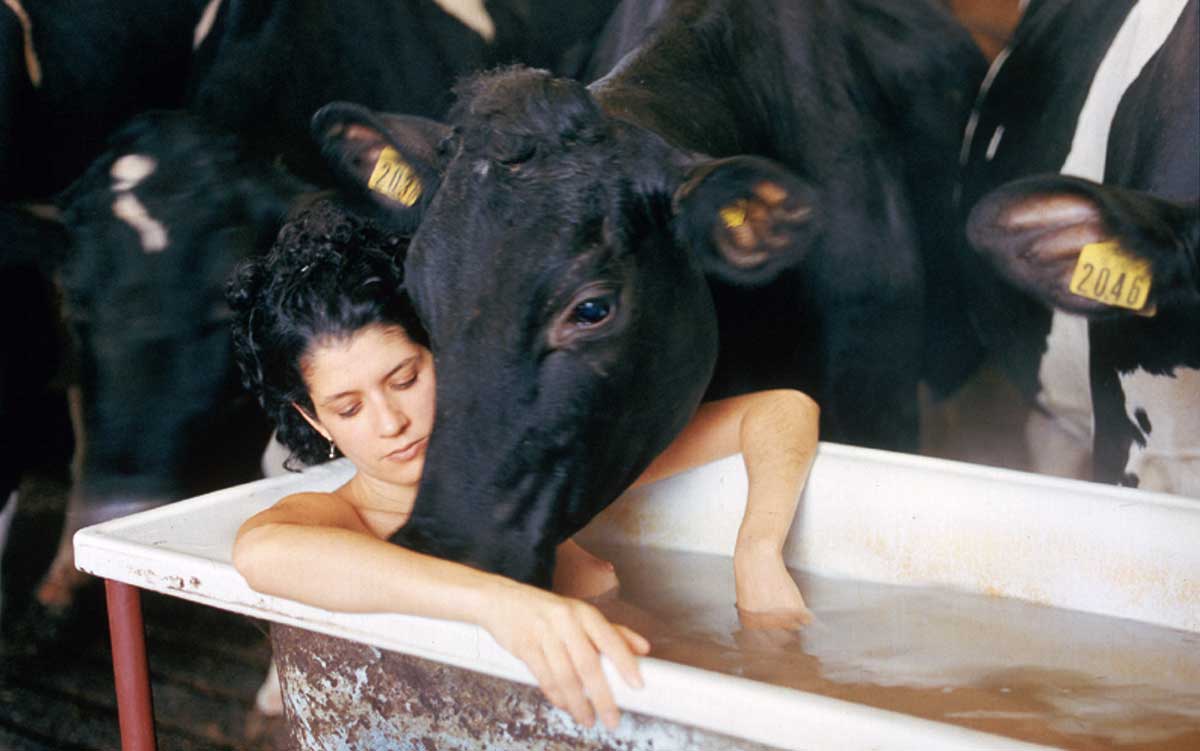
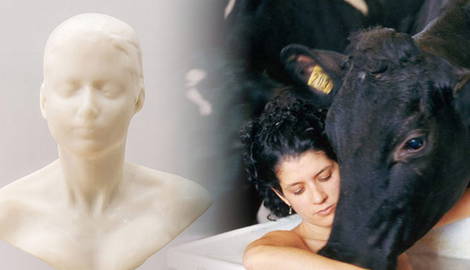
This photographic print features the artist lying down in a bathtub next to a group of cows, one of which Antoni is seemingly nursing. The number 2038 is seen on the cow’s ear tag and it’s the only piece of information about the animal. The anonymous existence of 2038 is completely subject to the desires and needs of human beings who see her as a source of milk, meat, and hide. This way, Janine Antoni brings her relationship with a cow full circle—the roles of a wet nurse and her surrogate child are reversed.
The topic of nurture and the physical and mental connection between mother and child have long preoccupied Antoni. Antoni’s mother was an experienced midwife who kept models of bones and organs in their home. The artist was always fascinated with the ways human physicality shaped their mental states and conventions and vice versa. Her experience became augmented with the birth of her daughter in 2004, after which Antoni dived further into works relating to pregnancy and childbirth.
6. Like Lazarus Did, 2013
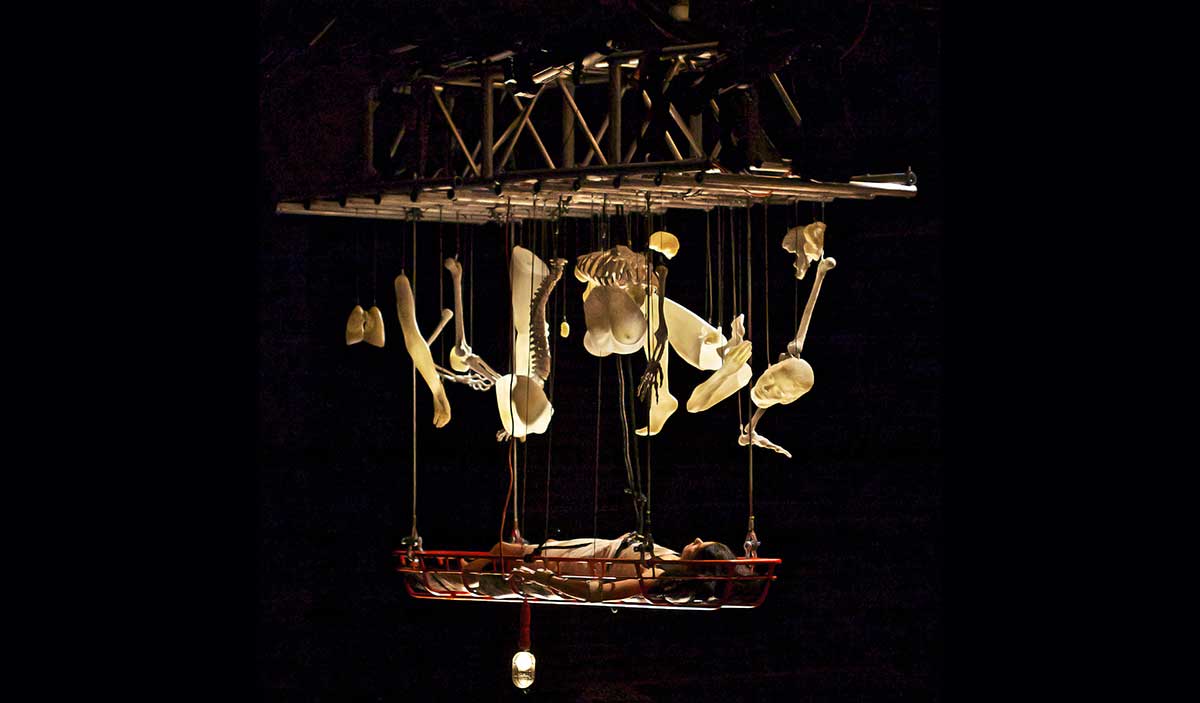
Like Lazarus Did was a collaborative project centered around a dance performance by a New York choreographer Stephen Petronio. The principal subject matter revolved around the Biblical myth of Jesus resurrecting Lazarus of Bethany four days after his death. The choreography was centered around concepts of rebirth, resurrection, and ascension to the higher plane of spiritual existence.
Janine Antoni’s role in the dance performance was counterintuitive, as she lay motionless in a helicopter stretch fixed above the stage. Over the artist’s head, casts of her own body parts were hung as ornaments in an infant’s crib. For hours, Antoni closely observed her physical body detached and suspended. The idea to create these elements came to the artist through her exploration of Catholic religious objects. In some regions, mostly Spanish-speaking devoted Catholics would purchase or create small copies of body parts that related to their prayer’s intention or desired result, both literally and metaphorically. A person would buy a leg-shaped charm to both heal an injured leg and ask for good luck for an upcoming trip.
7. Janine Antoni’s Cemetery Installation: I Am Fertile Ground, 2019
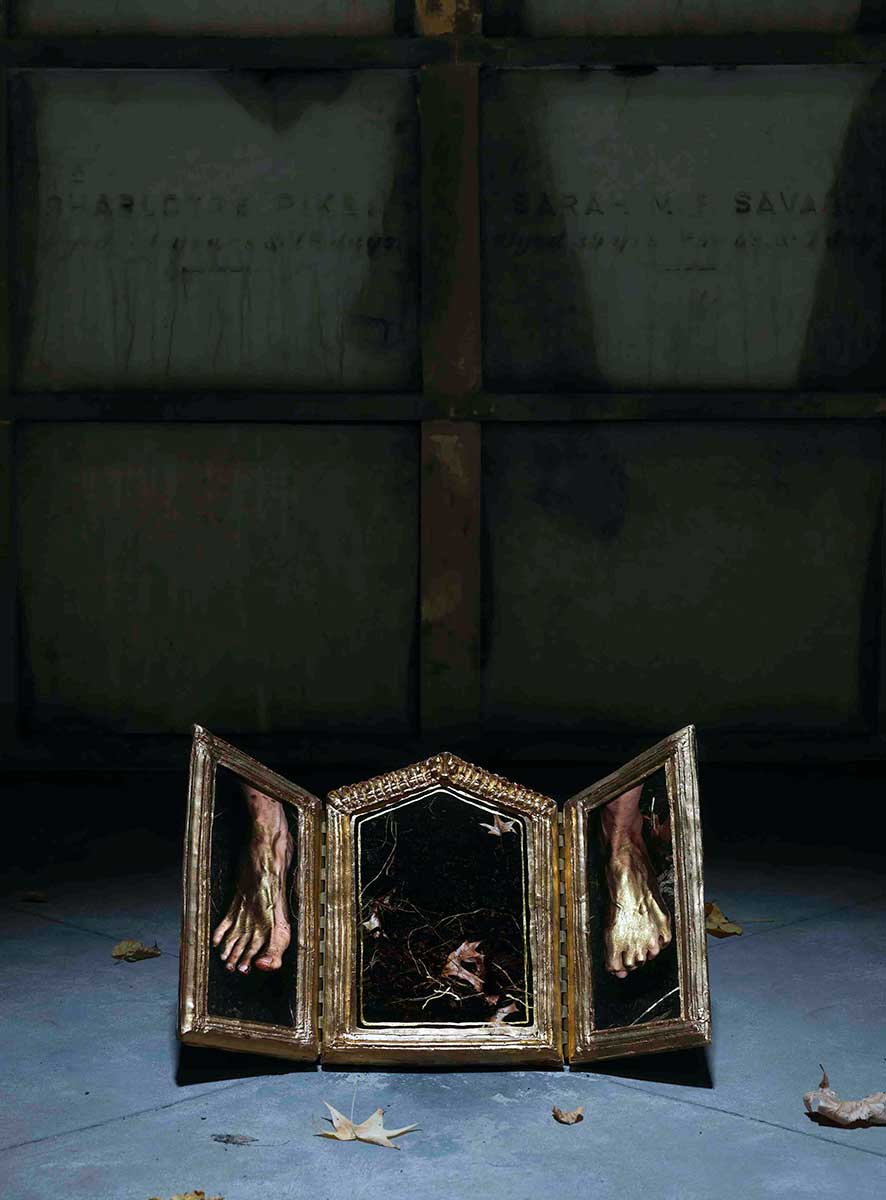
Janine Antoni designed this complex and site-specific installation for the Green Wood Cemetery in Brooklyn. Under the cemetery, vast, uninviting, and cold catacombs stretch. As Antoni stated, the catacombs are the place where bodies are aware of their mortality and dread it. Instead of unraveling the terror, the artist chose to represent our mortal bodies as sacred by positioning images of their parts over the catacombs’ labyrinth.
Antoni decorates her work in the form of gilded Baroque altarpieces, yet keeps them distinctively small and delicate. Painted images of hands, feet, torsos, and hips, celebrate the body as something mysterious and sacred. Each body part performs a gesture that Antoni developed through her own dance practice, adding a ritualistic component to the work. The title hints at the inevitable return of the body into the ground that produced the union that should be revered, not feared. The original exhibit of the artwork in 2020 featured a dance performance that united the dancers’ bodies with the natural elements.