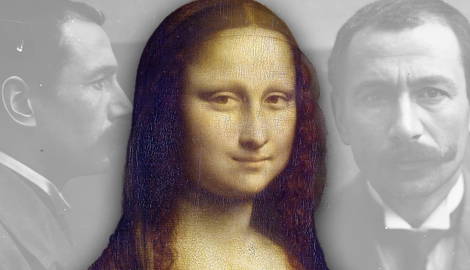

On August 21, 1911, Vincenzo Peruggia, an Italian immigrant working at the Louvre, stole Leonardo da Vinci’s Mona Lisa from the French museum. After hiding it in his apartment for two years, he then tried to sell it to an Italian art dealer, who denounced him to the police. Arrested and tried by an Italian court, Peruggia claimed he simply wanted to return the painting to its rightful owner: Italy. Read on to discover more about the thief who turned the Mona Lisa into one of the most-recognized artworks in the world.
Vincenzo Peruggia and the Theft of the Mona Lisa
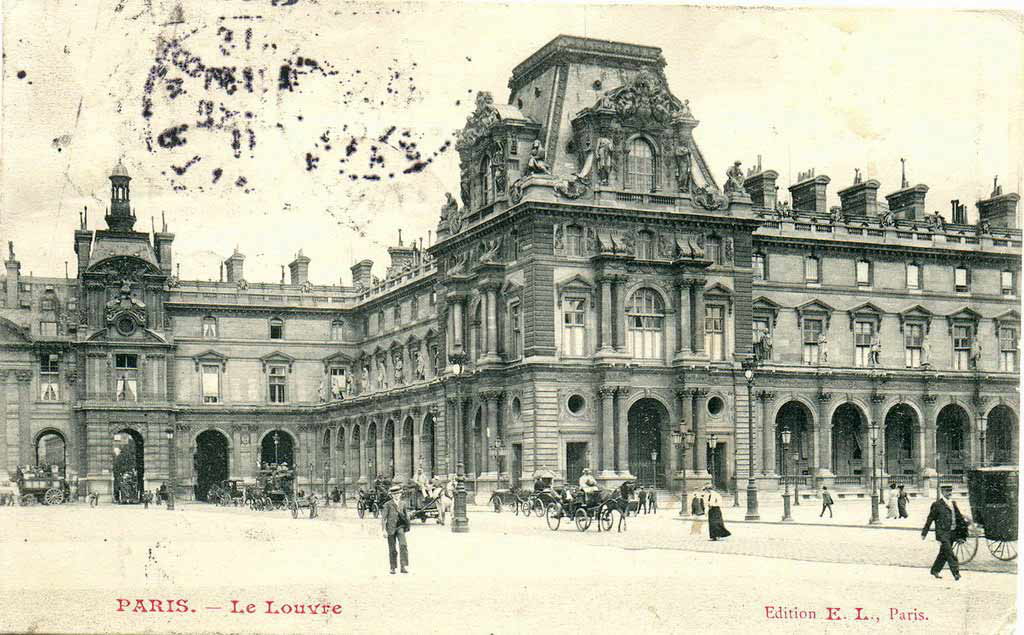
On August 22, 1911, a local artist entered the Salon Carré at the Louvre Museum in Paris, planning to sketch Leonardo da Vinci’s Mona Lisa. Upon finding an empty space where the portrait usually hung, he asked a guard about the painting’s whereabouts.
The guard was not immediately alarmed as the museum’s artworks were often removed to be photographed. However, after a more extensive search, the Mona Lisa could still not be located. Realizing it had been stolen, the Louvre contacted the police, who frantically began to look for the missing painting.
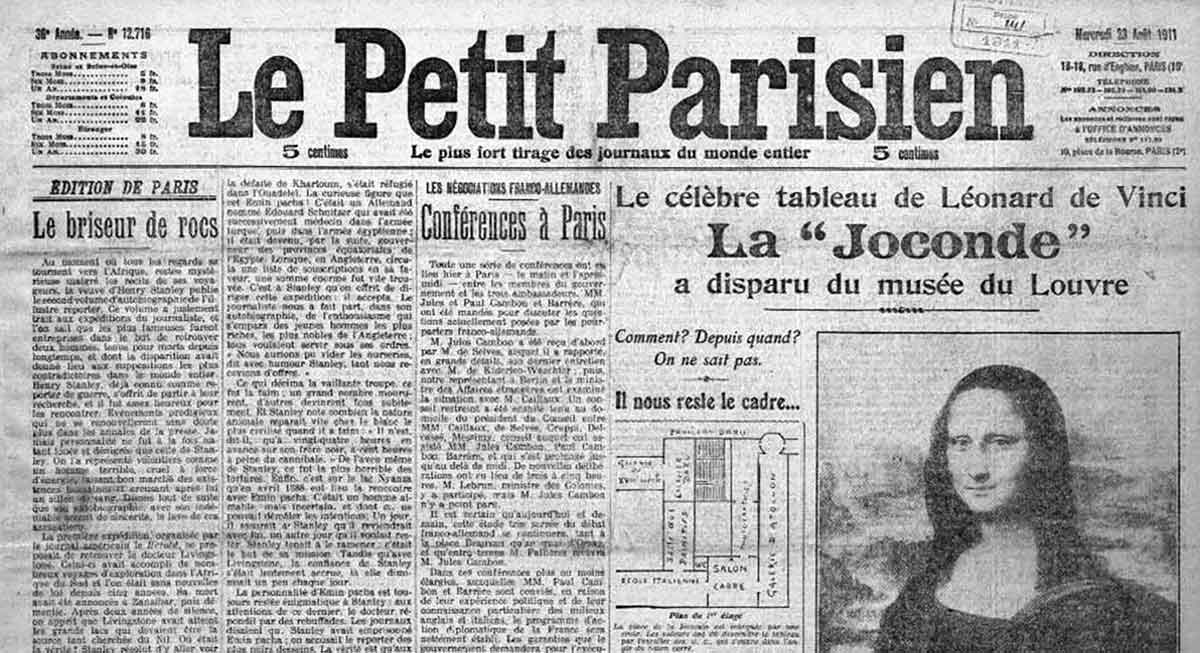
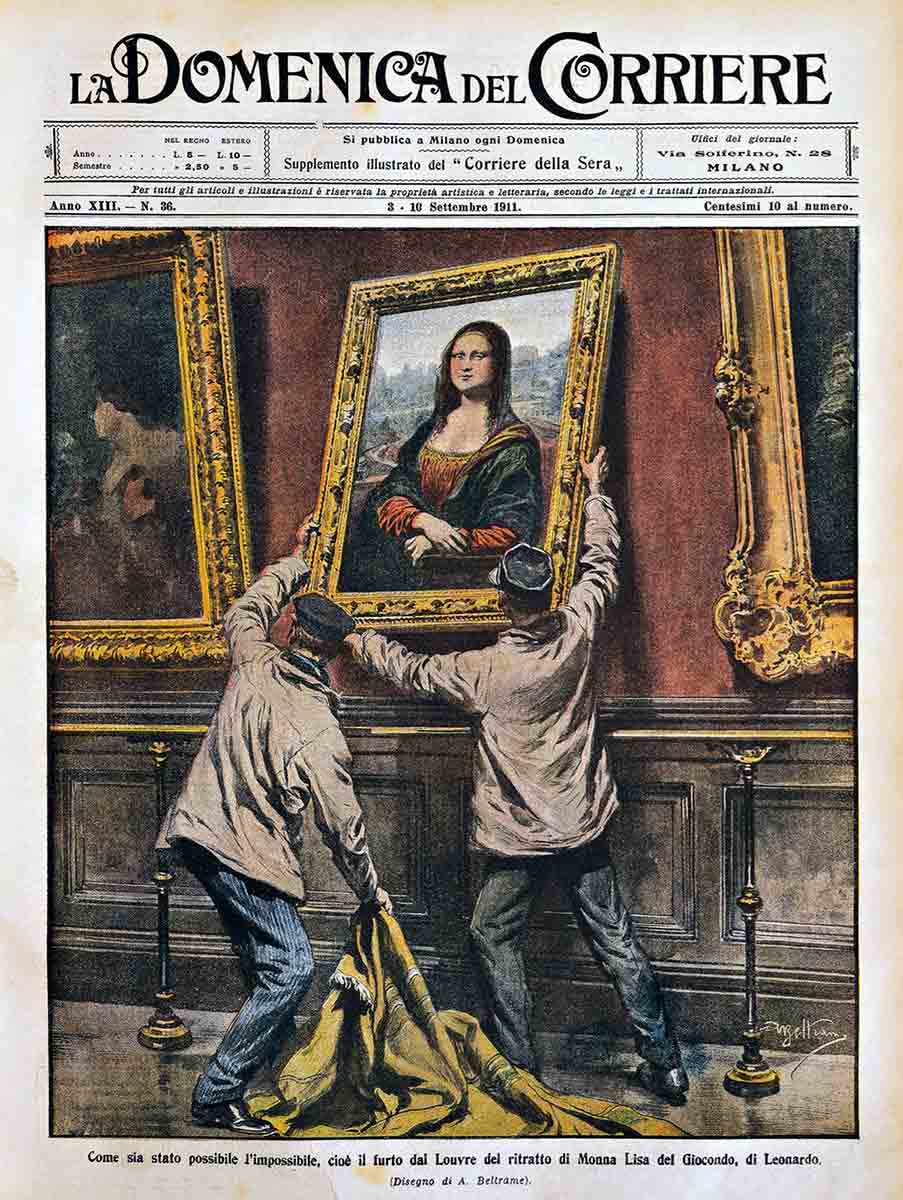
In the following days, news of the theft appeared in the French and international press, causing a sensation: Masterpiece of Leonardo da Vinci Vanishes from Louvre — Known as Mona Lisa. FRAME FOUND ON STAIRCASE Picture Not Cut from It, but Carefully Removed — Army of Detectives at Work read the lengthy title of an article published in The New York Times on August 23. Suddenly, readers around the world became familiar with the painting, which was reproduced on countless front pages. When the Louvre reopened a week after the theft, thousands of Parisians flocked to the Salon Carré to stare at the empty space left behind by the portrait. Amid a public outcry, the Louvre’s director, Jean Théophile Homolle, resigned.
As the investigation continued, a series of outlandish theories emerged. Some claimed to have seen the Mona Lisa in locations as far as Brazil and Japan. According to another story, US banker J.P. Morgan had commissioned the theft. Additionally, the French police initially questioned poet Guillaume Apollinaire and painter Pablo Picasso. Indeed, the latter had used some Iberian artifacts stolen by the poet from the Louvre as models for his Demoiselles d’Avignon painting, so the suspicions were not completely unfounded. However, the two artists were cleared.
The thief’s identity was discovered only two years later when the Italian police arrested Vincenzo Peruggia, an Italian immigrant working at the Louvre at the time of the theft. The French police had previously questioned Peruggia but never considered him a person of interest regarding the heist.
Who Was Vincenzo Peruggia?
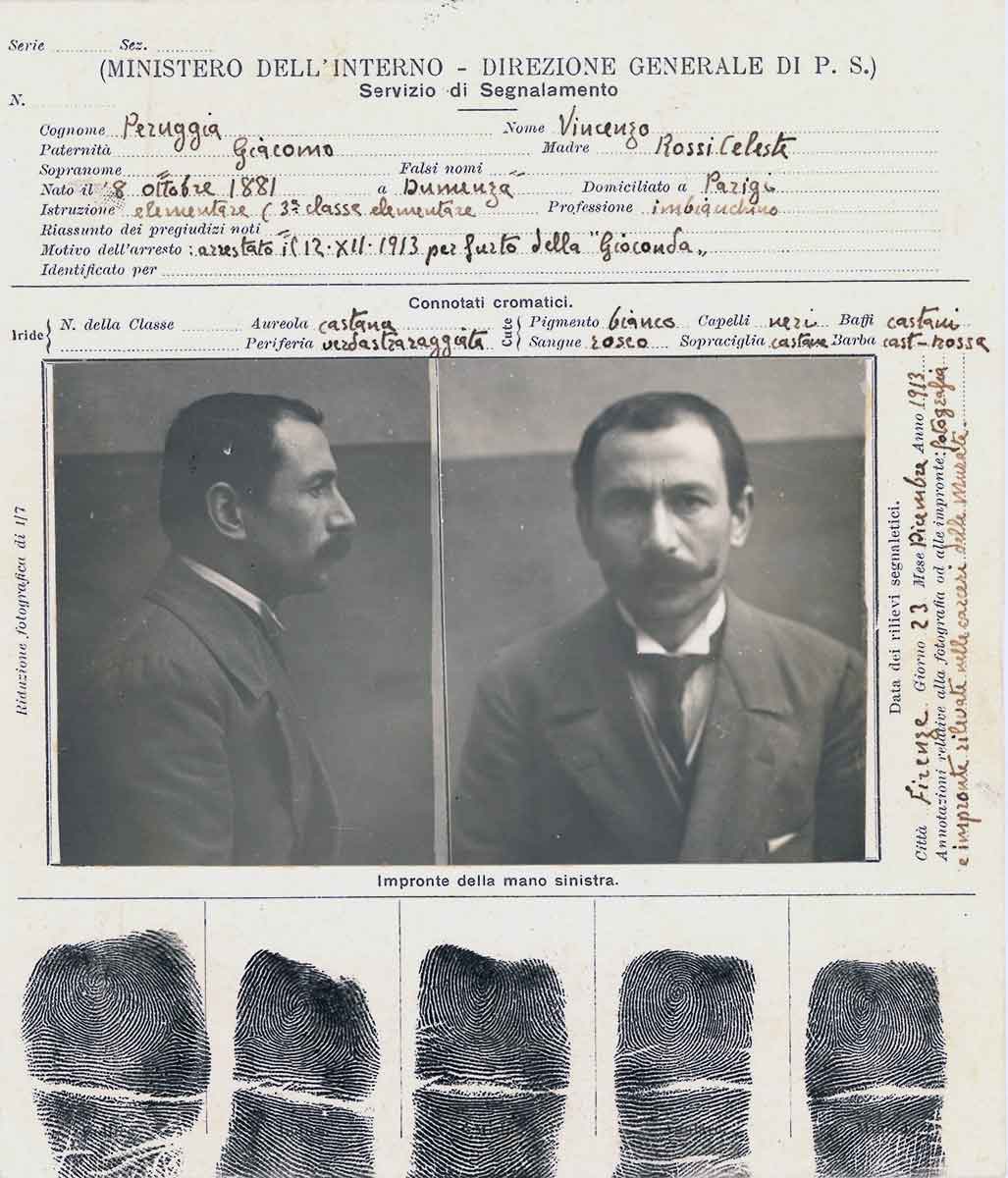
Vincenzo Peruggia was born on October 8, 1881, in Dumenza, a town in the province of Varese in Lombardy, Italy. His parents were Celeste Rossi and Giacomo Peruggia, a construction worker. At the age of twelve, Vincenzo started working as a house painter in Milan. In 1900, he suffered lead poisoning, at the time known as “saturnism,” due to prolonged exposure to lead-based paints. Exempted from mandatory military service because of his poor health, Vincenzo spent the following years working in Milan, Sondrio, Lyon, and Paris.
In 1908, he moved permanently to the French capital, where he worked as a decorator. In the following year, he began working for a company employed by the Louvre to build glass cases for several artworks, including the Mona Lisa. While his employer trusted Peruggia, even tasking him with doing extra work on his country residence, the Italian house painter had a couple of run-ins with the police during his stay in France.
During a stay in Mâcon, a city in east-central France, he was arrested, charged with attempted robbery, and jailed for 24 hours. During the interview with the doctor who wrote his psychiatric evaluation, Peruggia claimed innocence, blaming the widespread prejudices against Italian immigrants for the incident. While working in Paris, Peruggia was sentenced to eight days in jail and fined 15 francs for violence and unlawful possession of a weapon following an altercation with a sex worker during a night out with a group of friends.
Why & How Did Vincenzo Peruggia Steal the Mona Lisa?
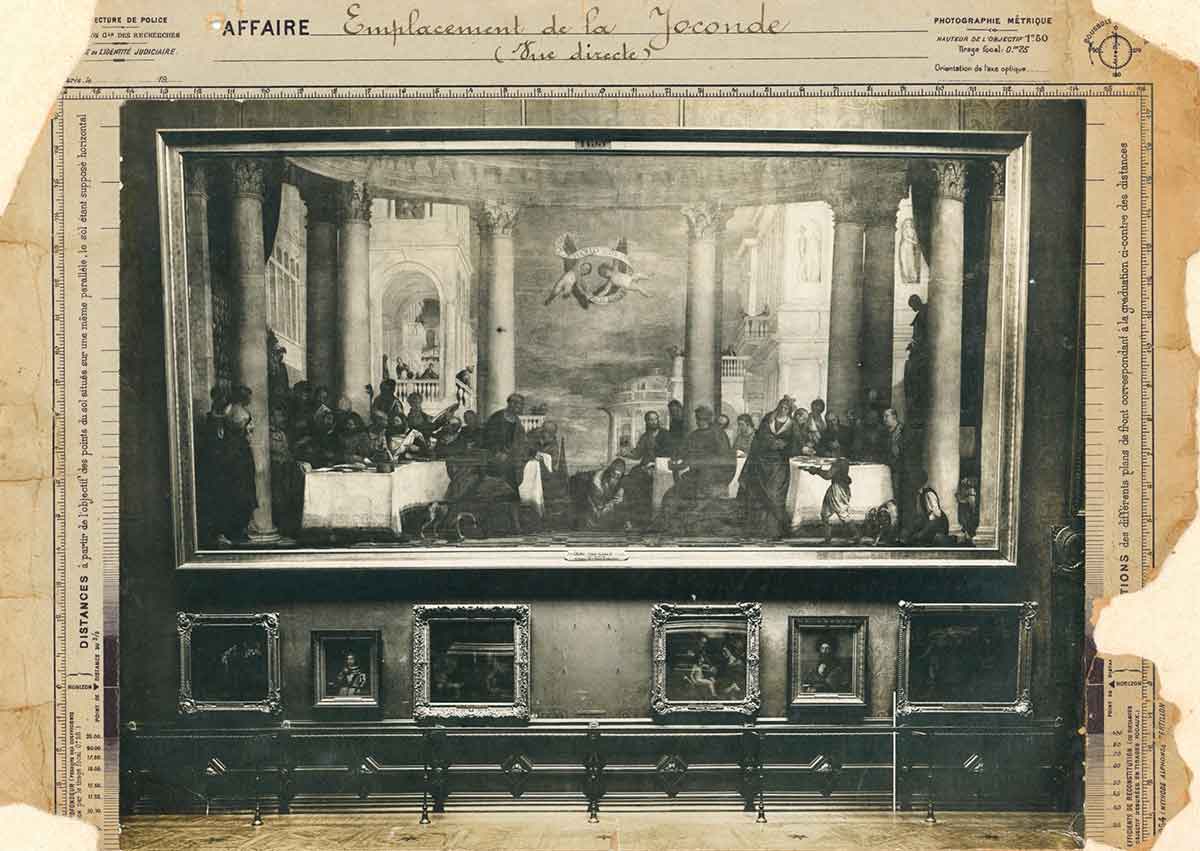
When questioned by the police, Vincenzo Peruggia claimed the resentment evoked by the daily sight of the looted Italian artworks on display at the Louvre inspired him to commit the theft. Initially, he considered stealing Raphael Sanzio’s painting La Belle Jardinière (also known as the Madonna and Child with Saint John the Baptist). However, he soon changed his mind, as the canvas was too big to carry. He then shifted his attention to the Mona Lisa.
Working as a subcontractor for the Louvre, Peruggia had easy access to all artworks. His uniform and the general lack of security inside the museum allowed him to move undetected through the building. “I had only to choose an opportune moment, and a mere twist would put the painting in my hands,” he later recalled. Indeed, on August 21, 1911, after spending the night hidden in a closet, Peruggia simply walked up to the Mona Lisa and removed it from the wall. He then wrapped his uniform, a white smock, around the wooden panel and exited the building after removing the glass frame.
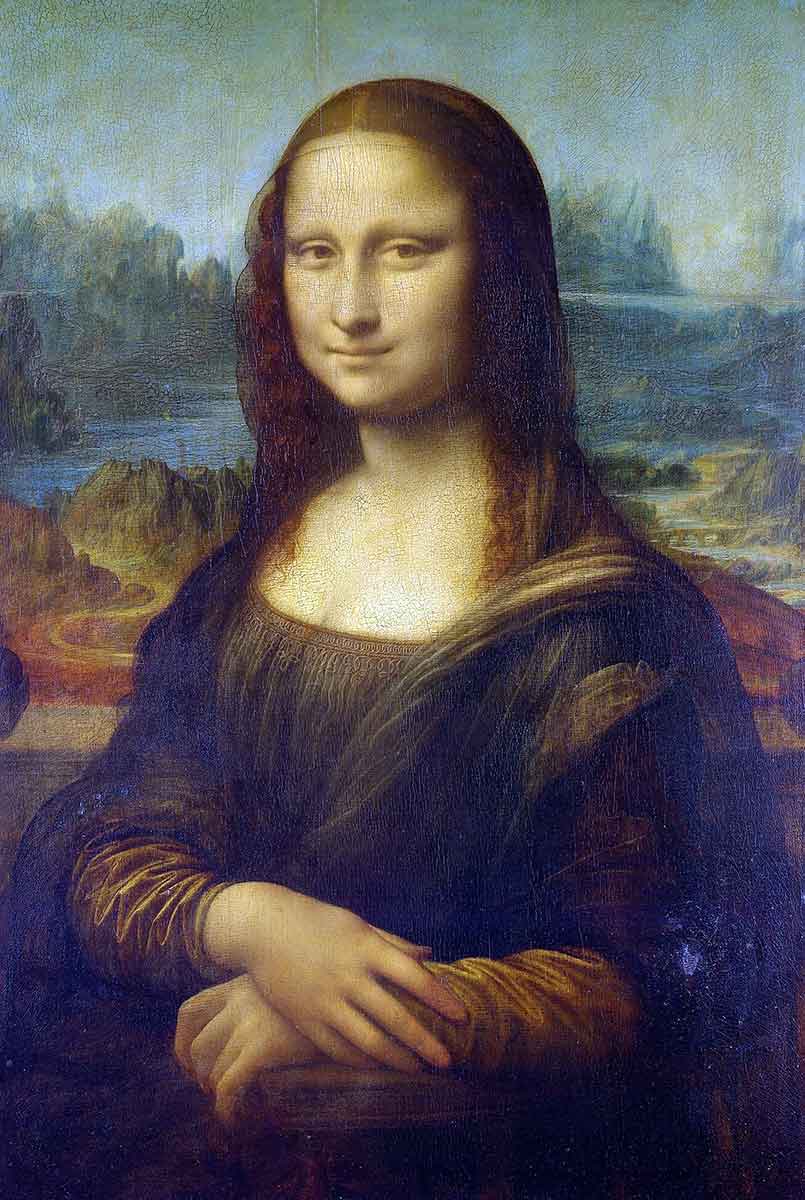
While police and teams of investigators frantically searched for the stolen masterpiece, Peruggia hid it in his Parisian apartment in Rue de l’Hôpital Saint-Louis. In his later account, Peruggia claimed he grew obsessed with the Mona Lisa as he waited for the chaos following the heist to die down. “I sometimes wondered in those two and a half years whether or not I would do better to burn the painting, fearing that I might go mad,” he declared.
In 1913, to escape the pull of the Mona Lisa’s “haunting smile,” and because he was short on money, Peruggia finally decided to sell the painting.
“Leonard V.”
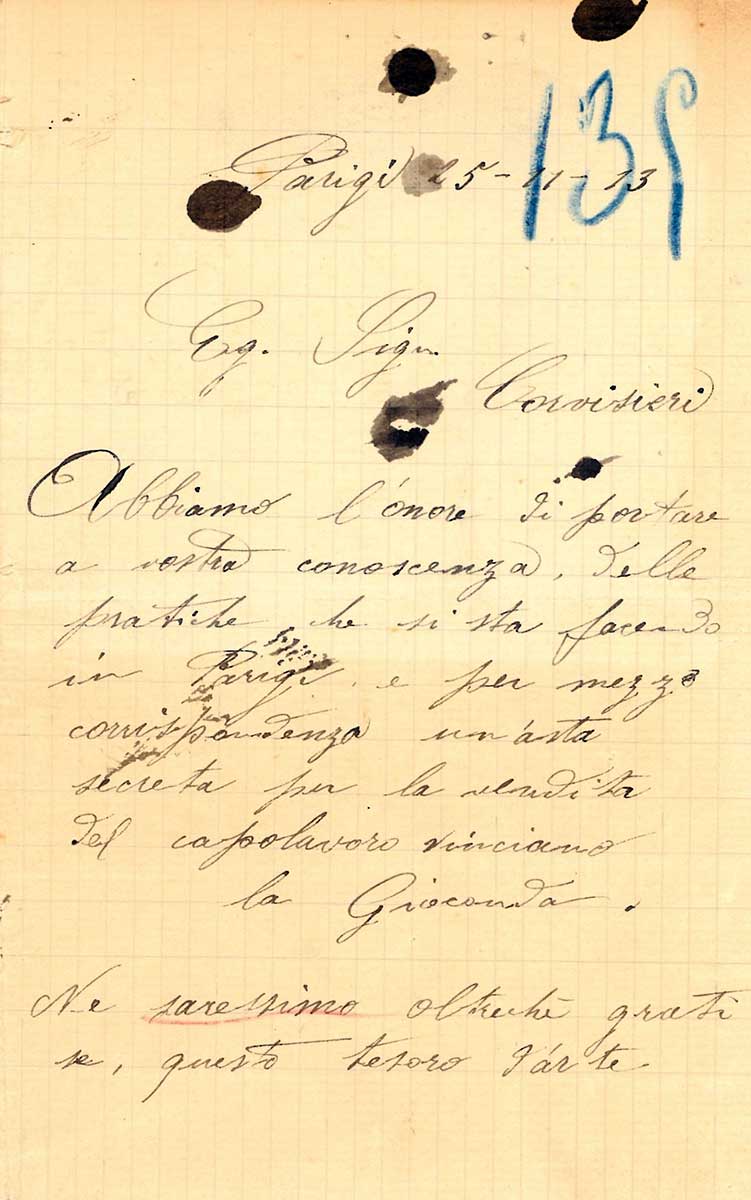
In November 1913, Vincenzo Peruggia sent a letter to Alfredo Geri, an art dealer located in Florence, informing him that he had the stolen Mona Lisa in his possession. Using the pseudonym “Leonard V.,” Peruggia also offered Geri a 25% discount, claiming his main goal was not profit but the repatriation of the painting to Italy.
In a second letter, Peruggia expressed his desire to return the portrait to the Uffizi Gallery, adding that displaying it at the Florentine museum would be “a great revenge on the French Empire” for the looting of countless Italian artworks. Indeed, Peruggia mistakenly believed Napoleon Bonaparte had stolen the Mona Lisa. In fact, King Francis I had legally acquired the painting after Leonardo’s death.
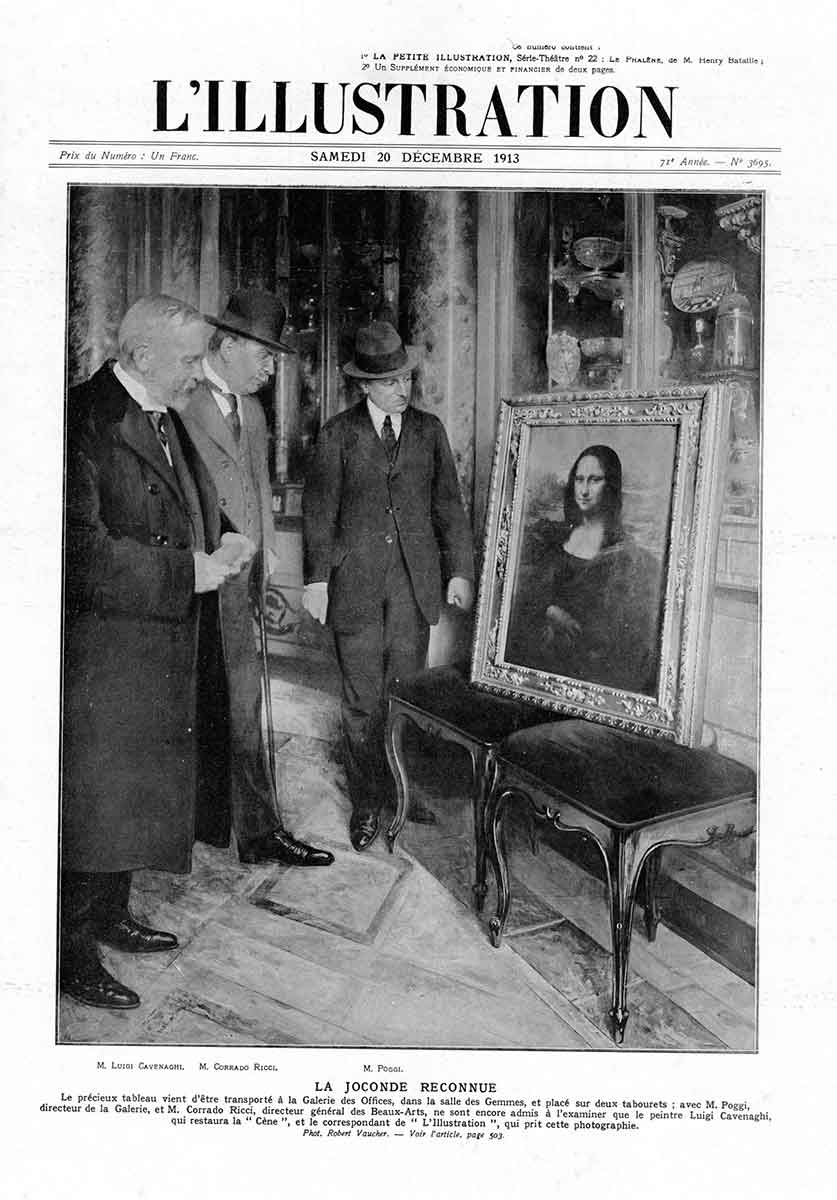
On December 10, the thief traveled to Florence, where he rented a room at the Hotel Tripoli (now Hotel Gioconda). Meanwhile, Geri, who had no intention of buying the stolen artwork, contacted Giovanni Poggi, the director of the Uffizi Gallery. Upon visiting Peruggia in his hotel room, Geri and Poggi convinced him to bring the painting to the Uffizi for an official authentication. Unbeknownst to Peruggia, Geri had already denounced him to the Questore (Superintendent) of Florence.
On December 12, 1913, Peruggia was arrested in his hotel room, where the police discovered a trunk with a false bottom. When questioned about the heist, he claimed to have acted alone. However, it was later discovered he had help from two close friends.
An Italian Hero?
During his trial, Vincenzo Peruggia claimed patriotism inspired him to plan the heist, denying he ever planned to profit from the sale of the stolen painting. Convinced he had carried out a heroic deed for his country, Peruggia even expressed surprise at his legal troubles. Questioned by the defense-appointed psychiatrist about his state of mind during the heist, he said he hoped the Italian authorities would reward his attempt to repatriate the Mona Lisa.
While the police and prosecution did not believe Peruggia’s patriotic claims, he won the support of the broader Italian public. During the trial, his defense team highlighted the popular support for the defendant, describing him as a hardworking man and a patriot acting in defense of his country’s honor. “By accepting our conclusions you will have listened to the voices that are coming from every part of Italy, where there is no one who desires the condemnation of the accused,” declared Targetti, the head of Peruggia’s defense team, during his closing argument. The audience present in the courtroom cheered.
The prosecutor, however, questioned the claim that Peruggia had acted solely out of love for his country, arguing that profit had been the real factor behind the heist. Indeed, before writing to Geri, Peruggia had made previous attempts to sell the stolen painting. In July 1913, he went to London, where he contacted the Duveen brothers, art dealers and owners of an antique shop in Bond Street. Then, in October, he sent a letter to Lucchini, an Italian politician, asking for his assistance in contacting the Leonardo da Vinci Society in Italy. Finally, in November, Peruggia contacted an art dealer in Rome, offering him the Mona Lisa at a bargain price. As proof of his claim, the prosecutor also provided several letters Peruggia sent to his family, announcing his imminent prosperity.
The Mona Lisa’s Italian Tour
In June 1914, the Tribunale Penale (Criminal Court) of Florence sentenced Vincenzo Peruggia to one year and 15 days in prison. The judge rejected the defense’s claim of a “patriotic heist,” reasserting that profit was the real motive behind Peruggia’s theft.
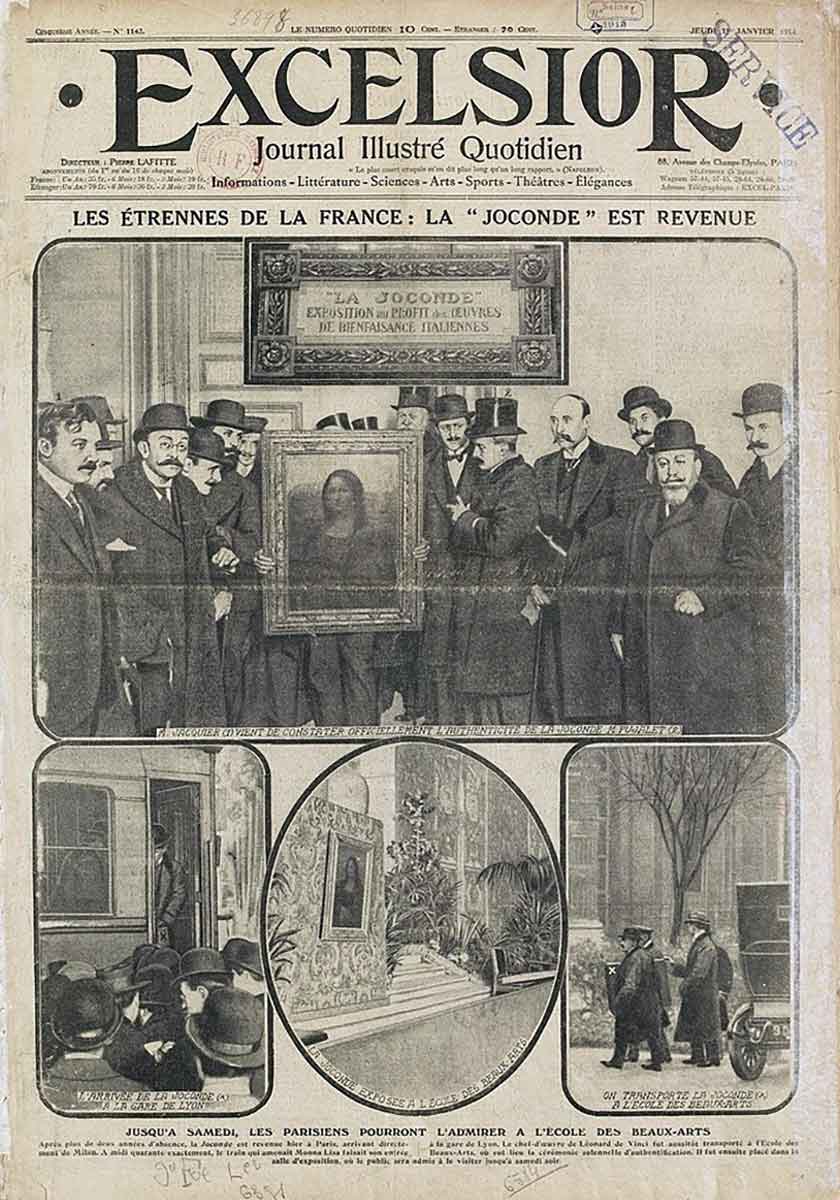
Meanwhile, the Italian authorities, who had (almost reluctantly) agreed to return the Mona Lisa to France, first took the painting on a “patriotic” tour through Italy. In December 1913, the Uffizi Gallery displayed the painting for five days. Thousands of visitors rushed to the museum to glimpse Leonardo da Vinci’s masterpiece. The next stop in the tour was Rome, where King Victor Emmanuel III of Savoy and several politicians could look at the Mona Lisa while it was temporarily displayed at the Ministry of Education. Then, at the end of December, the painting reached the Pinacoteca di Brera in Milan, where visitors jostled each other to be near the painting.
When the Mona Lisa returned to the Louvre, it had already become an international art icon.
Today, it is displayed behind a temperature-controlled glass case in the Salle des États, where it faces Veronese’s Wedding Feast at Cana, a painting that Napoleon plundered in 1797 in Venice.
What Happened to Vincenzo Peruggia?
At the end of July 27, 1914, Vincenzo Peruggia’s lawyers appealed against the Florentine court’s ruling, asking for a pardon or a reduction of the sentence. During the hearing, Peruggia again depicted his heist as a form of repatriation: “I took the Mona Lisa because it would enrich the Uffizi Gallery. I wanted it to come to Florence, where it was painted. I insist on this point. Of the rest, little interests me.” The judge ruled in his favor, and Peruggia was released from prison.
A year after his release, Italy entered World War I, and Peruggia was called to the army. After the war, he returned to France, where he died in October 1925 of a heart attack.
The real motive behind the “theft of the century” remains unclear, with some, including Peruggia’s daughter Celestina, still claiming it was a misguided attempt at cultural repatriation. Over the years, the story of Vincenzo Peruggia and his theft has been told in documentaries, songs, books, and movies. In 2012, the Parisian auction house Tajan sold Peruggia’s mugshot for almost €4,000.