When an amateur Boston engraver stepped into a darkroom in 1861, he emerged with a portrait displaying a spectral silhouette hovering behind his shoulder. To a nation on the brink of the Civil War, the image looked like undeniable evidence of life beyond the grave. In reality, it marked the birth of spirit photography, an audacious Victorian confidence trick that preyed on profound grief and bamboozled grieving families, prominent artists, and even former First Lady Mary Todd Lincoln.
What is Spirit Photography?

To label the invention of photography as just another human invention is an understatement. It radically transformed how we record and transmit information, but also reduced the barriers of space and time. For the first time in human history, it became possible to witness an event without being there or “see” a person who had already passed on. For some, photography seemed to contain an element of the supernatural, and might even be able to break through the barrier between the living and the dead.
By the 1860s, the most popular technique in the United States was glass negatives. A glass plate was covered in a light-sensitive emulsion. The emulsion darkened the parts of a photograph that were the lightest in reality, creating a reverse yet accurate image. Then, a photographer developed the negative and printed the final image. Getting it right required significant experimentation, so image manipulation is as old as photography itself.

The discovery that you could impose one image onto another was probably accidental, but it opened up possibilities. Since the secondary image was often faded or blurred, it looked like a shadow or ghost, leading to the idea of spirit photography: that a ghost or spirit present in the room was captured by the camera.
There were numerous ways to create an illusion of a floating spirit, and historians have not identified all of them, so an element of mystery still surrounds them. The most popular proven methods featured overlaying several negatives during the printing process so that the images would appear on the same picture. Another technique was simply using a plate uncleaned after the previous use. As a result, the new photograph was developed along with the contours of another one.
Of course, different techniques produced different results. For that reason, spirit photographs had a variety of ghosts present: some appeared as semi-transparent figures, some as strange balls of light, and some as floating heads similar in density to those of the living.
Spirit photography should not be confused with another phenomenon of the era, post-mortem photography. Post-mortem photographs featured the physical bodies of someone’s deceased relatives, most likely children or mothers who died in childbirth. Although the pictures themselves were morbid, the desire to capture a dead loved one next to their living family at least once is quite understandable. Before the advent of photography, artists sometimes painted portraits post-mortem as well. Spirit photography had essentially the same purpose, yet never used actual bodies, instead utilizing photo manipulation of various kinds.
William Mumler: The Alleged Pioneer of Spirit Photography

The first person to ever take a photo of a spirit was William Mumler, an engraver and amateur photographer from Boston. In 1861, Mumler was working on a self-portrait. But Mumler was not the only person in the picture. Behind him appeared a figure of a woman, which Mumler identified as his long-dead cousin. This story told by Mumler was the beginning of a long-lasting craze over spirit photography.
Mumler’s discovery happened just at the beginning of the American Civil War. Feeling the air saturated with death and grief, Mumler saw a perfect business opportunity, opening a photography workshop in Boston. He was not working alone. His wife, Hannah Mumler, was involved in the process. While Mumler was busy with the technical part, Hannah acted as a medium, reaching the deceased relatives of clients and asking them to reveal themselves in the photograph.
Another curious fact was that Hannah was a trained photographer, unlike Mumler. They met in a photography studio, which was Hannah’s workplace that Mumler rented for his experiments. Some historians believe that it was Hannah Mumler and the owner of the studio, Helen F. Stuart, who invented the technique and designed the business scheme that followed.

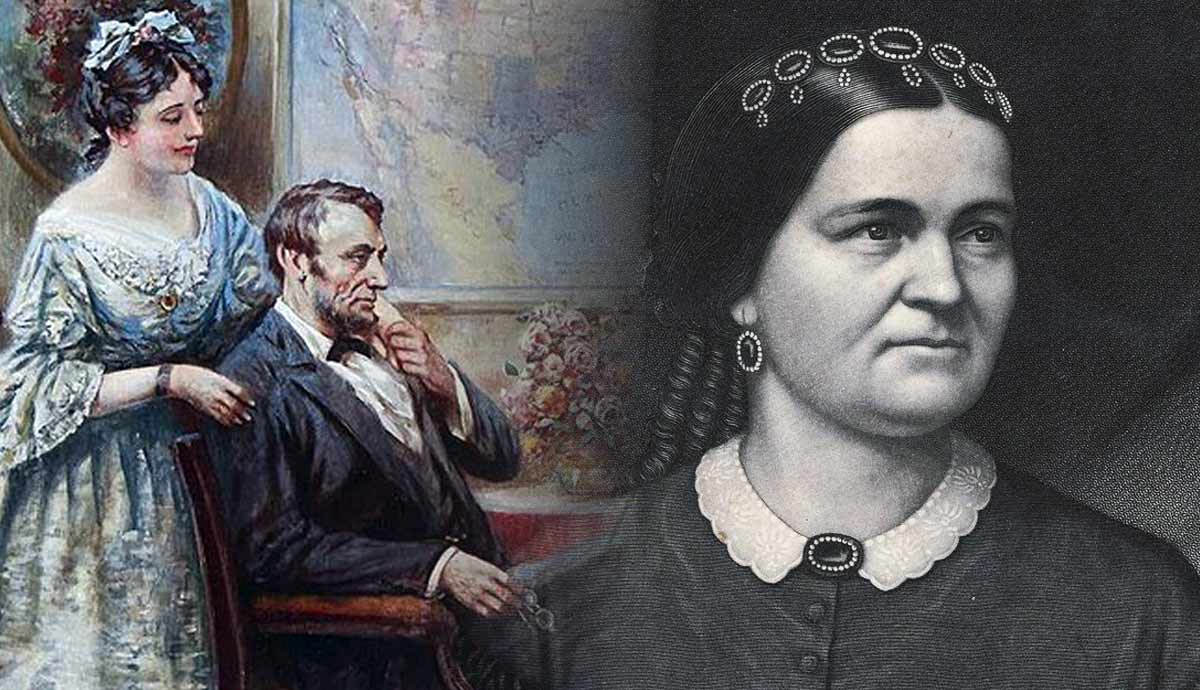
Mumler’s most recognizable and sensational work was the 1872 portrait of Mary Todd Lincoln with her deceased husband, the 16th President of the United States, Abraham Lincoln. A semi-transparent figure of Lincoln is standing behind the seated Mary Todd, touching her shoulder. The president’s widow was an avid believer in spiritualism and mediumship. Crushed by her husband’s murder and the deaths of their three sons, Mary Todd Lincoln tried to find comfort in the possibility of connecting to her dead loved ones as if they were still there.
P.T. Barnum and the Landmark Fraud Trial of 1869

Although spirit photography was a huge trend at the time, it had its fair share of skeptics. The history of spirit photography is also a history of remarkable court cases. Fraud charges were common occurrences for photographers who claimed to make the dead appear in pictures. The jury tried to unveil their technical secrets, but they rarely succeeded.
William Mumler was put on trial by none other than P.T. Barnum, who was widely regarded as the pioneer of modern mass entertainment, publicity stunts, and advertising. Although Barnum was rather far from being an honest entrepreneur, he insisted that Mumler’s activity was essentially nothing but preying upon the grief-stricken relatives of the deceased. During the trial, Barnum presented his version of the Lincoln photograph showing an image with the face of the dead president floating beside him. That accusation was followed by another. Some witnesses claimed that Mumler was breaking into their clients’ houses to steal photographs of their dead relatives and use them for his works.

Mumler was cleared of all charges in the Barnum trial. Mumler’s main line of defense was shifting the responsibility from himself to the spirits. The photographer insisted that he was not responsible for the figures appearing, and if someone was unhappy with the result, it must have been the spirits playing tricks on them. The main reason for Mumler’s acquittal was that the judge and the jury had no idea how a manipulation was possible. In fact, we still cannot be entirely sure how Mumler did it; although there are numerous possible explanations and techniques, there is no definitive proof of his method.
Frederick Hudson, Georgiana Houghton, and the Rise of British Spirit Photography

Across the ocean, the first (and the most famous) British spirit photographer was Frederick Hudson. Like Mumler, Hudson was working with an assistant. Along with the photographer, a medium and artist named Georgiana Houghton was present. Houghton made sure that the dead relatives would connect to the world of the living. Unlike the pale silhouettes captured by Mumler, Hudson’s spirits look more solid and physically present, as if another person was standing right next to the sitter.
Although Hudson was proclaimed a fraud several times during his lifetime, he never went to jail. The will to believe outweighed any logic for some people. For example, one of Hudson’s sitters claimed to see his dead mother in a photograph next to him, even though, in his own words, the ghost looked nothing like her.

Houghton herself was a trained artist and claimed to channel her artworks from the world of spirits and higher beings way earlier than Hilma af Klint. However, her association with Hudson did not help her career in the long term. Even though neither of them ever faced any criminal charges for their photographic experiments, Houghton would hardly be taken seriously as an artist for decades. The only exhibition of Houghton’s work during her lifetime was organized and paid for by the artist personally. Although Houghton died in 1884, her artworks would be on display for the next time only in the 21st century.
Why Did People Believe in Spirit Photography?

Despite the rightful accusations by P.T. Barnum and many others, it would not be entirely correct to dismiss spirit photography as merely an instrument for capitalizing on someone’s pain. In a way, photographs of dead loved ones helped people navigate grief and sorrow, providing them with one more chance to see their loved ones before letting go. Just like the practice of mediumship, spirit photography was also a way to cope with the fear of death. While skeptics labeled both practices as frauds, believers in spirits received their proof that death is not final. Like Mary Todd Lincoln grieving over her husband and sons, many others were trying to find comfort in the idea that there was something to hope for beyond the grave.
However, not all believers in spirit photography were grief-stricken relatives in need of comfort. Many other proponents of spiritualism were more rational in their beliefs. The rapid technological advances of the 19th century created a stir in public minds. The world suddenly became unfamiliar, forcing many people to actively search for answers. The discoveries of invisible waves and particles, new means of travel, and new ways of transmitting information raised further questions: if these forces were unknown until the present moment, what else could humanity be missing? What if photography, as a new way of seeing, can capture something invisible to the human eye? What if it can be a bridge between our world and others? Thus, even though spirit photography may now seem like a weird occult craze, it nevertheless had at least some logical reasoning behind it.